Resistant Cancer Mutations Require This New Strategy
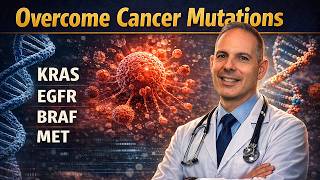
Dr. Dino Prado argues that most targeted cancer drugs only slow tumors, not kill them. He uses that window to profile each patient's tumor deeply and build custom immunotherapies, including personalized vaccines. His clinic reports 35-fold better survival and 43-fold better quality of life than standard care.
Chapters
If you're a cancer patient and you're given one of these stubborn genes, crass gfr, braf, lk, met, egfr, this is going to help slow things down. These targets are going to help us. I'm really now moving in precision oncology. But here's a problem. The majority of these drugs, they actually do not kill the cancer. They slow it down. They're cytostatic, not cytotoxic. They're buying time. So what are you going to do with the time? The key is to get your immune system involved so that not only are you slowing the cancer down, but you're killing it. It's not being trapped in just a new SM smart drug that your oncologist put you on, but using the right combinations with precision. Until we get the immune system involved, these cancers return. So I'm going to focus on one of them. But you can address this pretty much across all these mutations because this is the specialty drugs that are billions of dollars in the market and big pharma likes to use to slow things down. Now, I'm not blaming them. These are can be very helpful, but not just used alone in the way they are being used in the standard of care oncology in the one size fits all model. I'm Dr. Dino Prado. For the last 25 years, my team and I have helped patients that failed the top cancer hospitals across the country. And yes, many of the patients were already on these specialty drugs. They've exhausted care, they have evasion of the immune system. And if you haven't even gotten here yet, you want to avoid these things before they happen, if possible. And so how do we combine care to make it work better? That's what precision oncology is and it's building it on you, not just on a genetic marker. We test for so much more information. We're looking at a thousand plus data points instead of maybe 24. A tumor marker, biopsy imaging, and some small DNA markers which mark one of these mutations. Mutations, and then puts you on an inhibitor of whatever sort to slow things down. These inhibitors, the way I like to teach these to doctors when we're training in precision oncology. It's like a christmas tree. You're on these inhibitors. You unplug the tree from the wall and you don't see the cancer. As soon as you come off of these, it lights right back up. It's like plugging the christmas tree right back into the wall. You can see all the tumors in the pet scan light up because they slow things Down. They're cytostatic, not cytotoxic. But there's something we can do. We can get the immune system involved and we can turn that SW our favor. So I'm not against using these medications if you need to slow things down, but what are you doing in the meantime? Watch and waiting. Because these aren't curative agents. They're buying. Maybe seven months. Even if you're on any of these, it's not long term remission. They might buy time. So we must find a way to achieve cytotoxic kill to take advantage of this honeymoon period, if you will, of using these specialty drugs. And we do that by turning the immune system on. So first of all, this requires deeper testing. We don't want just the basic DNA. We want full DNA next generation sequencing, RNA transcript genomics, and one of the most important parts, immune spatial biology. With full immune profiling. Why are these important? Because it's like we get a drone in the air and we can now see around the tumor and look at the gangs that are blocking your immune system from killing the cancer, your natural killer cells and dendritic cells from doing the ultimate work of getting rid of the cancer. Yes, long term responses, not short term responses. This is how important immunity is. And if your body can see the information, the antigens from the tumor, the fingerprints, the blueprint of the tumor, it can go to work. So we don't want to just take for granted. We want to put it to work in our best interest. So regardless of your tumor's microsatellite stability or these various markers, when we run detailed planning, we're going to see many, many more markers. Why? Because we're going on label, off label. We're using phytotherapeutics, we're building cancer cell vaccines and immunotherapies that are customized for each patient. And then we're able to go to the tumor and turn on the antigens and help the rest of the body see that through immunotherapy targeting. So while we're slowing the cancer down, this is the time to take advantage of precision oncolo, in my clinical opinion. And now look at achieving a thousand plus data points to custom build it on you. You are the n of 1. Yes, Big Pharma makes great drugs, but they typically manage cancer. They don't eliminate it. Because the protocols are to slow things down, not eliminate it. That is my clinical opinion. Say whatever you want. I'm happy to have these conversations with you. I'm happy also to Hear your comments below. But most of these drugs buy time, which is great. But with the money we have in big pharma and all the research and development, we should be moving to get rid of the cancer, which is immunity. That's why immunotherapy will be the blockbuster treatments in the future and already starting to be. And yes, I also am talking about fixing the metabolic diet and all those pieces which I've already done videos on. But just stay with me here for a minute because I'm not just talking about the metabolic side of cancer. It doesn't solve everything. We've treated thousands and thousands of patients, ketogenic diets, et cetera, but we're now talking about the mutational side of cancer because cancer is bimodal. It's both metabolic and mutational. And when you understand that with precision targeting, that's when you get to the next level care. That's where we're able to get the outcomes that we see with our patients, which we published on 24 and stay tuned. We have some new papers coming out that are very exciting, but we had 35 times better outcomes and 43 times better quality of life than standard of care oncology for late stage cancer patients. And that's exciting. Now let's talk about why the cancer industry is moving down these gene markers. And I'm going to show you how to turn this around here in a minute. So let's say you have this crass mutation. I'm taking one. I won't go through them all because I want you to see there's a similarity to them. It'll slow the cancer down, maybe give seven months of life. In 2024, there's about 470, 75 million in sales. By 2030, this one drug will pass 2 billion in sales for what? Managing cancer. Can we do better? You bet we can. We can do a lot better. Big pharma is smart, they have the technology. But it's up to the doctors and the institutions to move away from the cancer industrial complex. These large insurance companies and hospitals that are billing like candy and moving to custom care. So when you're told your MSS microsatellite stable or you're not a candidate for PD1 inhibitors, or you have a crass mutation or any of the mutations I mentioned earlier slow down, this is buying you time to get a custom immunotherapy program and to look at thousands of markers and not one. I mean, when I'm saying the big guys are involved. It's Amgen, Bristol Myers Squid, it's Bayer. They're all involved. All the big companies are in the slow it down. Cancer specialty drug markets like the crass mutations. Bioscience is going heavy in this area because there's lots of money. But how much time is it buying? 3, 5, 7 months, 10 months? It's not enough. And the key is the immune system. So a lot of these crass inhibitors, because I want to stay focused on one thing. These markers and mutations are like a gas pedal. They're letting the cancer grow and spread. And by giving them an inhibitor that blocks this, it slows down or unplugs the Christmas tree. So now the Christmas lights, the house, everything was lit up. You saw the tumors, and as soon as you gave the inhibitor, it like goes away. It's like miraculous. And then the cancer finds a way to evade it and grow out of it. And the Christmas tree turns back on. Or you stop the drug and within a week or two, it's growing again. That's how powerful these inhibitors are. But while we slowed the cancer down, how are we looking at the deep map? So this is the analogy. You're driving in your car. The DNA looks at these mutations and says, okay, this is a mutation. The car is going fast, driving, and let's find a way to take the foot off the pedal. That's the DNA. The transcriptomics shows us all the maps in the road of all the different ways. Upstream, downstream, the cancer will evade these mutations, meaning grow in a different direction. And we can shut those down. And then the immune spatial biology helps us to look at the tumor from an aerial view and see all the neighborhoods that are blocking your tumor from your immune system. Which, in the end of the day is the key to getting rid of cancer. That is the key, but that's not what we're doing. In standard of care. Oncology, we're focused on. In standard of care, one size fits all. All the major hospital cytostatic drugs slow it down. It's like a speed bump. Slow it down, slow the cancer down. Big pharma keeps pushing it. Look, big pharma, it's in all the universities. It's all tied into the big hospitals, billions in research, and it's great, they're discovering wonderful drugs. But the problem with using those alone in late stage cancers that are refractory to care, it's only slowing things down. Now that we've slowed down the switch with one of these specialty drugs, now we need to look deeper. So I'll take you down this one example and we could do this for all of them, but it would be very long and I would bore you. But let's look at that crafts mutation. This could be braf, it could be anything. But then down the pathway there's PIK3, AK3 MTOR, there's all these other pathways. And when we do heat maps, we can see the signatures of which one of these are impacting your cancer. Then we can go on off label to further slow down and then boom. Bring in the immunotherapy, custom build the immunotherapy, use a technique I like to call chemo immunoprecision injection where we can take a catheter the size of a hair, go right into the tumor, kill it. With the custom immunotherapy, seal the blood supply to the tumor without providing toxicity to the rest of the body and now release those antigens to the rest of the immune system. Now it does several beautiful things. It makes sure the chemo's not going everywhere in the body because when you give IV chemotherapy maybe 1, 2, 5% gets to the tumor. The rest of it goes to your organs, central nervous system and most importantly, wipes out your immune system. We don't want that. That's the standard of care. Maximum therapeutics dose chemotherapy used through NCCNN guidelines across the platform. What I'm talking about here is targeted and tested and custom designed direct delivery to the tumor. So we know we're getting 98, 100% to the tumor and now releasing the antig. The dendritic cells can get the information. Think of your dendritic cells like a detective. It's got a mug shot, fingerprints, all the information, the damps, it has the peptides, it has the neoantigens and passes it to the natural killer cells that are snipers. They can go in and now immediately kill the cancer everywhere in the body. And this is what we need to be doing while we're using smart drugs to slow things down. These drugs slow things down. They don't cure the cancer. My goal, as it should be with everybody else, is to long term remissions and helping patients achieve that. And the key to that is going to be taking these cold t hiding from your immune system and turning them back on. And with deep learning custom drug build direct to tumor cellular vaccines, we can go beyond the microsatellite stability markers to turn these tumors on. In standard oncology if you have microsatellite stability, they'll say you're not a candidate for a PD1 inhibitor and a patient will say Oh, I can't do immunotherapy. Really? You're limited to one marker, one test. That's standard of care. Oncology Today focused on PD1 inhibitors. We've been using PD1 inhibitors for over a decade, on and off label. They are limited in their benefit. One out of five patients, durable response according to Frontiers in Oncology. About 19% to be precise. But it only works for 10 months for most patients. So that's not the ticket. The ticket is to get a full picture of the immune system going beyond the microsatellite stability or instability or the mutation. Craft, BRAF, EGFR, HERC2 and to rebuild the immune system for the patient so we have a chance of getting a longer term response. That's the secret, in my opinion, to shutting cancer down so people can live a long and blessed life. It's seeing these roadmaps, shutting them all down, Building the medic on the patient with deep mapping, not just giving NCCNN guidelines to everybody. Those are population health. Those were all done on large populations, not you. When we look at two people with the same type and stage of cancer, we look at thousand plus markers. They have totally different cancers. There's heterogeneicity and it's well published in the data. So how do we handle that? We custom build the medicine for them, tracking their pathways, building their immune system, teaching their body to virtuously kill the cancer. The natural killer cell goes and kills the cancer. There's more release of antigens, more release of damage associ associated molecular patterns. There's more release of these peptides and the new information moves to the dendritic cells. And the natural killer cells now have new information for their cytotoxicity and they can go to the tumor. The same information can be used to build cancer cell vaccines. Now these aren't vaccines like a hepatitis vaccine or something. These are vaccines that teach your own immune system to get rid of the cancer, recognize it and kill it. What the body does over 10,000 times a day is it deletes early and pre cancerous cells because the immune system can find it. So when we're on one of the these specialty drugs, PRAs, BRAF, whatever they are, there's a whole bunch of them, EGFR and more coming out. They're slowing things down. This is the time to get immunotherapy and deep mapping on board using N of 1 targeting. So here's what you want to ask your doctor. What are we going to do when this specialty drug stops working? How Are we going to turn my cold tumor hot? How are we going to get precision immunotherapy beyond a PD1 inhibitor? Because it's not going to work long term. And if the answer to those questions is, I don't know, we don't have an answer. Look for another doctor or look for the combinations and testing that is going to help you. That's the. That's the intelligence behind N of 1 precision oncology. It's not about using conventional or integrative care or this or that. It's letting the data and deep learning guide the precision care that's needed for each patient. Because two people are really very different with the same type and stage of cancer. I hope this was helpful and this gave you a better idea of all these different DNA mutations you're going to see. I get these questions all the time. They're cytostatic more than they're cytotoxic. I mean, they're just slowing things down. And they're only going to work temporary. So the key will be immunotherapy. And the sooner you get that on board and the more it starts targeted for you and built on you, the better chance the patient will have. I hope this was helpful. And may the Lord bless you on your journey to healing.










