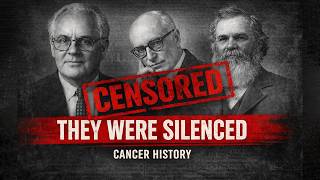
In this narrated monologue, Dr. Dino Prado, founder of Envita Medical Centers, delivers a sweeping historical overview of cancer treatment to argue for a precision, N‑of‑1 integrative oncology approach. He begins by recounting Samuel Hahnemann’s homeopathy, emphasizing individualized care and how it was marginalized by mainstream medicine. He then describes how John D. Rockefeller’s funding and the 1910 Flexner Report reshaped medical education toward a laboratory‑driven, drug‑centric model, laying the groundwork for modern big‑pharma oncology while sidelining nutrition and holistic practices. Prado surveys early “alternative” professions—chiropractic (D.D. Palmer), osteopathy (Andrew Taylor Still), and naturopathy (Benedict Lust)—detailing their persecution and eventual partial integration into supportive cancer care. He moves to scientific concepts, highlighting Otto Warburg’s discovery of the Warburg effect and its later resurgence in metabolic oncology, and reviews controversial metabolic/chemical therapies of the 20th century (Emmanuel Revici, Max Gerson, Hans Nieper/Laetrile) that were dismissed but foreshadowed current interest in lipid metabolism and plant‑based diets. The narrative then celebrates pioneers whose once‑ridiculed ideas became pillars of modern oncology: Judah Folkman’s angiogenesis inhibition (leading to drugs like Avastin) and Steven Rosenberg’s immunotherapy (precursor to CAR‑T and TIL therapies). Prado explains how Douglas Hanahan and Robert Weinberg’s “Hallmarks of Cancer” unified disparate findings into a framework that now guides multi‑targeted, data‑driven treatment. He argues that today’s tools—next‑generation sequencing, transcriptomics, metabolomics, AI‑driven analytics—enable truly personalized, N‑of‑1 cancer care that combines evidence‑based conventional therapies with carefully selected integrative adjuncts, improving efficacy and quality of life. The talk concludes with a call for humility, curiosity, and historical awareness, warning against dogma and emphasizing that precision oncology is rapidly becoming the standard for treating cancer.
Chapters
One man's wealth, another man's vision. And in the shadows between them, millions of patients across the centuries were told the exact same thing. There's nothing left to be done with your cancer. The history of modern medicine is not what we were taught in school. It's a fierce battle between geniuses, Betrayal, money, and the enduring fight for the cure. Who decided what science was going to go forward? And who was jailed and discredited for daring to challenge a system. Stick with me because we're going to lift the veil on the forgotten pioneers who faced persecution to pave the way to modern day precision on oncology and the powers and interests that fought them all along the way on every step. I'm Dr. Dino Prado, founder of envita medical centers. For the last 25 years, my team and I have helped patients who failed some of the top cancer hospitals across the world. And we've helped our patients using precision N of 1 targeting. What's interesting is that the pioneers that we're discussing were facing some of the very same problems that doctors face today. In this episode, it's not about you copying the past medical techniques. It's about understanding the forgotten history behind the rise of conventional oncology, big pharma, and the birth of integrative medicine. And ultimately what I think is the key to solving cancer, which is going to be precision and of one care, where you get the best treatment built on the patient. Before we dive in on this episode, I'm going to do a clear disclaimer. It's for educational purposes only. Do not use any of this information to treat yourself. These are historical documents and I'm using this as an education. And many of these therapies FDA has claimed as unsafe or unproven. So make sure you're always working with a doctor. So now let's get started. Our journey starts in 1796 with Dr. Samuel Hahnemann. He was fed up with medicine. It was a time that was brutal and there was a lot of bloodletting and harsh purging and often it hurt patients more than it helped him. So he proposed something radical like cures light. His treatment was called homeopathy. He would carefully note all of the unique symptoms that a patient would develop when given a substance. And then he would give that super diluted dose of the same substance as somebody who had the exact same symptoms when they were sick. And the goal was to eliminate the disease. Light cures light was his strategy, Matching the symptoms to the remedy. Hahnemann focused on individualized care in tiny doses that put him directly against the power of the apothecaries and pharmacies of the time. His ideas were mocked and eventually pushed out of the mainstream of healthcare. Homeopathy is a system of therapeutics that treats disease with highly diluted substances and based on the law of similars. Despite widespread use, it lacked comprehensive evidence and acceptance by the mainstream. Proponents claim that some studies showed efficacy of up to two times better than placebo, citing the French EPI3 study which showed patients using homeopathic physicians use significantly fewer antibiotics. Critics say the remedies contain zero active molecules, violating Avogadro's number. If you remember that from science and any effect is just a placebo effect. The only way scientists may finally study this and get a breakthrough for homeopathy would be quantum biology, which suggests that highly diluted waters might create an electric magnetic field signature, a kind of water memory that could only be explained by the quantum field theory. While homeopathy is not proven or a sole treatment for cancer, Hahnemann's focus on the deep patient history and treating the whole person planted a critical seed to integrative medicine and precision medicine, tailoring treatments to each patient. That philosophy is so important and commonly today, something known as classical homeopathy is practiced very prevalently in India where it's used alongside standard oncology to support patients and help them with their care. While Hahnemann focused on the individual, another giant force was reshaping the future of medicine as we know it. Money and structure entered John D. Rockefeller, one of the richest men ever who poured massive amounts of money into a medical education and research system. This led to the 1910 Flexner Report which pushed medical schools towards a strict laboratory driven drug focused model. The consequence? This movement created a foundation for Big Pharma. Rockefeller's funding established the university hospital research model that prioritizes drug discovery which was easier to patent and profitable worldwide. Schools teaching natural, holistic or homeopathic approaches and botanical medicine medicine lost their funding and legitimacy and were forced to close down. The Flexner Report created the foundation for modern conventional oncology, our powerful surgeries and chemotherapy drugs. But some argue the downside was that it removed nutrition from the schools and healing arts that have been around for a long time. And personalization was ignored. And the standard medical schools to this day have a higher preference to pharmaceutical training and pharmacology than they do in nutrition. All you have to do is look at the hours of training, so it still exists today. While big institutions were rising, other healers focused on the body's natural structure. Its built in Ability to heal itself. Enter D.D. palmer, chiropractor. He believed that spinal misalignments that we call subluxations blocked the nerve flow and his treatments involved spinal adjustments. The American Medical association labeled chiropractors as irregulars, cultists and quacks. Early chiropractors were jailed and fined for practicing medicine without a license. It took 79 years after the profession's birth for the last United States state to legalize it. Due to the aggressive opposition by the organized medical system. In 1874, we have Andrew Taylor still, after losing his children to harsh drugs, still founded osteopathy. And he taught that the body is a single unit. By improving the alignment and circulation through hands on manipulation, you would help the body heal. His philosophy is so important to care today. Addressing the root causes and restoring the balance that's incredibly important in health today. It helps patients with supportive care and integrative care, helping them with pain, fatigue and nausea to give them support during their care. Enter Benedict. Lust plus believed in the power of nature. And he brought forth naturopathic medicine known as naturopathy. His treatments included hydrotherapy, herbs, sunlight and a healthy diet. He was arrested multiple times for practicing medicine without a license. But kept pursuing the idea that nature and lifestyle are so critical to being healthy and live a healthy life. Many integrative doctors the world over, both in cancer treatment and standard of care will use functional medicine. Naturopathic medicine, chiropractic, osteopathic manipulation in its various philosophies through bring healing to patients. And naturopathic medicine really focused on the evidence based nutrition and lifestyle today to help patients get the support they need alongside standard oncology. And it was all started by these guys years back. Next, meet Dr. Otto Werburg, a Nobel prize winning biochemist. His radical idea cancer is a system of diseases. He noticed that many cancer cells prefer to ferment sugar for energy even when oxygen is available. This became known as the Warburg effect and his idea. Warburg believed that you could change how cells use sugar. You could stop cancer by doing that. His work pointed to changing diets and metabolism. As the field swung hard towards genetics. In the mid 20th century, Warburg's metabolic ideas were minimized, almost mocked. We now know that he was right about some of these effects. The Warburg effect is a standard concept. Modern precision oncology uses advanced testing metabolomics to look at a patient's unique metabolism and things like a ketogenic diet or specific drugs to target the weakness in glucose metabolism. He helped us to see cancer just as A gene problem but also as a systemic metabolic problem. Something that many patients now use healthier diets and lifestyle to go along with their care. The history isn't just about accepted science. It also is filled with figures who pushed chemistry and nutrition to its limits to the absolute edge. And oftentimes met with great resistance. Emmanuel revici in the 1900s revici was a chemist who believed cancer came from chemical imbalances. His treatments were focused on this complex of unusual lipid compounds like selenium. And he adjusted the in ph and worked on these lipid imbalances and he called it guided chemotherapy. Revici specific method has been found by standard of care to be unproven. Where he was using vegetable oils to try to balance this. But in the 1960s the concepts were focused on these lipid metabolisms as a key part of cancer targeting. And remarkable insights as modern research now confirms that cancer cells significantly alter their fat metabolism to support rapid growth. In the early 1900s we have Max Gerson. Gersten believed cancer was caused by toxins and he developed the Ger therapy which was completely disproven by standard of care oncology. The therapy was extremely strict. Massive amounts of organic juices like 13 per day, a vegan diet and frequent coffee enemas for detoxification. Gerson's medical license was challenged and his therapy was largely exiled out of the United States to Mexico. For standard oncology. Gerson's original acid ash theory was considered a myth. However, his dedication to the high nutrient plant based diet remains influential for many patients. Modern integrative doctors plant based diets to help their patients. Gerson's extreme risky methods were discredited by the standard healthcare institutions. But he introduced us to a lot of what we know today as the plant based organic juicing that people use to detox. Hans nieper in the mid-1900s was focused on cell membrane transport using special mineral complexes like orotates as carriers. Crucial his protocols often included Laatril, something called amygdalin or B17, a compound that was found by the United States to be unproven for the treat treatment of cancer by the fda. While Laetril is unproven as a cancer cure, recent in vitro studies or animal studies suggest that it has anti cancer properties. The major problems are toxicity due to cyanide and poor absorption. So new research is exploring nanoparticle technology to deliver amygdalin more safely. But there's a significant lack of human clinical trials to prove it or to make sure that it's safe. But he began this work years ago, and there's still studies going on today. The ultimate lesson comes from two men who were ridiculed, then eventually proven right. Judith folkman. In the 1970s, Folkman proposed something very bold. Tumors need their own blood supply to grow. Something called angiogenesis. He suggested that if you could block this process, you could starve the tumors. For years, colleagues laughed at him and ridiculed him, saying his idea was too simplistic. His work established angiogenesis and one of the first drugs approved by the FDA, called Avastin. Very powerful change in the thinking of cancer. In fact, later on, it became one of the hallmarks of cancer. One of the pathways to stopping cancer from growing and spreading by blocking its blood supply. Enter Dr. Steven Rosenberg. Dr. Rosenberg, known as the father of cancer immunotherapy, pushed another big idea. The use of your body's own immune system to fight cancer. One of my favorites. His idea was that your own T cells could attack tumors. And he pioneered high dose IL2 interleukin 2 adoptive cell transfer. Taking a patient's own immune system, growing it, teaching it to attack a tumor and returning it back to the patient. Early on, his work was considered extremely risky. But his breakthroughs paved the way for modern day car t cel therapy and TILS therapy that we see in melanoma, tumor infiltrated lymphocytes and other immunotherapies that patients use around the world to help their immune system fight cancer. Now there are some FDA approved treatments from his work that he did to help people with metastatic cancers. Folkman and Rosenberg show us how these ideas were once laughed at. Become core pillars of standard of care oncology. Their stories are a testament to the fact that breakthroughs often come from challenging the status quo. Now fast forward to the game changer. The work of Douglas Hanahan and Robert Weinberg. In the early 2000s, they published the hallmarks of cancer in the journal Cell. They looked at all of the confusing research on cancer and they organized it in a map showing us the superpowers of tumors and how they evade and how they grow and how we can go after them. Things like angiogenesis that Judith Folkman introduced us to or programmed metabolism like the Warburg effect or immune evasion. Like Rosenberg's work, their map wasn't persecuted. It was embraced because it organized centuries scattered ideas into a framework that supports modern precision day multi targeted cancer. Letting the data guide it reminds us that cancer is not just one problem. Two people with the same types of cancers can have very different markers, it's called heterogeneity. And they need different treatment. And that's why I believe n of one custom treatment is so important, where the treatment is built on the patient hitting as many of the targets on label, off label integrative care immunotherapies to help the patient respond. And that's the future of cancer treatment in my opinion and what we're seeing in the literature. So where does that leave us? Today we have all these tools and all these pioneers that came before us. But now we have testing. We don't have to guess or be biased. We can use DNA next generation sequencing, RNA transcript nomics, we can put all the data together and custom build care for each patient. We can actually use the hallmarks of cancer to guide targeting and care. And with deep learning and AI, we can now build custom treatment for each patient. This is coming very fast. We can understand what the immune blockades are and overcome them. We can actually change the metabolomics of the cancer. It's a very exciting time. This data that we're talking about that comes to life in a way that's unique for each person. That's the work of precision oncology where we're using the right targets to treat the patient and not using everybody as a one size fits all. And we're also honoring those that came before that had good scientific ideas that were brought forward. We look at toxicity, make sure that the patient is using the right dosing and not overdosing and the treatment is perfect for them but not over treating them where it's harming them so we have less side effects and better quality of life. Combining standard treatments with carefully chosen evidence based based adjuvants that support the patient, this simply allows us to reduce the guesswork and have a better respect for the amazing complexity of what cancer is. Let's quickly review the powerful lesson of the journey of cancer. Hahnemann was mocked and then pushed out. Warburg's metabolic ideas were shelved for decades. Revici and Neeper, they were branded as quacks and heavily criticized. Gerson's license was challenged and his therapies were exiled. Palmer was jailed. Folkman was laughed at. Rosenberg was doubted. Hanahan and Weinberg helped us bring together the theories, actually work scientifically and bring forth the framework of modern day oncology. The lesson is not that every rebel is secretly right. The lesson is that we need humility and curiosity and let the data guide data over dogma. And building the treatment on patients. For two decades now it's been the work of my team that we work in this area of precision oncology using the best of conventional integrative care and combining that for each patient using the latest in genetic test testing, latest in immunotherapy, profiling, and developing care to help people that haven't responded in standard of care. With one goal, supporting the patients to live longer and have a better quality of life. We need to make sure that these things are done safely and they help patients and they make a difference. A lack of our historical awareness can hold us back in the fight against cancer. And my mission is to just open everybody's eyes to understand that precision oncology is coming and it's here an N of one custom care that's built for each patient, that's data driven and immune centric, that can help people live longer. The better quality of life is coming quickly, especially with all the advances in science and research that we have today. And it's important that this should be done with a doctor who knows what they're doing and working to help you heal. So I hope this was helpful and this opened your eyes to the history of medicine and actually got you excited about what's coming forward. That cancer someday in the future may be something nobody's scared of anymore, but can be treated very precisely and quickly and improve people's quality of life. I hope this was helpful and may the lord bless you on your journey to healing. Bum bum bum bum bum bum bum bum bum bum bum bum bum bum bum.