This $2 Billion Cancer Discovery Makes Radiation Look Outdated
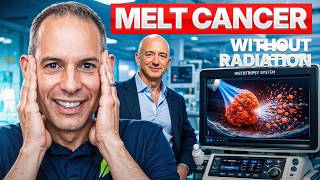
Dr. Dino Prado argues radiation oncology prioritizes hospital profits over patient outcomes, and proposes histotripsy, an ultrasound technology that mechanically destroys tumors to create an antigen-rich material for immune therapy. His approach, called Symphonics, combines this lysate with immunotherapy and nanoparticles. Bezos and Thiel have invested in the technology.
Chapters
Something most patients are never told. The best radiation plan is sometimes chosen around the machine a hospital owns and not the biology that's right for your cancer, meaning the right type of radiation. Here's the uncomfortable truth. The data shows US that about 40 to 50% of all radiation is palliative, meaning it's not trying to cure the cancer, slowing things down, maybe trying to improve quality of life. But we can change that. So in this episode today, we're going to break down the radiation wars and this new disruptive technology that uses no radiation but ultrasound. Yes. Sound waves to kill tum and how that can be developed into systemic immunotherapy. So this is a really unique episode today and really exciting. I'm Dr. Dino Prado, founder of Envita Medical Centers. For the last 25 years, my team and I have helped people that have failed some of the top hospitals across the world. We're utilizing some of the newest technologies to help our patients respond to treatment and using techniques and immunotherapy to help. And so what I'm going to do in this episode is go into that, starting with radiation and then working our way into sonodynamic therapy or sound waves, and how they work and how we can use that in a program we like to call in our facilities phonics, which is kind of like symphony music to go after tumors. So let's get started. Of course, before you change any of your medical care, make sure you're in touch or working with your doctor. So most large investors, like Jeff Bezos and Peter Thiels and others, love disruptive technology. They've heavily invested in histonics, which is a company that is using histotripsy, which is focused on ultrasounds to kill tumors. In August 2025, there was a consortium that acquired this technology, and the goal is to it global and use it on many cancers. And why this is exciting is because unlike radiation, it melts a tumor. So think of it like an egg. You get the ultrasound, and after you're done, you get this material in the tumor that's like liquid. That's called a lysate. And that information is rich with antigens, neoantigens, damage associated molecular bodies, tumor fragments that are powerful for the immune system. In fact, in animal studies, they were able to transport that lysate into another tumor in the body and shrink it. So this is why this is exciting, because you can shrink the tumor, no radiation, and then use that data. But most people won't hear about this, or if you do, it might be for maybe a liver disease at this point, but it's moving forward. And so we like to call that symphonics, like a symphony to get your immune system augmented, to go after the cancer. And there's tools, both in the phytotherapeutic world and integrative world that can be used to enhance sonodynamic therapy as an adjuvant. All this technology could greatly change the way we treat cancer. And we're actually working in that space right now. It's very exciting to me because it's immunotherapy centric because all of what we like to build is based on the immune system. So stick with me, we're going to go through this today and hopefully illuminate our eyes to this technology as changing the way we see cancer. And especially when you have big dollars by big investors coming in, they're always looking for disruptive technology and also trying to help humanity. And I think there's a combination here because bringing these drugs or sometimes machines like this into the market is a very expensive process and it's not one that's easy. So by having dollars behind it and the right institutions, we're going to see it move forward quickly. But let's get started. Radiation itself can be life saving. But here's what most people don't hear. Radiation side effects like fatigue, skin irritation, hair loss, digestive issues that can impact their mouth or throat, Difficulty swallowing, dry mouth, all these things that really don't make radiation very appealing. And that's why I think a lot of people want newer technology. But a huge amount of radiation given is really not even to cure the cancer. Studies show us that 40 to 50% of all radiation therapy is palliative. And I don't like that. But in my opinion, that's when you really start working on immunotherapy. Because buying time and sometimes radiation in the right micro doses can be used to hone the immune system like nk cells, T cells to go to these inflammatory regions to kill tumor. So if radiation is often about buying time, then what's the real question? What are we doing during that time? We need to get other targets on board, Use this time like a smoke alarm to get the immune system moving so we can shut the cancer down. And this is where tools like cancer cell vaccines, immunotherapies, direct to tumor targeting can really enhance the overall response of the patient going be standard radiation. But there's a hidden war that nobody talks about. And here's how it looks. There's money that's driving Radiation. So if a hospital owns that equipment, that's what you're going to get because that's what they've invested in. And it may or may not be the best for your type of cancer. It's what they have. And so that's what you're getting. You know, when you're talking about investments that are 2 or 5 million or proton beam, that could be hundreds of millions, like the Mayo Clinic has, they're going to use that equipment everywhere they can and twice on Sunday because they're paying for this very expensive equipment. Unfortunately, it may not be the best thing for you, or it may not be the newest technology. But if, if a hospital which has special billing rights, this is something people don't know. Hospitals can charge more for radiation much more than a standalone clinic, which I think is ridiculous, but they can because they have contracts with insurance and deals that allows them to charge much more. So if they own radiation equipment and they're able to bill a lot of money for it, they're going to use it. And it doesn't always incentivize them to use newer technology like the one I'm talking about that uses sound, which is going to be a lot cheaper and at the same time doesn't profit as much for them. So it's going to come down to billing. That's the cancer industrial complex. You may want to watch my other episodes on that. But that's what's driving radiation. And radiation therapy began after the discovery of x rays in 1895, and it was radioactivity. Soon after they looked at, okay, this is powerful. Can we use it to kill cells? And we can. And so from there, then we started developing CTs and imaging. And now a lot of these different types of radiation like IMRT, Rapid ARC, CyberKnife, proton beam, and one of my favorites, brachytherapy, which is actually just little seeds that they can put around the prostate and breast and other has kind of gone away because it's not as profitable, but actually works very well for some patients. These technologies are not always used equally. It depends on the equipment and the doctor and the technology. Even newer technology like Y90, which is radiation the size of red blood cells being placed directly in the liver or other areas just to kill and then dissolve. So that's very, very precision and can have its place in certain cancers. And now we have things like MRI guided radiation, or even in research studies like flash radiation, where it's like a a thousand times faster trying to kill the tumors quickly. But radiation, in my opinion is always been an adjuvant care meaning it's alongside and oftentimes we don't even want to use radiation. If we have to, we use it, but it's not ideal. Which brings me to my next point. What about a new technology that might eliminate radiation because people think they're getting radiation. But it's like someone saying oh you, you need radiation. That's like saying you need a vehicle. And so there's a difference between a bicycle and a jet airplane and everything in between. What is that vehicle going to look like? There's all different kinds of radiat equipment that could be some better, more expensive on off label usages. But do we have a technology that can be so disruptive that could eliminate a lot of radiation, move us from palliative care and engage the immune system? So now we have full immunotherapy and I believe this is a technology, it's called ultrasound and it's using sound waves to basically destroy tumors. With concentrated sound waves mapping you can go right over a tumor and essentially melt it. It's almost like a star wars. And when you melt that tumor, inside the tumor you have something lysate. It's a liquid rich material. Now I'm going to give you this analogy so you can visualize it because I always like to make complicated subjects easier. Remember those eggs they sell at Easter where you have the liquid in the middle and the chocolate on the outside? Well imagine the outside of the tumor is demarcated by that chocolate and the inside becomes all liquid. And now we can go into that liquid and use that liquid information to tell the rest of the body. Here's what the cancer cells look like. Tell your immune system here's where the cancer is. Augment the immune system with other immunotherapies or adjuvants and now not only get a kill tumors, we get a systemic response on all the microcells throughout the body. In fact, maybe build long term memory to our T cells, our immune system using phytotherapeutic adjuvants alongside this lysig. That's the potential. Now of course this is new, but in many ways we've already seen it in animal studies and I think it's going to be very exciting to see in patient care. Now ultrasound's already available today. There are facilities that offer it for liver cancer. But in the integrative and precision oncology space we're looking at everything because we believe it to be a far gen approach, but actually a far more elegant approach because Then with interventional radiology oncology, the tools can be used to build a systemic immune response. So that doesn't mean that, you know, radiation is going to go away altogether. But this technology is so disruptive that I believe it's going to take the place of a lot of radiation in the future. Now if you own a proton beam and you spent $200 million building it and a football sized campus to deliver it, you probably don't like that. But the reality is that's why it'll be slow to adoption. So a lot of the technology is coming, but we have a cancer industrial complex and they figure out how to profit, get high reimbursement rates. You know, it doesn't make it and they've already invested in older technology so they're just not going to get rid of it. And in reality there's a place for all this technology, but it's the right one that patients need. Like take for instance brachytherapy, those little seeds I talked about that are used in prostate cancer. You know, they're fabulous when they're, you don't need a lot of them and they can shut the cancer down. And with good immunotherapy you can have great responses without a lot of toxicity. But it's not used because it's not as profitable. And so when there's not the reimbursement, you don't see it being used. And I think that's what you're going to see with ultrasound. But, but I think that's going to change. When you look at precision oncology, you can take, you know, cancers like colon and just dissolve it and take the liquid, build an immunotherapy, put it into other tumors using interventional radiology oncology. And now in a 45 minute or you know, hour procedure, you've killed the tumor. You've taken the information from the tumor and you're moving it elsewhere in the body with immunotherapy adjuvants to stimulate immunity. So you don't move until you have multi omics. So not just biomarkers in DNA, but you have transcriptomics, thousand plus markers, spatial biology, immune profiling. Now you know what this cancer is doing. You can heat map its mechanisms and use that as part of the treatment strategy to shut the tumor down. So now we're using the best of conventional integrative hybrids that are customized for each patient. And ultrasound is very powerful because in integrative care we have a lot of tools that augment sound therapy. They actually improve sonodynamic Therapy, which is another way of saying ultrasound therapy, because they're sonodynamic agents that help. And then those in nanoparticle delivery to the tumor prior to the ultrasound will have a very good effect. So let me give you an example. Let's say somebody has a very resistant tumor that has lots of tumor stem cells, it won't die off. There are integrative agents in nanoparticles that are delivered like curcumin or a quercetin. And then that before the sonodynamic therapy will help more cancer stem cells die off and create a better lysate that is then able to be used for better immunotherapy. I mean, that's pretty cool. That's pretty exciting. I'm very excited about that because that's part of the work our team is involved with in this project we call Symphonics. I see a world where people are treated very quick, precisely, and they're able to go home and then monitor and change diet, lifestyle metabolomics, shut the glucose down, the poor dietary habits. You need to do all the right things so you're not feeding the cancer and building your body's immune system. But these tools help us to quickly, precisely shut the cancer down. And that's very exciting. Now, by the time this type of technology makes it to a hospital with all the different things I'm talking about today, or variations of that, you're probably a decade out, unfortunately, but you're seeing it now available for liver cancers. And that's why you've got all these billions of dollars being invested into this technology. It's exc. I remember when technologies like CyberKnife came out and they had a place in brain cancers on the very exciting stuff. Now we're looking at even more exciting because we're using no radiation, we're using ultrasound. So exciting. So you don't have all the toxicity, all the die off, but you have the right multi omics and AI deep learning to take that data from the lysate and then build an immunotherapy vaccine with adjuvants to get a full body response to other tumors in the body. It's pretty brilliant and exciting. And I think it's like again, another Star wars approach to shutting down cancers. So what I want you to know is that most of the time, patients don't have access to these things as I'm teaching and talking about them. It's possible, but it's not out there yet. And so the goal of precision oncology is to use data over dogma use real data points and information that guides the treatment and the monitoring to the patient. These algorithms can really make a difference in patient care. So I hope this was helpful, got you really excited about what's coming in the area to replace. I hope most of radiation oncology with something elegant where you don't get all those sore side effects and you get immunotherapy to shut the cancer down and the patient gets a positive response. And I want to share with you that 90% of you that are watching this have not subscribed to the channel. And the reason I'm asking you to subscribe is not just to help the channel, but to help people. The way that the YouTube algorithms work is that the more people subscribe, like and respond, it pushes it out to more people. So this information of precision oncology can get to doctors and patients all over the world. So it changes the way they think and the way they adopt care. That's how information works in so many ways. And I hope that you can help us because we want to get out of this one size fits all standard of care oncology and move into precision where people can respond better with a better quality of life. I hope this episode was helpful and may the Lord bless you on your journey to healing.










