This Study DESTROYS What We Thought About Cancer
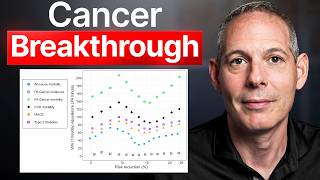
Dr. Dino Prato presents a 2024 study comparing personalized cancer treatment to standard care. Precision-oncology patients showed a 35-fold increase in response rates and 88% symptom improvement. The approach uses deep DNA sequencing and testing of over 1,000 markers to customize drug selection for each tumor.
Chapters
Over the last 25 years, my team and I have treated patients who were told by other doctors, go home because there's nothing more that can be done. And for 25 years, the assumption behind that sentence was the same old: when you get to stage 4, the outcomes are dictated by the biology and the chances are slim. That's really what they want you to think. But in April 2024, we published a paper in the Journal of Cancer Therapy and completely rewrote that assumption. Our team compared a group of late-stage cancer patients treated with very precision personalized protocols, some of the latest technologies from around the world, and we compared that against the standard of care benchmarks, really the one-size-fits-all model that is used in oncology today. We found that the patients who underwent this special treatment of precision oncology, where we look at 1,000+ markers, they had a 35 times better outcome. With an 88% of those patients showing measurable improvements in symptoms. That's amazing because these were late-stage cancer patients. So imagine if we saw them sooner. So in this video, I'm gonna walk you through exactly what we found in the study, the treatment that we used to get these results, and what it means for you or someone you love that's going through cancer, because your oncologist right now may be saying, well, there's nothing else you can do. I don't want you to be listening to that because The data actually suggests otherwise. I'm Dr. Dino Prato, founder of Invita Medical Centers. And so before you do anything or change anything, make sure you're working with a doctor. And now let's get started. The first thing we need to understand is this: when most people hear standard of care, they assume it means the best medicine available, but that's not what it means at all. Standard of care usually means the accepted default treatment protocol for specific cancer types. And stages of cancer based on what has helped other patients in the past. The averages. That matters because cancer is not a disease of averages. Even when two people are told they have the same exact type of cancer, let's say colon cancer, their tumors may behave totally differently. When you look at the deep genetic markers, their immune system may respond totally different. Their tumor microenvironment may be totally different. Their inflammatory pattern's very different. Their metabolism is very different. Their microbiome is very different. So the idea that we have average protocols is automatically not the best strategy for every person with the same name cancer. And this is where patients get trapped because the system often treats the label, the diagnosis first, and the biology second, meaning the markers, not the detailed markers of the cancer. So here's what happens. It basically says you have this cancer, so here's your protocol, instead of asking what are the drivers to your cancer specifically. That's the difference between protocol medicine and precision medicine. And that's why this study that I'm about to go over with you matters so much, because the benchmark that it's beating, it's not some weak comparison. It is the accepted benchmark used by major cancer centers and systems around the world. So now let's talk about why this paper really deserves attention. Anybody can say, look at this one person who took this and got well, but But that's not what gives us the weight of a true good study. What gives us the study weight is that the outcomes were evaluated by a third-party actuarial data and using N-of-1 modeling. So this is different than double-blind placebo clinical trials where you treat large populations all using the same types of treatment for the same types of cancer. These were individually built for each person. That's why we call the work we do precision oncology, because it's the targeting that makes all the difference. And that matters because the study was not built on emotions. It was built on measurable outcomes in precision oncology. This is not a randomized controlled trial. When you do a custom protocol for each patient, it's different. In fact, just recently, just in 2026, FDA's just started to open the door to N-of-1 clinical trials because they know the genetic information is way more than standard oncology is doing, and it is the way of the future. And it doesn't mean that every patient will get the same miracle outcome, but they just get far better plans because they have far better testing and custom drug design and delivery. Now let's talk about the real numbers in plain English. The headline number is 35-fold improvement in response rates. It means that the patients were far more likely to have a measurable positive response than what the standard benchmarks predicted. Then there's a second number. 88% of those patients showed measurable symptom improvement. And a 43 times better quality of life. I mean, that's the ultimate marker. That's what really matters at the end of the day. So how's that possible? How do we get such a dramatic improvement? And the answer is simple. Precision oncology. Standard oncology usually chooses treatment based mainly on where the cancer started and what's the stage. So you got a tumor marker, imaging, and a biopsy, and then you go, okay, we have breast cancer, stage 2, 3, and 4. And then you're put into a national comprehensive network guideline, a protocol. That's standard of care. Precision oncology asks a much deeper question. What is actually driving this tumor? What are the mutations, DNA and RNA? What are the pathways of immunity? Is this a cold cancer? Does it need to become hot? Is the immune system not turned on? What's the immune spatial biology, the immune profiling? See, that changes everything because two patients can both be told they have stage 4 colon cancer, and still have completely different disease biology. This is why using population averages to treat deeply individual biology creates a major problem. The average patient doesn't exist. It never did. And that's why I've said this for years, that cancer's not a disease of tissue, but it's a disease of mutations and information and immunity and inflammation. And if you don't gather that information, you don't treat it specifically, then the cancer will either resist treatment or return. That's why deeper mapping matters, particularly in late-stage cancers. Early-stage cancers can be treated potentially with surgery and then they're over. And the chemo and radiation is basically supportive. It hasn't done anything cuz the surgery did the work. But when we have people that have difficult cancers or cancers that are mutating, or even they want to get on all the data right away, you want to look at DNA. Think of it as a car that's on the road. We can actually see the vehicle. That's the DNA. The RNA transcriptomics, which are hundreds of markers— so now we have thousands of markers when you combine these two— shows us all the escape routes that that car might take on the freeway and block those. Immune profiling shows us the immune system and exactly what are the players on the field. We can also see the immune spatial biology, and we can see all of the gangs around the tumors that are blocking your immune system from doing the work it needs to do. And then custom build treatments to address every one of those tiny bits of information and get a precision-targeted plan that's not just standard. A lot of people hear the phrase precision and they think that means fringe medicine. It doesn't at all. It just means more data and more targeting, and that's really what people need. That's one of the biggest things that we see with cancer patients is 90% of the patients that we see are on the wrong treatments when we do precision, because a lot of the care in standard oncology is guessing. When we replace that with deeper science, you're going to have the data you need, the targets you need, and then you can custom build the medications. That's the other part— on-label, off-label, phytotherapeutic, immunotherapy drugs that are custom designed for the patient. So you're working on that biological intelligence, and it's personalized for each patient, and that's where you get these far better outcomes. And then there's adaptive monitoring. So while we're treating the patient with precision oncology, we can tell if they're responding or not way before the tumor appears. And that's why this is important. This is a radical change from current oncology. Pathology that kind of just watches and waits and uses a standard one-size-fits-all for everybody. So when your doctor says there's nothing more you can do, that often doesn't mean there's nothing more biologically possible. It often means there's nothing more they can do that's available for the doctor in the current pathways, sometimes with the current insurance that will cover the care, the current standard regimens, Medicare. Those are all blockades, if you will, to good, great precision targeting. So you want to ask these questions: did I get the right deep testing? Do I have the right targeting? Or am I just working off a basic pathology reports and basic imaging, right? We need more information than that to really unveil the biology of that unique cancer so we can treat it. And we don't want to wait to do that. The sooner we do that, then we can really help people get the care they need now. So when you're out there looking for a second opinion, one of the biggest mistakes patients make is they wait until nothing works or they stopped responding to care cuz they hope it works, and then they start looking for the second opinion. But my recommendation is get the opinion now because the more data you have, you're gonna eliminate the wrong treatment. And you're gonna get the right treatment, which is gonna give you a far greater success of overall health and improvement. That's the reality. That's why this study was very important because it shows that when you do detailed testing on DNA or RNA, you're gonna get better markers and better outcomes. This one study does not overturn all of medicine overnight, but it shows us a great spotlight that we've need to talk about for years, that the more data we have and the more personalized the care is, the better chance the patient has. So if someone you know or you're facing cancer, my recommendation is precision really matters. Let it guide the treatment and you can see the difference in the responses. That's how we're hoping to change the world in oncology. Thank you for clicking on the video and share it with somebody who may need it. And you can walk through some of the other videos that we've made that go through other combination care models that can help you, like supplements or other evidence-based things in human cancer trials that you can take a look at with patients. I hope you found this video helpful, and may the Lord bless you on your journey to healing.










