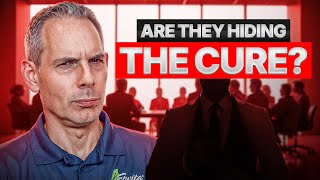
In this monologue, the speaker argues that a cure for cancer is not a single magic drug but will emerge from precision, N‑of‑1 oncology that integrates thousands of molecular data points—DNA, RNA, immune profiling, and tumor microenvironment mapping—to design individualized treatment regimens. The speaker critiques the current cancer care system, describing it as a "cancer industrial complex" where population‑based guidelines (NCCN), fast‑track drug approvals, pharmacy‑benefit managers, and hospital mark‑ups prioritize volume and profit over patient‑specific outcomes. Citing an AACR 2024 analysis, the speaker notes that only about 43 % of accelerated‑approval cancer drugs have demonstrated real clinical benefit after five years, and European data show similar shortcomings. The narrative highlights the speaker’s own team’s clinical experience over 25 years, including published data showing dramatically higher survival (35‑fold) and quality‑of‑life (43‑fold) improvements when multi‑omic, N‑of‑1 targeting is applied. The speaker calls for broader access to comprehensive testing, training of oncologists in these technologies, and reimbursement reforms to shift from one‑size‑fits‑all care to data‑driven, personalized therapy, emphasizing that earlier implementation yields better outcomes because the immune system remains more intact. The talk concludes with a moral appeal, invoking faith and urging patients to demand precision care, positioning precision oncology as the existing but under‑utilized pathway toward a future cure.
Chapters
Have you ever wondered if a cure for cancer already existed and someone big is keeping it from you? Here's the clinical opinion I have. The cure isn't one magic pill, but it's going to come from better systems Precision oncology. This is where we can use a thousand data points for you to look at your DNA, rna, immune system, tumor neighborhoods around the tumor, understanding the immune system so that we can treat it like a laser, with precision, less side effects and just get the outcomes we want. But here's the tragedy. Most people never get access to it early enough. Dr. Dino Prado and for the last 25 years, by the grace of God, our team has helped patients who've tried the biggest names in cancer and failed. And when we move from the averages, the one size fits all to an N of one precision targeting results can really improve data over dogma, targets over averages and precision over hope as a strategy, this is the key. So why do people think a cure is being kept from us? Let's be honest. The standard system is built on population based guidelines. It's great for consistency for large hospitals, but it not unique biology for you. And the NCSN guidelines are. These are experts with evidence based roadmaps meant for broad uses across hospitals. And they're useful but they're not custom blueprints. And this is where it goes wrong. For so many thousand molecular targets and signals that we have for cancer, we're not treating them, we're using general averages. And this is what's missing out I think on a lot of the fantastic responses and targets that patients deserve. Cancer isn't just one disease. Tumor type and stage, let's say you have a breast cancer with certain type and stage, they're totally different. Cancer is widely heterogeneous. Two patients with the same type and stage of cancer, as I've said many times before, have very different drivers and drug responses. That's the biology, that's not a conspiracy, that's according to peer reviewed literature. It's critical and you'll see that we're missing that right now in cancer treatment for the most part it's being ignored. Patients are being forced into a one size fits all model and often if caught early enough, maybe surgery helps, it does the job. But when you're talking about late stage disease, they're missing so many of the targets. The sooner you use precision in our clinical experience, the better. So the problem with why we might not be getting the best cancer treatment now and it's being kept from us, may have something to do with the cancer industrial complex. Now listen, here's the key. Here's where the system breaks for so many patients. A lot of these drugs from big pharma get approved in something called fast track. It gets approved, but it may not have long term benefits. Many drugs go through quick approvals using surrogates like a response, meaning it shrinks the tumor by 30% but it can come back. But years later, some of these drugs still haven't proven to help people live longer, feel better. According to Jim, in an independent analysis presented on AACR 2024, more than half, like 43% of cancer drugs were granted accelerated approval that actually showed clinical benefit. That means more than half didn't. And this is after a five years that the drug was out. Earlier work by the British medical journal found that most cancer drugs approved by Europe regularly didn't have these targets working long term. They entered the market without the evidence that they actually improved survival and quality of life for the patient. This is a big problem. And the vast majority new drugs that come in by pharmaceutical companies are not designed to cure cancer, but they're designed to manage the disease. So you can see what I mean is the cancer cure coming sometime soon? It's the system I believe is really broken. To make things more complicated, we have these middlemen, the insurance companies that use basically pharmacy benefit managers. And recently the FTC Federal Trade Commission in 2024 and 2025 reported and described how large pharmacy benefit managers were steering patients to affiliated pharmacies. They owned inflated cost cancer patients. So these incentives do not align to letting people get the latest technology. This insurance model, this cancer model, the cancer industrial complex is broken. The incentivizes for pushing high drug costs and not always what's right for the patient or the best target targets for them. To make matters worse, hospitals mark it up even more. Independent rand studies which are usually used for government study data sets show that private plans end up paying 250% Medicare to 300% Medicare in some hospitals as high as 600% Medicare. Care for surgery, chemo, radiation, it's overcharged. And the big thing is when we looked at the data, what life expectancy did this get? All these new drugs, all these new studies adding just months to people's lives. See this is where the problem is. This isn't a conspiracy. It's happening right under our noses. People are being denied precision. Oncology doctors aren't being trained in the technology and they're not getting access to it. None of these means that someone has the cure is Hiding it. It means that systems and incentives reward volume list prices, profits over precision. Not what' best for you, not what's going to reduce side effects, improve outcome and help people eliminate cancer from their life. So you tell me how this system is going to change. It's not with these incentives. Money is driving it, big organizations are driving it and it's misaligned. It's not designed for people to be well and heal. Tell me how somebody's going to use a natural, on, off label drug. They're not. Because if you're going to add a natural agent that isn't even going to make any money, it's not going to do it. Or an off label drug, that's an old drug that's been around, that might be a right target for you. It's not going to be used either. There's no profits in it. It's going to be all of specialty drugs that cost tens of thousands a month. And you might need them, but they're going to manage the disease, not necessarily cure it. And that's the problem. And this is what I think is an injustice, because patients deserve this kind of care. You do, your family does. We shouldn't be dying. With all the technology we have today, with AI, with all the advances, deep learning, this needs to come right into our treatment. But I believe there's a better way. And we've seen this with patients over and over again. Clinically, it's called precision personalized oncology, n of 1 where the treatment is built on you, it's completely unbiased, it's based on what's going to work for you. Conventional, natural, off, labeled, built for you. And here's what I believe in. The answer is precision targeting is changing the entire game. Instead of just looking at only a biopsy, let's say tumor markers and imaging, which are good points. Let's move to multi ohmic maps. These are thousands of data points from DNA and RNA matching those and the more match we have, the better response. We can look at DNA, we can look at RNA transcriptomes, thousands of genes we can look at mapping these out. Look at the immune system, looking at the tumor environments around the tumor, mapping it out and then building this actionable plan that's based on data. The more data the better. The more the match is, the better. And we've seen this because according to genomic and transcriptomic references, we see that more the match, the better. And when treatments match your target, outcomes improve. This wasn't just something I'm saying, but even in studies like I predict, which I love to bring up, or in the winter studies, these trials that used RNA and DNA, the patients did better when they had the match targets. Can you imagine now in the ecosystem that our team has built where you're looking at all these targets and we're seeing even better responses in our clinical experience. So much so that we just published a paper in 24, you hear me talk about all the time, very excited and we got another paper coming out where we had 35 times better outcomes in late stage cancer than conventional standard of care. We had a 43 fold improvement in quality of life. That's huge. Our patients don't look like they're sick, they look like they're on vacation, they're hiking, they have color in their face. This is the power of precision oncology. We published this and we're excited about this work and this is our data, this is our model and results are important. Now they can vary from patient to patient because everybody's different, has different markers. But the better our targeting and the better our markers are, the better the outcomes. And I think that's where we're going to get in the future, this cure to cancer, it's going to come from here. So the earlier we do precision oncology, the better. Two reasons the average machine, most hospitals that follow the NCCNN guidelines standard of care, population based health is not your personal multi omic map. It's not novel tests and off label matches that can leverage your cancer and help you. It's not. It's designed mainly for a cancer industrial complex that benefits big pharma, big insur insurance companies like PBMs and hospitals that just make a fortune in these care programs. Some are helped, but the majority go through just palliative care. So these approval pathways need to change. We need to move from the double blind placebo clinical trial models to n of one where everything's customly built on each person. And that's where we're going to see massive breakthroughs. Doctors being trained to use these targets, use specialty techniques and start targeting. And this is where we start bringing in all the big data. We get all this heavy lifting of technology actually helping us. So there could be a potential cure for everybody's individual canc cancer because it's not going to be one magical pill. It's the combination of immuno targeting the right chemo, targeting the right pharmacogenomic genomics which your body can metabolize and if you can do that, you can reduce the side effects and get better responses. So this is important. We don't want to build care for the averages. We want to build care for the individual. That's what N of 1 targeting does. So the key is to unlock precision, comprehensive testing up front. Targeted combination, smart delivery. Many patients become far more responsive when they have these targets in place. And in some cases, you can even reach very deep where they were told there were no other options because of targeting. That's where the hope is. That's where the future is. And yes, the sooner you use precision, the better the odds because the more your immune system is intact, the more you haven't grown resistant to other treatments that didn't work, the more targeted matches work for you. So the big picture is if you look since the 1970s, since the war on cancer was brought in, the cancer death rates really have dropped, let's say 30%. Most of that because of stop smoking. Early detection has led to surgery and removal of tumors. But when it comes to late stage cancers, we still have have hundreds of thousands of people a year dying. We need to accelerate precision oncology, Move it to the forefront and get it covered so people can get the care that they need. Every human life deserves the best technology. We should be putting our best foot forward. So ask for better care. Ask for targeted care so that you can live better and longer by the grace of God. So what are your targets? This is the question we need to ask. What does your immune system need? What are the things that cause your cancer? With data today, we can help patients. That's the future of getting to the cure of cancer. If you ever thought, is there a cure out there? But it's being kept from me, I'd say, well, the cure isn't a single pill. It's the precision model that needs to advance that's going to move us to the cure. And it already exists. But all too often, patients don't have access to it. They're using the old system. People deserve data. The more data, the better. The more targeting, the better. I would rather be treated by a thousand targeted data points versus 24 more data is better. Using deep learning is better. Not random care, but targeted care. And this is when we unleash the power of technology, personalized care and help patients heal and help their families win. By the grace of God, Keep learning, keep asking the right questions. I've seen here is the key to changing this entire disease. May the lord bless you on your journey to healing.