Your Colon Cancer Treatment Plan Is Probably Wrong | Here's Why
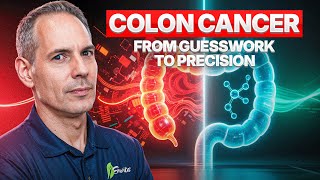
In this video Dr. Dino Prado argues that standard NCCN‑guideline chemotherapy for advanced/metastatic colon cancer is largely ineffective because it relies on shallow genetic testing and blunt, high‑dose drugs that merely slow tumor growth. He proposes a precision, immunotherapy‑centric approach that begins with deep molecular mapping—DNA next‑generation sequencing, RNA transcriptomics, and immune spatial biology—to identify thousands of actionable markers. Using custom algorithms, he selects a personalized cocktail of on‑label, off‑label, repurposed, and phytotherapeutic agents, then delivers them via targeted, often micro‑dosed, interventional techniques to activate the patient’s immune system (NK cells, dendritic cells) and convert “cold” tumors into “hot” ones. The strategy emphasizes immunogenic cell death, metronomic dosing, and minimal side effects. Prado cites a 2024 study from his group showing a 35‑fold improvement in response rates and a 43‑fold increase in quality‑of‑life compared with standard care. Throughout, he stresses that each patient’s tumor is unique, requiring a custom “N‑of‑1” regimen rather than a one‑size‑fits‑all protocol.
Chapters
Colon cancer doesn't have to be a hit or miss. Most people fight colon cancer with, like, a tiny map and a blunt tool. Today, I'm going to show you how to turn a complex disease into a targeted mission, using a better plan, deeper mapping, smarter medicines, and getting your immune system to do the work it needs to do. This can make all the difference, as I've seen so many times for our patients. I'm Dr. Dino Prado, and if you are a loved one has advanced colon cancer, this episode is for you. And for the last 25 years, we've helped patients who have failed the top cancer hospitals across the country. And it was deep planning and targeting that has made all the difference for them. So let's get into it. So here's the truth. Many metastatic colon cancers that are stage four, they don't respond well to treatment because they don't have the right maps, they don't have the right targets. Most of these tumors don't always have immunotherapy. And even if they do, there's a minimal response, often with the PD1 inhibitors. And those usually don't respond to standard checkpoint inhibitor immunotherapies by themselves. And if they did, they only do for a partial time. So we need to talk about a stronger immunotherapy, and we'll get into that. That's why many patients feel like they're stuck. We need a plan that warms that immune system from going from cold to hot using the right targets and the right technology. Common places colon cancer can spread would be liver. That's very common. Lungs, peritoneum. And these spots can be hard to treat, especially in the liver and in the peritoneum can be very difficult. You could have this spread in little areas that are hard to get to. But a suppressed immune system makes it so much easier for these tumor cells to hide. So if we get the immune system enacted, they can get to these areas pretty effectively and do what they need to. So let me give you the analogy so we can think of cancer in a way that's a little different. So if we're looking at an aerial map or we're thinking of looking at a city, I always like to think of throwing a drone up in the sky and we can see the whole map of the cancer. Now imagine that. That's what this precision technology allows. We start with DNA next generation sequence that show us parts of the car are broken. This is the genetics. Now, some patients will already have basic genetic testing. This is maybe a few hundred markers, maybe 400, 500. That is not enough because most of the drugs like the BRAF drugs or the crass drugs, which you may know what those are, but those are mutations where you're given prescription drugs and the smart drugs slow things down. They're, they're cytostatic, not cytotoxic. So they're helping by slowing down, but they're not really killing the cancer. And they can be used in combination, but they're not going to give us that long term response that we typically want. We can use. It might buy us time, but it isn't going to help us to really get to the tumor. There's only a few FDA approved drugs. When you're looking at that DNA, let's say you run 500, 400 next generation sequencing DNA markers, you're only going to a few approved drugs. And most of them are to slow down or manage the cancer. They're not to kill the cancer, but they can be used if used correctly. And then people end there. And I always hear, oh, I've already done genetic testing. No you haven't. That's very basic entry level testing. Now we're going to go into RNA transcriptomics. This is like knowing who's driving the car. It tells us which routes the cancer is likely to take, what are the escape route, what's the fuel line? Basically, what's that cancer going to do? Grow, spread, where is it going to go, what is it going to best respond to? And so when you read the rna, which can now get us over a thousand plus markers, we can match these therapies with the DNA and the RNA and it doesn't end there. Then we go to immune spatial biology. It's the most important part. This is where we bring in the SWAT team because we can see the neighborhoods around the tumors that are blocking your immune system from going to work. And this is very common in colon cancer. These tumors are cold, they're not hot, and they're not responding that well to treatment. So we have to turn those cold tumors hot. And that's why precision immunotherapy is so important. Because the PD1 inhibitor, even if you have an indication for it, doesn't do the full work for immunotherapy. So now we can see all these things. We have a thousand plus data points and we can build the treatment using FDA approved drugs on label. We can use off label or repurposed drugs. These are drugs that are approved for something totally different, but work for your cancer's pathways. And we Already know their safety profiles. They can be very effective phytotherapeutics. These are the natural adjuvant agents that can really enhance the chemotherapeutics, enhance the repurposed drugs when they work together. And cellular biologics where we can get the natural killer cells dendritic cell targeted specific to your cancer. Most colon cancers don't always have good immunotherapy checkpoint inhibitor targets. But we got to prepare them for the battlefield. And there's a process we use for that so we can change the cancer to what we call an immunogenic cell death strategy. We want the cancers to be killed out. We don't just want to slow them. And we do that by releasing these dams damage associated molecular patterns which turn on your natural killer cells to know where to go. It's like tells them where to sniff out the cancer and go after that. These signals wake up your immune system. And oftentimes we may have grow the immune system expand the natural killer cell dendritic cells teach them to go after these damps and return your own cells to your bodies. Activated, going to work. And certain drugs and doses can help us do that. They can help shift these tumors. Meaning when you look at the algorithms, after we do all of this testing, thousand plus markers. Now we have custom algorithms, but it's not enough. We've just done the testing. Now we have to go build the custom medications. You can't just call the typical suppliers of chemotherapy and mix them like you do at a hospital or in a chemotherapy center. You have to custom build these because many of them delivered direct to tumor or they need to be microdosed so you don't have the side effects because now you have the target. You're going to get a good great response. But you don't need to lose your hair, you don't need to be fatigued. And we can activate the immune system by getting straight to the tumor and turning it on. But these algorithms of which drugs the right targets and the right doses, including immunotherapy, has to also then be delivered correctly. So now we have the right targets or the deep mapping. We have the deep algorithms that show us what are the right combinations for you. Not for everybody. Remember I've said this over and over again. Two colon cancer, same type and stage are going to have very different markers. Now that we have the markers, we can custom build the medicine. And that's going to be very different for you than somebody else. And now we can enact immunotherapy which Is so critical to help the patient. So imagine now we have an immunotherapy centric care for colon cancer, game changer. And it's not just by giving some natural integrative agents those can be supportive. It's by targeting the right pathways, Understanding what that tumor microenvironment is and what's blocking it. So when you have the map, that tells us, great, here's what we do. We have deep mapping. It's not just a basic map, it's very deep mapping. Then we know how to deliver it. And to make the medicine custom for you, delivered in a way that's targeted, we may use interventional radiology, oncology, go straight to the tumor. Or we may use other techniques that help us get to the tumor so we get the responses we want. Improving it, reducing the side effects and now encouraging healing of the body. Treat the root causes. You may have infections, chemical toxins, heavy metals. You have metabolic problems, you may have even genetic issues where you have a hard time eliminating glutathione and detox pathways. You may have different inflammatory pathways. Oftentimes that's a big one in colon cancer as you have these higher inflammatory pathways that need to be down regularly. And we can get right to the tumor and down regulate that and stimulate the immune system. We can debulk these tumors, release these damps, damage associated molecular patterns. Now here's the key. Whenever you're doing high dose chemotherapy or let's just say standard chemo, you're going to use maximum therapeutic dose. This actually wipes your immune system out. This actually causes further damage, it actually weakens immunity. So when we use targeted doses and their microdose, maybe at 10% the normal dose, we're getting the release of these damps and these immune modulators in the way we want. So we get the whole care to be immunocentric, we can go straight to the tumor. And now we can also build the SWAT team if we need to. Natural killer cells, dendritic cells, type them to the damps, which are these danger signals that the tumor releases so that these cells know where to go and get them into the body. This is a very comprehensive approach. So instead of blasting the body, we can target, we can have surgical strikes right where we need them with minimal to no side effects. Good quality, good strength for our patients. Metronomic dosing instead of maximum therapeutic dose. We don't have the fatigue, the hair loss, the nausea that we typically see and an immun activated form of cancer treatment which is going to be the key to helping with this cancer. We can use on label. These are approved drugs for your cancer if the match is right. It's not surprising in our clinical experience to see 90% of the patients we see are on the wrong drugs. When we do this testing. That means they were put on standard NCCN guideline medications which is the one size fits all double blind placebo clinical trials which is designed for the averages for population health, not for you. This targeting changes that entire process. And now we can be precise, we can say okay here's the the natural agents that your body needs and is going to support this pathway. Here's the repurposed drugs that are off label. They're going to work with this pathway. Not from some published papers, which is what often doctors do now is they look at a few published papers and recommend something. But from your own deep mapping, you are not some published paper. Your mapping will tell us what is the right configuration and algorithm that's going to work best for you. That's the key to really getting at cancer in a very powerful way. Once you have the DNA, the rna, the spatial biology immunity, the on label smart drugs, all of the this working for you. It's an unbiased approach to finding what your body needs. And when you do that, that's when the healing comes in. That's when you start seeing a huge difference. You start having phytotherapeutics that could be very powerful combinations but you don't know which those are. Curcumin, quercetin, eccg, resveratrol, there's a whole series of these which are going to be the right fits. All these different agents in the current models like try and fail, try and fail. But it's the combinations make everything different. So as soon as now you have a chemotherapy that's targeted for you at a micro dose combined with a natur phytotherapeutic and a repurposed and an immunotherapy agent from your own self. You've developed an entire custom n of one treatment just for you. And this is where we see in our published paper the results that we're getting which are fantastic. In our 2024 paper we saw across all our different cancer types, late stage cancer patients responded 35 times better than they did to standard chemotherapy or standard oncology care which follows NCCNN guidelines and a 43 times better quality of life. That's massive because process and we can overcome things like multi drug resistance that you find in standard oncology or in integrative care, you might get a treatment that's helpful, but it isn't doing the work long term of bringing the cancer in remission because it's just bringing some quality of life, some energy, but isn't shutting the cancer down. This is the difference when you have proper targeting. And it's so important that even the immunotherapy is targeted correctly. So it's done just at the right balance, particularly in colon cancer. And our clinical experience of immunotherapy is not done balanced. You'll get too much inflammation and in the beginning you might get some tumor kill, but then you'll develop resistance because you've now got inflammation. And the immune system will become down regulated and blockades will start to form to stop the immune system from working. So that whole process through care has to be delicate and precise. And that's where we have found the best responses, particularly with colon cancer patients that have these cold tumors that become hot. So targeting is the key. Putting this all together is so important. And when you do that, that's where we see the T cells, the natural killer cell, dendritic cells. All of these things blocks getting to the tumor and getting the response that we want. That's the key. Instead of just following standard protocols and algorithms, it's following what are the right pathways for you. I hope this was helpful and it gave you better insight to the approach with late stage colon cancer and where we've seen in our clinical experience, success. May the Lord bless you on your journey to healing. Bump, bump, bump, Bump.










