Your Immune System Is Under Attack — Here's Why Your Cancer Won't Go Away
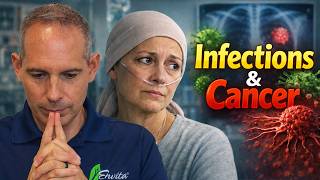
Dr. Dino Prato argues that hidden chronic infections and toxins, viral to parasitic, suppress immunity and drive cancer by causing inflammation and mitochondrial damage. HPV, Lyme disease, and mycotoxins are common culprits. He recommends deep infectious-disease testing and eliminating infections before or alongside cancer treatment.
Chapters
What if your cancer didn't start as a bad luck in your DNA, but was fueled by hidden infections that your doctors never test for? This is what I've seen over two and a half decades. Patients with all kinds of infections that go undiagnosed as drivers or complications to their cancer and frankly, other chronic diseases. A persistent virus in your liver, a bacteria in your gut, a parasite in your bile ducts, even toxins from mold that hit your body like a slow chemical leak. And no doctors are testing for this or eliminating their cause. To prevent cancer and other chronic disease, but more importantly, to treat them, we need to look at the body's immune system in response to infections. And immunity plays a critical role. In this episode, I'm going to go through why immunity is so critical. I'm Dr. Dino Prado, and for the last 25 years, my team and I have helped patients that have failed some of the top cancer hospitals across the country using precision care. Not a one size fits all model, but precision, where treatment is custom built for each patient. Before I get started this episode, make sure you talk with a doctor before you change any treatment plans. Now, if we look at the world, World Health Organization and other Information says about 13% of cancers in the world are caused by infections. But I have a problem with that. I've been doing this for a long time and I find that most patients we test thoroughly with infectious disease panels have some sort of infection going on. And the reason being that it's underreported is nobody's testing and they don't run a full battery of infections. They're maybe just looking for an elevated white blood cell count or something basic. But patients would have H. Pylori, hpv, hepatitis B or C, Epstein Barr, Lyme disease, many other infections that are potentially linked cancer. So here's the truth. Even though 13% is what is touted, the infectious diseases are much higher than that. And I've seen that clinically we're just not testing for them. So in this episode, I'm going to talk about infectious diseases, proper testing and how to eliminate them so we can better fight cancer. And this doesn't matter whether using conventional care, integrative care, most doctors on both sides are not testing thoroughly enough for infection and re establishing the immune system. And so I'm going to show you how infectious diseases play a critical role in cancer. And we can't ignore them. We need to treat them and we need to not just superficially treat them, but thoroughly eliminate them because we need to get the immune system involved. The immune system is our first and last defense against cancer. And if an infection is weakening your immune system, we need to eliminate it. So cancer patients are vulnerable. You have immune suppression because you have cancer or you've been doing treatment. You have low white blood cell counts, you're at higher risk for infections. You may have poor gut lining, so it causes weak immunity because it's been irritated by chemotherapy or other medication. Surgery, IV lines, these all increase the risk of infections. But pat often may have low grade infections even before they develop the cancer. Bacterial, viral, fungal, parasitic, tick borne, all these different infections, these infections are opportunistic. That means when immunity is altered and it's weak, these infections will propagate and sometimes spread and bring in more infection. Because now your immune system is weak, you're more susceptible to developing other infections. So let's go a bit deeper and talk about this in relationship to cancer. I think it's a topic that's rarely talked about and critically so important. Pathogens or infections drive cancer through three major major routes. Number one, direct oncogenic sabotage. So some viruses make proteins that shut off your tumor suppressor genes. HPV is a classic example. And these proteins will cause problems with P53, which is important for apoptosis. These direct oncogenic proteins cutting the brake lines on the cell's growth machinery. So the cancer grows, it spreads because the virus shifted. Genome integration instability, this is another path. Viruses can literally insert genetic material into the DNA like hepatitis B into post genome and contribute to genomic instability. So when everything's healthy, our cells that are cancerous, they know to die off. When that machinery mutates, it can continue living. Epstein Barr has also been famous with lymphoma, and it's also linked to other cancers we've seen in our clinical experience. So what drives that B cell growth? Again, it's infection. It's understanding that these infections, when they're also chronic, they cause inflammation, oxidative damage, and they flip the switch. They create long term slow burn inflammation that releases inflammatory cytokines, reactive oxygen, oxidative damage. And we see this in things like H. Pylori. Bacteria in the stomach that causes ulcers, can cause gastrointestinal carcinoma. So this is so important because no one's looking at it, I'm just naming a few. There are so many other infections. And when you run infectious panels, you're looking at bacterial, viral, fungal, mycotoxins, and you're seeing what those levels are. And more importantly, with deeper testing, you want to look at how the immune system is responding or how it's being suppressed by those infections, or how chronic inflammation is a driver. Because see these underlining causes either turn cancers on or may. Cancer is more difficult to treat because at the end of the day, they've hijacked the immune system. There's a trap here. The immune system is our security team, and it stops these chronic infections from getting into our body and fights them. So people on the natural side can take garlic, or there's so many herbs I won't go into vault that stimulate immunity. Beta glucans, mushrooms, vitamin C. There's so many great things we take, but chronic infections can be there for a long time. Patients with Epstein Barr or even have been exposed to other viruses. HHV6, HHV8, you know, all these can cause malignancies. This is why we don't want to overlook this impact with immunity. Immunosuppression is the weakening of your immune system. And when these bad actors are involved, our immune system gets weak. And so even if you're taking a PD1 inhibitor or some treatment to stimulate the immune system, if you have chronic inflammation going on, you want to get rid of that so your own immune system can start working before you start immunotherapies. It makes sense because you want your own immune system on board before you start giving your body any type of immunotherapy. And I'm telling you, this is not happening for patients. The majority of patients don't know what their infectious disease profiles are. They're not being tested, and their immune system is suppressed. This immune system affects your mitochondria and your organs. So everybody calls mitochondria the power plant produces ATP. But mitochondria also alarm systems for viral danger. A core alarm protein is called mavs, mitochondrial antiviral signaling. And the system helps trigger antiviral defense and immune activation at the mitochondrial level. So what happens if an infection or a toxin disrupts the mitochondrial function? Your body can lose energy, danger signals, immune coordination, and that can cause fatigue. Fatigue and your immune system to become blind. And that's one of the things we have to fight. And the way we do that is we clean up and get rid of the infections. Now, there's another cytokine called IL17, which is also an alarm that never gets shut off. So let's talk about the cytokine for a moment. This short term, IL17 can help fight infection. So if you get an infection, IL17 can promote your body to fight it, but it can also Become tumor friendly and push blood supply to tumors called angiogenesis and make the cancer spread further when it becomes chronic. So IL17 can be tied to metabolic metabolism and metabolomic problems as well, linked to infection. So the pattern we look at here is these hidden infections. So if you look at something we used to call The Stryker panel, CD 57, this is a natural killer cell linked to infections, you're going to see there's an infection, and that infection is directly impacting my immune system. If you have viral loads, those are impacting your entire immune pathways and it's causing oxidative stress, immune exhaustion, and it's giving your tumor a huge advantage. And we want to get rid of that. Even infections like Lyme disease. I've been doing this for two and a half decades. We've been working with Lyme dise these patients for two decades with some pretty advanced technologies and helping the majority of our patients significantly with Lyme. And what you'll find is that Lyme disease is found in cancer patients and it may be the cause. In 2024, a study looked at Borrelia, which is the infection of Lyme disease, and it was invasive in breast cancers. They did biopsies and they found the genetic information of Borrelia in these inflammatory breast cancers. So we know that these infections can cause immune downregulation and inflammation and be the cause of disease in cancer. This is important thing we need to look at. So we need to look at this immune complex and infectious exposure. Another one is mold and mycotoxins. And a lot of people don't even know what their exposure to these things are. One of the most common ones is like alpha toxin B, which can link to liver cancer and can be found in peanuts and things of that nature. But there are people who have mold and mycotoxins who've lived in areas where they have moldy houses. And this is impacting their immune system, weakening their mitochondrial DNA and increasing their susceptibility to not only develop cancer, but also to fight it. So these mycotoxins are also important to be cleaned out. Now, if you, you bring this information to your standard oncologist, they might laugh at you because, number one, they're not doing any of this testing. They're not involved in mold toxicity, infectious disease. And they might say, oh, that's not related. It's totally something separate. But it isn't, because inflammation and signaling lead to your immune system struggling. So we want to clean these things out so that now we can better fight cancer. So Infections or toxins. Whether it's heavy metals, microplastics, infectious diseases can cause chronic inflammation, mitochondrial stress, oxidative damage, immune exhaustion, and your tumors to grow and make treatments more difficult and increase resistance and evasion all on their own. That's what I mean when I talk about deep testing. And this is where root cause analysis comes in. It's a practical way to look at all the infections, all the infectious exposures, look at your immune system and help the body. So first we have to do deep testing. We want to look at is it driving inflammation, weakening of the immune system, Is it causing toxicity in the body? It could be infections. It could also be heavy metals, chemical toxins, microplastics. But I'm focusing right now here on infections. And if you have these infections, we need to get rid of them. We need to clean them out of the body and then re establish the body's immune system, support the body so it can eliminate these systemic infections and help the body be healthy. So in the general population, yes, people need to sleep and they need to get good health and they need to exercise and take their vitamins. But when people have high viral infection, bacterial infections, they actually need treatment. Even if we're using phytotherapeutics or natural agents or conventional agents, we need to eliminate these infections. Particularly in a cancer patient who's already susceptible to getting infections, may have already had long term infections sitting there. So the first thing you want to do is get the right testing, find out what infections reactions are there. Secondly, you need to devise a plan to get rid of them. I can't go through all of that here today. We'd be here for a long time. And if you're healthy, do things like take vitamin D. Make sure your vitamin D is at the highest levels, not the low. I like quercetin and other zinc ioniforms like resveratrol, which take the zinc molecule and push it into viruses and kill them. These are some of the things that they can do adjunctively of supportive care, Test for bacterial infections, treat them, get rid of them, reestablish your gut microbiome. This is all stuff everybody should be doing. But when you have cancer, it needs to be done more aggressively. So talk to your doctor, test for infectious disease profile trials, and if you find them, treat them, eliminate them. It's going to give you an advantage in your cancer treatment. Over 90% of the patients that we've seen over the years were on the wrong chemotherapy. We saw that in our data, which is already something telling you that even basic testing isn't taking place for selecting the right treatments. But when it comes to infections, there's nobody testing them. It's very rare. Only time you start seeing infectious testing is when there's an obvious septic infection from like a port or something. Otherwise. Doctors aren't typically using infectious testing in their algorithms. Encourage your doctor to run an infectious profile, viral, bacterial, fungal, pay for it out of pocket so you know what your infections are. If they're present, treat them, eliminate them. When you do that, you're better able to fight your cancer. And I can go into that because we know now we have Epstein Barr lymphoma, Heliobacter pylori, gastrointestinal carcinoma, you know, hepatitis C, liver. So there's many, many infections that are linked to cancer and we just don't treat them. And we need to. And if we do that and then provide the body vitamins, minerals, enzymes, nutrients to reestablish the immune system, we're going to have a far better chance of fighting cancer. And longer term responses, our data shows us that the majority of you watching these episodes have not subscribed yet. I'm going to ask you for a favor to subscribe, not just to help the channel, but to help us get the information out. The way the YouTube algorithms work is that if somebody actually subscribes and comments, it pushes it out to more people, which means now we can get these concepts out to the world so people can talk to their doctors and look at precision oncology and not just the one size fits all model that sometimes doesn't work for patients. So I really thank you for your support and may the Lord bless you on your journey. Journey to healing.










