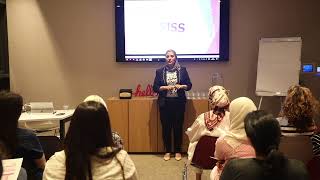
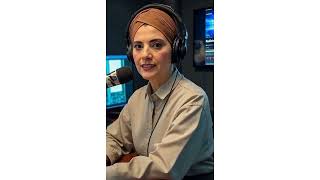
In this personal, motivational talk Dr. Hanan recounts a decade‑long journey that began with the sudden death of her father in 2005, which left her feeling lost despite an elite medical career. Ten years later, while battling cancer and multiple chronic conditions (endometriosis, PCOS, obesity, acne, fatty liver, borderline diabetes), she turned to a blend of conventional medicine and alternative modalities—hypnotherapy, mindfulness, NLP, and energy healing—to uncover the root cause of her illness, which she identifies as the unresolved trauma of that hotel‑room moment. Inspired by a note from a nurse quoting Napoleon Hill and guidance from Andy Harrington, she created the "Jet Set Self‑Healing System" (also called Healology) and the "Power to Heal" program. The core of the system is achieving "flow"—a cellular‑level alignment likened to being "in the zone"—through three simple practices she calls the "three Bs": Body (changing posture to shift neurochemical states), Breathing (a quick breath technique), and a third B that will be introduced later. She demonstrates how simple body‑position changes can reduce cortisol and anxiety, and how brief breathing exercises can reset the nervous system, making the flow state accessible for healing. The talk blends personal narrative, motivational coaching, and practical bio‑hacking tools aimed at helping listeners recognize their own hidden stories, adopt the three‑B practices, and pursue self‑healing.
Chapters
It was the year— summer of 2005, and I was sitting in my hotel room, the sun rays coming through the windows. You could hear birds chirping, insects chirping, screams of children playing in the pool yard. It was quiet sounds, relaxing sounds, summer sounds. It was in total contrast to what I was about to experience. He's standing there at the doorway, overshadowing this beautiful scenery I'm experiencing. Why is he just standing there dangling the phone in his hand? Why didn't he just walk in? It's my husband, Leonardo DiCaprio-looking-like. And I just want to run over there and say, what's wrong? But you know those moments? You're too scared of what's coming, so you put yourself in that box. Fear takes over. You get paralyzed. You can't move. Can't talk. All I did was stare at him. Finally, he walks in. Hands me the phone. Hello? Yes? It's Nurse Rashid. What? My dad? Yeah, I know he's in the hospital. Okay. Oh, you mean he's discharged? Yeah. What? What do you mean deceased? No, no, no, you mean— you got it wrong. You mean discharged. I don't understand this word. Why you keep repeating this word, deceased? It's discharge, get it right. I can't talk to this lady. She's saying these weird things. I don't know. What are you talking about? He's like, okay, okay. We pack up our belongings. I don't know how, or I don't remember. We get into the car. And we drive away from the hotel. And the further and further I got away from that hotel room, the further and further I lost and left myself in that room that day. You see, my dad was my hero. I remember as a little girl, "Dad, Dad, I got 95!" Hanan, why don't you get 100? Dad, dad, I got second honors. Hanan, why don't you get first honors? So he pushed me and pushed me all my life until I got my master's degree. I got my PhD. I worked at the most elite hospital in the most elite position. And now I don't know who that Hanan is without her hero. Fast forward 10 years later. I'm sitting, I'm laying down in my, in the hospital bed. And Nurse Mercy walks in. And she is looking at me real, and I look really upset, really depressed, really anxious. And I think she, I looked like I was really going to have a nervous breakdown. And she looks at me and she says, it's going to be okay. Okay? What do you mean okay? I'm day after day getting pumped out now the chemotherapy to my patients, getting out the paperwork so I could get 2 hours of sleep. And now I'm the patient. Going into surgery. What do you mean okay? Calm down. She slips a piece of paper into my favorite book, Think and Grow Rich by Napoleon Hill. Anybody know that book? You read it? After she leaves, I take the book. I'm curious, right? Page 37. I remember it till today. It was page 37. And I read the note that she leaves. "For every adversity, for every heartache, for every failure, there's an equal and greater benefit." Hmm. It's interesting. Remember those words. Huh. My dad used to tell me those words. I read on page 37, second paragraph. You could look it up if you have the book. It said, for when you have an obsession, it becomes your life. Purpose. Those again were my dad's words. All these years since that hotel room, I was missing my dad, grieving my dad, wish my dad was here, and I lost my way. And yet, same words were from my dad. Take the learning and run. Make it your life purpose. Be better, do better with what I've taught you. And I remember that day like it was yesterday, 10 years ago. And that's what I did. This is my new obsession. I'm going to get over my endometriosis, I'm going to get over my polycystic ovarian syndrome. I was 40 kg heavier, worst acne, fatty liver, borderline diabetes. You name it, I had it. And that's when the journey started. And I delved more and more into hypnotherapy, mindfulness, NLP. Anybody know NLP? Neuro-Linguistic Programming. Yeah? Energy healing. I didn't leave anything from the alternative and the conventional side. And that's where I came up. Ha! I found the root cause. It was that story. It was that hotel room. But I didn't get it. Yeah, the symptoms were there. 10 years, it's a lot of symptoms. I was getting bigger. I was getting more and more acne. I was, you know, diagnosed with some cysts. —wasn't a dermoid cyst at that point—and so forth. But I wasn't paying attention. The signs were there, the symptoms were there. And now I'm going to teach you those so you're aware of the signs and symptoms and what you can do about it. Sounds good? Yes. Thank you. It took me a few years. I used to cry when I told that story. And until one person, his name is Andy Harrington. Anybody familiar with Andy Harrington? Okay. He told me, get over yourself. It's not about you. It's about what you have to pay it forward to others. And if you get up there and you tell that story, 'cause people will then think, what is their story? What is going on with them? What happened in their life that they actually could pay attention and do something about it? Yeah? Thank you. So, kiss. It's not what you think. The I is for it. Well, I'm going to teach you something today. It's called the Jet Set Self-Healing System. And I did it in a way, and through Andy's teachings and everything, that it's going to be keep it simple. Anybody heard of that? Keep it simple and stupid, but Sister. Trying to say. Keep it simple, sister. I like that one better. Okay? So it's gonna be very easy. I try to make it as easy as possible because there's a lot of science and a lot of evidence and a lot of tests and blah, blah, blah. But trying to make it as simple as possible so you could get the gist of it and actually use these tools. Yeah? Okay. Healology. The main purpose of it is to get you into something we call flow. Flow actually happens on an intracellular level, okay? So So it's not really— okay, have you ever heard of that, flow? Familiar with that term? Okay, so another word for flow is being in the zone. Anybody sports here? Play sports? You know what that means, right? Being in the zone. Okay, a golfer, when he's golfing, does he have his eye on the ball or no? No. He looks where it wants to go. Right? Because the moment you look at the ball, finish. Done. You're not going to be able to be a good golfer. Yeah? So when you're in the zone, He's actually having— there's a conversation that he's having, the body, the muscles, everything align so he makes that shot. Yeah? And he only can do that through experience and being in the zone. Okay? So what I use in Healology is getting you in the zone, in the flow. Or in the zone because it gets the intracellular level aligned to get you to your goal of recovery, of unleashing the root cause of the emotions of whatever it is that we're trying to heal. Yeah? The course is called, or the program is Power to Heal, right? So this is one of the secrets. Is getting into flow. So you with me? Yes? OK. And there are 3 ways you can get into flow. Can you give me the first B? Body. OK. So what I mean by body is not necessarily exercise or working out or things like that. That's good as well. But what if you're sitting at your desk and your boss is hammering you, yelling at you, telling you You know, you're not doing a good— how could you miss the deadline, blah, blah, blah, blah, blah. You feel anxious, right? You feel you just wanna, you know, but we don't do that, right? We respond, 'cause we're professionals, right? So what do you do when you're in that situation? The chemicals are there, right? The cortisol is running, the anxiety is running, the stressors are running. So what do you do to relieve? Huh? Okay. What if you're sitting, if you actually change your body's position? If you're sitting and the boss is yelling at you and hammering you. Excuse me, I'll be right back. Right? Break. So just changing your body's position Actually changes the chemicals that's happening. It was like, oh, we were sitting, now we're not sitting, you know. And then the chemicals that you were releasing, the cortisol, the anxiety, stopped. And you're able then to calm down and respond instead of react. Yeah? So if you're in any time in a negative situation, if you're depressed or you're overthinking or you're you know, anxious or any of those negative emotions, you could actually change your body's position. If you're inside, go outside. If you're outside, go inside. If you're sitting or you're laying down, stand up. Do something different and change the body's position. And like that, your body's chemical and you'll be into more relaxed flow. Yeah? Okay. So what's the other B? Breathing. Okay, perfect. Anybody here do yoga, meditation, any of that? Okay. So that's like the first thing, right? Your breathing. What is the breathing method that you— anybody want to share? What is the breathing method that you usually do for that? Hold, exactly, yep, and then release. Okay. Exactly. I have one that's really easy and simple, and it takes a couple of seconds.