Humanizing AI using a Scientific wellness Journey
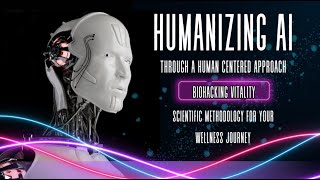
Dr. Hanan Selim argues that as AI creates 97 million new jobs but displaces 85 million by 2025, only uniquely human skills like empathy and creativity will survive. She presents Healology, a wellness system that identifies hidden "unmet expectations" in the subconscious and uses bio-hacking tools to strengthen nine areas of life, from health to spirituality.
Chapters
All right. So welcome everyone. Today is going to be quite an interesting topic because, you know, everybody's been worried about AI taking over their job or they're not going to be able to catch up with the advancements in machine learning and You know, I remember during COVID when I had to learn how to use the Zoom, and I was like, what's the Zoom, you know, and I felt like a dinosaur, right? Of course, everybody was forced to get on the wagon, right? So that's the way. So it's time, right? It's time to start understanding how then we can then humanize. We don't lose ourselves. During this transformation, or what we call augmentation. So it's going to be quite interesting. Maybe if you don't have a pen and paper, get it ready, because it's not going to be just a webinar and talking, but there's going to be a lot of teaching as well. So my name is Dr. Hanan Selim. I'm an author, international speaker, award-winning author, and recognized by Global Gurus as one of the most influential thought leaders in health and well-being. So for everybody who showed up on time, um, I want to give you a gift. Some of you already have my book, like I think Jillian and, uh, Shine, they actually have the original, uh, copy. But everybody here could actually go to www.healology.me and you can scroll there, and while you're, uh, moving the mouse around, you'll see that it pops up and then You could download it right there and then. And thank you for showing up. And as well, at the end of the webinar, I do have another gift and a surprise. So make sure you stay till the end. Okay, so AI. Yeah, so I remember not so long ago, His Excellency Omar Sultan Al Olimar, he's the appointed Minister of the State for Artificial Intelligence, sends to 2017, believe it or not. And he really believed that AI is a necessity, not a luxury. So we— he and UAE is driving AI to make sure our services, our workforces are on the cutting edge of AI. Now, AI and machine learning are reshaping industries and displacing jobs, We have to realize that, or we have to understand that we can't just have our heads in the, in the sand, as they say. So I'll be talking about how AI and machine learning is actually augmenting now our existence, our reality, and our thinking, actually. And then I'm going to go into the psychology wellness system that's going to be really the solution to all of this. So this is going to be a two-part kind of webinar where we're gonna talk about how AI and machine learning are actually changing our mental health wellbeing and how we could solve that moving forward and becoming more resilient and actually future-proof, if you will. That's a lot of a buzzword right there. Future-proof ourselves, uh, you know, this new wave of AI and machine learning. So there is an importance to a scientific wellness journey to build resilience in an AI-dominated world that we're living in right now. And of course, psychology wellness is the age of biohacking vitality, meaning peak performance, meaning being up to date and being on this wave and not be left behind. So we're going to go into that psychology wellness, what it's about, what it means, and how you can actually start utilizing it. So when AI started, you know, making a buzz and coming into what we call the Fourth Industrial Revolution, a lot of people were against it because they're what we call traditionalists, right? Everything is the way it is. It's fine if it's working, and if it's not broken, don't fix it. That kind of mentality, right? Mhm. Then you have the dystopians. Dystopians are people who are really fearful of the unknown, fearful of the new. Um, you know, they have a lot of anxiety and stress around this topic because, you know, just like everything that's unknown and new, you feel like you're stressed about it, right? You don't know how to feel about it even, right? And then there's the techno pessimists. So they know the technology is here and staying, and they're being realistic that it's not going to go anywhere, but they're very pessimistic because, oh, it's going to— I'm going to lose my job. AI is going to take over. What do I do? This is my— you know, I've been doing this for X amount of years. And all that negative thinking. And then there's the techno-optimists. So like anything, like we had with the, let's say, COVID, we have to be flexible. We have to be able to advance and learn and change and, you know, be able to accommodate what is in our environment at the moment. And technology and AI, machine learning is no different. So actually they did a survey and a good thing is that the optimistic techno-optimists are leading at 63%, and 37% is somewhere between the techno-pessimists, dystopians, and traditionalists. So hopefully, I don't know where you guys stand at the moment about AI and, you know, machine learning and, how it's going to affect us here and now, and it's not in the future, it's here.
Um, I don't like it myself. I don't like it.
You don't like it?
I'm a traditionalist. I'm a traditionalist.
Let's not fix it. Let's not touch it, right? So by the end of the webinar, we could actually hopefully get you on the side of being, uh, an optimist and be able to see how we could actually join the wave of the future. Okay. So yes, you know, the statistics is that there are currently, currently in this moment as we're doing this webinar, 97 million new AI jobs projected to be created by when? 2025. What? We're 2 months away, even less than that, than 2025. So we're not looking in the way future here. We're looking at in a couple of months. Right? So that's a lot of AI jobs that are being created. And unfortunately, 85 million jobs are expected to be replaced by these AI jobs. When? By 2025, which is again in a couple of months. You guys could go and read the whole article at findweb3.com. That's my resource there, and it gives you all the detailed information about how these jobs and what the jobs are and why it's getting a lot of these jobs getting replaced. And I'll be sharing why in a minute as well. So there's even worse news. I don't know if you guys have been following the news, but Donald Trump won, won the 2024 US presidential. I was like, ah, if it doesn't get like—
I don't know if it's good or not. They all talk, they all talk nonsense.
Oh, I mean, my opinion anyway. We have worse people, worse things to deal with now than, you know, AI and machine learning.
Yeah, exactly, exactly.
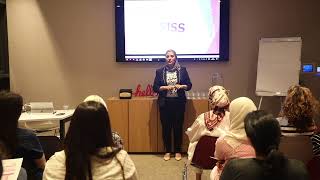
I'm American, you know, so of course. So that's what I do when you can't do anything about it. So laugh and make, you know, make life happen for yourself, right? Excuse me. Okay, how do we then future-proof ourselves in the AI era? Well, as we already know, globally AI is seen as a necessity, as we already saw with His Excellency mentioning, it's not a luxury for economic growth, it's not a choice anymore, right? So integrating the psychology, wellness, and AI to humanize machine learning, that's very, very key and very important to to understand this as a solution for the future, especially when we're trying to future-proof ourselves in this era. And of course, while we're doing that, while we're using the psychology wellness, which I'm going to explain in detail in a minute, we're also developing skills, important skills to mitigate the challenges in these uncertain times of economy. So who am I? I mean, Gillian and, you know, Shine already know, and they're actually Healology practitioners, by the way. I'm an international speaker, as I mentioned, and I've been doing this for quite a long time. I've been in the healthcare industry for over 25 years. So I got to work, you know, with amazing, amazing people. I do work as well at the moment during my full-time job at the Ministry of Health. And I also was very fortunate to be on the virtual stage with a company called Najahi here in Dubai, joining the virtual stage with Tony Robbins, Lisa Nichols, Grant Cardone, Prince EA, and a lot, a lot of amazing voices right now in this industry. And I've been very fortunate to join professionals on the subject matter like Dr. Dean Ornish, Dr. Bruce Lipton, all across the world. I was able to travel and get a lot of rewards, awards, I mean, and, you know, get the recognition for this cutting-edge solution for our future. So what is psychology wellness? Well, psychology wellness is also known as wellness psychology, whichever way you want to phrase it. It encompasses not only theories but practices aimed at enhancing individuals' overall quality of life. And that's just it. We are looking not only to integrate or improve your psychological approach and, you know, and, and your physical or your mental. It actually encompasses, um, to help people achieve a state of balance, fulfillment, and contentment across multiple dimensions, otherwise known as biohacking vitality. This includes your mental health, your emotional health, your human skills, which we're going to talk about especially this for future-proofing ourselves in the era of AI, uh, spiritual belonging, um, physical health as well. So if you look at this, uh, picture I have there, it's a wheel, right? It's what we call your wheel of wellness, and psychology is right at the forefront of that, in the middle, that has a shift on all these different parts of the Wheel of Wellness. So psychology wellness journey process, what is then the process for this? Well, it's a lateral approach structured in a linear way. I know I said a mouthful right there, but I'll explain. So what is lateral approach? Well, it's using cutting-edge, out-of-the-box biohacking techniques. That's what we mean by lateral. I mean, it's not you know, using the same old, you know, processes that we're familiar with, maybe like NLP or hypnotherapy and things, or yoga, meditation, things along those lines. No, these are new, modern, cutting-edge tools out of the box, if you will, that we call biohacking techniques. But we're actually using it in a systemized, organized way, linear. Meaning we're doing it in a step-by-step manner. So that's because our mind works that way, and for us to absorb that information and be able to implement it, it has to be structured and organized in a way that our mind can wrap its head around. There are certain phases, actually, and one of the most important phases, and I want to stress this really from the beginning, is empathy, rapport building, deep listening and identifying pain points. This is very crucial for us to understand where we need to look in order to make that shift happen for us to use this holistic lateral process. And then we start then implementing the solutions based on the customized client needs or your personal needs. Okay, so empathy. Empathy is a core element in wellness, and I want you to understand empathy is because that's a human skill. This is something that AI machine learning cannot use or implement. Only humans can do this, as well as emotions. So we're gonna dive deeper into that and that how we can then leverage these tools that we as humans and human skills have that AI and machine learning cannot replicate. I was actually meeting one Dr. Osman last month, I think, and we were having a conversation and he's all about data and statistics, which is really what AI is. And that's what it gets fed into the machine learning so it can give you the results and input that you're looking for. So he literally calls AI and machine learning a stupid parrot. So when you go to a parrot and you teach it a few words, what is it going to say? It's going to say those exact words, right? Unless you teach it new words, right? So really AI machine learning is through the input and data and statistics, which is leading the world right now because that's what AI uses in order to work, right? So empathy, tolerance, critical thinking— these are the foundational skills we could leverage on as humans that could actually future-proof ourselves during this AI revolution. Okay, so actually at the World Economic Forum, they said that the Fourth Industrial Revolution, the top 3 skills is complex problem solving, critical thinking, and creativity. This is how to future-proof ourselves in the age of machine learning because this is what the machine can't do. It cannot have critical thinking, creativity, emotions, empathy that we as humans have at our fingertips to make a difference for ourselves, for our clients, and for the world, right? So communication is very, very key. Translating complex ideas into simple language, feedback, fine-tuning, also incorporating client feedback for continuous improvement, and other life skills. So humility to be able to get feedback and fine-tune and improve upon and continuously learn and change out of the box, making, creating out of the box solutions is very, very important. So life skills like tolerance, perseverance, humility, and critical thinking, these are vital for success in the modern world. So when we talk about the Fourth Industrial Revolution, we, I want to explain explain this a bit because not many people are familiar with the term. So if we look at the first Industrial Revolution, it was all the water power, the steam, and it was all built to help, you know, the lifting and creation and manufacturing of products in like cars and things of the sort. Then the second, uh, revolution, uh, world revolution came where it's all about mass production, assembly line, and then electricity was then introduced. Then the third world, uh, revolution was the computer automation technology. Now we're above and beyond that, and we're here at the fourth world revolution, which is cyber-physical systems. If you notice, the first, second, and third is all about, you know, lifting and helping, you know, the labor, if you will, right? Now we're transitioning from these three previous revolutions into what we call a thinking augmentation of thinking, creativity, and problem solving. So the key skills actually then for resilience in a machine learning-driven age is to be able to understand that we're no longer looking for the physical labor support, but we're looking actually to intelligence augmentation, not only physical, but now it's affecting our thinking and our wellness. So why psychology then wellness complements AI? Well, AI and psychology wellness are complementary in their contributions. right? If we are going to be looking at techno as an optimist, we have to take this with a grain of salt, right? We have to understand and not be traditionalists or, you know, dystopians and be, you know, our head in the sand and say, no, no, no, this isn't happening. It's just a phase and it's going to be all over. No, it's here and it's here to stay and it's going to even get bigger and better, right? What it can't do, machine learning and AI, is human-centric skills like self-awareness, contextual thinking, empathy that we mentioned before. And AI lacks this human understanding of emotions and empathy. So that's why psychology wellness focuses on these skill sets, these human skill sets. That we're able to leverage to future-proof ourselves. That picture is right there where I was at the World Police Summit. And there actually were their AI and their, you know, two things that I saw, a robotic dog there that they put in there to go maybe and look at, you know, take pictures of an empty building if there's any you know, things that need to be addressed, like, you know, drug control or things like that, or they send them in during the war as well. So the things I saw there with the aerospace and the things were just, you know, robotic. Everything was robotic. It was absolutely mind-boggling how advanced they have become. Now look at Elon Musk. How could we talk about AI and machine learning without talking about—
I think he's a robot. I think He's a robot already, bless him. He's not normal, he's not normal.
He wants to put this, you know, a button or, or, uh, you know, uh, like a SIM card, if you will, called Neuralink in our brain. The brain. So let's talk about our brain, okay? So there's the right brain and the left brain. I mean, the brain is more complex than that, but let's make it simple and talk about those hemispheres, right? So when we talk about our left brain, we're talking about analytical, sequential, detail-oriented, okay? The right brain is more creative, empathetic, innovative, the skills AI cannot replicate. We spoke about that, the emotions, the empathy. And education has historically favored left-brain thinking as well as you could see it in our teaching education, in our testing. It's a one-size-fits-all, right? And they actually undermine the right brain, right brain, okay? But this shift is very essential. We have to improve and sharpen the saw of our right brain skills because that's where AI cannot replicate or take over. The problem is with left brain skills being analytical, sequential, detail-oriented, and systematic, That's where AI and machine learning is actually replacing those jobs. So what they can't replace is the creativity, the emotions, the empathy, the innovation. Okay, these are skills that AI and machine learning cannot replicate. Now, I was very fortunate, like I mentioned, I've been at the World Police Summit, and we were actually talking to them about, you know, having these skill sets being part of their trainings. And we have and continue to work actually with Dubai Police, um, creating this client-centric wellness and root cause analysis. And it's an important of understanding and prioritizing client pain points because they need to be also the workforce, as, um, His Excellency Al Ulama already mentioned, that he's trying to shift the services and the workforce for AI and machine learning. So of course with that shift, there needs to be also a shift that happens for the people who are part of the workforce, right? So we're very fortunate to go there and teach and give them this psychology wellness trainings, and even we've created an online platform for them as well. So clients' response actually positively, we saw a huge positive response and being is, you know, with the workforce being able and equipped with this psychology wellness model as it fosters genuine connection, right, between the work staff, the government, and also the flow that the UAE is looking at its vision and mission to implement. Okay. And what is great about it is fast and it's long, lifelong results. Which is absolutely amazing. And we've actually been fortunate for a year now to be working with Dubai Police on this. Now what's even awesome, and that was like the highlight of the whole summit, is then they did a presentation on our results of working with us at the World Police Summit. And they showed the statistics and the advancement and the progress that they've been seeing using a psychology wellness system. So what is then the psychology wellness system? Again, it's bridging AI and human wellness. As we already saw, AI is very, very powerful. It's here to stay. It's shaping a lot of jobs, and it's replacing jobs, actually those that are primarily using the left brain, which is, you know, the systematic analytical part of the job. But it lacks the human quality essential for true connection and resilience. And we could leverage on that. And I'll show you how in the second part of this webinar, which is right in a minute, and it's coming up soon. Okay. So the solution to this is the psychology wellness system. It's a structured human-centered approach to mastering what? Empathy, critical thinking, creativity, implementing biohacking system for vitality or peak performance so we could keep up with this AI era or trend. So why does it matter? Well, this system equips us with the tools to thrive alongside AI by nurturing these skill sets that only humans can fully embody. So up next, we're going to be talking then how this unique phases and methods within the psychology wellness system for achieving peak vitality and future resilience. Okay, so hold on to your hats. Okay, now I can't go on explaining this system without sharing my story. This is the, you know, where it all started. This is the moment everything changed for me and why I became so passionate about psychology wellness. Well, I'm actually a clinical pharmacist by profession. I have my PhD in clinical pharmacy and I'm also a chemo pharmacist. So I was working in the heart of Manhattan where I was dealing with, you know, very hard to diagnose, hard to treat conditions. And I was part of something called a P&T committee, which is Pharmaceuticals and Therapeutics Committee. And this is a bunch of doctors and pharmacists that, and nurses and, you know, some management that come and make the decision on certain critical patients. And how to move forward with the formulary and the systems that we implement in the hospital. So one day, one of the nurses that does rounds on the chemo floor walks in and sees me in the room. And she looks at me and she says, Dr. Hanan, I never thought I'd see you on this side of the bed. What she meant by that was not only was I actually the chemo pharmacist, but I was getting ready and prepped to go into surgery for a hysterectomy because I had developed endometriosis, PCOS, and pre-cancer cells in my ovaries. So I can remember it just like yesterday. I'm listening to the wheels turning from the bed as they're taking me to go into the surgery. And it hit me like, why is it that if we're in the heart of Manhattan, the best part of the world where you get, you know, research, the best medicine. We have amazing doctors. Why is it that I'm going through, or people like me and me giving chemo to patients, and then they come out of remission, go into remission? So make a long story short, I signed myself out of the hospital and I decided to go on this investigative, life-saving journey, if you will. And what happened after that was absolutely mind-boggling. I reversed my endometriosis, PCOS, as well as lost 30 kg in 6 months. So I'm like, hang on, what's— what am I actually doing? So of course I went and became, you know, like I said, a life-saving obsession. I had already my medical, you know, conventional medicine background, my PharmD. I delved into NLP. I went into, you know, understanding hypnotherapy and of course Reiki energy healing. And everything was, was, you know, making me feel better. But the numbers weren't changing. My cancer indicators were still peaking at a time where I'm actually making the doctors nervous, myself nervous, and something has to be done. Then I discovered something that's quite interesting. I said, well, if my, the conventional medicine alone is not working for the body and symptoms, and the alternative only is working a little bit on my mindset, but not moving the needle in the right direction from the physical aspect, then what is missing? What is the missing puzzle piece of the puzzle? And what I discovered was that we're not looking at the root cause. And this diagram right here really sums it all up, right? We as healthcare professionals, you know, right there, the doctor wearing their black coats and trying to take, take the water off the floor. What is actually happening is that all of this is the symptoms, all of this is the responses, all of this is the pain and suffering that the patient or the client is going through. Without even seeing the root cause. Now the root cause right there, they just turn off the faucet, they would be able to relieve a lot of these symptoms, a lot of the issues that they're trying to treat in the first place. So that was actually an aha moment for me where, okay, where's then this root cause? Well, before I get to understanding or giving you the information about root causes, Let me give you another story. So there was a big plant, and this plant was actually manufacturing cars, and every minute will actually produce a lot of money because they're producing a lot of cars. All of a sudden, the electricity went out, and of course the operations manager was going crazy because of every minute that the electricity is out, the production is out, as well as the money. They're losing a lot of money. So he decides, and of course, you know, all the workers trying to, you know, running around trying to figure out. So finally they find an electrician or an engineer, and he comes in, looks at all the beams. I mean, it's a huge plant, right? He looks at all the beams, looks at all the electric boxes, and he sees the one box right there in the corner that nobody can even, you know, look at because it's behind a lot of the beams. So he goes straight to that box, puts an X on it, opens the box, and there's a little nail in there, and he takes his screwdriver and he just shifts it a quarter of an inch, and boom, the electricity comes on, and the operations manager is very happy. He hugs the guy, and, you know, it's all back to normal again. And I'll give you a funny end to the story. So You know, he tells him, okay, what, how much do I owe you, right? So the electric guy, he tells him $10,000. And the operations manager is like, $10,000? You've only been here 5 minutes and you moved half a screw, you know, shifted the screw halfway. And he said, okay, what do you need then? He goes, give me an invoice, give me a detailed invoice. So the electrician pulls the, you know, this little booklet out of the back pocket and he rips out a piece of paper and he starts writing the invoice down. And, you know, he looks and gives it to the operations manager. The operations manager looks at it, he's like, yeah, makes sense, writes him the $10,000 check. So what was on that piece of paper? Well, it said turning the screw was $1. Knowing which screw to turn is $9,999. And that's just it. In order for us to have the wisdom and the knowledge to be able to leverage on and be able to use it to our advantage and understand what is the root cause, where is it that exactly through all these electricity or these wires, then we are able to make a small shift that really is going to affect all the areas in our lives. So what was the missing piece of the puzzle? Well, like I said, it is the root cause, the thing that is making a whole shift. Just moving the screw around a quarter inch is all it took, right? And the same thing as an analogy is what we're trying to show here where it's simple strategies that we could implement that will make the shift. And now I saw that it's not only making the shift in our vitality and biohacking us to a whole different level, but it also is giving us the skill sets that we talked about a little while ago with about how we future-proof ourselves in the age or era of AI. So now I want to explain something. There are 9 areas. Remember that wheel of wellness we talked about a minute ago? Well, this comprises of 9 areas of your life. Like I said, health, wealth, relationship, mindset, emotions, purpose, passion, contribution, and spirituality. Okay, so there's so much information that is coming at us on a daily basis that we don't even notice sometimes what is happening in our environment. And I'll explain this right now. So there are parts that we know we know, meaning I know I'm a pharmacist, I know I'm a trainer, I know I'm a speaker, I know I'm an author, okay? I also know what I don't know, meaning I'm not an astronaut, I'm not a mechanic, and I can't turn a screw, right? I would be one of those people to call the technician. Okay. But the major part in our environment is what you don't know, you don't know. What does that mean? I call this the blind spot. Now, imagine you're trying to merge into a lane while you're driving, right? You have to look very carefully because if you don't, if you see the blind spot or you don't see the blind spot, What's gonna happen? You're gonna hit the car coming on the other lane, right? And this is exactly what we're talking about when you don't know, you don't know. You don't know what's happening in your environment on a daily basis that's compounding you making the shift, if you will, in these 9 areas. And it doesn't need to make a shift in all of the areas, but it has a ripple effect in all of the areas if one of those areas is affected. I like to call it like a pizza pie, okay? If you have something on one slice of the pizza, it's— or like a fungus or something, I don't want to gross you guys out, right? It's going to go on the rest of the pizza and it's going to ruin the whole thing. So if you have health issue or finance issues or relationship issues, any of that, is going to actually make an effect on all other areas of your life. So this is very key and important to understand that area that where that electrician went in and turned that screw half an inch, just like that, the electricity came back and just like that, you can make a shift right away. Perfect. Now, this is all not woo-woo, by the way. I know this is a British word, actually. I don't know why it's making— yeah, okay, well, maybe not. This is scientific, okay? And the father of this bio— I like— I've changed the wording, biohacking and psychology wellness. He calls it epigenetics. So epigenetics says that it's not your DNA, it's not your, you know, your, uh, that predisposes you to this, um, ill alignment or disease, if you will. It's your environment that we just talked about, that blind spot, that yellow major part that is actually affecting you emotionally, physically, and mentally. Now remember when we talked about AI, these are the important human skills that we have going for us in our favor that we need to improve to biohack into peak performance in order to, you know, not compete, but be on that same wave as AI and machine learning. So if there's any imbalance, ill alignment between this area, then we're going to be left behind and we're not going to be having the other peak performance to be alongside AI era. Okay, so let me show you even more of my own research. So, a lot of people say, oh, if you get rid of your stress and anxiety and depression, you'll be just fine. You'll make that shift. Well, actually, my research shows that 15% is only the part of the solution, okay? 10% is nutrition, 10% is sleep, and the final one, activity or exercise. Now look at this. 56% are what we call chronic biodestructors. These are what we just talked about with epigenetics. These are the things in our environment that go unnoticed, that are compounding and are not making us at our peak performance. And if not leading us to even mental health or physical health issues. That's why, you know, the success of Healology has been so impactful, allowing me to, you know, be a bestselling author on Amazon, being able to talk on major stages across the world and getting many, many awards because this stuff works. This is not only helping people be at their top peak and peak performance, but it's also making them sustainable and resilient to the future of AI. So what is actually then, what are we looking for? Where is this root cause? Where is what we don't know, we don't know? Where is it actually? Well, the best way to explain this is right here. You see this iceberg, there's two parts, and then there's the water level, okay? So what you see, what you know you know, and what you, you don't know also is there. What you know you don't know is also there, which is the actions, the interactions, your behavior, the results, your reality is there. But what about what's behind, what's underneath that water level? This is actually what's driving everything that you see, everything that you know you know, and everything you know that you don't know. Okay, so everything that you don't know, you don't know, is underneath that water level. What is happening that's driving emotions, the habits, the fears, the values, the experiences, the beliefs, the confidence, the parental and cultural, you know, things that are happening when you were growing up, the self-esteem, the ambition, the pride, Now, where's the root cause? Well, you see where it says unmet expectation, dive really deep. You have to really go deep, and that's the root cause. The unmet expectation is the root cause. Well, what is the unmet expectation? Oh, when I become a millionaire, I'll be happy. When I get married, I'll be happy. When I have, you know, what is that new one, Defender, that's my favorite car, I'm looking at that, by the way. When I buy my Defender, you know, I'll be happy. You know, when I have, you know, a whole new wardrobe, when I lose X amount of pounds or kgs, I'll be happy. Okay, we're always putting our happiness, our health, our well-being on this hanger called unmet expectation. Something external in your environment has to happen for some shift to happen on the inside. And it's not going to happen unless you become aware of what this real root cause, what this real unmet expectation is. And that needs to have that lateral process, linear implementation that we talked about a while ago. Okay. And what is that system called? Well, it's called the mind-brain-organ connection. Okay, so we start at the mind, we start at the mindset, unlike the conventional methods where we start at the symptoms, at the pain, at the organ level. Okay, we work backwards in the psychology wellness system where we start at the mindset. What is actually happening? What is triggering in the mind that's giving those marching orders just like a soldier doesn't ask why or why not or how. It just does it. The order happens and it marches to the beat, right? The brain does the same thing. It marches to what the mind is telling it, releasing what we call inflammatory cortisol chemicals. Okay. And that affects directly the organ, that area of your life. And we are not aware of it. And we let it happen. The problem is we let it happen on a daily basis because we surrender to our environment and this unmet expectation. So what we need to then have is a synergy. We need to create an alignment between the mind-brain-organ connection. And that's why psychology wellness is very important because we start with the psychology, we start with the mind, we start with the brain. and that will have that ripple effect in aligning everything else, those 9 areas, including our health. And that's what people mistake, you know, the understanding between health and wellness. So wellness includes those 9 areas, and health is part of it, not exclusive of it. Okay, so when we're talking about wellness, which is psychology wellness, we're not just talking about the mental health, but we're talking about the wheel of wellness, the whole areas we mentioned earlier. And this is why I want to introduce Healology. Healology psychology wellness is actually this lateral process, that step-by-step implementation system that finds right from the start the root cause, going to the psychology, going to the mind and the brain, that we then allow us to recover or get that biohacking vitality that we talked about in order to future-proof ourselves during AI era. And what's great about this is that not only is it a proven system that we're using actually with the bike police and it showed improvement, but with our clients as well, and actually now allows us to now have practitioners all around the world, including our two amazing practitioners on the webinar today, Shine and Jillian. Okay, so it's also backed up by the Global Trainers Federation and the American Institute of Business Psychology. So we're not, you know, fooling here, you know, we're, we're the real deal, and we want things that are scientific, evidence-based, that can be implemented. So here's what Healogogy is and what it's not. So a lot of people mistake Healology, which is the art and science of biohacking vitality, as being, you know, something that we use, you know, energy healing or we use, you know, NLP hypnotherapy, even though— I don't know why it's not going. Okay. Even though these are amazing tools, but they're not actually the cutting-edge tools that we're using in Healology. So it works parallel with artificial intelligence. So what is artificial intelligence? Well, it's human-made. And what Healology taps into, what we call biohacking, is the wisdom, these human skill sets that we are able then to leverage and be able to have our peak performance. It's also categorized under biohacking by tele— it bridges what we call the gap between all areas of the health optimization using an out-of-the-box cutting-edge tool that we spoke about earlier. And believe it or not, it's also categorized under lifestyle medicine. So now in the UK, most insurance companies are paying for it because they see that there's a huge shift that's happening in the mental health wellbeing of their clients that saves them a lot of money instead of prescribing, you know, Prozac or Xanax or any of those medicines that, you know, in certain conditions really would help. But in, you know, a layman person who's every day, you know, trying to succeed in life, they see these tools are really, really advantageous. And like I said, we don't do energy healing or hypnotherapy, yoga, meditation. We actually use evidence-based, this lateral process and linear system that we talked about, creating empathy, building rapport with our clients. And our real goal is to have the peak performance in all 9 areas by shifting the one area. So if you looked at a pebble and you throw it in the pond, right, what does it have? It has, it creates a ripple effect. Right? So this is what we're doing. We're actually looking at that one root cause, that one area, and we focus on it, make the shift, and guess what? It has a ripple effect in all the other areas. So we don't actually spend a lot of energy and time trying to fix the relationship, fix the, you know, the marriage, or fix the finances and everything, but we go to that one area, that one root cause that's going to actually make the adjustment that, you know, that turning of that nail, that quarter inch, and then boom, everything starts to shift and work and go back into place through the alignment of that mind-brain-organ connection. Okay, so it's a holistic approach and teaching the right brain that critical thinking, creativity, complex solution-solving part of the brain that we are neglecting all our life because of the educational system, because of the systematic of work or things of the sort. So now with this as well, we empower, we kick in, we revive, we energize, we biohack, if you will, the vitality of the right brain. And that is very important because that's what AI and machine learning cannot do. Which is the empathy, the critical thinking, and all those things that we mentioned. And boom, what happened after I created the system and then, you know, brought on practitioners, and then, you know, I saw a huge shift from the personal one-on-one working with clients as well, right? Simon Snelder, if you even look on LinkedIn, he's doing amazing. You know, he started out with a personal eczema issue that actually we were able to find the root cause. And now if you even Google him or look on LinkedIn, he's an amazing finance advisor. And that same thing with Charmaine. And Jessica, she did so well. I'm not going to talk about, you know, their personal stuff, but then she decided to— wow, this is actually amazing, let me get certified in the system and help my mom and everybody in her family. So the reason I made now this public, or I have had it for quite a while now, for 5 years, um, or is this 6 years? I think— what was it, uh, Gillian, when did we do this the first time? I think it was around 6 years ago, right before COVID I think we did it.
Yeah, it was to— and I think end of 2019 when—
yeah.
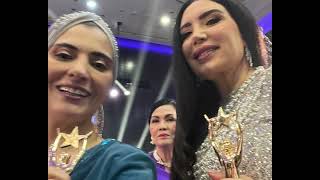
And, you know, I was, you know, for many years I had it in my head. I worked with the clients. But then, you know, oh my God, the work that was involved, you know, the endless sleepless nights that I had to go through to create what was in my head and put it in a value, giving all the information, not leaving anything unturned over to through videos, through downloads, through all of that. And being able to have everything replicated for my practitioners who were in the training. So not only do I practice Healology to support others, the psychology wellness, but I also then created Healology Academy because I saw that this was doing so well, it took a life of its own and I couldn't do it alone anymore. I needed people to help me get this to make more of an impact globally. So that's why I decided to actually launch Halology Academy and why I made it public, because, you know, it took so much, you know, energy and time. And then I decided, okay, do it. I actually did it in 6 months, another 6 months to get the accreditation and recognition backing me up that this is a a valid accredited system that's actually making strides for not only one-to-one, but, you know, people like clients and patients, but also for organizations and understanding that the shift that needs to be made in the workforce for us to be AI ready. So the academy actually is looking for, you know, if you're looking for stress free, healthy lifestyle to, you know, be at your peak performance, to, you know, be on the wave of the AI era. If you're looking for holistic healing biohacks, if you want a long-term result with a short-term experience, and if you want the peak performance blueprint, this is it. The psychology wellness that we've been talking about. And if you want an emotional and mental makeover which is what needs to happen for us to be future-ready for AI and machine learning. And/or if you want just the freedom of exponential impact and income, becoming a practitioner. So what are these linear steps that we talked about? Well, the first one is, of course, like we mentioned, is about the root cause, the realization, the routine, regime, reverse, and recovery. And each of those is a system within itself to really deep dive and get to the root cause, that unmet expectation that we talked about, because your subconscious mind is not going to give that information up. It kept it nice and tight and neat, really, really in the dark, deep, deep, deep down that iceberg area. So it's very hard to reach, but with a system that's using, I mentioned, the cutting-edge tools, that we talked about really gets in there easy and simple, but it has to be done in a linear process step by step in order to actually make a difference. What is unique about this cutting-edge way of psychology wellness? Well, we use the principles of psychology and neuroscience, and we actually talked about earlier the two hemispheres, the right brain and the left brain. Well, actually, it's more involved. And in Healology psychology wellness, we get to what we call the color brains. And we get to understand which of the color brains you are, how that is making an impact on your brain and affecting your areas of life. Okay. And not only are we using this and saying, you know, people coming back, oh, I feel great. All the sunshine. I feel healthy. You know, I'm happy. No, we are also looking to have and validate that this is actually happening. So that's why we have something called the progress report. There's numbers that we follow, just like, you know, if someone has, I don't know, diabetes, you know, they go to the doctor to measure their glucose levels, right? So this is the same thing, but we don't do work with blood and things like that, but it's more psychological wellness analysis that shows us the score and where you are in the process, that linear process we talked about, and what needs to be happening in that particular area or phase. So at the end of it, you know, once you go through this process, whether you want to get certified as a practitioner or use it for your personal performance and biohack your vitality, or you want to actually become a practitioner, it's all up to you. It's all validated. It's all accredited from these two organizations. So whether you're a newbie or, you know, or a bank teller or, you know, like, for example, Shine is an accountant and Jillian is into beauty and health. You know, you don't have to be, you know, a doctor or you don't have to have like a PhD. In order to get into, you know, Healology psychology wellness. And it's actually rewarding that you could actually make a shift and be having an impact in the world during these untested times that we're living in, right? So it's a start-to-finish solution with scientific measurable tools that we talked about, and it's evidence-based And it creates not only a shift in the areas of those in your, your life, that wheel of wellness, but it also prepares you and makes you future AI era ready. So we, why I work only with people because, and I want more practitioners to, to come in is because, you know, I, you know, time or the effort to actually go out there and work with everybody, right? So I'm actually now looking to recruit practitioners and be able to have their support in order to make an impact globally. So this is quite interesting. So biohacking vitality into future resilience. So it's interesting now that we call it artificial intelligence. What we're actually experiencing that's manmade and, you know, getting pushed at us is artificial wellness. So whether we're talking artificial from the medicine, synthetic medicine that we're given, or artificial, you know, the foods that we're eating, or, you know, the colorants, I mean, you know, obesity is at an all-time high. So what I see right now is artificial wellness that's happening. That's all man-made, man-designed to sell you more burgers, more fries, and upsize the Coke, right? We're all familiar with that. And then what we're really looking to make an impact in, in Healology psychology wellness is the psychology part, the intelligence part, the wisdom part that we all have as innate resources as human beings, as human skills that we don't have to, you know, be dragged into this man-made wellness, man-made artificial wellness that we are all familiar with out there in the world. It's time to have the wisdom, tap into the wisdom, the psychology and intelligence as humans that AI and machine learning cannot replicate, cannot even compete with. Okay, that's why with all this artificial wellness, 80%, let me say that again, 80% 80% of people in the world right now have at least one chronic condition, one or more. 80%. This is a global statistic. 68% have two or more chronic conditions because of what we allow these environmental challenges to do to us and compound leading to the disease. I like to call disease as the E, this alignment of the mind-brain organ connection. So actually, this is a game changer. It's 90%. I'm OCD, by the way. So I, I made sure I spoon-feed everything to my practitioners. Okay. So 90% of this is done for you and 10% is handholding. And when I talk about handholding, We do live weekly sessions in order for you guys to actually have the chance to ask questions, sharpen the saw, if you will, of what you just learned on the, um, online system or the course, right? And it's structured model of questions and feedback. You have access to case studies and forms. Um, we continuously have updates and learnings, and of course the accreditation and recognition of these valuable reputable organization, and you get to be part of our Healogee Mastermind group. I don't see you in this picture, Gillian and Shine. I don't know.
No, I'm just wondering why.
Even Shine?
I don't know how that happened. Where were we?
I think you were in London, maybe. I don't know.
No, no, no.
I think that was an all-women session.
Oh good, I didn't know about it. No, I didn't know about it somehow, otherwise I would be there. Yeah, yeah, Dr.
Hanan used to conduct all women seminars sometimes, workshops sometimes. No, this was before COVID actually, right? So maybe, but, but Nush is there, Dr. Nush is there. Yeah, yeah.
Yeah, I remember Noosh and I remember the lady in the green scarf. I've forgotten her name now.
Dr. Hanadi.
Dr. Hanadi. Yeah, and I recognize another lady at the back.
And Switzerland, I forgot her name. Yeah, Switzerland, the last lady, right? Yeah, last one. She actually booked a flight to come and join us. Just for, uh, get certified in this, which was absolutely wonderful. Yeah. So, yeah, this has grown since then. We have now 25, uh, practitioners.
Yeah.
So to give you a little preview of some of the tools awaiting for you inside, here's the short snippet. So like I said, you're going to be part of this actual exclusive mastermind community. You get one-on-one weekly mentoring. You get to access the full library of scientific telology course. You get the unfiltered access to our community, ask any questions. You know, you get all the support from other, you know, community practitioners where they can guide you on maybe a case you haven't been, you haven't been familiar with and someone else in the community has. They can give you tips and tricks on it. You access all the scripts, templates, progress report sheets, and, and of course so much more. And actually, we're doing, uh, we're going to be doing a 6-week virtual boot camp for all our practitioners. So, uh, Shine, look out for— and, uh, Jillian— for the email on that. We're probably going to do it in the beginning of January where all the practitioners come together and we're going to you know, test and measure, uh, what you've missed and what you could sharpen on and support you as well with that. So everything, like I mentioned, it's all the templates, done-for-you process, the entire course, question and, uh, questionnaire feedback. Actually, I have a surprise, uh, Jillian and, and Shine. We have a word here from, um, I hope it works because it didn't work last time. You see the video from Nush?
You know, and this cannot be— there is no biggest happiness bigger than this one, that you can really help people to heal and to be happy as well. And what I appreciate the most from the course of Healogics is the combination of The mind and body work. And because I'm a scientist, a pharmacist, so I really love the explanation of the mind-brain-organ connection that explains really why when we feel or we have any emotions, it can be translated into disease. And when we find the root cause, then we can help people to change the energy related to that emotion and heal the body. That is what I love the most, very scientific, and at the same time there is this element of psychology. You take into account the person that's in front of you. It is not, you know, the same lesson for everybody. But we are all different, so we have to apply as well our attitude of practitioner to make us heard and understood by the client, and then create this rapport that helps both of us to go through the process of healing together. So I define the Healogogy— actually, I was looking very long time How can I define the Healology? And I come up with something that you might like, Dr. Hanan Selim Selim. I call it Healology is the art and science of empowering our natural body intelligence.
I love that.
Yeah, because we use the body and the mind to work together to become healthy and happy.
And most of your clients, you were telling me when we met yesterday, actually was like suffering for 10 years, 15 years, and the results got them in such a short time. Um, was very, um, it was absolutely amazing, absolutely amazing what you were doing.
And probably it was the first time that this client found the root cause of what she had, which is like, you know, the flat in the morning every day, every day, very heavy phlegm in the nose that caused pain and even headache every morning. It was really very intense, you know. And then I was able to help her to reduce this pain from 20 out of the score down to 2 out of 10, just to say.
I've done also for my practitioners is that I created something called Tackle and Talk. So Tackle and Talk is a platform where people all over the world can go to and find a provider on there that can take them through this process, this helology psychology wellness, or actually, you know, being able to, you know, implement, or the practitioner being able to implement what they learned Of course, after they get certified and be able to get clients, we do all the marketing, we do all, you know, get all the funnels of clients to the platform and support you. So it's free online access as well, 24/7, and you can be part of the platform as Halology practitioners and help others as well, right straight at your convenience at your own home. You make your own schedule. All you need is an internet and of course a funnel of clients and you get all the free marketing. So actually we have the doors open now. If you're interested, you could go straight to hilology.live and be able to register and join the community right away. But hold on, we're going to also have a surprise for you right now. If you see this QR code, if you just take a snapshot of it, or open it on, uh, with your camera from your phone, you'll be able to also get a breakthrough session with your one and only moi. So you could actually come on there, and if you want, you have a personal issue, you can— we could work through it, uh, try to find the root cause of it. Um, if you have questions about, um, joining, um, if you have anything that you want to discuss, of course, you're all most welcome. All you have to do is just book an appointment using this QR code and, you know, then we'll show up and we tackle anything you, you want to bring to the table. Okay. Otherwise, if you're really hooked, interested, and you want to start right away, you could just go to Healology.live because live webinar. And hopefully, you know, we'll see you on the inside and be able to join the community. So let's go. I'm going to stop the sharing in a minute, but I do want to go through a couple of questions that I get asked a lot. And so a lot of people ask, well, if I don't have a healthcare background, will this be able to work for me? Will this program be right for me? And absolutely. We have a lot of practitioners who don't have a healthcare background, and because of my OCD and I, you know, spoon-feed everything to you, you don't need any other training or any kind of background because I actually give everything to you. I take you through the whole process step by step all the way. Someone might have a healthcare business already and they're not getting maybe enough clients. Will this help them? Yes, of course. A lot of people who are already coaches, health coaches, healthcare practitioners like we saw with Dr. Nuj, she's able to actually support her clients and patients even better and faster and for lifelong results by incorporating the Healology psychology wellness. You know, a lot of people when they think they're going to have to share their traumatic events from childhood, whether it be abuse or anything else, and We don't need to hear any of that because it's a structure, remember? It's, you know, we give you the framework and everything, all the information that you put in that framework, personal details, we don't see it. We don't get to hear about it because you do it all on your own. We give you the framework and we ask you to do the work, do the homework. I hate that word homework because it reminds me of school. But anyway, we ask you to go ahead, take this part of the session, the framework, and do it, and then be ready for the next session. We don't see anything that you put in there. Only you know what you wrote and you understand, and the shift still happens quickly. What if I miss, uh, live group sessions? A lot of my practitioners miss the live group sessions, and automatically, um, it's recorded and it's posted on the community. As well as you get an email of the recording right away. Some come to us and they say, well, I don't have any media, social media presence. I don't have any clients. I'm like, they're total newbies, and that's exactly what we're looking for because then we could actually, you know, give you the information without having any conflict with any other learnings that you might be coming with. Right. Some people have physical products, the vitamins. They're part of an MLM, multi-level marketing or whatever. And they find the Healology psychology wellness very, very good because they're able to combine the two of their learnings, whether it also be if they have hypnotherapy background, NLP background, whatever, they actually are able to combine these methodologies and make it even more unique to them and make a huge impact for their clients. A lot of people say, well, how long is the program and what is the requirement to get certified? And the program, if you're really like Dr. Noosh, really adamant and very passionate about the program, you could actually finish it in 3 months. Otherwise, you know, people who do it part-time, end up finishing it around 6 months. So if you have any further questions or you need any support, you could actually book a session with me with the barcode, or you could email me at support@healology.me, or go to the website www.healology.me.
More from Dr.


Deep Shifting Method to Clear Problems For Paying Clients (and for yourself) in 10 Mins or less!