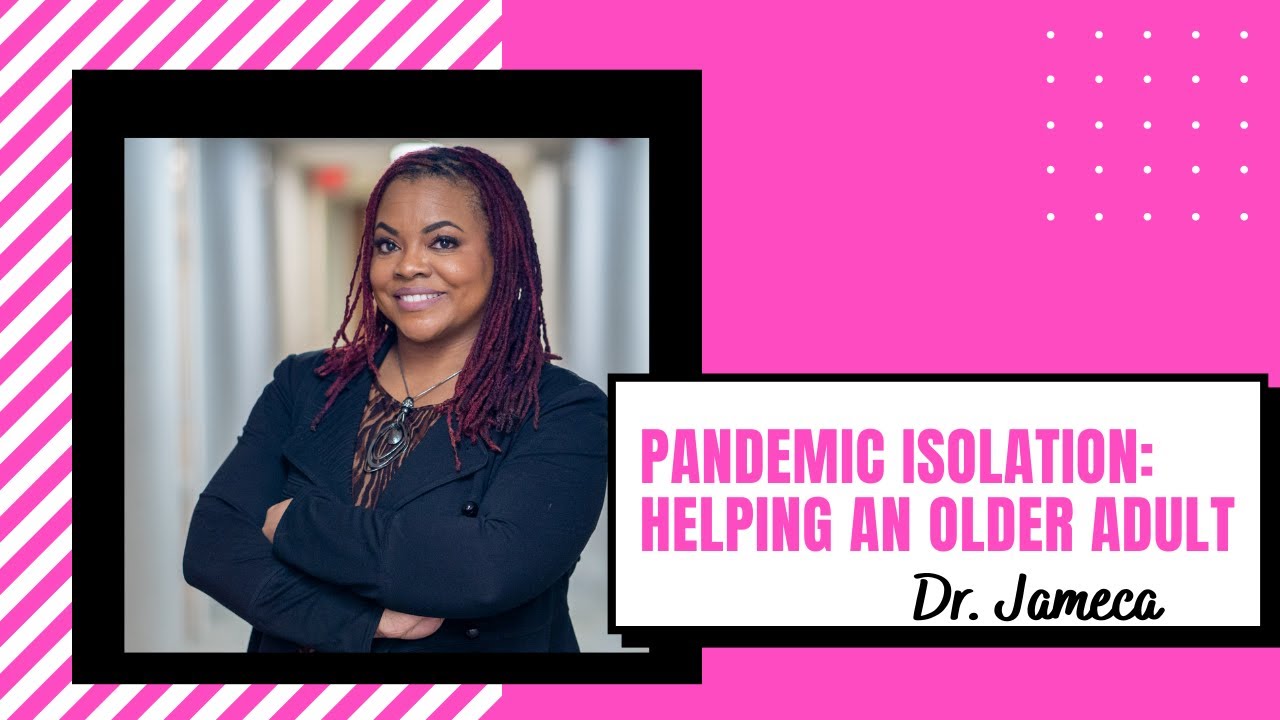
In this YouTube video Dr. Jameca Cooper explains practical ways family members and caregivers can reduce loneliness and isolation among older adults during the COVID‑19 pandemic. She emphasizes four main strategies: (1) increase phone contact – regular calls make older adults feel remembered and valued; (2) conduct safe, socially‑distanced in‑person interactions – drive‑by visits to nursing‑home windows or outdoor meetings in parks allow face‑to‑face connection while maintaining health precautions; (3) teach and provide technology – donate unused smartphones, tablets or laptops and spend time showing older adults how to power them on, navigate basic functions, and use video‑calling or social‑media apps; (4) address the loss of social role – recognize that retirement and pandemic disruptions can make older adults feel they no longer contribute to society, so fostering communication and community involvement helps restore purpose. Dr. Cooper notes common resistance to technology, the importance of patience, and the emotional benefit older adults report when younger family members stay in touch. She concludes by urging viewers to apply these tips, watch her related mental‑health videos, and subscribe to her channel.
Chapters
Hi, I am Dr. Jameca Cooper, and today we're going to talk about isolation among older adults during the COVID-19 pandemic. So make sure you check out my other videos that talk about isolation among older adults during the pandemic and other mental health issues that have occurred during the pandemic. Today we're talking about how to help a loved one, especially if that loved one is an older adult, and especially if that older adult has been isolated during the pandemic. What are some ways that you can help them gradually become more immersed into their families, their neighborhoods, their communities, and society overall? So these are my tips. The first tip I would say is to call that older adult in your family or your loved one more. Call them more, um, even if it makes you feel like you're bothering or pestering them. They like to have calls. I constantly hear my older adult patients talk about how, oh, my grandson calls me every day, those type of things. They smile as they say that. They really enjoy it. They appreciate it, and it lets them know that their families, especially the younger generation, it lets them know that they're thinking about them and that they still feel like they are part of something, and that makes them happy. The other suggestion I would have is to have what, um, some nursing homes in the area call drive-by visits. So if you are able to drive by and maybe dialogue or converse with the individual through a window, sometimes that is more, of a safe option because some older adults have not gotten vaccinated. They've chosen not to be vaccinated, so they don't have the same safety or, um, the levels of risk involved. So what I've seen happen in some of my nursing homes in the area is that the family will drive by— if it's a main level room of the person— drive by and maybe sit in their cars or outside of their cars and have a whole conversation and a meeting with the loved one that may be inside the facility. Through a window or a screen. So drive-by visits are good for a person that will be in a long-term care facility, but even if the person lives on their own, you can definitely drive by, that person can come outside, and you can have a whole conversation, a meeting outside, so that the individual still feels safe and you're still socially distancing. So more calls, drive-bys, meeting outside is one of the big things I've seen with my older adult patients who are more mobile and able to get around on their own. You can meet your loved one in a park or to have ice cream where you can sit outside, um, and eat the ice cream together in a way that makes that person feel safe, um, and you're still abiding by some of the restrictions. So drive-by, meeting outside, more phone calls. But the biggest tip that I have today is if you have a loved one that has been isolated during the pandemic, is for you to help that loved one learn more about technology. Now, what I've seen sometimes with older adults is they seem to be resistant. They will even say, "No, I don't wanna learn that. I can't learn that. I don't have the time. I'm not interested." But any way that you can, help them learn technology. So by technology, that means things as simple as show them how to power on a laptop. Show them how to turn on a tablet. Show them how a tablet works. Show them the different things they can do if they're using technology and social media or gadgets. Many of them might not have a smartphone, so the one tip that I've given my patients when I see them in person and they don't have those modes of communication is to ask their family members, their children, their grandchildren, nieces and nephews, if they have phones phones, tablets, or laptops that they no longer use, because you can then donate that to that loved one, and then that allows them a way to communicate with you and the rest of their family more. So of course, donating gadgets that you no longer use is one, but then you also have to show them how to use it. Most of my older adult patients have no idea of how to use smartphones or tablets. They just have not been, uh, used to it. They haven't grown up using these things, nor has anyone from my generation. We've had to all learn on the fly because technology rapidly changes. So, um, keep in mind that none of these older adults have taken a class that tells them this is how you use a computer, or they've never taken a class that says this is how you use a smartphone, or this is what a smartphone is. So many of them, unless they have younger children or grandchildren that really um, interact with them a lot, they would not know these. So take the time out of your schedule to help them learn technology so that they can communicate with their friends and family better. And it's also going to make them feel more involved and more engaged in the community that they live in. A biggest— the biggest piece that I've seen from older adults during the pandemic who are isolated or feeling depressed is that they no longer feel like they are a part of anything. So because they have retired and they are no longer working, they don't feel a part of the work environment. They don't feel as though they're contributing to society in that way. But then the other thing that happens is that during the pandemic, their families, their children's— their children have been so involved in their own lives, and maybe the transition or adjustments that have occurred in their own lives, such as virtual learning for their children or grandchildren, and so that it may have been difficult for their children or grandchildren to keep in contact with them as much as they had hoped. So my tips for you again, if you have a loved one that has been isolated and maybe feeling lonely during the pandemic, is to do the 4 things that I talked about: the drive-by visits, the more calls, the more communication, the outside visits. And the biggest tip that I gave was to help them learn how to use technology. These are my tips. Hopefully these tips will help you and the loved ones that you know to get more involved and to not feel so isolated during the pandemic. Check out my other videos for more tips about mental health during the pandemic and more tips in general from Dr. Jameca Cooper. Make sure that you subscribe.