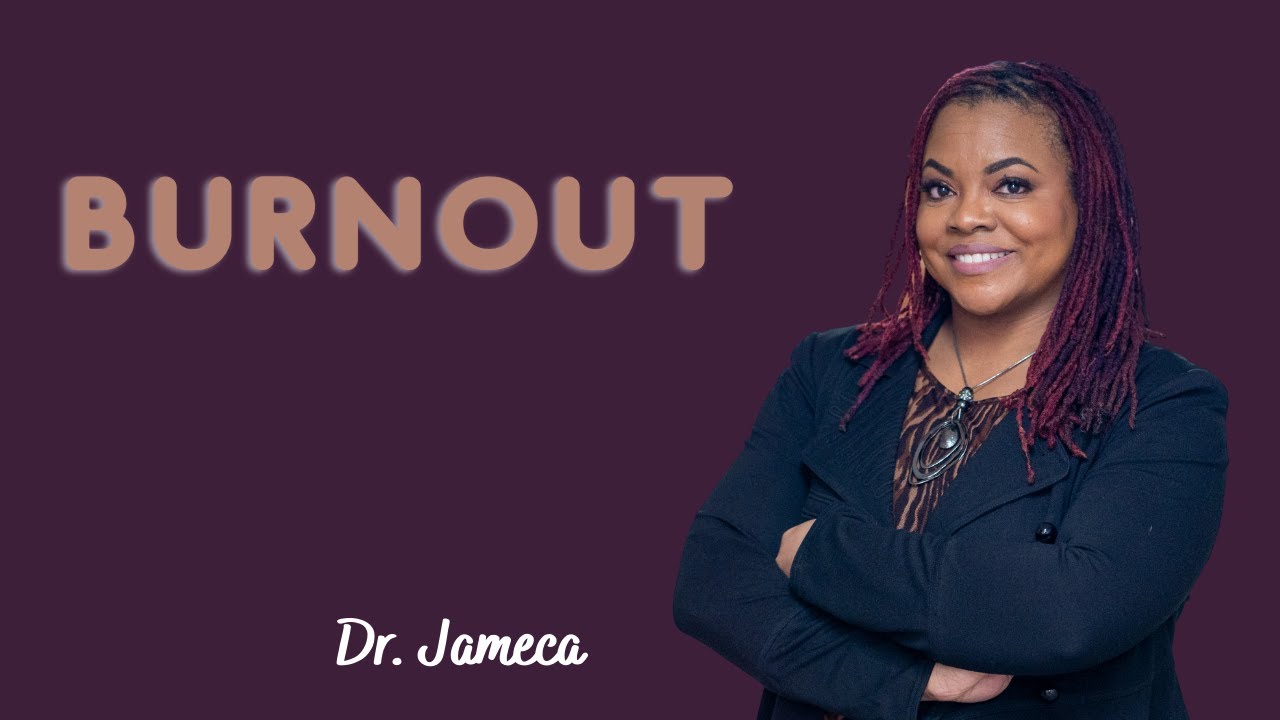
This content was created by Dr. Jameca Cooper. This content was uploaded by Dr. Jameca Cooper. This is a YouTube video titled "One Tip For Dealing with Burnout" (posted 2021-11-19) containing a solo talk/monologue by Dr. Jameca Cooper about burnout during the COVID-19 pandemic. She cites a finding that 89% of people experienced burnout, notes higher rates for women and minorities (linking this to virtual schooling and childcare shortages), introduces the idea of “psychological hibernation” based on Antarctic studies, and offers one primary tip—embrace change (job, supervisor, school, living situation, or mindset). She says she will publish a part 2 with specific actions and asks viewers to subscribe.
Chapters
Hi, I'm Dr. Jameca Cooper, and today we're talking about burnout. Everyone is experiencing burnout in the midst of this pandemic. I'm pretty sure that most people were on the edge of burnout before this, but the pandemic has really taken us over the edge. Findings say that 89% of people have experienced burnout over the past year, which to me means pretty much everyone. So studies show that it's mostly women and minorities who are having the higher rates of burnout. Why is that? Women, likely because of the introduction of virtual, um, online education for many of them who have school-aged children and limited or a lack of child care. One of the things I've noticed over the past few weeks is that childcare centers around the country have been shutting down as a result of low staff volume and just a lack of many, many resources that they need to run properly. So what is all of this about? Everyone is suffering from it. One of the ideas and terms that I found that really has a lot to do with this is this whole theory of psychological hibernation. So if you think about a bear and a bear hibernating in the winter, it's kind of the same thing except it's your brain. Now, how they came up with this term is they looked at some studies done by some psychologists in Antarctica, and what they found in that population was that as those psychologists lived in Antarctica for a while, they noticed that they kind of dialed back on their social interaction and their amounts of stimuli. To the point that when they were introduced to more interaction and stimuli, their system really couldn't tolerate it. It was too much. So think about that in the context of what we see now with the pandemic. Everyone has social distancing, social isolation, stay-at-home orders, and if you live in a rural area, it was probably even worse. So everyone dialed back on their social interaction, and then all of a sudden they said, "Go back to work." Go back to school. So we were expected to hop in line and do all of this song and dance all over again, but in reality, it was really too much for people, and it was really too fast because our systems just were not used to it. So that's what we're seeing now, lots and lots of high levels of burnout. So the question is, what do we do about it? My one tip for you today is to embrace change. What does change look like? It can look like changing a job, changing a supervisor, changing schools, changing your living situation, changing how you think about your situation and your environment. I'm going to make sure that I do a part 2 specifically about this to talk to you specifically about what changes I'm referring to here and how to embrace those changes. But for now, I want to make sure you think a little bit more on what burnout is, how we can combat it, and how we can all feel better. Make sure you subscribe. I'm Dr. Jameca Cooper.