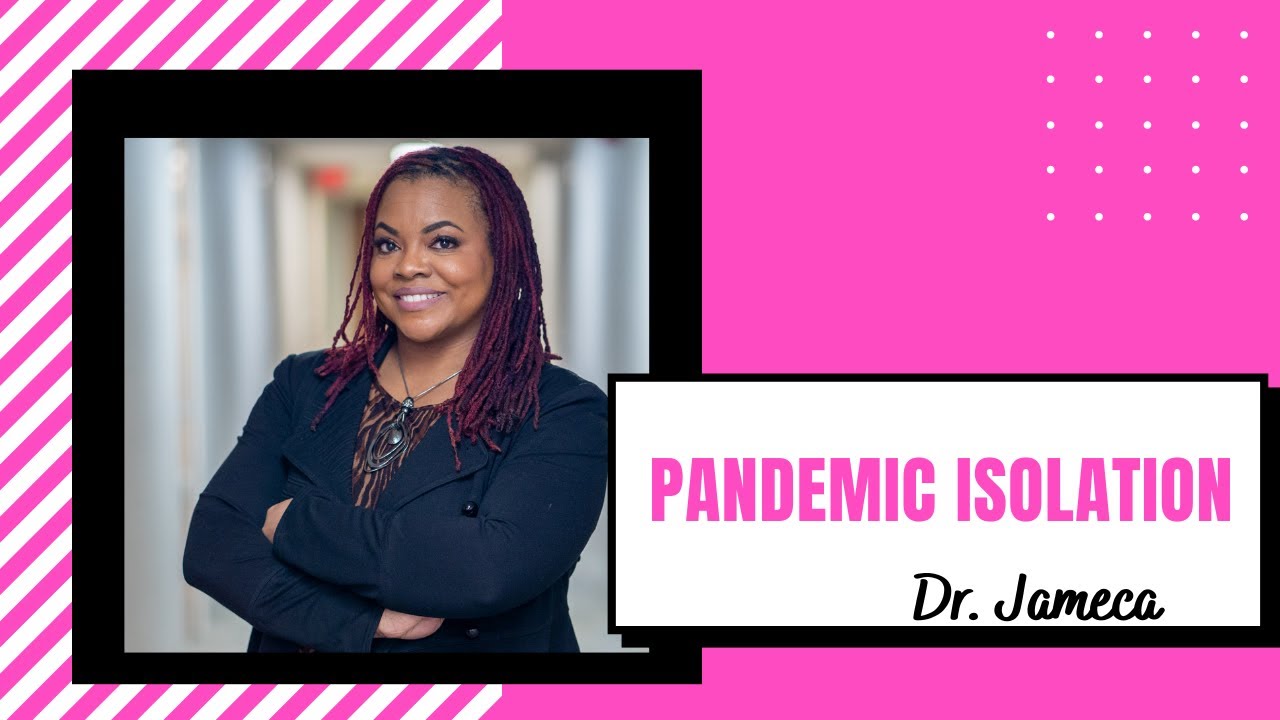
In this talk, Dr. Jameca Cooper examines the mental‑health consequences of COVID‑19‑related isolation observed in her patients over the past year. She outlines three primary problem areas: a rise in depression driven by loss of physical contact and reduced oxytocin, heightened anxiety stemming from disrupted daily routines, remote work, virtual schooling, and other societal stressors, and an increase in trauma triggers such as strained family dynamics, abusive relationships, solitary living, and excessive news consumption. Dr. Cooper explains how each factor contributes to feelings of loneliness, fear, and stress, and emphasizes the need for therapeutic support. The presentation concludes with a brief call‑to‑action for viewers to subscribe.
Chapters
Hi, my name is Dr. Jameca Cooper, and today we're going to talk about pandemic isolation. Many of the people that I've seen in the past 12 months have been dealing with isolation and stress having to do with being stuck in the house since COVID-19. So what are some of the things that I've seen in my patients that have to deal with pandemic isolation? The main thing is that people are suffering from an increased amount of depression. Think about all the reasons that we've had to be depressed in the past 12 months. The main thing is not being able to touch, see, and feel the people that we care most about, unless of course they live in the house with you. So one of the things that research has found is that the hormone oxytocin is a big variable in how we feel when we're around people. It's also called the love or the cuddle hormone. So when we are around people and we are able to touch them physically, it increases the amount of the hormone oxytocin, and that makes us all feel better. It makes us all feel loved. So in the past 12, in some cases 12 to 14 months, people have not been able to do that. So in general, people feel more depressed because they feel alone. They feel as though they're not loved by their loved ones, they can't see and touch them. They've missed out on huge family gatherings, weddings, family reunions, birthdays, um, and in some cases the death of some of their loved ones. So being isolated from those that you love before they pass away has been a big factor as well. I've seen all of that, but depression has been a huge part of mental health for people in the past 12 months. The second area that I've seen is an increase in anxiety. Anxiety has been big for people in general. If we look at research, we'll likely see that the levels of anxiety have increased over the past 20 years. We have lots of reasons to be more anxious about in the past 20 years, such as traffic. Traffic is a big thing that people complain a lot about. Having to drive at a certain rate of speed is is anxiety provoking for many people, having to deal with the oncoming traffic merging in and out. And as we become a more developed society, highways and interstates become more complex, I guess I should say. So that can be an issue of anxiety for people. Many of the ways that people become more anxious during a pandemic is because many of their normal ways of life have been turned upside down. So instead of getting in your car every day or train or bus and going to work. Now we're working from home. So for those of us who have children, especially school-aged children, that has been a huge area of concern. It's caused a lot of anxiety for those working parents trying to educate their children, virtual learning, while trying to simultaneously work their own jobs. And it's been very, very stressful for them, and it's increased their anxieties to a level that sometimes has caused them to seek out a therapist therapist for therapy and counseling or a psychiatrist for medication. So, so far we've talked about depression being increased and anxiety being increased. Let's talk about things I like to call trauma triggers. This would be the third category of what contributes to pandemic isolation. What are trauma triggers? We all know that PTSD, post-traumatic stress disorder, is what we experience when we have experienced some level of trauma in our lives. You have to have experienced the symptoms for at least 6 months in order to be diagnosed with PTSD. So what type of things can trauma trigger or trigger the trauma? Those things can be living with family. If you're stuck in the house for the past 12 to 14 months and you're living with family, that can be a trigger for your trauma. If you don't necessarily like your family, what if the family has been an issue for for you in the past, such as what if they've, um, been negative towards you? What if they have impacted your self-esteem? All of those things could be a trauma trigger for you. What if you're living with your partner or spouse and that has been an abusive relationship? So now you've stuck in the house with a person for 12 to 14 months, and that is the person that has been abusive towards you. So again, that can be a trauma trigger as well. What if you are living by yourself? I've heard many stories of people who are isolated simply because they live alone, and when that happens, they don't have the same opportunities that individuals who live with other people have to interact with others. So likely they're not able to just go outside and interact with their neighbors because many of their neighbors are also trying to social— socially distance and isolate. So living alone can be another trauma trigger because it can cause a person to feel more isolated, um, more depressed even, and sometimes more anxious. One of the things that I also see that can be a trauma trigger or can contribute to a person feeling more anxious is that they watch too much news. Many of my patients spend all day watching news. It's not unusual for people to tell me that they watch the news at 7 AM, 8 AM, 10 AM, 5 PM, 6 PM, and then the nightly news. And of course my first reaction is, that's way too much news. Because when any of us watch news, think about how you feel when you watch the news. Typically your anxiety level rises. Sometimes if you're really careful and pay attention, you can see that you become more anxious, your heart rate might increase, you become more stressed because it puts you on alert to many of the things that are going wrong in the world. So let's review: depression is increased, anxiety is increased, and your trauma triggers can also be increased. And these are the things that contribute to pandemic isolation. I am Dr. Jameca Cooper, and if you like what you see, please hit the subscribe button.