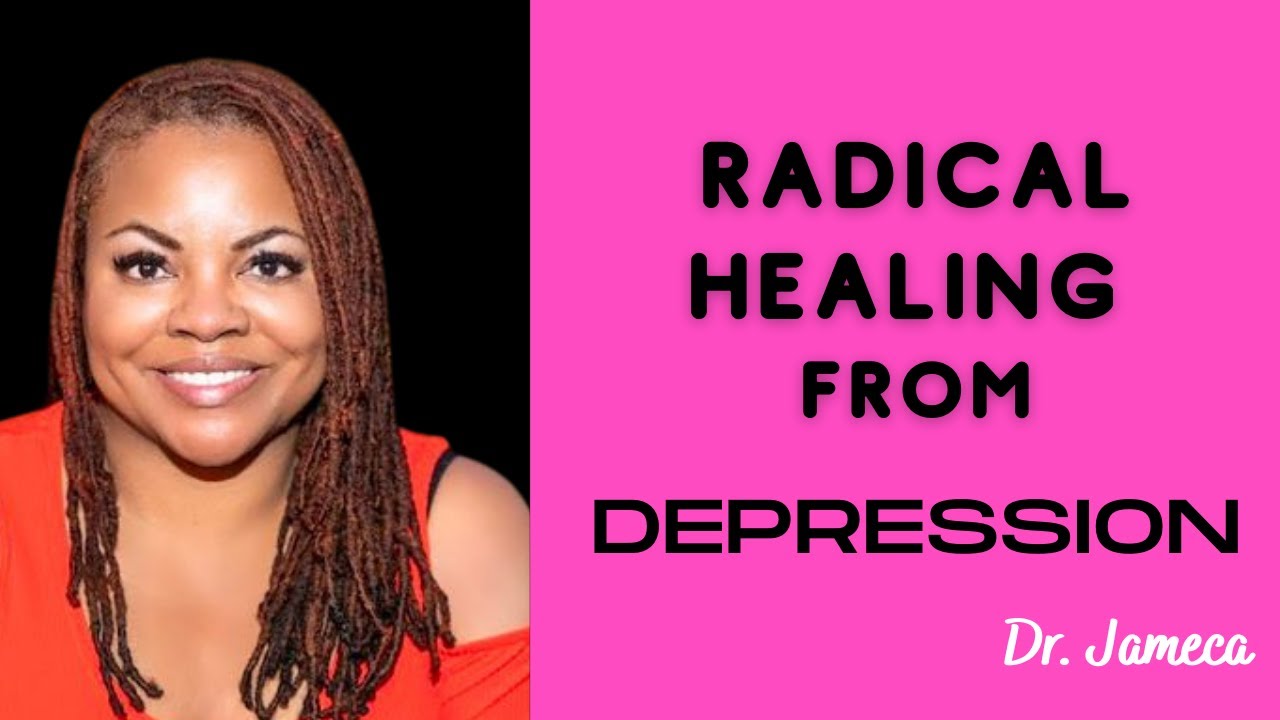
In this episode of her 30‑Days of Radical Healing series, Dr. Jameca Cooper outlines a three‑step framework for moving beyond depression. First, she stresses the importance of understanding what depression is—its symptoms, chronic nature, prevalence, and the need to label one’s experience. Second, she argues that awareness—a critical consciousness of personal, genetic, lifestyle, and systemic factors such as racism and discrimination—is essential for identifying the root causes of one’s mood struggles. Third, she calls for demanding healing: actively taking agency by seeking treatment (therapy, medication, or both), making lifestyle changes (sleep, diet, exercise), and being open to unconventional modalities (e.g., chiropractic, acupressure). Throughout, she emphasizes personal agency, the necessity of action, and the empowerment that comes from confronting both internal and external contributors to depression.
Chapters
Hi, I'm Dr. Jameca Cooper, and we are still doing our 30 Days of Radical Healing. Today we're talking about radical healing from depression. Many people suffer from depression or know someone that has suffered from depression. So numbers say that we have large numbers of individuals in this country who suffer from depression. I think this is a really good time to focus on how to heal and move forward, whether you have depression or you're trying to beat depression. So I want to talk about 3 really key pieces here that all have to do with this idea of radical healing. And if you go back to the other videos, you'll see some of why radical healing is important and necessary. So make sure you like this video and subscribe to the channel. The first part of radical healing from depression, I won't even spend the time going through what depression is because everyone knows what it is. You can Google and find out what the main criteria are as far as what it takes for you to be diagnosed with depression. Now, everyone that feels depressed does not suffer from clinical depression. There are a certain number of criteria that have to be met in order for you to meet those standards. So one of the first things that has to do with radical healing from depression is understanding. So you first have to understand what is depression, like what are the symptoms that I'm having, why is it sometimes hard for me to get out of bed, why is it sometimes hard for me to maintain the same level of productivity at work. Why is it hard for me to maintain my social interaction, my relationships? Um, what's up with that? Why does it change? If it's seasonal depression, these things could change based on the season. So for instance, in the Midwest, most of November, December, January, February, it's a lot of gray skies, not a lot of sun. So we have higher rates in the Midwest of people who suffer from seasonal depression. So The first step is understanding what is this, what is going on with me, what is it. Give it a name. It's very easy to be in denial about things you are experiencing when you don't give it a name, but when you give it a name, you can address it as such and operate moving forward in a way that really focuses on what that is, right? You also have to understand that depression is not something you can just snap your fingers and be cured from. Typically, it is a long-term illness. Typically, it is a chronic illness. Estimates say that 50% of individuals who suffer from one depressive episode will have other depressive episodes. And as you go on up with the numbers, the numbers increase from that. So very rare are you going to find people who will only experience one depressive episode. So part of the understanding that's necessary for radical healing is understanding the nature, the duration, and the whole, um, in the United States, what is called our prevalence or incidence of depression. So that's all part of understanding. Number 2, you can't have understanding without awareness. Awareness is very important And I've talked about this before in my other radical healing videos. Awareness. Awareness of what? One of the components of radical healing for women of color has to do with having a critical consciousness. So what is having a critical consciousness? It's really being able to reflect on elements that are acting in your life. So if we're looking at racism or discrimination, you will be reflecting on racism systemic racism, the other forces of oppression that act in your life, and the other part of that is being able to act on those. So we want to encourage people to be more critically conscious, so to have both pieces, the awareness as well as the action. We want to make sure that you have the agency to actually impact the change in your life because you are the king or the queen of your life. No one can make those changes in your life other than you, so you have to master that and feel competent and confident in being able to make those changes. So part of this awareness that you need for radical heal— healing is looking at the factors that brought you here. So what brought you to depression? Think about it. How long have you suffered from depression? When was the first time you felt depressed? Um, look at your lifestyle, your diet. What is your lifestyle like? You have to really be searching and exploring details of your life in order to get the root of what might be causing your depression. Is it diet? What type of foods do you eat? Do you eat a lot of processed sugar, lots of dairy, those type of things? Um, what's your fitness activity like? Are you Engaging in a normal exercise routine every day. What about sleep? How much sleep do you get? Sleep is very important regarding depression. Um, sleep is necessary. And what I find with my patients, and many of them don't get adequate sleep. So sleep is very important. So looking at the different pieces of the puzzle that might have brought you to suffering from depression in the first place. These are just a few of them. Other piece of awareness is looking at genetics. Are either of your parents depressed now, or have they ever experienced depression in their lives? You can't find these things out unless you have conversations with them. Now, I know if we're talking about Black people, Black people don't usually like to talk about things like that, like illnesses, mental illness specifically, because there still is a very large stigma of that in the Black community. But you have to ask questions. Ask your parents, have they ever suffered from depression? Ask your siblings, grandparents, ask around. Put the pieces together in the stories that you've been told over the years. Sometimes there are gaps missing. Such and such got sick and he went away. Okay, well, why did such and such get sick? What did he have? Where did he go? Someone has to ask the questions in order to get to the root of it, because maybe, just maybe, genetics is playing a role in your depression. And then the other piece that you have to look at regarding awareness is your situational. What are the situational factors that could impact your depression? Um, situation could be racism, discrimination. Trust me, living as a woman of color in this country comes with lots and lots of challenges and stress. And it could be that your work environment is the cause of it. It may be an unfair or a biased work environment that simply weighs on you and causes your depression. So there could be situational factors. There could also be relationship factors. Who are the people around you? Do you feel like you have a friend group that is supportive and that make it easy to talk to, people you have commonalities with? What about your family? Do you feel like that's a dysfunctional family? Do you feel like they're imposing stress and depression on you? So there are lots of things you have to look at when you get to the root of what the depression is in order to heal from it. Remember, because the whole goal of 30 Days of Radical Healing is that we want you to move forward and be healed, not just live, not just survive, but to actually overcome and to get better. So that you can move forward in the next year. So the third piece, and maybe the most important piece to me as a psychologist, is radical healing requires that you demand healing. Not just think about it, consider healing, but no, you demand it. You say, "I will engage in efforts that promote my healing. I will be healed." You have to feel that. Again, if you go back to the other, other videos with Radical Healing, where I talk about radical hope, hope is a big part of it as well. But you have to demand healing. And this is all also a part of radical healing, involves using resources that may already be around you. So how do you demand healing? Treatment is one issue. Therapy. If you're lying around in your house and you know that you're depressed, but you're not doing anything about it, that's not demanding healing. Even having the other two components that I already mentioned, understanding and awareness, is still not enough to get you radically healed. You have to engage in the action. You have to demand healing. Let's look at treatment. What are you going to do to treat your depression? There are lots of different options out there, and I don't even want to focus on the main ones. The main ones, of course, are therapy. I always recommend therapy, psychotherapy or counseling, because sometimes it helps for you to sit down with someone who doesn't know you from Adam, who can sit down with you and hear all of your problems and help guide you through or walk with you through the process of getting healed and feeling better. Um, and it just helps to have some time to yourself where you focus on you and your feelings. Therapy, definitely at the top of my list. Medications. I'm also not going to rule out medications for depression because depression usually involves some imbalance in your neurotransmitters such as serotonin, serotonin, and medication, antidepressant medication can help to level those out in ways that will make you feel better. So for some people that suffer from clinical depression that is very severe and that helps to get them back on track faster. In other words, if you're suicidal, you're depressed to the point where you're suicidal, medication could help quickly. So there are times when medication is definitely necessary, but there are also lifestyle changes that you can make, such as getting more sleep, making sure you get enough sleep every night. Diet— what are you eating? How can you change your diet? Radical healing involves changes and not being afraid to make those changes. What can you eat differently? Neurotransmitters are built and based on amino acids. So if you're not eating healthy food, how is your brain supposed to work in an optimal way to make you feel better? You know, garbage in, garbage out, is that what they say? So diet is a change you can make. Lifestyle, you have to be active, physically fit, active. The more that you're active, the more that your body and your brain can heal itself. The more activity that you engage in— well, actually, there's a certain— it's a key number, key number of minutes that you need to engage in activity. But when you do that, your body can start to promote those natural neurotransmitters that promote feelings of calmness and decrease in depression. You're allowing your body to have those things work as they should by being active or being physically fit. So these are all the changes that you can make that can help you. Be more calm, less stressed, and less depressed. So I've already talked about the 3 things: understanding awareness, demanding healing, and the third part, demanding healing engages and requires you to make these changes and be at the forefront of those changes. You are the driver of your own bus. Which is life, the bus of life, right? So you take some action, take some initiative. If you're with a therapist that has not helped you move forward and to be better and less depressed, take the agency to find a different therapist, right? Search the internet, search your area, word of mouth, and see if you can find someone that's better. If you haven't tried medication, don't be afraid to try it. There are lots of other ways that you can be healed. Don't be afraid to think outside of the box regarding your healing because radical healing involves something radical. Sometimes that change is radical. Sometimes it's unpopular. It could be chiropractic. It could be acupressure. You have to try different things in order to get to where you want to go. So I'm Dr. Jameca Cooper, and we are still talking about 30 Days of Radical Healing. Today we're talking specifically about depression. Make sure you like this video, subscribe. Thank you.