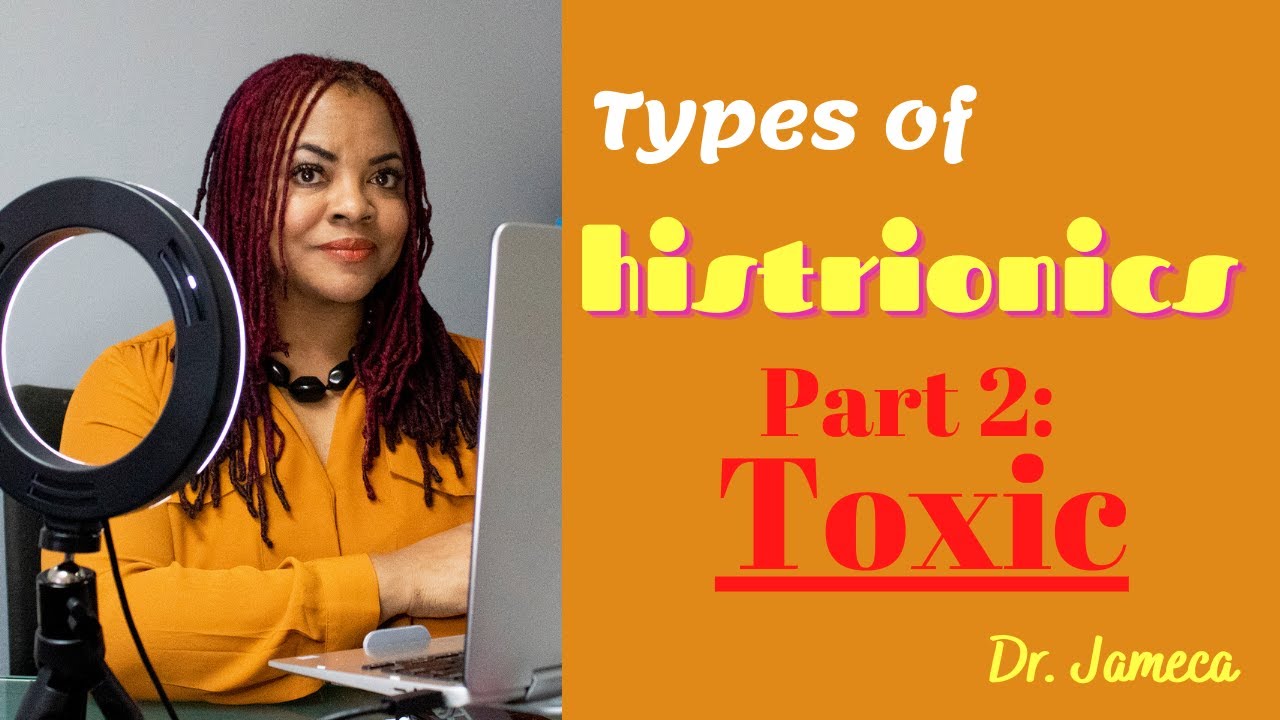
In this YouTube video, Dr. Jameca Cooper explains the "toxic" subtype of histrionic personality disorder (HPD). She first clarifies the meaning of "toxic" as harmful or difficult behavior, then outlines three primary behavioral markers that distinguish toxic histrionics: (1) poor impulse control, illustrated with a traffic‑light scenario where the individual cannot resist acting on an urge; (2) extreme self‑centeredness, which can become dangerous in high‑risk situations because the person prioritizes their own safety over others; and (3) recurrent threats of self‑harm or suicide, which create uncertainty for others and may be used manipulatively for attention. Dr. Cooper emphasizes that these traits make interactions with toxic histrionics frustrating, exhausting, and potentially hazardous. The video concludes with a brief recap, a call to subscribe, and a promise of future content on personality disorders and mental health.
Chapters
Hi, this is Dr. Jameca Cooper, and today we're talking about a specific type of person with histrionic personality disorder. Make sure you subscribe to this channel right now. Press subscribe so that you can be one of the first to see some of the videos that I'll make sure to put out about personality disorders, reality TV, mental health, and other stuff. So today we're going to talk about the toxic type of histrionic personality disorder. One of the other videos I talked about the two different types of histrionics, toxic and non-toxic. So with the toxic type, let's be clear, what does toxic mean? People throw this word around a lot. Toxic, toxic means bad for you. Toxic in the way that it was used, I would say, 20 years ago meant poisonous, horrible, going to kill you. Not necessarily meaning that now. Toxic just means bad, difficult, right? So a toxic person or toxic behaviors that come from a person with histrionic personality disorder are going to be these things that I'll talk about today. One of those things is impulse control. Is this person able to control their impulses? In other words, if you're pulled at a traffic light and you're in the car and someone next to you in the other car is playing loud music, can they resist the urge to get out of the car at the intersection and dance? That's impulse control. A person who cannot control impulses would simply do exactly what they feel doing and not factor in that that is totally inappropriate, not to mention in the wrong place, right? So impulse control is one of the big things that makes a person fit into this category of toxic histrionics. Another thing you should look at would be, um, how self-centered is this person? And I put this in the category of toxic histrionics because if a person is very self-centered, over time it can be frustrating, it can be exhausting, but it can also be dangerous. Right? So let's say you're in a situation where there is, um, um, a crazed person around with a weapon and you need to get out of that situation and you're with another person that may suffer from histrionic personality disorder. If they're self-centered, they might only be able to think about in that moment how to get themselves out of that situation. It might not be able to consider how to also get you as their friend out of that situation. In other words, where can you go? Where can both of you go to get out safely? So a self-centered person is in the toxic category because over time, if they continue to focus only on themselves and not on those around them, it can definitely be annoying and frustrating, but it can also be dangerous. So that's why it's in the toxic category. The third thing that puts a person who suffers from histrionic personality disorder in this toxic category is if it's a person that— this is, I'm saying, this is number 3— if they threaten self-harm. So a person that constantly threatens to hurt themselves, a person that constantly threatens to cut their wrist, kill themselves, shoot themselves, take some pills over and over again, of course, definitely frustrating, definitely annoying, but also very scary because it becomes this, um, what to do situation. If, like the Boy Who Cried Wolf, what to do about it. If they threaten suicide threatens self-harm all of the time, you don't know when to take them seriously. So you're constantly going to be on edge wondering if this is the time, and that person is really just really trying to get more attention. They don't really understand the complexities of how threatening something like that is serious. So third thing here, if the person threatens self-harm over and over again, very toxic. That puts them into the toxic category of people who suffer from histrionic personality disorder. So there you have it, those are your 3 things things to look for, for toxic people who suffer from histrionics. Hope you learned something. Make sure you subscribe, stay tuned for more videos, and thank you. This is Dr. Jameca Cooper Cooper.