'Calm Doctors = Safe Patients' webinar in collaboration with IMA
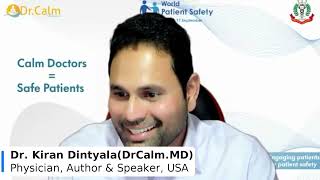
Doctors discuss how patient safety depends on both physical safeguards like equipment checks and clinical monitoring of infections. They reject 'burnout' as a label, instead pointing to long hours, sleep loss, and pressure as the real problems, and call for counseling and peer support to keep doctors alert enough to practice safely.
Chapters
So thank you for inviting me here on a very auspicious day. Today is our Prime Minister, beloved Prime Minister base and today is the Vishkarma Day also in India. Yeah. So all the, all the pupil and the mechanics and everyone who uses the instrument, any kind of instrument, they celebrate this day and of course the international Patient Safety Day.
Yes.
Patient safety is the prime most subject and priority and the number top priority for any doctor or hospital owner. Yes. Nowadays as we know that lot of thrust is on the patient safety because scientifically based on the data and the studies over the years and decade, probably the last decade, we understood the value of patient safety. If we deploy the different measures of, you know, counting and capturing the patient safety indicator and working on the improvement, it definitely improve the clinical outcome. Yeah. It reduces the, it reduces the loss average length of stay in the hospital. Yeah. It reduces the cost of the treatment.
Yeah.
It gives the bed, the hospital to opportunity to keep on changing the beds and the patient and give more and more accommodate more and more needy patients who may be waiting for the sake of the beds, empty beds and definitely the patient the clinical satisfaction. If my patient is happy. So the doctor is the most satisfied person in the world. Patients and family members are the satisfied, but doctor is the most satisfied person totally. Patient safety we can see in a two part one is a qualitative service safety and second is a clinical safety. Yeah. Like in service safety part what we deployed in our hospital, we deployed the administrator and the quality managers and make a team of under a manager where the engineer, the IT person, the. The nursing, everybody is a part of that team and they used to have a safety round. Every month, twice or thrice weekly or fortnightly. We organize a safety round where there is a. There is a specified checklist that they have to see where whether there is a open wire, electric wire or there is a wet, wet floor, there is a. You know, we, the. The cleaning is happening and whether we are putting the signages that floor is wet, whether the, the, the. The toilets having the anti skid tiles. Yeah. Whether the toilets and the beds are equipped with the nursing bell. At the same time we see that whether the, the stretcher and the wheelchair they are having the patient safety belt or not. So basically we have to make sure safety in all respect it is not only the clinical safety but the mechanical and the quality safety. Also we have to create safe environment for the patient that patient. That the, the point of patient safety is the why we are giving so much of stress on the patient safety because we don't want to add anything in the suffering of the patient. Patient is coming to hospital for a treatment of a. Some element.
Yes.
Then the. The. The bottom line is that we should not contribute in the pain of the patient by giving any additional injury in the form of either our. Our. Our floors are wet and we have not put in the signages and God forbid some patient slept off and got an head injury or something like that or. Or if. If patient being transferred and there is no safety belt and if we fall down. Likewise the. In. In the. In the. In the. In the. In the toilets also we have to see that all the beds have the railing proper railing with the log. So these are the quality safety service safety. In the clinical safety side we have four or five indicators which we capture regularly by our team and we monitor them month basis or weekly. Like catheter associated urinary tract infection, central bloodline infection, center line infection. We say surgical site infection, web ventilate ventilatory associated pneumonia bad source. And we have the data available that what are the acceptable limit and range of these indicator. And we should be taking care that we should not be beyond that range acceptable range worldwide. And if we are there then we should put in a force and imply the brain and our resources how to come down that first we have to do the you know root cause analysis RCA why these are not in the acceptable range. And then we should implement all these things. So definitely these all maneuver these all things ultimately improve the patient satisfaction. Ultimately it gives you the business Ultimately more and more patient come to the hospital because many hospital think why should we waste so much of money to deploy all these system. But no, it is a one time investment and you get the return of the investment continuously day on day, month on month, year on year. And the best part is if your patient is well satisfied your hospital will be definitely be all time full with lot of good abita. So with these words I understand that all the participants in this webinar they will understand the value of patient safety as a moral value, being a doctor and as a economical and numbers value also for those who running the hospital with these words. Again congratulations to you for organizing the very important topic inviting me here. And all the best to all the listener and the speaker and the organizer. Thank you very much. Long live I thank you sir.
Thank you sir. I I think those words of wisdom are very valuable those people who are listening and I am part of committees here, you know, vascular various infection related committees here and we actually get dinged what we Call whenever there is a catheter associated infection. For example CTI for example. I'm part of that committee. Our hospital we get ding, you know there is hidden percentage and beyond that if you have it. So that's all important sir, my next.
Question to you would be how are.
The burnout rates and doctors, the stress levels in doctors in India, in the people that you have seen whether it is at a medical college, students level, postgraduates or practicing doctors. What is your perspective?
See I always take, I, I, I am not a believer of word stress. It is a negative word. I think stress is a like your capacity, your like your immunity towards any pressure. Your resistant power against a pressure. If you divide the pressure by your resistance power, it will come the stress. Yeah. So our training in our India, in our medical colleges is like that, like, like we always say army training. So the training of undergraduate label is so that we are trained like that, that we have to work 24, 48 hour. Right. And we are trained like that. This is a, this is a new I think norm nowadays a fashion to coin this word stress. No, we are not burnout. We are not stressed. We are meant for. We have opted this profession by knowing, by choice, not by force. And when we, when we are writing exam for competition, you know in India for getting 1 lakh seat, 22 lakh aspirants are there writing exam. Out of 22 lakhs you only 1 lakhs are getting the MBBS seat, the medical graduation seat. So it is by choice. And when by choice you are opting a profession which is the nobler and most pious profession in the earth. On the earth. I don't think any profession is as pious, as noble, as respectable as the medical profession. So there is no point of stress, There is no point of burnout. You have to decide how much work you want to do. So I, I personally don't agree with this word of stress and burnout. Because as, as, as we are last 25 year we are working, we worked in the COVID probably 48 hour or more than 72 hours continuously. See there is a, see there is a tiredness. Yes, of course. Tiredness is always there. If you don't have a proper sleep, if you don't have a proper food, there is an element of tiredness. But tiredness cannot be synonymous with the stress or burnout. So probably, probably people are using much harder and harsh term for the tiredness which was there in 25 year back also and pupil are coining burnout and stress term for simple Tiredness. So, so I, I, I don't think there is any burnout or stress in medical field because we opted this. It is not a eight hour job. It is not a just a, you know, official job that you are coming, signing few paper and going back to home or working from home on computer in a clinician. As a clinician you are bound to be with the patient and limit you can set yourself. Yes, of course in the medical college and the hospital in younger age when you have more capacity to bear the pressure, you have been forced to 48 hours, sometimes for 72 hour duties. But it is, it is since ancient time, since decade it is happening like this. It is not a new thing now. So now situation has improved, the working atmosphere has improved. There is a doctor's duty room. Are there 25 year, 30 year back there, hardly any doctor duty room. Yeah, things are improving a lot in India. And personally I don't agree with the word of the stress. And even I advise those who use that burnout and distress they should just take it easy. Yes, it is a tiredness and after taking a proper relaxation, wherever you want to chill out. After that having chill out, you are again fresh.
Sir, obviously you became the president of IMA because you were able to tackle stress very well, tackle all the pressures very well. So you are a very strong personality. It seems to be, you know, your mindset seems to be very strong. So obviously you are able to, that's the reason, lead the IMA and get to that stage which I really appreciate the mindset with which you are approaching it. Because the moment you say oh, that stress is there or that is there, the more you start feeling negative, bad. So from that point of view I do agree with you that don't tell yourself constantly that you are stressed, you know, because the more you tell yourself that you are stressed, the more stress.
You are going to feel automatically. Absolutely, absolutely. We feel pride, see as a doctor we feel pride to serve the patient. We feel pride whenever there is a serious patient on the ventilator. You see, is there any doctor who, who say I am tired, I am not going to take the abg? No, no doctor, neither doctor nor the health care worker.
Okay, so, so sir, at the same time like yeah, like you know, I'm sure there are different mentalities, right? There are different personalities. Some people can take that pressure and be able to perform well, like for example you. And there are some people who never got any kind of training or they don't have that mindset, for example. And yet knowingly or unknowingly, they become doctors or choose a profession that is high pressure right now. What should we do with those people is the question. Because some people automatically, you know, they have that capability. I know, because no one taught most of the doctors they know, we just do it. But also we are seeing, for example, suicides, depression in doctors, for example. I'll share two points, you know, from articles. One is in United States we lose approximately 300 to 400 doctors each year because of depression and suicide. 300 to 400 doctors. And there is approximately one or two medical classes, you know, and that too after spending years of time experience and all that. The second thing is for the past two, three years there's lot of talk about it here in America. I think in India it is still probably maybe not talked too much. I know some people are talking. For example, in 2022 Medscape did a survey and said almost 48% of doctors are burnt out, means not able to sleep, exhausted, getting depressed, feeling isolated, hopeless. So my question for you would be because the numbers are there, you know, despite we wanting good doctors and wanting to help people and all that. So what could have led to these people? Because you know, we will focus on.
Those people who are not able to.
You know, handle whatever that they're supposed to and how we can help them. So what do you think could have contributed to these people's situation?
Number one, definitely it's an important point. But I, I, I usually don't go by the data which has been not vetted because we don't know the survey, the what are the denominator, what is the group they exercise, whether they went to the young doctor posted in the emergency Iqna Medical College. Anna. So whether they have went to the clinicians who are 20 year practicing. So I am not going by data. Yes, the point you raise is a very important point. I think number one, as I said, that we are confusing the young generation is confusing with the term from tiredness to the stress. Number one. Number two, a lot of ambitions are there now.
Yeah.
Everybody want to reach the top in a two or three year after coming out of the PG graduation.
Yeah.
And that they are putting lot of pressure on themselves to reach that milestone which the others have reached over decades. Yeah. They want to cover that distance in a year. Year two, that additional pressure is putting them under depression when they are not able to handle that pressure. Number three, I think that 99, rather more than 99 who are in the critical care or in emergency Service or into 24 into 7 kind of services. They their training is like that. They hardly have any problem unless until there are some personality problems also. So you know there is a type A, type B, type C kind of personality, right. So if, if, if, if, if it is contributed through that personality. So even if you are any profession, so you cannot blame the profession for their tendency to society. Number three is pro. Probably nowadays as in India a lot of social media and WhatsApp group and so much of in social media. So even if they are the younger generation or even the any generation, if they have no work, they keep on busy on the social media. And there is a. There is a decrease in sleep so they are not able to take a proper sleep. And that adding up to the pressure and tiredness of the patients. Yeah, if you don't have a proper sleep then ultimately it adds up the pressure. So I think more than medical cause, these are the different cause which is adding the pressure on the doctors, not the. Because of the patient. And for a personality cause, if you have a tendency as a personality defect that is. That can happen anywhere. Anywhere. It is, it is, it is in all the profession. So it should not be seen as the health hazard, as the, you know, occupational hazard. But it is a type of personality. And definitely those pupils should be taken care, should be. The other people should be vigilant and find out those kind of people and keep talking to them. They should not be remain in a silos or in a alone kind of system. They should be taken care by the system and we should talk to them. We should do counseling of those, those doctors or those personality. Because suicide is. Is very unfortunate, very unfortunate for the family also. Those that are doing that, I am sorry for them also and. And for their family members also. This is a loss, this is a nation loss. After becoming a doctor. If somebody is doing society it is a loss to family. But bigger than it is a nation loss. So. So I am very sorry and definitely it needs to be look after. But lot of fine tuning is required in your daily routine. Also daily pursuit has to be changed. We should not be giving much time to the social media at the. At the cost of proper selling.
100% sir. Very well said. Every single point what you said. I'm very happy that you are seeing both sides of the coin means on one side there are strong people who can, you know, manage and everything because their personality or the way that they manage their life, you know, they can take care of things very well. On the other side I'm very glad that you Touched on the social media aspects and, and you know, some people not able to manage whatever that they are trying to do. I think that is equally important and need to help them. And you know, my whole goal is to help the people on the other side, you see what I'm saying, Who for whatever reason they did not learn the skills growing up. Not they had that, you know, pressure taking capacity for whatever reason, you know, no need to blame anyone. That is how I see it.
I don't blame anyone.
And what kind of support can be provided for these people? Like you know, the one example that I often give is when we have someone to go and swim in the ocean, for example, first we put them in a swimming pool, teach them and then absolutely all that and then after all the training we then put them.
Into the ocean and try. That is what I mean by the training. So training itself is a design like that. Yeah. So there is, there is no fault in the training system. It is the personality and it is unfortunate. But I, I must say it is unfortunate. And whatever we can help them, we can do, we should do.
Absolutely, absolutely. Dr. Lakshmi Devi, would you have any comment this? What Dr. Sharat Kumar Agarwal has said?
Sir, actually you have touched many good points and they are very practical points as well. And as you said, it's both mindset as well as these burnout cases. We, we never know. And the word is not burnout, it's tiredness. So that's the, that's something where we should differentiate. So instead of going on using that low energy word, okay, like burnout. So that is one thing. And as sir has pointed out was very well said about the mechanical devices and other patient safety things which he said that we need to take care which are not related to the doctor directly. So those are really important and what we need to take care as doctors, those four, five points which have to be taken care should not be going into the negligence aspect. So that I think that makes it very simple. And in emergency areas, definitely doctors should be trained about what happens when we have to break bad news, how do we break it and how to face mob violence. And like you should have some support from the hospital in terms of security and as I said CCT cameras to cover the scenario. Okay. All these will help from the medical legal aspect in order to have protection and then later claim and all these things.
But they see they are not patient safety, they are the environmental safety, the, the doctor safety. But then when we are celebrating patient safety, I only touch the patient safety point.
Yes, sir. Yes, sir. Yeah. You would like to add something?
Yeah.
Yes, I. I have to catch my flight, and I think the boarding time is coming close, so. So I will take your leave and. Very, very good. Very, very good. Webinar. And all the best.
Thank you, sir.
More from Dr.

Is COVID Vaccination Safe for Cancer Patients_COVID Help_Dr Naidu_Dr Kiran Dintyala_Dr CalmExclusive
Is DELTA PLUS variant going to be worse than any variant? How to save ourselves from THIRD WAVE!
How to Build Our Mental Strength to Overcome Problems? _Personality Development_Dr Calm