Discover Powerful Strategies to Enhance Patient Care
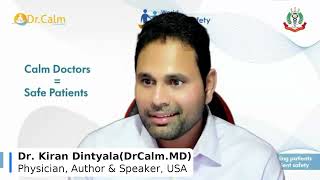
Webinar transcript (Oct 3, 2023) of ‘Calm Doctors, Safe Patients’ led by Dr. Kiran Dintiala (Dr. Calm) with panelists from the Indian Medical Association. The discussion links physician mental health (stress, burnout) to patient safety, outlines legal protection and documentation (informed consent, Consumer Protection Act, mob/violence protections in India), describes hospital safety practices and metrics, and offers practical calmness/relaxation strategies for clinicians. The session closes with audience Q&A on guilt after patient deaths, resource constraints, and health‑tech aids.
Chapters
Hello everyone. Good morning all the people, doctors in India and probably abroad too for joining this session. This webinar, Calm Doctors, Safe Patients. Currently we are waiting for our panelists to join us. And while we are waiting for them, I'm going to briefly introduce myself and why I'm doing this. So I am Dr. Kiran Dintiala. I'm a physician, author, speaker. I was originally born in India in Vijayabada, Andhra Pradesh. And from there I have come to the United States for higher studies. I did my internal medicine residency and then I did my Master's in public health and then I started practicing. And what I noticed over a period of time as I journeyed through my life as a physician, as a person is that while the physical issues, the physical health issues like heart attack, hypertension, diabetes, cancer and all these things are important and are being taken care of by our medical community at the same time, the mental health issues, especially.
Stress.
Related problems, they are often ignored. And because of that, all of us are suffering, both doctors and patients alike. And I have noticed again and again that when doctors are stressed, are burnt.
Out.
It is not good for patients. Burnout is not good for physician well being or patient well being. These safety issues are a big concern. And for that reason I am doing this seminar today in collaboration with Indian Medical Association. And shortly we will be joined by IMA National President, Dr. Sharad Kumar Agarwal. IMA Honorary Secretary General, Dr. Anil Kumar Naik. I am a National Vice President, Dr. Sri Hariraogaru who is instrumental in actually having this webinar get going and be able to have the collaboration with ima. We will also be joined by Andhra Pradesh State President for IMA, Dr. Ravi Kishangaru. And then last but not least, Dr. Lakshmi Devi. She's a physician at Rainbow Hospital in Hyderabad. Not only that, she is a attorney lawyer. So she can give us both medical perspective as well as legal perspective. So with that, let me just check where our panelists are so that I can invite them in and then we can get started with our webinar. Hold on for one minute please. Hello, Dr. Lakshmi Devi, can you hear me?
Yeah, I can hear you.
Yeah. Are you able to get in? Do you have any issues getting in with the video?
Yeah, it's actually showing that you can't start because the host has stopped it.
The host has stopped?
Yeah.
Okay, give me one second.
Yeah.
Let'S just get on call with them for one second and see why there is this technical issue.
Doctor Kiran, you need to unmute yourself.
Hello again. This is Dr. Kiran again. We are having some technical issues so I think our team is trying to figure it out. Nothing better than actually a live meeting, people all getting together in a room. But you know, at the same time, I think we are very fortunate in this modern age that because of Zoom or other similar platforms that people all over the world can get together and talk and share their ideas. So while Dr. Lakshmi Devi is waiting for her video access, we do have her audio access. So I'm going to invite her to speak. Hello, Lakshmi Devi, how are you?
Yeah, I'm good, thank you. How are you?
I'm doing very good. I consider the privilege to share this platform with you because as you know, she is the smartest doctor in our entire medical college class out of 150 people.
Exaggerating.
He used to get terrorized by her. He always used to study. We could never reach her excellence, you know, so. And she continues her excellence now not only as a doctor but by choosing to become a lawyer. So that is pretty amazing. If you want to share anything, a couple of words before we get into the act.
Yeah, sure. So thank you so much, Kiran. But that was exaggeration. So we all are like growing in our own careers and because of the increasing litigation cases on doctors that actually provoked me to study about it. And knowledge is power anytime. So I felt that there's nothing wrong in simultaneously studying a course which is going to help us.
Yeah.
Very few people can do it.
That's one thing.
Reading was my passion since childhood. So I keep it going.
Yeah, yeah, yeah.
That's good. That's good. Awesome. So let us get into the subject of calm doctors, safe patients and why this is important in my opinion, Dr. Lakshmi Devi and over the past 15, 20 years that I had been a.
Doctor.
Having seen a lot of patients, having seen my own people, means doctors, nurses, colleagues, the amount of stress that we all go through is tremendous. For patient side, that is a big issue. They are worried about what's going to happen to their health. They're anxious, they are fearful. And at the same time, especially at this juncture in this world where there is corporate medicine and rapid changes in healthcare, so much information, so much knowledge, new studies and all that. Doctors are also very burnt out, stressed out for various reasons. And the point that I'm trying to say here is when doctors are stressed, burnt out means they're worried, they can't sleep well at night, there is compassion fatigue and they feel like they are not being appreciated for all the good things that they are doing. You know, it takes a toll on them. And when that happens, physicians, I have seen people, physicians who are depressed, who have committed suicides. So it's not good for them. At the same time, I have seen when doctors or nurses, when we are burnt out, that leads to patient safety issues like medication errors, for example. Medication errors are the third leading cause of death in the United States. I don't know exactly the statistics. In India, it is third leading cause of death, medication errors in the United States, right after cancer and heart disease. And you can see how bad it is.
Right.
So that's the reason on this day of patient safety, International Patient Safety Day, according to World Health Organization. I thought it is equally important to add calmness, being present, being mindful as an important goal both for the doctors and patients. So we can help each other. You know, doctors can help patients and patient also by not getting anxious or worried too much. They can help doctors help them. So that's the reason for this webinar. And I would definitely like to take your perspective on this idea.
So, Kiran, you're asking me to speak?
Yeah, yeah, I want to take your perspective on what I just said.
Okay. Yeah. So definitely the reasons for increase in the medical litigation was due to the increased consumer awareness and the forums available now. Okay. And the cost involved in the services. And then as you said, The other thing was their anguish at that time.
Y.
So all these things actually make a difference to the patients and their expectations.
Yeah.
Okay. And definitely the litigant attitude of the population has increased. Okay. So these are some of the factors where there are more number of medical legal cases now coming up. And as you said, yes, we have to strike a balance and try to remain calm in this scenario. And at the same time, how do we save ourselves and at the same time do good to the patient? So these are some things.
At one point of time, when I finished med school and came to America, right. Like everyone's talking about, oh, there is a medical legal risk. You got to be careful about this. You got to be careful about that. And while I was doing MBBS in India, I never, never heard the term in my entire five and a half years of MBBS.
You know.
Fast forward some 15 years later. It's a common thing, it seems to be in India.
Yes.
Common thing. Like I just visited India last month and then I met a few doctors and they were saying that I thought when I went in, you know, he's a neurosurgeon, there's another guy who's a ENT surgeon and then of course, obviously you guys are all there, you know, with various specialties. And when I met people working in such a big, nice hospital and you know, you must be making a lot of money and you're having a nice time. No, no. We are having so much trouble here. And despite our best efforts, patients do not either appreciate or sometimes outright curse you. Sometimes it seems that a mob attacks. So there's a lot of stuff going on. Shed. Shed light on it, please.
Yeah. So one thing is the doctor need not panic whenever there's a mob attack or there is a violence scenario in the hospital. So the thing is. And whenever there is a negligence as such, from the side of the doctor or the hospital, so the doctor can never be arrested. That is one thing.
Yeah.
So that is the immunity we have for our white collar jobs.
Yeah.
So that is one thing. And you can actually file an FIR in the nearby police station. And. And then that there is a medical protection Act. Practitioners Protection Act. Okay. Which is operable in different states.
Yeah.
And there is imprisonment as well as fine, which are. Which is placed on the mob, whoever have destroyed that. And now we have CC cameras everywhere which can collect evidence.
Yeah.
So that is sufficient to prove what has been done.
Yeah.
So simply you have to, I think, flee from the scene. That is the only thing there is. Okay. When it is such a violent attack. Okay. So we should know that we do have protection against such acts. I mean, such violent reaction from the mobs. That is one thing. And this has actually come up after the COVID scenario where patients admitted in ICUs and then their status not known, and then sudden breaking of the news that they expired. So that led to violent reactions. So. So after that, after the post Covid thing, these. We came to know that we do have these acts for our protection.
Actually, we discussed this. If you remember, I think your panel member at one point of time during COVID Yes. Our savior's program.
Correct.
Discuss partly the mob attacks and violence and all that was happening, which was. But I think you made a good point that the doctors or the medical practitioners who are watching.
Yeah.
I think they are now definitely aware. They were not before. They are definitely aware now that they have legal protection and nothing to worry. From a legal point of view, just because something happened in the hospital doesn't mean it is entirely the doctor's fault, you know?
Correct. That's true.
Also, at the same time, even though you may not have done anything wrong. But yeah, very sensitive people. Doctors, you know, we take our duty. I'll talk Most of the doctors, I would say, you know, yeah, there will be always some 5% people who don't care. But having been a doctor for a long time, I know most doctors mean well. They want to do the right thing for the patients. And when something bad happens to the patient, you know, better it is a real mistake or whether it's, you know, even when there is no mistake, when, when something bad happens, doctors really blame themselves a lot. There's a lot of self criticism that goes with him even before anyone points them out. It's very difficult phase for them now on top of it going through any kind of legal trouble.
Yeah.
And that excess stress and pressure to their. All things. So while there is legal protection, there is no doubt about it, but it's, there's a process, you know, process. They go through a lot of suffering.
So at this juncture I would like to mention two things. One is medical negligence and how to avoid it. Okay. And the other one is consumer protection act. Okay. So these two things are important for doctors in cases where patients file cases saying that doctor was negligent. So that is where our documentation, our informed consent plays an important role. Okay. So that's where doctors have to be careful about. So in explaining in the patient's own words.
Yeah.
The procedure which is going to happen, this is more of like surgical as well as medical work as well. And the other thing is what are the alternative forms of therapy available?
Yeah.
And what would be the probable side effects and the complications? So when these things are properly explained, the patient and the family are actually prepared well for these things.
Yeah.
That's where the informed written consent plays a good role.
Yeah.
Nowadays we have video consent also. So that also forms a proper electronic evidence in the court of law.
Yeah.
And negligence as such cannot be proven on spot. So that requires time to be proven. Okay. So and even the judge who's supposed to give a decision on a particular case has to depend on expert evidence from doctors. Okay. Because the judge is a non medical person. So here they would check one point for reasonable action at that situation. Okay. The doctor need not be an expert in that, but should have reasonable expertise in that area and should have acted responsibly. So those two things are the ones which the judge would take into consideration. So apart from that, the documentary evidence and the case sheet and the whatever the consent and all these things will be added as evidence. So these are the things which we can prove against the negligence case when the patient or the family puts up a case in the court of Law. So that is one thing and the other one is a consumer protection act. So here, this was basically designed for goods and services and medical service was included in this. And there was a lot of confusion like how to decide medical service being inadequate.
Okay.
So and then this was basically to help the consumers because this was to support the patient actually.
Of course, yes.
Because. Yeah, because they would want some compensation or they want some action to be taken against the doctor or the hospital. Okay. So they want some remedy. So that was the reason why the medical service was also included in the consumer protection act. Okay. But then there was a lot of controversy whether this has to be implemented in the consumer protection act or not. That is the medical service. Because the inadequacy of care cannot be proven unless there is a clear cut evidence of it. But as you said, every doctor always tries to do their best. Okay. So how can a patient prove that this was not adequate? Okay. So that's where was the confusion whether to take it in this consumer protection act. Because this act actually is supposed to help the consumer to get a reply within 30 to 45 days of filing it. Okay. So this. And it is a very approachable area for the patient. That means there are some codes like district forums, state commission and national commission. And these are supposed to act like fast track codes unlike the reports where there is a lot of filing of cases and they do take a lot of time to give a decision.
That's good to know. So because they say justice delayed is justice denied.
Yeah, something like that. So again the judges who have to decide on who is right and who is wrong are also non medical people. Okay. So they need to depend on again medical opinion. That is the field reviews and the normal clinical practice guidelines are very, very important in order to guide them.
I have a question here. Sorry to interrupt.
Yeah, yeah, yeah.
Think that we are in such a state now. We did med school.
Yeah.
And no one is thinking about it right now. Why are we here now in this kind of situation thinking about all these legal aspects and everyone listening. As soon as we are done with Dr. Lakshmi Devi's legal perspective, which is very, very important actually for all the people who are listening, we'll actually go deep down into how to be calm, you know, and why calm doctors are important. But let's take Dr. Lakshmani, just continue please. Why are we in this position in the first place?
Yeah, actually speaking as I said, the cost of medical services and then the public awareness.
Okay.
And then availability of forums to support these things.
Okay.
And again Patient expectations and all these things have actually led to the rise in the number of litigant cases. That is one thing and one thing I would like to reinforce here is any service which is done free of cost does not come under consumer protection act.
Oh so government.
Yeah, yeah. So if you're doing anything free of cost so that cannot be challenged in the court of law.
Got it?
Yeah, yeah, yeah.
I think we have Dr. Sh. Kumar Agarwal. Sir. Join the panel. Sir, welcome.
Good morning.
Good morning. Good morning everyone who is here. Dr. Sharad Kumar Agarwal is the Indian Medical association national president and we are thrilled and honored to have you sir, today because I know how busy you are and Dr. Sri her told me that you have taken a lot of responsibility on your shoulders administratively trying to help everyone, the doctors and you know, being an advocate for doctors and all. So we are very, very till. Sir, thanks for joining us.
Yeah, I am, I am at airport and waiting to catch the flight for Mumbai. So yeah, my, my best wishes to for this webinar.
Thank you sir. Thank you sir. Dr. Agarwal has accepted, you know, our invitation as a chief guest for this webinar. Sir, I know your time might be limited and so we definitely want to use your time, whatever time that we have here to take your perspective, your wisdom onto the current topics. What we are talking about very briefly, what I was mentioning before was that patient safety, of course, all of us, we recognize it as a very important thing. Number one, my point is as a physician over the past 15 years or.
So.
Having worked in India, having worked in the United States, what I noticed is the physician burnout, doctors being stressed out for various reasons, especially in this generation, definitely affects patient safety. When we say okay, wash your hands, infection control by the patient's name, you know, label and all those things, those are all important patient safety goals. There is no doubt about it. But what I notice is a lot of times when we are busy, we are stressed, we are distracted, we tend to make mistakes. As you know, I'm sure in America medical errors are the third leading cause of death right after cancer and heart disease. It is not diabetes, it is not hypertension, it is not stroke, it is not copd, medical error. I don't know the statistics in India. So what my whole point of doing this webinar is there is need to increase the awareness for people that being more mindful, being calm is very important for improving patient safety. And we would like to take your perspective on it, your words of wisdom.
So thank you for inviting Me here on a very auspicious day. Today is our Prime Minister, beloved Prime Minister Bak. And today is the Vishkarma Day also in India. Yeah. So all the, all the people and the mechanics and everyone who uses the instrument, any kind of instrument, they celebrate this day and of course the international Patient Safety Day.
Yes.
Patient safety is the prime most subject and the priority and the number top priority for any doctor or hospital owner.
Yes.
Nowadays as we know that lot of thrust is on the patient safety because scientifically based on the data and the studies over the years and decade, probably the last decade, we understood the value of patient safety. If we deploy the different measures of, you know, counting and capturing the patient safety indicator and working on the improvement, it definitely improve the clinical outcome.
Yeah.
It reduces the, it reduces the loss average length of stay in the hospital. It reduces the cost of the treatment.
Yeah.
It gives the bed, the hospital to opportunity to keep on changing the beds and the patient and give more and more, accommodate more and more needy patients who may be waiting for the sake of the beds, empty beds and definitely the patient the clinical satisfaction. If my patient is happy. So the doctor is the most satisfied person in the world. Patients and family members are the satisfied but doctor is the most satisfied person totally. Patient safety we can See in a 2 Part 1 is a qualitative service safety and second is the clinical safety.
Yeah.
Like in service safety part what we deployed in our hospital we deployed the administrator and the quality managers and make a team of under a manager where the engineer, the IT person, the, the nursing, everybody is a part of that team. And they used to have a safety round every month, twice or thrice weekly or fortnightly. We organize a safety round where there is a, there is a specified checklist that they have to see whether there is a open wire, electric wire or there is a wet, wet floor. There is a, you know, the, the cleaning is happening and whether we are putting the signages, that floor is wet, whether the, the, the. The toilets having the anti skid tiles, whether the toilets and the beds are equipped with the nursing bell. At the same time we see that whether the, the stretcher and the wheelchair they are having the patient safety belt or not. So basically we have to make sure safety in all respect it is not only the clinical safety but the mechanical and the quality safety. Also we have to create safe environment for the patient, that patient. The, the, the point of patient safety is the why we are giving so much of stress on the patient safety because we don't want to add Anything in the suffering of the patient. Patient is coming to hospital for a treatment of a some element.
Yes.
Then the. The. The bottom line is that we should not contribute in the pain of the patient by giving any additional injury in the form of our floors are wet and we have not put in the signages and got forb some patient slept off and got an head injury or something like that. Or if patient being transferred and there is no safety belt and if he fall down likewise in the toilets also we have to see that all the beds have the railing proper railing with the log. So these are the quality safety service safety. In the clinical safety side, we have four, five indicators which we capture regularly by our team and we monitor them month basis or weekly. Like catheter associated urinary tract infection, CTI central bloodline infection, center line infection. We say surgical site infection web ventilate ventilatory associated pneumonia bed source and we have the data available that what are the acceptable limit and range of these indicator. And we should be taking care that we should not be beyond that range acceptable range worldwide. And if we are there, then we should put put an force and imply the brain and our resources how to come down that first we have to do the you know, root cause analysis RCA why these are not in the acceptable range. And then we should implement all these things. So definitely these all maneuver these all things ultimately improve the patient satisfaction. Ultimately it gives you the business Ultimately more and more patient come to the hospital because many hospital think why should we waste so much of money to deploy all these system. But no, it is a one time investment. And you get the return of the investment continuously day on day, month on month, year on year. And the best part is if your patient is well satisfied your hospital will be definitely be all time full with lot of good abita. So with these word I understand that all the participant in this webinar they will understand the value of patient safety as a moral value, being a doctor and as a economical and numbers value. Also for those who running the hospital with these word. Again, congratulation to you for organizing the very important topic inviting me here. And all the best to all the listener and the speaker and the organizer. Thank you very much. Long live.
Thank you sir. Thank you sir. I think those words of wisdom are very valuable those people who are listening. And I am part of committees here, you know, vascular various infection related committees here. And we actually get dinged what we call whenever there is a catheter associated infection. For example COTI for example. I'm part of the committee, our hospital we get ding. You know there is hidden percentage and beyond that if you have it. So that's all important sir, my next question to you would be how are the burnout rates and doctors, the stress levels in doctors in India in the people that you have seen whether it is at a medical college, students level, postgraduates or practicing doctors. What is your perspective?
See I always take, I, I, I am not a believer of word stress. It is a negative word. I think stress is a like your capacity, your like your immunity towards any pressure, your resistant power against a pressure. If you divide the pressure by your resistance power it will come the stress.
Yeah.
So our training in our India, in our medical colleges is like that, like, like we always say army training. So the training of undergraduate level is so that we are trained like that, that we have to work 24, 48 hour.
Right.
And we are trained like that. This is a, this is a new I think norm nowadays a fashion to coin this word stress. No, we are not burned out, we are not stressed. We are meant for, we have opted this profession by knowing, by choice, not by force. And when we, when we are writing examination for competition, you know in India for getting 1 lakh seed, 22 lakh aspirants are there writing exam. Out of 22 lakhs you only 1 lakhs are getting the MBA seat, the medical graduation seat. So it is by choice. And when by choice you are opting a profession which is the nobler and most pious profession in the earth. On the earth. I don't think any profession is as pious, as noble, as respectable as the medical profession. So there is no point of stress. There is no point of burnout. You have to decide how much work you want to do. So I, I personally don't agree with this word of stress and burnout. Because as, as, as we are last 25 year we are working, we worked in the COVID probably 48 hour or more than 72 hours continuously. See there is a, see there is a tiredness. Yes of course tiredness is always there. If you don't have a proper sleep, if you don't have a proper food. There is an element of tiredness. But tiredness cannot be synonymous with the stress or burnout. So probably, probably people are using much harder and harsh term for the tiredness which was there in 25 year back also and pupil are coining burnout and stress term for simple tiredness. So, so I, I, I don't think there is any burnout or stress in medical field. Because we opted this. It is not a eight hour job. It is not a just a, you know, official job that you are coming, signing few paper and going back to home or working from home on computer in a clinician. As a clinician you are bound to be with the patient and limit you can set yourself. Yes, of course, in the medical college and the hospital in younger age when you have more capacity to bear the pressure, you have been forced to 48 hours, sometimes for 72 hour duties. But it is, it is since ancient time, since decade it is happening like this. It is not a new thing. Now, now situation has improved, the working atmosphere has improved. There is a doctor's duty room, are there 25 year, 30 year back. There are hardly any doctor duty room. Yeah, things are improving a lot in India and personally I don't agree with the word of the stress. And even I advise those who use that burnout and distress, they should just take it easy. Yes, it is a tiredness and after taking a proper relaxation, wherever you want to chill out. After that having chill out, you are again fresh.
Sir, obviously you became the president of IMA because you were able to tackle stress very well, tackle all the pressures very well. So you are a very strong personality. It seems to be, you know, your mindset seems to be very strong. So obviously you are able to, that's the reason, lead the IMA and get to that stage which I really appreciate the mindset with which you are approaching it. Because the moment you say oh, that stress is there or that is there, the more you start feeling negative, bad. So from that point of view, I do agree with you that don't tell yourself constantly that you are stressed, you know, because the more you tell yourself that you are stressed, more stress, you.
Are going to feel automatic.
Absolutely, absolutely. We feel pride, See, as a doctor we feel pride to serve the patient. We feel pride whenever there is a serious patient on the ventilator. You see, is there any doctor who, who say I am tired, I am not going to take the abg. No, no doctor, Neither doctor nor the healthcare worker.
Okay, so sir, at the same time like, yeah, like you know, I'm sure there are different mentalities, right? There are different personalities. Some people can take that pressure and be able to perform well. Like for example, you. And there are some people who never got any kind of training or you know, they don't have that mindset, for example, you know, and yet knowingly or unknowingly, they become doctors or choose a profession that is high pressure right now. What should we do with those people is the question. Because some people automatically, you know, they have the capability. I know because no one taught most of the doctors, you know, we just do it. But also we are seeing for example suicides, depression in doctors, for example. I'll share two points, you know, from articles. One is in United States we lose approximately 300 to 400 doctors each year because of depression and suicide. 300 to 400 doctors and there is approximately one or two medical classes, you know, and that too after spending years of time experience and all that. The second thing is for the past two, three years there's lot of talk about it here in America. I think in India it is still probably maybe not talk too much. I know some people are talking. For example, in 2022 Medscape did a survey and said like almost 48% of doctors are burnt out means not able to sleep, exhausted and getting depressed, feeling isolated, hopeless. So my question for you would be because the numbers are there, you know, despite we wanting good doctors and wanting to help people and all that. So what could have led to these people? Because you know, we will focus on.
Those people who are not able to.
You know, handle whatever that they're supposed to and how we can help them. So what do you think could have contributed to these people's situation?
Number one, definitely it's an important point. But I, I, I usually don't go by the data which has been not vetted because we don't know the survey, the what are the denominator, what is the group they exercise, whether they went to the young doctor posted in the emergency IQ medical college. So whether they have went to the clinicians who are 20 year practicing. So I am not going by data. Yes, the point you raise is a very important point. I think number one, as I said, that we are confusing the young generation is confusing with the term from tiredness to the stress. Number one. Number two, lot of ambitions are there now. Yeah, everybody want to reach the top in a two or three year after coming out of the PG regulation.
Yeah.
And that they are putting lot of pressure on themselves to reach that milestone which the others have reached over decades. Yeah, they want to cover that distance in a year. Year two, that additional pressure is putting them under depression when they are not able to handle that pressure. Number three, I think that 99%, rather more than 99% who are in the critical care or in emergency Service or into 24, into 7 kind of services, they, their training is like that. They hardly have any problem unless until there Are some personality problems also. So you know there is a type A, type B, type C kind of personality, right. So if, if, if, if, if it is contributed through that personality. Even if you are any profession, so you cannot blame the profession for their tendency to society. Number three is probably nowadays as in India a lot of social media and WhatsApp group and so much of in social media. So even if they are the younger generation or even the any generation, if they have no work, they keep on busy on the social media. And there is a. There is a decrease in sleep so they are not able to take a proper sleep. And that adding up to the pressure and tiredness of the patients. Yeah, if you don't have a proper sleep then ultimately it adds up the pressure. So I think more than medical cause, these are the different cause which is adding the pressure on the doctors, not the. Because of the patient. And for a personality cause, if you have a tendency as a personality defect, that is. That can happen anywhere. Anywhere. It is, it is, it is in all the profession. So it should not be seen as the health hazard, as the, you know, occupational hazard. But it is a type of personality. And definitely those pupils should be taken care should be. The others people should be vigilant and find out those kind of pupil and keep talking to them. They should not be remain in a silos or in a alone kind of system. They should be taken care by the system and we should talk to them. We should do counseling of those, those doctors or those personality. Because suicide is. Is very unfortunate, very unfortunate for the family also. Those that are doing that. I am sorry for them also and and for their family members also. This is a loss, this is a nation loss. After becoming a doctor, if somebody is doing society it is a loss to family. But bigger than it is a nation loss. So. So I am very sorry and definitely it needs to be look after. But lot of fine tuning is required in your daily routine also daily pursuit has to be changed. We should not be giving much time to the social media at the. At the cost of proper selling.
100 sir. Very well said. Every single point what you said. I'm very happy that you are seeing both sides of the coin means on one side there are strong people who can, you know, manage and everything because their personality or the way that they manage their life, you know, they can take care of things very well. On the other side, I'm very glad that you touched on the, you know, social media aspects and you know, some people not able to manage whatever that they are trying to do. I think that is equally important and need to help them. And you know, my whole goal is to help the people on the other side, you see what I'm saying, Who for whatever reason they did not learn the skills growing up. Not they had that, you know, pressure taking capacity for whatever reason. You know, no need to blame anyone. That is, that is how I see it. I don't blame anyone. And what kind of support can be provided for these people? Like, you know, the one example that I often give is when we have someone to go and swim in the ocean, for example, first we put them in a swimming pool, teach them and then absolutely all that. And then after all the training, we then throw them into the ocean and try.
That is what I mean by the training. The training itself is a design like that.
Yeah.
So there is, there is no fault in the training system. It is the personality and it is unfortunate. But I, I must say it is unfortunate. And whatever we can help them, we can do, we should do.
Absolutely, absolutely. Has definitely gave us some very good points about patient safety as well as burnout. He Here are some points that I want to share. Definitely without any doubt in my research, what I have done and what I have discovered. Let me very briefly share with everyone who is watching this one and maybe after this we'll be happy to take some questions also from the audience. Okay, I'm just going to share my screen for one second. I need screen sharing capability. Can the host enable that for me please?
One second.
Sa.
All right, I got my screen sharing capability. So let's start with this very brief presentation to make some main points. Come Doctors Save patients Healthcare burnout solutions and my request for all the doctors is that every day you save so many lives. Do not forget to save your own. You're busy, I know you're working hard, but make sure you take time to exercise, to relax, to spend time with your family. Eat well, take care of yourself very well.
Very, very important.
And here are some slight that shows the research of job stress and patient safety culture whether it is nurses or doctors. There are studies that were done that show that when there is too much stress in doctors lives, clinicians lives, nurses lives, it definitely leads to poor outcomes for patients. Patient safety is jeopardized. And even the World Health Organization has defined burnout as an occupational phenomenon, not a medical condition. In ICD 11 that is a very big thing. It's not a medical condition. It is the occupational phenomena or a hazard. And we need to be aware of this point. And awareness is the first step towards solving any problem. For example, if you have a nail stuck in your foot as you're walking, the pain is there so that you can stop and immediately remove the nail from your foot. But, but let us say if you have diabetes and then you have numbness because of peripheral neuropathy and you have numbness in your feet, you walk on the nail, you don't feel it, what happens? There's no pain and slowly you're going to get infection, probably gangrene and then foot has to be taken off completely. So awareness is the first step towards improving anything. And pain is not necessarily always a bad thing, as we know the same way when it comes to the stress and burnout and various problems that we are facing, we need to be aware of it. Let's talk about it. Let's see why we are in this state as a person, as a medical community, as a society in general. Twenty years ago, none of us discussed about it. Even 10 years ago, very few people discussed about it. Right now everyone is discussing about it. American Medical association is taking major steps to help physician burnout. Stanford is doing a lot of research and coming up programs for physician well being and all this great things. What they are doing here are the statistics. It doesn't matter which journal you go to, you can go to any jm, you can go to jama, Journal of American Medical association or something else. Or something else. The physician burnout statistics are alarming and approximately $6.3 billion per annum are lost because of physician burnout. Very important, very important. Physician suicide rates lead to 1 million lost patients. I can keep on going with the statistics for the next hour, but that is not my intention. Let's get the solution very quickly and right before that. Believe in a dysfunctional healthcare system. Everyone who works in a healthcare system, who is a doctor, who is a nurse, knows we live in a dysfunctional health care system. Demanding patients. Of course they may have their own problems, but when we are in the midst of it, we feel like, oh my God, it's too much conflict with people around you, with staff, with the nurses, with other doctors, with administrators, too many government regulations, insurance issues in America, in India, probably insurance issues are not too big right now. And we have our own personal life issues too. You may be going through a financial challenge, you may be going through a personal challenge and sometimes you feel like you're attacked by people psychologically. You know, all these things put tremendous amount of pressure on doctors, without any doubt. And this is the everyday stress cycle that we go through constant interruptions to, you know, people asking this, asking that. And then you have to focus on something. Angry attendance, crashing patients, delayed care, stuck in meetings. A doctor's life is not easy. And the Medscape survey, 130,000 physicians from 29 specialities. That's a lot of physicians. A lot of physicians. And his latest survey in 2022, every single one is burnt out. Look, emergency medicine, 60% critical care, 56%. OBGYN, 53%. Infection is a 51%. Almost everyone except, you know, maybe dermatology, pathology, and a few other people. It's less. But see, most of them, at least half of them are burnt out. Most specialties, outpatient, inpatient, it doesn't matter. Look at the statistics. Doesn't matter. And then we all know that stress leads to heart attacks. But this is a article from Harvard in Lancet Journal. Four or five years ago it was published where whenever you are stressed, the amygdala gets activated, the emotional center. And when they correlated that using PET scans and MRI of the brain, and then they checked for atherosclerosis, they noticed that there is a significant increase in cardiovascular risk. Not only that, we all know chronic stress is related to many diseases. In fact, chronic stress leads to chronic inflammation. And now we know for sure by research that almost 70 to 80% of chronic diseases are because of chronic inflammation. And stress is the underlying cause for that. The more you look at it, the more clear it is. You know, there's so many things, you know, if I just keep going, there are so many things. The burner thing, the stress thing is real. It's happening. We can't ignore it. And from a patient safety perspective, what I see is for patient safety.
The.
Doctor, the nurse, they have to be present in their minds. Because if you're distracted, if you're tired, sleepless, you're going to make a mistake. You're seeing on the computer screen or maybe in the paper chart, oh, CT scan, 4 millimeters nodule, but you don't notice it. You don't notice it because you're so tired or you're so stressed or you're so restless for whatever reason, and then six months or one year later, maybe that nodule turns into cancer. You're seeing on the computer screen, potassium is 2.9, but you're so busy looking at everything, you miss that. And then it goes down further. The patient is having diarrhea, for example, and then you end up with a cardiac arrhythmia. I have seen these things very practically in My practice in the hospitals where I worked. And it definitely affects patient safety. It leads to medical errors. Also when people are stressed, distracted, they are not good listeners. They don't listen, they don't try to understand. Okay, all right. And so they miss important information and the patients may not feel understood. That is the breakdown of trust. That is a breakdown of communication that happens. So all these things are real. And what I propose is when we keep our minds calm, then our focus improves, our concentration improves. Even when there are distractions, you can perform that. Even when there is pressure, you can take it. You can multitask. A restless mind cannot multitask. A calm mind can multitask someone calling you. You take this phone call and then come back to what you're doing. And then someone pages you, you take the pager, answer that, you come back here and while even you're talking there, there's a crash mutation and you got to talk to the nurse, give instructions to come back here. You could multitask and perform very well when your mind is calm. So my point is by adding calmness to your life, you can improve your own life as well as patients lives. So I'll hold off here for one second. So, so see if Dr. Lakshmi Devi has any comments. And then also I think right after this we should take some questions from people and I'll be happy to answer. Dr. Lakshmi Devi, do you have any comments, question points to mention?
Yeah, very well said. K. So, and the data is really alarming to know that like almost every brand, starting from clinical to non clinical, there is a good percentage from 30 to 60. And as you said, a calm mind would definitely give a better outcome and that's more important for doctors. And you have reinforced that part. Like I think if you would suggest a few techniques of how to do this, maybe in between in the midst of things. Yeah, sometimes, yeah, we, we do go through many things and many demanding patients, triage, I mean like. But in the midst of those things, how do we maintain this at the back end? That's something which would help our viewers as well.
Absolutely. So I'll give an analogy first and then we'll jump into the solution part. Okay. And even before the analogy, I had a question too for every single person who is watching this. Did you brush your teeth this morning? I. I'll, I'll bother Dr. Lakshmi Devi because she's can answer, she has the mic. But I'm asking everyone here this morning.
Yes.
Yesterday?
Yes.
Day before?
Yes.
Your entire life? Every single day?
Yes. Yes.
So what happens if you don't, for like three or four days.
Of course, it would turn out to be really uncomfortable for myself as well as others. It's something which is very basic, right?
Very basic. You don't even have to wait for three days, just one day. And yes, won't be able to pulse now, right?
Yes.
Now you spend every day brushing your teeth so that you can take away the plaque, you know, so that you can prevent the accumulation of the plaque on your teeth so that they are healthy. You take a bath or shower every day, maybe another five, ten minutes you spend on it. You eat breakfast, lunch, dinner, and for the whole process, just to maintain this body as it is, I'm not talking about going for one hour gym or jogging and all those things just to maintain this body so it can live. We are spending almost one and a half to two hours now. My next question for everyone watching is, do you brush your mind every day? Do you empty your mind of negativity every day? Because as you go through the day, as things happen in life, negativity accumulates. Negative emotions, negative thoughts, right? That is what is stress. That's the reason our minds are foul smelling, means stressed, because we never take time to brush it off. In all your life, you are accumulating the emotional traumas. What your wife said, what your husband said, what your mom said. When you are, you know, 15 year old, some people remember all those things.
Even now.
All those things leave impressions, you know, negativity in our mind. And if we can empty our mind of negativity every day, like we brush our teeth, just take 10, 15 minutes, maybe at the end of the day, empty your mind automatically. That routine will take 80 to 90% of stress away from your life. Very simple, Very simple. And there are some basic principles that everyone needs to understand. What stress is, how our mind works. And once you understand, then whatever the incoming insults, you know, coming from people, from your environment, the stressors and all that, you'll be able to shield yourself. You'll be almost like in a bulletproof car, cushioned and impenetrable to the nails of stressors, to the bullets of stressors. They can't really penetrate you easily. So when a patient says something, a family member says something, or whatever it is happening in your life, maybe it could be a real thing, but your ability to journey through that real challenge becomes so much better, that you can manage the challenges better. The challenges will always be there, but your strength, your ability, that greatly increases. Now, how can we do this in a simple way that's the question really, isn't it? None of us have time if I ask you to meditate for an hour a day, like, oh, okay, sorry, bye. I don't have time for that. So, keeping that in perspective, I have designed a three step system. It's called the PET system. P stands for three principles, E stands for two relaxation exercises, and T stands for one common technique. When anyone practices it regularly, automatically their stress levels go down and define more peace and joy in their lives. Now I will start with the P component, the principles, so that everyone who is watching this webinar, they can go home with something very practically implementable in their life every day.
So.
The three principles is a very big topic. But I'm going to condense into three simple laws, three simple points that you can remember. I call them the laws of Thought mechanics. Like our physical world is governed by Newton's laws, the same way our mental world is governed by certain laws too. The first law of thought mechanics is that as long as thoughts are flowing freely in your mind, you're naturally peaceful and joyful. The second law is stagnated thoughts lead to strength, stress. And the third law is whatever thoughts that you focus upon, that becomes your reality. Let me give an example. Imagine water flowing in the river. As long as the water is flowing freely, you can just take some water and you can drink it. It's very healthy, typically. But the moment there is stagnation of water, all the bacteria, dirt, everything accumulates, mosquitoes, foul smelling, your mind is like a river. As long as you let thoughts flow freely, whatever that's happening, you'll be naturally peaceful. The moment you hold on to one thought, whatever it is, oh, this guy said that, my husband said this, my wife said this, they did this, or this happened to me, and yeah, they said that and that happened to you. But if you hold on to it, you are going to create a dam where it is just going to build a nest of negativity in your head. And that is what makes you feel miserable and unhappy. The moment you let it go, the moment you say it's okay, let go, just let go the moment you say that and be able to do that, positive thoughts are going to come forth and flow and wash all the negativity away. But the question is, how do you do it? You know, letting go, seeing it is easy, doing it is not necessarily so easy because thoughts can be very tenacious. They hold on to you or you hold on to them very strongly. There is a relaxation exercise which I will share is going to Be helpful. But before the relaxation exercise, we have this third law of thought mechanics, which is also going to help you, which is the third law. Whatever thoughts you focus upon, that becomes your reality. Imagine a TV and you're watching a movie. If it is a horror movie, of course, obviously you're going to feel horrible. If you're a feel good movie, happy comedy movie, of course you're going to laugh out loud. The same way in your mind you're running movies, movie scenes in your mind, depending on what thoughts you're focusing on each moment. And the remote is in your hand. Like you change the TV channel, you can. The moment you become aware of it, you can actually change the channel in your mind. Okay, I am not going to focus on all the horrible things that my wife said or my boss said, whatever that happened, or the patient said in this case, or my colleagues said. I'm going to focus on something else. I know that's done, it's passed, it's over. I am not going to focus on it. Yeah, whatever it is, I'm going to focus on something different. So you have that capability.
Okay.
But this is, in brief, like a very vast subject distilled into three simple points. Okay? So those are the laws of thought mechanics. The second thing is a relaxation exercise. When you practice relaxation exercise, especially using your breathing, what I have done is I have simplified this exercise so much that it doesn't matter. Your race, religion, creed, caste, doesn't matter where you are, what you are doing, which profession. If you practice it even like five to 10 minutes, it's going to create the profound deep relaxation, calmness within you and you'll be able to let go of the negativity, you know, especially this is good before doing, before going to sleep. So you're empty your mind of all the negativity. And it is also good when you wake up in the morning. If you can do it is also good in between. Like you have five minutes during lunch break, let's say you have 30 minutes for lunch, 20, 25 minutes, eat five minutes, practice this, just five minutes. And the more you do it regularly, the easier it becomes in your life. That relaxation exercise, that answers your question, what you can do, right? But also, as you know, as a gold medalist, as well as a lawyer, as a doctor, and as an intellectual, nothing substantial can be learned by just spending 5 minutes, 10 minutes here. People do need to invest their time and energy slowly and steadily. You know, you don't have to spend two hours a day, but even if you spend the 20 to 30 minutes each day, slowly and steadily, you know, or maybe weekends, you take a little bit more time and you gain these skills. You'll come to a maintenance phase where you already know. Like you became a doctor because you studied so hard. Now you don't need to really study that hard to be a doctor.
Yeah.
Once in a while you may need to look through the books and journals to refresh your knowledge. But you're practicing, right? The same way. Maybe in the initial phases, people who are stressed, anxious, worried, fearful, depressed, hopeless, they may need to go through a more, you know, vigorous learning. But once they get it, it's like yeah, 15 to 20 minutes a day. I'm pretty good, you know. So that is how the relaxation exercises. And there is a calming technique also. When you practice 20 minutes a day, it is going to instill a deep calmness. And I'm going to share these things with you guys. Everyone who registered as a bonus. Okay, I'm going to share with you. I will send it to you so that you can learn these things. But let us welcome our beloved Dr. Sri Hari Rau Garu. He's the national Vice president of Indian Medical Association. And sir, I think you can. Can you unmute yourself? He's trying to unmute himself.
Okay, sir, I'm audible.
Yeah.
Good morning everybody.
Sir, good morning. Thanks so much.
Hello.
Thanks so much for joining us. Dr. Garu is a national Vice president for association and also he's a radiologist by profession and he's located in Tirupati. And he's the main person. Because of him only we are able to do this seminar. He helped organize this and helped us a lot. Read the word to people. So thank you, sir, thanks for joining.
Thank you. Thank you for this great opportunity. Along with my national president and Secretary General and other members and other dignities and delegates. Thank you. Excellent program for that I am receiving so many messages. Even though I'm not giant, I am receiving lots of messages. Excellent. Excellent program is going on. The already our national president has joined and given his address. I think.
He made very strong point. Sir, we discussed a lot of things, you know, because today International Patient Safety.
Day.
Definitely like to hear your perspective on patient safety, how we can improve it and also a few words about physician Bernard. What you have seen. I know you have your daughter going through medical college right now, I believe.
Yes, right. This is started on 2019. This our international or world patient safety day. This is for the setup to raise awareness to reduce the patient harm and improve the functioning of the Patient safety main that that is the main motto and for that you have to involve the stakeholders like patients, families and policymakers healthcare workers and healthcare leaders and some some of the organizations to work together and to safer the patient safety. And this year already our WHO given slogan has elevated the voice of patient and also the theme of this year is the engaging patients for patient safety. As I told you in 2019 they started establishment in 2019 by who from that onwards we are celebrating organizing this day in every year September 17th and 2019 they have given the theme that is the patient safety a global health priority in 2020 speak up for health workers safety and 2021 safe maternal and neonate and 22 medication medication certificate. So the main thought is the patient safety is the main motto and the aim of the WHO for that the key action or objectives for that is to raise awareness among the public and the patient regarding the health care and the policy and other engage everyone in society to adopt safe healthcare and practices and empowering patients and families towards the improvement of health care and advocate the agent need to align the patient and with the global action safety plan 202130 this is the key action objectives for this patient safety. And I'm to the patient actual safety goals are the to ensuring that patients are accurately diagnosed first diagnosed and treated treated first it prevent the medications and problems and effective communication not only to patients but also to the healthcare workers. Mainly. Hello.
Yes.
Yes, listening actually. Yeah. Communication is a very important point like what you mentioned.
SS one second. And the ensuring the patients are accurately diagnosed and treated for this it prevent the medical problem the effective communication not only the patients and the their families because mainly our ethical workers like doctors and nurses paramedical stuff to avoid the miscommunication.
Yeah.
And also before administing that that take safety measures to prevent side effects. Hello. Hello. And finally I have to confirm the exact site and and side of the body part. So you can. Exactly. You can do the needful for the patient. Take care about the hospital acquired infections. Further the implement infection control measures and also take care about the hydrogen inspections done by our healthcare workers. Minimize the rest of cost that is higher to lower in healthcare settings mainly chronic and vulnerable diseases. So these are the main motto on our side. Doctor said you have to take care about the patient regarding the patient safety.
Yeah.
Hello. Hello. And the situation WORSEN with the COVID 19 pandemic and due to multiple lockdowns possessed by the pandemic and led to increase in stress and anxiety. A man individual as well as Doctors also. So this often leads to chronic exposure to stress among doctors resulting the burnout. Most of the service just the 40 to 50% of doctors and nurses are.
Yeah. Most of the doctors are burnt out. Yeah. You're mentioning that 40 to 50%. Sir, I think your audio and video are stuck.
Yeah.
Marcellus and Jackson Burnout is three dimensional construct consisting of emotional exertion, depersonalization and reduced personal accomplishment. If doctors narratives and patients are totally calm they are not anxious or exclusively worried. Communication is clear medical analysis are minimized for that the role of the patients and the.
I think Dr. Srihar Ragharu is having some trouble.
Accountable for patient safety.
Yeah.
So everyone involved in the healthcare be it doctor, nurse, patient or family members plays a critical role in the safety of the patient. So you have to involve the patient and healthcare workers and all the family members to prevent the this most the uneffective things for the patient. So this day we are attending organizing. He has done a lot of programs in pandemic time at that time meeting along with our national president at that time is the president and also involved the American Medical association president also. So the regularly conducting this type of webinars and programs to enlighten the and aware the patients and. And also it is useful for our doctors also.
Yes, absolutely sir. Very well said. Very well said.
Prevent that one every you have to maintain calmness and attention is required for the towards the patient. If you are not attend towards the patient patient will not satisfy our treatment or our any procedure. So we have to concentrate the patient take care about the care pressure. Then we can do more patient safety than the in angers are specific. So you have to maintain calmness and maintain the whatever you want to talk towards the patient. You have to do the needful with the calm mind or the without stress.
Yes sir.
100%. 100%.
This is my.
Yeah, 100% agreed with everything that you said and one key thing that I want to definitely emphasize here is the communication aspect. Lot of times breakdown of communication is a source of many 80 to 90% of problems are because of breakdown. Yes sir.
That's audible.
Not audible. Not audible. Hello Lakshmi, can you hear me?
You're audible. You're audible. Okay.
So a lot of times the breakdown of communication is a major issue between patient and doctors, between doctors and doctors, between nurses. Breakdown of commun is a major and again if you track it down very if someone is stressed out, restless they don't have time to listen their communication how they are expressing to others and they're Telling you may not be in a compassionate way. You know, it may not be in a compassionate way. So again as a doctor Srihar Ragharu said a calm mind will promote good communication. So sir, any other points? Sir, please continue please. I'm just just emphasizing the point about communication about what you said. Any other point that you want to mention? Sir.
Can you hear I'm not you.
You can't hear me. You can't hear me.
Okay, got it.
So here it seems we have some.
Questions from they get patients also actually they are responsible yeah towards the hospital the patient responsible as a hospital patient. They have to give the as you have told information communication for the sake of communication. They have to give that all the related information about his health and including present condition, past illness and hospitalization medications and natural products using there what what is the taking the treatment and so completely provides accurate information including full name, address and other information. When they have the right to ask understand the the given treatment or any diagnos regarding the patient is not you can ask directly to the doctor and AMAD made the hospital rules patient has to amid the hospital rules and and also they take hospital staff and the other patient visitors and respect if they have taken an appointment they have to be on on time. If they want to cancel or reschedule the appointments I have to inform them in advance to in case of cancellation of the schedule not give the medical prescriptions to the others whatever they are prescribed by doctors to their patient follow the prescribed treatment plan and careful comply with instructions given to action they will where applicable and adaptation of the 11 hospitals. So patients have to respect the hospital management and also they have the right right to get the diffuse they have to refuse the treatment they have to get the information whatever the information they want to from the hospital they will get it and express and if they want especially any preference for towards the treatment or any spiritual or cultural needs writing that protection and physical abuse and the neglected last bitters and informed consent also and complain and they have the right to give any complaint any problem happened in the hospital and that addressal this one is there they have any problem with the courts also you can there is a Detroit services available for further IRF codes also they will know the expected cost of the treatment also from the doctors they will know the expected car and they have right to have the second opinion and all so patients have so many rights and as well as to maintain as I am told before they have to responsible disorder towards the hospitals and the doctors also.
That'S part of Patient safety knowing their rights it is safe for them. Yes.
And family members also if they seek any clarifications and asking questions and pointing out the concern these initiatives could be decrease the errors and improve the quality of the health care. If they have any doubts or any class they want any clarity patients you can ask doctors and clarify. Then the communication will be clear. And there is no misunderstanding between the patient and the healthcare providers. So it will do the betterment of the patient. So the patient safety is main for the doctors. And also as you just I before I joined I listened about the outer doctors who take care about this test and all. So we have to provide protect our professional healthcare providers and healthcare. This one system has to secured by these special strength. So you know every many many more techniques to how to get out of this stress and sp so that it will be very benefit beneficial to our members and doctors to day to day practice. So continue this series. This needs for our profession. They have to know learn the things about the out of this. What are the types of modalities to test out this test and all. So I need even supported cooperation for further programs. Also will continue these programs as discuss series series of programs. This will definitely beneficial to our profession.
Sir, my pleasure your help definitely.
Thank you.
Thank you. Thanks for sharing your knowledge. There is one more question here. Dr. Porna Chandrika has raised her hand. So I'm going to, you know, enable your. Enable you to talk. So let's see where is she? Yeah, talking permitted. So Dr. Poorna Chandrika, you may ask your question.
Good morning.
Hello.
Hi.
Good morning.
Hello.
Am I audible, sir?
You're audible?
Yes.
Hello.
Yeah.
Yeah. Sometimes instead of all efforts in the ICU cases and all. Complete, complete care of the patient and all it's in government sector. Sometimes ventilatory failures like that happen suddenly. That time even we are engaged in some other cases and we don't have alternate equipment in that situations in changing our standard even sisters on what boys all also won't work properly. And that times after completing our duty. If we came to know that patient died. When we are plant expert after within one hour we feel guilt. But that time we feel very stressful. Though we are enough then how to. How to maintain the situations. Am I clear, sir?
Yeah, I think. Let me repeat the question so that I understand.
Actually in some ICU setups online in government setup I am working right now. Yes, we had followed. We can't follow up every day if we are only on duty. We can see sometimes if you are interested Enough to see the case. We will follow up though we are in some busy schedule. In some other cases, yeah, the patient is. Is good. And when we are planning to extubate after one hour like that, in changing hours, like 8am like that, after 11pm like that. If the patient died just due to the ventilator failure and unattended, how due to lack of under ventilator like that. If the mob is coming and doing some nonsense, how to handle that situation?
Yes, yes. First of all, there are two questions that I am seeing. One is how to handle the guilt. Number two is how to handle them. I think these are the thing because. Let's talk about the first. You have done everything, You have done everything that is for the patient. And sometimes sources do not permit us. Unfortunately, especially in the Indian settings where you do not have enough, you do not have enough staff, you don't have the medication, sometimes you don't have proper diagnostics and you are doing the best that you can at that moment. And yes, it is terrible for a patient to die. It is. We never feel happy when a patient dies. We always feel very, very, very, very bad. Definitely. But also it is important to shield ourselves out of that guilt. I think it is important to tell yourself that I did everything that's possible. I'm sorry. And for that, that hardworking, conscientious doctor inside. That's the reason, I think, I believe that we need to be very conscientious and do the hard work and all that is needed so that when incidents like this happen, we don't self criticize ourselves. You know, even when we do all the things, we will still self criticize ourselves. I know, I know how exactly it feels and what you are saying. There is Only one way, Dr. Poorna Chandrika, as far as I know that is to be able to console ourselves. I have done everything in my capacity with the resources that were given to me and this is what all I can do. I think you need to tell yourself. We need to tell ourselves in situations like that arise so many times so that you feel okay and having also support system, other doctors or maybe friends who could understand the situation and be supportive can be very helpful during those situations. I think. Number one. Number two, coming to the mob issues, I live in America, we don't see that too much like that here. But I have heard from my friends about the mob attacks and all that. Like Dr. Lakshmi Debi mentioned earlier, we do have legal protection from mobs and all that. So we should be able to file a Case or get the police or if there is a security at all, you know at the hospital. But sometimes there may be so many people the security might not be able to do too much. So I do definitely see that is a concern. Again this comes back to lack of resources. In my opinion the system has to improve for our lives to get better and for patients lives to get better. I think more funding should come to healthcare and more resources should be allotted and the system has to be improved. We need to learn from maybe western systems also sometimes and see what they are doing and implement it. This is my perspective. But I would also let Dr. Sri Hariragaru or Dr. Lakshmi Devi to shed light on this topic.
Whenever the problems comes to the attics come through that wherever the problem like so so many doctors are come to the that place and what are the happen the things that IC or any place Generally in our practice we have formed a committees like that. In the whenever the problems come we will that committee will come first because the patient will know that some of the doctors they come from different places. They know some of the doctors they listen our doctor's words. Whenever the problem if the doctor says and sometimes we are asking the patient attendance to get some one doctor from your family then only they will know that things happen. So you can explain easily to that patient attendance. Otherwise patient will not know our our terminology and our technology. Whatever what is the treatment given what has happened. So you can explain the things to better to if any family member is doctor or any friends or friends or patients having different doctors so you can explain clearly. Otherwise the problem will be enhanced by the patients are mob will create a nuisance in the hospitals. If that is happening ask for the postmortem first you ask patient post mortem and complaint. Whatever the complaint they will give police complaint or medical council is there to the to know know the problems and there will be punishment. Instead only doing any wrong.
Coming back to sir the same communication and building trust. Yeah communication and building trust is the key. Keeps coming back and again we can't communicate unless we are calm. Honestly that is my strong point on this one. People need to be calm. Yes they can communicate well, they can think well. They can be focused. They can X rays themselves. We have more questions sir Let me see who is asking another question. Dr. Prapanna Chowdhury is asking the question what do you think will be the role of new age devices that are coming in health Tech, mind tech.
Sleep.
Reduce stress, reduce anxiety. So here is the answer. They do have a role.
No Double no doubt about it.
I am actually right now testing a device someone gave me. I know other devices also that people could wear. They have a role. There is no doubt about it. You can track your sleep, you can track your what is called heart rate variability which gives you your stress levels. You know, someone was asking me, can you measure stress? Can you measure how calm you are? Yeah, you can. You can with a reasonable accuracy using heart rate variability. I know another company, a startup, creating a device to measure your eeg with one sensor, only one sensor on your body, you can measure your eeg. Like how are your brain waves? Are you calm? Are you stressed? Are you, are those beta waves, alpha waves, theta waves? You can measure those things and interpret how you're doing. So they do have a goal. There is no doubt about it. But my, my other point on the raise also that what wearable devices did we have all these hundreds of years? There are many doctors, many people who are able to safely, calmly, practically take care of everything nicely. So it is so much about how we train ourselves, how we upgrade our skills, what is our mindset.
How are.
We changing our behavior, are we improving continuously? I think that is 90% the variable device. In my opinion, 10 to 20% probably is benefit. It's good to have it. There is no doubt about it. It's all right, you can wear it, but still you got to change, we got to use it, we got to upgrade ourselves. So that is the answer for that question. Now there is another question here because we are almost two hours into this so to be on time we are going to close this out webinar pretty soon. But there are one more question here so let me just answer that. Okay. Second, an anonymous attendee as recently a court health surgeon, a quote held a surgeon negligent despite him explaining risk to the patient and attenders in written format how to deal with it. I'll give you my answer. Let Dr. Lakshmi Devi answer that too. I mean I think it is too broad of a question without knowing the details for anyone to answer properly. That is my perspective. But I'll let Dr. Lakshmi answer that.
Yeah, actually this is a very common question these days and for for a surgeon, most important is about the informed consent and a special high risk consent for patients who have risk factors which are not normal. A video counseling if possible. So these things will help out. Also explaining possible alternative therapies in the consent, the side effects individually and the complications of the treatment. All these things need to be documented both in the outpatient as well as the Inpatient case sheet. These will definitely add weightage to the documentation part and will be as supportive documents for the doctor. And coming to negligence, negligence is something where we say happens when there is a breach of duty and a damage happening. So there should be both of it. That means there is a breach of a duty which is supposed to be done and there is a damage which happened. So those two things come under negligence. The definition of negligence per se in law. Okay. So here if a patient had suffered due to that, so obviously they would ask for compensation and that's what it is all about. So when the case is taken to the court of law, so the judge being a non clinical person will depend on expert opinion. Okay, so the expert opinion could be anything from peer review. That means other doctors, clinicians who are experts in that field who can support or refute the diagnosis or the treatment part, that is one thing. And whether the performing doctor, that means the doctor in question on whom the case was filed acted in good reasonable competence and with reasonable expertise. So that is something which is important. And the third point is whether clinical practice guidelines were followed or not. Okay. Whether the commonly followed guidelines or protocols, as we say, okay, those things were followed or not. So these things are important to support the doctor's case. So that is something where that would help the doctor in order to fight for themselves in the court of law. And evidences in form of electronic or documentary, all these will help in supporting the doctor. So I think negligence is a very commonly and abused word rather than actually having a meaning for it which can be proved. Thank you.
Thank you.
Appreciate the explanation and detailed answer Dr. Lakshmi Devi and thanks to Dr. Gopichen, my mentor, my well wisher and friend for joining this webinar. Thanks sir. I'm seeing your messages. I appreciate that. Dr. Srihara, do you have any final points that you want to make the two hours our webinar Want to, you know end the webinar with any special message to everyone.
Safe health care and practice and patient safety. Actually we will have discussed earlier regarding this what is the betterment of the hour safety in that day. But our professionals will be benefited from this webinar. That's why we had planned like this and they were excellent and and professionally. Well definitely your talk will be useful to our members and other factors also. That's why we request our national President and Secretary General and other members also. So on behalf of ima, I thank you for organizing this type of webinar and for this one. Definitely. I know you are an excellent speaker and also the you are doing a lot for the outpost. So for that thank you and I I request on behalf of our IMA to continue this type of webinars and all in future also we'll cooperate with our doctors. So thank you. Thank you for organizing this webinar and given the opportunity for us to participate this great webinar. Thank you, thank you.
You're really kind. Thanks for giving me the opportunity to able to with your help only we are able to do it and I'm 100% ready for doing sessions. I think we need to continue.
Yes, yes.
Important topics like this for both patients and doctors. Doctors through doctors to patients, you know and absolutely I'm always ready for I again, once again thank you for your kindness we have done. Dr. Lakshmi Devi, do you have any final message to people who are watching to patients, families, doctors, friends?
So finally it's a very interesting webinar because these are some of the aspects which we are facing day in and day out. And when we are discussing such things definitively, we all would agree with each other that we are all going through the same situations in life. Okay. And definitely it would help each of us to be more aware and I think the involvement of the IMA president, vice president and yourself from there all these things are definitely benefit for all of us who have attended this. And yes, it's a holistic approach basically. So here the main idea of it is to come out of it in a comfortable, safe manner, not hurting anyone. So whether it is your techniques or whether it is the guideline or whether it is the quote. So finally it is that we don't harm each other. That is the thing.
100, 100. Do not do any harm to yourself or other people. That's the essence of the message. And, and you know, my final two words on this one is thanks to all the participants who have patiently been with us for the past two hours and listening to us and asking questions, interacting with us. We really appreciate you all. You all will be getting a bonus to your emails. It is a relaxation exercise as I promised. And also there is something called Happiness Formula that I discovered putting all the things that I have learned in my life into a formula Happiness Formula. I will share that with you. And then the third thing is my whole point is about how can I help our doctors, young doctors, practicing doctors, experienced doctors, no matter who they are, to have better life. Physician well being is a big thing. You know, let us save our own lives too while we save other people's lives. That's my message for all of you. And I also want to say something very very important. I want to recognize the efforts of the team behind the scenes who helped us make this possible. First and foremost thanks to Mr. Nageshwar Rao. He's the Karta Kriya and Karma for this entire program. He said Kiran, I think we should do this for World Health know Patient safety day. So why don't we do this? And then that is when I reached out to Dr. S and thanks Nayasara for being good friend and supporter. And then equally important the team from SA Mr. Venkatesh, Ms. Lalita and also Mr. G and their supporting team behind technical team and everyone. To create the posters and improve the awareness. And try to push this out so that people can come and participate. I really appreciate your help. And also we need to thank our chief guest Dr. Sharath Agarwal for joining us today. Even though he was very busy in the airport, somehow he made it. And I also know that Dr. Anil Nayak, the honorable Secretary General. He mentioned to me that he may not be able to. But he will try. Because he's in Delhi attending I think Dr. Narendra Modi's birthday. I believe so. Thanks sir. Even though you're not here, I'm sure your blessings are there with us. And also thanks to the IMA State President Dr. Ravikrishna for his support and help. And once again thanks everyone. And I wish you all good luck. Good day. Wonderful. Bye.
More from Dr.
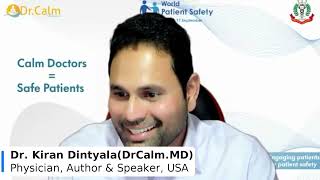
Is COVID Vaccination Safe for Cancer Patients_COVID Help_Dr Naidu_Dr Kiran Dintyala_Dr CalmExclusive
Is DELTA PLUS variant going to be worse than any variant? How to save ourselves from THIRD WAVE!
How to Build Our Mental Strength to Overcome Problems? _Personality Development_Dr Calm