How to Avoid Social Media Stress!
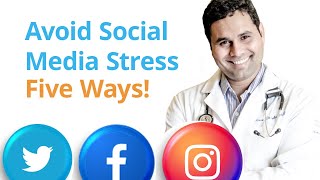
Dr. Kham explains how constant exposure to negative content on Twitter, Facebook, Instagram, and TikTok increases anxiety. Six practical steps: ration your time, visit at set times, skip negative news cycles, seek positive posts, separate online friends from real ones, and invest in real-life relationships.
Chapters
Hello, guys. This is Dr. Kham. The topic for today is how to avoid social media stress. I don't think you need it because I don't think you are stressed by social media. Right. Are you stressed because of social media? Don't say now, because almost everyone. Research shows that the social media stress has been increasing steadily over the past decade because we are so much exposed to Twitter, Facebook, Instagram. Something else, something else. I mean, the moment you turn on your phone, there are notifications coming in and you're looking at it. And then, you know, even if there is some kind of negative information 10,000 miles away from here, it hits you. So how do you avoid the social media stress that we all are facing in this modern society? In the olden days when I was growing up, all I knew as a child was school and home. That's it. Yeah. Maybe once in a while, you know, you go play and you go to your friend's home. There was limited exposure at the time to the world around you. You are in a very protected. You were in a very protected environment at the time. But now what's going on is there is so much exposure, our children as well as ourselves, that we are getting every single day because of the explosion of the social media. What I mean to say is something that happened probably 10,000 miles away from here has the potential to make you feel instantly, very bad, negative, pessimistic about this world. Right. Something could be happening in Africa, something could be happening in China, something could be happening in India, and you sitting here in the United States, could be immediately affected by it. Did you see how much the world has changed over the past 15 to 20 years? And because the negative news spreads like a wildfire on social media, there is so much anxiety, hatred, anger, worry that we are seeing in people these days, whether it is children or adults, especially teenagers. And youth are spending endless amount of time on Instagram, Twitter, Facebook, TikTok, you know, like so many social media outlets these days. So how do you guard yourself as well as your children from the social media stress? Number one, maintain social media ration. So what I mean by that is take probably 30 minutes in the morning and 30 minutes in the evening. Well, if you really need like an hour in the morning and an hour in the evening, that is fine, too. But ration the amount of time that you spend on social media platforms. Of course, there is no limit to the amount of time that you could spend on social media. I mean, that's the reason people are like spending hours and hours and hours Looking at their phones, forgetting the world around them. There is so much negative news out there and there is so much. Sometimes people feel like judged on social media whether oh, this person has liked me or not, this person has commented on my post or not. What if I say this and what if I actually don't say anything? I mean there is so much thinking going on around this social media world and that is stressing out people. And the only way to guard yourself for the social media stress is cut down, cut down the amount of time that you spend on it. You know what I have been doing lately, if I had to do an important task, I usually turn off the notifications from Facebook, Twitter, Instagram. And then actually not just turning off the notification, instead of keeping the phone like this, I would actually turn down the phone like that so that I just can't even see if there is some kind of message coming through. That way I remain totally focused on what I am doing. Otherwise it is so distracting. Number two, allot specific times when you visit social media. What I mean by that is, you know, even though you may have 30 minutes in the morning, 30 minutes in the evening, sometimes you may feel like, you know, I need extra time on social media. Allot specific times in between. Maybe like at lunchtime, maybe for 15 to 20 minutes or maybe just right after work, 15 to 20 minutes, something like that. And let your friends know, hey, you know, I'm going to be on Twitter, I'm going to be on Instagram or Facebook around this time, apart from my morning half an hour and evening half an hour. So that way you are still communicating with them, you're maintaining a discipline, you're cutting down the amount of time that you spend on social media and you are still are connected with your social media friends. Number three, avoid being pulled into negative news cycles. I mean, there is no dearth of negative news these days, right? You turn on TV and there is constantly something negative that is sensational. And you go on social media, Facebook, Twitter, you know, Instagram, you have so many pessimistic posts. So my recommendation is avoid all that negativity because you know, the more your mind focuses on negative information, the more it generates negative emotions. Whatever thoughts that you are thinking, watching that information, absorbing that negative information is going to affect you very negatively. Shut yourself away from those negative, pessimistic, inflammatory posts and pages. Instead what you could do is, which is my fourth recommendation, find positive and uplifting posts on social media. Advocate for them. If you see something that is really good, if you see Something that is uplifting, that is really helpful. Share, share like it. Share it and tell all your friends, hey, look, man, this is really good. Be an advocate for positive news. Also, there are so many people who have recovered from COVID and there are so many good things that are still happening in the world. Why don't we focus on them? Why don't we share them? Why don't we share these stories of recovery and hope? And number five, this is very, very, very important. Pay attention. Do not think all those people, the Facebook friends, the friends on the social media, do not think all of them are your real friends. Right? Differentiate them from real friends. The word friend is taken so lightly these days, especially on social media. Maintain caution that they may not be your real friends. You know, this is just someone somewhere, you know, liking things and saying things. But that doesn't necessarily mean that they are going to care for you when you are in trouble. A friend in need is a friend indeed. Remember that. Do not let your emotions be influenced by your friend. Facebook friends. And number six, do not compare yourself to other people on social media. Just because someone posted a happy face and everything is great, bright, sunny day, that doesn't mean that their life is so beautiful. People, you know, just project a positive emotion on social media so that other people, you know, think good about them and there is no reason for you to compare with them. If something bad is going on in your life and you're struggling with and don't think that, oh, that guy is happy on social media. That guy is happy. Don't think that guy is happy on Facebook. You know, those have such nice pictures on Instagram. Why can't I be like that? No, don't do that. Don't do that, okay? You're causing, you're asking for trouble. When you compare yourself with other people, especially on social media, you don't know what's going on in their life. They don't know what's going on in your life. And that brings us to my final and most important recommendation, which is build deep and enriching relationships. There is a whole world out there beyond the social media. I want you to acknowledge it. You know, have real connections with people, whether it is parent, whether it is your brother, sister, whether it is you know, someone that you know at school, at college, wherever it is, you know, your neighbor, know them. Try to build good connection, human connection. This is very, very important. During this coronavirus pandemic, we all suddenly realize how much of social animals we are. When, you know, all the contact is cut down with people around because of home isolation. Now people are feeling like, oh my God, it's so important to see my colleagues. It is so important to see my friends build on it. Take this opportunity, right? You had a two months of social media craziness because of home isolation. Now it is time to take a step forward and build deep and enriching real human relationships. And when you do that, your social media dependence automatically comes down. I know that I'm asking you to do a lot with regards to the social media stress, but I know all those recommendations really help those people who follow them. They're like so happy and I want you to be happy. So. So I want you to watch this video on how to avoid social media stress at least three times if possible, five times. Remember them. Jot these points down, you know, make a new schedule and have the discipline to follow through what you decided to and you're going to have such a great life ahead. Thank you. Sam. Sa.
More from Dr.



Is COVID Vaccination Safe for Cancer Patients_COVID Help_Dr Naidu_Dr Kiran Dintyala_Dr CalmExclusive

Is DELTA PLUS variant going to be worse than any variant? How to save ourselves from THIRD WAVE!


How to Build Our Mental Strength to Overcome Problems? _Personality Development_Dr Calm