SAVE OUR SAVIOURS (Session 2) - How to Prevent Attacks on Hospitals, Doctors, and Staff
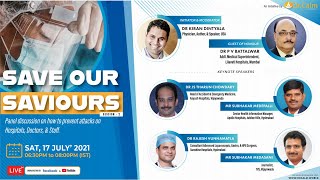
Dr. Calm hosts a panel on violence against healthcare workers, with an ER doctor, hospital CEO, surgeon, and patient advocate. They identify poor communication, unrealistic expectations about costs and outcomes, and physician burnout as root causes, and propose solutions like standardized protocols, multilingual consent forms, and real-time billing transparency.
Chapters
Yes.
Everyone is on. Okay. Good evening to everyone. To the people in India and those people in America. Good morning. For me here time is 6:00am, California time. I'm in San Diego and in India time is 6.30pm So I am so thrilled to invite all the speakers today, the elite panel to join us to discuss Save these Saviors program. The reason why I started this program is every day I have been seeing that so many doctors are being attacked. Hospitals being attacked both physically as well as mentally. There is a mental abuse, physical abuse. It's very, very difficult for people like us, doctors who want to provide good care. And then if we live in fear for whatever reason it is. So for that reason this initiative was started. And today we have our speakers to join us to discuss how to prevent these attacks and to actually understand why this problem actually exists. Let me introduce you Dr. Taran Chowdhury from Ayush Hospitals in Vijayawada. He is the director in the emergency department. And then Dr. Batalwar who is a top executive at Leela Badi Hospitals until a couple of days ago. And then now I think he has taken the role as a CEO I believe at Mittel Hospital in Mumbai. I believe. Sir, we welcome you. And then Dr. Rajesh who is a well known surgeon in Hyderabad Sunshine Hospitals. Very skilled in his profession. And I know him as my classmate, also a very good person. And Mr. Subakar who also I know him for the past few years and I met him actually when I came in came to India in 2018. He works at Apollo Hospitals in Hyderabad I believe still. Yes, in healthcare management. So we invite everyone. Thanks so much. And I need to recognize Ms. Srinija Ramachandra and Nagasar Rao behind the scenes. And journalist Seshu to help us understand this problem. To actually arrange this program, there's a lot of background work needed. I really appreciate them to do all this. Now I think we also have a special guest joining us. Ram Gopal Varma Garu. I requested him just 10 minutes ago. Sir, if you have time, even if you join for a few minutes to share your perspective, we'll be very happy. So I think he's trying to connect his audio, Sir. Warm welcome to RGV sir. And yeah, so let's talk now. I'm going to shut up. I'm going to say one thing before I shut up which is this kind of problem, the attacks and doctors is not new. I was actually reading a journal article and it said no physician, however conscientious or careful can tell what they are. He May not be the object of some underserved attack, malicious accusation, blackmail or lawsuit. Essentially what he's saying is physicians are worried that they are going to be either attacked or they are going to be sued. And do you know when was this article published? Anyone wants to take a guess? 1892. 1892. How many? 130 years ago.
Huh.
They were talking about it long back, more than a century ago. This was published in jama, you know, Journal of American Medical Association. So think about it. It has been there, this problem. So with that I let. Sir, Dr. Batalver, can you hear me?
Hello.
Dr. Batelver, can you hear me? He's on mute, so.
Yeah, yeah, yeah.
Oh yeah, there he is.
Yeah.
Yes sir.
Yeah, he got into a different window there. Good. Hello, sir. Warm welcome to this program. Thanks for joining us. So anyone who wants to share their thoughts about the program, Save the Saviors and why these attacks in hospitals is happening, let's start the discussion. Rajesh, if you want to say a few things based on your experience, what you have seen.
Yeah, I will talk more when this meeting is going on.
Yeah.
These discussions keep on happening regarding the attack and doctors day in and day out. Nowadays they are increased more. The number is more. For any big problem there is always a multi factorial. Not a single side like Dr. Is not knowledgeable or is not dealing the patient properly. That is not the only cause or the only. The final output will be patient attendance will become, you know, they become very agitated and then the we or the doctor is available to nearby. They will beat the doctor. Not that who has done the mistake or why that happened. Most of the time this happens. Young doctors will get this punishment most of the times. And doctors like whoever is in the DMO or this one. So the lack of preparation to face the society is the main reason. Lack of preparation for the doctor, for the attack on doctors, for the increase in the attack of doctors. Preparation in the sense upgrading their knowledge. Lack of infrastructure. In the government hospitals, everyone became busy. Even doctors also. They spend only little time for the patient. They have to increase the time. I observe this day in and day out. Everyone are very fast, very super speed. This is also one reason. The lack of knowledge, proper understanding of the disease, proper understanding of the patient and very, very little. I can say that mistakes by a doctor will happen. But all these things, these factors, if they upgrade infrastructure, knowledge, definitely the attacks will come down. They won't stop. Ignorance is all is already also on the side of people that we cannot stop. In India, ignorance We cannot stop in India. That will be there.
So you're saying that these attacks are happening. Are you saying that is it happening because the fault is on the doctor side or the hospital side?
Multifactorial.
Multifactorial. One factor is how the doctors are approaching the patients, how they are talking to them. Are they spending enough time or not? Yes, that is there always. You know, because especially during COVID times.
Right.
You're asked to see humongous number of patients each day.
Attack occurs even in. Not even even before the COVID time also. That is a continuous process. This is not related only to the COVID time.
Yeah.
Dr. Tarun Chaudhary, what are your thoughts about this? How. How much do you think.
Good evening.
Doctor's role is in these attacks and how much is other factors?
Yeah. Good evening. Kiran. Thank you for giving me this opportunity to be a part of the panel. I. I speak. I am actually Dr. Chaudhary, ER physician working for 15 years in ER medicine. Worked around in a different setup like the medical college, private sector. So with my experience as an ER person in ER Persu I will like to share that it is not. It is what as Dr. Rajesh said, it is multifactorial. It is not exactly the doctor or the patient or the patient's attender. It depends on the level of understanding, the communication skill, the time you spend. See, I am an ER man. I. There is no one who comes walk into the er. That's very less. Patient is bought in a stretcher or a wheelchair. Patient might be responsive. Patient might be unresponsive. He is bought by a neighbor, unknown person who cannot give me any details. He's bought him. I'm supposed to do it. Sometimes most of the thing will solve if you communicate well. If you communicate well, you tell the problem. You attest that this patient is. There's a lot of danger. Chances for him to come out is very less. We will try our level best as we are not gods. And one foremost thing I want to talk about here is for everybody is when a doctor speaks about finances, he becomes a devil. Okay.
Yeah.
So the financial part or whatever, the other part, there should be another person who's going to take care of it. The medical part of it is with doctor patient relationship is going to be maintained there. And once you, as you say that this person needs so much of this thing, chances for him to come out depending upon the age, other comorbid conditions. And most of the time you can solve all the problems of, you know, making them understand Making the attendance understand. But there are certain healthy situations. Like suppose for instance, a patient is unresponsive. He's just pushed into the ER and the attendants are outside. You have no time to talk to the attendance because the patient is unresponsive and he needs immediate medical attention. You may not have a group. You are senior man. You are trying to resist the patient. You do X whatever. You put a center line, you put. You ventilate him. He needs some drugs. All resuscitation, in spite of all your resistation efforts for that particular time, you may not get him out. So breaking news is a very, very important topic where people in neglect. Okay, so I have to go out.
I want to interrupt you for one second because you said something very powerful. I want to reiterate it for people to know. It is really a key skill for all doctors and medical personnel, doctor nurses or any staff is how to break an important news, a difficult news in a way that the patients can understand and we can calm down their emotion. Otherwise they become angry and upset. It is the way of communicating. That is an important point for everyone to hear.
Yeah. And the thing is, breaking news is a topic by itself. So there's a lot of research going on, a lot of psychologists, psychologists, psychologists, psychiatrists, everybody going through a lot of research going on. And in the crowd, you, when you are trying to break the news, they might be agitated, they might have been roaming around for four hours, four to five hospitals, they say that we can't do anything. So he's just come in the last part thinking that there's some justice going to happen. And you say whatever the news you have to break, you have to take time. And the way you stay plays a lot. The second part of the issue is you have did certain resuscitation, okay. You have intubated the patient. You have used a IV line or IV fluid, whatever drugs. So the next part is you're going to show the bill. Okay. That is where the stimulation starts.
Yeah.
Okay. Patient is no more. You have got into the hospital within 20 minutes. You're giving me a big bill, whatever. Okay? So this is not acceptable. That's what. So nowadays actually it is very difficult to explain. But who are, who's going to pay for all this? If it's a corporate setup, if it's. It's a government hospital now, they are now we have working on. We have work on all these things due to our past experiences, the memo, all these kind of. It's an added support to the family. We cannot, you Know burden them in spite of dear. Now is it clear now?
Yeah, now we can hear you.
Yeah, yeah. So it is actually multifactor. And the second part is the other part. Who is on the other side? People who already psych say they are coming into a corporate hospital. Okay. Thinking that these corporate hospitals charge a huge money, they start putting a battery of investigations. And that is a psychological prefixed idea. They want the best invested treatment from a very good doctor with no cost. That is the basic attitude of a person now who is coming out because it's going to pitch the pocket. You have come to another corporate setup where things are happening but you don't want to pay anything. Okay? So that is a very difficult scenario from the if from that prefixed mind. Suppose a young man who has come with chest pain, he's come to er, he's diagnosed to have an mi, okay. Myocardial infection. And he's supposed to be taken to the cath lab for immediate cat may. How are you going to address the person? He's got an early prefixed idea that this hospital is going to charge me more. So you are, you are, you are supposed to say that this CAT procedure is going to cost X number of rupees. So he's not a. He's not willing. These guys are all false. That's how things starts. So out of experience we, we try to say that. Can I speak to your personal family doctor or your doctor doctor friend or a doctor, a family relative who is a doctor. So we try to explain the situation that this is. Man is need, he needs. He's got an MI he needs. He's in the window period. And it is, it saves his life. Okay?
Yeah.
So there's such a lot of, you know, back. The hard work which we have to take. There are not, that is not only the patient. There are X number of patients in the room which I have to keep convincing them. Some people irritate me. All the doctors I say. And then some people, I have the next movement, the next bed is in pain. I have to talk to him very politely. It's okay. There's no point. There's no, don't worry, I've given an injection, it will calm down. So that is the situation. Okay? So out of experience, we try our level best to see what best for the patient. Yeah, that is, that is the main factor. See, once what we see is a prefixed idea that the people are having. Okay? And this, what we say is this should go out. Whether it is the prefix area has to Be education where because they don't want. The opposite is a government hospital. They don't want to go to the government hospital. They want the best treatment with minimum this thing. You cannot do anything and they don't believe you. Trust, trust is one factor. They come for you, they trust you. They just come to the hospital, say that you have and you say that these guys are charging, what is this so much of money they're doing. They're just trying to cheat us. And the problem here is time. He's not an OP patient, he's an MI patient. If you don't have time to go convince him to say, go to the other hospital to get a this thing from the doctor's point. Okay. Yeah, so it's very tough to convince them.
Yeah, very good. You shared a lot of good points, Dr. Tarun, especially for people who do not know what is er. It is the emergency room. ED is emergency department. So when people first come to the hospital with some kind of emergency, like a heart attack, stroke, accident, they go to the emergency room or casualty we also call it. And then there, there are a set of doctors who help them who are the emergency room physicians. And then they triage and say, hey, how this guy is doing? And then if they need a heart attack, they send it to cardiologist to do angiogram. If they have a stroke, they call a neurologist to take care of the stroke. Or sometimes if there is a surgery that is needed, they'll get the surgeon involved. There is an emergency medicine. That is what they do. And what happens is the emergency doctors, there is a lot of pressure on us because so many patients coming in and they had to figure out very quickly what needs to be done. It's not always whether you have spent half an hour, two hours with the patient. Sometimes the two minutes of the doctor's time is very, very important to figure out what is happening. Right, Dr. Theron. And I can definitely say with experience, myself and many other doctors here with experience. When I started medical college, I used to spend almost one hour with each patient to understand what is going on because my knowledge was not so great. Now I walk into the room and within two minutes I know what is happening with most patients because you accumulated knowledge, experience and clinical judgment, wisdom about the patient's situation. So people, I think patients need to understand that just because a doctor spent only two minutes, it doesn't mean he's a bad doctor as long as they are giving the right treatment. Now, I'm not saying that we should not Spend more time with patients. I think we should always do try to spend as much as we can. But as you know, in India, the patient to doctor ratio is really bad. We have so many patients for each doctor compared to developed countries. Even in developed countries, it is on the lower side. So the doctor has no other choice. If he has 100 patients to see. He can only spend so much time on each patient. So people need to understand this point. I'm not saying that we should shun ourselves from spending more time. But these are the factors that one need to understand. Yes. Rajesh, you have something you want to say?
Yeah, yeah.
Many hospitals, many emergency departments lacks of emergencies per day. But attacks occur very rare. Okay. Just to take it as a percentage. Attack on emergency doctors, particularly in casualty has increased this pandemic period. Because cases to emergency load is more than what a doctor can see. So they come and they tell that nobody has reached us or saunas for the last one hour, two hours. That is not the doctor mistake. Most of the attacks pre Covid area or pre pandemic time is in the admitted wards. Admitted wards with a history of patient admission. Or they claim that wrong surgery is done or proper care is not taken or they charge more. The hospitals are attacked most of the times based on this thing Hospital, not the doctor. Even hospitals are attacked can see a number of videos Most of the times attacks with admitted patient who is inside the water. During this pandemic period like attack on ER doctors also has increased a lot. Increase a lot. There's one thing the basic or the most important thing to get out of this admitted attack on doctor Attack on doctors by a patient who got already admitted that everything should be taken care by a physi. The primary consultant. If he is more no knowledgeable about how to deal a patient in all the aspects treatment, financial counseling, everything. Because once he is admitted a sick patient will be seen by multiple consultants. Then critical care people financial aspect will be more. But the counseling should be done through a one person. After discussing the all these things. Most of the attacks are the thing goes to the attendance by counseling by multiple people. Someone comes who don't see some kind of.
Yeah.
Specialist come who don't see the patient for the last 10 days. He will see for is needed only for that day. And then he will come and he counsel water you want. And if we go, everything will be spoiled. Everything will be spoiled. So the primary consultant with a good knowledge of everything each aspect of the all the aspect of patient. All the aspect like financial aspect counseling aspect Then grip over the other systems. These things will definitely decrease. Two days back only we faced the very dangerous case. Very dangerous we have.
Yeah. Rajesh, I would like you to share the dangerous case in a few minutes. But I want to say something. And then I want to give the mic to Dr. Batalwar to give his perspective also. And then we'll come back to the dangerous patient. What I want to say is it is true that attacks are not just on the emergency room but actually it happens once they actually get inside the hospital. Because the emergency room contact is typically less. Maybe hour, two hours, maybe five hours, six hours. But once they get in the hospital and they heard something in the emergency room and the doctor upstairs, they may have a different perspective or the situation might have changed. So they may have to change the plan.
Right.
And then there is a consultant who comes in. And then he may actually have a different perspective about the same thing. Then what I see is there is a communication gap that is created in this entire process. And that communication gap makes it difficult for patients to understand what the hell is going on. They just don't understand. So that communication gap is what Rajesh is highlighting. And that needs to be clarified. I got your point, Rajesh. And we'll go deeper into the topic how to fix it. But I want to say something very important. No matter how the problem arise, you know, whether it is communication gap, whether it is financial, whether it is an infrastructure problem, no matter what the reason is, it is we need to. Absolutely. It is not acceptable for anyone to attack another human being. Whether it is a doctor, whether it is a nurse or whether it is someone else. You know that. I think that attitude needs to be inculcated. Need to be inculcated in everyone in the society. Okay. Without any doubt, we need to make this point very clear. Let us say if someone is walking on the street and the policeman stopped him and asked for something. Are you going to attack the policeman? That doesn't happen too often. Compared to doctors, yes. They have other different problems. Police people. Why? Because doctors or the hospital are they soft targets? Right. So there is a law that tells that people need to be, you know, punished, imprisoned. If there are attacks on doctors. So I just want to make that point. It is just not acceptable. No matter what the reason is to attack doctors or hospitals. It needs to be resolved in a more peaceful way. Whatever it is. But I know the other side of the coin too. When you try to resolve these things in our Indian society where the legal system takes years and years to get Anything done. There's a lot of frustration there, sir. Dr. Batalwari, please share your perspective on what's happening. What we have been discussing. What. What do you think about all this?
Yeah. Good evening all the panelists. Good evening all the audience. Am I hearable?
Yes.
Yes.
Yeah. So the solution to this problem is lying with Quality Council of India National Accreditation Board of Health Care facility. And in India, the hospitals, particularly corporate hospitals, big charitable trust hospitals, tertiary healthcare facilities, they are going for NABH accreditation. And under NABH accreditation all policy procedures, SOPs are let down. Where in such cases, different types of codes are there. Like Code Blue. If the patient is unresponsive, does not response. If there is a such type of situation, any attack or any misbehavior with the doctor, with any of the nursing staff, with any of the healthcare workers, then we activate Code Gray and the systems are in place. We find out the reason. And all the team members of Code Gray they assemble, they calm down the mob over there. They go, they communicate to them. And the reason for Code Gray is disclosed to all the team members through audio system, through WhatsApp message and through telephonic message. So that they will know understand what is going on. And such people are calmed down. Particularly in NABH accredited hospitals nowadays. What happened in Gujarat? Government of Gujarat. They are having so many government hospitals throughout Gujarat. So they have started with tertiary healthcare facility, secondary healthcare facility and they are going for NABH accreditation. So that all the systems, everything, all SOPs are laid down as per the NABH standards and everything. All types of consents, they are in Hindi, English and the regional language. Like in Andhra, it will be in Telugu. Like in Gujarat, it will be in Gujarati. Like in Maharashtra, it will be in Marathi. So that for each and every procedure, any invasive procedure which you are carrying out on the patient, the next of kin, the next blood relation available over there. He reads the consent, he understands the consent and he signs it and gives the permission to go ahead. That is one thing, another thing. All the counselings by the consultant is video recorded in the counseling room. So you help sufficient evidences. In case there is such type of mishaps occurring in any of the hospital. Or if there is a case in the court. Suppose there is a attack on any doctor. To prove in the court of law, we need to carry out collect all evidences of audio recording, video recording as well as eyewitnesses. So that there will be a fear in the society that it is not easy. Because generally what happens, the attacks happens when there is A crowd. So if your security system in the hospital is tightened very well, along with the patient, only one attendant is allowed who can accompany the patient 24 by 7 during COVID time, we are taking all the relatives, all the attendant with the patient, with RTPCR test. And they are not allowed to go out of the hospital. They have to be there with the patient. We define their roles and responsibility. What are their roles and responsibilities? Suppose the patient is in icu. There's a separate arrangement for sleeping the patient relative, who is accompanying the patient, who is admitted in intensive care unit or intensive care, cardiac unit or intensive care surgically. All these patients, relatives, they are always available around the clock. And for each and every procedure, we inform them, we communicate them. There is a separate communication sheet on which the consultant or the treating doctor writes what communication has been given to that particular relative who is attending the patient and his signature is also taken. So all such types of evidences are collected. And particularly in corporate big hospitals, the literate patients, they are coming, they are not illiterate, if you communicate to them properly. Because in medical curriculum there is no teaching about how to communicate to a patient. Communication is learned by the doctors, by trial and error method, through practice. All the doctors, they are not same. Every mentality of every doctor is different. It depends on how many patients he or she is attending per day in opd, how many patients he or she is attending in wards, how many patients they are attending in icu. In country like India, where there is shortage of doctors, the consultant who is sitting in USA or UK sees limited number of patients, either 10 or 15 patients. That's how the patients from other countries, they are coming for medical tourism to India, because there is a waiting list, there is a strict appointment. Whereas in India there is no such strictness of the appointment. You can walk in the hospital, if there is a big queue, people are standing for their number. But if a VIP patient comes, he's an MLA, he's a corporator, he brings along with his him 10 people and manage to get inside. They don't follow the cue, they will give them to the doctor, that corporator or email has come, or member of parliament has come. So do respect. They want. They want that they should be given red carpet welcome in the hospital for their treatment. On the contrary, they want everything that they are the public representative and they should not be charged. Whereas it has to be made clear to all the politicians, because all the hospitals they are surrounded by the pockets of different politicians of different parties and they have their Local stand over there. They bring their people whenever they come. Or they send any patient. There are 10 peoples along with the patient. And their motto is that they are in your vicinity. They are making favor to you. They are spreading good name of your hospital that you are doing so much charity in. Particularly in charitable trust hospital. And they want to take the credit of it. Hospital is spending lakhs and lakhs of rupees on the surgeries in charitable hospital where 2.2% of the total revenue generated is given to the charity by the charitable trust. Hospitals where indigenous patient those who are treated 100% free of cost then there is a separate like after indigenous there is a weaker section patient. They are treated at 50% cost. But suppose there's a paralysis patient coming and the patient is admitted in a weaker section class the patient. After keeping the patient in IC ICU for long time, the bill rises daily. Because daily cost of ICU for each patient is in is more than 30 to 40,000 per day. And it goes on multiplying months together. And the patient is not recurred. Many times it happens that due to hypoxic brain damage the case lying in the bed and the patient's relatives are after after communicating them the prognosis of the patient. They are not ready to take the patient to home. Neither they want to spend money on that particular patient. Under such such circumstances, neither hospital is getting revenue. The bed is occupied and there is a political pressure that you cannot discharge that patient unless the patient walks from the hospital. Patient has come to the hospital walking, he should go walking at home. That does not happen in such cases of hypoxic brain damage.
Right.
Such patients.
I want to make a point here, sir. You said something very powerful. There is an expectation in patients or families that because I have spent so much money when I leave the hospital I should go home completely healthy. While there is a reasonable expectation in most cases. But there are some cases where I mean you just can't reverse whatever that happened. For example, a stroke. For example hypoxic brain damage or something else.
Covid lung damage.
Even Covid lung damage, it may take.
Months before there is no many cases.
Yeah.
We have sent so many cases to Chennai for lung transplant. Because transplant is not happening in Bombay. We get the cadaver lung. How long we will keep the patient on icmo.
Yeah.
We are keeping the patient on ECMO for months together waiting for the lung from the donor. But if there is no cadaver available, no cadaver donation happens.
Yeah, yeah. I mean the one Thing that I think everyone watching this, what you guys need to realize is our any healthcare system, not just Indian healthcare system and the decisions that have to be made in a system, healthcare system, they're very complex. It is not one problem, one solution in the straight line. There are so many factors that are involved in every single decision that is being made. And it is very hard to understand, very, very, very hard to understand even for experienced doctors sometimes. So I cannot expect patients and families, no matter how well educated they are, they could have an mba, they could have been an engineer, they could be a politician, whatever it is to actually understand the complexities of the healthcare system. Only people who are going through that complexity in the healthcare system see what is actually happening every moment. Now what I do say, what I would say though is that through these discussions like this, there is a need to raise the awareness about the problems we face as doctors every single day in rendering care. Because the patient and family and the community perception is that oh, they only saw for 5 minutes. Oh, they are giving me 10 lakhs bill. Oh, why is this costing so much? So there is a huge gap between the medical community and the public in how things are done. In how things are done. And there is a huge trust issue. Over the past 10, 15, 20 years as there is more corporate culture, you know, that we have developed, there is this idea that oh, corporate hospitals are charging a lot. So there is and that needs to be bridged. The trust, the communication needs to be bridged. And I want to take a minute here to let actually Subhakar who works at a corporate hospital to say a few words about it.
Yeah.
Subhakar.
Good evening everyone.
Sir.
Kiran.
Sir, thank you so much for giving us this opportunity. Actually, even last week also I connected to this talk. So I felt that very happy. In last week, sir, you mainly stressed about a point understanding. So this is the main factor for I think discussion of these sessions. Sir. Now two doctors spoke about their issues. And because I am working in a corporate hospital and my entire experience is only in corporate setup. So I am interacted with doctors, patients as well as management. So now I am advocating on behalf of patients.
Yeah. For everyone to know. Please let them know your role in the hospital so that they know the point.
I'm working in Apollo Hospital, Hyderabad, Julie Hills as a information management deputy general manager. So I do interact to patients in the information department and this is a different experience. Actually our talk itself, talk itself is a double edged source. We cannot say that Dr. Had made a mistake or we cannot Say that patient attendance did something wrong. It is a double edged sword, both sides. There will be some plus and minus. And now I am giving my opinion on behalf of the patient.
Yeah.
Normally in Indian scenario, sir, we. We all know that the spending of healthcare infrastructure is very minimal. So keeping this in mind, there is no facilities in government setup. You take either medical colleges or medical district hospitals or area hospital anything if it is required in a specialized care means everyone thinks that only corporate aspect is the immediate solution. So from the villagers, from the cities, from the metropolitan cities, people first will think about health. Means it is a corporate hospital mainly. And in that corporate hospital also people are thinking for the specialized doctors. So normally the if fever comes, normally the patient earlier days patient goes to a general physician. After that assessment will be done. If required, the patient will be referred to the specialist. But nowadays what happened with the help of Google knowledge, right? Whatever symptoms are there, Dr. Google. Dr. Google.
Yeah.
Yeah.
With the Google knowledge that's they are typing in the Google and taking some decision and rushing to the hospital. And nowadays sir, even the patients also searching for the reviews of a particular doctor. Based on reviews they are visiting to the hospitals and they are taking consultation from the doctor. So now we are in that era. With that attitude or with the thinking pattern, this profession, especially the hospital or doctor treatment, it became a consumer activity.
Yeah.
Instead of a restoring health or taking the treatment or bettering better condition from the existing disease to the next level, it becomes a consumer mentality to the customer. So when I'm paying 1 lakh rupee to the hospital, I need to get the sophisticated treatment.
Yeah. I'm giving you 1 lakh. You better bring me alive. No matter what my situation is.
Yeah. That is the set.
One thing I just want to tell you here.
Yes.
Yeah. Excuse me. And one thing I just want to tell you here is that's what actually is mentioned. Like it is like the amount I pay, what I get back. That is what the people are actually. You know what misinterpretation, like whatever misconception they have is like when you go to a five star hotel, you pay a huge amount of bill. You are prepared for that. You wait for hours together. You come, you give them tips. You say that I have breakfast and so. And so life, your life is. Is put into so bad position that you start counting every damn thing for your life. You start saying that what is this? What is that? You go to a five star hotel, do you blame? You go to a movie theater. You wait for three hours to buy a Ticket in a reserved class. Buy a popcorn for extra price. That's what happens. Because it is the perception of the person how much value he is giving to his own life.
Yeah.
That's what happened.
Yeah.
This is what we are stressing again and again. Sir. It is a perception understanding about the medical condition of the patient. So as a patient attendant the main reasons what normally patient or patient attendance experience is the lack of communication as Dr. Tarun Chaudhary sir pointed out. So if you. Sir, you also mentioned that normally the first attempt or attack will be done to the junior level doctors.
Right. Shows that junior level doctors are more susceptible to attacks than senior level doctors. That means Dr. Batalwar will have a far less chance for anyone to attack him. But someone like who just came out.
Of.
Medical college they are at a much higher risk. I think patients have this perception. The same thing with Dr. Tarun Choudhary or Rajesh.
Yes sir. Very true sir. Very true. Because they see this in this process also sir.
What they are doing. Yeah.
In this process also there is a lack of communication particularly related to the local language. See, since I am working in a corporate hospital, right. I have a lot of people from the different states and different own languages. When it comes to. As Dr. Taranchaudrisa told about the ER scenario, emergency room scenario.
Right.
Their explanation or explaining about the patient condition, plan of care and further course and what will be done to the patient. What can be done? What is the outcome of the patient explaining in a detailed way and proper ways the the method of communication sir.
Right.
That may be the one of the reason.
Yeah.
And other thing is as Batwasa told VIP syndrome.
Yeah.
Especially in our corporate scenario.
Yeah.
Sir if you see the Same again either SU or ER there are 10 patients already occupied on beds and one VIP suddenly enters into the either ICU or ER. So there will be mess in that place. So there is a some different attention as Butwasar told that there is a red carpet to 30 VIP obviously or automatically I will compare my care with that patient.
Yeah.
So when it the comparison comes into my mind automatically again the consumer mindset comes. I am also paying the same amount to the this particular care ICU care ICU room charger and I am not getting that much of a preference.
Yeah.
This is the one of the reason and other things sir. And lack of trust on doctors. And the important, important aspect is sir. Now, now nowadays we are all practicing multidisciplinary setups. Yeah. So here the communication barrier especially I'm talking About communication barriers. Suppose Tarun Chaudhary, sir, admitted a patient under him. He's the primary consultant. He gave referral to the neurologist, nephrologist or whoever is required in that particular scenario.
Yeah.
So when communicating to the either patient or patient attendant, there is no gathering of information from the different doctors, whoever is participating in the particular patient care and not giving proper information to the.
Patient.
Sir, I have a point here. I want to make sure.
Yes.
There is a common theme that is happening here. I want everyone to notice. That is communication. Whether it is doctor to patient or patient to doctor, whether it is doctor to consultant, other consultants, specialists, whoever it is, and closing the loop of communication with the patient. You know, communication is one key thing in my opinion is responsible for the misunderstandings which can lead to attacks. And I would like to make another point here. That is communication doesn't necessarily mean that you have to talk to them for 30 minutes. There are ways that we all can learn about communication as doctors or nurses or the staff in two minutes. How can you communicate properly what you need to say and be done with it and tell them, you know what, I have an emergency, I have to go. But I want to stop here for one second and tell you I call the cardiologist and they're going to take care of you. This is what I think. If you have more questions, we'll talk a little later. That itself. But a lot of time what happens is for patients, because we are busy, right? Doctors, we are running and doing this and doing that. And even though we want to, for some reason the things that we want to communicate never gets communicated.
So.
Battel.
Dr. Patel, you want to say something, please go ahead.
Yeah, yeah.
One minute. There is a small saying we used to like tell all the people to decrease this problem. There are four things. One is communication. Second is documentation. Yes. And documentation of what you communicated. And communication of documented.
Yeah, true.
Yeah.
That is what we do in affect everyone.
Now there is so much documentation that we don't have time for communication. But anyway, that's the problem.
And the second thing, second thing is, is all communication. Everything generally happens in a nice way. Only one thing. Spend the time with patient to understand the disease. Spend the time with patient to understand the disease. And spend equally time to the patient attendant to understand what is happening. Most of the problems will solve most of the problems.
Most of the problems will solve. For that one point.
One point. Communication counseling should be there. One point. That is the primary consultant is the proper person to come counsel the patient. Patient attendance.
I agree. You know we are talking about an idealistic situation here, Rajesh. The reason is these things do not even happen in America. I see every day. So in India for that what all the things that you are saying that needs to happen for that, the amount of time and energy and effort that is needed. Probably Indian doctors can see more than 15 to 20 patients a day. And for that the government or whoever it is needs to compensate for the income loss that you're not seeing so many patients. And even it is not about income loss, it's about the fact that you don't. People won't be seen. Because we have so many patients and so less doctors. Sir, Butterworth, please go ahead.
Yeah, yeah. Another factor is transparency from the hospital side. Hospital has to be totally transparent. There should not be any hidden things.
Yeah.
If you have your list for everything, your room rent, your bed charges, your operation theater charges, your consulting charges, various procedure charges, various packages. If everything is transparent, particularly cost wise.
Yeah.
Because cost is a big factor in Indian scenario. A middle income group person who is going to a corporate hospital. Because in all metro cities, all small nursing homes, they are on the verge of closure. Many of them have been closed because the patient wants all facility under one umbrella. And under one umbrella they want blood bank, they want pathology, they want ct, they want mri, they want cath lab. All facilities under one row. And these types of setups are only available with big corporate or big charitable trust hospitals. But if they are putting everything on their website, if they are displaying the digital display in the reception area of the hospital where all the details are just rolling on the screen and it is in the local language, it is in the English, it is in the Hindi, whatever the language the local people understand in all those languages. What are the rules and regulations of the hospital is the responsibility of the patient. What is the responsibility of the doctor? Everything is displayed and it they go on reading it during waiting period. All the patients, patients, relatives they come to know. Suppose they are coming to a particular corporate hospital. Every hospital they have their own policies, they have their own set of rules and regulations for the patient as well as their relatives. Suppose a hospital who is giving credit limit to a patient up to 50,000 rupees. If after 50,000 the bill increases automatic through computer system, SMS goes on next of kin of the patient that so much amount is required to be paid subsidiary. If they don't pay next time the there will be a WhatsApp message in a letterhead format of that hospital signed by the medical superintendent. And it goes to the WhatsApp of the next of King. Then he comes running because we that whatever the bill amount per day is generated, 50% of that bill amount is due to the drugs consumed by your patient. And hospitals, they are not manufacturing the medicine, we are procuring the medicine for your patient from the market. We are not the pharma company, we have to procure the consumables, we have to procure the medicine from the market. If you don't pay, how we are going to take care of 300, 500 patients who are admitted in the hospital. So to make everything transparent apart from communication. Sad thing that in Indian scenario when there is an emergency room, there are no emergency room specialists available in India. So many of the time plain MBBS graduates who are not going for their PG, who are not going for neet exam, they are cashed, they are put dumped in casualty to take care of casualties around the clock. Because all senior consultant, all postgraduate or DM or MCH qualified doctors, they don't come during night. During night, your DNB resident, your MD, Ms. residents, they are seeing the patient during odd hours. Yes, On Saturday, Sunday, all these senior consultants, they are not available because they are going for picnic with their family. Patient care is taken over by the junior those who are learning, they are either DNB residents or they are MDMs, PG students who are staying in the hostel doing clock duties. And they are doing so much duty, they are tired because they are staying in the hospital premises. And all these PGs, they are supposed to work 24 by 7, they don't have any restriction of working hours.
I have a important point here. You made a lot of good points. Transparency is definitely one of the most important things. Communication, transparency. Because people need to know, hey, if you're charging so much, it is because the pharmacology, the medications that we are getting from the drug company, it is charged, they're charging so much. That's the reason we have to do this or whatever it is. The equipment costs so much. I think this kind of breakdown for people to understand, I think is going to be helpful and we'll get back to that point. But also there is another very important point that you made which is the junior doctors being the front line in the casualties and emergency rooms. I will ask Dr. Tarun Chowdhury to comment on it in a second. But apart from that, there's another thing. This physician burnout. Physician burnout. And I'm not just talking about the junior doctors, it is the senior doctors at all levels because there is so much pressure, there is so much work and it's an imperfect system. And despite all your efforts to do help people, sometimes you are perspective in a very negative way by the patients or the attendants. And after years and years of struggle, one has to to become a doctor. Right. MBBS five and a half years post graduation, three years if you're doing dm, you know, is another two or three years. And then in between many other things, I mean to become a doctor, it takes at least 10 years of your life is gone just for studies.
So.
And doctors feel very frustrated because after all this, I mean, is this how people are going to treat me? And I am helping every single day. I'm putting my life at risk to help other people. Especially during this Covid scenario. So doctors are feeling the burnout. And when doctors or nurses or the staff is burnt out, when they are under a lot of stress, there is a greater chance to make mistakes. And that is going to be detrimental for patients. In America, there is a research that says that medical errors are the third leading cause of death. Right after heart disease and cancer. Right after heart disease and cancer. And that's huge. That's huge.
So.
We also need to address the physician burnout aspect. How to help physicians not to be burned out, how to be calm, how to be peaceful, how to handle stressful situations in a graceful way. All these things. So we'll get to that little later. I let Dr. Tarun Choudhary and then the mic goes to subhaar because I interrupted you about the points that you're making. So Dr. Taran Chaudhary, please tell us about these emergency physicians.
Yeah, actually see, emergency medicine is new to India. New to India. I mean to say that I am one among the first emergency in India. Yeah, we had a lot of struggle. We didn't know it. To change the name from casualty to VR concepts of VR was very difficult. A consultant says that, see, why did you treat this case like this? You would have. We would have done better if you have done like this. So we had to coordinate, we have to make a drug committee, we had to do a protocol based approach. Then we had to study and the course curriculum, everything. Because it's all westernized by the time it came to India. And even still now the government is still not recognized emergency medicine in a big way. Recently they have started. It's a must for all the people to all the medical colleges to have emergency rooms. So the things are just developing. There are acute shortage of emergency patients throughout India. Throughout India. And in spite, the outcome of these ER medicine people is very, very minimal compared to the requirement. So until and unless there is a lot of support from the medical Council, the medical colleges, the system, education policies, all that have to change. And it's been improving. We have been doing a lot. We are improving. We have now things are much better than the year with the ER physician and all the equipment, the protocols, everything has been there, but still there's a lot of care to go, there's a lot of things required. So the number has to increase very, very big.
Your voice is not audible. Yeah, now, hello.
I'm sorry, I can get you. Yeah, so actually that's what I was talking about. People like the deficiency of the ER physicians here. The concepts have changed, acceptance is now more better and people are more confident saying that there's an ER there, ER fusion there, so you can go any point of time. Things are happening very fast. Things will take a good. This thing if this particular team is there, this particular ER room is present. So it's growing. It will definitely grow. We'll try to do our best. Hope the government and all the other people also support us to improve the ER medicine teaching programs, curriculum and all the facilities, which is basically required.
There is an important point here that I want to mention about the ER program like Dr. Tarun physician burnout. And I'm not just talking about the junior doctors, it is the senior doctors at all levels. Because there is so much pressure, there is so much work and it's an imperfect system. And despite all your efforts to do help people, sometimes you are in a very negative way by the patients or the attendants. And after years and years of struggle, one has to to become a doctor, right? Mbbs five and a half years post graduation, three years, if you're doing dm, you know, is another two or three years. And then in between many other things, I mean, to become a doctor, it takes at least 10 years of your life is gone just for studies. And doctors feel very frustrated because after all this, I mean, is this how people are going to treat me? And I am helping every single day. I'm putting my life at risk to help other people, especially during this Covid scenario. So doctors are feeling the burnout. And when doctors or nurses or the staff is burnt out, when they are under a lot of stress, there is a greater chance to make mistakes and that is going to be detrimental for patients. In America, there is a research that says that medical errors are the third leading cause of death, right after heart disease. And cancer right after heart disease and cancer. When that's huge, that's huge. So we also need to address the physician burnout aspect. How to help physicians not to be burned out, how to be calm, how to be peaceful, how to handle stressful situations in a graceful way. All these things. So we'll get to that little later. I will let Dr. Taran Chowdhury and then the mic goes to Subhaakar because I interrupted you about the points that you're making. So Dr. Tarun Chaudhary, please tell us about these emergency physicians.
Yeah, actually see emergency medicine is new to India. New to India. I mean to say that I am one among the first emergency in India. Yeah, we had a lot of struggle. We didn't know to change the name from casualty to VR. Concepts of VR was very difficult. A consultant says that see, why did you treat this case like this? You would have, we would have done better if you'd have done like this. So we had to coordinate, we have to make a drug committee, we had to do a protocol based approach. Then we had to study and the course, curriculum, everything. Because it's all westernized by the time it came to India. And even still now the government is still not recognized emergency medicine in a big way. Recently they have started. It's a must for all the people to all the medical colleges to have emergency rooms. So the things are just developing. There are acute shortage of emergency patients throughout India. Throughout India. And in spite the outcome of these ER medicine people is very, very minimal compared to the requirement. So until and unless there is a lot of support from the medical council, the medical colleges, the system, education policies, all that have to change. And it's been improving. We have been doing a lot, we are improving. We have now things are much better than the year with the ER physician and all the equipment, the protocols, everything has been there but still there's a lot of to go, there's a lot of things required. So the number has to increase very, very big.
Your voice is not audible. Yeah, now, hello.
I'm sorry I couldn't get you. Yeah, so actually that's what I was talking about. People like the deficiency of the ER physicians here. Yeah, the concepts have changed, acceptance is now more better and people are more confident saying that there's an ER there, ER patient there. So you can go any point of time. Things are happening very fast. Things will take a good. This thing if this particular team is there, this particular year room is present. So it's growing. It will definitely grow. We'll try to do our best. Hope the government and all the other people also support us to improve the ER medicine teaching programs, curriculum and all the facilities, which is basically required.
There is an important point here that I want to mention about the ER program. Like Dr. Tarancha, they said this is a relatively new training program in India. That's a big issue by itself. Big issue by itself. Like Dr. Batara said, like I used to work in the casualty back 15 years ago when I was fresh graduate from MBBS, you know. And unfortunately, when you just come out of mbbs, your knowledge is still limited. Yes. You have become a doctor, you have learned a lot of things. Definitely. Theoretically, I'm sure you know a lot. But you still don't have the same experience as, you know, a doctor who has done this for five years, 10 years. And in India, I did see this tendency where the specialists may not be available on the weekends to actually guide, especially during nights. That is a problem. So if you look at all these different points, right. It is largely an infrastructure problem, a training issue, a government issue. Because a lot of these things depends on government policies, isn't it? How they are doing things, whether they are giving enough support for medical community to do get the training right and providing the facilities for doctors to get trained in whatever that is needed. And are doctors getting compensated properly so that they can provide what they need to? I mean, there are so many issues behind the scenes that the patient, the families, the public need to understand. I'm not in the delusion that we can solve this problem in one session like this, but every week or two things like this happening will let people start thinking about it. Oh, they have this problem. Yes. They do not maybe have a solution, but they had this problem. So anyway, I would. Yeah, I would let Dr. Butler say something and then go to Subhakar.
Yeah.
Yes, sir.
Due to COVID pandemic, it has attracted the concentration of the doctors. It has attracted the concentration of the government. It has concentrated the attracted the state government. So all the government funding due to Covid now diverted to healthcare system health care systems. They are building up in state where there is more patients of Kobe like in. There was a shortage of oxygen during the second wave of the COVID And we have seen that how the oxygen plants were created within 15 days of time by the government. It is a big plant which can cater to thousand bedded hospital of the patients, those who require oxygen therapy due to Covid. So now government has taken a lot of efforts.
Yeah.
Due to Covid and now the amount of GDP which is given for health care sector this time is more, threefold more than the earlier years. And funding is coming from international agencies also for the healthcare. And it is eye opener. This pandemic is an eye opener to all the leaders, to all the political parties, to government, to public representatives, MLAs, MPS, corporators, everyone. So now there is good attention of all these politicians to bring these changes. Government setups from primary health centers starting from rural hospitals. Because the COVID has spread to the rural area. Same in the urban area, same in the metro cities. Even today the local trains in Mumbai they are not running. And only the local train is running for the healthcare workers. So they will come for their duty through local trains. Because local training Mumbai is called as lifeline of Mumbai.
Yes.
If the local train stops, it means Bombay is not working. Yeah, that is the scenario. So the government, the railways. Railways have designed the bogeys which are gone to the rural areas where there are no hospitals. And these bogies, isolation wards produced inside the bogey patients were admitted. And the railway doctors they treated these patients inside the railway coach which is into isolation wards. So these things has. This change is a dramatic change in the Indian scenario. And has been taught by the COVID COVID 19. And now as the virus is mutating now we are preparing for third wave also. And huge amount is spent to create the facilities during second wave. Government have not predicted that after finishing first wave, second wave will come so immediately. And they were not able to cope up with the second. So for third wave they have predicted that it will be having focus on the pediatric age group. So good. Pediatric hospitals are coming up. All pediatric facilities picus nicus especially for the pregnant woman's vulnerable age group. So now various sections of the society they are giving importance for their healthcare system. And this is a good thing that the pandemic has taught to the government to prepare themselves for such type of emergencies.
Awesome. Awesome. I'm very happy to hear such a great response from the government in Mumbai Maharashtra. And I hope everyone does the same and learn from them. I will let people in Andhra Pradesh comment on it. But back to you. You made three points before understanding communication. And there are other points that. Yeah. You want to make. Please go ahead.
Yeah.
As Dr. Batuhar sir told, there is a lot of improvements after this COVID pandemic. There is a spending of budgets or healthcare infrastructure is definitely increasing.
But.
But here we are discussing about the violence against doctors.
Yeah.
So this violence, One of the another reasons in between actually I'm sorry again, I'm bringing the same thing into discussion. I started my valid point. One of the valid point.
Yeah.
That is for medical fraternity especially the treating doctors mainly focusing on the clinical aspects which is related to the disease. But here sir, if you. If you observe there are many people involved connected with the patient. That is patient attendant, family members and there are a lot of people. So there is a gap again communication gap. So clinicians are focusing only on clinical aspects. Yeah, but my point is here clinician also has to understand the emotional aspects of the.
Can hear you, Subhaka. You're going in and out.
Now. Is it okay, sir? Yeah, yeah, yeah. My point is the treating doctor, our clinician has to understand not only the disease pattern and also the emotional and psychological issues of the patient as well as the family members. So that is the one area causing the violation.
Yeah.
So what do you say doctor?
Your voice is going in and out. If you think that is it same with everyone else? I can't hear Sabakar. Can everyone hear Sabakar?
Yes, yes, we are hearing.
Yeah.
I want to say because what Sudhakara has told that there has to be some psychological aspect, some emotional aspect of the patient and their relative. But Sudhakar, everywhere we are practicing the medicine which is like diagnosing the patient with various modalities of the diagnostic test. So it is the type of medicine which we are practicing is evidence based medicine.
Correct, sir.
Housing the disease. We are giving a list of diagnostic tests to the patient. Once the test reports comes, the doctor sees all the reports and the diagnosis is declared. It is communicated to the patient, patient's family. But subsequently if the prognosis of that disease or that diagnosis is convinced to the patient and his family then there is no much problem of such attacks on the doctor. So we are not focusing on the prognosis of that particular disease which is causing harm to the patient which the doctor is treating. But sometimes there are chances that the line of treatment given by the doctor fails. Particularly in cancer patient. You know that the cancer patient is taking chemotherapy, taking radiotherapy, undergone several times surgeries. But the prognosis, if it is a young patient, the. The prognosis has to be told clear cut to the family that if you try even we have seen the chief minister level people who is treated in our hospital went to usa, taken treatment over there, came back to India. After few months he expired. We have given that prognosis before going him to usa.
Hello.
This is the prognosis of your disease. So the prognosis has to be clearly declared and to be understood by the family. Thank you.
Yes.
It all again coming back to communication. Even Subakar, what you're saying is understanding and communication.
Yes.
Doctor playing a role not just as a doctor giving the diagnosis and treatment, but playing the role as a compassionate being and communicate that compassion to the patient. A lot of doctors are compassionate. That's the reason they are in this profession. But that compassion may not always be communicated to the patients. And also patients sometimes are in severe pain because of the disease. Emotional pain. And that needs to be understood. And for that again, it comes back to time crunch. Whether you have time to do that or not. Yeah. Is there any other point that you want to make, Subhakar?
Yeah. Another thing is education. I am talking about.
So the.
As we all know, there are many hospitals going for accreditations. So all accreditation bodies talks about education, patient and family education. So here the only one thing what we observed is we educate the patient. But it is a normal education. And the regular, regular education what the doctors and nurses what they are give as a medical record, Health information manager. I see records. So all those records. Records documented the fall risk assessment educated or. And is in educated or something educated. It is not relevant. May not be relevant to the patient condition. Here the education. Even the accreditation bodies also expect that there should be a disease specific education. This is the point. There are some cases missing education to the family members as well as to the patient. So this, this. This is the one lacking in the hospitals from the doctor side as well as the other healthcare provider side. So that there is a anxiety or there is a raise of hands or abuse words. These are things are happening.
Yeah. So there is another huge point that you made. Education. I think the answer to almost every single problem in life is education. Almost every single problem in life is education. Proper education. Unfortunately that doesn't happen. So how do we solve the problem of education is going to be important to patients? My suggestion to the patients is. Yes. I mean Google is not the best way to learn about the physician is.
The best way, sir. Physician is the best way.
Physician is the best way. So I want to mention this. Approximately two and a half months ago when I saw all these things happening in India I have started personally a new initiative. I actually started a YouTube channel for health education for patients.
Correct.
It is called Dr. Kham Sanjeevani Channel. The entire goal of this channel is to provide evidence based Right. Information for patients. Now patients, what they need to do is yes, we can provide the information, but they need to watch it, learn it and ask questions. So I think that is a continuous process. It is not about one day, it is not about one week, it is not about one month. Because like in ancient Chinese medicine, what they say is the doctor is given incentive when the patient doesn't come to the hospital. When the patient comes to the hospital, they get de incentivized. You know, that means health is given a greater focus than illness and prevention is given a greater focus than treatment. As a society, as a country, as a healthcare system, I think we all need to go in that direction and immediately there'll be a question, oh, then all the hospitals and doctors will go out of business. No, that is not going to happen. Because human behavior is hard to change, is very hard to change. But even if there is a little bit of this effort, you know, from the community, from the doctors, from the government to educate people about various diseases, that is going to reduce the unnecessary burden. Lot of times people come with silly complaints which unnecessarily takes away the doctor's time, right? Unnecessarily the patient has to spend their money, right? These things will automatically be taken care of so doctors can focus on the real important things that they can treat that reduce the burden on the system. So education is very important point here. Yes sir. Dr. Battala, please go ahead.
Another thing is discipline amongst the society, amongst the community.
No, we don't want to be disciplined in our community.
The people, they don't go from primary health care to secondary health care to tertiary health care. They are actually jumping to tertiary healthcare facility in other countries like in uk. First you have to go to gp. Unless GP refers you to that particular consultant or specialist, the patient is unable to approach directly to the consultant or to the higher tertiary healthcare facility. So that system is lacking in India. From primary health care to secondary health care to tertiary health care. This system needs to be implemented by the community, by the government, by the society. Then only the burden which is coming on the corporate hospitals, big hospitals will get reduced and simple things like hydrocel, appendicitis, these cases can be resolved at secondary healthcare facility.
Yeah, true, true. I mean that kind of gradation is important and people need to know and that requires a perception change and that also requires training properly at various levels and that requires proper infrastructuring by the government itself saying that, you know, and having standards. I mean people who are watching this program may be thinking what all this has to do with violence against doctors. The truth of the matter is it is not, is A one factor thing is multifactoral thing. There is a system issue or infrastructure issue that we have been talking. There is a patient side issue, the education and understanding and their attitude, their perceptions about doctors. And there is a doctor issue. How doctors are approaching the patients, how doctors are communicating the patients. So it's a multifactorial thing. Rajesh has stayed quite for a long time. So let's give him an opportunity to say something. And along with that, I also want to invite Ms. Manjusha, a patient advocate who was treated. A patient was treated recently by Dr. Rajesh at Sunshine Hospital, Hyderabad. I think it was a very difficult patient. It took almost a month or more to provide care and do what is needed. And Sunshine Hospital has done a great job in keeping the cost to the minimum for the patient, providing the best care with minimal costs and all that. Ms. Manjusha has then written a Facebook post about Dr. Rajesh and Sunshine Hospitals. And the reason for inviting Ms. Manjusha to join us today is I think the public, the patients and families in general, they need to hear the good things that are happening in the hospital. When you look at all these reviews, what happens is those people, like for example, you're talking about doctor ratings and all those things, right? Usually it doesn't matter whether it's doctor, lawyer or it's a restaurant or something else who writes reviews are the people who hate whatever happened. So those are the people who have a motivation to say, this is really terrible, this guy is bad. But they don't talk about all the 99 times that Dr. Batalwar or Dr. Tarun or Dr. Rajesh or someone else has done an amazing job. They only look at the 1%, you know, that happened and it's terrible. And all of a sudden there is a big talk in the media and everywhere saying that, you know, this guy is a rakshas. Essentially that is how they portray it. But they don't see all the great things that they have done whether the hospitals or the doctors. So this communication also need to happen. This awareness has to happen. So I really appreciate Ms. Manjusha to come here voluntarily and wanting to share her experience. Please go ahead, ma'.
Am.
Hi everybody. So I'm meeting Dr. Rajesh also for the first time, I guess on the video. Thanks for having me over here. So I must say that there are few points that I really loved about Dr. Rajesh and how he handled the whole scenario. So generally my perception about, you know, hospitals or doctors, our doctors are very busy and then it's Almost like that mechanical communication where we wait, we go into the room and then we meet. And so in that whole process, we do not get a chance to have that holistic perspective about the case. And even we may be forgetting few questions that we really want to ask them. And then the doctor is gone by then. So these are the kind of issues we actually face. I lived in USA for about 15 years where I am used to being educated about the conditions that we have or, you know, what are the. I mean, we still make the decisions, but we are presented with options and we make the choices based on what, what education we get from the doctors. So that is how I am used to. But things here are slightly different. You guys have been already discussing about a lot of that. And in this particular case, my teacher's husband, he met with a serious accident and he got admitted in a very serious condition into a particular hospital. And for like about almost more than 24 hours, we were literally struggling to understand the severity of it and whether he's going to make it or not. And this particular family had been. They cannot afford the kind of, you know, the expenses also, basically they both had been jobless for the entire Covid year and they recently had twins. And all I was thinking is what would happen to the entire family if this person, you know, doesn't make it. And somehow one of my contacts actually knows Dr. Rajesh. And he spoke to him and he was pretty great about like analyzing the reports. We approached several different doctors in the whole process asking if there is a chance for this guy to survive. And most of them said no. And first point about his diagnosis and his capability as a doctor is he analyzed the situation and said he's too young. So there are chances. We have seen several cases. So let's look at it in a holistic perspective and see whether he's going to survive or not. And there's a lot of compassion there because I mean, these people have to take lot of loans if they have to, you know, may come up with all the medical expenses. And if he doesn't make it, then it's like a mute point and the girl has to survive with all these loans for the rest of the life. And so he actually looked at all the reports, whether it is not just the liver aspect of the issue, but he also talked to the neurologist. And then he made sure that the brain he would be recovering from coma. He had chances. Everything is a guess right at that point. But still he made like a guess that there is, there are, there is higher probability of him surviving. And even after we move him to sunshine at that point, right from the day we moved him into sunshine and even till now, he's still not out of the woods, Dr. Rajesh had been continuously supporting him and his family, giving the appropriate information at the appropriate times. So one of the most important thing that I really loved about Dr. Rajesh, not just for the clinical or his skill perspective, but his communication, he would just put in a one message saying that, you know, surgery went fine and it's a success. That's all we need to know. Because it's, it's a lot of anxiety issue for the, you know, for the patient's, you know, friends and family or whatever you want to call, because they are always kept in the dark. And finding information is like such a big deal. And when we get that just one liner from somebody saying, hey, the surgery is a success and you know, it's going to be another two months, but still at least we know that it's a success and we are relieved for that point. So that compassion aspect is something I really love. Thank you, Dr. Rajesh. And then the third aspect of it is the, again, the compassion, but the humanity side of things. So these people really couldn't afford and we had been doing a lot of fundraisers and stuff like that and he did everything that he could from the hospital side and then, you know, reducing the bills to the extent possible. I mean, medicine has become very expensive and that's the reality of the current day because everything comes with a cost, right? I mean, nobody can work in vacuum, but they did whatever they could to reduce this cost. And I really appreciate that and that is what made me write that post. Even once we shifted him to the care center, he did not wash his hands off. He's still supporting us by giving the advice as and when needed. So it's like an end to end case. I mean, he actually looked at him and we are hoping that in another couple of weeks he would be able to sit and recover and probably go home. But it's not like a one time thing. And he, Dr. Rajesh had always been available in making, making him survive. So basically I call him as a savior. Literally. I mean, he literally gave a life and saved that family. And that is what I really liked about the whole thing. You, you may throw all the money you want at a patient, but you will not be able to. I mean, if, if you cannot make them survive, right then it's a huge void in the family's lives after that. Point. So from all those aspects I really appreciate Dr. Rajesh and I didn't realize but I. I mean I wrote the post because I wanted to write and I just so happen came out on doctor's day. But truly appreciate Dr. Rajesh. Really appreciate whatever you have done and what guru are Reddy Garu and Sunshine Hospital has done. I mean all the support. I truly appreciate that and I really do not want you to ever lose that and continue doing it. Thank you.
Thank you Manjusha. That's really nice of you to share your experience. And I want to say one thing and then I let the other doctors speak about this. But you know, and there are many other people like Manjusha in Dr. Rajesh panel, Dr. Batalwar's panel, Dr. Tharun's panel who they have saved thousands of lives in their career. Now people need to understand this because there is one mistake that happened. Because there is one misunderstanding that happened. We should not completely say oh this is a terrible hospital or terrible doctor. If there is a consistent bad behavior. Yes, that is a totally different thing. You know, when the mistakes are repeated again and again despite bringing them to the notice of whether it is organization or to the person, that is when it is a problem. But if we start inviting patients there will be a thousand Manjushas to share good things about different doctors here. And I think this kind of sharing of the positive information I think is important for the public to see. Oh actually the mistakes that are happening is the tip of the iceberg. There is much more that is being constantly done beneath the surface that we never see it. And that which is not seen, I think that is what we need to bring to light and help people see. So thanks so much for sharing this experience. Please go ahead. I think Matalwar raised his hand and then Dr. Rajesh, if you want to say something about this.
Yeah.
Like by the way, we have 19 more minutes. We'll close the session sharply at. You know, for me it is 8am for you it is going to be 8.30pm but give me five minutes to summarize in the end. So you have approximately 10 to 15 minutes to say what you want to say. Everyone else.
Yeah, one minute. I was just about to tell about a dangerous case.
Right.
Primary consultant should triage his patients, whatever patients he has under him. Like right now, some eight or nine patients under me. It is the most serious case. Spend more time with that. There should be no limits to treat a patient to spend a time to the patient. How I will tell that dangerous case we had to operate second surgery in just a matter of five days. His name is Sujatali. Sorry to say that but Sujatali, that family is very, very emotional with a bad background like rowdies and all, whatever. So he went without our knowledge. He is deteriorating like anything. After the second surgery also is deteriorating like anything. So they are coming every 15 minutes. We need to counsel them. So ultimately what we have to do is to stay overnight. Yesterday overnight in the hospital with the patient. That helped a lot. Luckily the patient has some improvement and he's okay now. This kind of efforts also will calm the patient. Yesterday, day before yesterday they are very aggressive and today they are calm. Even if he dies, we will come out of that, you understand? Otherwise it's a very big mess. So we have. We should not have any limits. That time. From morning 10 to evening 6, I will be in hospital. After that only over phone, switch off the WhatsApp in the night. In that way you cannot help many people. We cannot. I think the pressure then your name, fame, money, whatever is all included. It's a whole package. That's what I want to tell.
That's a good point that you made, Rajesh. Lot of times about is this communication and compassion. Now there is also something called compassion fatigue that everyone should know. Because now let us say this is your 10th year of practice or 15th year of practice or 5th year, whatever it is depending on the person and the experience that they had and how they are being treated and depending on the hospital, you know, and so many other factors depending on that person's mental state. You see, there's so many factors that determines how a person behaves in a situation. Compassion fatigue is essentially after you take care of it, take care of it, take care of it, you get burnt out and you're like, I don't. I really. I don't care anymore. You know, it happens. And statistics show that especially in a ICU setting. I'm giving American statistic, I don't have Indian statistic. In ICU setting there is a 40% burnout rate of doctors. You know, these ICU doctors are intubating patients, mechanically ventilating, taking care of people who are literally dying every day and bringing back them to life. And it takes a toll on doctors. Takes a toll on doctors. And it is important for the medical society as a whole. You know, the hospitals, the organization, the government to think about how to support doctors, right? To provide them that net of support so that they can continue to be great doctors. Like what? That they are supposed to do right. So this is something that I want everyone to think about. Everyone to think about. Dr. Tarun, do you have any comments on this?
Yeah. As you said, there is a point where, you know, beyond that for everybody there is fatigue. In spite of all these. This Covid situations, everybody did great. There were people who are calling us at 11 o', clock, 12 o' clock morning, early morning, 3 o' clock saying that I had 99 temperature and now I see it is 99.1. See it doesn't matter what. It might look silly, but he is in home quarantine and he's. He's fearing death because this time death is just around the house. Somebody of the kitten came or somebody of their friends died all the time. So in spite of all we had to get up in the morning, come back to our work and the stress, work stress is hardly. Is all there we are is always a stress zone and we always have it. Of course I enjoy it because I'm used to it and see if there is a point of time where I can't be my phone and I'm forced that it happens. So that point of thing, there must be some. It depends on what we say is like for the scenario in India for the doctor patient ratio. This cannot be taken care of. Even how much ever passionate you might be, you might be you, you might. You can concentrate on 1, 2, 3 patients, but not might be. If you have a less sick, less number of sick patients I think you can take. But suppose you have two, three people sinking down at the same time. They expect you to be there at the bedside. They can't do it. It's like that. There must be something which has to, you know, look into it.
Practice specific too. It is practice specific too. Depending on, you know, what kind of practice your emergency medicine physician, you have a different set of rules. You know, once the patient leaves the emergency room, you're out of picture typically. And if surgeon it is different. And then if it is a cardiologist or an endocrinologist, it is different. So these need to be very individually tailored and focused how to handle these situations. And this kind of discussion just needs to happen more often and come up with protocols or solutions that makes it viable to implement any program to help. Yes, Dr. Battleborg, please.
One tagline more than health care, human care that is important. All the doctors fraternity, if they learn it by heart that they should treat equally and give more importance to human care. Health care is taken care of by all automatically. Yeah, automatically. So that is important.
That is very important. You know, I think it is just not for healthcare. Honestly speaking, to solve all the problems in the world, there is only one thing that human beings need to do that is be more humanistic. It's pretty simple. We just need to live up to our own definition. What we labeled ourselves as human beings and humanistic. But often that is not the case. There is greed in the society. There is a lot of ego in people.
Right.
And there are many other negative qualities in people. And that is what leads to these unnecessary complications in society. Just take for example during COVID people were selling remdesivir in black market for 60,000, 70,000. What kind of nonsense is that when your neighbor is dying that you're trying to take advantage of them. And I know some big people too, you know, who are involved in this, who have a lot of money. It doesn't happen just like that. It's usually a racket. You know, a lot of people get together to make this happen. So at the end of the day my answer to almost every single problem in this world is we just need to be more humanistic, lessen our egos. I'm just not talking about doctors, the patients, the politicians, every single person in the world. All human beings lessen our ego. Learn how to be happy and calm in your life. If they do these three things, 90% of the problems will be solved. 90% of the problem. Subhakar, any last words?
Yes.
From your side? Yeah.
Yeah. As I speak about on behalf of the patient, I'm also telling to the patient group that violence is not the.
Solution, is never the patient.
If the patient feels I'm not treated properly or I'm not justified. So there are means of other platforms. So violence is not the solution. And I, I strongly believe that Dr. Kiran. So there are many laws protecting the doctors and there are some laws are going to come into the foresee very soon. So one message we have to spread in the community is raising hand against the doctor is a punishable offense. Yeah, that is the message. We need to spread the news into the community. It may not be the one day or two day but repeatedly it has to like these programs many. It has to come into life as well as there are many discussions has to be happened what doctors are sacrificing, what they are doing and how they are work for the human beings. As Batwasar told humanity, humanity is the more important thing. So raising voice or raising hand against the doctors is a not at all a solution. There are other type of platforms available to raise the voice as well as the, to file the any complaint that is either consumer forum or criminal cases or something like that. And one more thing is the medicine cannot cure 100 all the diseases. People has to understand that there is a plus and minus. Some people will come up with a good, good result and some people will, may, may not affect that treatment. Suppose you take the plasma therapy in covert cases. So we don't know what is the result of plasma therapy. So doctors tried the plasma therapy. There are some patients come out from through the plasma therapy and there are some patients who did not get the positive result through the plasma therapy. These are the two things I want to reiterate in this forums.
Yeah, violence is never an answer. It doesn't matter what the situation is. It may make you feel better in that moment, but you will face the consequences. Whether it is violence against doctors, violence against another person or something else, it comes back to you in a different way. Maybe you'll get punished or you know, you will face other consequences. So violence is never the answer for any problem. For any problem. And yeah, you know, there are, there are a few themes because I think we barely have seven minutes. I want to close this session with a overview about what we actually learned today and the future direction that we need to take. First of all, I want to thank every single panel member here, including the patient advocate Manjusha, for being here and help us explore this problem. I am not under the delusion that we are going to solve this problem all at once today, but I think the direction that we are taking will help guide many people who watch this one. What needs to be done. So the key things, number one, from the doctor side, what we need to do, be more humanistic, spend more time with patients, be compassionate, upgrade ourselves with our knowledge. Right? And that is from the doctor's side I believe is very important, giving them enough attention and time. Number two, coming from the patient side, they need to also educate themselves about health. They need to take precautions about what needs to be done. For example, during COVID everyone is saying take the vaccine, wear the mask. If you don't, then it's going to be a problem. The same thing with diabetes, for example, control the sugars by eating less or following the proper diabetic diet, doing exercise. There are patient related things that they can do in general to improve their health that will reduce the amount of frustration and the patient expectation needs to change. They need to understand our healthcare system better. Now, coming from the infrastructure side, hospital side, government side, what needs to be done is transparency. Transparency. This is what is going to cost for this. And everything should be clear there. Then people know I'm going here. It is going to cost me so much money. And this is what is being given. I think the transparency I think is definitely missing. And even if the intention probably is not to hide it, but if it is not brought to the forefront and communicated to public about, hey, the drug company is asking us so much money to give us this medication. That is the reason it is costing you so much. Whether you want or not, it is up to you. But this is what it is, this kind of transparency and communication. And also from infrastructure side, building more medical colleges, providing proper training and providing training to the doctors themselves about communication, communication and other important aspects of healthcare. And some amount of psychology, patient psychology, how to understand it when we come out of medical college, right? We don't understand any of those things because no one teaches us. I still remember my first time, you know, more than 10 years ago when I was fresh out of my internal medicine residency practicing the way I used to teach with treat, the way I used to talk to patients was much different than now. Now I have developed a sense of a balanced way of talking to them and breaking the news. And sometimes these things can only be developed by experience. No amount of knowledge or teaching is not going to be sufficient. But we can supplement, we can reduce the experience time for very little if we actually provide good knowledge about how to do these things and training in medical colleges. So all these different factors need to be considered. And finally, violence at all levels should be condemned. No matter what the reason is, that is not the solution and it is a punishable offense. And that needs to be known to people aggressively. This needs to be informed everywhere, proper awareness about it. And of all the things ultimately we all, whether doctor, nurse, patient, politician, if we all are more humanistic, that itself is going to solve lots of problems. In general, I think that is a summary that I have gathered through this session. Any last words? We have two minutes. Any last words from anyone?
Yeah, yeah.
Whenever some incident happens, like many people don't, doctors will support doctors like opposite people. I mean they will support themselves all the time. It's not the mistake of people who attack attitude and all like we can't change that, we can't say that. So to decrease this kind of incidents, what is the best thing we can do is the as we thought properly communicate, increase the knowledge of the primary consultant or the person who is treating there. Then communicating the attendance, attendant treatment aspect is One part and almost equal aspect is the communication with the attendance and proper communication. And as SAR told, we have to be more human. I mean, treat the patient humanly. And then coming to the financial aspect, we have to help each and every patient. Not only the patient who has big bills, small bills also, as far as possible, there are many ways to help them. Decreasing your fee or talk to the hospital administration and all. So these things will decrease the attack on doctors.
Yeah. Thank you. Dr. Taran. You have anything you want to say?
Yeah, what, what, what? The gist you have told is, all right. You should treat them passionately in spite of whatever stress you are in. The experience matters. You learn a lot, you tend in spite of. They become aggressive, you try to cool them. That's what basically they need because they are in pain, they are in stress. So that is the main part of it. So whatever you are, somebody has come come to you. It is your responsibility to take care of them in whatever way you can. It may not be possible all the time because.
Doctors are human beings too.
Yeah, human beings too. So that, that is the primary thing, what we have to do.
Got it?
Whatever. Yep. Yeah.
Thank you, Dr. Bacharvar. And then this will be the last.
Yeah.
Thing. Yeah, go ahead.
Constitutional right of all the citizens for getting free health care is the solution. Like in other countries in UK NHS hospitals, they are meant for the UK population because the health is a constitutional right over there. Where in India health is a state subject, health is taken over by the state. That particular state is spending the X amount on the health infrastructure health facility. If it is amended in the constitution that the health is the constitutional right of the Indian person, then there will be total change and all health facilities by the government, by the municipal corporations will come to that level of the accreditation or standard and quality of the health care will improve and the government will take the total responsibility of the health. Whether it is preventive health, it is curative health or it is after that also.
Yeah, maintenance.
Yeah, yeah. Everything if it is taken work because government of India is taking good amount of taxation from the population, they can increase the tax.
The GDP that is being spent on health care is 1% in India. There is a proposal by someone saying that if it is actually they make it 2.5 or 3% that is going to give enough oomph to build the infrastructure and provide the right thing. And you know what I want to do for future direction, What I really want to do is I really loved everyone's expertise and ideas in this Zoom conference. Today everyone made such amazing points. Subakar, Tarun, Battalwar. Rajesh. Everyone. Manjusha. So what I think I'm thinking for the future sessions is. Maybe we need to take one aspect. Communication. Corporate hospital bills. Humanistic how to be physician burnout. Patient education. Like this. Take topics now, divide it and then provide more awareness. Jump deeper into those topics. Maybe that is what I want to do in the near future. Thank you very much everyone for your time. And I'm sure we'll talk again pretty soon. Bye.
Thank you.
Take care.
More from Dr.


Is COVID Vaccination Safe for Cancer Patients_COVID Help_Dr Naidu_Dr Kiran Dintyala_Dr CalmExclusive
Is DELTA PLUS variant going to be worse than any variant? How to save ourselves from THIRD WAVE!
How to Build Our Mental Strength to Overcome Problems? _Personality Development_Dr Calm