SAVE OUR SAVIOURS (Session 3) - How to Prevent Attacks on Hospitals, Doctors, and Staff
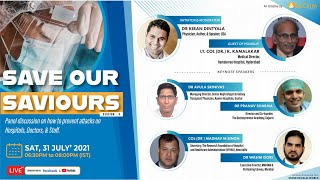
Dr. Kiran leads doctors discussing violence against hospital staff during COVID-19. A Lancet meta-analysis found roughly 4,600 incidents. Panelists blame patient stress and unexpected deaths, exhausted staff, and weak regulation, proposing better communication training, security measures, and clearer billing.
Chapters
Yeah.
All right, so welcome everyone. Good evening to those people in India and good morning to those people in America. This is Dr. Kiran Dintiala and for the past two and a half to three months we have been doing these zoom calls on various issues starting from COVID stress management, post Covid complications and many others. Also we have done a few sessions on fighting against this terrible thing that is people attacking doctors and healthcare systems. And it is the program Save the Saviors. We need to help our doctors, we need to help our healthcare system to survive. And people need to understand that attacking doctors, killing them, hurting them is not going to solve any of the problems that they are facing. In fact, most doctors are on their side, on people's side. So how can we resolve this issue? What is the reason for the rise in violence against doctors? We have done a few sessions on these and we are going to go further with this session with the help of our elite speakers in the panel. Dr. Kamalakar, Dr. M.M. singh, Dr. Pranav Sharma, Dr. Awula Srinivas. Let us welcome them all to join this discussion today. Please sir, let's go ahead. And I would like to invite you all to briefly introduce yourself for a minute or two and then we'll dive deep into the problem itself. And Myself, I am Dr. Karen Dintiera. I actually live in San Diego, California in the United States. I have done my MBBS from Andhra Medical College in Visakhapatnam and from then I came here for higher studies. I have done my internal medicine, I have done my Master's in public health. I'm also an author, speaker and a stress management consultant. And it's pleasure to join all the panel members today. Anyone can go ahead, we can get started.
Yeah. I am Dr. M.M. singh and I have graduated Markforces Medical College and I did my post graduation in hospital management from all India Institute of Medical Sciences and PhD in Hospital Management along with MBA in Finance Management and presently I am serving in army and commanding officer can say in civil parents, the CEO of a hospital and in a large number of forum because of I am alumni of aims in a large number of forum. I am a member of policymaker body of government of India. So I was in one of the platform where this rule against violence against doctor was framed and I was.
Yeah Dr. Singh we can't hear you. Your voice is going in and out. Also the audio quality was not that great.
Yeah, so I was there in framing the policy. So I will discuss some of the causes and what to do list for the hospital and the healthcare professionals for this violence against not only doctor but also for healthcare worker. And I hope this session will be very enlightened. Because a large number of people are there who can teach us and tell us what extra can be do to prevent such incident. Thank you.
Thank you Dr. Singh. Thank you. Anyone who wants to go next.
I'm Dr. Kamloka. I presently live in Hyderabad. I'm the medical director of a trust hospital Ramdev Rao Hospital in Kukatpalli. I graduated from Venkateswaram Medical College, Tirupati. Then joined the army and served for 25 years. While in the army I completed my postgraduate diploma in Hospital administration from Apollo. And I became an ISO auditor and several quality standards. I became a certified auditor. Then I served as a CEO for 11 years in a corporate hospital. And for the last one year I am in this hospital as the medical director.
Awesome. Thank you sir. Thank you.
Yeah. I'm Dr. Pranav Sharma. I am audible.
Yeah, you are audible.
I am Dr. Pranav Sharma. I did my MBBS from Karamsar Medical College, Gujarat. And I did my Ms. From BJ Medical College, Andabad. Then I did my MCS in Cardiac Surgery from Ames New Delhi. And after that I have joined the UN Metha Institute in Cardiology and Research center. I operated. I was operating for five years. And then I went into hospital administration. Then for the five years I was chief medical administrator in that hospital which is the 1200 bed hospital. And after that since COVID I have formed my own company. And it is called the Dr. Pinner Academy. And it helps. We intend to empower the doctors to become successful entrepreneurs. And we already have 2,000 members in our community.
Awesome. Thank you Dr. Prana Sharma.
I am Dr. Srinivas. I'm practicing upon this.
We can see you.
Yeah. There's some problem with the video.
Okay.
It will get corrected or I'll switch the device.
So.
Then I did my MBBS from Jabalpur Government Medical College. Then MD from Nagpur. Thereafter DM Nephrology from SCPGI Lucknow. And since last 20 years I've been in Guntooth practicing as a nephrologist. Have much experience regarding the laws and rules. But being a private practitioner we face this situation in and out. And have thought of various reasons why this happens and all. So let's have a good healthy discussion about and put our thoughts into it how we can elevate this problem. Thank you. And thank Kiran and all for organizing this beautiful seminar.
You're welcome. So thanks so much everyone for Introducing yourself so that our audience know who are speaking. You know, I believe that no matter what the problem is in this world, it has to be solved only peacefully. Any other way of solving the problem usually leads to more problems. Only when people can come together and using common sense, peacefully figure out what needs to be done, understand each other's perspective and come to a conclusion only then actually it helps. So in the past few sessions that we have done, what I understood is there are three factors. One, patient factors means from patient side, what is it? What, what is their problem? What is their struggle? Understanding that why are they getting angry? And then the second side is from healthcare professional side, like, what is it? What is it like for them every day to go to work, especially during the COVID times, how difficult it is. And yes, there are deaths because of COVID There are increased expense of treating patients these days compared to what it was maybe 15, 20 years ago. And patients getting upset and doctors taking that heat. That is another perspective. The third is the healthcare system itself, both private and government sector, the administration aspect of it. You know, what are the flaws? What are the problems in the current system, healthcare system itself, that are leading to attacks and violence against doctors? These are three separate perspectives. In the end, everything comes together into one. But understanding them is going to be very important to solve this problem. So with that I will let any one of you to get started and explain to people what it is like for doctors who are struggling during this Covid time. People need to understand it. They think that we are simply sitting inside, you know, wearing a white coat and just making a lot of money. But that is not true. The day in, day out, how much struggle that we go through as physicians needs to be understood. And also we physicians are also human beings. We are human beings, we have emotions, we have families, we have problems. So people need to understand it from that perspective also. So please go ahead. Anyone?
Yeah, let me start with this. We studied this violence in healthcare sector deeply in last four, five years. And we can demark this in these incident pre Covid era. And during this Covid era. Yeah, we have to understand the psychology of patients in Covid era. In what in Covid I found people are suffering. And people are suffering in an unexpected manner. A young healthy family member, a young earning person of a family, because of COVID suddenly he is admitted to any hospital and across globe. Not only in India, it is in Europe, us, everywhere. And suddenly the people are losing their loved ones. That if I you can recall our during community medicines time, that is the epidemiological triad that the host agent and environment. So in this Covid era, if you see this environment is suddenly changed. Because if anybody is dying because of road traffic accident, heart attack, the relative knows the patient is suffering from this disease and he may die here. The problem is that relative is not knowing anything. Just a viral fever admitted in a hospital. And the relative can't meet the patient. And suddenly he get the news that your so and so loved one is no more. Yeah, that is the main reason of anger across globe. And recently the Lancet has published the report one meta analysis which says approximately 4600 incident they quoted in 238 articles across globe. And that is the main reason which they quoted. This is the main reason for because unexpected thing. And suddenly in that situation these type of violence is happening. Especially in Covid situation. Suddenly the bills the payment is because the insurance was not covering that Covid portion for those people who died in first wave and first half of second wave. So suddenly everybody has to pay in lakhs. In US it is in millions if that person is not covered in that insurance cover during COVID So during COVID we found the causes are different. Pre Covid the causes were different and main reason was which I feel that the communication problem. Communication to patient and their relative not getting information what is happening to their loved one inside the hospital. That was the one of the most common reason I found another. I found that the soft skill. Because soft skill you can't say the like percentage wise more because the doctors are busy in Inside wards inside ICU for 10 to 14 hours as seen in Delhi. The people are working in a sift. They go inside the COVID ward for 14 days and they come out after 14 days. So those stressful time is very difficult especially in India. And I hope third waves should not hit India at least for healthcare worker Because a large number of fatigue and in fatigue the doctors are in streets and strain. So might possible there may be some problem with the doctor side. But seeing both side environment as well as if you can see the doctors and healthcare workers they are also in stress and strain. So these two problems. Other problems are also there which I will other speaker will also mention. So I feel these communication to the patient and their relative was one of the main cause for this type of stress and violence in India and outside India also. Now over to other speaker also.
Yeah, you made a lot of good points sir. And you know there are two things that I am consistently seeing. No matter who the speaker is, no matter which session it is. We have done a few sessions before this. There are two things that constantly come up. Number one, communication. Communication between the doctor and the patient or the healthcare system and the public that keeps coming back. There is a huge communication gap. For whatever reason, whatever reason. You know, number two, stress. You know, people are under stress, the doctors are under stress, the healthcare systems are under stress. And this has greatly magnified during the COVID era. And because of that, when people are stressed, they act out in a way that they normally wouldn't. When people are angry, upset, for whatever reason, then they do things that they normally wouldn't. So I want to make a note for all of us here today, no matter what the rest of the discussion is, I think these two things, communication and stress, are things that must be worked on as a society, as a healthcare system, and as individuals and as doctors. And you mentioned something very important. That is, sometimes these doctors go inside this Covid ward and stay there for 14 days, for 14 days in some places. And in some places they have stayed for maybe a week. Some places they are just staying for 12 to 14 hours in a shift, go back home and then come back. But no matter how we look at it, how doctors are sacrificing their lives, they know if they stay there, the longer the contact with the COVID patients and the COVID wards, the higher the chance for them to get Covid and the higher the chance for them to get sick or even die or take the virus to their families. And every doctor knows this. And at the end of the day, still we go and we take care of the patients. And we know that many doctors got infected and some doctors have also died. And I want people to understand.
Despite.
All their anger and upset, you know, let's address it. But I want people to understand how difficult it is for a job as a physician. How difficult is it it must be to live in that fear and still help other people. All the public, take a moment and think about it.
Think about it.
I know people who do not want to take care of their own families, who do not want to even see their friends or family or even touch them, even after two months of COVID Once the COVID is gone, they're afraid. But you see now someone having active infection with COVID and you going there and taking care of them every day. And this is especially during the first wave and even during the second wave where the vaccination was not still complete, and everyone knows that there is a high risk. I just want everyone to take a moment to think about whoever is watching this video.
Yeah.
I will hand over to the next speaker. Dr. Kamala, you want to say something?
Yeah.
Yeah.
What I want to say is I have traveled from peace to violence during my tenure as an intern in the government hospital. Then while serving in the military hospitals and military MI rooms while in the army.
Now we are seeing more violence in.
The public life than in the military life.
Huh.
The violence in military is at the border, not at the hospital.
Yeah.
Then I came to the corporate sector where I was the CEO. And then I came to the trust hospital. There is a slight difference because the trust hospital, the rates are comparatively less than that of any other corporate hospital. Now, there are two instances I have seen number of incidents of violence, but there are especially two incidents that trigger the violence. One is when there is death, and second one, when we hand over a bill, their death, they are not prepared for that outcome and they react. And the bill also, if the bill is not the one that they are expecting for the service which we have given, then they cannot compromise on it. And that also triggers the violence. In both these cases, we have done analysis in the incidents that happened in our own hospital hospitals. In both these cases, what we thought was that the attendants or the family members were not prepared for these two outcomes. A heavy bill or the outcome of end of life.
Yeah.
So there, of course, as Dr. M.M. has said, it is the communication. It can be the consultant, it can be the administrator, it can be the nursing staff or any other paramedic, whoever is dealing with the patient and what they are communicating to the family members. So as a team, these healthcare personnel are supposed to travel with the attendants, that is the family members, and prepare them for the outcome that is about outcome of life as well as what is happening in the bill. The other thing is, every morning the financial counselor comes and he says that till yesterday you are paid this much advance and now you will have to pay the. You are paid. The total estimate is this much. You will have to pay the bill. See, first thing in the morning, he receives this bill. There they cannot take it because they are more worried about the progress, the clinical progress of the patient. Let our people communicate the clinical progress and then tell them how the bill has taken place. They would have to explain the bill also, not simply give him a bill and ask him to pay. So we thought that we are not preparing them for these two things. And most cases, these are the two instances that have triggered the response. And of course, how we communicate.
Yeah.
You are about to say something.
No. Yeah. So I mean, I totally agree with you in what you just said and I just want everyone to take a note of these. Number one, is the death issue or when the patients are very, very sick, is that being communicated beforehand or not? Because a lot of times what happens is based on what I heard from other doctors also in the past discussions is the patient doesn't know the patient or the patient family, they do not know until the last minute that the condition is so dire. They do not know that severity of the disease until last minute in many cases, not because doctors do not want to say it, but it is because either they don't have time or they did not think about telling them communicating beforehand. So there could be many other factors and that triggers violence. That is I heard from other people too in the past. So what can we do to improve that communication? Is my question to the panel.
I think.
Yeah.
And the second, second thing I want to mention and I let you guys speak and second thing is the financial responsibility, the bill, how exactly handle that issue? We'll discuss after the communication thing is done.
Yeah. Okay.
I think I want to make another point and it is that as the doctor or the healthcare team is stressed, the patient is also anxious and patient's relative are also anxious. And second thing is the patients that we are seeing, they have changed, their relatives have changed and we have to change with them. They are more informed, they get more information from WhatsApp, they read the disease and come. So we also have to, you know, grow ourselves. Yeah. Most important thing is communication. But communication should be continuous and clear. It should be all throughout because now the patient relative want a share in the decision making. Gone are those days of 90s when we used to take decision for them and they just used to sign. Now they want to active involvement in the decision making of the patient. And other point is that whenever patient is actually deteriorating, we don't tell, we fear telling them, thinking that he might improve some time and then we'll tell him by that time it is too late. So it should be on a continuous basis. If patient is not doing well, tell them that he is not doing well. We are trying our best. Second day, if he's still not doing well, then we should tell them that still he's not doing well despite our efforts and not keep them in dark. And second, the transparency of the bill should be there. If you give an estimate and if you're overshooting it, tell them why we are overshooting it. What extra we are doing or what extra we have to do. We have to take them in confidence because they might be illiterate, but they are not fools.
Yeah, that's a very good point, what you said.
Yeah.
So, you know, everyone knows that the information needs to be communicated and continuous. Dr. That I have spoken with. No, now my question for all the doctors in India, and as you're representing them and what you are seeing daily, I am not seeing it because I have a different system here, the way it works. So my question is, how many doctors realize this point in your colleagues, among yourself that this communication is very important? Number two, how many people make the effort to communicate? Number three, what are the barriers?
I think first thing what I feel is that now there has been a training part and it should be in the curriculum also that how to break a bad news or how to talk to the difficult patient. But one more, one more idea I was thinking is that when we tries the patient in a casualty, we should try as a relative also. If somebody is really fussy and really asking too much things, we have to approach him a little different way. And some of the things could be, I mean, whenever we take a consent, we should do a CCTV recording of all the consents and that we used to do in our hospital also. And we should keep it in the hmis. Every day we take a consent on video and record it and keep it in the hmis. That helps in case of when the things go wrong, actually explain the patient throughout the course of the illness.
Right, right. So the question really is, if anyone wants to answer, how many doctors in India, in your colleagues, amongst yourself, realize the importance of communication and amongst them, how many people actually make the effort to make that communication? And if not, if that is not happening, what are the barriers to communication? What is it really that is making it difficult for the communication to happen?
Yeah, let me answer, because I'm telling you, all the doctors in India, approximately, I can say 70, 80% doctors, they know the importance of communication, but barrier is because of workload, they are not able to come out and tell like which patient is suffering from which disease. Especially if I can tell you examples of bigger hospital where ICU beds are too many and they are totally overbug. So one barrier is the workload. Second, there is a misconception among clinician, with all the clinician, because I am from administrative side, some people, they thought this is a job of administration people to go and tell about the condition. This is more. Now this culture is developing in surgeons, gynecologist, basically all surgical specialty they come out and they brief. But from medicine side I am saying it is lacking all the surgeons they definitely come and they brief about the case pre op and post op period also and during evening and morning round also. So this is there and now MCI has developed the curriculum of soft skill breaking bad news communications. So the time will come in a one or two year when this culture will develop because the people are now knowing that there is a legal implication if they any case goes wrong and if they will not communicate in time then there will be a problem with the consulting doctors. So some barriers are there. But I think 70, 80% doctors are no like this. Communication has to be done and they have to do it.
Yeah, 70 to 80% doctors recognize the importance of communication but do not have enough time to actually do that. Everyone agrees with it or do you have any other numbers to throw kind of same.
Yeah, I am not totally agreeing with the just communication.
Okay, go ahead please.
Communication is important. There's no doubt about that. There are lot many other factors despite good communication, everything as already pointed out by our eminent speakers. There are few lapses in our curriculum and our regulation system and everything. I will go into a broader aspect looking into our own personal experience.
Dr. Srinivas. Yeah, we'll jump to the actually that aspect in a minute. But I want to get from everyone like around do everyone agrees that 80% or 90% what are the number of doctors recognize the value of communication and it doesn't happen because of the workload. Can we all kind of on the.
Same page on that gap in implementation but they are unable to implement it for some reason? Yeah, is one reason.
Workload is one reason. Okay, so we'll delineate the communication barriers why they happen shortly and I let Dr. Srinivas to go ahead and explain what he was doing.
Yeah, please go ahead.
Communication as I said is important and despite the communication is the perception of the patient and their relatives. And as rightly Dr. Has pointed out it is the bill and the death unexpected things. But despite that, even after knowing and has been communicated about the details of the past expenses, they come for the best treatment and say first say then do whatever you like. And ultimately if something goes wrong, they know it's going to be critical may go wrong. But just for the sake of avoiding bill they do all sorts of this. There is one particular group of patients who know that they will not be able to pay. They will ask you to go ahead and do everything and they will find a conflict so as to avoid the bills. This is one of the major problems which are facing in and out. Second is what I want to make it clear is it is from the both sides. It's from the doctor side as well as the patient side. From the doctor's viewpoint of view. I'll tell you, everybody knows and we agree not all doctors do it sincerely. Some amongst the doctors also as with other businesses, everything there will be 10%. Those will be not up to the mark and doing all sorts of listings. Why don't doesn't our regulatory system take care of these doctors to avoid punishing and spreading a false message regarding this. And what the patient perceptive is that all the doctors are like this. But most of the doctors are doing their correct job but not exposed. Only the 10 or 20% who does the wrong that comes into the limelight via media. The media shows like one of the Telugu film which has shown that even after the death the billing goes on and the patient was kept in icu. That has created a furrow and that has led to a lot of the cases the last 10 years after that movie just come and say that this style, the movie style you are doing it. They know it's not there. Everything is clear. But despite that the media is one of the things which has to blame. Second is our own regulatory system. Can you name? Suppose I am from Andhra Pradesh, Andhra Pradesh Medical Council. In the last 10 years how many people or doctors have been brought to the book for qualified practice or untoward or whatever we do.
How many?
You can count the numbers. If our regulatory system is good, Suppose I'll tell you for just one example of an antibody. As soon as the patient comes in for a simple infection or with a fever, what antibiotic do we start? Most of our colleagues will do oral antibiotic if necessary will be start. But we all know there are our colleagues who start with a highest antibody policy. Because there is no antibody policy, there is no regulation. What you should give and whatever you do is right in the legal terms. So if there is a regulatory system, a proper diagnosis and if not we can approach the regulatory body and who takes care of it in a proper way. The problem with the regulatory body is the. Suppose I give a complaint on my one of my colleagues who is doing it wrong this thing. They will show the letter to that colleague and tell you that this complaint has come and the state is interested only in money like income tax department. They will not show you that letter. They will search and do everything and ask you to pay the money. Because state is interested in finances but not in regulating the practice which the doctors are doing. If this is done discreetly, you will get lot of complaints. The system can be rebooted and proper techniques and proper methods of practice will be. Doctors will also be in this thing that yes, somebody is checking, we should do it properly. So that is one point. This, it's not the absolute point, but in that perspective, if somebody is taking care and people know, when people know that nobody is contradicting the doctors, they're doing as they like, they take the law into their own hands. That should not happen. If there is a regulatory body, they can approach, they can complain and they can check that, yes, this has been done properly in a proper way, in a limited period of time. It should not be going to the ports and prolonging a consumer for forums, taking years together, wasting time. It should be in a proper manner then, yes, this, the confidence of the patients in the doctors will increase and this incidents tend to decrease. Second, media, as I already said, media plays a very important role. If something goes wrong in the hospital, they. First of all, they show the hospital in a bad light. Second, the next day they comfort their own vested interest. If one channel shows something or one paper writes the next day, all their colleagues, everybody will be there in hospital, not for the coverage, but some other vested interest which you can understand. And those. So these are the things which are happening practically, those who can manage and sort out this, they are good at it. They don't come into the limelight, those who are poor at it. So communication skills here also, they matter not only with the patient, with the media and other things. Yeah, so, yeah, these are the pertinent points, apart from those which the doctor has already discussed. So I thought this will be interesting points and that's where this. Thank you.
Absolutely. I mean, like we discussed earlier right at the beginning, there are three factors. One, doctor factors, two, patient factors, three, administration and you know, health care system and other factors, including media. You know, all those factors and you know, what you said is true about the regulatory bodies. You know what, what I noticed, you know, let me explain a little bit how it works here in America. The regulatory body is pretty strong here. You know, we call it the. There is HIPAA compliance for privacy.
And.
Then there is a regulatory body that comes and checks all the healthcare systems, how they are working, how they are not working. But I can immediately see what you already said. That is, they come to pride on the healthcare systems so that they can get more money. You know, yes, there is some regulation, but they come Every four or five years, whatever it is. And then it's a totally different ball game once the regulatory system is in place. But the regulatory system should be in place, but not in a way like how exactly? Not in a way to just make money. You see what I'm saying? So that's a much bigger discussion. That's a much bigger discussion than.
What.
Can be done in a few minutes. But I do believe in general, some regulation is needed. You know, oversight is needed. But how much and how exactly do it will be the question for everyone. And coming to the media, we cannot control media because as long as media thrives on their TRP ratings, on sensationalism, and that is how they make money, they will find even though you have treated 10,000 cases, none of them had complications and you have one and that one somehow got into the media, that's it. They are going to talk about it for the next 90 days until the hospital is dead. Well, their intention is not for the hospital to, you know, be dead, but they just simply are doing their part where, you know, they're doing their job in their mind. But the repercussion can be really bad. And we have seen it during the COVID season, some hospitals doing something not right, but they started blaming all the hospitals. So I understand the media aspect, but I don't think we have any control over the media. And we had a couple of media members in the panel before and their point of view was we were simply reporting what was there. It is not like it did not happen, it happened. We are simply reporting it. But that is not exactly the entire truth because they just do not just report it, they magnify it. They magnified it 100 times or a thousand times. So anyway, so that's my perspective on it. And I let other people comment on these two aspects.
Also, I have one more point I wanted to place before this forum. A couple of decades back, we were having the model of family physician. Patients used to go to the particular family physician. There was a bonding between the physician and the patient as well as the patient's family. There, whatever is the outcome, they place the patient's problem in the hands of the physician. And whatever is the outcome, they thought that the best will be done by him. Probably in the current ecosystem where the hospital consultant is writing the admission for the patient and thereafter, this bonding is probably missing. Yeah, in fact, in us I come to know that the family physician system is being revived. So something like that comes up, then these issues of discontentment will not be there. And Naturally the violence will not be heard of. So some sort of a bonding. It's not exactly the family physician system should come. The hospitals should develop a bond with the patient's family during the stay of that by giving the proper counseling. One need not be a communication expert or soft skill expert. Timely communication, if it is maintained continuously, it is being maintained probably will carry the patient with the healthcare personnel.
That's an amazing point, what you just mentioned, Dr. Kamalakar. And we had the same point discussed in one of the previous sessions and Dr. Gopichen has suggested the same point where now the family physician system is gone and the hospitals have taken the role. What the hospitals should do is build rapport with the community around them. The hospitals should own the community around them, whatever the population around and go there, do free health checkups, give them something for free, educate them, build a connection. And by doing that, the good thing is for the hospitals they will develop a good name among the community. So from a revenue perspective it is good for them when something bad happens to the patient. They already know this specific hospital is doing something and so they come to the hospital. But also the other good thing is because they have that rapport already built in, right? When patients come then probably there is going to be better communication and there is better trust. Because right now there is a fracture of the trust between public and hospital systems. There is a fracture of trust definitely. Right now the perception I think of people is that all these corporate hospitals are thieves and they are trying to take humans, you know, lakhs and lakhs of rupees for no reason. That's the perception. How much truth is there or not is a separate discussion. But that is the perception and our reality is totally based on perception. It doesn't matter what is happening. If we perceive something to be that way, then our actions are going to be that way. So you made an amazing point and that needs to be considered as one of the most important things to be done. Yeah, please go ahead. Other members.
Yeah, indemnify is one of the ways to indemnify yourself is making system, sop and checklist. If you have them, then you can fight in the court of law. Also that I have done the right thing. And second is like it is not always a patient doctor's problem. Sometimes there are politicians also who want a cheap publicity and they come with the goons and they, you know, just to make their name, they do this kind of things. So hospital security should be strengthened. Every hospital should be, you know, have a touch with the local police station or something. And there is a. Now NABH has introduced a code also Code blue. Initially we had this code with an hour hospital. Whenever that code was announced, like a code blue, whenever this code was announced, two administrators, two doctors, senior doctors, two nurses and two people in security in normal uniform, they used to come and they used to sort out the matter. That can be also considered.
Absolutely.
And that's amazing point again that improving the healthcare, the security system inside the health system, inside the hospitals. Again, this point was also discussed in one of the previous panel discussions. And the reason why I'm mentioning it is it seems most doctors who are participating in these discussions, our wavelength of thinking is almost the same. Is almost the same. Because it is true, like you said, there are goons or politicians or whatever it is, they come inside and can harm people. But what about the fact that we are seeing in the news where some doctors are being followed to their home and are getting beaten up at their home or on their way. What do you say about it?
See, one way, one thing I interestingly saw in one of the hospitals in Rajkot, my friend's hospital, what they did was they have put in in the lifts in all the public areas, they have put in the notices that if you do violence against the doctors, then this is a punishment. In a way it is educating them that you better not do it. And that that point also should be clearly visible whenever a big hospital is made.
Yeah. So we are talking about policy and law.
Strict laws are in place, but the people should be aware about that.
Strict laws are in place, but are they being enforced is the question.
No, Most of the state governments they have made, they have issued government orders jivos violence against the doctors will be stand there said that what is the nature of violence and the punishment, the penalty that they have to pay and all that. But that is not a deterrent at all. These posters of the copies of the jivo are being displaced in the reception and the front office in many hospitals. But that is really not happening. In spite of the jivo being there. It is not becoming a deterrent because no one who has unjustly resorted to violence is getting punished. And recently during COVID times, the government has. So the central government, they have issued saying that these are the punishments for various things, but that they said as long as the Epidemics act is in vogue, under that act they have displayed all these things penalty. That means once Covid is over and this 1857 act is out of it, then again they become nullified outside the act. The central government also did not say that it is a, that there will be a penalty for the violence against the doctors. They cannot be selective like that. You know, government also that only if there is a violence during COVID times it is the, the action will be taken. And during non Covid times it is unwritten that you can go for violence.
Dr. MM Singh, what do you say about this?
You're not audible sir, please.
Yeah, yeah. In India recently, Ficci has done a study across India why violence is happening across India. And surprisingly all of you will get to know that in that root cause analysis. It came like in India for primary health care sector, secondary healthcare sector is not that good. So what is happening?
We can't hear you sir. I think you're connectivity is not good. I think.
I think what he was telling was secondary and primary health care system is not good. So our system is overburdened. That leads to the chaos and the waiting time.
True.
Because the primary and secondary health care centers are probably not equipped with everything that is needed to help patients. What is happening is all these patients are finally ending up in the corporates and there, you know, whatever happens, that rage is being shown on the corporate systems. Can we say that? Is that what I think he's trying to say?
Yeah.
Is it what you do?
Yeah. And also the public health is so overburdened. If you have 500 patients waiting in the OPD for you, I don't know how will you see it, how much time you can give to one patient.
Overburdened doctors is a big thing. Very big thing. Like we discussed about the. What is it? Barriers for communication. In my opinion, this is purely my opinion. 90% doctors are good people. Yes. There are 10% that are bad. No matter which profession you go to. Alright. In what I see in my friends, my colleagues, whether here or in India, most of them are sensible people and they have come to this profession because they want to help people. You know, they want to do their best. However, there are barriers. Even despite their wanting to do their best, there are barriers and I believe that is where we need to focus on. And one of the major barriers in my opinion is overburdened doctors. If you have like what is it, 100, 150, 200 patients that you are seeing, in your opinion, you won't have time to say anything. You just have to see them. Right. Because people are waiting for you. So comment please. Can anyone comment on this one? The overburden aspect of doctors. Trying to say something.
Yeah. Overbunded doctors, especially in the government sector it's very difficult to work with the number of patients. The public sector which I see, yeah. When it comes to the private we can yes limit our numbers. We can do we have the liberty to cut down and usually we take care of them. But yes, in the government hospital for a limited period of time with a limited number of doctors, the number of patients is very high. You can't do justice to those group of patients. Investigations are limited. The public sector treatment is very limited. That's one of the major reasons that people are seeking treatment in the private hospital which is expensive, which they have to dig out. And the lack of insurance or the spending on the public spending on the health care is very, very minimal. That's one of the major factors with the people have to shell out from their pockets. That's again comes to the bills which we have already discussed. They don't expect that they're going to be sick and then they have to lend money for the treatment and that pushes them into vicious cycle of selling their home and land also in many, many cases which we have seen. So these are also the various factors. So insurance has to come a long way, public spending has to increase. So these are all pretty vast topics to as Karen already said to be discussed at least.
Yeah, yeah. So when you mentioned about the public spending on healthcare system. So that is such a huge topic actually because in some countries like Sweden and some other European countries the government takes care of the health. Even in England, so Canada there is a central system where people just are taken care by the government system. When there is a health issue that arises in America it is insurance system where you pay out of pocket to the insurance people and then you know they help you and you need it. Now in India everything is coming out of pocket. The insurance system I think is very small portion right now. Right. And how do we address this problem? Because I can see that to be a major factor in inciting violence financially. There are two things Dr. Kamlokar mentioned right at the beginning. One is unexpected death. Number two is the bills that they are receiving. The bills that they are receiving. So how do we any comments on this financial aspect?
Yeah, the government, government of India has started some insurance scheme on low cost basis which is known as some Atal Bihari Bajpayee Insurance and Pradhan Mantri Suraksha Yojana and you know in this Covid period those people who can pay now if you read the balance sheet of all these insurance company being HDFC Life SBI Life or PNB MetLife. All these company are now doing these insurance things and a substantial jump in all those people in India across especially in all tier 1 and tire 2 cities people are taking insurance. So this Covid has teach us a lesson. All of us has to take some insurance for not only for us for entire family. So it will take a time. And now government has also started spending on healthcare sector. Sometime I feel I should thank COVID 19 this virus that it has boost up the Indian healthcare delivery system. So now us a substantial portion of GDP is now government is spending on these healthcare infrastructure. Now they are converting all the district hospital to medical hospital. Oxygen generation capacity of India has increased. So it will take time and these funding will gradually it will progress from non insurance to insurance part. I think in 5 to 10 year you will find presently 5 to 10% people have taken the insurance. But in 10 year time it will cross 50%. So that will be after 10 year India will be totally different especially the healthcare sector aspect. If you can tell with the financial coverage across India by insurance and definitely through the government setup all the hospitals which will be likely to develop on PPP model or the government on government expense. Definitely it will boost up in five to 10 years. Over to other panelists.
The question I have is for healthcare system infrastructure.
Yes.
Now because of COVID people are, you know the government is now realizing the importance of spending on healthcare and they're doing it and it's going to take, I don't know, five years, 10 years. What is going to happen meanwhile is number one, of course, number two, it's a good step. But how do we cope with all this healthcare stress in the next five to 10 years? Number two, we should not do the same mistakes as America did. In my opinion the insurance system is the most evil system in America.
In my opinion.
I think, I hope my insurance carriers are not hearing me say this. It is the most evil system exists. I hate insurances. You ask any doctor, they just hate it. You ask patients, they hate it because they charge thousands and thousands of dollars. And when you actually need it, they deny care or they delay care. Someone who has neck pain, back pain, and they say, you know, yeah, you need an MRI to really see what is going on with the disc. They say, wait, you need to get your X ray first. So the X ray takes two or three weeks and then you again go back to the doctor. You know, a doctor's appointment is two to three weeks from now. So six weeks has passed before the patient Gets any attention. Actually, the study that is needed, for example, MRI of the spine, for example. I'm not saying everyone needs it, but I'm saying it is needed in those people who really need it. And there is no way to differentiate for these insurance people. And six weeks later you get the MRI and then you're waiting for the doctor to again see maybe another week or two. You know, it takes so much time. And then the doctor says, okay, you need an injection. You know, you have cervical radiculopathy, you need an injection. And the insurance says, deny, go physical therapy. Did you do this? What the insurance companies knows about the patient's health? They don't know anything about it. They don't know anything about it. If the doctor is saying you need.
This.
How can the insurance company deny it? There are people there in insurance company, their only job is to deny it. No matter what you write, that's their job. Because they want to make money, because they don't want to spend. And the patient has already gone through six months without getting the right treatment. I have seen so many of these cases. I have a personal experience with the insurance system for my own health. So we should learn from the mistakes of the American health system. The things that they have done wrong and we should not repeat it. That would be a smart thing to do for all of us. Because these insurance companies are like works. Initially they come as a small Cuban looking nice and behaving nicely. And then once the cub grows and becomes a big wolf, then it wants to eat everything. That is what is happening now. They became so big, they lobby at the highest level because they have billions and billions of dollars in control. And then they get whatever they want. And ultimately the people suffer. People suffering is the ultimate consequence in almost all these situations. It is because of human greed. That is what it is. It is because of human greed. So my take is, no matter what problem we are trying to solve, India, America, Canada, wherever it is, until this human greed is taken care of, we won't solve any problem. We will only create more problems in a different way. The problems keep changing, keeps getting compounded. And for that the real solution, in my opinion, is how everyone. We need to be taught. Everyone needs to be taught. Doctors, patients, public, politicians, how to be more humanistic. We are not living to the expectation of our own name, that is human being or species. I am talking about most people. We are not just being humanistic enough. We are lost in a system that is made to make more and more money, to build more things. We are Cutting down trees, we kill people. Not me as doctors. But you know, the political system is corrupt. All that is playing role into what we are seeing entire society. That is a very big topic again. But until that is solved, we won't be able to solve and where to solve that problem. The way to solve that problem is educating our kids. Now it is our educational system. Because once we are conditioned, you know it is very hard to change after you cross certain age. It is our children, five year old, six year old. The education system, how to balance lives and why happiness is not just dependent upon money. The importance of relationships, all these different importance of communication, all these, you know, holistic approach towards life is needed. You know, that is where it needs to be started. While we work on everything else. You know, if I am the politician, if I am the prime minister, I need to look at all these things and address each of them. Connect all the dots to build a bright future for India. Right now, at least based on what we are seeing, our system is so broken. Even though there are improvements here and there, I personally do not perceive an integrated approach, you know, that takes everything into account and addressing the core problem. Sorry that we deviate a little bit from health system, from insurance all of a sudden to you know, life in general. But it is life in general isn't is life ultimately. Whether it is health care system, whether it is financial system, whether it is education system. We want all these things to function because we want to live a good life. If everyone is happy and healthy, there is no need for any of these systems. And how do we keep everyone happy and healthy? That should be the focus. Not just in India, also in America. We do not have a health care system anywhere. Neither in America nor in India. That is my belief. We only have an illness system. When someone gets ill you want to go and put off the fire so that they again come back after a few months. We do not have a health care system. We do not have ways to really prevent things. Our lifestyle sucks. And even among our doctors, we tell everyone you need to exercise half an hour to 45 minutes a day. But we don't do it because we don't have time. We are stuck.
Right?
So Anyway, please sir. Dr. Kamalakar. Sorry I interrupted you. Please go ahead.
No, no, no. I just wanted to make one more point. The one more trigger for violence I find is the scope of services when we receive the patient.
Yeah.
To make him fully fit.
Sorry, I think your screen is stuck for a second. Anyone wants to say anything?
One thing I Wanted to say was that which are the patients which are going to be in trouble? I mean they are single bred owners then women who are pregnant, only child and a young patient. These patients are there which are more prone, their relatives are more prone to make issues if any of these die.
Yeah. Identify risky patients and families. That is what you're saying, right? Yeah, yeah, I agree, I agree that it's important. Like you said, triage for patients. They should be triage for families too. You know, I have a crazy idea. We should have some kind of like metal detector that we use. We need to have some kind of detector to detect people who are more prone to violence when they enter the hospital. Something of that sort needs to be done both in America, India, everywhere. Because the truth of the matter is there are huge mental health problems that people have in society and they bring it along with them when they enter the hospital premises. And I think that needs to be screened because someone has bipolar, someone has, you know, past history of violence. These things need to be taken into account in my opinion. How do we do that is a different question.
I think how we can address it is like one, you can use the digital technology. You cannot. You can use patient not wait for so long in the OPDs and take. Give them appointments. Use the digital technology for giving training to them, inform them, detail them about the disease and its treatment. Then the quality accreditation. If you have, then it will be, it will take care of your system and processes if you educate them well. And there should be clarity in communication of billing and disease. Both the things.
Yeah. Quality accreditation, digital technology and proper communication. Yeah. How do we do it? What do you mean by digital technology?
I mean we can use that to, you know, first I said you can record the consent process. There can be a common consent which is taken with all the family members. You can explain them the disease properly. You can give them videos to educate themselves about their own diseases. You can make disease specific groups which can talk to one another and counsel each other.
Mm.
What else? One second. I think Dr. Kamalakar has rejoined us. I think his phone got disconnected.
Hello, Dr. Kamlakar?
Yeah, he's still connecting to the audio. Yeah. Anyone else has comments on the digital technology usage? Meanwhile, Dr. Srinivas, Dr. M.M. singh.
Yeah. Digital technology helps definitely in managing the hospitals and in better communication.
In a.
Way that, yes, clarity basically it's a part of, as we discussed, a broader aspect of communication. A better communication with the help of latest technology does going a long way in solving these problems. But yeah, personal touch Is something totally different. Face to face and group discussion along with the team of doctors, especially in sick patient, giving them a clear perspective and keeping a recording of the same. When the person knows that he has been informed, it has to be recorded. When it is not recorded they say that we have not. Just when they go out of the room they just tell them that nothing is told to us. We don't understand anything. That's a very common perception. And patients just deny the fact that they have discussed anything. A digital of the clear cut communication was a long way in elevating. When they know that this has been recorded they don't come back because they know that we have the evidence. A lot of times I've seen that these things if properly recorded, they don't go beyond our particular limits. Violence is particularly averted in this particular cases. That makes regular practice. It's very, very useful.
In fact what we used to do was that one hour in the hospital early morning seven to eight or eight to nine was given for the patients to be talked by the medical officer. And after that when the specialist comes he also talks to the patient relative once every day. He used to keep a record of that and used to take the signature of the patient relative who was explained. So that that was very useful in decreasing the number of incidents.
Good, good.
Dr. Kamalakar, I think you got disconnected while you're trying to explain something. Please go ahead.
Yeah, yeah, I was, I got disconnected. The point I was making is we admit the patient and after two, three days we tell the relatives that the case is deteriorating and we don't have this particular service to manage it further. And you refer to a higher center that they will be not satisfied. And that is one of the triggers for violence. Also the hospital should avoid it. If the scope of services is going to permit this patient to be completely managed then only you accept the patient. Or on day one only you refer to the higher center. It's only when you accept and you say no, it cannot be further managed here. You will have to go to a higher center. Then they get dissatisfied and they may resort to violence in that. So we have to limit ourselves to the scope of services of the hospital while accepting the patient.
But do we have a proper triage system in most hospitals in India to determine that?
Because.
Trial is important to determine whether we really have those services or not.
Yeah, actually the percentage of hospitals having it may be limited. But now with the like the JCI India has got an accreditation system in Nabh and most of the hospitals which Are going for NADH accreditation. They are having the trial system.
Yeah, I think that that's important because one of the major complaints that I heard during the COVID season from many of the patients and families is that. Not from patients who are not telling me about triage themselves. But they don't know. But I understood that there is no proper triage being done. You know, like mild cases are unnecessarily getting admitted to the hospital. And because of that the hospitals got full. And so there were no beds for those people who actually have disease. They didn't have beds, so people died. There is one major issue that happened during this Covid season. Triage has come to the one of the most important things that was ignored. And I don't think it is just for Covid, but the habit needs to build for every single disease. Any patient that who comes. Is there a triad system in India in most of the hospitals that someone tells them or how does it work in your respective hospitals? Please help me understand.
Triad system is very much present. But you made it there this valid point. That is only the mild cases which do not require a hospitalization have been admitted. And that has deprived the moderate and severe cases where hospitalization required the beds. When the crisis for beds was there. That did happen. That is why we had a discussion. I was mentioning it to you when I spoke to you. Also that when ASCII was asked to prepare a paper on how the government should prepare for the third wave in case.
If.
In case the such a wave is coming, then we made a suggestion. There has to be a centralized control room and all cases where the PCR is done and they are found positive, they should be monitored in the central control room. All hospitals should be categorized that this can take the moderate cases, this can take the severe cases. And depending on that, mild cases should be kept for home isolation and monitored there. And moderate should go to the hospitals with the moderate facility and the severe cases should go to the hospitals having the which can manage the severe cases. Such a system, if it is possible and if it is established, then the real help will happen to the deserving cases.
Yeah.
So the other point here is actually triage. I mentioned that in the solution that we are coming up with is that is going to help people not just with COVID but after also. Yes, regarding scope of services. Hey, we don't have this here. You need to go somewhere else right away. Unless of course, if it's an emergency, of course they have to be admitted. Okay.
Yeah.
Dr. M.M. singh has remained quiet For a while. Sir. You're still there?
Yeah. Yeah.
Any comments from your side on this.
Note that the use of digital technology can reduce violence. Because I am quoting you the example of all India Institute of Medical Sciences Delhi in a trauma center they put a large number of screen for all the patients after triads. Their status reflected in the red, green and yellow colored. And you can see your patient status emergency also and in all the ICUs also. So I think the use of these type of digital technology now LG has come up with these all seem these all signals of displaying the patient outside the hospital. Whether it is in front desk area or an emergency or in icu. It will have a very good impact. If you can display all these years of patient on a screen to all the relatives and extra skin. And it will definitely reduce the violence in any hospital not in India across book. And what sir mentioned on the day one you have to tell main problem is MM sing. Sir. Yeah. I have a suggestion sir. Your signal somewhere your connectivity is bit low. So you better turn off your camera and speak.
Sir.
Because the signal connectivity will be good if you turn off the camera and if you speak your voice is not audible. Actually unable to understand it. So now you speak sir.
Hello.
Hello.
Yeah. Dr. Singh. Yeah, please go ahead.
Yes, please go ahead.
One thing I'm interested in knowing is what is that red, green, yellow status. Can you help us understand that? Yeah. Anyone else can tell me about this thing? Because I think Dr. MM Singh's connectivity is not that great. Anyone else can comment on the red, green, yellow status names.
Red requires urgent treatment. Yellow can wait. Is the least, I mean the least problematic. And black is dead.
Okay.
Hello. Yeah. Okay. Dr. Anand Singh is bad.
Yeah. So the red color is there if your patient is very serious and life is in danger. The yellow color is moderately dangerous. And green is your patient is stable and most likely his condition is stable. So these color coding they have done and it is fully functional in all Indian Institute of Medical sciences and it reduces a large number of anxiety in all the patient. Relatives. Yeah. Forces we categorize. Hello.
Yeah. Yeah. Where is it displayed? The red, green, yellow. Where is it displayed? Is there like a patient's waiting room? Like a family waiting room? Is that where it is displayed? I think Dr. Answering went on.
It is displayed on the big screens of the trauma center.
Okay. The trauma center.
Yeah. So that they can try which patient to be given the first attention and which can wait.
Okay. Okay.
Yeah. One more point I wanted to add here is that accreditation like Nabh can go a long way in improving the system because many of the near misses or some of the quality parameters are really becoming mandatory after nabs thing has been accepted nowadays. What has happened is if you want a TPA with any insurance company, you require a NABH entry level certificate mandatory. So that way the quality of all the hospitals will improve and some of the near misses will be decreased.
I do like the idea of the accreditation in India or any other system in general. We have Jacob who does this here in America. But that is important to maintain the.
Standard of care and it is another way to make all the doctors comply. Also we say that it is because of Nabha to do it. They'll say, okay, we'll do it then. Right, right.
I mean that is needed. That is definitely needed. Some kind of check is needed. There's no doubt about it. I hope more and more people does it.
Yeah.
You know, my only fear is.
We.
Should not do the same mistakes that America did. Yeah, that is my fear. How to learn from America's mistakes and not repeat them. Take the good from them, but avoid the mistakes.
Yeah.
Yeah.
Okay, good. I got it. You know, I still. Yeah, I think Dr. Singh said that he has to attend another meeting. Dr. Singh, thanks so much for joining us and we also will be wrapping up this conversation in the next 10 to 15.
Thanks to all panelists and thanks Kiran. Thanks everybody.
Thank you sir.
Thanks for sharing your valuable suggestions. I got your point about the red, green, yellow that AIMS is implementing and I like that idea. And I think something similar has to be done across all healthcare systems in the country in their own way, locally, whatever that makes sense to them. But having the digitalized information available in the patient waiting room can actually help. Now that brings us to the cost of it. When you want to do better and when you want to do the digital technology, improve the communication and all these different things, it all comes with a cost. Right now you need a screen, you need a big waiting room and that drives the bill up, isn't it? A lot of people ask in corporate systems, why is it so expensive? My answer to that is, and I think I'll take your opinion about it here, My answer to that is in corporate system, a good corporate system, the availability of the latest technology, I think and the cleanliness of the place and availability of the rooms and different services, all these things have to be taken into account. That's the reason it costs to be in a corporate hospital. What is your comment about it?
I think corporates in the name of technology are Sold a lot of things. But I think doctors, if they get involved personally into what they want and how would it help them there will be a cost effective way to buy things. And they should take only what is must have and not good to have. So that can decrease the cost.
That can decrease cost. Why are heart rate bills so high? That's the question. Any Dr. Srinivas or Dr. Kamalakar you want to say anything about it?
Definitely.
Are they high at all?
Is it high, low, medium? What is your take on.
Corporate? Definitely is costlier. One is the comfort of the patient is looking. Second is the number of persons who are providing the same service as compared to a public sector. The number of personnel involved in providing the service is pretty higher. That adds from the facilities. Facilities don't add up to that much as we see. But suppose the nursing staff, the paramedical staff, other things which per number per patient is much higher in corporate as compared to the public sector. As you rightly said, for this communication to look into the smaller details of the patient. These things add up. And this is the one of the major factors which is in the cost. The services provided like display boards, the room services. Yes, they are important. The cleanliness, they are important. They do add up to the cost but not to a significant extent. But the personal, the personal involved in cleaning, their maintenance cost is much higher. The salaries, as is going when we started about 20 years back. The salaries if you see as per the inflation have increased tremendously. Whereas the payment if you see from the patient. Suppose the consultation cost was 100 rupees about 20 years back. Now also it is 250, 300 rupees. In a place small place like Gunkul, it has not gone up that much. But the salaries of the start the staff has gone up five times. Is eating into the profits. And whatever we say and done so cost definitely one of the consideration which is not the only consideration. And definitely the people now want better facilities. They want more cleanliness. They want to be in the hospital as they are in the home. And they're not compromising on that. And that has to be provided irrespective of what we build them.
Yeah, Dr. Kamalakar, please go ahead. We can hear you. I think maybe.
Yeah.
Ben.
Yeah, we can hear.
Now. What I feel is when we are pricing a particular service we should be conscious whether the patient who is coming to us will match the service provided with what he has paid for it. Value for money. If we are conscious about it. Suppose a consultant's fees for a Consultation of a patient is rupees thousand. He should get enough attention at the end of the session. He should be happy that paying 1,000 for the consultation for this clinician is satisfactory. If we can provide the satisfaction to the patient for the price that we have given for that particular service, there will not be an issue. One should be conscious when we are pricing it and the service provider also should be conscious that so much is being charged for this service and he should get the satisfaction for that much cost.
Now what I understand is people, it's not so much worry, not worry, but not so much upset about the physicians consultancy fee itself. That is one aspect, yes, but actually it is large corporate bills in lakhs and lakhs of rupees. And what I understand is the physician portion is very small in the corporate bill. It is the other things, whatever they are. And one of my colleagues who was in his panel in the previous discussion has suggested there should be transparency. You know, whatever that the hospital is billing the patients make it clear, hey, for this, this much, for this, this much, this much, this much, this much. So they know where exactly the money is going. What do you think about it?
Yes, it's true that transparency should be there.
Is it possible?
Yeah, I, I don't think it is possible because there are several. Oh sorry, carry on please.
It's possible. Why not? Transparency is one of the most important things and it's not just the billing of the facilities. It is also the medicine, the investigations and what all are required. If it is clear that yes, my money is going into this particular aspect and also we should have the choice of yes, this is going into this, we can refuse this or we can do with a. A little lower cost or lesser facilities then also yes, that goes in a long way. Someone who cannot afford can go for a slightly lower package, this thing that helps in partly elevating this problem of what we are called the broader sense of violence against the hospitals and the doctors. It comes into transparency, it comes into communication and finally it is between the patient and the doctor. Whatever said and done, the hospital does, it is the doctor who is the responsible person to order or deliver the. And knowing the patient well, their family members. As already, Dr. Kiran has pointed at the holistic approach. Looking into their background, what they are expecting, what are we delivering. It is within their limits. What are their expectations. These all things going a long way in elevating this problem. It's not just the simple analysis of cost benefit ratio or the profit for the hospital or the doctor's billing which is there it is the overall attitude, the holistic approach and the expectations. Everything goes into the matter very simple. Do practice is a very difficult.
Managing expectations is one of the biggest things. But yes, Dr. Kamlakar you are saying. Dr. Srinivas, you made very good points about transparency and holistic approach. Dr. Kamlakar, you are saying that the transparency is not possible, not practically possible.
Tell me why.
It is understandable. I think unwritten thing. You have seen the corporate bills and I have also seen the corporate bills and if the patient is to be explained each and every head and subhead in that bill I think the one who has built it will be facing a lot of questions which cannot satisfy the patient. I think we not going into those micro details of billing.
I think that's true. I mean just give a different example for the same thing the billing and transparency. If I go buy an Apple phone, right? Let's say it is $1,000 and they say thousand dollars we buy it. Now they don't tell us oh how much it costs for the semiconductors inside, how much does it cost for the gorilla glass, how much does it cost for all the different things. And we know Apple makes huge amount of profit. Probably it only cost them $200, you know, maybe $100 to build the phone itself in the vast amount of its profit but also in the profit in the money that not necessarily profit, you know that the difference between the cost of the product and what it takes to actually build the product and then from that on the revenue they also have to pay the employees, whatever it is and then there is a profit. It is the corporate's business, you know, it is none of anyone's business. Because if it is a free country, if it is a democratic country, you know, like in India or America, as long as it is legal, people can make profit. It is as simple as that, isn't it?
Yeah.
Then comes the question of how much transparency. So I see why you're saying the practical. Why are you not asking Apple or Samsung or the Maruti car or whatever it is BMW, whatever people are buying. Oh, why are you not showing the entire bill of what you have spent for and why you are asking me to pay so much then why hospitals must be discriminated on that basis is my question. I'm not a corporate owner, hospital owner but if I put myself as a corporate hospital owner, right that will be my question.
Living thing and there it is a non living thing that makes a big difference.
I think I know but both are categorized under business.
No. One thing I wanted to make here was that for example, you are operating a patient for cavg and you're giving an estimate. So if you want to charge 10 lakhs, you tell them in advance that 10 lakhs will be the charge. It is not that. Slowly, slowly you carry on and keep adding the bills. Apple doesn't do that. Apple says this is a thousand dollars. You want to take it, Take it or leave it. So there should be clarity. Just like sir said initially only we are going to provide these services and this much is the cost. You might take whatever you want to take but at least there should be clarity on that part. This is a scope of services and this is the package. This will, you'll get into the package and this will not get.
Yeah.
So clarity on package may be a better way to go about than total transparency, is not it? Just because in my opinion, even though people want to be transparent, right? Even when people are transparent and have given everything, that is going to rise. A thousand questions. Should we be transparent? Should we not be transparent? How much transparency should be there? Is it semi transparent? I don't know the answer. I honestly do not know the answer regarding this. But I feel and now if I put myself in a patient's role and then when I go to a corporate hospital in America, if you don't have insurance, you're dead. If you don't have insurance, you're dead. If you go to a hospital because it charge almost like for a room, like a simple room, $4,000 $5,000 for simple room in a general ward, in the floor, if you're an ICU, you're done $15,000 a day. Most people cannot even paid the expense you had to Bill Gates.
To be.
Able to live in America without insurance. So the point is, Where is all this money going? That's the question that I ask myself, you know, when I see the corporate hospital bills in America. How does a room cost you 3, 4, 5,000 dollars for one day.
Like.
A room and you know, taking care of the patient in one day like what are all the things? There is no real explanation for these things. There are so many intricate details that we don't even understand and no one explains us. So if we go that route, explaining people about all these, I don't know how much that is going to help or harm. I don't know. It's just a question that I'm asking.
Dr. Kiran. One more thing. You made the example of Apple Phone and thousand dollars.
Yeah, Apple Phone.
When you buy for thousand dollars. There is a warranty that the company gives. I am not in a position to give any warranty for the patient management.
Right.
Yeah. Why not? Let's say if someone does cabg.
It.
Is the expectation that they may not, you know, get any significant cardiac problem in those arteries that they have did the cabbage for the next 10 to 15 years, right?
Yeah, typically.
Typically. But I think there are certain things that patients can be assured about and there are certain things that you cannot and I think that probably communicated, hey, you know, we have treated your pneumonia. You know, usually people get better after one week, you know, or 10 days, whatever it is. And the chances for you get another pneumonia is less likely. Unless, for example, you go drink alcohol again and you lay unconscious, you can get again aspiration pneumonia. I think this kind of communication should happen, I believe point of care communication, in my opinion. Let me share with you what I do when I see a patient here. So when they come, when I see them in the emergency room, I tell them right then, hey, your situation is good or bad or terrible, whatever it is. I tell them right away, but in a non threatening way and say, yeah, I think your situation is bad. You know, I think you have some severe sepsis. But you know, based on my experience and all the things that I have done so far, the chances for you to get better is more likely than not. But even the best of the doctors are not always right. You know, there is always chance. There is a 10% chance that you may deteriorate from severe sepsis. We give antibiotics, we give fluids, we give all these things. You may actually end up in ICU, you know, 10% of chance that is there. So that is how when you communicate to them right at the beginning of.
Care.
It builds that trust. I think in my opinion, the single most important factor a doctor has to build with the patient is if you build trust. And the trust is dependent on how we actually behave in the first few minutes when we first interact with the patient. That is what is going to define trust as a doctor. Even when busy, there are ways that we can build trust by you simply sit down for a second, hold their hand, even though you only have like two minutes, right. Instead of those two minutes standing somewhere and talking from there, if you actually go there, hold their hand, sit down and explain, I have an emergency. I have already looked into your records and this is what I think. Even though I am not here right now, I will be checking your chart. I'll be speaking with the nurse. They will you Know, this kind of communication, even though we have two minutes, can greatly enhance trust, you know, and if it is non emergency, how we are actually interacting with them, you know, coming across and showing humanity to them, you know, I think that is what is going to build trust and also showing them our competence. We need to make this conscious effort. They need to know they are talking to a doctor who has 10 years of experience or 15 years of experience, whatever it is. Inserting those little, little things into the communication can greatly enhance trust and then they believe what you are seeing. I think these are little minor details. Minor but very important details. But that only happens with experience. The way that I interacted with patients 20 years ago is different from the way I do it now because you pick up all these things, you get better and better at all these things. But these are learnable skills. No one teaches us as doctors. These things we learn by ourselves. But they should be enrolled into the curriculum and the medical students and residents should know. But the point that I'm trying to say is that communication right at the beginning of the care of the patient, in the hospital or the clinic, wherever it is, that plays a huge role in setting the expectation. You know, I'm seeing that based on my experience, most likely you're going to stay in the hospital for three days or five days and then you can go home. Yes. Can I hundred percent say for sure how many days? No, I can't. But based on my experiences, this is what I think. I'll update you every day about it.
I think the point is said very well and clearly because we make a hypothesis on the hypothesis, we add our knowledge and experience and some investigation and then we come to a probable diagnosis and then to a final diagnosis. So we are not 100% and we should not be shy in telling that we are not God. We are a healthcare professional and we are trying to help you come out of your sickness or illness. And you should be very, very clear in your communication, as you said from the initial part. Because initial first impression is the last impression.
Yeah, yeah, that's true. It changes everything. And we only have five more minutes. We'll all make some important points. Each one of us will take a minute. So there's a point that there's something that you said about communication and the God aspect.
Yeah.
You know, in Western society the expectation is we are not gods. Okay, that's good. So it lets us accept that, you know, we don't have all the answers.
Absolutely.
We are okay not to have all answers. But Indian society That can be a big problem because when the patient comes there to see you, they are under the impression that you are God and you should have all answers. And if you say in Indian society, I'm not really sure, let me check and come back next time the patient is not going to come to you. That's the kind of, you know, expectation that we are dealing with Indian society in my opinion. Yeah, that's. That's all I wanted to say about it. Please go ahead. Let's all take a minute or so to give our final words about anything and then we'll do more of these sessions. I think it's a very good session that we did, you know, Go ahead.
What I believe is whatever we said and do it is the perception of the patients, the community of a particular doctor in the hospitals matters. Whatever we discuss till now, perception matters. Yeah. If the particular hospital is known to do well, they are doing good job, they don't deceive or they don't do unnecessary tests or investigation and the treatment is proper. If there is a word in the community and amongst the doctors, community also, not only in the public, amongst the doctors, it's usually what we have seen is when there is an inciting factor, usually there is a doctor or a politician behind who incites the violence. If the perception of the hospital in general is good, the chances of avoiding and coming and discussing the problem is much more higher than going for the violence or this thing. So whatever we have discussed, the communication, the regulations, everything comes and points out to this thing which in a large aspect we see the perception of the hospital.
Yeah, I like how you summarized into one word that is perception, whatever that needs to be done. It is about changing the perception from bad to good and whatever that needs.
To be done for that. Yeah.
Dr. Kamala, I want to sum up with one word that is bonding. I go back to example of bonding with the family physician. Now let the you yourself, I borrow from you only. You mentioned that Dr. Bhopi Chand was talking about it, the hospital bonding with the community instead of the physician. Let the hospital find its own ways of bonding with the community that it is serving and that bonding will definitely avoid a lot of violence.
Yeah, that's true. And you know, I want to add one point there. It's just not about violence. That bonding will greatly enhance the care too. Because once the doctor and the hospital bonds with the community and the patient, you know, we care about people who we bond with automatically. Automatically. You know, there is a tendency that the hospitals and physicians Are going to be even more humanistic, you know, and attending their needs. I think the bonding is very, very important point. I love it.
Perception.
Bonding. Yes. What is the word that you have in your mind, Dr. Pranav?
I think I'll say that there should be clarity and there should be. The person should feel that he is not. I mean, in a way he has got value for money. So just said because there are so many factors. If it is a for if you think about a patient, then he should get the value for money for Dr. He should make a good and good and fruit combined community. And as an administration you should have all the accreditation and security. So this is a widespread topic and there are three to four aspects to it. You have to work on all the four topics or all the four aspects.
Yeah, yeah. Value for money needs to be understood. Value for money and transference. What is transference? Transference is another word. What is it? Value for money and clarity.
Huh?
Clarity. Where and what is going on for essentially I think about the care. Clarity about the care. Can you say that?
Yeah. Clarity about the care. Quality service.
Yeah.
And security. Because there are. Sometimes everything is fine. It is just a goon who is coming. So you have to have security in place. Also.
Security system is another thing and we forgot communication barrier is another take home message. Right?
Yeah.
Communication.
Continuous and clear communication.
Yeah, continuous. But you know, the problem comes.
For.
Continuous and clear communication. You need to have time.
I mean there you can add some of the prerequisites like for washing hands. The way the compliance increased. Initially in our hospital, the least compliant community was the doctors. And just when we started showing the results, they became more and more compliant. So this consent taking and talking to the patient should also be made mandatory. People are doing it in the small hospitals, in corporate. But in big hospitals and public health, they are still not talking to the patient. The main surgeon is not talking to the patient. That should be made mandatory.
Yeah.
Consenting and video recording of the consenting is very important. Got it. Any other points we have? I think reducing workloads. Workload is another big thing. Right. And how to handle that. So that is, you know, that's a healthcare system level. But I think we made a lot of good points. I think. Right. And everyone kind of is on the same page. That is what I am seeing for most part. We know what to do. It is about doing what needs to be done and things. But you know, what I'm doing is I'm connecting people and I will add you to a group about the save the saviors. More and more doctors coming together and having similar ideology. I think at one point of time we'll have enough power to bring the change that we need.
Very good step.
Thank you. Thanks so much everyone for joining us today. Really appreciate it.
Thank you.
Thank you. Dr. Kiran.
I learned a lot of points from all the fellow.
Me too. I learned a lot from everyone.
Nice communication. Thank you. All of you.
Yeah.
Thank you, sir.
Bye. Dr. Kamlakar.
Us.
Thank you, sir.
Thanks Srinija and Bharat for helping us. Thank you.
Bye.
Most welcome, sir. Thank you.
Bye.
More from Dr.

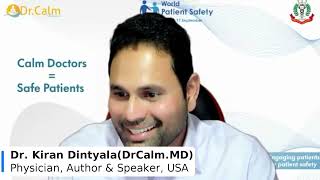

Is COVID Vaccination Safe for Cancer Patients_COVID Help_Dr Naidu_Dr Kiran Dintyala_Dr CalmExclusive

Is DELTA PLUS variant going to be worse than any variant? How to save ourselves from THIRD WAVE!

How to Build Our Mental Strength to Overcome Problems? _Personality Development_Dr Calm