Drs. Céline Gounder & Tom Frieden talk all things public health
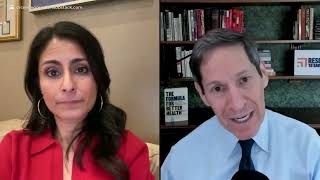
Tom Frieden and Céline Gounder discuss hantavirus, FDA approval of flavored vape pods, and the collapse of U.S. primary care. They point to successful models like Kaiser Permanente and home-based prenatal care, and argue for universal access to a regular doctor as the foundation for a healthier system.
Chapters
Hi everyone, thanks so much for joining. We'll wait a few seconds for others to join, and for those of you who are joining, welcome. Céline, thank you so much for being here. We'll just give it a few more moments for people to join. So let's get started. I'm really delighted to be here with Dr. Céline Gounder from for a conversation about what success looks like in public health. This is one of a series of conversations with health leaders as we enter really what is a new era of global health in which we are facing huge challenges, but also real opportunities for progress. Dr. Gounder is an internist, epidemiologist, and medical journalist. She's CBS News medical correspondent, editor-at-large for public health at KFF Health News, and a professor at NYU. Céline, thank you so Thank you so much for joining.
Oh, it's great to be here.
So let's start with what's on the top of the news, hantavirus. You know, I remember when what's now called Sin Nombre virus was identified in 1993. And hantavirus is a really unusual group of pathogens. But what can you tell us about the latest information and how to think about this outbreak from your perspective?
Yeah, so just in the last day, we got some really good news, which is that a passenger— or rather, a flight attendant who was in contact with one one of the hantavirus cases on a flight, a KLM flight. That flight attendant has tested negative for hantavirus. She had reported some symptoms, was worried, got tested for both PCR and antibodies, which was negative. So her symptoms were not due to hantavirus. Now she will continue to be monitored to see if she develops other symptoms, needs to be retested again. But this supports the, what knowledge we had of hantavirus and Andes virus specifically, prior to this current outbreak, uh, namely that it requires, uh, close prolonged contact, uh, in order to see Andes virus spread from person to person. In the large cluster that, um, we saw in Argentina in the past, uh, the people who were most at risk for getting hantavirus, Andes virus specifically, person to person, were sexual contacts of cases. So some 18% of sexual contacts of cases were infected, whereas regular household contacts, so still close contact but living in the household, not intimate contacts, only 1% of those got infected. So this is more support for what public health officials have been counseling, that this is not something that is likely to become widespread. This is not an airborne infection. There is another, in this case, passenger, a Spanish person who was on a flight within 2 rows of another hantavirus-infected person on a flight. That person is now being tested, and I'm hoping if that person remains negative, that would be yet more reassurance that this is not easy to catch just through casual contact.
I think hantavirus is confusing. Most hantavirus infections are spread by exposure to rodents or other animals. The Andes virus is the one that's caused that one large outbreak or moderate-sized outbreak, and it's concerning because it has such a high case fatality rate among those people who have respiratory symptoms. There's always kind of an artificially high case fatality rate because the milder infections don't get diagnosed, but as you note, People who are contacts also get colds and flus and fevers, and so you're always going to have suspected cases to learn about. One of the interesting things about hantavirus is that it's so diverse. There are more than 50 species, many subspecies, and although it does mutate and it does have reassortment potential, human infections are so rare that reassortment within humans is, is pretty unlikely, and that's why the pandemic potential is considered to be low, although, you know, we have to be humble. We don't know for certain what will happen, and it's very hard to grow in the lab, so that actually is something that makes it less concerning as, for example, a bioterror risk. To me, though, the bigger story here is the importance of the World Health Organization and how much more risk we are at as Americans because of the hollowing out of the CDC. And let me be clear, there's still thousands and thousands of doctors and nurses and pharmacists and scientists at CDC who are working really hard to protect us, but they're doing that against enormous odds. At least a quarter of the agency has been dismantled. Virtually all of the leadership has either been dismissed or is acting. There isn't an acting director, and there hasn't been other than for less than a month. In this administration. What we would have expected by now would be what's called a health alert network message going out to physicians around the country to say, here's what to tell your patients, here's what to be worried about, here's how to do testing. Nothing. And so this is really kind of a stress test, and the U.S. has failed. We have let down our defenses. We're at higher risk. So to me, that's a huge risk, and WHO seems to be performing quite well. They're clear, they're communicating well, they're coordinating laboratory testing, case definitions, very complicated multi-country evaluation. They're on the cruise ship, CDC is not, but they can't continue that and they can't do as well as they could have done without UHO, without WHO presence. So we need to rebuild the CDC, rejoin the WHO, and also up our game with reducing the risk of spillover from animals to humans.
Tom, I couldn't agree more. I find it profoundly disturbing, frankly, that we have yet to hear from Secretary Kennedy, from anyone at the CDC, and it's not that they don't want to share information. I think they're being prevented from sharing information, many of the long-term scientists, doctors who've been at the CDC for many years, but I find it really concerning that we're not getting frankly, daily updates from the highest levels of government as to what is happening. I've been told that this response is being run by the State Department. Well, if that's the case, we should be hearing from the State Department every day as to what the plans are. For example, some of the questions on my mind are, you know, how are patients, or I shouldn't say patients, passengers who are exposed on the cruise ship, how are they being quarantined here in the United States? Those who've already returned home, what are the protocols who is checking in on them, who's monitoring their symptoms, who's making sure that they are abiding by a quarantine, who's making sure that if they get sick they get the appropriate medical care. As you know, one of the issues with, with hantavirus is once somebody gets sick, they get sick very quickly and they can die very quickly. And in those situations, often the only thing that can help them is ECMO, which is cardiac lung cardiac bypass machine. So it's basically a machine that supports your lungs, your heart through a severe infection until you recover on your own. And so you would want somebody to have access to that for their own health. So it concerns me that we don't really seem, maybe there's a plan, but that has not been shared publicly. And, you know, I think part of the role of WHO and the CDC is the coordination, the communication. In fact, I think that's one of the most important roles whether it's coordination of health officials, providing them with technical support, or communication with the public. And I think one of the reasons we're seeing conspiracy theories run wild online right now about hantavirus and people panicking about a pandemic is because there has not been clear guidance, clear information as we've been receiving it as to what is happening. We're having to piece it together through me texting Tedros, the head of the WHO, for example, through press releases from the various other ministries of health. That's how at least those of us who are in the media are piecing together some of the story as to what's going on.
Let's change gears from a threat from the microbial world to a threat from the regulatory world. This week we saw The FDA authorized blueberry and mango-flavored vapes. Now, we know that vapes are very appealing to kids. We know they're an on-ramp for smoking and a lifelong addiction to tobacco. You know, there was a phrase, there was a phrase that this was gold standard science. Sounds to me more like a gold bribe. But I mean, what, what can average Americans do about this or know about it?
Yeah. So the FDA, just to provide some context, approved flavored vape pods from a company called Glass, including fruit flavors for the first time. I should say authorized, authorized, not approved. In February, the FDA commissioner's staff said they actually needed more time to study whether the device— so the device needs to scan a government ID and pairs with a smartphone to use it. But we don't really know if that device is going to keep kids from vaping or not. And then over the weekend, the Wall Street Journal reported that the president had scolded his FDA commissioner for moving too slowly on this. And by Tuesday, uh, the FDA had reversed course and had moved forward on the authorization. And as you point out, flavors are the top reason you have young people start vaping. Under tougher rules, under the leadership of Brian King, for example, at the CDC, teen vaping had dropped to a 10-year low. We know that teens who vape are 3 times more likely to start smoking regular cigarettes. And so yes, we are worried that this could be a gateway to smoking cigarettes. And this FDA authorization came about under rather unusual circumstances, to say the least. The Trump, the tobacco industry made campaign donations to the Trump election campaign. Campaign. Last year, the head of the FDA's tobacco office was fired, and then most of the CDC smoking prevention staff were cut. And the tobacco industry has also donated money towards building the White House ballroom. And then on top of all that, you have a former tobacco executive who's now in a senior role at the CDC. So this really begs the question: are the agencies tasked with protecting kids from tobacco— do they still have the freedom to do their job?
Absolutely. And you know, just to give a little context here, um, uh, it used to be that more than a third of American teens smoked, and that number has come down dramatically to in the low single digits with good tobacco control. So this is really rolling back progress that's been hard won. And we know that with Juul, there was a dramatic surge in high school e-cigarette use from 12% to 28%. And then with good control, that came right back down to 8%. So government policy really has a lot to say about whether our kids are condemned to a lifetime of addiction to tobacco. And clearly, this administration is with the folks who are trying to get our kids hooked.
Yeah, I mean, I think across the board it's, it's an administration that is not in favor of regulation, and regulation is one of the core levers that public health has to improve health. And I think smoking is probably example number one of that.
I think more broadly, certain industries are really good. We want them to succeed. We want you know, fitness apps and gyms to have more clients. We want people and businesses selling healthy food to sell more of it. We're not opposed to business, but every business in the economy suffers when the workers are less healthy, and so it's not anti-business to try to reduce tobacco use or ultra-processed food use. Industry shapes not just what people eat and drink, but often what gets researched, what gets regulated, what gets reported. How do you, as someone who does a lot of public communication, how do you think about how to reveal and push back against the industries that are really self-interested but having a narrative of either personal freedom or more efficient government or less regulation?
Well, I actually have two stories that will be coming out before too long on exactly this issue. They're going through edit right now. With my editors at the KFF Health News. So stay tuned on that. But this does touch upon tobacco, ultra-processed food, some of the wellness space. Some of the wellness space is very healthy, like you were mentioning, you know, going to the gym. I belong to a gym, eating healthier foods, whole foods, minimally processed foods. This is all good. But there are also other parts of the wellness space that are really trying to sell you a silver bullet, a silver bullet to live longer, silver bullet to be sexier, more beautiful, more energetic, you know, you name it. And that underside of the industry is a problem that needs to be regulated. I have even seen one of these sites advertising a cure for HPV. So that's the virus that causes human— or sorry, human papillomavirus, which causes cervical cancer, head and neck cancer, penile cancer, and others. I've seen a preventative or treatment for HPV that supposedly contain bits of warts, which to me, I don't even understand how you can market that or sell that.
It's like the Three Witches. Yeah.
Exactly. I mean, it really is on that level. So I do think there is a real role for regulation to prevent people from ingesting things that are really unsafe and not sanitary. And I think it's unfortunate that that kind of regulation has been seen, has been portrayed as the bad guy, when in fact this is really an important layer of safety for all of us.
Yeah, and, and, and really, um, we shouldn't be talking about a misinformation movement but a misinformation industry. This is not just some misconceptions that are floating around on the internet. This is people getting rich selling stuff that doesn't work, getting people to subscribe to services, and setting up lawsuits that will go after entities with deep pockets, whether or not they actually are responsible for the illnesses caused. Let's talk about— oh, sorry, go ahead.
No, no, I was just going to say, I mean, I think we're seeing this in spades with the hantavirus right now. And I think you just have to ask, what does this person have to gain by spreading whatever mis- or disinformation? Depends a little bit on if it's intentional or not. But are they building a social media following that they can turn into ad dollars? Because remember, that's how influencers make a living. They leverage, they sell their audience to, to get advertising dollars. Are they selling you something? You know, part of the business model, as you're alluding to, is you say mainstream medicine or public health or, uh, the institutional professional scientific advice is wrong, and then you say, but this isn't what they're not telling you, and I have something to help you, and you can— I'm selling it, I, you know, I'll, I'll provide it to you. And so this is a narrative we see over and over and over again. Um, and I think one irony here is actually that with hantavirus, there is no vaccine, there is no antiviral. And so the idea that someone engineered this to sell treatment or a vaccine does not hold up this time. Um, and, and so I do think we have to remember that, yes, the pharmaceutical industry has not always been, um, uh, fair to consumers. Uh, there are issues with how they price medications. And how they prioritize certain kinds of R&D and not others, but that doesn't mean that what has been FDA approved, what public health officials and physicians and scientists are recommending is wrong, and I think it's conflating two different issues right there.
Yeah, and of course, just on the hantavirus question, and then I want to go on to healthcare, but a hantavirus, it's actually quite hard to grow in the laboratory, and that makes it much more difficult for anyone to engineer it and quite risky because you could die trying to grow it up in your lab. So let's, let's talk about healthcare. The US, as you know, pays more and gets less for healthcare than any other country in the world. And a lot of that is because our primary healthcare system is so weak. 100 million Americans don't have a regular doctor. And a lot of these problems would be so much better if people could go to a doctor or nurse practitioner, someone they trust, and say, hey, what's the real story here? And that person would know them, understand them, and understand how to speak to them in a way that they can trust. And if they don't like that doctor, they can find another one they trust. And if they don't trust any doctors, then, well, they have their own issues. But, you know, we don't have that. And there's emerging evidence in the US and around the world that the US could double or triple the amount we spend on primary care and reduce the amount we spend overall. I was just speaking with one CEO of a company. His company, which helps care for hundreds of thousands of people, has reduced expenditures by more than 40%. Wow. And they've done that while increasing primary care expenditures also by more than 40%. So I think we have this system that is very focused on hospitals, procedures, specialists. And there are some bright spots. Look at Kaiser Permanente. Kaiser Permanente provides excellent quality medical care for less money than other healthcare systems. And that's because they are both the group that pays for it and the group that provides it. And so they have an interest in keeping people healthy. What are your thoughts about how we can get to a healthier healthcare system?
Yeah, so I think you have a few different points that were really critical there. So one is access to primary care. So last I saw estimates about 1 in 4 or so Americans had a primary care provider, a consistent one that they saw on a regular basis. And I think as you go down in age, that is less and less frequently the case. A lot of young people do not have a trusted healthcare provider they can go to if they need something. And so that means defaulting to urgent care or the ER, which is really not where you should be getting primary care. Um, another issue we have right now is a lot of people are losing their health insurance. Um, so the ACA subsidies, so the subsidies that made it more affordable for people to purchase Obamacare, so the insurance marketplace plans, those subsidies were allowed to expire by Congress. And so it has become much more expensive for people to afford healthcare through those health insurance exchanges. So we've seen already millions of people roll off, uh, as a result of that. And then also we have cuts to Medicaid, um, in the form of new work requirements, which actually might sound on the face of it like, well, why not require people to work to get health insurance?
Um, well, it's a little more complicated because they're basically new bureaucracy requirements is what they are.
It's a lot of red tape. And if you're somebody who's already maybe working 2 jobs, earning an hourly wage, having to shuttle your kids to daycare and, you know, whatever it is, to have to then do that kind of paperwork on top of it, it's actually a lot of work. It's a huge onus. And so a lot of people just lose their Medicaid because they haven't recertified that they're eligible. So I think that's That's one major issue there. I think also, you know, our goal should be that the best healthcare is the healthcare you don't need, that you start off healthy, that you stay healthy. And it's no accident that your zip code is your best predictor, is the best predictor of your health status and your life expectancy in this country. How much do you control your zip code? Well, you control your zip code if you have the means and you can buy into a nice neighborhood. If you can't, if you don't have those kinds of means, you have a lot less control over where you live and the circumstances of that. So I, you know, I do think we need to think about what does it mean to have healthier communities in terms of things like air and water quality, access to whole healthy foods. And then in addition to that, you know, how do we make access more affordable and appropriate, easy to access in the home, for example. One of my friends, Rebecca Gee, she's an OB-GYN by training, was health commissioner for Louisiana, or I think they call it Secretary of Health in Louisiana. But in any case, she went on after that to become the founder of a company called Nest Health, where what they do is they actually provide prenatal care in the home. And these are women who are on Medicaid. These are not wealthy women. Not only are they providing prenatal care in the home, they're doing, as a result, they see what the home circumstances are. They can do a home assessment. They can assess, are there issues with food insecurity, with housing insecurity, with other safety issues? They continue to follow those women through the pregnancy and after. We know that some of the highest risk period for women is actually that year postpartum. Not necessarily during the birth in terms of pregnancy-associated morbidity and mortality. That follow-up is essential for women who might be overburdened after, with a newborn child, that they're not taking care of themselves. This program also looks after the rest of the family once they've gotten in. I think thinking out of the box, how can we do things differently, especially for those who have the greatest need?
Absolutely. But you know, one thing I, I, I— there's so much controversy in society. I would hope that we can get to a bipartisan place with primary health care. Now, there may be different perspectives about who should provide it and how to pay for it, but ultimately there shouldn't be any disagreement that every American should have access to a health care team that will provide the great treatments that we have, because for all the bad news in the world, the fact is we have better and better tools every single day. We can help people live longer, be healthier, avoid cancer, avoid heart attacks, avoid strokes. In fact, I think we could make heart attacks and strokes rare if we just implement what we know how to do. So that means thinking creatively about how to provide primary health care in states, in cities, with support from providers in a way that reaches patients and probably capitalizing on telemedicine, which is really a great way of reaching more people for less money. Doesn't replace all in-person visits, but it's a great— it's a lot better than nothing. And frankly, I think AI is going to improve healthcare substantially, make it more efficient and more effective. Because there are a lot of mistakes in healthcare and you can't rely exclusively on AI, but AI can find those mistakes and prevent them. Let's end, as we've got about 5 minutes left, let's end with more positives. Let's think about how to build forward to a public health and a healthcare system that is going to work really well for as many people as possible in this country and around the world. I mentioned earlier the progress with tobacco control. We reduced youth smoking from 36% to 3%, you know, 90% plus. So we've made progress. Céline, what's one example of past success that you can think of that can give us hope? And then let's talk about what are things that we can do toward the future to build a healthier country and world.
Well, in addition to smoking, A couple others that stand out, well, smallpox eradication is one. As an infectious disease specialist, it would be remiss of me to leave that one out. Bill Foege, who was one of the leaders of that effort and a former CDC director like you, recently passed away. And one of the things he told me, which I think relates to what we're ending with, is surround yourself by optimists. And yes, you need the cynics and the pessimists to sort of challenge your thinking, but be optimistic because that's the only way you get things done. And I, I think about that every day and the challenge that was eradicating smallpox, the only infectious disease ever to have been eradicated from the face of the earth, human infectious disease. And so I think that was a huge accomplishment, but that required This was something coordinated by the WHO with the CDC's support and a huge amount of coordination and communication. The technical aspects of it were actually pretty straightforward. You just have to vaccinate somebody for smallpox. But the logistics of doing that are what are complicated, not necessarily the science of that. And unfortunately, that's a lot of what has been eroded, not just the science, but the operations, the logistics, the communication. Um, another one I would throw out there would be motor vehicle accidents. We've made tremendous progress, um, engineering cars and roadways to be safer and safer over time. Um, that is not something individuals can do. I think very often, you know, I get asked on air for tips all the time, tips to deal with XYZ. Well, tips are not going to solve every problem that we have, and in fact, many of these problems, whether it's our food supply, you know, issues with ultra-processed food, smoking, motor vehicle accidents, smallpox eradication. These are not solutions an individual can bring about on their own or address on their own. And so I think getting back to a place of a culture of health and a culture of fighting for better health together is really key to moving forward.
The way I think of it is, is the framework of see, believe, create. We need to see what the threats are, see the path to progress, and see whether or not we're on that progress. Believe the optimism that Bill Fahey talked about, because we have made a lot of progress and we can make much more. And then we need to create a healthier future. And we do that by working together, by being specific about the goals we're trying to achieve, by being rigorous about how they can be achieved, by simplifying our approaches. Simplicity is not a compromise. Simplicity is a design principle. And the more simple our healthcare system— I mean, look at the complexity of reimbursement rates. It's crazy. We waste 15 to 20% of all the billions, trillions of dollars we spend on healthcare just on bureaucracy. If we simplify, we can really achieve progress for people all over the country and all over the world. And that means building forward to a primary healthcare system that is accessible, high quality, that meets people where they are and addresses their concern, and a public health system that tracks the trends, that tracks the risks, that provides that information to people, and that is not just trusted but also trustworthy. Céline, anything you'd like to say as we, as we close?
I think you, I think you got it. Um, you know, but I, I just hope that we can come together and believe that every American deserves a shot at a healthy life and that we work through that goal together.
Thank you so much. Thanks for joining. Thanks to the audience for being here. And, uh, thanks for what you do, Céline, to promote good information so people can know The Way to Health. Thanks so much.
More from Dr.
"You Don't Bring Water to People Who Think You're Killing Them" | Inside Congo's Ebola Trust Crisis
"We Had to Become Farmers" | A Doctor in Congo on What Happened When USAID Left