UPDATE: Cruisers stranded after Hantavirus breakout, 3 dead, 7 ill
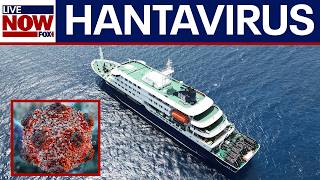
Dr. Céline Gounder explains a hantavirus outbreak on the cruise ship MV Hondius off Cape Verde, which has killed three people and sickened seven. Hantavirus spreads through rodent droppings and is rare in the U.S., with only about 900 cases in 30 years. The ship's confined environment makes containment difficult while investigators determine whether the strain spreads person-to-person.
Chapters
A deadly virus outbreak. Now we're taking a look here at a social media post courtesy of the Associated Press. It says this: a rodent-borne illness is suspected of causing an outbreak aboard a cruise ship that has killed 3 people and sickened others. That specific illness called the hantavirus. And the AP goes on to say that about 150 people are still aboard that cruise ship waiting for help. It is still docked off the coast of Cape Verde in the Atlantic Ocean. 3 passengers died again, and then 3 other people were left seriously ill. Now, the MV Hondius, a Dutch ship on a weeks-long polar cruise from Argentina to Antarctica and several isolated islands in the South Atlantic, had requested help from local health authorities after making its way, uh, there to where it was supposed to be docking on the island of Cape Verde. It's off the west coast of Africa. No one has been allowed to disembark. That's according to the Netherlands-based operator Oceanwide Expeditions and what they had to say in an official statement. We've been following the story closely here at Live Now from FOX, and there's a lot to discuss in terms of what we can expect and possibly what passengers are going through at this time. Joining us next to get into all of the details is Dr. Céline Gounder. She's the editor-at-large for public health at KFF Health News, infectious disease specialist, and also an epidemiologist. Good morning, Céline. Good to have you on.
Good morning, Pearl.
So, uh, pretty scary situation, at least from how we're looking at it here on land. So first off, let's get down to the basics for our viewers. Hantavirus— what is it? What are its symptoms? And really, what is the possibility of death once someone contracts that virus?
Hantavirus is really a family of viruses that are transmitted by rodents, so, uh, mice, rats. Usually it's transmitted when, um, rat droppings or droppings or urine are aerosolized into the air. Sometimes it's when people are cleaning something up, say in the garage or the basement, and that causes hantavirus pulmonary syndrome. Hanta, uh, in other words, a severe viral infection of the lungs. It can also cause kidney failure, heart failure, uh, and so the symptoms can be wide-ranging, but very often they're pulmonary symptoms, lung symptoms.
What's interesting about that is that with these symptoms, I was reading up on it as well, they kind of look like the flu at first. So really distinctly, when does that change, turning from, okay, I possibly have the flu, I possibly have a cold, to now I know that I have something that's potentially way more dangerous? I mean, what kind of testing is even done to figure that out?
Well, it's done in the context of an exposure usually. So hantavirus is exceedingly rare. To put that into perspective, in the United States we've had 900 cases in 30 years, uh, and most of those cases have been in the Four Corners area in the United States. So we don't go testing everyone for hantavirus. You really need to have had an exposure, a risk factor, in order to prompt testing. So in this case, we know people have been exposed on the cruise ship, and people who are developing symptoms are being tested.
So I'm glad you mentioned this, the people who were exposed on the cruise ship. It leads me to a social media post here courtesy of Reuters. Following this closely, they included a video of one of the passengers as he was speaking about his experience, but they say this: medics were working to evacuate 2 people with symptoms of the deadly hantavirus after a suspected outbreak on a cruise ship held off the west Africa, according to officials. Again, 150 people still on that ship. So let's get into possibly the challenges, Céline, when you have an outbreak of a virus that could potentially be deadly and people are stuck on a cruise ship. I mean, how unique is that situation in terms of containment and making sure that people stay safe?
Well, keeping people on the ship, essentially quarantining them on the ship, is part of preventing transmission because we don't know for sure, is this the typical hantavirus that is caused by aerosolization of rodent droppings and urine, or is it— there is a rarely a person-to-person spread. Um, the type of hantavirus involved is called the Andes virus. That Andes virus is found in Argentina and Chile. This boat left from Argentina, so we don't yet know, is— are we dealing with the usual hantavirus? Are we dealing with Andes virus? And until then, you really do want to keep people on the ship to prevent further onward transmission. But as you can imagine, that's super scary. You're in the middle of, uh, you know, cluster of cases of a highly deadly virus and don't know how those other people got infected. Uh, I really feel badly for those who are stuck stuck on the ship right now.
You mentioned there, uh, the different places that this cruise ship has gone to, specifically Argentina, which is possible if that's where this virus was first contracted. Earlier today, I was listening into a briefing from the United Nations. They also expressed a similar perspective that they don't think it started on the ship, but more likely somewhere that they had docked previously. But this cruise ship not only went to Argentina, it went to a lot of other isolated smaller islands. Does that add another layer of complexity when trying to track narrow down the origin of the virus?
Possibly. You know, if there were rodents in some of those other islands, on some of those other islands, that would also raise some questions. Those are islands that are also unlikely to have people, if any at all. So it does help narrow in certain respects. But, you know, big picture, what needs to happen here is a really thorough investigation. So beyond testing and typing which type of hantavirus, they need to identify the source of transmission, the mechanism of transmission, uh, and then, um, in addition, um, tracking what happened aboard the ship. Were there certain safety lapses? Uh, are there issues with a rodent infestation on the ship? Um, this is really where public health agencies, uh, step in. And unfortunately, we're dealing with, um, our own CDC, which has been gutted. The US has pulled out of the World Health Organization, and those are precisely the folks who get called in in a situation like this.
I'm glad you mentioned some more of these public health agencies. By the way, this video on the screen is a video of the ship. You see some people docking it just to try to take samples, to take a look at some of the cruisers that are still stranded there. Plus, they give you an inside look as to what the cruise looks like on the interior. Um, going back to public health agencies, obviously you hear something of an outbreak and a lot of people go back to coronavirus. Now, that became a global epidemic. With hantavirus, you know, we're not trying to scare people. At this moment, there is no real risk to the general public, at least what we've heard from health officials. But Céline, walk us through how health officials decide whether some type of outbreak is cause for global concern or something that people really shouldn't worry about just yet.
Well, first of all, if this ends up being the form of hantavirus that's transmitted through exposure to rodent droppings or urine, then it is very difficult for this to spread widely. Uh, when we think about pandemic viruses, we're usually talking about something that is respiratory, uh, transmission in nature. And as I mentioned, Andy's could be, however, it still requires really long, prolonged, close contact. And that's not what we see with a pandemic virus. A pandemic virus like, um, avian flu, bird flu can be a pandemic virus. COVID, of course, we've all just lived through. Those are viruses that can be transmitted through the air, which with much more casual contact and can can linger in the air after somebody has left that space. So those are the kinds of viruses we worry about becoming pandemic viruses.
And then let's just go back to some more of that video that we have of the actual cruise ship because I want to focus on what some of these passengers may be experiencing or feeling right now. Dr. Céline Gounder, one of the major questions would be they're there quarantining on this cruise ship. We don't really have word as to when all of these people can get off. Is there a way to kind of estimate a timeline to when this cruise can finally dock, specifically because what they're tracking is the hantavirus?
Well, it's really going to depend on whether this is the Andes form of the hantavirus or is it the more general, um, typical form of the hantavirus, uh, and also assessing what the exposures are because you want to be starting the timeline from last point of last potential exposure. But this could be a situation where, uh, people are on that ship for weeks while they're doing that assessment.
All right, on this ship for weeks, not the best prospect here, but, um, you know, hopefully, I mean, everything goes well and it goes really smoothly. Staying on the topic of cruise ships though, this seems like a very unique case. I can't remember the last time we heard that a cruise ship couldn't dock because of a virus outbreak, but we are heading into the summer months, Céline, cruises are really popular for people. This story is making headlines, you know, across the world internationally. What would you tell people that are gonna go on a cruise now, um, just to make sure that they stay healthy? What are some of the best practices? Because when you're on a ship, I mean, you're really in enclosed spaces, you're going to be sharing a lot of spaces with other people, utensils, seats. What should they keep in mind?
Well, the most common viruses spread on cruise ships, we, we usually think about norovirus, which causes gastrointestinal illnesses, so nausea, vomiting, diarrhea. Um, and frankly, that's one of the reasons I am a little, um, reluctant to take a cruise myself, is because those are known risks. So that means hand washing rigorously when you're on a cruise ship, being careful, um, you know, about contact with surfaces, and, and before you eat, making sure you wash your hands. Um, some of the other things to worry about are also respiratory viruses. You may remember during COVID there was a cruise ship that had to be quarantined due to outbreak. Now, COVID may not cause that kind of outbreak today, but other respiratory viruses can. We've been seeing measles outbreaks in the United States. Vaccination rates have dropped. Measles would be certainly a candidate to have an outbreak of that on a cruise ship. And this is also a year that's further complicated by other mass gatherings, the World Cup in particular in the United States. So it's not just cruise ships people need to be thinking about, but other kinds of travel, other kinds of gatherings.
Céline, you are following this case very closely. As someone who is an expert when it comes to infectious diseases, is there anything in particular that stands out to you from these cruisers that are still stranded? The hantavirus in general, maybe something that catches your eye as someone who really focuses on these kind of illnesses that the public should also be made aware of?
Yeah, I mean, I think what we're— those of us who are experts in this space are most curious about is which kind of hantavirus is this? Is this the airborne kind is it the more typical kind? Because that really will determine how to manage this particular cluster of cases, how long people will need to be on the ship, what needs to be done, what kind of decontamination needs to be done. So that's the kind of thing we're really waiting for more information about. I think for the, for the general public, one thing to know in terms of how to reduce your risk, first of all, again, your risk is in the United States exceedingly low, but if you find yourself in a situation where you're having to clean the garage, clean clean the basement because there have been rodents there. A few tips on that: you want to be wearing a respirator, wearing gloves. Don't sweep or vacuum up the dust because that kicks it up into the air where you can inhale it. Instead, use some bleach and water to wet it down and wipe up the surfaces. So those are some of the things you can do to reduce your own risk if you find yourself in that situation.
Dr. Céline Gounder, editor-at-large for public health at KFF Health News, also an infectious disease specialist and epidemiologist. I appreciate you coming on here to Live Now from Fox just so we can talk about this story. Again, it is making headlines, and I look forward to keeping in touch and seeing how this progresses.
Thanks, Carol. Of
More from Dr.








"You Don't Bring Water to People Who Think You're Killing Them" | Inside Congo's Ebola Trust Crisis

"We Had to Become Farmers" | A Doctor in Congo on What Happened When USAID Left