Augmenting Medicine with AI: Hassan Tetteh, MD, on Innovation in Healthcare
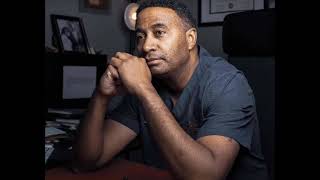
In this episode of the "Living a Life in Full" podcast, host Dr. Chris Stout interviews Dr. Hassan Tetteh, a cardiothoracic surgeon, board‑certified clinical informatics leader, and the Warfighter Health Mission Chief at the Department of Defense Joint Artificial Intelligence Center (JAIC). Dr. Tetteh recounts his journey from operating rooms in Afghanistan to becoming the Chief Clinical Informatics Officer for Navy Medicine and then leading AI‑driven health initiatives for the military. He explains how decades‑long clinical registries such as the Society of Thoracic Surgeons (STS) database have transformed cardiac surgery outcomes through data‑driven benchmarking and risk‑stratification tools. Building on that foundation, he describes how artificial intelligence can augment physician decision‑making, from personalized risk scores to rapid literature synthesis for complex cases. The conversation moves to Project Orion, a DoD effort that applies natural‑language‑processing and psychological autopsy techniques to massive post‑mortem investigations of suicide cases, aiming to identify predictive patterns and enable early intervention. Dr. Tetteh also discusses the broader potential of real‑world data—patient‑generated health metrics, wearable devices, and crowd‑sourced registries—to inform AI models in both military and civilian settings. Interwoven throughout are personal anecdotes about his early life in Brooklyn, his brief stint as a graffiti artist, and the creation of the "Art of Human Care" book series that blends creativity, publishing, and healing. The episode concludes with practical information on how listeners can access Dr. Tetteh’s books and online resources.
Chapters
Living a life in full is a conversation you always wanted to have with that person who gave an amazing TED Talk, or the author of one of your favorite books, or that inspirational Olympian you always wanted to know more about. It's graduate level conversations with those making a difference in the world and in the lives of others. This show brings you new ideas and approaches so that you can live a life in full. I'm your host, Dr. Chris Stout and I hope you enjoy this episode. This episode is sponsored by our new video course, how to Publish in the New Millennium. From Scientific Journals to Best Sellers, it's an asynchronous course offering so you can watch it when it's convenient for your schedule. It's based on eight video lessons and provides three hours of material with new concepts, stories and examples, and it includes several attempts and humor. You'll learn about the best ways to submit a manuscript to a peer reviewed journal, the mechanics of book contracting, what publishers are looking for, how to evaluate and negotiate a contract, royalties, advances, copyright and ownership, why to never first submit a manuscript to a publisher when you need an agent and when you don't, and the differences between publishers. You'll learn about ebooks, print on demand, Amazon's CreateSpace and KDP programs and other non traditional approaches to publishing, along with how to tell if a platform is of high quality or not. We do a deep dive into marketing, how to create media kits and what goes into them, along with examples how to create a great Amazon author page, how book signings work, and how to be invited to do library talks and the economics of both, along with developing speaking engagements, promotional tours and being a podcast guest, as well as a number of other publicity aspects. We cover blogging and provide additional resources to help you in crafting your work and making it better. This is a rich, fun and fact filled course that covers everything you need to know from a practical and actionable perspective. It's for anyone wanting to get their written work into the world, be it academia, popular media, or both. Join the masterclass in Getting Published. To learn more, please visit tinyurl.com getting publishedcourse thanks welcome to another episode of Living a Life in Full. I'm your host, Dr. Chris Stout. Dr. Hassan Teddah is a decorated Navy Captain and Associate professor of Surgery at the Uniformed Services University of Health Sciences and an adjunct faculty at Howard University College of Medicine. As a cardiothoracic surgeon, he was deployed in Afghanistan and on warships in the Persian Gulf. He's also an unabashed medical nerd as part of a cadre of physicians. Also board certified in Clinical informatics, he was selected a 2019 Emerging Leader in Health and Medicine by the National Academy of Medicine. Currently, Dr. Teta is a thoracic surgeon for MedStar and Walter Reed National Military Medical center where he heads the specialized Thoracic Adapted Recovery or STAR, team in Washington, D.C. and his research in thoracic transplantation aims to expand heart and lung recovery. A Native of Brooklyn, Dr. Tetter received his BS from State University of New York, his MD from their Downstate Medical center, his MPA from Harvard's Kennedy School of Government, an MBA from Johns Hopkins University Carey Business School, and an Ms. In National Security Strategy with a concentration in Artificial Intelligence from the National War College. He completed his Thoracic Surgery Fellowship at the University of Minnesota and Advanced Cardiac Surgery Fellowship at Harvard Medical School's Brigham and Women's hospital in Boston. Dr. Teta is founder and principal of the TEDA Consulting Group, creator of the Art of Human Care book series, and a best selling author of several books including Gifts of the Heart and Star Patrol. He's a Board certified in Thoracic Surgery, General Surgery, Clinical Informatics and healthcare Management and is a Fellow of the American College of Surgeons, a Fellow of the American College of Healthcare Executives, and a Fellow in the American Medical Informatics Association. Dr. Teta received the Ally Sheridan Award by the Thoracic Surgery foundation for Research and Education, was named a TED Med Frontline Scholar, and is a TEDx speaker. He's an alumnus of Harvard Medical School Writers Workshop and Yale's Writers Conference. Welcome to the show. It's great to have you on.
Chris, thank you very much for the kind introduction. I really appreciate it.
Absolutely. It's very impressive and I'm excited as well to have you on. For those that may not have seen it, there was a recent piece in the Wall Street Journal and it noted that you had one of the coolest sounding jobs in medicine. So I have to reprise it here and it's War Fighter Health Mission Chief for the Department of Def. Defense Joint Artificial Intelligence Center. Or Jake, can you tell us more about what you do there and what the center is about?
Oh sure. Well, that, that is, you know, was a great compliment paid to me by Alan Rip, who wrote that that wonderful article in the Wall Street Journal. So certainly one of the highlights of my career to be recognized by that great periodical. But that came about, you know, like many things in my life, through serendipity, divine intervention and maybe a bit of good luck. So, you know, many people ask how did I Get that job. And how did I wind up where I am? I think a lot of it goes back to what I do in healthcare. And my clinical sort of background is really the genesis for much of what I think I do today and the pursuits and interests that I've had. So as a cardiac surgeon, and those of us that have been in cardiac surgery for many years know that you can imagine this is a very high pressure type of intense specialty, subspecialty. I should say, in surgery, we take our outcomes very seriously. There is something that was created by my colleagues decades ago called the Society of Thoracic Surgeons database. If you can imagine, cardiac surgeons tend to be a profile in the quintessential type A personality. And we love data. Unfortunately, in cardiac surgery, the stakes are high, or fortunately, the stakes are high. And so when they are high, our outcomes matter. And if we have a bad day in the operating room, our patients are going to have a bad day in life. And so because of that, many decades ago, as I mentioned, my colleagues started to report their outcome data. And so those that were doing really good obviously would share what they were doing to have good outcomes, meaning low mortality, more morbidity, and do something that's very hard, stopping the heart, putting patients on bypass, fixing their hearts, and then getting them to recovery. And as we started to collect all this data, we started to realize that there were certain things that the good programs and those that had really great outcomes were doing. And it wasn't that the patients or the, I'm sorry, the surgeons that were having poor outcomes or worse outcomes were not doing anything better. It's just that they were not doing things the same way. And as we started to look at that data and analyze things, we established this database over decades. All cardiac surgeons started to do much better because we were sharing this information and data. That's really the beginning of where I started to see that information, especially a lot of data on a lot of patients could lead to really good outcomes. Because when you started to follow the things that the patients that were doing well and the programs that were having good outcomes did, like giving less blood, giving antibiotics for certain cases, before you started just different techniques in the operating room, you start to see that how you could learn from this data and you can improve outcomes. And so when I learned about clinical informatics as a subspecialty years ago, I was all in. It made perfect sense to me. I said, well, yeah, absolutely. Taking information, looking at data, and applying technology to make our work better. And there's a subspecialty for this. This is just an extension of what I've been doing all my life in cardiac surgery. And I saw the outcomes and I saw what it did for cardiac surgery. I mean, if you think about what we've been able to achieve in cardiac surgery, heart transplants notwithstanding, lung transplants notwithstanding, to stop someone's heart, routinely fix it, and then bring them back to not only health, but better health than they were before. I mean, that's one of the modern miracles of modern medicine, and yet we take it for granted. But that came about through due diligence, data analysis, and rigorous and dedicated work from a cadre of surgeons that were really focused on getting better. And they got better by looking at what worked and what didn't work. And so informatics to me is an extension of that. So fast forward, you said, how did I get this job? Well, I dedicated a lot of study and focus and time to becoming board certified in informatics, because again, it just seemed to me to be a natural extension of what I was doing in cardiac surgery. And I said, wow, you could apply this across all of medicine. There's absolutely room for improvement in every area of medicine. When you look at data and when you look at what you, you know, you can gather from information and outcomes for patients and then see what worked and didn't work and make it better and improve it. And so that led to an opportunity to become, believe it or not, the Chief Clinical Informatics Officer for Navy Medicine, the Chief Medical Informatics Officer for Navy Medicine, the entire Navy Medicine enterprise. And because I had this great opportunity to go to the War College and had an opportunity to focus on writing a thesis and artificial intelligence, when the JAIC was established, the Joint Artificial Intelligence center at the Department of Defense, at the sort of national level, at the epitome of our national defense apparatus, the recognition that artificial intelligence was one of these technologies that we needed to continue to lead in, and we needed to lead in in the future to ensure not only our national security, but also to make sure that we were going to provide the policies and sort of the roadmap for how we would apply this technology across the world. They recognized that in health there was an opportunity to have a mission within that construct, within the Joint Artificial Intelligence Center. Military medicine would benefit from having a dedicated mission that was going to be able to use leverage and apply artificial intelligence to improve the health of our service members and give us an edge in national security and to make sure we had a ready force that was always able to be successful in missions. And so I was recruited into that position. And so it was a long winded way of answering your question. But it came about, principally speaking, as a result of just following my passion and doing what I knew had always worked, at least in my experience in cardiac surgery, which is looking at data, taking that data, learning from that data, getting insight from it, and improving your practice, not only personally, but professionally and sort of throughout the community of cardiac surgeons.
Wow. So that's great. It makes so much sense hearing you, you know, kind of describe it with the interest that you have in data and outcomes. And, you know, my background is a little parallel track. I mean, one of the things way back when dinosaurs walked the earth and, you know, my background is more so psychology and psychiatry, no really looked at outcomes in those areas and it was just sort of everybody sort of had their theoretical canon. You know, you were a psychoanalyst or you were a Jungian or you were a whatever, and you kind of just, you know, like if you had a bad outcome, whatever that might be, it was the patient's fault. You know, it wasn't because of a variation in therapeutic or therapist's ability. It wasn't because, you know, my therapeutic approach can beat up your therapeutic approach or anything. And it, you know, it was sort of finally really early 70s, 80s and, and then starting into the 90s that people actually started looking at outcomes and measuring outcomes. And I think for you, perhaps correct me if I'm mistaken, but it seems like in the more cardiac and cardiothoracic kinds of areas, one of the things, like you're not going to do a randomized controlled trial on a patient. Someone's there, they're in need, you're going to help them as best you can. And you kind of have to take all comers. You can't say, well, I'm going to, I've got exclusionary criteria. I'm sorry, sir, you have diabetes. So I'm not going to be to have you be part of my subject. So can you speak to that? Because I think that's one of the amazing things where AI can kind of come in and help us sort through some of those kinds of things. That it's not these super clean N of 1/ hundreds, these are in the thousands, but also with a boatload of comorbidities and other kind of complicating factors. How do you sort through for that and your specialty with clinical data and informatics?
Oh, Chris, that's an excellent question. I mean, it gives me goosebumps thinking about the question. And my Answer in response to that, because you're absolutely right. You know, I can see absolutely incredible and powerful application of AI and, you know, and data analysis to exactly the same question that you just posed. So you just said, you know, a scenario. You just highlighted a scenario that happens, you know, every day in our practice. Like you said, when you are individually taking care of a patient, that patient is in front of you and they are looking for your help, right? And they have a cardiac condition, but invariably, because they have a cardiac condition, they probably have some comorbidities, they may have some diabetes, they may have hypertension, they have a family history, they have, you know, poor exercise habits potentially, or just poor genetics, you know, and so now they're faced with this challenge and they're coming to you for help and assistance. And in their mind, because I've been in the patient's shoes, so to speak, you don't care about the statistics, and all you're worried about is how are you going to help me with my problem. But as the clinician is at the provider, and especially as a cardiac surgeon, you have to take into account this myriad of all of these other factors, in addition to their underlying condition and problem with their heart, to sort of come up with a good treatment plan for them. And this is where, you know, we pay a lot of, you know, platitudes to this thing called informed consent, right? But I can tell you it's because of this database, right, and this years of decades, rather, of collecting information that we can now actually, with almost precision, accuracy, tell a patient that is undergoing a pretty significant cardiac condition what their risk of mortality and morbidity is going to be based on a lot of data. And we've got over the years. And so we can come up with something called an STS risk classification and a score. And it can go down to, you know, pretty high fidelity numbers in terms of saying, well, you know, if you were to have this procedure, given all your comorbidities, you have a 5% or a 10% chance of having a complication. You have a 1% or 2% chance of death. And we can share this information with patients. And you obviously do this in a very careful and a very thoughtful way, in a compassionate way. But what it does, I think, is it helps to put in context and characterization what this patient is about to undergo, both for the physician, the provider and the family, so that they know what to expect. And I think it's been invaluable for us because it starts to set expectations for patients and their Families, so what they can expect, right? And most people, I'll tell you, when you're straight with them about that, they're like most people, going to be optimistic about what their chances are, but at least they'll be realistic as well going in. And I think it does an incredible amount of building trust and also engendering a lot of confidence in patient doctor relationship. So that's what the data has done for us. And now you can imagine you overlie the power of artificial intelligence, which is taking a lot of data, finding patterns and being able to give you insight into those patterns. How incredibly invaluable that could be. Right. As we sort of advance to mature this technology and this application of this really powerful tool, and I call it a tool, it's not going to be a panacea, it's not going to save or make everything better, but it's going to help enhance the way that we deliver care so we can start applying the right kinds of therapies, technologies and therapeutics to the right patient at the right time. And I think that's where AI is going to really play a big. And so, you know, I think, you know, Alan Ripp and the editors at Wall Street Journal aptly called the article that they highlighted there as how AI can make your doctor smarter. That's what I think it has the potential to do. Not replace your doctor, but make your doctor smarter. And I'll give you another very practical example of this. You know, maybe outside of the realm of cardiac surgery, but just as a doctor and being posed with the question, like many of my colleagues are often done, you know, often faced with, you know, on a daily basis. So while I was at the War College, it was a two year stint there. So the first year I was actually the doctor on campus. I was called the command surgeon. And sort of as a reward or punishment, depending on how you look at it, you get to go to school then the following year. So this is an appropriate story because it actually highlights for me in my mind and reminds me of why it was that I decided to dedicate that year while I was a student to artificial intelligence. So I had a colleague of mine who you would get you appreciate this. He was the clinical psychologist on our campus and he was leading a lot of our behavioral health initiatives on our campus and doing really great work. Super fit guy. I mean, the guy looked like a Boston marathoner. I mean, strong fit, healthy guy, but he had a family history of heart disease. And I remember one day I was in my office and like we often did sort of late afternoon. We would just have this sort of banter, talking about all kinds of topics. And he came in one day and he was very concerned because one of his family members had a heart condition. And he said, you know, he was having what he wouldn't call symptoms, but just some discomfort. And, you know, it was very vague kind of things. Like he said, you know, when I do certain things, I have this chest pain and I also have, you know, this sort of feeling. And then I kind of feel like a flutter. And so does this. A constellation of a bunch of different things, but in an otherwise very healthy, seemingly fit looking individual. And he posed a very simple question to me and he said, what do you think that all means, Hasan? And I'm thinking to myself, like, that's a damn good question and I don't have a damn good answer for you. And I feel bad that I don't because you're quite concerned about it. You're a very healthy person.
But.
And I would be concerned if I were in your shoes too. And I felt, Chris, I felt inadequate that I didn't have the answer for him because I'm like, he's describing symptoms that if you took individually and in a different kind of clinical picture and presentation, you would say, well, that's clearly a heart problem, or that's clearly a musculoskeletal problem, or that's probably nothing at all. But here he was very anxious about it. Family history, a constellation of things that, you know, individually didn't mean a lot, but maybe collectively meant something. And in that particular presentation with that family history probably meant a lot. And I didn't have, I didn't have the knowledge in my, in my mind and my little peanut brain to figure out what it was that was what was causing all of this, right? And I thought to myself, and this could be incorrect, obviously, but I thought to myself, I bet there's some case study somewhere. Someone over the history of medicine probably wrote about some symptom set of symptoms that this person is presenting with. Almost exact same picture of what he's presenting with the family history, and said, you should consider this as a possibility for this condition, and perhaps not, maybe it doesn't exist, but I don't know if it does, right? And I can't go through the entire PubMed library and go over petabytes of data and figure out to find that one needle in the haystack and say, hey, I know what's wrong with you, Dr. So and so wrote about this very condition back in 18, 20 something. And I didn't have that information. And that's when it dawned on me that the power of AI is that it can help me be a little bit more effective at answering that question. And that's really, I think, Chris, for that. It was that afternoon, I remember vividly, because I have notes written down about it, that I decided when I had the opportunity, I said, you know what? I'm going to look into how AI could be applied to help a physician like myself have a better answer for my friend instead of saying, dude, I have no idea what's going on with me. And that's when I started to realize that, you know, what AI can do is it can take a lot of information, it can automate the collection of data, it can optimize the analysis of data, and it can highlight patterns, and those patterns can give you insight. When you talk about developing algorithms and things like that, that's just another level of giving you that kind of insight that can help you to make a better decision. And I know there is lots to talk about and there's lots of controversy and there's lots to be concerned about when you talk about applying that kind of technology and that kind of tool to something that's very personal, something that's very important, something that's so critical as healthcare. But I think people should look at the upside of that. Right? I think a lot of people actually are very pleased that Netflix can give you a suggestion for a movie you may like based on a bunch of patterns that they recognize from their viewing hack. And wouldn't it be nice, too, if at my disposal, when my friend asked me that very important question to him that I had in my hands there in my fingertips, a number of different possibilities that could explain what was going on with him. And then I could take that information and I could apply that knowledge, that new knowledge now with asking some more probing questions and maybe even ordering some more diagnostics that maybe, you know, would bring me closer to the. Giving him a better answer than, dude, I have no idea what's going on. You know, and so that's, at its core, that's, to me, where I think AI can have a very, you know, important role in helping us to deliver better health care. And that's what excites.
Yeah, absolutely. It sort of reminds me of kind of like thinking about the, you know, there used to be the little books that you could, like, fit into the pocket of a lab coat of like, you know, neurology for the House officer or Whatever, you know, like when you're doing whatever rotation and all of a sudden you got something that seems like neurology, then you whip that one out and you kind of look at it and you see the pearls. Here's an interesting case study or whatever, but to take the power of 100xing times clinical studies and case studies to be able to have that at your fingertips because like you said, you can't just go to hop onto PubMed and 10 minutes later have the definitive answer. And I think one of the promising things, because there's a lot of overlap you read about when you're looking at AI and medicine with predictive analytics and with personalized medicine. And it seems to me, I mean, my simple minded way to think about it is to say we've got this trove of searchable data that a machine can go through and scrub for, looking for certain kinds of patterns as you've noted, and then take that and look at it maybe at the end of one quantified self to the patient that's sitting in front of you and say, okay, we're going to take all this that we know from the literature and studies and now we're going to scrub this against your family history, your current lab tests, your Fitbit data from the last year, whatever it is that someone brings or doesn't bring to the clinical waiting or the exam room, so to
speak, with genetic makeup even.
Yeah, yeah. And the other thing that kind of drives me crazy with this is that it's just like with COVID which is, wouldn't it be great if we already had this database that we could just easily get all the answers to our questions with a 95% certainty. And it's sort of like I have done some stuff with genetics and SMPs and whatnot and there's a great database called SNpedia. I don't know if you've ever heard of it. We can put it in the show notes for folks that are interested in the audience, but it's basically kind of this periodically updated database like a Wikipedia. But the fact that there's going to be studies published tomorrow that have not been published today that are going to have, you know, add to the data, add to the knowledge, bring in, you know, x thousand more patients in and we'll know more tomorrow than what we knew today. And the fact that a lot of these, either they're, they're, they're free or they're very inexpensive to access, I think will also be, you know, one of the key places that we, you know, I hope people smarter than me can then go to, as they're developing these algorithms to be able to, you know, to trawl or to scrape or to search, to be able to start to get those kinds of things out there. So, you know, you talk about. You start off with the, like cardiology and big data. And I had. It's been fascinating in my evolution to kind of go from almost a hubris of randomized controlled trials and, you know, remarkably small ends to kind of what we go to today. And I moved from being primarily in behavioral health, but then also getting into sports medicine and orthopedics and stuff, and worked as running a department there, looking at data analytics. And we went from. I went from, like, being tickled to have an in of 100 over a course of a year to having 23,000 patient visits a day through this orthopedic practice, a national practice. And, you know, then I developed. I went to ClinicalTrials.gov, we developed two patient registries. Can you talk a little bit more about either, both the military side of patient registries? Because I know that there's like a treasure trove of data there in the Defense Department and then anything else, like with other patient registries that you're familiar with or, you know, with ClinicalTrials.gov and what promise you think that those might hold for the AI colleagues of ours?
Yeah, I think it's all wonderful, actually. I mean, you had, in your own experience what I think many of us are going to experience, you know, in future generations, and they'll probably look back at us. And I used to joke around, I still do, with my residents and my colleagues in cardiac surgery. And I say, you know, someday for, you know, many years from now, maybe not even many years from now, they'll look back and say, you guys were doing what you were ripping veins out of people's legs and cracking their chest open. What were you thinking? Man, that was craziness, Barbaric. I mean, it's functioning and it's working now, but maybe people years from now will discover that, oh, you know what, because of these registries, because of different kinds of experiences, we may find that, oh, you know, perhaps there's. And we do know this to some extent, obviously, that there. There's some dietary modifications you can make that can actually reverse them. Cardiovascular disease that you might have. And maybe that's a better way. Maybe someone will create a wonder drug that can, you know, melt the plaque away. Who knows? But the point is these registries and even more importantly, some of the crowd sourcing and some of these sort of platforms. And I'll highlight one because I got to meet the developers as well as some of the leadership in this organization. Patients like me, for example, right, where you have, where you have an entire community, right, of individuals all across the world who have a condition. And not only that, Chris, they're living with this condition every single day. So unlike us in healthcare or even in a clinical trial, even in a randomized clinical trial where you're seeing that patient episodically, right, over a course of like five, six, maybe 12 months, and you're seeing them for visits that last maybe an hour, maybe two hours. These people on these platforms are sharing information and data and observations about their condition 24 hours a day, seven days a week. And they're sharing things with the community of like minded folks that unfortunately are suffering from the same experience that they are. And they're telling each other, hey, this has worked for me. You know, I tried this, I tried that. And that I think is a rich and I think often overlooking source of information that could actually help contribute a lot to the body of knowledge that we have for treating patients with different conditions. And that's why I think you see, and I know patients that have had chronic conditions, and I know my own patients that have had chronic conditions, they will place a lot more confidence in those kinds of forums than they will with things that I'm telling you and why it makes sense, right? Because they're like, well, you know what, doctor, you only see maybe one or two of me in your career. I'm on a chat or I'm in a forum with hundreds of people that have the same condition that I have. They've been told to try this and it didn't work for them, but yet they discovered this or they discovered that and it's working for them. And you know what? I tried and it's working for me and I applaud that when that happens. I try and support them and I try and give them information to help their journeys, to help. And I don't discount those things because I think they're very important. So when you talk about the randomized clinical trial, they're great, right? But they're also not without flaw because sometimes they don't have a very diverse patient population. So even though you may lean an insight or may say, yes, this is the right path for this condition, or this therapeutic is the right way to treat this population, you may be missing a whole swath of the population, just because in that clinical trial they didn't have a particular social demographic, they didn't have the right genetic composition. All of those patients happen to be from the Northeast and not in the Pacific Northwest or, you know, whatever it is.
Exactly.
So there are some limitations with even that mode of data gathering. But I think that if you look on the horizon and the future, what's to come, I think we're going to get insight a lot more rapidly because, you know, people are walking around with supercomputers in their pockets and that those supercomputers are collecting a lot of data. Whether we want it sometimes or not to collect that data, it is collecting the data. And when it comes to trials and to gleaning insight for what may work or may not work with patients, I think you'll find that these platforms, like a patient, like me, or in your practice, in your experience, have seen 23, you know, thousand patients over a short period of time that are all having, you know, very similar kinds of therapeutic interventions performed on them and then being able to have the ability to follow up with them very dynamically, you'll start to see what works and don't work and doesn't work. You'll say, hey, wait a minute, you know what? These people do very well with the six week course of rehabilitation, as opposed to what I thought they needed, which was nine months or whatever it was. Exactly, you know what? We need to apply these techniques as opposed to others and we may get better outcomes here or we know that, that this absolutely doesn't work and in fact may cause more harm for patients that are undergoing these sort of therapies. So I think the future is very exciting in that regard because I think it's only going to be better in terms of how we gather, how we synthesize and analyze and gain insight from this information that before we largely didn't have access to. And again, I noticed, you know, being Pollyannish about, you know, some of the potential hazards with gathering all of this information and gaining sometimes the wrong insights from it. But I do believe that the good in these cases will far outweigh the bad. And I think, you know, what we'll hopefully get at the end are more and better ways of treating and caring for patients and hopefully doing it in a way that's more affordable, that's a little bit more effective and hopefully more efficient.
Yeah, well put. It's, you know, what you say makes me think about the, you know, it's, we would all love to have the magic bullet the, you know, the easy button and to say, okay, if we just throw some AI at this and an algorithm or two, then, you know, we'll have the magical answers and, you know, life will be rainbows and butterflies. And I think, you know, there's sort of the meta aspect of what you're saying too about, you know, patients like me is that there's also, you know, a nice, here's my psychology coming out, but it's also nice support. You know, it's a nice, nice kind of way to get, you know, feel not alone with whatever the disease or illness or issue is that the one's dealing with. And I was at a Stanford Medicine X conference years ago where I first learned about them. And some of the speakers there, like one guy was a data scientist, he wasn't an MD and he was a data scientist talking about what you were saying by virtue of the fact that his daughter had a terminal or a poor prognosis kind of illness. And stitching together those kinds of things I think are, are hugely important. And I've just recently been working on a project in digital therapeutics, getting an FDA approval for a project. And it's interesting to me and again, it makes me feel like, you know, I'm a Luddite or something. But it's, you know, like you think of FDA and you think of, you know, randomized clinical trials, et cetera, et cetera, et cetera. And now there's, at least in this space that I'm specifically focused in in terms of more. So digital therapeutics and behavioral healthcare is looking at what's, you know, real world data that you can, you know, submit a, you know, for approval from the FDA for clearance using real world data as opposed to, you know, having a controlled group and doing kind of the traditional, you know, specific orthodoxy of pharmacotherapies and drug development. So, you know, I think we'll. Excuse me. Learn a great deal from looking at those, you know, kind of patient, organically organized and like you said, carrying around their own little microcomputers with them to be able to look at data. And then if a couple of apps here and there and getting those data back to their health care providers and whoever else they're involved with, I think will be a big boon to what happens. I want to circle back again and keep my psychology hat on. One of the things you talked about in that article that's involved with, with Jake's is the project Orion. Can you share a little bit about that for people in the audience that may not have heard about it yet.
Yeah, sure. So that I must say, it's a collaboration from multiple different agencies within the Department of Defense and quite frankly, other interagency, interagency, intergovernmental agencies, getting after and addressing, as you say, putting on your behavioral health hats, a problem, a challenge and an issue that's been a big problem for us here in the country and certainly within the military. And that's suicide and of course, behavioral health, depression, and all of those things that come with it. And so, regrettably, and certainly the pandemic has probably exacerbated things with isolation and loneliness and also just. Just the stress that comes with just living in this time of a global pandemic, more behavioral health issues and challenges that people are faced with. And what we have tried to do in the department and what we've tried to do in healthcare writ large is to prevent suicide. I think everybody knows and understands the tragedy that suicide is not only obviously for the individual, but those family members and friends that they leave behind. And there are always these, these questions that are asked, well, why? And could we have avoided this? Could we have prevented this?
Right.
And so suicide prevention is something that I think many people have dedicated their lives to addressing. I've had my own colleagues, you know, friends that throughout my medical career at different levels, medical school, residency, fellowship, that have committed suicide. And when I reflect on. On those lives that are lost, I've done the same thing. I've asked, why? How could that have happened? I didn't see it coming. And so when you think about everything we just talked about, looking at data and looking at patterns and trying to gain insight, Project Orion and many of the initiatives within the department and with healthcare in general, are looking at ways to take information, information on individuals, information on populations, and see if we can find triggers or patterns or recognize things that may be hints, if you will, to provide a path to intervene on one's behalf, to hopefully prevent a tragedy or prevent someone going down a path of a destructive behavior that may lead to suicide or worse. And so that's at its core what it's all about. And we have a lot of information on folks that we have just by way of medical records, by way of service records, and with care and security and privacy all in mind, and taking things in aggregate, we are looking for patterns that for us are even the ones that, beyond the things that are usual suspects, relationship problems, financial problems, you know, problems at work, to see if there are other triggers that could potentially give us some insight into saying, hey, if you identify an individual that has 1, 2, 3, or several of these factors that we know have been identified as things that, you know, these people that have committed suicide all share in common, we may want to intervene on that person's behalf, ask them how things are going, maybe get them to the appropriate help and. And provide them the resources that they may need so that they can prevent a tragedy from falling down. One thing that I will just share with the audience, which is something unique to the military, which I think gives us perhaps an edge in this sort of endeavor, if you think about it, is the fact that in the military, and this is unique to the military, it's not like something that the civilian sector does, and I only learned about it somewhat recently actually, is that in the military, if one commits suicide, you know, depending on which service they're in, there is a complete and very comprehensive investigation that occurs on that individual. And it's almost like a forensic analysis of one's life, tragically, unfortunately, triggered by the fact that this person committed suicide. And so, you know, we look at a person's record, they look at their social connections and, you know, service records, the way that they deploy, where did they get assigned, health, you know, and things like that. And, you know, it's done, obviously, because, you know, in the military, for someone to commit suicide, it's a big deal, and we want to try and learn from. From this experience to prevent it from happening again. But as a result of this investigation, what comes of that is a report. It's a very comprehensive report. In some cases, depending on the individual and the circumstances, it could be several hundreds of pages.
Wow.
And if you think about it. Right, that's unique to the military because most times in the civilian sector, someone committed suicide, the investigation will just go so far as to make sure it wasn't a homicide or foul play or something other than other than what it seemed to be, which was a suicide. And that's pretty much it. And the report will be filed, and it may be just a few lines, but when you think about having a comprehensive record on a number of patients, in this case, it's a lot of patients, unfortunately, where we're looking at a lot of different aspects of one's life. For people that have actually committed the act, they haven't attempted. They were not people that were unsuccessful in the act. Regrettably, they were all successful. So you think about this as a resource of information, at least for this particular population in the military that can be used to help us identify patterns and recognize trends that we may see among this population of individuals that have regrettably committed suicide, perhaps give us some insight into helping our commanders, our leaders, our healthcare providers, our behavioral health professionals to say, hey, when we identify triggers that we notice are sort of shared in common for this group, financial trouble, sometimes, relationship issues, moves, deployments, all of the things that are very well identified as triggers for cause of stress, we can be a little bit more in tune to being receptive and of course, proactive and helping individuals to give them resources, provide them with some tools, and hopefully help prevent them going down a path where there's destructive habits that are sort of adopted and worse, suicide that's committed.
It'd be interesting to see the, you know, of those that were intervened with, to see, you know, if that, you know, did help, you know, mitigate.
I think it would be. Yeah, no, I think that's a good question. I think it's important to note here too, that, you know, this is a very difficult and challenging problem, and certainly we don't have the panacea. But what we're trying to do is address a very serious problem that, you know, many people have not been successful at addressing.
Right, right.
Not only military. I mean, the world and almost every society and almost every community is faced with these tragic events. And what we're trying to do is again, use information and what I would argue is a fairly unique kind of resource to help give us some insight into some of the things and some of the maybe identify some patterns that could help us to be more aware and hopefully that addressing the challenges that people may be going through that may lead down the path of suicide.
That's fascinating. It's like a digital phenotyping. I mean, it's like being able to have those markers, so to speak, and kind of through a process of like a psychological autopsy as opposed to a physical.
It's fascinating that you use those words. I bet it's because of your background. So that is one thing that I will say has been a. A breakthrough. I would call it a breakthrough because again, it's something that we identified. Our team, our very talented team of many professionals were working on this identified as a unique attribute that we have in the military, which is this sort of repository. And so one of the things that we came up with was a bit of a way of quantifying or maybe presenting this data in a meaningful way that can be helpful. So you talked about an autopsy tool. So taking all of this information, one of the things that's being developed now, and it's certainly not, you know, complete at this point. But what's being done is they're taking these reports and looking at patterns, and they're developing kind of like a psychological autopsy. And I don't want to use the word inappropriately, but if you think about why we perform autopsies in healthcare, we do that because there may have been a cause of death that was not clear. And so use our pathologists to perform what's called an autopsy, which is they'll look at the deceased and they'll not only do a gross anatomical survey, but they'll do a microscopic one and sort of examine organ by organ what could have contributed to this person's demise. And from a psychological standpoint. Right. It would be hard to do that, you know, physically. But from a behavioral health standpoint, especially if you have information that we do have in some of these reports, you kind of go through just like you would in an autopsy, and look at some of these aspects of one's
social
circumstance, professional circumstance, and see if there are things that could have given you some insight into why this person, unfortunately, committed suicide. And so I think it's an area where there's some novelty. And of course, the audience may be thinking, well, where does AI come into that? Well, think about hundreds and hundreds of pages per individual, unfortunately, thousands of people that have committed suicide. That's a lot to go to. And you can apply AI, like natural language Processing, which has been in part responsible for us to be able to just Google things, right. And figure out negatives, how we get to, you know, all of the knowledge that's been digitized. It's because there's the computer that has been trained and algorithms that have been developed to be able to find keywords out of a myriad of text. And that same kind of. Of technology can be applied in this circumstance to look through those, you know, those reports and do so, I think a more efficient and sometimes a bit more effective way than any one individual, even team of individuals.
Sure, yeah. I was first introduced to a software program called Atlas Ti, and it was looking at refugees into the United States from Kosovo. And it was in psychiatry, Department of Psychiatry at University of Illinois College of Medicine. And it was fascinating to me. I mean, I was very naive to this. This is some years ago, so I'm sure it's much more robust than what it was back then. But it was just this whole idea of taking patient narratives and looking for similar choices of words. And this is after going through proper translations and whatnot with their native tongue. Et cetera. And it was fascinating, like you said. I mean, we keep circling back to, like, pattern recognition and to. To be able to see these things, but you're absolutely right to have these kinds of statistical, analytical kinds of tools to be able to do that. There'd be no way a human could do it. There'd be no way. A therapist, one, even with a thousand patients, you know, it's just beyond, you know, human capacity, so. Well, I. I want to circle back, if you don't mind. I will get back to AI don't, and the audience doesn't need to worry. But I also. I. I can't let you go without talking a little bit about. About your early years. In doing my research, I found that you were a aspiring graffiti artist. Is that correct?
That is correct.
Okay, Banksy.
Yeah. Well, I grew up in Brooklyn. I always like to tout where I come from, because I think you can appreciate this as a behavioral health person, where you. Where you sort of, you know, indoctrinated into early life, I think has some. Some influence over how you live your life moving forward. My wife and I were talking about that, you know, and for good, bad or indifferent, depending on how one, you know, I guess, reacts to the environments in which they grew up in, so. And, you know, I grew up in a Brooklyn that's a lot different than the gentrified version of the Brooklyn that people know today.
Sure. Yeah.
For me, it was not only a test of mettle, but also one of survival and also provision of great survival skills.
Yeah, yeah.
But from that. But from that experience, there were some really great highlights of my early childhood and teenage years in the city. And one of those was, you know, this very creative, very dynamic art form called graffiti, which, you know, maybe depending on how you look at it nowadays, especially. Especially, I think being an adult now myself, probably didn't see that as much of an artistic expression, more than just vandalism and then probably a bunch of nuisance. But back then, graffiti art was very ubiquitous, I would say, all over the city. And for me, it was not only just the actual art form and the coolness of doing it with the spray paint and the markers and all that went along with that. But it was this social connection of knowing other artists and learning about them and knowing about them and learning about them through their art. But then, you know, in my case, sometimes meeting them and being like, oh, my gosh, that's so and so, and, oh, my gosh, you know, I saw that mural that you did. I saw that work that you did. And so there was this, like. There was this kind of, like, community that I belong to. And, you know, as a teenager, I really embraced it. And it was like a sense of belonging, and I was part of something, and. And I wanted to go to art school. And in fact, I got accepted to Art and Design High School, which is in New York, which is competitive art school, Very good art school. You had to actually have a portfolio. You had to go there and actually have a drawing test and an exam where they sat you down, they gave you different objects to draw, and they would look at it and grade it. So I got accepted, and I was very enthusiastic because this was gonna bring me even closer. Cause a lot of graffiti artists went to art and design at that time, and some of the best actually graduated from there. And I was like, now I'm going to be a part of it. And I was going to take a train from Brooklyn to Manhattan every. Every day, go to school. So it's very exciting. And, you know, all of that enthusiasm quickly got, you know, curtailed when I shared with my West African immigrant dad that I wanted to be an artist.
I can imagine.
He said, nope, that's not gonna happen. You're not gonna make any money as an artist. And fortunately, I also got accepted to a technical science school, Brooklyn Tech. He said, you're gonna go to science and engineering school instead. I think you'll have a much better job prospect now. He was partially right. Right. Because we both know artists that are doing much better than many scientists ever will.
That's true. Yeah, that.
But maybe from a statistical standpoint, you know, the odds of doing okay as a scientist and an engineer is probably a little bit better than the one
your dad was just predicating this off the data and looking probabilistically. Right.
Exactly right. Exactly right. He was like, well, chances of you being, you know, world famous while you're living.
Yeah, right, yeah.
Critical point, probably a lot less than you going to study and, you know, becoming a scientist or an engineer. And, you know, and truth be told, Chris, at that time, I still, like many kids, and especially if you're a child of West African immigrant parents, two of them you'd already been indoctrinated into. You're going to be a doctor or lawyer, so. Yeah, yeah, I sort of vaguely had that interest anyway, so it made sense. And I, you know, I didn't protest too much, so. But I never gave up my affinity to art. And that's why, many years later, fast forward. Not only was I able to go into a specialty which I think involves quite a bit of creativity, and that is being a surgeon. And, of course, you hear a lot about the art and the science of medicine, and there truly is an art, too, and especially when you deal with individuals who are unique in their own way. And then, of course, I had recently the opportunity to. To start a book series around the genre of art and call it the art of human care. You know, wait for me to bring all of these things full circle and bring them all together.
I know it's. And I want to. This is a wonderful natural segue to that. One other thing, before we get into that, is that you. You had another. Very well, I guess let me just circle back, even to the graffiti. I mean, thanks, you know, thankfully, to your parents and to whatever other kinds of events transpired in between. But, you know, the blessing that it is that you've taken the career path that you have and the lives that you've saved and the lives that you've changed and continue to do so. So I just want to not blow by that. But, I mean, that's something really to, you know, to make a highlight and to take credit for. And it's wonderful and not an easy path that you've chosen, but you also, if I can maybe kind of play psychologist again here, one of the tipping points, or turning points, rather for you, was an undergrad where you nearly died. Do you feel comfortable sharing that story? And was that kind of one of the springboards into medicine?
That was absolutely. Not only a springboard, but definitely a springboard that led to, at least me, in my analysis, the type of medicine or type of doctor that I believe I am, and had it not been for that experience in undergrad which you just highlighted, which for the audience, what happened to me in undergrad was pretty consequential. You know, your podcast is aptly called living your life in full. I would say, you know, that many years ago in my tween age years as a junior and undergrad, I was not going to have a full life for sure because I contracted bacterial meningitis, ironically, after coming back from an interview for medical school.
Oh, my gosh.
So here I was in my proverbial deathbed, because for the audience, even now, with all we have in modern medicine, if you have bacterial meningitis and you get it severe enough, as I did, it could definitely be a death sentence. And there's not uncommon for many young people and very old people and everyone in between to die from bacterial meningitis every year. And so I had it. You know, I was even incorrectly diagnosed initially. But fortunately, given, you know, the right therapy, albeit in much smaller doses than I needed, I was diagnosed with a stomach flu when, in fact, I had bacterial meningitis. And I had not been for some friends and. And fraternity brothers of mine that found me sort of almost, you know, on death's doorstep to the hospital. I would not be here having this conversation with you. But the good news is that I survived, obviously. And the good news is that experience, I will tell you, for anybody that has ever been on the other side of our healthcare system, not the delivery part, but the receiving part, it will be an experience that changes you. And I'm not talking about the going to visit the doctor or going to the ER or, you know, for going, you know, because you had a sprained ankle or something. I'm talking about, like, knocking on death's door. One. One foot. One foot in the grave, another on a banana peel, you know, tenuous, you know, two binary orifice, that kind of experience under the receiving end. And you quickly realize how vulnerable you are. You're vulnerable, you're anxious. And even as an invincible teenager, I was very nervous. I was scared for my life I was gonna survive. I wasn't even aware of what was happening to me half the time because I spent several weeks in the hospital and much of that summer after recovering. But what it did engender for me was this deep sense and appreciation, and I think gave me an empathy which I would have never had for my own patients once I became the doctor. And when I started around patients on the other side, so to speak, in the bed, in the icu, intubated with their family members, around understanding what it felt like in that situation. I know it's given me an incredible sensitivity. And I said, as I said, an empathy that you can't learn in a textbook.
Right, right, right.
Everyone is supposed to be nice to medicine. But, you know, there's one thing about being nice in medicine because you read about it, is another thing about being nice in medicine because you remember being in that predicament and knowing and remembering how those people that were really nice and compassionate to you made you feel. And they made you feel great. They made you feel good, they made you feel hopeful. Yeah, well, they made you feel like, oh, and I'm gonna get through this. And I want to make my patients feel like that. And that. That's been. That's been a. It's been a very, you know, important part of the kind of physician that. That I am today, even so many years after, you know, that event. I mean, that happened decades ago, but I can remember, like, it was yesterday every time. Sure, of course.
Yeah. Trauma is like that.
So I can realistically say I know how you feel.
Yeah, yeah. No placating. So were you pre med then?
Well, I was. I mean, I was an undergrad. I was a biochem major, and it was my junior year. I actually, like I said, went for an early decision look at Hopkins. So I got an interview. I ultimately did not get accepted, but I like to always say I got my poetic justice back from Hopkins because I, like, went back to. Got my business school degree from Hopkins, and I've been on faculty and work with their staff there now. But, yeah, they. They, in their infinite wisdom, decided to reject me after my meningitis bowel.
Great. I'll be back. Oh, yeah, yeah.
But it all worked out.
Good, Good. Yeah. To the benefit of us all, especially you. So I have a few more questions. Are you good for time? Sure, yeah. Okay. Awesome. I do want to circle back now to the Art of Human Care series. What spurred that? I mean, we talked a little bit about your artistic abilities and beginnings and stuff, but I also heard you subcontracted out the illustrations to somebody else for some of your books with this. Can you tell us about that and tell us about the whole idea? Absolutely.
So that that idea came about as a result of, I think, you know, you can't hide the inner artist once you have one. So the inner artist is always. And, you know, I have a daughter and I have a son, and my daughter, you know, more so than my son, had always expressed this, you know, artistic affinity. And, you know, I loved her drawings. And. And I know most parents say, oh, I love my child's drawers. I really love my drawing. She was just, like, really just gifted at it. And I told my wife, I remember early on, I said, well, you know, if she ever wants to go into art, I'm not going to dissuade her, even if she has to stay on our payroll for the rest of her life. I remember what my dad did to me.
That's great.
Oh, I love it. I don't want to do that. So, Chris. So I actually. She was 8 years old at the time. I remember this very, very well because I told. I said, hey, Ella, you know, at this point, I had already wrote. I already wrote one book. I had wrote my first novel at that time, Gifts of the Heart, which I wrote after I got back from my deployment. And I was thinking about, you know, many artists do, like, what can I do next? What do I do next? And so I was thinking about thinking about it and I came up with this art of human care concept. And I was like, how neat would it be to have art in the book? Because art is so healing and so therapeutic. And I start thinking about how art is like in every aspect. The hospitals, you know, there's music, there's like, there's sculptures, there's paintings on the wall. And it's this universal thing that, you know, people just feel good with art. And I mean, I think about it, people like have their favorite song, they have their favorite poem, or they have it. So I just thought to myself, there must be a good way to fuse this. And as I started looking to it, I was like, wow, there really is a lot a body of work on art and healing. And so I told my daughter, who was eight at the time, I said, you know, you don't. Wouldn't it be neat? Her name is Ella Blue. And I said, wouldn't it be neat, Ella, if we wrote a book together and you drew the pictures? And as an eight year old, you know, she's, you know, I don't know what kind of answer she gave at the time to me was a yes, we're gonna work on this. And so four years later, the first one came out and. And Ella drew all the hearts in the book.
I love that.
Yeah, so that's what started it. So. And of course I was like, wow, we gotta do this again. There was good reception from it and I said, let's work on another one. And so I had these ideas for these series of books. And because Covid occurred, the timeline and sort of the order of the books got a little bit
upended.
I'm sure nothing like that happened to anyone else. Yeah, Covid threw a little monkey in my plans. And so I found myself, you know, sort of sequestered and hunkered down, but also impacted tremendously by Covid, both personally, professionally, and thinking to myself, well, you know, if there's ever going to be a time where an incredible body of art is going to be produced, it's going to be during COVID at least for our generation. And so let me contribute to that by writing another book and then also infusing great art again into this work. And so, yeah, I found a number of artists, I told them what I was trying to do, and I mean, beautiful art, I think came out of it. And so that's incorporated into the art of Human Care for Covid. And then I also followed that up with the Art of Human Care with Artificial Intelligence. And I found an incredible digital artist that, you know, really sort of, I think, saw my vision and manifested in some really cool pictures that. That sort of juxtaposed the words in that book. So, yeah, there you have it. That's how that came about.
That is so awesome. I love the kind of the integration of these different kinds of things into your work and how you've described how whatever kinds of experiences, if they're traumatic, with being sick at age 20 and having greater empathy and bedside manner than maybe what would have been without that. And, you know, again, thank goodness for surviving it. And then the whole aspect of art. I loved your point. You know, if she's going to be on the payroll, let her be an artist. I love that it speaks to not only your humanity, but also being a great dad. So I think that's wonderful. That might be a great way to wrap up our show. But before I let you go, for people that are interested in getting a hold of your books, learning more about your work, et cetera, what are some of the ways that people can go about doing. Doing that?
Yeah, great question, Chris. So I definitely invite and love interacting and learning from other people, whatever their work is, and happy to answer questions on my journey, so to speak. So two places, you know, being digital people nowadays, that would. That would sort of give insight into what I'm doing. And the work that I have is Art of Human Care website. It's just Art of Human Care, all one word.
Okay.
And there you see all of our books. And then of course, I have my own personal website, which is drte.com and that's Dr. It's spelled out D O C T O R T E T T E h dot com. And of course, as I mentioned, artofhumancare dot com. Great, good.
I'll make sure.
Yeah, we have. And from those, you can launch into our social media and Instagram and all those kinds of other platforms. But those are like the two great starting points, so to speak. Into the. Into the world of Dr. Tetter.
Excellent. Good. Well, I encourage people to go exploring around in there. I certainly have. And you're also, you know, you appear in a variety of other places as well, too, so that's good. It's good to be connected this way. But anybody interested in this, you know, please check out our show notes. We'll have that in there as well, too. And again, Hasan, I just want to thank you for making the time today. My gosh, you have like the most incredibly busy schedule of anyone I can imagine with all the different responsibilities and things that you're involved with, and you still have time to be able to share yourself with us and with the audience. And I very much am indebted to you for doing that. It's great and great to be in touch with you and get to know a little bit more about you and your background.
Well, thank you Chris for giving me the opportunity to be on such a great platform and to contribute in any way to your audience's inspiration and inspiring them, hopefully to live their full life and live their life in full. So I really appreciate the opportunity. Thank you.
My pleasure. You're quite the inspiration. Living a Life in Full is a production of Stout Media, a subsidiary of of Gordian Knot, LLC assistant producer Gracie Wong Music Dan O' Brien executive producer and host Dr. Chris Stout to learn more, stop by our website at lifeinfull for show notes and please recommend us to your friends and subscribe on your favorite platform. And as for the obligatory disclaimer, this podcast is for general information uses only and does not constitute the practices I come medicine, nutrition or other professional health care services, including the giving of medical or psychological advice. No doctor patient relationship is formed. Lastly, and perhaps most importantly, I take conflicts of interest seriously. For all of my disclosures as well as show notes, please see livingalifeinfull.org podcast and my LinkedIn profile. Thanks and until next time.
More from Dr.

2025 Mercedes-Benz CLE 450 4Matic Cabrio – Owner’s Views After a Year-and-a-Half as a Daily Driver

The Complete Guide to a Successful Everest Base Camp Trek – Post-Trek Debrief

The Complete Guide to a Successful EBC Trek – Post-Trek Debrief: What I Needed (and What I Didn’t)

What Went Wrong Customizing My New 2026 Porsche Carrera T …and what I did about it!

Coming May 1 At the Intersection of High Performance and Fulfillment: A Conversation with Alisa Cohn

From High Performance to Fulfillment: Lessons in Inner Mastery with Jim Murphy

Coming March 19: From High Performance to Fulfillment: Lessons in Inner Mastery with Jim Murphy

The New Humanitarians Volumes I - III:- Inspiration, Innovation, and Blueprints for Visionaries

The New Humanitarians Volumes I - III:- Inspiration, Innovation, and Blueprints for Visionaries

The New Humanitarians Vol I - III: Inspiration, Innovation, and Blueprints for Visionaries - Forward
