Building Peace from Chaos—Around the World with Dr. Mari Fitzduff
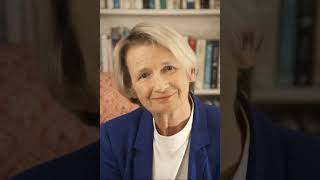
Dr. Mari Fitzduff spent two years traveling the world on a shoestring budget, then studied how former paramilitaries in Northern Ireland changed their minds. She helped design the peace process that led to the Good Friday Agreement and now runs a Master's program at Brandeis training peacebuilders for the UN and NGOs.
Chapters
Living a Life in Full is a conversation you always wanted to have with that person who gave an amazing TED Talk or the author of one of your favorite books, or that inspirational Olympian you always wanted to know more about. It's graduate level conversations with those making a difference in the world and in the lives of others. This show brings you new ideas and approaches so that you can live a life in full. I'm your host, Dr. Chris Stout and I hope you enjoy this episode. This episode of Living a Life in Full is brought to you by ATI Physical Therapy. If you need physical therapy, choose ati. ATI offers exceptional care, trusted expertise and remarkable outcomes customized to your needs. ATI has over 800 clinics coast to coast in 25 states. When want to start feeling better fast? ATI can help address chronic pain or recovery from an injury or surgery expertly, quickly and conveniently. ATI's first program uses a performance based methodology to safely return injured workers to their workplace. FIRST is designed to increase strength, endurance and cardiovascular functioning. ATI's sports medicine provides athletic training services to help athletes get back in the game. ATI has hundreds of professional collegiate, high school, middle school and club relationships nationwide. ATI also offers a variety of specialty services including home health, hand therapy and women's health. To Learn more about ATI's advances in evidence based practice, clinical outcomes and their innovative new smartphone app, please visit atipt. Welcome to another episode of Living a Life in Full. I'm your host, Dr. Chris Stout and today we have a fascinating person and good friend of mine as a guest on the show. I had in 2006 the pleasure of collaborating with Dr. Mari Fitzstuff as we co edited the three volume set the Psychology of War, Conflict Resolution and Peace, which was published by Prager Press. Our mutual publisher, Debbie Carvalco acted as matchmaker to pair us up and I'm honored that she did. I knew of Dr. Fittstuff by reputation as a professor and director at Brandeis University where she founded the Master of Arts Program in Conflict and Coexistence, which to date has graduates hailing from over 70 countries. I also knew that she was an Irish American educator, writer and academic and helped set up the first university courses in conflict resolution in Northern Ireland in 1988. She wrote a training book called Community Conflict Skills which was used particularly in the Northern Ireland Northern Ireland conflict. Since its original publication, it's been translated into Indonesian, Serbo, Croatian, Spanish and a number of other languages to help countries in dealing with ethnic strife. What I didn't know, and I'm going to give this is going to be a little bit of long form, but I think it's very much worth it. What I didn't know was her origin story. Here are some highlights. She was a nun for 18 months, after which she started protesting in university in 196869 the university was closed and Nari was influenced by Vietnam, Marxism and radical ecumenism. She met Gaddafi in Libya in 1973 and she met and married a man from Northern Ireland who she met on the revolutionary committee in the university. For their honeymoon they traveled around the world for two years on a budget of about a dollar a day each, visiting community projects around the world. They spent a year in South America traveling in what turned out to be a pirates boat from Panama to Colombia illegally of course, and they were briefly arrested in Argentina for spending time cleaning the sewers in a barrio with some liberation theology priest friends who were subsequently imprisoned for a number of years. That was followed by a year in Asia. They went to Petra and slept outside in a car with some friends with refugees as there were no hotels and she briefly was kidnapped for an afternoon in Afghanistan and they were held up by bandits while traveling from Sudan to Ethiopia and also shot at while sleeping in a tent in the Kenyan border. When they came home, they set up a woodworking shop in her husband's rural homeland and lived a self sufficient life on around $10 a week for a year. They had two kids then got caught up in the war. Interestingly, her husband's family were settlers from Scotland 300 years ago and Mari's family were Ulster Lords who were driven out by his family. Their old fort was nearby where they lived and living in what they called the killing fields as it was the second highest murder rate in Northern Ireland. And thus began her career establishing the first mediation service in Northern Ireland, which is still used for sticky political issues to this day. After that she was director of the UNU ncor, a joint initiative of the United Nations University and the University of Ulster, which she conducts policy relevant international research on conflict issues around the world. More recently, in February 2017, she published her latest book, why Irrational Politics? Understanding the Allure of Trump, which examines his allure as to how his success ties into the hopes and fears of many Americans and actually calls into question some of the limitations of our democratic system. So zowie Mari, what an intro. What a life. And just it's so great to have you on the show.
Thank you Chris. I must say I'm exhausted listening to it and that Was you. I can't believe that's the life I live.
That is just so fantastic. And again, I had no idea of this backstory story. It's truly amazing. I mean, tell us about those early years of travel and activism.
Well, the traveling was very much. I had a husband who was very committed to local community development, and both of us had friends and colleagues who were around the world working on issues of community and looking at difficult issues of refugees, et cetera. So we decided to take ourselves on the learning. It was supposed to be a year in the first place, but we managed to get some money by working in Canada for a couple of months and took on then another extra year. It was an amazing learning experience, you know, once you've learned how little you can live on. And we did. I can remember coming across the border into Mexico from South America and thinking, why do we need so much stuff in all these stores when we'd actually lived on so little in the markets? And it makes you realize you don't. There's some reasons you don't need to live a pretty full life. So I think it was a very good experience. After we promised ourselves that we would always be ready to put our rucksacks in our back, that we wouldn't get tied down to work that we didn't believe in, and that we tried to, as it were, inculcate this into our children as well. So it was a great learning experience for both the work that followed. I think that social change has always been a commitment of both of us, but mine particularly was born out of the revolution in 1968, 69, in our university. And I can actually remember the marches we went on, the sort of protests we took up. But I can also remember one particular point that was really seminal for me was walking along the streets of Dublin as part of a march. Was it Vietnam? I can't remember what the cause was. And I watched all the people, besides looking at us and wondering what on earth we were doing. And the question came to me, is this changing anyone's mind? So the whole question of what changes people's minds became probably an obsession for me. I subsequently did my doctoral work talking to paramilitaries who had been using bombs and bullets and the conflict in Northern Ireland, but who are now committed to dialogue instead. And my doctorate looked at why they changed. So I suppose I kept this obsession with why people change by working out in the three or four years that I did my PhD. And that was, again, a great beginning for me because it gave me Something to work on. When I was, to my total surprise, appointed to run the Community relations council in 1990, which was basically a last hope for the government in Northern Ireland because they had tried military means to end the conflict, they had tried economic development to end the conflict, but they couldn't get people to get enough, both politicians and people who live at local levels, to actually develop enough trust to move on to a situation where they could make a peace agreement. So I think both of those things, traveling the world on very little, it's really good to travel on very little subsequently. I go back now to some of the same places and I'm put up in places like the sort of the fancy hotels. And you realize you can go from fancy hotel to fancy hotel and learn very little, but you learn much more by going out and having very little money and eating in the markets, etc. So those two things, a social change and wondering how it happens, how is it facilitated, have probably been the focus of much of my thinking and investigating over the past sort of 20, 30 years.
Wow. It really sets you up for the kind of career that, you know, you've. You've been so successful in. What. I'm curious about your dissertation. So you had. Were people comfortable talking about the, you know, sort of their evolution and their change from maybe being more constructive, from being destructive or tell us about that?
Well, I mean, they were given a promise of anonymity, which I believe still holds, although there has been some problematic cases in which it's been broken here in Boston. Two things I remember. One was, yes, they were actually very happy to talk about their journey, but almost every one of the men on both sides who'd been out killing confessed to me that they had never been more alive than when they were out of what they called a life of action. It brought home to me how much it meant to them to feel that they were making change, to feel that they were important, to feel that they were men about business. That mattered. Now, a lot of them would have come from working class backgrounds and unemployment was very high. So for some of them it was a historic quest. Many, particularly in the ira, they had families who had been in the IRA right through the early century of Ireland when they were seeking independence from Britain. And they had sort of inherited a process of political action and indeed violent action for the Loyalists, many of them, just because, again, they came from very difficult backgrounds. For many of them. They first of all set up watch groups and then became so enamored of becoming needed and wanted that they actually Joined the various loyalist military groups as well. So that was the first thing that I remembered, that war actually can mean an awful lot in terms of people who feel that they haven't really got a stature in their communities. I can remember one prime minister in Ireland coming up to visit us in Northern Ireland and saying, well, Mary, doesn't everybody want peace? And I had to say no, because for some people, war is actually the most exciting thing that they've done in their lives. So that has sort of stayed with me that there's a real need for people who come back for more. They're often addicted to the adrenaline, the testosterone. So the whole work on how you actually resettle people after a conflict is really significant. I suppose the other thing that struck me was that there were two different kinds of people that I came across. And I realized that very few people change their minds through thinking. So there was one I remember he was a pastor and he was a member of Ian Paisley, who was a very pretty racist, anti Irish pastor who created a lot of trouble in the 60s. And he had bands who would follow him and basically pretty well negatively disposed to any of the Catholics that they met. But I can remember this particular pastor saying that one day he found himself. What he changed was he found himself in his kitchen and he was reading the Paisley Telegraph, which was a sort of bio ribbon newspaper that Ian Paisley put out. And he also happened to have the Sermon on the Mount open. And he said he found himself going from one to the other. And he suddenly realized cognitive dissonance. He could not hold both in his mind. And so he actually stopped and became, as it were, much more of a peacemaker. But then there was somebody else. He was a loyalist paramilitary. And he changed because a group of people who were interested in sort of political discussions, etc. Asked him to come and speak to them. They didn't actually know that he was out at night killing people, but he became so felt he belonged to that group. They made such use of him. He felt he was wanted by them that eventually he actually gave up going out at night shooting because dissonance that he felt in terms of the violence that he was out perpetuating. So I suppose what I learned from it is that unfortunately, war is often the way in which people find meaning and they can find it pretty difficult to adjust afterwards. And secondly, that we may give up reason is not often the way you change people's minds. Very often it's experiences. Now, roughly, I would say about maybe ethicism change through reading things through Using their minds through what we would call cognitive dissonance in our field. But the rest change by experience. So one of the things we do a lot of work on is making sure that people know that they set up not sort of books and lectures, etc. But all sorts of experience where they can meet the other so that they can become sort of more relaxed and comfortable with people who are different.
That's wonderful. I think I've seen this sort of thing, you know, play out, in other words, conflict situations in other cultures and even other continents. And I think you're spot on. The initial urge for folks is to say, well, I have a rational, logical argument about the way that I feel about whatever the world should be. And my job to help you is that you have a flaw in your logic. And as soon as I point that out, it will be an epiphany and all your ideas and beliefs will magically change over to what I think, you know, and it's certainly. Yeah, it's certainly. It's certainly not that way. And I think, you know, you, you, you also look at the complexity of it in the context of, you know, like you said, you know, adrenaline and testosterone, which I think, you know, certainly are, you know, fuels to those fires. But, you know, I think you also note that the, the. The affiliation needs, you know, and people that may feel like they've been victimized or that there's a. A lack of justice or whatever that then can start to band together in an organized way, be it for something positive or for something negative, that those ties and bonds are very, in some instances, very difficult to overcome or very difficult to change.
And actually, I suppose the other thing we struggle with is other such things as bad people or good people. Originally, my work started from an experience I had. We lived deep in the countryside. As I say, it was a killing zone between different paramilitary groups, soldiers, police, et cetera. But one morning there was a knock at my door and I opened it and there was a group of young soldiers, an officer in command, but these were obviously young soldiers who couldn't get jobs in England. Basically working class joined up. This was the only sort of road that they could find for themselves. And they asked me was there anybody in the house that I didn't want there. And it took me a while to realize they were basically asking me, were there any IRA members in the house? And then I remembered that just about a few hours previously, I'd actually seen a group of men who were out practicing in one of the far back fields, who were the ira. And then it struck me, Chris. So here was one young group of soldiers from England who were probably soldiers because they couldn't get any other jobs. It was a time of high unemployment, and they were all prepared to murder another group of young men who couldn't get jobs because, as Catholics, they were excluded from many jobs in Northern Ireland. And this idea of young lives being lost as each see themselves as the enemy, finding themselves in a context in which their duty is to kill the other. I happened to have two children running around my feet at that time, and both of them were boys. So I think it really startled me. And I then felt that I had to do something. I couldn't just any longer live without actually addressing the issue of the conflict. So that began a lot of my. Continued a lot of my work on trying to understand change. And subsequently, then I began a doctorate from deep in the countryside before there was any network connections that really did. The other thing is realizing that in Northern Ireland, for instance, people are actually very open, generous and kind to each other. I can remember I was going to give a lecture in one of Queen's University. And I stopped my car, broke down. My car. I hadn't a very good car broke down. I thought, where will I go to get it fixed? So I looked around, and I was on a street where it was near Loyalist paramilitaries did their drinking in a publisher. So I went into the pub. I knew I needed men to fix the tire because I couldn't do it or whatever was wrong. I went in and I said, look, guys, can you help me? My car's broken down. And they said, of course, love. And they said, where's your keys? And I gave them the keys, and I walked up to the university, and I thought, is there anywhere else in the world you'd actually give the keys of your car to a group of loyalist paramilitaries? And me speaking with a southern accent, they see me as the enemy, and no would be fine. So I came back from the lecture, and there they were. They said, oh, we took to Jimmy's place and we got it fixed. And here you are. It's going fine. I said, can I buy you a drink? And they said, no, no, off you go. Safe home. So that was a loyalist. And a couple of weeks later, my car broke down again outside. Jerry Adams, he was the sort of irrational commander, as it were. And I stepped out of the car and I looked over, and there were six of what we call Jerry's heavies, his security men. And I looked at them and I just put my arms up into the air. These six men come over. They didn't even have to take the wheel off with that little wrench that you use. They just heaved the car up, fixed the tire, put the car back on, and then said, off you go, love. So it actually brought home to you that people can live on different levels. We lived in what we called a killing zone, and we knew many of the neighbors. It couldn't be proved in court, but we knew they were out at night, up to no good in terms of Protestants, but during the day, they were looking after the old people. They were doing teaching the children's sports, etc. They were ideologically inclined. They believed politically a certain thing, but they wouldn't have dreamt of stealing from you. They wouldn't have dreamt of hurting people who weren't the perceived enemy. So, you know, when you live among people who are like that, you actually know that we all have the capacity to go, to rise to our best or to our worst in situations of conflict. And actually, I always say to my class, I don't really want anyone in my class who doesn't understand that given a certain context, they too could behave in a pretty awful way if they had to protect their family or their children or felt they were being totally excluded from food and water and other such things. So it gave us a great insight into the sort of the capacities that we all have as human beings and that can be. Can be called forth by leaders to do things that are probably the worst of us or things that are the best of us.
Right. I think you certainly see evidence of that when, with the Nazis and the Holocaust or even Phil Zimbardo's work with the Stanford Prison Experiment of how light, contextual variables, so to speak, of people knowing that they're at a university and at home, but all of a sudden start identifying with the aggressor and kind of doing things that they probably wouldn't have done. I had the pleasure of being in Belfast some years ago, and I remember going by the Hotel Europa and you're gonna have to help.
The most prompt hotel in Europe. I know it well.
I was going to say that was. That was the. That was how I had remembered it. And. And tell me if this is urban myth or. Or if I'm just so misinformed, but I also recall that. That. That frightening statistic or frightening, you know, whatever accomplishment, if you will, that oftentimes they would send a bomb in a package and it would be labeled as such. Such that, you know that there's a bomb inside. And I remember that. I forget which year, but when Bill Clinton was president, that when he visited, he purposely went there as sort of like a, you know, a symbolic gesture of, you know, unity and I don't know necessarily put himself in harm's way. But tell me what your thoughts are about that sort of thing. Does that help change hearts and minds or.
Well, I mean, the bombing thing is interesting. I lived in, basically, the office that I ran with the Community Relations Council was on, just off the main strip.
Oh, wow.
And a lot of the other agencies were actually on. I think it's called Victoria street, the main street. And the Europa was on the main street. So often what would happen would be there would be bomb scares. Ironically, the bombers and the police had a system of communication whereby they could. The bombers could tell the police that was a bomb was going to go off. So the word would come and we would, you know, people from the offices on the main street would often come down to our offices for shelter. But I can remember one day, then we got the word that there was also a bomb in our building. And I went around and gathered up people and they were going back down the downstairs. And it was so funny because as they were going downstairs, people were saying, okay, we've dealt with agenda number one. What about the second thing on the agenda? What about the third thing? We're so used to having sealed with bombs and bomb scares that they hardly stopped what they were doing. And I just thought, you know, this is probably not a good way to run a country. And one of the photographs that I know is of two little old ladies coming along with a shopping basket. And as they chat away, there are two soldiers lying flat on the ground with their sort of guns focused on. It doesn't show what they're focused on. And the women just don't stop nattering. They don't stop nattering. They just step in between the arms and the leg of people and just go on. Now, in terms of Clinton, I had the pleasure of meeting him several times when he was over. He was quite extraordinary, I must say, as a politician, he has a touch that is very hard to beat. He sort of. He could. He even wrote many of his main speeches. He really had a touch and enabled many people to actually come together and begin to do a lot of talking. The help that was put. One of the things I like to talk about is that actually the United States States was very helpful in the Northern Highland conflict. Let Me give you an example. So the consul general would have July 4, would have dinner parties, et cetera, and they always pushed the boundaries in terms of having people there who were sort of not totally legitimate politicians who had, shall we say, incredibly close ties with some of the paramilitaries. But it was. They actually were willing to put themselves out to bring a lot of these people together. And a lot of the conversations that were happened from business people, et cetera, that Clinton had gathered around, they really did bear fruit. So much so that, you know, we got into a habit of actually calling the White House when the talks were on the possibly going to break down so we could get the President to sort of urge them along. So, yes, he was. He was actually Hillary Clinton. She came a few times as well. I met her as well. Very different characters. I mean, I think she's. Hillary is just an incredibly, really intelligent woman. But I think it's. Bill has the emotional political touch. And I think that unfortunately was part of what happened in the last few years. But it was. So certainly, yes, the Europa brings back many memories because we did have many a meeting in it and had to leave because of many a bomb scare. The thing that happened in the end was the warnings often didn't come in time and a bomb would go off and people would get killed and then people would blame you. The paramilitaries would say, well, it's the police's fault. They didn't give the sort of emergency signal early enough or whatever. So it was a really odd, almost insistent, incestuous nature that happened between those who were going to bomb and those who were trying to stop the bombs. I think it's only in Northern Ireland it could happen like this. I mean, it was interesting because you could. You actually could connect with a lot of the people who hadn't. Their, their proof would stand up in court. But we actually, it's a small community, so you could find who was responsible for what. So if we got, for instance, a death threat to our staff, we very often would know who to go to to talk. You know, we could find out pretty easily. So it was, in that sense, it was a tale of two kinds of people who were just extraordinarily friendly and they still are. When you go to Ireland and you think, well, how couldn't this be happening? How could it have happened that they have had this war? But on the other hand, to those whom they. Other as it were, the other side, when they're informally on the other side, they actually can show no mercy.
Yeah. So what's the logic behind planting a bomb and then saying that you've planted a bomb? I mean, is it. There was an expectation that the bomb would be found or people would be cleared?
Well, you see, gradually what happened was during the early 70s, the IRA in particular blew up a few pubs. And they were awful, awful events because, you know, I still remember there was a wedding party out to have sort of a pre wedding drink. There were mothers, children. So many people were killed that eventually they realized that actually having that kind of violence. We had two very bad years, hundreds of people killed in such events. And then actually the bombers, particularly the ira, realized that they were not actually going to get away with it with their own people who did not look at their own people. Obviously supported a lot of their own people, supported their cause against the British, but they were certainly not keen on blowing up pubs. And it was fascinating. They even had gender rules where they would blow up. They would blow up police men, but there were very few police women where they would blow up. In fact, I remember being very. When I heard a policewoman had been murdered by the ira and basically the community was in shock because this was not something that you did do. It's hard to imagine people having honour like that, but it is their own people. I mean, it was the same when the ceasefires happened and unfortunately for a year nothing happened. People sort of had promised to move, they didn't move. The British government was very slow. And eventually what the IRA decided was they wanted to shock the system. So they actually went to Canary Wharf, which is a huge, big office development in London, and they decided to blow up the building in Canary Wharf. But they did their darndest to make sure there was absolutely nobody in the building. In fact, unfortunately, one person was killed. But they turned to blowing up buildings rather than people because their own people actually were saying, that's going too far. We don't mind if it costs a million to rebuild, but we don't want you going out and, you know, killing people in the way you have been. So to a certain extent. And they had what they call legitimate tolerance, which the community seemed to sort of go along with. They were the police soldiers, but sometimes they did crazy things like blow up the train that went from the north to the south. Even though they were all on for United Ireland, the number of times we'd go on the train and have to get off to have a bus to take us around to the next part of the train because the track had been blown up. So there was a Logic. And when you get that, you see people who are struggling to adhere to some sort of honor among their own people, but also an honor that's about the other and how the other is, is the target and legitimately so.
Yeah, it's a curious combination of humanity and violence, I suppose.
Yeah, it is. But it does actually, it does help you to realize that really contexts bring out the best or the worst in people. I mean, I feel that very much now that we have a leader here who is in a way enabling people to bring out the worst in them. But actually if they'd had a different leader who was able to address some of the sort of the hardships they felt they were experiencing, it could have brought out the best in them. I mean, I have a husband who cycles. He cycled from Los Angeles to Boston. He's, you know, he's really cycled the United States and he comes back saying, look everywhere, Everywhere they are decent people. Whether it was Obama land, whether it was Trump land, wherever. But the problem is that I think the leadership permits us to fall down into our worst or to rise to our best. And I think that's the difficulty about having a leader who in a sense calls up the cruder ways in which we react towards each other, many of which we had hoped had gone away because we'd become a much more open, human rights focused society. But it's a really big lesson to us about how frail we are.
Yeah, well, I see also, and I want to talk about this, this is a good segue into your irrational politics book that even in Europe, I mean, I don't see it as daily as I do in the media here, but this nationalist, populist kind of, I don't know, growing group and influence that if you think about on the one hand, democratic ideals and it's the people who vote, whoever should be in, etc. Etc. Etc. But then, you know, it's sort of like, wow, if, if we do hold true to that and the majority does say this is who we want as our leader, you know, by virtue of, you know, electoral processes that, that, it, I don't know, it's, I think it. We've had a very eye opening situation with the midterms recently and, and people really starting to see the value of, you know, what their, their vote is and you know, they, I think it's
finished and book out an ability. Basically the author talks about the people of somewhere and the people of nowhere. Now the people of nowhere are people like you and me, our children, most of the people we know, we comfortably move between. I'm in Boston now, I'll be in Ireland next week, I'll be in Switzerland the following month. We comfortably move between. Around the globe. We find globalization is exciting for us. We open our emails in the morning, and there's 100 different countries coming through from different people, and we feel comfortable in that sort of development. But then there's the people of the local, where it's the local that matters. For instance, the Brexit vote was very much people who had met, very few people who were different to them. Ironically, in London, everybody voted to stay in Brexit because they were so used to the diversity, and the whole city ran on diversity. So the people who. It's when they feel the local changing that they feel very threatened, when they feel that other people are sort of thriving, but they're thriving in a way that is fearful, you know, by going away, by traveling, by doing strange things that are different, by connecting with all sorts of parts of the world. So the idea of those who are local and those who are cosmopolitan, who are sort of comfortably globalized, makes some sense, I think. I mean, I remember. I thought, like everyone else, that the Democrats would win the election in 2016. And I remember saying to myself, the first thing that Hillary should do is go to where people have lost jobs. Because from all of my reading and talking to some of my students, the center of America is really often a disintegrating infrastructure and say, okay, now what can we do? What do we not do? And start moving things like solar panel development, et cetera, into places where the industries have just crashed. Because there was certainly. I think we realized there was certainly a part of. Of people within the United States and indeed within Europe, because it's the same kinds of people who really do feel threatened by the world becoming so varied, so diverse. They look around, the place is just looking different. People are speaking different, they're speaking different languages, etc. An example of this, after the Brexit vote, I remember we used to joke, people would say to me, which would you prefer, Trump as president or the Brexit vote? And then they would jokingly say, well, if Trump gets in, it's only for four years, but Brexit, of course, is forever. But I can remember the shock that Brexit brought home to us about how we, too, had been living in a situation where we hadn't really understood where so many of our people were actually feeling the world was changing beneath their feet and their children's feet and really this idea of sort of radical, that what they saw was very radicalizing change. Change was so problematic. And I'd hoped that the Democrats would have gone and sort of noted that, taken note of it. But of course what happened is we got caught out. We just hadn't paid attention to the fact that we exhilarate in a world where things are going so quickly. I mean, I end the book actually by saying that we got our communications right, we can communicate now anywhere with everybody in the world. We got our economics right. We used to be able to trade with anyone. The thing we didn't get right is the sort of social psychology side of it where our people didn't have necessarily the networks that they felt they were part of and were supported.
I think that's really a fascinating kind of perspective and to see even the coincidence, if you will, of how the parallels that you draw between what's going on with presidential leadership in the United States and what's going on in Brexit, that there's almost these basic core value kinds of things that are different. So in your book with Hawaii Rational Politics Appeal, one of the things that you do, you challenge readers to reconsider the process of electoral politics and how we vote here in the United States. Can you talk a little bit more about that, what your thoughts are on that?
Well, it's interesting because my students, as you noted, are very international at the moment. My teaching assistant happens to be from Egypt and she was very much part of the Tahrir Square protest some years ago in Egypt, where they had hoped for democracy would bloom, etc. She actually ended up being put in jail and tortured for her part in the entire spring. And similarly, we've had people from pretty many of the Middle Eastern societies which have had this so called awakening. And then suddenly it all fell apart. And they would all say that it fell apart because people weren't used to democracy. People didn't do a lot of democratic talking. So for instance, in Egypt they went for the Muslim Brotherhood because basically they were a strong institution and they felt a strong institution would be best at running the country. So I think, you know what's been happening there and the sadness of so many of our students. Now we do have some. Our students from Tunisia are pretty pleased the waiting to go, but pretty well everywhere else. Syria, Egypt, etc. There's a sense of where do we go wrong? So it's not and I sometimes think they fail to realize that it's not just in the Middle east, it's also here where we really were not wedded to our own role in politics and decision making. You know, it's so much easier for all of us and don't we all fall into this where if we get a leader whom we think is doing a pretty good job and we just relax and don't stay connected to politics. So, I mean, in a sense we have just managed, I think, to get by so often without doing the kind of work that's needed in terms of democracy. I feel that what's been happening over the last couple of years, I have a lot of friends who are involved in a lot of the sort of the shoots of democracy that are growing. I think people realized how much that they lost by standing aside from politics. And certainly now the midterms shows that was born on the work of thousands and thousands of hours of local groups who actually had said, we have failed. We've got to get involved ourselves. We've got to make sure that it's the quality of politics that we want. Now, how you do this is actually quite difficult. I know that at home in Ireland, we had to put in place a lot of civics courses. We first of all had to put in place a lot of programs called Mutual Understanding. So if you are in a school in Northern Ireland, unless your parents take you out, you all go through a mutual understanding process whereby people get to know about different people and their differences and why they're different. They get to meet them because everybody is still. A lot of people are still fairly ghettoised and where they live. So I think those sorts of processes are really important. But they also have civics processes whereby people are. It's born home to people. How important it is that they involve themselves in their local politics, in their governorship politics, in their sort of local councils and in their national and regional cultures. Very interesting in. I sort of. I come from Ireland itself, from the south of Ireland, although I've lived in the north for the same amount of time as I've lived in the south. But you may remember there were two elect, two referendums took place in Northern Ireland. One was in terms of the equality of gay marriage and the other was in terms of abortion. Now, Ireland is a very Catholic country, yet it passed both of those. And what they had done was set up what they called a civic forum, whereby lottery people were chosen to come together to actually talk for and with the nation, as it were, and to come to some decision about how these. How these difficult decisions could be handled. And we're now starting that back home in Northern Ireland as well, where we get people who are not officially involved in politics. Politics to come and actually have their say and talk with people through these very, very difficult issues. Because I can remember, for instance, we set up something in Northern Ireland called an upside process, which is about getting people involved in the kind of Northern Ireland they wanted. And this was when the war was still raging, it was a couple of years before the ceasefires. And actually our politicians were very angry. They said to us, why are you getting. We're the ones who are supposed to be doing politics. And we said, no, but you're not doing it. So this is why we're doing this. And the that fact, fascinating thing was it was called an off sell process. And there were hundreds of meetings all over Northern Ireland. They took place in town halls. You could make submissions privately because often given your personal views, you'd feel you were going to be threatened. And it resulted in a 2 or 3 inch thick document of suggestions. And many of those suggestions subsequently made their way into the eventual peace agreement. So I think there are different ways of. And that was a process that was really involving. It went from town hall to church hall to school hall and also the civic forum in the south that we're now trying in the north where you actually literally, literally lottery people. So they're chosen almost by citizens are chosen by lottery to come together and discuss difficult things like abortion or in our case it was gay marriage. So I think we do need to have more of those kinds of things if we want people to understand that not only that politics matters, but that they actually have a chance to, to be involved in it and have a say in terms of shaping the decisions that are taken by politics. So on the one hand it's quite depressing, but on the other hand there are new ways of doing politics that I'm beginning to see in action. And they actually are pretty exciting. They've been tried in a whole variety of places. And I think also the thing that we now realize is I'm very conscious that one of the things in Ireland, Ireland has 17% of its population not born in Ireland. Ireland, 17%. It's an extraordinary, it's higher even than I think New York or wherever. But what we have is actually a Prime minister who, believe it or not, he's both half Indian and he's gay. And this from a Catholic country. And that's basically been driven by the youth in the country who are saying we want different ways of being involved. Ireland is now coming out of the depression. It had gone through a very prosperous stage. It went down like most people during the 2008 depression. So the whole combination of young prime ministers, young ministers, young people finding different ways to do politics that are sort of out with the regular way in which we do politics is, I think, quite a good. Quite good. There's so many good examples there. I'm also conscious when we couldn't get people to do politics here at the national level, that we set up the local level. The local level, we set up up trade unions, NGOs, along with the politics, to actually spend the money we were putting on trying to solve the conflict. And actually that, again, was a different way of doing politics by ensuring that politicians had to make decisions in conjunction with local communities, in conjunction with trade unions, in conjunction with the churches, which were pretty important in many places in Ireland. So I think it's a good time for us to call upon, and people have been calling upon those kinds of dialogue processes. And, you know, I'm hopeful that we may turn out to have even better processes as we move beyond the fears and the negativities of those who think it's only a tough leader who'll actually see them through.
Right. I think it's a. I didn't know that the granularity of those kinds of changes, I think that really does, you know, give some hope in terms of momentum and further enrichment with diverse voices and diverse perspectives, being able to make a, you know, more unified but nevertheless heterogeneous kind of country and circumstance. And it reminds me, too, in the sense of sort of what seems to somewhat have been lost in these last few years of, like, I was struck by your comment about how, you know, when everything's kind of, you know, percolating along and everything's, you know, not horrible, not super wonderful, but, you know, just sort of normal that, you know, people do get disengaged from the political process. And someone said a while back, it really also resonated with me that the act of not voting is still a political act. So even people with apathy or ambivalence or whatever inaction is in some ways still an action because not doing something could still result in. In an untoward event or not what someone would necessarily want to have for their community or their country. So I think the whole civic duty kind of aspect, I think it's almost kind of in a resurgence right now with these examples like you've been giving, especially in Ireland. So I want to talk a little bit about your time as director of the Community Relations Council and Director at the United Nations University. What was that like? And set us a time frame and context of when you were there.
Well, so what happened was, I told you the incident of the soldiers coming to my door and watching the young IRA men out my back door. I began to get involved. And part of getting involved was I started to teach in the university. I started to teach mediation. Now, I have to tell you, Chris, this was a totally new term and a totally new process. Half the people who turned up for these initial classes and mediation thought they were turning up for meditation. Seriously, it was such a new term. But we did set up with a couple of colleagues, we did set up a mediation for a mediation forum, which meant that we had. We trained a lot of people to be able to have difficult conversations. And you talked about my book there, which was basically about. It was 101 ways to have difficult conversations. It's just. Actually, we're just transferring it from a generic one that was done for Northern Ireland to one that can be used anywhere, because the exercise will stand in good stead in any divided societies, we think. So what happened was then I was asked by the Standing Advisory Commission on Human Rights, who'd heard I'd been doing that, would I do a proposal for the government about was there anything else that could be done in Northern Ireland that hadn't been tried? So a colleague, Hugh Fraser, and myself sat down and we basically wrote a report for the government saying that they should set up an independent body that would actually facilitate a dialogue. We had quite a lot of equality work going on, but it wasn't being matched by any sort of relationship work in terms of huge distrust. So this was about getting an organization together that would fund different ways of people meeting to have difficult conversations. And the government, who are they were just presumably out of ideas. They actually accepted this. And then when we began to look for a director, because I was one of the people had the ideas, I sort of opted out and then was opted back in as director. You know, I can remember one of the. So the birth of the current program I have in Brandeis came from the fact that I found myself driving up to Stormont, which was the seat of power, where it was a parliament that had been sort of stopped 30 years previously because it being behaved, the people in it had been behaving so exclusively, and some cases the police had been behaving very violently. And I thought, what on earth am I doing? I had plenty of money. They had made it clear that money wasn't the problem. But I Just, you know, it was almost like starting. How on earth do you get a million and a half people to start a dialogue process? And I can go to my first day and I think, what have I done? So in a way, I started to try and find what else there was. And I can remember going in desperation to London to see somebody who was doing some work in conflict resolution and having a conversation which didn't leave me all that wiser. Although it was a great conversation, I loved it, but I still wasn't sure. So we found our ways in many different ways and there were a lot of good people and we sort of worked there. But the program I have now in Brandeis is very much a program for somebody like me who finds themselves with the capacity, the ability, the desire to actually shift and change the wars that are happening in their country so that they would at least have nine months to a year of contact and connection with the best of what we know in terms of our field. So it was very much, you know, hoping that other people would come who were faced with many of the same problems that we were, but wouldn't have to sort of act from the ignorance that I felt we had to in our setting up this, because that was 1990. Now the field has just grown enormously. I mean, when I was in Valley to come and set up the program in Brandeis, there were actually six. There were actually only 10 programs. There's now over 160, 170 programs in variously called conflict resolution, peace building, etc. And they're actually getting a lot of jobs. So it's actually making its way. But my feeling was that this is a thing people we really need to study. And you and I did that book together and we knew so much more after we had done it and read so many papers from so many amazing people on sort of of working in their singularity of issues to do with war and peace. So that was. It was. It was a difficult job because when I took up the CRC in 1990, I was appointed to. I mean, I really wasn't sure what I was doing and good heavens, what was expected of me. But we actually immediately then were threatened by both sides, of course, because the Republican, the Irish side, they felt that this was a substitute for equality work, which it was the. And the loyalists thought it was a way of taking everybody into a united Ireland, which is what they were fighting against. So we had a lot of opposition to get around, as it were. And we did indeed get death threats because people saw it from their perspective and they thought they had a mistaken notion of what we were doing. But the great thing was there was already quite a bit of work happening, but it wasn't. Interestingly, when I started the job in 1990, there were some peace groups, but they were existing on pennies. I mean they were sort of voluntary. There were people doing it in their spare time. And this work is worthy of more than that. It's worthy of sort of professionalism and focus, etc. So a lot of it was setting up much more focused work. So for instance, we also. One of our statements was goodwill is not a strategy. You know, wanting peace is not enough. So we used to, we took a lot of the groups that had. We're very pleased with the fact that they were meeting across the divan and so are we. But we would also insist that they would actually take on board difficult issues like getting politicians involved, getting trade unions involved, getting a lot of the churches involved, you know, so we made. I had a big long list in my office that we used to look at because it was a matter of working with the police and the army and as I say, the farmers and the fisher people. Everybody had to be involved. And we believed it's, it's now we have a name for it which is what it's called Shared society Works where you try and look at business and see how it can help in places like Shell in Nigeria or it can be health. How can health be used in a way that connect people? In many parts of the world there's a lot of people now working on these issues. But in the beginning it was a whole of society approach that we were taking and they were really varied. I mean working with the army and the police. On one hand, the army, if they agree with you, if you can get them on board, things would be done by next week. Working with the housing executive because we had people who were from so called mixed marriage and they were the first targets in their neighborhoods and they were being killed and there was nowhere for mixed couples to live. Trying to get the housing executive to provide public housing, which we had a lot of, for people who weren't from either Protestant areas or Catholic areas. That took about 15 years to get on board before people really put their minds to it and now have developed places of public housing where they're managed collectively across the community. So it was bit by bit, it was about engaging, not people who are especially focused on mediation or dialogue, although there was a lot of that going on. But on people, on trying to get every organization Every institute involved, including the business people, the institute of directors, etc. So it was a huge learning process for us all. And I think what happened was, interestingly, we did have some kind of colleagues did a survey of politicians and others afterwards to say how did the peace agreement, how did it come about? And about 60% of them gave credit to these kinds of groups who were working often across difficult divides, to start breaking down barriers and above all, realizing that nobody was going to win everything. The IRA had already admitted it couldn't win the war militarily. The British military had admitted they couldn't win it militarily, and recognizing that whatever happened, it was going to be compromised. I always say in our fields there is no such thing as win lose. For instance, in Sri Lanka there was a supposed win lose where the government thought it had beaten the Tamils. But that's not a win lose, that's a lose lose because the Tamils now are back again looking for the equality they felt they didn't get. So we knew it had to be sort of compromises on all sides. And I think all of that work was about people beginning to realize that the future was not going to be the way they thought, as Rosie and the others didn't, but it was actually going to have to be some sort of connected way in terms of getting to the piece.
That's fantastic. Gosh. So that then leads up to, like you've been talking about the start of the program at Brandeis. So for the students that are a part of that, that then become graduates, do they go to policy? Do they go to NGOs, do they go to government?
It's fascinating. I mean, first of all, it is such a privilege to work with so many of them, as so many of them have seen their whole families merged in front of them. You wouldn't believe the background. And yet they come with all their energy. So, yes, they do actually. Some of them go and work for governments and some of them go and work for un, World Bank, Institute, migration. They work in a lot of the international organizations. Some of them go back to set up their own NGOs, and some of them, about 20% of them go on to do PhD, PhDs and actually start up their own programs. So I think we've got about four or five programs from students in the Philippines and Waziristan and a few other places where our students have actually gone to set up the equivalent of our program. So they engage more people in sort of dialogue and structural processes that can lead to peace. So Yeah, I mean, it's interesting. I was in Colombia. I've been to. I've come around to Colombia quite a bit, while the peace process has been sort of coming and going there. But I was there just a few years ago and I was interested that the UNDP were there and I knew some of them, so they invited me to come in and do a briefing and around their table, it was fascinating. They had four people who were involved in development and four people who were experts in conflict. So what we've actually done. And the main agencies are really looking for people like this. The World bank have now just brought out a joint report with the United nations saying there's no point in us doing development in situations of conflict, because basically we're just losing all of that money. So they're actually putting their backs behind people who can do development in what we would call a connecting way, a shared society way. So you don't just put a water hole in somewhere and just leave it there. What you do is you try and connect people through that who are actually on different sides of either political or economic equations. So a lot of. So, for instance, we set up, I think, the first ever program in development and conflict. So people get two degrees at once over two years. And they're very popular with a lot of the aid agencies and again, a lot of the UN agencies. It's interesting how the field has developed. For instance, give you an example, I was at the alliance for Peace Building just a few weeks ago, which is sort of the equivalent of our trade union. So we started about 10 years ago with about eight people. We had 480 people. We had the World bank, we had the Ministry, Ministry of Defence, we had the State Department, we had the European Union, we had pretty well all the major organizations there, along with all the aid agencies and along with a lot of professionals in the field. So it's actually been. It's becoming. And for instance, we had a general, General Levini, who opened the forum, and basically he was saying, you know, we know that the old way of doing war with sort of large armies and weapons is not. We've known from Iraq and Afghanistan that's not going to work. We have to find different ways of doing it. And it's interesting because I myself teach in the war college, the Carlisle Place. Many of my colleagues also teach, about six or seven that I know of are also teaching in some of the military colleges. You know, I've been to Sandhurst to talk to them there. So my latest project is trying to get partnerships between more colleges and peace building courses because a lot of the seniors in the army in the military are realizing in fact their men are often not doing sort of shooting guns and bombs and they're often doing things like mediating between groups. They're often doing things like helping development to happen in a conflict sensitive way, et cetera. So we think they're very open to some of these ideas. So we're hoping that that will be the next, the next achievement that in fact we'll have a lot of productive partnerships going on. Because if you talk about many of our fields see the army as completely different people. But often for people who are trying to create peace, they just believe it can only go about through the use of weapons. And there was a big win last year when our field actually helped organize. So the appropriate Senate Appropriations Committee was going to be asked by the President to cut down on the money to the state so to cut down money on diplomacy and peace building and the alliance for Peacebuilding got together the signatures of over 130 generals, ex generals who wrote a letter to the Appropriations Committee of the Senate saying do not defund the work that's going on in diplomacy and peace building. They are critical to our work. So in fact they, the generals themselves, they are sort of the people in charge of the weapons. They were saying we need less of weapons and we need more diplomacy and more peace building. So that was very heartening and trying to of where the field has got that really is.
It's interesting to think about the aspect of what you were saying made me think of the sustainability vis a vis development now being kind of coupled and insinuated into conflict and coexistence. That makes perfect sense. And then it's fascinating brings a smile on my face to think about that war is becoming less sustainable. That the way we fight wars isn't to going to work. It's like hey that's, that's good so. But gosh, so true.
You know, I've sat on so many army tables where you know this is has become the norm. The problem is I think there are some people who still, I mean another thing that's one of the problems is in terms of cutting down on the sort of the amount of money that goes on weaponry, the number of weapons we are. We could blow up the world 10 times if we wanted to. But one of the real problems is again we had some of the people who are most high in these sort of military folk saying look, we've got to do something about the military complex because what's happening is politicians, both Democratic and Republican, many of them live where there are people who are getting a lot of jobs from this industrial military complex and they don't want to have to turn around and say to their people we're going to lose jobs, etc. So it's not just about, you know, a few politicians who are in charge of the. For defence. It's actually a whole world process that's happening that's providing jobs and you know, lives, livable lives for a lot of people. So we've also got to face that before we probably can get too far. I think we'll only be able to limit a lot of that if in fact we have alternative ways of employing people and giving them as good a life as they want and need and deserve for themselves and their children.
I feel there's hope in the, that area. I mean it's been some time. Back in the 90s, I did a book called the Application of Psychological Principles and Policy Development and one of the things I talked about was the, in situations of like demilitarization, so to speak, the, the whole idea of what's been referred to colloquially, colloquially if I can say it as the peace dividend and the fact that, you know, there are opportunities, you know, I, I certainly appreciate the people need employment and these can be very geographically centered kinds of things. But there are ways with so called peace dividends to be able to maintain jobs and to be able to maintain companies staying in business. To be able to do that, I think it's wonderful. The point of being able to have just, it's sort of like there's a meta aspect of what you've been talking about, of the inclusion of diverse voices and they're, you know, in some sense this is stereotypically speaking from my point. But to, to bring in people that are stereotypically seen as being, you know, people that are into conflict and war by virtue of, you know, being in the military versus saying that, you know, they need to be at the table too and you know, their voice needs to be be heard. And that point that you brought about the, the petition being signed by them, I mean is, is really striking to me. I was not aware of that. That's really, you know, it's great. Yeah, it's really, really, really wonderful. So, gosh. Well, I know we're starting to bear down on time and I, I don't want to. I could talk with you about, you know, a variety of different kinds of things. I have a few other little things I Want to make sure that we touch upon. And one of the things that, that I also have found in your recent professional activities that I just find so fascinating is the idea of cross cultural neuroscience and the neuroscience of followership and stuff. Can you talk about those? And maybe. I know they're complex issues, but if you could kind of give a broad stroke for the audience to kind of understand what your thinking is and what that's all about.
Well, I suppose this, my interest in this came about from a few. There were a lot of puzzles that I met. For instance, the very fact that I know we had a group of Protestant loyalists who thought that the Battle of the Boyne which took place in 1690, was in the Bible. Okay. So it comes. It came from a situation where they trumped everything together in terms of what they believe. And there wasn't much logic to it and there wasn't much you could apparently do about it. So I think the lack of logic has just come to me, come home to me so many times. And the way the actual research that started my interest with this was found. There was somebody who had a very fundamental belief in some issue. I can't even remember what it was. And they actually wired him up to see what happened when it was a. He was faced with information that challenged dead back belief and very seriously challenged it. And they discovered that in fact what happened was he froze. He literally could not let the information come in to his head that what he was thinking was actually inaccurate. And I think that I have seen this many a time that it's very threatening for people. And often we try and change people like we have an exercise rush to try to change people's minds and they often sit in front of them and give out to them and tell them, look, you've killed all these people, et cetera, et cetera. And you actually see people's bodies closing in, not hearing what's being said, certainly not absorbing what's being said. So I suppose the primary base of the primary point of emotion as being something that's much more critical than we ever give credence to. And I began to think then the whole way in which we. The fundamentalism which provides a sort of safe place for people to stand in terms of their life, in terms of their beliefs and how they will continually change what comes from the outside to fit with that belief so that we all have. We often find a place to stand and then everything has to fit into it. So I suppose the idea about two years ago this was a very difficult thing to raise in our field, I have to say, because it sounded as if we were saying war was about what happens in people's minds. It's not words about what happens in people's minds within particular contexts, so it's within particular structural context. Certain things like being feeling left out, etc. Even fairness seems to be a biological. Have an aptitude for it. So things happen in our body that we are not even unaware of, but that actually make it so much easier for us to get involved in issues like conflict and so much the whole question of oxytocin. You know, I used to joke that if we could get everybody in Ireland to drink in the same room together, we would have a much better chance of getting an agreement, which actually often was true. Mainly an agreement was forged in liquor, but then it was broken, of course, the next day. But the whole question of those hormones which actually bond us to other people, but at the same time, when we see people who are not of our group, they'll actually do the opposite for us. The whole question, as we know, in terms of just being controlled by unconscious impulses, even, for instance, how much do we learn about others. We have exercises where we can prove that pretty well any of us, including you and me, Chris, if I could put you through a very forced fast exercise, which would bring out all the prejudices that you have against groups that you didn't even know about that become absorbed as we go through our lives. And, you know, these all come into play when we're looking at peace building. And I think that one of the difficulties we had was that we kept not using neuroscience at its best. So many other professions, the profession of selling, of marketing, there's even theological neuroscience, and yet we hadn't realized that so many of our evolutionary instincts, which came about from the need to protect ourselves, our families, et cetera, actually come into play in situations of conflict so easily and take over. So a lot of the work was about opening up that conversation. And I was interested in the conference I was just talking about. We actually had at least four presentations on how to use neuroscience to understand the natural evolutionary instincts that we have that we're often unaware of and that often make it so easy for us to find enemies. So it's been a fascinating journey for me. And at end, the. For many others as well. As I say, the main thing is to remember that, you know, it's not just that. Put it like this, I mentioned, I think we can all be at our best or our worst. There are situations in which you Know, we feel negative, we sort of hate the other, etc. Etc. And I always say to my students, it's not about teaching people to become better people. It's about changing context. Changing context so that people can be at their best rather than at their worst. So if we have contexts where people are included, where they have a voice, where they don't feel that people are resenting them, there's not stereotyping, etcetera, you're much less likely to have conflict. And I think one of the things this is a lot of the work that our students do is working with governments, and how do they have contexts that include people so that these old instincts about being left out, which often feel like a life or death matter, don't come into play. So, yeah, it's been a fascinating trip over the last few years in terms of neuroscience. One of the problems about neuroscience, of course, is like, I'm thinking of mirror neurons and their role that they play in empathy, which are very important, by the way. One of the things that I realized in our work in Northern Ireland was that you could have liberal Protestants who were in power and they would listen to Catholics who are being excluded and feel very empathetic to them. But Catholics who were being excluded did not feel very empathetic towards Protestants who had power, because power plays a big part in how you feel about the other. They felt empathetic to Protestants when the Protestants were listening to them. Now, this is huge implications for work between white and black, for work between work in South Africa. It's been very important to understand that people didn't immediately empathize with those who had had power. And you change your exercises because of that. But, yes, it's been a fascinating journey, and there are other people now taking it up. So I think we probably see an awful lot of work happening over the next few years in neuroscience. And taking into account that we're learning things every day in terms of the things that change, in terms of mirror neurons, et cetera, I think we have
improved measurement and specificity of things as well as the. That type of technology starts to.
Yes, it's been. I mean, we couldn't have measured much of this before, but now the fact that you can actually prove to people on a machine how they react against somebody whom their body sees as other, but they don't even themselves have noticed as other is fascinating.
Yeah, I've seen these things, like, you know, they. Through whatever kind of machinery, you know, can kind of do it in real time. You know, it's not an artifactual thing of a blood drop or anything, which I know used to be, you know, the case in some ways, but it's just fascinating. So is this, is this going to culminate for you in, in your neck as a next book or, or where is this going?
Yes, the next one I'm hoping to start. I finished this term with full heart and thankfulness and I've really enjoyed my, my sort of teaching years here. I basically, on January the first, get back down to. I've collected a lot of work which is again, it's on what I hope will be a result that can be used not just in peace building courses in colleges, but also in the war colleges as well, on helping people to understand the sort of natural processes in terms of social psychology and in neuroscience that often take us to places that we're very unconscious of, but if we don't recognize them, that we can make conflicts so much worse, we ourselves can end up involved in sort of violence against others because of things we don't recognize in terms of our responses to people who seem to us to be threatening. So, yeah, I mean, it's something that I think we will, it's something that I certainly will be working on. As I say, a lot of colleagues now are beginning to look specifically at the neuroscience aspect. So when I talked with my editors, we decided that it would probably be better to do both social psychology and neuroscience because they're so close together and they validate each other and they feed into each other. So it will hopefully be something that will bring an extra dimension. There's very few courses teaching, very few social psychological courses in peace building colleges. So I'm hoping it'll also be a resource for those places where these courses aren't taught and that people can learn from it.
I think that'll be very innovative and you know, keep us, keep us posted depending upon when the show hits. You know, if we can, if the book's out, we'll be happy to link, link up to it.
Okay, thank you very much.
Absolutely. So, and just final comments. What are some ways that listeners that have, you know, been sort of struck with curiosity about your work and about the program and about you? What are some ways that they can learn a little bit more and get a little deeper?
Well, one, one is my name is Fitz Duff and my original name was Fitzpatrick, My husband's name was Duff. We put them together. So just putting stuff, stuff into the web will find pretty well most things that I've written or websites where I'm involved and I've written some of the resources that I have, etc. And we're always very happy if anybody is interested in any of our curricula that they can email me and we can send it out if anybody's interested in picking up some of the issues there. So, as I say, it's very easy. Stuff at Brandhouse will get me if anybody wants more information. This is my passion and I'm more than happy to share it with anybody who's interested.
Wonderful. Well, you have always been so generous and so, you know, such a humanitarian in the work that you've done and in the career and the life that you've built.
But Chris, I have to hand it back to you. I mean, when I look at the work that you have done, I am just stunned at the amount focus of the scope. So it's my my place to thank you. And you have been such a pleasure to work with on the occasions we've worked together.
You're very sweet. I am very honored by that. And you have just been sort of a role model and mentor to me. So that's why I'm thrilled to be able to have you on the show. So, and we'll also put, we'll put together a set of show notes that will have links to your work, the books, et cetera, et cetera. Well, we'll need to have a round two, my friend, and talk about Gaddafi and Libya adventures.
Listen, take care of yourself and we'll see you somewhere out there in the world.
Wonderful. Thanks so much, Mari. Bye bye. Living a Life in Full is a production of Stout Media, a subsidiary of Gordian Knot LLC. Assistant producer Gracie Wong Music Dan O' Brien executive producer, producer and host Dr. Chris Stout to learn more, stop by our website at lifeinfull for show notes and please recommend us to your friends and subscribe on your favorite platform. And as for the obligatory disclaimer, this podcast is for general information uses only and does not constitute the practice of psychology, medicine, nutrition or other professional health care services, including the giving of medical or psychological advice. No doctor patient relationship is formed. Lastly, and perhaps most importantly, I take conflicts of interest seriously. For all of my disclosures as well as show notes, please see livingalifeinfull.org podcast and my LinkedIn profile. Thanks and until next time,
More from Dr.

2025 Mercedes-Benz CLE 450 4Matic Cabrio – Owner’s Views After a Year-and-a-Half as a Daily Driver

The Complete Guide to a Successful Everest Base Camp Trek – Post-Trek Debrief

The Complete Guide to a Successful EBC Trek – Post-Trek Debrief: What I Needed (and What I Didn’t)

What Went Wrong Customizing My New 2026 Porsche Carrera T …and what I did about it!

Coming May 1 At the Intersection of High Performance and Fulfillment: A Conversation with Alisa Cohn

From High Performance to Fulfillment: Lessons in Inner Mastery with Jim Murphy

Coming March 19: From High Performance to Fulfillment: Lessons in Inner Mastery with Jim Murphy

The New Humanitarians Volumes I - III:- Inspiration, Innovation, and Blueprints for Visionaries

The New Humanitarians Volumes I - III:- Inspiration, Innovation, and Blueprints for Visionaries

The New Humanitarians Vol I - III: Inspiration, Innovation, and Blueprints for Visionaries - Forward
