Dr Chris Stout on Breaking Through with Dr Sage Breslin
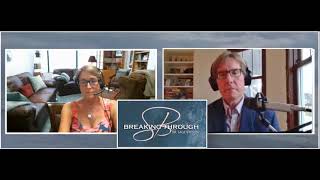
Dr. Chris Stout, a clinical psychologist and humanitarian, founded the Center for Global Initiatives to open-source intervention through free lectures and programs. He's pivoting from running every project himself to teaching others to launch their own NGOs, and recently moved into for-profit health-tech startups focused on behavioral health and genetics.
Chapters
This is Dr. Sage Breslin and we are breaking through today with Dr. Chris Stout. Dr. Stout is a clinical psychologist and international humanitarian with a diverse background in a variety of domains. He's the founding director of the center for Global Initiatives, executive producer and host of the popular Living A Life in Full podcast. He's also a full professor in the Department of Psychiatry in the College of Medicine at the University of Illinois. And prior to that he had an academic appointment at Northwestern University's Feinberg School of Medicine. He served as NGO Special Representative to the United nations. And he holds the distinction of being one of only 100 worldwide leaders appointed to the World Economic Forum's Global Global Leaders of Tomorrow and was invited faculty at the annual meeting in Davos. Dr. Stout has lectured across the nation and internationally in over 20 countries and visited six continents and over 100 countries. He's a busy guy. He was noted as being one of the most frequently cited psychologists in the scientific literature. He's a fellow in the American Psychological association, past president of the Illinois Psychological association, and a distinguished practitioner in the National Academies of Practice. The APA dubbed him International Psychology Rock Star. And believe me, I think as we speak, you're really going to understand why. He is a best selling author and has published 38 books. I got five on the market. I don't even know how 38 books comes out of a person. It's amazing. His works have been translated into eight languages. He's the recipient of four humanitarian awards and four additional honorary doctorates. As if one wasn't enough. Oh my gosh. He is a popular LinkedIn influencer and has nearing half a million followers. He's also been a guest on CNBC, CNN, NBC, PBS, NPR, and even Oprah. He was listed in Fast Company's global Fast 50 nominees and in TED founder Richard Saul Wurman's who's really who's who 1000. The most creative Individuals in America. His archive of professional work is part of the Smithsonian's Museum for the History of Psychology. He balances all of his academic and humanitarian efforts with time with his family and ultra running, adventure sports and climbing having such a three of the world's seven summits. Welcome, Dr. Chris Stout.
Hey, thanks Sage. Good to be with you.
That is just, you know, as I was reading through everything, there are many things that we have in common, oddly. But somehow in my year since graduate school, I didn't achieve that. I achieved a lot. But I am so impressed with what you have invested your time and energy in. So welcome to the show thank you.
Thank you. And it takes one to know one sage, so. Thanks, I appreciate that. But you've got quite the CV yourself, my friend.
Well, as I was reading, I didn't realize actually that we're both in Illinois. I'm not sure about whether we crossed over timing wise, but I was at Northwestern and I think you were at Northwestern School of Medicine at some point. And just interesting to know that we were maybe crossing paths a little bit.
Yeah, good karma. Nice to circle back together and be direct like this. Yeah, I probably have maybe about 10 years on you, so I was probably there before while you were still in kindergarten, I would imagine.
Maybe not quite so much. I'm feeling my age these days.
Same.
I have so many questions for you today and I would love to maybe even just get started with kind of an understanding of where you're really passionate about your energy right now, what you're investing your time and energy into. Obviously, I know that a lot of the things that I was citing for our audience or things you've done in the past, things you're doing currently, but I'd love to know kind of what's up. And I did actually click on some of your. Your center's feed. I mean, I actually spent about an hour last night reading and was just so delighted with the information that I was able to access. So tell me a little bit about kind of how you're spending your time now.
Well, thanks. I'm glad that that was a positive for you. Our website needed a refresh for quite a period of time. So this year 2021 has really been kind of focused on re upping efforts in that area. The site went through a large redesign. The ethos of the center has always been to kind of help people do humanitarian work. We call it open sourcing humanitarian intervention and really comes born from the spirit of it shouldn't be so hard to try and do something good in the world. But oftentimes there's a lot of stumbling blocks or a lot of hassles in doing that. So on the website in particular, we've got a number of free resources that we've been building out. And that's what I've been focusing on a great deal. We've got lectures, we've got books, we've got book chapters, we've got podcasts, just kind of a cornucopia of things. And then we've also recently launched a fellowship and a certificate program for people that are interested in humanitarian intervention or for those that may want to start their own Nonprofit. We found, I found that there's sort of like a bifurcation. Some people say I don't want to, I don't want to go through the 501C3 process. I don't want to develop a board, I don't want to build a website, I don't want to do all the things that go and into building a 501C3. I just want to work on one specific project. I want to get a well drilled someplace, I want to get a bridge built, I want to get a better road put in or something along those lines. So we help people to do that as well. So everything, again, all of us, we're all volunteers. So sort of. To answer your question about how I spend my time, pretty much half my time is spent with doing things for the center that's all pro bono, all no charge, always free, all the time. And then the other half is that I've kind of shifted gears post Covid with lifestyle changes to focusing on working with startups. And that's kind of the for profit side of things. So those tend to be in the areas of healthcare and technology, sometimes probably 51% in the behavioral healthcare side of things, but not just limited to that. We're doing things in orthopedics and genetics and microbiome as well. So it's a, it's kind of a nice balance. I've always got a toe in the water with healthcare, some of it on the nonprofit side and global health, and some of it on the for profit side, more so in tech and startups.
Wonderful. It's interesting to see how we as psychologists can start in one arena and then broaden into such a vast array of different activities and, you know, investments. It's, it's really interesting. I look at even the few people, I had a very small class at Northwestern and I look to see what they're doing. And we're all doing different things. I think my best friend from graduate school, she and I probably do the most similar, but everybody else, like yourself, has ventured off into different parts of that pie.
I think psychology serves as a great foundation for that. I mean, as you know, or other psychologists that might be in the audience know that there's a variety of different subspecialties within psychology. And you can go from everything of experimental and super scientific to statistics, to methodology, to clinical, to organizational, to sport. So there's, you know, all of those kinds of things get me very excited. And I felt like, yeah, while I have an awareness of a lot of those, you can sort of hone in and drill down in specific areas. But then you still sort of have this awareness or even sometimes a network of, you know, alumni with you or others that you can kind of stitch together different experts still within the rubric of psychology, but to bring in their special expertise into whatever the project is.
How did you find yourself moving more into technology or consultation about that blend between psychology and technology?
Well, true confessions time. When I was an undergrad, I started off as a math major. So I was kind of like, you know, in the math and nerdy.
I think I asked you just a little bit.
Am I here? Okay. In the math.
There you go.
Good, good. Speaking of technology, in the math was in the math department was in the school of science where I went and I back in when the dinosaurs were walking around on my way to campus as a math major. That was sort of how you got into computer science. I was very interested in computer science. So I was writing code in Fortran on Dec.10 Card Punch cards and hoping that it would run by the next and all this sort of thing. And I just thought, oh my gosh, you know, I just cannot. I don't want to spend the rest of my life, you know, writing code or anything. Which now might have. Might have been a good thing to do. But anyway, that kind of ran its course in a sense. But still again, for me was foundational. Got in long story short, we got into psychology and graduate school and all that. But even when I first left graduate school and got my license, I was kind of terrified that I would misdiagnosed someone with a. That had a thyroid dysfunction, is having, you know, depression and I'm sure. Yeah, so that's a common.
Yeah, that's a common error.
Yeah. So I didn't want to, you know, like trip right out of the gates and do things inappropriate or risk of harm of anyone or anything. So I went back to my old coding days and I started writing little programs on differential diagnosis. So I wrote and published a program. Yeah. And differential psychodiagnostics with. Between medical disorders that were mimicking psychiatric disorders or psychological disorders. So because I like to write, I would put these codes out. It was all mercenary for myself. I didn't write it for anybody else. I wasn't on contract. It was just for me because I didn't want to mess up and found that it wasn't that hard to do that. And so I published on that and then got a graduate student and he and I worked on some things and published that. So it was Always kind of foundational. And I grew up in an era where outcomes really kind of had not become what they are today. And one of the best ways to do look at outcomes was to have an electronic medical record. So all these things are all kind of formative on one another. And then I got outcomes measures, then kind of lead themselves to evidence based practice and wrote a lot and did a lot of research in that area. But all of those are very much predicated on big data sets. And as you know, in psychology, big data could be like 100 subjects, you know, so. So you're like thrilled that you. Yeah. And it only took you three years to get an N of 100. So all of those kinds of things kind of conspired into these areas where I thought, I can't write algorithms anymore, I can't code, I don't know how to create an app or anything, but I can work with people who do and I can at least have some kind of semi, non naive understanding of the technology that can go behind an AI algorithm or behind machine learning. So all of those things are sort of what wound me up to where I'm at today with being able to have opportunities again, primarily in the behavior behavioral healthcare space, but also within other applications in healthcare.
Got it. Got it. Well, the number of things that you just shared that we have in common is almost on the creepy side because I started out as a math geek.
Wow.
My first job was actually for Jet Propulsion Lab for NASA.
So you're a rocking scientist right off the bat, huh?
Right, right off the bat. They actually had to convince me to leave JPL and go get a, you know, go to college. Wow. Because I was really, I really appreciated sort of the sanctuary that I had at jpl and, and I loved what I was doing and I could just sort of be in my little nerdy world. And I'm. I'm really glad that Dr. Gupta kind of pushed me out the door and said, you know, go to ucs. And, and that was when, you know, a computer filled an entire building. Not, you know, not a room, not, you know, your desk. And I mean, I think in the first probably quarter of college, I was, you know, as you said, you know, we started writing in Fortran, Pascal, and then I had a terrible car accident and I had a brain injury.
Wow.
And everything away. So my all, I mean, math was my international language. It was my love language. And gone. After the accident, I came in to my calculus class and I stared at the board and I started shaking because nothing made sense. And it was really a difficult time. And it was one of those things. Excuse me. That I think really shaped my next steps, because I could have given up and really, I wanted to.
Yeah, it's more likely that you would
have not sort of mapped out everything. I was. And I got really lucky that I had a dean and their staff that kind of talked me through, you know, what were other big picture sciences. And they said, well, what about psychology? And I remember thinking, well, okay, I'm an introvert by nature. So the concept of sort of, you know, being with lots and lots of people and talking all the time was at that time, mortifying, actually, you can imagine. But, you know, I found out that I was good at it and that, you know, for me, because I lost, you know, so much of that frontal lobe function while you went this direction more towards AI and towards technology and had fluency with that. I had to lean into my intuition, my sense of self, all of the little sort of bells and whistles attached to, you know, this mechanism, my human and my sensitivities. And it worked, you know, for me. I learned to tune in at a much higher level, I guess, than I ever had before. And I was probably always hypersensitized to things going on around me, but it was an interesting journey away from math and science and technology and into sort of the, you know, the depths of humanity. So it's. It's just interesting how we were sort of traveling some parallel planes and then maybe took positions on different ends of the continuum. So very interesting.
Yeah. Nevertheless, foundational in psychology.
Absolutely. Absolutely. Well, a little bit of what I do and what I love to do on this show is to talk with people about how they came to sort of where they are in terms of hurdles. Obviously, one of the first big hurdles for me was learning how to talk again and learning how to think again and getting beyond, you know, something that seemed like a major obstacle for me. And I'd love to find out more about sort of what some of your breakthrough moments were or breakthrough issues were that allowed you to really embrace this, not only kind of what you're doing now, but even the humanitarian sector that you've stepped into. Because truly, I mean, with the information and as you said, the cornucopia of information that you're providing the general public. I mean, you have the capacity, you and your center have the capacity to touch the world. Really, everyone in it, anyone who's affected by the pandemic can literally step onto the site and boom, they actually have something to help them. Stabilize and understand and maybe make steps forward. And that's not everybody. I mean, if you start as a map geek, normally speaking, you don't end up in the humanitarian sector. So I'm curious for you what some of those breakthroughs were that you needed to make in order to land where you've landed.
Wow. It's such a good and challenging question. I mean, there's a variety of different kinds of things that have sort of happened over the course of my life, but I'll kind of give a little bit of a highlight reel and then we can drill down anything that you'd like to. I guess, you know, first of all, I came. I'm only child. My folks got divorced before I was one. So I lived with my grandmother and my mom. And that was a very challenging time. That was in Dallas where I was born. And there was a lot of bias against single mother. There probably still is today, too, but it was quite pronounced in the 1960s, and that was kind of a difficult, challenging time. We went through a very long illness of my grandmother's. Since my mom was at work, I would be done with school. My grandmother was hospitalized for, if you can imagine, for probably close to eight months. And during that time, I would be done with school around 3 o' clock, and my mom would be done with work around 5:30. So I needed to be somewhere. So we made arrangements where I would go to the hospital. So if you remember back, back in the, in the 60s, kids were verboten from coming to any kind of adult wing on a hospital floor. So that was the case, and this was at Baylor Hospital in Dallas. And people understood the circumstance that we were in. And I sort of became the little de facto mascot. I mean, I was, I was very well behaved. I wasn't running around, you know, doing anything inappropriate. But, you know, I got to go to the doctor's lounge, you know, when I was 10 years old, and go to the vending machines and stuff like that. So I feel like that was probably a very formative period in my life, probably that, you know, subconsciously got me into healthcare. You know, I mean, my first jobs and my internships were in hospitals. So big, big coincidence there. But so I would say that that's one thing in particular in being raised by a single mom. And things did not go well. My grandmother passed that then created a large medical debt that then caused my mom to have to sell my grandmother's house. And then we were kind of homeless for a little bit. And a bunch of other stories that go along with that. But to fast forward to maybe a few more positive times, I mean, you know, one of the pivots we've already talked about of starting off in math and then making a pivot and having a breakthrough into finding out about psychology and enjoying psychology and seeing all the things that you can potentially do with that. And as the cliche goes, you know, what do you do with an undergraduate major in psychology? You apply to graduate school. And I guess my pivots there too were such that my imagination was that I would graduate and then I would develop a outpatient adult based private practice. And of course I graduated and created and started into a hospital based child and family practice. So I'm kind of, you know. Yeah, yeah, exactly. I mean, I should be dizzy with all the pivots and things with these, with these breakthroughs. So I guess the point, and I've tried to make this the case with my kids too, is that I feel it's very important to have a direction, but not necessarily to feel locked into that direction. I mean, I think it's, it's bad to be directionless, but it's fine to go into a direction and say, I need to change directions, go into a direction of math and change away from math, go, you know, whatever programming what have you. But then also, you know, sometimes to take detours and sometimes to take sidetracks and high roads and low roads and highways and scenic routes and things like that. And most recently to circle back to the center was that I've written in LinkedIn. I kind of refer to myself as an accidental humanitarian. I never took, I don't know even if they exist, you know, humanitarian classes in undergrad or something. But as you had mentioned, I like to climb. So back in the day I was kind of getting, you know, my, my climbing experiences. And one of the, the easiest, if you will, to start off with of the seven Summits is Kilimanjaro in Africa. So I went there, met a porter. He and I became very close on the climb. He and I kept in touch. He was working his way through seminary and this is circa 1992. And we, there's a lot of stuff that happened in between, but basically, you know, I, he, he needed help and there's things I wanted to try to do to help him. I had a mentor at the time who's continuing to be a mentor and a very good friend who is an attorney. And he said, you know, you can fund all these projects yourself, but do you have a, you know, an oil well in the backyard or whatever. Or you should create a 501C3. And I'm like, well, what's a 501C3? So again, fast forwarding. We created that and it was very successful. Again, we, you know, all the donations go to the work. None of us take a salary, all have day jobs. And we hit a point. We were working in Bolivia, Cambodia, Benin, Tanzania and India.
We just lost your feet a little bit.
Am I back?
There we go.
Okay, good. Yeah, I just.
Technology.
Yeah, keeping. Keeping everyone on their toes. I shouldn't begrudge technology. And then I'll get blacked out here. But we were doing these.
So you were saying.
Yeah, so we were working in all these different countries doing these things and then someone came to us to ask us all. And all of these things have been people coming to us. We don't pick places, you know, it's just sort of colligual. We knew each other. We had a, you know, very good network of friends. Oops. I see myself popping out every so often. So hopefully my audio continues. So we had some colleagues come that were cardiac surgeons, married couple, and they were from Ukraine and they wanted to do a project and have it funded with a grant from usaid. And long story short, it would be a three year long project. It would require one of us, and I was the only psychologist on our board to do something that would be. You've probably heard of the Moos Ward Atmosphere Scale. So I would be going over to Kiev four times a year for probably two to three weeks at a time to do assessments to create baseline data. And I thought, oh my God, you know, I don't have that kind of vacation time. And you know, I've. And if I did my, you know, my family would kill me. Hey, guess we were going for spring break. I'm going to Kiev. So it just, it wasn't scalable. We just couldn't, couldn't do it. So again I felt like, you know, here I am right out of the blocks, you know, falling flat on my face. We've got these projects and are these things, but all of a sudden we've got a, you know, tap the brakes and stop doing, you know, stop growing. And the board was very sympathetic to my position and they said, you know, there's a lot of people out there that want to do projects and want to do these kinds of things, but they have not done the work that the center's already done in terms of putting things together and making things publicly available. So our kind of. My most Recent pivot then was to say with the center rather than us doing all the jobs. It's a proverbial teach a person to fish kind of philosophy. So if we can make the open sourcing of humanitarian intervention all that much easier for people to either do the one off projects or to help them create their own 501 C3s or anything else in between, that's our pivot. And then that's, you know, as you probably saw on the website, you know, we're very good about collecting data, organizing resources, making resources, you know, within a click or two away for people, that type of thing. So that really is kind of a skill set, a sweet spot, something that we can curate and cultivate and grow over time and, and keep it fresh. So that's kind of where we've really kind of hit our stride now. And that's the main focus. And that's probably the most current breakthrough that I've personally had that is very, very, very satisfying.
That's wonderful. I wish that I had known about what you guys were up to when I developed my 501C3 because the paperwork,
I know, it's horrible.
Literally, it is horrible. I don't know how anybody would do it on their own maybe, maybe without the help of an attorney or somebody who is just well versed. And I mean, I considered myself, you know, Fairly smart, right?
PhD from Northwestern, that's. They don't hand those out.
And it, I mean, and then getting the fully tax exempt status was like the next step. And I just, I really, I felt like my head was going to explode most of the time through getting paperwork. So I just, I think it's fantastic that you even stepped into this pocket that, you know, maybe other people didn't even realize and you saw an opening to really make an impact. And you're absolutely right. There are a lot of people who want to do projects but just don't have any idea. My foundation does something very similar this. More recently through LinkedIn, I met a group of folks who none of them knew one another, but they all wanted to make a humanitarian effort. And we started to talk about bringing, brought our healthcare into Africa, into parts of Africa. And the conversation has stalled a little bit because of some health issues for me. But you're exactly, your center is exactly the place I would go to say, okay, if we want to do this one project and we have all these folks who want to do this one project, you know, where shall we go with that? Or how shall we proceed? So that's really Exciting.
Well, good. Well, you know, we're here, Sage, so if we can consult, you know, offline or whatever. Let's. Let's stay in touch around any of these kinds of things, depending on where in Africa I may have seen some contacts for you or, you know, some things to look for or watch out for. So, you know, please do feel free to, to reach out anyway and audience too, you know, do you know, anyone can reach out?
I'm gonna have some projects ahead of me that will call me back in. I've got a. I've got a three month leave coming up, but I think that there will be, you know, things lined up, inviting me back.
Good, good. Good for you.
Yeah, you know, it's interesting. I'm curious to know what the other summits you did were and how maybe you even got into climbing.
Oh, my gosh.
Something else we have a little bit in common.
Yeah. So you climb too? You enjoy climbing?
I do not like exposure, which is, you know, most climbers laugh at me.
Right.
So I like the granite and I like the feeling of my body climbing on granite, but I really don't like the view, actually.
So are you more of a wall climber and that type of technical climbing?
Yes. Okay, don't do it now because I've had some injuries to my shoulders, but probably when my children were younger, I did a fair bit. And I don't know if you've done Whitney, but. So if you have. Yes. So you know Eberbachers ledges. Right. So my little story was that my mate at the time had gone up and he was trying to sort of move the packs because my pack was about 65 pounds. And getting across the ledge, when you don't like exposure with a pack, that really feels like it's threatening, pulling you back.
Sure.
So he was trying to actually move them up and off so that I wouldn't have to climb with my pack. And I was wearing a harness, by the way, but it wasn't clipped into anything, which is kind of problematic. And I saw this tree and so I thought, I can climb the roots of this tree, like that will help me go further. And anybody who wants to look this up would just have a delight because when you look up at something, you can see what you think looks good. And when you look from another perspective, as in down, which of course, before you start climbing, like you don't know.
Right.
So I get all the way up to the roots of the tree and I get myself sort of up and over, and it's at that moment in time, I realize that the likelihood of my falling into a 2000 foot abyss and dying, leaving my children motherless.
Oh, my gosh.
And he's looking at me like, oh, my God, what are you doing?
Oh, gosh.
Point in time. I mean, we had been in relationship for a few months, but, you know, we hadn't kind of shared like, you know, deep words. Right. So at this point, I'm like completely like frantic. And, you know, I mean, like, they're not gonna, you know, it's getting late, let's just say it.
Oh, you poor thing.
Like, just paralyzed. Paralyzed. And yet I know in my being I've got to get out of here. Like, I've got to do something and really, I've got to get across. And so he has gotten up on the other side and he, he yells back to me and he says, you can do this. And I can't even move my head. And then he screams out, I love you. And I'm thinking, like, some part of my brain is like, oh my God, he loves me, right? And the other part of me is wanting to scream swear words back at him. And I get myself up and I literally run across the ledge. I hit the embankment and I keep going. I don't want to have anything to do with him. I want to get to lower Boy Scout and I just don't want to be there anymore. So he's like calling after me, slow down.
F you.
It was at that point in time that I realized, you know, he is, he's really the climber and I am a backpacker.
Oh, my God.
But he had, he, like you, was very interested in hitting the seven Summits. He actually named his company at one point in time. Seven Summits.
Wow. Pretty serious.
Yes. No, he was very. He went actually to Aconcagua and was just about to start the ascent and he was robbed. Like, as in all of his equipment, money, and, And I had to fly him back.
Oh.
So. Oh, yes. So I'm just, I'm so curious, like, how climbing became one of your loves and what the other summits were that you did and.
Wow.
I'm just curious.
Well, thanks. Yeah, I could, we could have a whole nother, you know, day, half day long episode about climbing and stuff. I, I'm very much the amateur, but I, you know, I kind of started off, you know, same kind of way, like I think maybe with wall climbing and enjoyed that just as, you know, inside not, you know, before we got outside and stuff and learned how to belay and Learn how to, you know, do all the technical kinds of things. And then I'll skip around on my story. Like, when my kids were, were young, we lived in a house that had a pretty unusually tall basement. It was like a walkout, you know, basement. So the. In the. The unfinished part was particularly high. So I actually built a climbing wall in our basement and had little I could belay my kids. And it was just really kind of a fun time. And then in high school, they both got in the climbing club and they enjoyed climbing. Subsequently, my daughter and I summited Pikes Peak together, which is not technical, but a fun father, daughter kind of thing to do. But, you know, I was never very athletic when I was a little boy, being named Stout and I was very obese. I had a BMI of 33 and being named Stout was basically I was a bully magnet. So I was not. I never, I had orthopedic issues. I never had a pair of tennis shoes until I was like, Gosh, 12. I guess. So. So I, Yeah, I was not the. Anyway, I didn't have a dad to toss a ball back and forth to. I didn't had none of that stuff, so. But I did like being outside and I liked, you know, physical, physicality kinds of things like you said, you know, of, you know, using your whole body and, and all. So, you know, I just sort of, you know, I don't know a lot of stuff in my life, you know, accidentally, whatever, you know, came about. And I got into that. I took a climbing class, a mountaineering climbing class in Athabasca in Canada. And that was one of the first climbs I ever did and really kind of got the bug. I liked, I liked all the technical equipment aspect of it. I like this, this tension between, you know, I don't want to carry everything, but I got to carry all the right things stuff. And that's always kind of a challenge for me too. So just. And it was always a great reason to, to, you know, I lost a bunch of weight as a teenager and it was a good way to kind of keep it off because basically to get, you know, as, you know, in, in Chicagoland, everything is flat as a flitter. So, you know, so I just ran. I used to do stair climbing races and stuff at the Hancock and the Sears Tower and all that back in the day. But I thought this is, you know, you can't, you can't cram, you can't cheat when you're on a mountainside. You need to have your, your lungs and your Fitness and your legs. So did just kind of small little hikes and stuff like that. Built my. Did running and 10Ks and 5Ks and 10 milers and marathons, half marathons, etc. Back in the late 80s, early 90s, and thought, well, Kilimanjaro seems to be a good one. I've always wanted to go. This is my first time to go to Africa. And that's how Kilimanjaro came about. And then the next one was I gave a talk in New Zealand and I was so close to Australia, I thought, well, I might as well do Kosciusko. So. And I had also gotten my scuba diving license. So I joked that I had like the highs and the lows of. Of Australia, because I had. I flew into Sydney, got a manual transmission car. This is before gpss. Make my way from Sydney up to where the. The mountains are, which are basically hills. I mean, they're just. That is like the. There's. There's probably more hills here. I'm now in Wisconsin. There's probably higher summits here in Wisconsin than there was there. So I did that and then I got back in my car and tried to make my way up to where I could go dive the Great Barrier Reef. And then, you know, went and did that. So that was, you know, kind of a fun adventure. And then probably the most technical and the most challenging was Mount Elbrus, which is technically considered the tallest in Europe, but is kind of in. It's in the Caucuses and it's. It's pretty much in Russia. And part of the challenge of that was just getting there. I mean, oh, my gosh. We were on these horrible Aeroflot airplanes with smoke coming out of the engines and seat belts that didn't work. And. Oh, my gosh. And some of the. Just even the. I have traumatic memories of the men's rooms and the airports, you know, so. So we. That climb, we climbed into a storm and we asked the guy, you know, what do you think our chances are of summiting? He goes, 50, 50. And we're like, 50, 50. Wait a minute. You're supposed to say, like, oh, 90%, you know.
So anyway, 50, 50 was. What do you mean? Like 50, 50 that you survived, Right?
Yeah, make it. Make it back down, you know. So, yeah, we had a guy that got sick. And then when we were kind of taking care of him, the guide lost one. One of his gloves. And I kid you not, Sage, I had these thoughts of, I wonder if my eyeballs can freeze inside my head. And then later I wondered, is it possible to actually run out of adrenaline? Can I stop secreting? Because it was really scary. It was not a fun climb. So after that and after those experiences, you're happy to be back. But at that point in time, my wife had kind of had enough. Our kids were getting kind of into elementary school age and stuff. And she said, I'm not nuts about your climbing in the first place, but I'm really not nuts about you climbing, you know, in Russia or, you know, Australia or these other places. So if you want to climb, okay, but you got to stay stateside. So that's what got me to Whitney did Rainier, did the cables route of Half Dome, Little did the Tetons with my daughter. So she's kind of become my de facto climbing pal. But that's kind of where we've. I've stalled out at that point point and gotten, you know, do these other kinds of things because, you know, it takes, you know, racing or running or climbing or anything takes a big amount of time. If you're not going to hurt yourself or be successful, you really got to train for it. So now I'm doing much shorter kinds of things. And no, no big international alpine climbs or anything like that. And that's. I still run hills. I ran hills this morning. So. So I still do that, but it's sort of my homage to kind of what. What used to be be. Not. Not what's coming next.
Yes, yes. Well, I have a. I have a great Pyrenees dog, and she is a mountain dog, so sure she would prefer to run up the mountain than anything else. So right now, with my medical challenges, I have to just hold tight to her reins and, you know, have her walk because, yeah, I don't have the hemoglobin for it anymore.
But.
But trail running, you know, for me, after I did a half marathon, not because I was interested as a marathoner, but really it was. Somebody threw down the gauntlet and dared me. So I trained for that and did it. But it did open up trail running for me and really loved it.
Nice.
I discovered that there was a Zen involved with that that I'd only found in a couple of places. And certainly inclining climbing and somewhat in swimming, but just a rhythm that would allow me to sort of move up and out into the zone and really lose myself, but in the right kind of way, sort of lose myself into the universe and really commune. And it's been. I don't find that when I'm walking her, you know, I am eager to have the capacity to do that physically more again now, you know, I can get there through meditation, but it's not as fun.
Yeah, yeah, I know what you mean. I did a double marathon, unsupported double marathon a few years back, probably more than I care to remember. And I told my wife that I was looking forward to it in the sense of I get to run all day, you know, not. I have. Not I have to run all day, but sort of. And you get it from the psychology of that, you know, that this is something that you get to do. And there's, you know, it's not all, you know, rainbows and butterflies running that kind of distance or anything like that, but it is very much, you know, the. There's much more of, I think, an appreciation of the Japanese concept of nature bathing and. And to be in nature and to, you know, earthing and those kinds of things and just the. The things that you notice and your head just goes in a different place. You know, I don't know if it's endorphins or excitement or combination of all, you know, whatever neurochemistry and nature's interactions, but it is a much different kind of thing. You're right. Then, you know, and walks are great, too, and hikes are great, but there is some little. I don't know what. Some little. Some something. Some little secret sauce in that that does feel qualitatively different that you kind of just. That I haven't been able to achieve in other ways. And I get, you know, the meditation is good too. And that's. That's a. You know, then I'm kind of. You sure? Focus on your breathing no matter what you're doing. You know, if it's climbing or running or meditating. But they're all different kind of, you know, varieties of maybe some kind of getting to that same Zen ish kind of point.
Yes, yes. Well, I, you know, I guess I have not. I have one friend, and she's done the century, the hundred mile, actually, so that's one friend. But my boys had a teacher who also did a sentry. And I find this is a curious mindset. It's not just. I mean, I studied, you know, my friend's body and how she engaged and I mean, the training regimen of this teacher, you know, just. I can't even. I can't even conceptualize all of that just to be able to move enough during the day and weeks before the events. But. But there is something qualitatively different about the way the mind Works for somebody who is, you know, like you ultra doing ultra running or you know, super long distance running or climbing. Even mountaineers who are doing, you know, our months in there's something really different. And I think as you said it, it may be the way that they are able to engage their body with the universe. And now I have loved having conversations with people about where their minds go in, you know, really long distance running.
Yeah.
And how that, you know. Yes. Paying attention to your breathing, but you know, where your mind goes and how you carry yourself through. And honestly there's probably so much of that breakthrough work that we're doing. Especially I mean I remember just in a half marathon I was at like mile 12, maybe just a little bit more than mile 12 and didn't realize that goo came in caffeinated and non caffeinated versions.
Yeah.
And so I just gone and bought some because I was told, you know, you're gonna need that to keep yourself going. And so apparently I had chosen all like caffeinated. So at mile 12, I am starting to be like electric, you know.
Well, you. That sounds like a good. Not in a good.
Okay, well, yes, I started that. That physiological like firing inside my body. And then. And then there were people at the side of the streets and there was a lot of yelling and cheering and then I don't even remember the last, you know, mild 1.1 or whatever because then I. You're right. And then I just took off and I was like, ah, I'm getting it done.
Wow.
But you know that I think that there is for much longer runs, there is something different about how the mind and the body work together and I'm very curious how that works. And I've been in pretty massive physical challenges, whether sport related or not. But it's interesting to me. I mean, I think that's where my desire to deep dive with people to know about those breakthroughs comes from. And you know, even I've had, you know, as you were talking, just such a curiosity about, you know, the version of you inside that may be fully resolved now of you know, that young heavyset kid, but who's now so ultra capable in this form. I'm just curious what you had to do for yourself to embrace sort of the inner athlete in you.
It, you know, I probably even to this day still have. It's not an automatic thing to not still kind of feel that way, you know, to feel like the fat kid or the non athletic kid or the whatever. And there's plenty of times where I have like very poor motivation to go out and run. You know, it's like, oh, it's a beautiful day and it's like, but I really don't want to go out and run, you know, but it, so that's for me sometimes it's good to have external motivations like, oh, well, you got a race, you know, coming up in a month, so you better, you know, get off your butt and you know, get out there and do that. But I guess part of it is at some level I feel like it's, you know, it's, it is under my control. You know, if I, if I sign up for a race, I sign myself up. You know, I'm not part of a team. I'm not, you know, my wife or family, you know, doesn't care if I run or don't run or whatever they're happy with, with me. So they're all kind of self inflicted kinds of things. But I'll tell you the benefits that maybe helped me break through and move away from what it felt like as an only child of a single mom that's fat and doesn't have a whole lot of friends or whatever kind of woe is me circumstances that I feel like there's such a liberating part of it. Again, this will probably sound weird, but you know, I sort of like the solitude of that. So I don't know if that's reflective of being alone as a boy. And that's what I'm used to or what I mean. I love my family, love my friends, love, you know, talking with people like you love this kind of engagement. But I also find that the solitude of it, even if it's a short run or just a, you know, whatever it might be that my mind goes into oftentimes problem solving mode, like if there's some project I'm writing or working on or something or you know, whatever that I, I kid you not, it's, it's probably just, you know, five feet away from me right this second. I have a little micro recorder that I take on every workout. It's in the back of my jersey. If I'm on a bike, it's in my pocket. If I'm on a run, whatever, because I find that, that like, you know, I'll come back. Like if I've been, if it's a longer run or something, I'll come back and I'll to say to my wife, Well, I got 18 voice messages to myself, you know, because there are things that I thought about because I don't want to, like, miss out on the run saying, oh, my God, I got to remember this, got to remember this. And then it just screws up everything. So I. I found this as a nice balance to feel the creativity around solving a problem or iterating a solution to a problem and then being able to, you know, record it or just, you know, I gotta, you know, buy a loaf of bread sort of thing. You know, the trivial as well as the, you know, quote unquote profound, but just to, you know, it's sort of like an intellectual or a cognitive cleaning out the cobwebs, you know, fine tuning and tweaking. It's. It's a variety of things. It's not one single kind of thing. But the one, I guess maybe the one single kind of thing it is, is very liberating and very, I don't know, reinforcing and growthful, you know, and I'm sure from what you said, I'm sure you've experienced those same kinds of things. It's. Sometimes it's the, you know, Macaulay Csikszentzmay high flow state stuff, but even when it's not, it's. It's. It's hugely important and valuable and helps me. So those, in addition to maybe having a race that's coming up, but also just saying, you know, this, this is fun. I do enjoy, you know, the. The physicality of it may not be super duper fun, but the intellectual aspect and, and cleaning out your carburetor, so to speak, is wonderful and critical for me.
Absolutely. Yeah. Well, another thing we have in common, I dictated books as I'm running.
Oh, my gosh.
I'd say my biggest downloads have been when I'm running, especially running with the dog. I mean, that's. I don't know whether it's just that her energy keeps me going or whatever it is. And
that's wild. Dictated a book. That's impressive. Wow.
So, you know, I like you. I think that I. Probably because I'm more of an introvert when I'm there and I'm in nature, you know, it's a sweet spot and it allows me to really open to anything that, you know, the universe has in store for me.
That's nice.
And I. The most recent book that I've been putting together is called 10 Things that I Learned from My Dog about life and Business.
I love it.
And it was just 10 things I observed while running with her. And when I first started, I was laughing because I would say, oh, you know, this is my Observation. And then I think. And I think to myself, like, oh, my God, like, that's like a truism, right? Oh, I could apply that. And the more I went, the more it just flowed out. And I thought, okay, well, this is how that works, you know?
Yeah. Well, that's.
She doesn't even have to say anything.
She's not gonna be critical. Wow, I love that. That's. Oh, that's. That's brilliant. You get to that spot where you have that openness to whatever may come in. And because you're smart and intellectual, you can then put frameworks around that and bring understanding to that. That then yields knowledge and then yields shareable knowledge that can be helpful for other people as well. That's a wonderful process.
Yeah. I think that it's probably the love of storytelling and the ability to share not only of my life, but, you know, things that I've experienced and just tales that have come along the way. And I realized that as we are able to be more authentic and just share, it is more accessible to other people, and that opens them up to do the same. And, you know, I think just being able to hear, not only, you know, what you're doing as a professional and how you got there, but to know who the human is below all of that story, who the human foundation is. And I've really enjoyed getting to know a little bit about your story and where you came from. And it is. It's interesting the way it all kind of laid itself out. I can imagine you as that kid in that hospital and getting the comfort, just the comfort of being in a hospital around people, being in health care, you know, that. That isn't. It's not something that you had to look and say, like, oh, I don't know if I could ever do that. I've met plenty of people would say, like, I don't like hospitals. Like, I don't like going in the hospital. And I'm thinking, I sort of grew up in a hospital.
There you go.
You know?
Yeah.
Even after brain injury, I was in graduate school, and I had an accident, and I was paralyzed and in hospital. I've had.
Good Lord, Sage.
Crazy experiences. So. But, you know, in some ways, each of those crazy experiences allowed me to be more and more open to other people and to resonate and relate with other people. Sometimes, you know, it's a person saying, I'm scared to do this because. And I'm saying, oh, I didn't find that. You know, and I can stare at storyteller. And the next thing, you know, they're kind of leaning into it, saying, really? Huh? Yeah, well, maybe I could try that. Maybe, you know, I mean, that's good.
Well, you serve as a very good inspiration. I mean, you know, the bits I know about your background in history and that I didn't realize all the, you know, the physical hospital kinds of things as well. I mean, that just, you know, adds, adds to the impressiveness of what you've had to overcome to be able to do the kinds of things that you've done and that you're currently doing. So I, I, I tip my hat, Sage. That's, that's all the more impressive.
Well, thank you so much. Well, I have, I've loved getting to know you. I'm looking forward to continuing to, to not only follow you, but to, you know, maybe to do some consultation when I get back from my leave. Because I've got this group of folks that I think is going to do something big. So I am, I'm hopeful that they'll lean into that as well. And it sounds like your center might really be a great way for us to, you know, you and your center may be a great way for us to move forward.
Sure. If we can play a supporting role. Let us know.
Absolutely. Well, tell our listeners how they can follow you, how they can become more aware of what you're up to and what you want to share.
Sure. I'm just, I'm kind of everywhere go. LinkedIn's probably one of the best places to stop. I write very frequently as a LinkedIn influencer in health care and humanitarian work and tech. No big surprise with, with that we also have the podcast Living a Life in Full. There's a lot of resources there. We drop a new episode the first day of every month. So we've got a, an interesting fellow coming up that's also been working in the diplomatic and humanitarian space. That's going to drop. I don't know when this show will drop, but this, my show will drop on October 1st, the next one. We also have a TheCenter for GlobalInitiatives.org is the website for what we've been talking about with tons of downloadable materials and things. So any of those kinds of. We also have a Facebook group, so depending upon what a person's interests are, they can sign up for our free newsletter. I also have a new, semi new LinkedIn newsletter. We've got, gosh, I think well over 125,000 subscribers to that. It drops, it drops weekly and right now it's very specific to Covid. Once we kind of get beyond the pandemic, we'll get back into our global health general focus. But we tend to be 90% Covid and pandemic focused right now, internationally and nationally. So any of those ways are great things people can reach out and follow. And I'm happy to respond as best I can to. I do try to respond to everybody, but just sometimes it gets a little busy, so it takes a little while. But happy to be in touch and happy to be of help of any way I can.
Well, it is as I told you. I got on and was just reading the volumes of information available that you make available. And just for even the information on Covid and the pandemic is. Was so great to just get like, real. I was really hungry for some actual knowledge and numbers. And I think that anyone who's curious about what's going on should definitely take a look at some of the information presented.
Thank you. Yep. Yeah, we've got a big. I've written a bunch. I'm in the midst of writing one right now about how to understand the differences between, like, misinformation and cognitive dissonance and a variety of the things to try and get. Get a little bit better signal to noise in terms of kind of what's going on. So. Yeah, be happy to share those with people, too. I'm glad you've enjoyed it.
Yeah. Perfect. Well, thank you so much, Dr. Kristaudt, and it's been wonderful having you with us.
Thanks, Sage. Great to be with you. Bye. Bye.
All right. Bye. Bye.
More from Dr.

2025 Mercedes-Benz CLE 450 4Matic Cabrio – Owner’s Views After a Year-and-a-Half as a Daily Driver

The Complete Guide to a Successful Everest Base Camp Trek – Post-Trek Debrief

The Complete Guide to a Successful EBC Trek – Post-Trek Debrief: What I Needed (and What I Didn’t)

What Went Wrong Customizing My New 2026 Porsche Carrera T …and what I did about it!

Coming May 1 At the Intersection of High Performance and Fulfillment: A Conversation with Alisa Cohn

From High Performance to Fulfillment: Lessons in Inner Mastery with Jim Murphy

Coming March 19: From High Performance to Fulfillment: Lessons in Inner Mastery with Jim Murphy

The New Humanitarians Volumes I - III:- Inspiration, Innovation, and Blueprints for Visionaries

The New Humanitarians Volumes I - III:- Inspiration, Innovation, and Blueprints for Visionaries

The New Humanitarians Vol I - III: Inspiration, Innovation, and Blueprints for Visionaries - Forward
