Dr Chris Stout on Fit After Forty
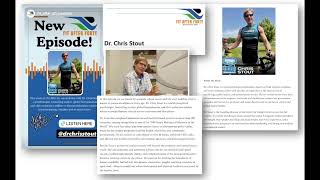
In this hour‑long interview, host Speaker A talks with Dr. Chris Stout, a licensed psychologist, former psychiatry professor, and founder of a global‑health nonprofit. Dr. Stout recounts his early life as a clinically obese child in Dallas, the rapid weight loss he achieved in his teens, and how that sparked a lifelong passion for endurance sports. He describes his late‑start athletic journey—track, ultra‑marathons, cycling, stair‑climb races, strongman "weirdo challenges," and mountaineering, including summiting Kilimanjaro, El Brus, and pursuing the Seven Summits. The conversation explores the meditative, restorative power of nature, the community ethic of ultra‑running, and how mental strategies from long‑distance events translate to everyday stress, work, and leadership. Dr. Stout details his evolving training and nutrition philosophy, his shift to a vegan diet, and his partnership with Hammer Nutrition. He also discusses his upcoming Everest base‑camp trek, the "Summits for Others" fundraising model, and the broader purpose of his nonprofit work in Tanzania. Throughout, he reflects on mindset, confidence, and the integration of sport, work, and personal life, offering practical advice for listeners seeking resilience and purposeful living.
Chapters
Hello and welcome to fit after 40. Our guest today is Dr. Chris Stout. He is a licensed psychologist and former full professor in the Department of Psychiatry at the University of Illinois, Chicago College of Medicine. He is the founding director of the center for Global Initiatives, which is a global health nonprofit. They do work such as founding a kindergarten and an orphanage in Tanzania. We'll talk more about that. Dr. Stout is also a ultra runner, a mountaineer, and a guy whose bio is probably too long to cover in just an hour, but we'll cover as much as we can. Dr. Stout, thanks for joining us. How are you?
I'm good, man. Good to be on. Thank you for having me.
Thank you very much. So let's start with your background. As a kid, you had some weight and orthopedic challenges. At age 12, you were clinically obese. That is a long. That's a long way from ultra runner and mountaineer. What happened? What changed? Nutrition, environment, activity? All the above.
Yeah, probably a combo pack. That and puberty was probably the tipping point. Yeah, I had as a little boy, my folks had gotten divorced before I was one, and my father lived a thousand miles away. I grew up in a very urban area of Dallas. And so it was just sort of like, you know, my, my mom was busy, she was working, and I sort of didn't have the proverbial dad to, you know, toss the baseball back and forth with. That was sort of amplified by the fact that I had these orthopedic issues. I had issues with my feet and issues with my knees and legs. And so I was sort of, you know, just burdened by what I referred to as clod hopper, you know, kinds of shoes. Just these big, bulky, you know, heavy kinds of sho. I think you and I have talked off mics that you were in a similar situation. So you know what those were like. Yeah, exactly. So that I never had a, like my first pair of Keds, I think, was like when I was 12 or something, I finally was able to graduate out of those. So even in elementary school with other kids and stuff, there was quite that kind of limitation. And I think, you know, maybe a little bit of loneliness and stuff. I would come home after school and because I wasn't hanging out with the other kids and I would just kind of treat myself to a bag of Oreos or Chips Ahoy or something, plop myself down on the couch, and it wasn't too difficult to be able to then be 12 years old and climb up to 185 pounds. So which was not cool. And Then again, as you and I have talked off Mike, you know, via your intro, my last name is Stout. So being heavy and being named Stout was really kind of like a, you know, a great recipe for being a bully magnet kind of a thing.
Oh, kids are jerks. Kids are jerks. There's no two ways about that. And then one summer, you lost a tremendous amount of weight. Yeah, 64 pounds. Is that right?
Yeah. Your research is correct. Yeah, it was a little too much, little too fast. I mean, as a psychologist, I've dealt with people with eating disorders, and I kind of look back on myself and say, I wonder, you know, maybe there was a little bit of that with it. But, yeah, I. The other part of me is that I kind of. When I tend to get into something, I get into something. So it was. It was summertime, too, and by this time, life had changed. It's a story for another show, but I'm now living with my father, and I'm now living in rural Indiana. So, you know, dramatic scene change. And I, you know, just now I'm. Now I'm the new fat kid, you know, in a new. In a new place where nobody, pardon me, knows me. And I just really kind of, you know, kind of honestly, enough was enough. So I started paying attention to what I was eating. I started paying attention to not eating, you know, all these sweets and stuff, and got into. When now I'm into these Keds, as I was telling you about. So I, you know, started running and I bought a. An $8.50 bicycle, a used bicycle. It was all kind of beat up and got it into rolling condition and would ride it out in this, you know, in the rural area where, you know, was not urban Dallas and nothing worried about getting hit and, you know, and really, really, really obviously restricted my calories as well, too. So the. The bad part about it was that, you know, I probably lost, you know, and I kind of overshot, too. I mean, I wound up going from 185 to 121 in three months. Wasn't great. But then once, you know, kind of through junior high, by the time I hit high school, things started to kind of stabilize and got into track, which kind of made sense after the running part of losing the weight and just kind of like those things as well, too. I mean, even though track is a team sport, it's still really kind of you as the individual as opposed to basketball or hockey or something. So that was really kind of the epiphany and tipping point of that. And then you Know, by virtue of losing that weight and watching the, you know, the macros, I kind of got a little bit. You know, it's probably the start of me getting into nutrition and paying attention to what I was eating.
Yeah, absolutely. So starting as an athlete later in life than a lot of. A lot of kids would, how do you think that shaped your relationship with sports?
Gosh. I mean, it. I. It's. It's interesting to hear you say it that way, because I feel like, you know, even just a little bit of track in high school, a little bit of soccer and in college and, you know, I never really kind of thought myself as an athlete. I probably still don't at a certain level, and I. I don't know why that is. I mean, maybe it's just I. My. My definitions and my visions of. When I think of someone as an athlete, I don't necessarily toss myself into that category, but I think the. The. For me, and I know there's a lot around this because, like, with some of the sponsorships and I have. There's a lot of stuff around, you know, community and team and tribe and stuff like that. But for me, it was still always kind of like the individual aspect of it. Like, you know, for me, go. Since I didn't have a coach or somebody saying, hey, you need to be in the pool at 5:00am or, hey, you need to be on the track or on the road by six, and blah, blah, blah, I could kind of choose my own workout schedules, which is a good and a bad thing, because I probably could have been more efficient if I had someone that knew what they were doing coaching me or something. But I think the individuality aspect of it was something that was very helpful and very appealing to me, that I could kind of hit the gas when I had the greater time and maybe a specific race that I was training for. And I could, you know, either take my foot off the gas or tap the brakes when there was more work requirements or travel requirements or family requirements and commitments. So I could kind of, you know, go back and forth that way and again back to being it just being me, not me. Being part of a team, I think, allowed me to have that kind of flexibility.
Well, a lot of the events you do are not necessarily inherently competitive, and I like that about running and cycling as well. Is that really the person I'm competing against is me? And, yeah, sometimes you're. You're neck and neck with that other guy, and you're like, all right, I'm gonna dust this guy. But, yeah, but that's not that. That's. That's not the. That's not what draws me to these sports. I will say I chuckled a little bit when you said you don't describe yourself as an athlete. Just reading all the stuff you've done, the mountains you've climbed, the ultras you've run, all of that. I don't know that any of that is accessible to the more casual participants.
Okay, thank you. Thank you. I appreciate that.
It's funny how our conception of ourselves forms early and is durable even as the facts sort of blow that out of the water, isn't it?
Yeah, that's a good point. Yeah. I mean, it really is kind of a, you know, you think about mindset in a positive kind of way of motivation and things like that, but there's also maybe sort of the shadow of it too, or the cast, you know, the cloud over it that, you know, kind of maybe keeps you in a. In a mindset that's not necessarily as motivational as one would want. So. And just actually to make a point too, that you said about, you know, with our individuality and stuff, I mean, you know, I'm a real rah rah, you know, for the stuff that I do. I mean, I'm. I'm, you know, that makes sense. But the, like, when you think about, like, and you guys know this, you know, probably better than I do, but like, in a lot of times, in ultras, if someone, you know, has an issue that technically and with air quotes is your competitor, you know, a lot of times people will just, you know, stop and help them, you know, I mean, how many other sports. You know, I mean, periodically, you might see that in football with a bad tackle or something, you know, like the. Whoever did it, you know, wants to make sure whoever they knock to the ground is actually okay. And I think that's, you know, good sportsmanship and good ethics. But, you know, I think you just, again, it's my bias, so maybe I'm more aware of watching for it. But I think you see that a lot more times with people on the trails and stuff. And there's a little bit, you know, when you're out on the trails too, there's a little bit more, I don't know, at the stakes are higher that, you know, if there's not a support crew, you know, that can, you know, drive over real quick, you know, 50 miles deep into the woods or something. So, you know that, that part of the. Still, you're the individual on the trail, but you're part of a greater community that cares about your competitor. And it's that same competitor that you would help and they would help you, but it's also that same competitor that makes you a better runner.
Indeed.
And I think cycling and ultra running are exceptional for that kind of mentality. You know, if, if, if we're at a cycling event and I get a flat tire, I'll have three people helping me change it before I could get my tube out of the.
Yeah, out of the bag.
And, and ultra running has that same mutually supportive kind of attitude. And you don't see that in, in the more hyper competitive sports, at least not to the same extent. I mean, if someone's hurt, maybe, but. But yeah, no, you're exact.
Well, even in similar sports like you, I don't think you'd see that in an iron man like I, you know, we're so hyper. Hyper. Of course, ultras also give you a little bit of the, the element of time to help.
Right, right. Yeah, yeah, good point. I will there a whole day I will say too. I mean just interesting. And not to get us off on a bad tangent or weird tangent, but where I, I'm up in Door County, Wisconsin and we have actually, it's kind of cool. We've got a 50 miler race, we've got distance cycling, we've got a triathlon, we've got a half marathon. That shout out to my son. He's won twice. I mean, it's just, you know. Yeah, it's, it's really kind of a neat area with a lot of, you know, cool athletes up here of various ages and skills. But we had, in our last triathlon there was a guy. There were two people that had health events. One woman needed to be fished out of the water. She was drowning, I mean, by virtue of like a heart attack. And she was a skilled senior elite triathlete. And then another guy was on his bike and had a heart attack and two, two guys behind him on cycling as well. Just, I mean, this is like, you know, spooky. Wonderful. They were, their EMTs. So. Yeah, so imagine that. You know, good news, bad news. Yeah, yeah. If you're going to have a heart attack, do it in front of a couple of EMTs that are right behind you. And they, you know, and both these people were resuscitated and saved and like, holy smokes. So I don't know, you know, maybe it's a, it's an. And again, this isn't, you know, this isn't Kona or anything. But still, you know, you know, the tip of the hat to those folks. So. Yeah, but again, again to our, to our general theme, I think it is, it's, it's, it's not, you know, it's not your typical, you know, basketball game. So.
Right, let's, let's talk about the, the sports that you do participate in. We've alluded to several, the ultra running and the mountaineering. But, but what, what would you consider your primary sport? And, and just tell us a little bit about your background and we should talk about the, the mountains you've summited. Kilimanjaro.
Sure.
And, and so forth.
Well, again, I, I now that, now that you guys as external folks have called me an athlete, I feel so much better about that. But definitely an athlete. Yeah. Okay. Because I don't feel like, I mean a lot of the stuff that I do tends to be in a sense experimental. Like, you know, and maybe it is for everybody. Maybe your first 5k, your first 10k, your first half, your first full marathon, whatever, your first ultra. And you know, I, I joke with my son who likes to win races. You know, I say I like to be able to finish races. You know, I'm just, I'm happy to finish and podium is not even. I'm with you. Yeah. It's not even in the equation. So, so anyway, so with doing those kinds of experiments, it's sort of like can I do it? And what's that experience going to be like? Obviously in the training and getting the miles in, you kind of get an idea and you tune into your body and you know what's working and you know what you need to work on. But I think that what I've written about and it's, it's become, this is kind of more what I think is my brand is what I call weirdo challenges. So I wrote about this. I'm a LinkedIn top voice and I wrote about this a couple of years ago that I, when I kind of started to realize, you know, you do your, your year end life audits and your goals for the next year and stuff. And I thought, man, I did a lot of weird stuff this last year and there's things like almost like strength, like strongman stuff. So there's like tank curling and you know, these again, weirdo kinds of things so people can, you know, look me up on LinkedIn, stick in my name. Weirdo challenges, it'll Google pop up for you. But I like those things because they're different, because they're kind of fun they're kind of quirky and you know, and I, and they're good challenges. I mean they, man, they totally, for me, change my workout routine, you know, to, you know, when I'm doing something that's much more lifting. Like I did, there's the 100 ton challenge. I did that a few years ago. And the idea is that cumulatively you lift 100 tons within a 24 hour hour period. Yeah. So I will tell you the training for that is not like the cardio and you know, and I'm like, I'm getting kind of big, which is unusual for me, you know, so I thought, well, this is kind of good. So, so I did that and then kind of. And I try and make these things make sense. So I did that and a bunch of strongman stuff of the, you know, the. What's equivalent to tank curling with, with weights and what's in literally like lifting stones and stuff like that. So. So it changes from year to year. I was initially sponsored by Hammer Nutrition in their motorsports division, so to speak. So I was, yeah, I was laying speed. I joked, I said, hey, I finally found my best sport. I can sit and I can sit down in a car. And I don't know if you guys would call me an athlete anymore if I did, if that was the only thing I did. But you know, so I did that for a year and I did it as a fundraiser for our nonprofit. So I raced at Road America. I raced at Blackhawk Farms. I did something called the Ultimate Streetcar Challenge. I drove down to Arkansas and did something called the Arkansas mile, which is land speed racing. I set two land speed racing records down in a. Yeah. In a 2023 C8 Corvette. I, you know, I just did 100 mil or a thousand mile rally out east and just all these kind of car related things because I'm also kind of a car and motorcycle gearhead. Yeah, motorhead. So that was kind of that year. That was that set of weirdo challenges. So for the climbing, it was really kind of like a lifelong. I don't know why a lifelong kind of thing because basically, you know, I kind of grew up in the flatlands of Dallas and then the flatlands of Indiana and then lived in Chicago for most of my life. And that's pretty flat. Yeah. So. But I'll tell you a cool thing about that again, back to weirdo is that in Chicago we have some very tall buildings. So in the wintertime there's stair climb races or stair climb events.
Oh, wow.
Yeah. So I did, I've run up the Hancock Tower probably six, seven times. My son, bless his heart, he wanted to do that as a little squirt, but I didn't want him running up the stairs by himself. So I ran up the full thing and then you could run half of it. So I came back down and ran it up with him for as I got to do it actually one and a half times. So. And then he and I did the Sears Tower probably three times together. He and I and my daughter did the Aon Tower together. So there's again, those are weirdo challenges. To run up and down a stairwell is really kind of an interesting way to get dizzy and hypoxic in the wintertime. So doing those things. But again, that actually is super helpful for climbing. And so I would try to do these things that had during these eras where they made sense with one another. I mean, I couldn't necessarily go like now where I live, I live on a bluff. So I've got some great hills that I can do hill repeats on running in the summertime, I can do hill repeats. Now I'm doing hill repeats with a 40 pound ruck and going up and down it with my. I'm doing an Everest base camp in about a month and a half from now. So that's. Yeah. And this weather is awful, so it's like perfect for that. So. So back to your original question. So once I, you know, got into all this running stuff, once I got into losing the weight, it was sort of like, well, I. And I love to travel. I've been to 115 countries doing a variety of also. Yeah, big surprise. Crazy, most of them. Yeah, big. Doing crazy things in these varied countries. And climbing was always kind of one of those itches, you know, I was always kind of curious about it. And this was again, I did Kilimanjaro in 92. So it wasn't like, you see Alex climbing up the 101 on Netflix and stuff like that. This wasn't a very popular per se kind of thing. So I don't know, I just reading books or whatever. I like to be outdoors. I like to camp and just be out in nature. So it seemed again kind of like this natural combination of cardio and lungs and travel and blah, blah, blah. So the short story is that in terms of climbing, I've done always do the classic is the seven Summits. So I've done three of the seven Summits. And for those that don't know, the seven Summits are the tallest mountains on each of the seven continents for Africa, it's Kilimanjaro for Europe. This is kind of quirky because it's Mount Elbrus, which is technically in Russia, in the Caucasus. Yeah. And crazy, crazy cold. And that was a crazy climb. And then one that's just. Anybody could take their dog with them and do Koscusko, which is in Australia. It's just basically a very, very low thing. But again, weirdo challenges. I joked. So I'm like, here I am already in Australia. I had actually been invited to give a talk in New Zealand, so. Already in New Zealand. Well, if I'm already in New Zealand, I might as well go to Australia and, you know, you know, ping, ping a summit. Right? So. And since it's so freaking easy, it's. You don't. You don't need a group, it's not an expedition. You don't need special gear. It's just basically just a hike. It's a hike. Yeah. It's a very. A beautiful, pleasant hike. And so then I'm like, well, if I'm already here doing this, I'm. I'm scuba certified, so I should probably dive the Great Barrier Reef. So it's on my list too. Yeah. So I joked. I've seen the high points and the low points of Australia, so. But again, probably not being the smartest guy in the. The room. You know, it's probably not the best thing with nitrogen in my joints to go from even that, a mild altitude to, you know, submersing myself underwater that deep. So. So anyway, not always. I'm not always the best, you know, role model for using my brains, But. But anyway, that. So those things got. So that was fun and I enjoyed those. And actually, you know, I did those well. And because I'm kind of an obsessive person, I like the planning for it. I like the training for it. Actually, actually I made mention about this Everest thing. I've got seven YouTube videos now, just specifically on Everest, of what I'm doing for my nutrition, what I'm doing for my training. Yeah. So people, again, just go to YouTube and put in Kristal and they'll pop up. I've also got, gosh, six episodes about the motorsports, more than that, probably about the motorsports racing that we did. So if people want to learn how to get into doing that and do those races, so. So those, again, kind of being adventuresome and liking to travel and doing that. But then this was all. My wife and I have been married 40 years. She's also pretty adventuresome. Congratulations. Yeah, thank You. And so we did a lot of this travel, but then my father in law said, you know, if you're going to have kids, you can't be climbing these mountains, doing all these other kinds of things. Like I said, the Elbrus climb was a little bit, you know, there's some issues that happened with that I think kind of freaked me and my family out. But everything turned out fine. But it was, it was not, it was not a good, it was not. It was, there were challenges in it that kind of, you know, were make you take pause. But anyway, so my wife and I had this detente and said, okay, I will not do any more climbing while the kids are at home and little outside of the United States. So then that got me to get to do Whitney, which is the tallest and a little over 48 and that got me to do Rainier and stuff. And then once our, you know, my son and daughter and I are running up and down the stairs in Chicago in the winter. They kind of got the bug. They were runners, they ran track, they ran cross and stuff. And my daughter in October ran the Milwaukee Marathon. My son's getting ready to do the half up here. But like my daughter and I did Pikes Peak together, which isn't technical, but you know, it's just a beautiful little time together. So big long story to all that. I mean it's just those kinds of things where we can kind of combine whatever else is going on with travel or what have you. And then, then as I think you guys know, then the Kilimanjaro is what led to what you said in the intro with starting a kindergarten and working, continuing to work in Tanzania.
Yeah. When we were speaking before, you described being in nature as a meditative experience. And that's something that resonated with me. Would you say that that is what pulled you into ultra running and mountaineering is just the desire to connect in that way?
Yeah, that's a, that's a very good point. I think like again, I keep referring back to urban Dallas. It was such a contrast to go from that to then living, literally living on a hundred year old family farm. And you know, in my runs, you know, I could go run back, you know, tractor trails, you know, versus you know, on the road or on sidewalks and stuff. And, and I think now as I've kind of gotten older and now to where that we've retired to in Door county, just, you know, I'm so surrounded by nature. We're on a peninsula. Like I said, I've got This hill I can do hill repeats on. And I think that, you know, it's fairly popularized now with good reason that you know, people, the restorative aspect to, you know, your emotions, your mood, your worldview, feeling connected. I think, you know, you and I have talked also about just, you know, the opportunities to be barefoot, you know, out in the grass and have that level of connection I think makes a, makes a big difference. And then even with, you know, a lot of the travel that I do, obviously you generally fly in on an airplane and therefore you're generally in a very urban kind of area. But I always try to, no matter if time allows, you know, to spend time in, you know, any kind of natural area or rural area, you know, of a, of a different country as well too. There's so many differences and simultaneous parallels and similarities that you know, just, I find it very enriching to the soul that way.
Let's talk about the psychological aspects of
it a little more.
If you don't mind the ultra distance, you know, you're out there running for 12, 14, 18 hours in some cases, some cases longer. What does that give you? Yeah, sometimes 30.
Yeah.
What, what does that give you? That, that a shorter, that a shorter distance that a 10 mile hike doesn't.
Oh boy. I guess it's a parallel and these are going to sound contradictory but on the one hand it's like, you know, it's, it, it, it's a meditative kind of thing. I mean, you guys know this too. It, sometimes, I mean, you can't tell me if this is your experience. Like, you know, if you're, if you're road training on a road, you know, you like I'll find myself counting my steps or you know, whatever, I'm going to get to that next stop sign or you know, you do all these kind of little, you know, weird mind things. But you know, when you're on a trail, you're probably kind of watching out to not trip over a route. You're getting ready to hop over a log. You know, there's, you don't. It's a different rhythm, it's a different pace. You know, when you're out on a true trail and doing that, not a, not a flattened hiking trail but like a, you know, in the woods kind of thing. And I think that like I, unfortunately, I mean the, the ultras I've done aren't 30 hours of hopping over that because that would man be a whole different kind of race. But in, as the, as the distances go, I mean even with those kinds of things you find your mind, you know, going different places. I mean I, I go forwards and backwards in time. I sometimes think about, you know, what's, you know, what's coming up and, and then I start to, it's almost a distraction in the way that it then becomes problem solving. But other times I found myself on long runs of reminiscing and becoming real nostalgic or some, something reminds me of a prior race or a prior point in training or something. And I don't know, I just find that sort of enriching and rejuvenating to my spirit, so to speak. Not to be woo woo about it, but I mean it's just, it's a satisfying kind of feeling. And I also maybe not in anything that's like, maybe not running an ultra, but training for one. So it's really again back on my time and there's not a, the finish line is my finish line, not someone else's. I find that my mind goes into very creative kinds of places. Not in the sense of problem solving or assessing a solution to something that's going on at home or with a project I'm on. But like I, I carry this, this little Sony micro recorder rather than my phone because a lot of times I don't run with a phone or anything, it's too heavy and I don't want to deal with it. But I'll have this little micro recorder I can stick in my shorts pocket or you know, wherever, hold it in my hand if I have to but because I'll have like ideas about some, something and it's like I don't want, I don't want to be like a mile into a, you know, a 10 mile training run and go, oh my God, I gotta remember this one thing, you know, for the next hour or something because it'll go and something else will come. They'll be mad that I, right, So I just dump all those and I just find it to be such a creative kind of outlet. And I'll come back in and I'll say to my wife is like, well, how was your run? I'll say, Well, I got 18 new voice memos to myself or something. So there's part of that too. And I can't help but think back to your earlier question. That part of that also is being out in nature. That there's just something about the, the freedom of it, the beauty of it, the, the, the, the, the, I don't know, the peace, if you will, of it that just stimulates Other kinds of things that, you know, just doesn't happen when you're, you know, at your gym or, you know, doing crunches or something. So. Yeah, so it's. Yeah, it's a different kind of thing, I think.
So your whole weirdo adventure and, and all. Or ch. Challenge. Excuse me. It reminds me a lot of like the concept of a masogi. Is that kind of what you're going out here like these, just like these a once a year challenge or something like that where you can kind of. You might fail. You should probably have a pretty strong chance of failing because that's what makes it a challenge. Is that sort of where you go there? And then also going back to your thoughts on running here, like you said you didn't want to go woo woo. But I feel that so, so much because I actually do get pretty woo woo about running and you know, like on a 100 mile run and you're, you're, you've got a lot of this experience with this. I find on 100 mile run I like to do one a year at least because it's like, it's like a mental full body reset in some ways because I think there's some advantage to just breaking yourself down that far. Breaking down all of your physical body and, and then just, just kind of like using your mind to push yourself through it.
What do you, what do you, what
are your thoughts on that? Do you have those same kind of feelings about, about these long distance runs or.
Yeah, that's a, that's a great point. It's a good observation too. You know, it's like I'm a big fan of do hard things, you know, kind of a thing. And I don't know, it's interesting that you say it like it's like to have that. I get what you're saying. Like having the big one thing. And I guess I never really thought about it in the sense of the one. But like this year, I mean, it's sort of like now that I take a step back, I'm gonna have to. This will be group therapy for me, you guys. So as I take a step back from this Everest expedition trek, there's nothing bigger this year that's gonna be happening for me. Yeah, I was gonna say. Yeah, it's kind of. I could say that. No, I don't do that. But then if you look at my behavior, it might contradict that, but. Right. Yeah. And it's. It. Yeah.
So I guess perception is different, man.
Yeah. Yeah, true. So. So it's like, and I mean honest to goodness, like it really, it has been a bit all consuming, so to speak because there are so many, you know, parts that go into it of the like even for me, like I've got gear, but it's like, do I have the proper gear? And I, I got rid of a lot of gear because I kind of thought I'm not going to do big climbs anymore. And then this came along, this opportunity and it's like, oh, I don't have, have this anymore, I need to get that and stuff. So I mean part of it's the, the training, but I would say it's probably, I don't know necessarily that I have one specific one every year. It so just so happens that 2026, this will be the, the whopper. But maybe one as kind of an, like I said, like maybe the, the more muscle head strongman kinds of things maybe was one for, you know, for that year. Because once you're doing, working for one kind of thing, it makes sense to do others. Once you're running training for an ultra, you know, you might as well do it, you know, a 10k or probably not going to do a 5k because that's a different thing. But you know, you're probably going to maybe do a marathon or two in the preparation of doing the ultra as you build up to it or maybe even if, you know, a few weeks after, once you've recuperated, you still got that level of VO2 max to where you like it and your muscles are kind of cooperating a little bit better after something long or at least, least that's my case for someone as old as I am in recovery. But yeah, I think it's. The other thing is doing all these, I don't mean to be these as shout outs, but I'm a big fan of Goruck. And I just got some stuff from them and they sent me a Embrace the Suck T shirt and I showed my wife and she says, what does that mean? It means do hard things and go for it and enjoy it. And it gets back to what you. We've talked, the three of us talked about in the very beginning of mindset, you know, and it's sort of like I want to be. Because she like says to me, she says, you know, how much are you going to be taking on the trail and how much mileage you're going to be doing every day? And all this I said, I can't train for altitude, but for the stuff I can train is make sure my gear is Good. Make sure I'm not going to blister up in my boots. Make sure I can handle, you know, this amount of weight and, you know, in a backpack, et cetera, et cetera. But I want to over train because. And I said this in one of my YouTube videos, I want to land in Kathmandu and be able to go, I am ready. This is going to be fun. I told my daughter I did a double marathon years and years ago, a double marathon trail run. And I said, you know, I get to. I said my mindset was, I get to run all day today. Not, I have to, not even. This is what I built up for. But it's sort of like the mindset of saying, this is a treat. And this is. This is. This is your. You, Chris. This is your benefit by virtue of all the miles you put in and all the other crap that you maybe didn't enjoy doing to be able to get to this point. This is, you know, this is your. Not your victory lap, per se, but almost like that, that, like it's almost already over, that this is. This is what you get to do now to enjoy it. And, you know, and again, maybe this is, you know, kind of what you were getting at, that the. The buildup for it is a big deal. The doing of it, you know, is. Is almost kind of like this, but in the context of not being afraid of it. And that's, for me, more so mountaineering rather than ultras. Because, I mean, technically, I mean, this is going to sound odd, but technically, you know, I mean, you could get hurt doing anything, but technically, even in most ultras, unless you're kind of really way out in the boonies, you know, something happens psychologically and you. You just. Hopefully not, but psychologically, you give up or, you know, God forbid, you know, you tweak something and that's the end of the. That race. You know, when you're. When you're, you know, 17,000ft on the side of Mount Elbrus and you're still not quite there, and you're roped up with a bunch of other guys with crampons and ice axes and stuff, and you say in your head, I don't want to be here, you know, it's like, yeah, tough luck is right. Yeah, you ain't going back down. You ain't staying in one. One space in one place, and you got to embrace the suck and you gotta make it on up to the top. And it's sort of. So it's sort of like, I don't want to be in any position ever with anything that I'm taking on to have that. So that's why I kind of have to, as we all preaching to the choir, we all kind of have to over train so we don't have that little naggy thing that we had maybe when we were first starting out, get to go, ooh, you know, can't, like I joked, you know, can I finish this? You know, I kind of, I kind of, you know, watched, you know, too many Netflix, ate too many cookies, you know, you know, I got this, you know, not anything about like, oh, my knees tweaky or oh, I'm, you know, whatever, but those lazy things that you kind of, you know, should have been out and you weren't kind of thing, you can't cram for an ultra, you know, you can't kind of, you know, make up those things. You got to stick to the plan. So, so I think, you know, those are kind of the differences in the kinds of things, the sports that, you know, that are activities, events, whatever that we're. That I and you guys, you know, all take part in. Yeah.
So you mentioned something that I want to zero in on a little bit, the mental aspect. Because when you're doing these major events, the mental training is every bit as important as the physical training. Your body may be ready, if your head's not in it, you're not going to finish. And specifically, I'd like to ask how that spills over into other parts of your life once you've disciplined yourself to push through when it hurts, when you're tired, when you're cold, when you can't breathe. You know, you've conditioned yourself to push through a lot of this stuff when, when you're dealing with everyday challenges. How does that impact your ability to manage just normal life, life stuff?
Oh, gosh. You, you ask at a time where I just came off a very stressful weekend of, of work stuff, where I would probably say it didn't have any application whatsoever. So. No, but it does. It, you know, from a. I'm going to give you kind of a superficial answer and then maybe get something that's, that's not going to be profound, but maybe a little more deep. But, you know, honestly, sometimes it's, it's like, I, I kid you not, I will just, I'll do breathing exercises. You know, I will just be like stressed and aggravated with something. And sometimes it's dealing with a technology that, you know, worked fine yesterday and is, you know, just full of bugs today. Sometimes it's with people that I have responsibilities for. I'm a division staff officer in the auxiliary branch of our Coast Guard up here. Here. And I oftentimes have a lot of personnel kinds of issues and stuff that, that come up. And those are not things that I can just kind of engineer my way out of a solution, you know, so to speak. So, so in those instances, sometimes it's just, you know, just the frustrate. Like I'll notice, like I'll have shallow breathing, I'll notice that my respiration is up or whatever. And sometimes it'll be just, you know, I, I'll do. I had. Dean Carnaz is on my podcast about a year ago who, you know, does ultras and you know, crazy wonderful guy. Yeah. And I'd ask him a similar question in the sense of. Because he writes, I'm like, and I write and it's sort of like, well, how do you, you know, what do you do? What's your writing routine like? And he says like probably per every 60 minutes of writing, he'll break that up sometimes in 20 minute increments, sometimes not that, you know, to the clock kind of a thing. But he'll, you know, he'll go do push ups and he'll go do pull ups and he'll go do wall sits and stuff like that. And I thought that is brilliant. So I've adopted that as well too. So in the sense of. Because part of it is, you know, I think it's a nice distraction. It's not just the physical of like, okay, I've been sitting here, I've been sedentary, you know, my body's in a different, you know, state right now. So if I simply, you know, get. I do a lot of standing desk work, which has helped me out a lot as well too. But I'll, you know, I'll just stop that. And I've got, I keep a, I keep. It sounds kind of weird, but that's my brand. I keep a 40 pound sandbag within 5ft of where I work and a Bosu ball. And sometimes I will just do one foot stands on that Bosu ball for as long as I can just to kind of, you know, get my lower extremities, you know, firing again. Sometimes I will grab that sandbag and I will do deadlifts or I will do presses or I will do rows or I will do squats. And it's so, it's like, and it's like right there. And I can do those four different exercises. As many reps as I want and that kind of like resets my clock and you know, I go maybe make another cup of coffee or something like that and then you know, get back to my computer and, and you know, start you know, troubleshooting and problem solving. Probably to be honest, 50% of the time, you know, I can come back to it with you know, you know, a good solution and you know, work through whatever that issue was. The other 50% of the time it's like maybe I don't immediately solve it, but I feel a lot better. You know, I feel more, more equipped and then maybe I do some, you know, productive procrastination and work on some other things first and then come back to it. But it's sort of like, I don't know if this is where you were going with it, but it's sort of like the, I feel a lot of times like when we work it becomes this intellectual cognitive mind body disconnect. And then just like we talked about running and meeting, you know, with being feeling creative. When I run it's sort of like okay, I'm doing something physical but my mind's going and that and it's beneficial. It's the flip side of that. It's sort of like I'm, you know, I'm standing or I'm sitting, you know, writing and working on some, something on my computer. Computer and the body's gotten disconnected and that's bogging me down with what my work is. So let's go do something physical and then come back to what that mental was. So it's kind of a nice, I don't know, yin yang, you know, but like out running, I'm still doing something intellectual. Sitting here doing something intellectual. I can take a break and do something with breath work or with something physical that and they both benefit each other. You know, it's a very symbiotic kind of relationship that way too. Your, you know, the, the mindset. Yeah. Do you?
Okay, I work in two spaces and I, I, I'm in my office right now and there's a hallway and then I work, we have a machine shop and I go out to the shop floor and I've got a pull up bar in between. And every time I transition from here to working out on the shop floor and back and forth, I, I, I knock out pull ups.
It's like makes you feel better.
Yeah.
It's funny.
Yeah.
You know this, the sympathetic nervous system is supposed to get you away from a saber kid tooth tiger, not make it harder to edit A PDF. Sometimes you need to burn off some of that energy before things work.
Right?
That's right. And you know too like to your point, like you know, in between the whatever studio and the machine shop. I mean it also, if something becomes a habit, it diminished. My opinion is it then markedly diminishes the self discipline meter, you know, so to speak. I mean it's sort of like, you know, we talk about mindset, we talk about discipline, we talk about doing hard things, blah, blah, blah. But you know, if you just sort of get into this, you know, habitual aspect of certain, and you know, the habits can be bad too. We all have our bad habits. But you know, that habitual thing of just like, okay, this is what I do and I walk by this, I, you know, I crank out a few pull ups or you know, if I, and again, if it becomes routinized kind of a thing, then maybe there's probably those times, and I'll be the first to admit it, they're fewer than what they should be. But there's probably times where I don't need to be there frustrated by what I'm working on, but still to take that same break, grab that sandbag or stand in that Bosu ball and do that anyway before it gets to that point of where I'm ticked off or aggravated or feeling helpless intellectually.
Well, it's not going to hurt you either way.
Yeah. Yeah.
Let's talk about how your training has evolved over the years. So you're in your 60s now, although I believe you said metabolically, you're a lot of biomarkers. You're a lot younger than that. How has your training volume, recovery, intensity and mindset, how has that evolved over the years as, as you, as you have entered your, your 60s, as you are a little older now.
Great question. It's, it's evolved a variety of ways and I think now probably, and maybe it's just because I'm falling into the cliche of, you know, feeling okay now I gotta shift from endurance to longevity or you know, or strength training to, you know, whatever maintaining muscle mass or other than, you know, building it or whatever, you know, because biology is biology. But I would say, you know, something that has zero to do with age is that way back when, like we were talking about when we first started, me being obese was, you know, just paying attention to my macros that then, you know, begat as I, you know, because I, and I ebbed and flowed with, you know, athletic endeavors and activities and stuff is, you know, Becoming a dad and getting my first, you know, big full time job and then working like, you know, three jobs to pay off student debt and all that kind of craziness, you know, workouts kind of took a backseat. Eat. But, you know, I, I started watching what I was eating. I mean, there used to be this predates. It's too old for you guys to know, but I mean, used to, people used to say a calorie is a calorie and it didn't matter if. Yeah. And if I drank a protein shake or if I drank a milkshake or. Well, I shouldn't say that. Or if I ate. Yeah, yeah. Or if I. Yeah, 150 calories either which way. Or if I ate a Pop Tart, you know, or whatever. Which I know we can get away with on a, on an ultra race, but barring that. But the, you know, I started paying attention to just, you know, physiologically, you know, you kind of dial into yourself especially I think more so with doing ultra distances, be it, you know, on bikes or feet or whatever, is that, you know, when I did not eat this and I did eat this, I started noticing, you know, my recovery time started to diminish and, you know, the, you know, Chris, you and I joked way back when about, you know, how do you know someone's a vegan? They tell you. So, so, so that's kind of how.
On the topic of nutrition.
Yeah. So there's my segue. Thank you. But so I, you know, when I, I didn't say that when I grew up on a farm, that part of what my growing up on the farm was was that it was a, you know, it was a grain farm, but it was also a beef farm. And so there was plenty of, you know, the, the slaughtered cow in the freezer kind of a thing. And, you know, there's plenty of meat for every, every meal. And as I got into all that weight loss stuff and everything, it wasn't like necessarily, did I become vegan or vegetarian then? Because I did not. But I just kind of, you know, I just, it honestly, it just kind of lost its appeal to me for whatever biological, natural. It wasn't ethics, it wasn't philosophical, it wasn't, you know, anything. It's just, you know, certain stuff, you know, maybe you don't like turnips, you know, whatever. You just don't have a taste for it. So, so that was kind of easy to kind of get, give up, you know, the, the meat thing. And I found that was beneficial. But I was smart enough to know, well, I still need to, you know, backload with protein. And when I started off as a vegetarian, that was, you know, super not hard. I mean, you know, drank a lot of milk and ate a lot of cheese. Yeah. Plenty of dairy. And that was fun. I love that. Eggs. Exactly. I mean, my go to is, you know, a egg white omelette with a, you know, milk and da, da, da, da, da. And that was great. And that was, that was 30 years. That was, that was 30 years. Years of that.
But you've been a vegan for a decade now.
Yeah. So after that. And that was the transition when I got into, when I was doing, you know, starting to up my distances and doing my stuff and thinking about recovery again. This is. Okay, let's call it 40s and creeping on to 50s. You know, my recoveries were getting longer. I was getting achier. A lot of times we joke about taking a lot of vitamin I, you know, Ibuprofen. Yeah. And I, you know, I was taking 800 milligrams of that almost daily, you know. Yeah. And I just thought, yeah, it sure was. And I thought, I'm not doing kidneys, check. Yeah, I know. I'm not doing my, my kidneys any favors. So. So it was, and it was just sort of that kind of a thing. I mean, my joints were achy and I was taking kind of drunk and, you know, I was trying to supplement my way to, you know, know, feeling normal and still being able to keep these, keep my miles up and all this stuff and just kind of thought, I never. And again, I felt like I was too young to think, oh, this isn't age, you know, this is just, you know, just my, my volumes too much or whatever. But I'm, I'll be damned if I'm going to decrease my volume. I just need to medicate, you know, the aches and pains. Right. So which, you know, duh, you know, smart me, so don't. Don't use me as a good example. So. So then I started, started hearing more about, you know, the Christopher McDougal came out with the barefoot running thing and, you know, all this other stuff about like. And I thought, well, what if, what if, what if, what if? And I thought, well, you know, again, big surprise, headlong, I'm going to be vegan. So then I, you know, read all the stuff that I could find about, you know, diets and menus and all this, and I drove my wife and my family crazy. And, you know, it just, it was all kind of this weird Transition. And it's sort of like, in some sense, like a lot of here I live in, you know, Dairyland, usa. I'm in Wisconsin now. And people, like, look at you, you know, sideways of like, what, you don't. Oh, you eat fish, right? Because you're, you're vegan. It's like, well, no, no, no. Oh, you can have, you know, here, have, you know, milk, you know. No, no, no. But the whole reason I was a
vegetarian is that okay?
Yeah, exactly. Right. That bull looks pretty beefy, right? So I found that when I started to do this, that, that, like, I, I even switched from like, you know, whey protein shakes to, you know, pea or soy and started experimenting with those. And, you know, I found every, you know, like, wow, I kid you not, this is going to sound like baloney or, or, you know, like I've, I'm, you know, representing the, the Vegan Dairy Non Dairy Association. But the, the. In the last 10 years, for that kind of turning point point, I could tell you I have probably taken a grand total. I'd have to do it like, I've never taken more than like, probably 400 milligrams of ibuprofen. I have to think about it in days. So when I would take a dose, It'd probably be 401. Never did anything. But if it was four, that's four
pills for those who don't.
Yeah. Thank you. Yeah, thank you.
Double dosage.
Thank you. So, yeah, So I, I have probably so if I would do that and I would never take it more than once for a day. So if I dosed myself with that dose one time, I can tell you I have not had more than seven doses in the last 10 years. I can say that in my heart of hearts, knowing that that is probably, if anything, conservative. It's not been over that. It's not probably even been that.
So very, very rare.
Yeah. And it, you know, it's like, it doesn't take a whole lot of that kind of evidence for me as a, you know, trained in science to say, I think this is cause and effect. So. And lifestyle wise, it hasn't been hard, you know, and then, you know, you lean into, I lean into it. You know, I read more about it and I listen to a lot of rich roll podcasts and, you know, and, you know, blah, blah, blah, blah, blah, blah. So. So I have found that has been very helpful. I have found that, you know, and now being in my 60s and maintaining that, and I'll also say as a little bit of A side plug. I mean, most. My son, who's an amazing athlete, is 95% vegan. My wife is pretty close now to 100% vegan and she is fit as can be with. And she's involved in a variety of different kinds of athletic endeavors. So, you know, so big plug for that. And you know, I know it doesn't fit for everybody. Everybody is different. Advice is hard. My biggest, best advice is try stuff out. If it works, you know, rinse and repeat. If it doesn't, then try something else. But absolutely, yeah, for me, in my situation with the kinds of stuff that I do with the lifestyle that I live lead it, it has been very helpful with, you know, I mean, just with whatever you want to call my lifestyle right now. I mean, my sleep is good. My blood work, like you said in this intro to this section, has been very good. It's like, you know, 20 something year olds. My testosterone is high, which surprises me. You know, I'm gonna, my next birthday, I'm gonna be 67. And it's like, you know, my, my, my primary, I had to get, I had to get a medical clearance to be able to get on this expedition to Everest. And you know, we did blood work and I'm a nerd. I pay extra for the extra blood work. And you know, me too, Dexa scans and do all sorts of crazy stuff. Just. Yeah, because I like it and you know. Yeah. And you also like to take a test when you think you're going to do pretty good too, you know, test me, test me. Yeah. What's my grip strength? You know, Come on. Yeah, so, so I think, you know, again, my best advice to your listeners is that, you know, try stuff out, you know, you know, we all, we're all an inn of one. We're all, you know, guinea pigs. I'm a big fan of, of Buckminster Fuller and he referred to himself as guinea pig number one because he was always doing. Not in the healthcare space necessarily, but in the intellectual or Tim Ferriss or Rich Roll or Peter Attia or whoever. You know, pick your guru but, you know, try things out and see, see what works. And again, for me, you know, the trying things out, the stuff I stick with tends to be around diet, nutrition and lifestyle. And the stuff I like to play with and experiment is the weirdo stuff of, you know, the different challenges that, you know, like, I don't know, you guys are probably maybe familiar with the Murph challenge, which is kind of more of a CrossFit kind of a thing, but that happens every May and. And, you know, so I like to do that. I like those kinds of things because it tweaks my training. I'll be back from Everest by then. So now I've got to, you know, do the next thing. There's something called now the. The G watt that I'm doing, g w o t 100, which is like run 100 miles or cycle 100 miles, or ruck 100 miles or row 100 miles, but do 100 miles sort of something. And it's all. And it's a fundraiser for veterans and stuff, and it's basically around the war on terror. Yeah. So I like to do these things that sponsor and then to go way back to Kilimanjaro and the start of my nonprofit. Every climb that I do, like we kind of alluded to this a little bit earlier, is, you know, it's a selfish kind of thing. You know, when I would get up at 5 in the morning to go run to, then get that done before seeing my kids, and then going to work all day, coming back home and maybe doing a second workout or whatever, that's all Chris. That's all me, me, me, me, me. And I thought, you know, there's sort of a selfish and like my father in law, you're not going out of the country again to keep climbing, you know, while you've got kids at home kind of a thing, because it's a meaningful me, me kind of thing. So I thought, well, how you. You are part of an expedition. You are part of a team. You are, you know, you work collaboratively with that group, and man, you get really close and, you know, it still takes weeks to climb, but in a relatively close period of time. But how can I do that to make it so that it. I can make it be of others, too? So one of the projects we have in my non, My nonprofit is called center for Global Initiatives, and one of our projects is called Summits for Others. So every climb that, even before my nonprofit started, like, we supported an organization called War Child. But every climb that I do, I do as a sponsored kind of thing so people can make donations. So I one time I had a graduate student of mine, and he said, I'm not going to donate like a flat fee, but I will pay like $10 for every thousand feet that you climb. There you go. Yeah. And he said, so just in case you don't summit, I'm like, wait a minute.
You leave money on the table?
Yeah, exactly. Yeah. So there's a different kind of Mindset and motivation with that. But, but to kind of make that point and to bring it back, you know, to your original question on this branch of like, you know, resilience and, and being in your 60s and stuff. I mean, I also have said in the, the YouTube videos I did, you know, I'm kind of scared that I, you know, I haven't climbed anything serious like this in over 20 years and I need to go into this with that same mindset before I do an ultra or before I do an expedition. Feeling like I'm ready and having that mindset to say, this is going to be fun. There is not any stone that I have not turned over. There's not anything that I've not thought about. Bad stuff, like what if I blister right off the bat? Or bad stuff, what if I get walloped with acute mountain sickness or hape or hat pace. I've got plans for all those. I, you know, and it's like, have I trained enough? Did I sit too much on the couch or did I, you know, get out and get the boots on? You know, and it's like, no, I'm, you know, by. I'm. I feel good the way I am right now and I feel like I've dialed in the training. So. Yeah. So being 36 or 66, you know, I hope will not make a whit bit of difference on this and, you know, be able to, you know, enjoy that time on the mountain. Which gets back to your other part about, you know, doing these activities and being in nature and being in a very special place in the world.
In a very special place.
Yeah. Yeah.
Let's talk real briefly about Hammer Nutrition. So you there, you're a sponsored athlete by Hammer. Hammer Nutrition. You started out as a brand ambassador. What drew you to them specifically? What, why Hammer?
I. This is going to sound like a, a joke, but I was, you know, I'm like the men's hair club. I was a customer, you know, I, yeah, I, man, back. I mean, way back when, when they first started. I. And it honestly, it had to be by virtue of, you know, I was at, you know, some running store or some outfitters that, you know, had, you know, their little stand there and there was, you know, Hammer or whatevers. I. They have a thing called Heed and it's kind of funny from a behavioral, psychological conditioning thing. Heat is sort of like their endurance drink, drink mix. And I just, I fell in love with Heed and they have this lemon lime and I am just like, I don't Know, like a rat getting, you know, a certain taste or something and being conditioned. When I smell that, when I mix it or when I take that first sip, you know, in training or in a race or something. Something, it's like, boom, I am right. I am right. Oh, I am right where I need to be in training. I'm right where I need to be in a race or something like that. It is. It's so weird. I mean, so and so for all my climbs, for all my races. I mean, honestly, from anything like where you would carry something on you versus get picking something up at a, at a table, at a, At a water station was always Hammer stuff because. And then, then they had a nice catalog and they could. It was, you know, then it became a nice website. I mean, because it kind of predated Webby stuff. I mean, late 80s, there was no website for Hammer, so.
So you've been involved with these guys for decades.
Yeah, I, I had. And then with. I get, I think like just one of their catalogs I had gotten, you know, like to order stuff. They. They're very newsy and they're very educational because they'll tell you like how to. Yeah. So it's sort of like, well, how do I like, they'll have. They have. Great. And all this stuff's free too. You can download it off their website or whatever. I, I put it in my web. My YouTube thing. There's a link that will. I create. I created a whole. I don't know if you're familiar with the issue, but it's like a place where you can put documents. So if people listen to my Nutrition episode on YouTube, they can click in the, in the show notes and it'll take them to ham and a bunch of other stuff that I have for what I did for nutrition. And you know, they're at a great price point. They have a lot of great vegan options that actually taste good. Their big thing too is no added sugar, which I really like. So it's sort of like, I know if I, I don't have to like read all the, you know, the nutrition facts sort of a thing. Right. So then. And so in reading all this and I'm reading about, you know, how to fuel for six hour plus races, how to fuel for the this and that is like, okay, I'm. I'm with my people, I'm in my tribe. And then you keep reading and you see all these different athletes that kind of, you know, are, are all ages and all over the world and all kinds of, you know, interesting, you know, motocross races to mountain bike races and ultras to marathons. And it's like, hey, you know, I, this is. And I was learning about races I didn't know anything about. And then I see some guys.
I mean, that's a cool resource.
Yeah. And they got people climbing mountains and doing the 14ers and doing, you know, all these cool things. So I just, and I saw. Oh, they sponsor people. Oh, they have, you know, there's brand ambassadors. So I, I just got my gumption up and, and, you know, sent them a, an email and said, hey, here's kind of what I've done, kind of what I'm into. And honestly, I'm a big time fan. You know, check your own records, see how much stuff I've bought from you. Right. From whatever time you guys have been keeping track. And so they kind of took a. I think their, their mo. Their process is that they start off, if they have an interest in someone. You start off as a brand ambassador and then you, you, you get sponsored. So basically it's sort of like the good news for me is that if someone's interested, they can get a discount off their first thing. And then I get discount. I get a certain amount of kit for free every year and I get a discount on all the stuff that I buy. So, so that's not. And then I get to, you know, I get to be a nice guy at races or wherever and hand stuff out so that it's, it's.
That's always fun.
Yeah, it's a fun thing. And they, they also sponsor Dean and then that actually led to an introduction for Dean and I and then got him to get on the show. So it's, it's been a very nice, you know, relationship with them. They're, they're great folks in all sorts of ways.
Very cool. Just a couple more questions for you. With your background in clinical psychology, neurology, let's talk about mindset. How that limits athletes or unlocks potential. You know, we talked a little bit about it, but, but if you could speak about that just from, from that perspective, I think that a lot of people would find that helpful.
Sure. I think a lot of it, you know, I mean, another way to maybe make it sound less scientific is, you know, to think about it in terms of confidence. I think mindset has like, you know, in my head, you could almost use them as synonyms, but I think that part of it becomes feeling like the, what do I want to call it? The structure, the framework of mindset is, you know, having a goal, whatever that might be, and it doesn't have to be athletic, but let's use athletic, athletic, athleticism as the example. So if there's certain kinds of things that you want to accomplish, there's a. There's a reason for that. Why do you want to do that? Well, you know, maybe I want to become a professional athlete. Maybe I want to, you know, just. It's a. It's a personal goal kind of a thing, a bucket list kind of thing. Maybe it's, you know, what, I want to make my dad happy. You know, whatever. Any, you know, there's a variety of different kinds of motivational reasons, and none are exclusive. Maybe they're a Venn diagram. They all overlap, and they're all 16 reasons that are all there and varying, you know, varying valence. But in the concept of thinking about that mindset, then I think it begets people kind of, you know, like as Stephen Covey used to say, begin with the ending in mind. So if this is what I want to accomplish, climbing a mountain, setting a pr, whatever it might be, then how do I get there? And, you know, what. What's my Runway to, you know, how long is it. It going to take? What is it going to take? How, you know, what do I add to what I'm doing? What do I stop doing? What do I, you know, is there a sacrifice involved on me or my loved ones or my job or whatever? And then, you know, kind of, once a person kind of goes through that, you know, imaginary checklist, then, you know, you, for me, I suss out, okay, this is doable. This is, you know, I've kind of vetted it, and it seems reasonable and it seems, you know, realistic. It's, you know, I'm not going to. I'm not going to go win Boston. But, you know, here. Here's whatever. Whatever that. That sort of a thing is, or to say, or to vet it and go, that, you know, that was a pipe dream. That was really, you know, that was kind of silly. You know, okay, fine. You know, maybe there's other comparable things or whatever that are more accomplishable or what have you. I don't think there's. I would. I don't know. My personal opinion is I don't think people get surprised of doing something, you know, when they work towards it. Like, oh, I didn't really think I could do this, and then, you know, it pops up. I don't think that's a mindset question kind of thing. I Think, you know, thinking about what it is that is important and then deconstructing it to the elemental factors of what it's going to take to, to be able to do that and then, and then going through it and doing it and maintaining whatever it is for you that maintains that level of motivation. Sometimes it's a carrot because you feel good and that was a great workout. Or you like how you look in the mirror or you like how the scale is responding to you or whatever, or you're lifting heavier or you're going further with, you know, same amount of effort, whatever your metrics are. Or it could be this, you know, it could be the stick of like, you know, man, I'm not at the level that I really need to be at or man, you know, I kind of goofed off, you know, for too many days in a row and now I'm making up for it now. So you kind of get that tightrope, that delicate balance, that back and forth kind of aspect with all those things. And then ultimately depending upon what that goal was of having the pleasure, like we've talked about today, that pleasure of feeling competent, feeling prepared, feeling like there's certainly still, the challenge isn't diminished, it's still there as much. But maybe your improved, maybe you know, that that same, that that hundred miles is still 100 miles, but you're not what you were X months prior to the day that you decided to really seriously in earnest, you know, commit to doing that. And it's those kinds of mindset things that I think back to. Your questions, like with psychology is that, you know, obviously they're, they're motivational but you know, then like we've talked about, you know, how can you develop, you know, like the, the, you know, the little atomic habits kind of thing where stuff becomes sort of automatic and routinized as opposed to having to stop and think about it and then, you know, perform it. But there's also, I think, a certain level of self actualization with it. I think there's a level of peace that comes from it. There's a level of competence that comes from it. I think that then spills over into our relationships with our loved ones and coworkers. I think it spills over into the quality of our work. Honestly for me, and this is going to sound a little Zinni or Yoda y or something, but I find that I have much more patience about stuff. You know, I feel like I get a little bit more zinny about those little naggy things that Happen at home or whatever that, you know, that would have freaked me out or something had I not been in this certain kind of process of developing a good mindset about this bigger goal.
Absolutely.
Yeah. So I think, yeah, those are, those are the kinds of things, I think, if that answers your question. I mean, I think those are the kinds of components and structure that, you know, it's a wonderful flywheel kind of thing that builds up a momentum that has this nice, you know, positive side effects and other things that I don't think about it in advance, but then kind of realize it either in the moment or look back. Like talking about it now with you guys to kind of look back and go, huh? I didn't realize it at the time, but yeah, that's, that's, that's a nice, nice bonus. Yeah.
Running a marathon turns the volume down on, you know, when the PDF won't save properly.
Right, right. Well, you know, and again, because I'm, I'm so much older, but I tell you like that my old joke used to be that, like when I, Because I, I don't think there's hardly any point in my life where I didn't at least have, you know, two and a half jobs of something of teaching someplace, writing a book and having a private practice and blah, blah, blah, blah, and then add, you know, training, add have a family ad, have a life, add travel, etc. And I used to joke, yeah, yeah. And then I used to joke that back in the day, this is when people wore beepers and you didn't have cell phones outside side of your car. And it would be like, when I'm on the side of a mountain, I am not thinking about my beeper. I am not thinking about, you know, the beeper doesn't reach me. And you know, and you are so focused in that moment. And, and again, it, for me, it kind of bifurcates. Like when it is that race, when it is that mountainside, when it is for reals, that's different. And that's kind of this odd, meditative, hard to put words to experience versus the training part of it, that then that part of it, there's a focus. But it, your mind is in this or my mind is in this different place. Maybe others experience this as well. To have that creative thing of either, you know, you're problem solving or you come up with a new idea about something or I never really thought about it this way or whatever. So, you know, there's. That part of it to me makes me feel like, you know, my podcast is called Living a Life in Full. That part to me is what's living a full life, that none of these things are. You hear so much about people compartmentalizing things or whatever, which has its place and is great and is helpful, sure. But for me to have everything being kind of integrated and synthetic and infused and threaded together, that resultant fabric, if I can be kind of corny and cliche about metaphors, is that it makes me feel like a very, you know, comfortable life where I don't have to stop and think. Like, I don't have to stop and think about, ooh, should I eat this? Because it's a habit now, how I eat. Ooh, well, this screw up my sleep. Probably not, because I'm, you know, I've kind of got this lifestyle now that kind of everything is moving. Nothing's in contradiction, you know, with. With what it is that I'm doing. And I think that also morally and spiritually makes me feel aligned, that I'm not. And we're all. I mean, there's. There's things that might look like, you know, like being a hypocrite, because I believe two different things that are opposites. I can believe those both are true simultaneously. I can hold two opposing ideas in my head simultaneously. Yeah, that's not being a hypocrite, you know, that's kind of being open to diversity, you know, So I think all of these things kind of fit in nicely together and that, you know, I try not to be evangelical or preachy about it, but I just, you know, all I can say is that I found a nice way that works for me, and here's some ideas that people can try on and, you know, see. See how it works for them. So. But. But the mindset, I think, is a generalizable kind of thing that you just. You put your own interests into that structure and, you know, work it out to, you know, to your best goal, your best ends. That's great.
That's really good.
Well, Dr. Stout, I really appreciate you taking the time to speak with us. We will link to Dr. St. Stout's podcast and YouTube channel in the show notes. You could find those@fit after40.substack.com Dr. Once again, thank you so much for your time. I thought this was a great conversation. I really got a lot out of it.
Well, thanks. Thanks. I appreciate the. The opportunity to do this. It's nice to speak with kindred spirits, and I'm real impressed with your show and the activities and things that you guys have as well too. So a big shout out and be happy to share this as well with all one audience as well because I, I suspect we've got a good Venn diagram of who listened to you guys and who listens to us. So that's great. It's good to be in touch and let's, let's take this as a start. Let's keep in touch with each other and you know, share tips and tricks and I appreciate the time today.
Absolutely.
I think there were so many topics today that I would like to just have a whole, whole hour to talk on. I just have the same wavelength. Like I view ultras as a spiritual experience and I think most people that really love them do, do.
Hear, hear.
And just, just you know that that self reliance out in the woods and I can tell that you really have to share that same, that same passion and love for just that type of
just being out there.
Thanks. Yeah. Yeah. Well, thanks. I, I appreciate that. I appreciate that you guys. Thanks so much. Yeah, thank you. Yeah. Well, let's keep in touch. Good luck with everything. Thank you.
More from Dr.

2025 Mercedes-Benz CLE 450 4Matic Cabrio – Owner’s Views After a Year-and-a-Half as a Daily Driver

The Complete Guide to a Successful Everest Base Camp Trek – Post-Trek Debrief

The Complete Guide to a Successful EBC Trek – Post-Trek Debrief: What I Needed (and What I Didn’t)

What Went Wrong Customizing My New 2026 Porsche Carrera T …and what I did about it!

Coming May 1 At the Intersection of High Performance and Fulfillment: A Conversation with Alisa Cohn

From High Performance to Fulfillment: Lessons in Inner Mastery with Jim Murphy

Coming March 19: From High Performance to Fulfillment: Lessons in Inner Mastery with Jim Murphy

The New Humanitarians Volumes I - III:- Inspiration, Innovation, and Blueprints for Visionaries

The New Humanitarians Volumes I - III:- Inspiration, Innovation, and Blueprints for Visionaries

The New Humanitarians Vol I - III: Inspiration, Innovation, and Blueprints for Visionaries - Forward
