Dr. Chris Stout on the Limitless Performer Podcast
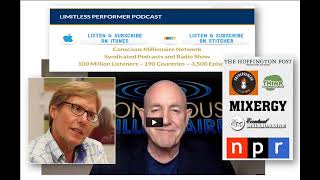
Dr. Chris Stout, a psychologist and founder of the Center for Global Initiatives, talks about random acts of kindness as a practice that expands personal limits and creates ripple effects. He and host JV Crumb III propose a 24-hour kindness challenge and discuss how impact-first business models can reshape the economy toward poverty alleviation and global health.
Chapters
3, 2, 1.
This is Dr. Chris Stout. I'm a best selling author of 38 books, founding director of the center for Global Initiatives, and on today's show, I'll discuss the possibility of random acts of kindness.
Perfect. Here we go, Tiffany. Three, two, one. Hi, this is JB and I am so excited you've joined me because you know this is more than a podcast and syndicated radio show. It's an entremural training especially for you. And if this is your first time joining us, a big warm welcome. I hope this is an amazing experience and that you'll come back. And when you do, I'm just going to ask a favor. Would you bring your entrepreneurial friends with you? Because I want to impact as many entrepreneurs as possible. And if you're a longtime listener, thank you for tuning in for this episode. Either way, you can subscribe absolutely free for all six days a week by going to consciousness millionaire show.com and at the top of the page where you have an iPhone or an Android, we have the links for both. Now help me. He's a psychologist and international humanitarian with a diverse background in startups, non profits, academia and the UN. He has worked or traveled in all 50 states, in over 100 countries and 6 continents. He's a best selling author. His recent book, the New Humanitarians, recipient of four humanitarian awards, and yes, he also has four honorary doctorates. My guest today, Dr. Chris Stout. Welcome to the show.
Hey, JV, thanks. Good to be with you.
Well, you know, we were chatting beforehand and looking at what we're both doing in nonprofits and that's a huge part of what you do and your focus on random acts of kindness, which I think is really about us becoming more limitless because it opens our heart to, to more possibilities when we can embrace our human beings. You're a professor, you've written all these books. I have to congratulate you because I've been to 49 states, but I've only been to 40 countries and five continents. And I now know you have accomplished one of my outcomes, which is to join the Century Club. And I'm on my way.
Good.
I figured my nonprofit work will probably get me to those other 60 countries.
I'm sure it will.
I'm curious, along the way, you've also become entrepreneurial because you're helping all these startups and have created so many initiatives. What attracted you to the entrepreneurial path as well?
I guess way back when I got involved, I got invited to the World Economic Forum in Davos. I was part of what was back in the day called the Global Leaders of Tomorrow. And it was really kind of a nice mix of people, very diverse backgrounds, different countries, different. Different native languages, et cetera, et cetera, and maybe a common thread through us all. And then some of the projects we got involved with was that of social entrepreneurship and a lot of focus. Sometimes, like, for me, it was more so the healthcare, medical side of things. Other people, it was more so a
lot of what you're doing is in that area.
Yeah, exactly right. So a lot of other folks, you know, we're looking at building companies around that and building nonprofits. And as you know, when you have a nonprofit, we.
We have to stop.
So a lot of the exposure I had was kind of back in the day when I was involved with the World Economic Forum. We'd meet in Davos. We had this kind of nascent group called Global Leaders for Tomorrow that had a very diverse background, a variety of different kinds of skill sets and interests and countries and languages. And kind of a connecting thread was that of social entrepreneurship that even if it was like, I tend to lean more towards the healthcare and medical side of things, we had other people that were help develop their own nonprofits that were in the areas of education or women's empowerment or being able to help with agricultural products, getting to market, those kinds of things. So I really kind of was curious about them and learning about them. And one thing led to another for me to get onto my humanitarian journey and nonprofit and with the academic side of me, try to get a couple birds with one stone. So that's actually what led to the start of the new Humanitarians book. That book blossomed from one book to three. It was with Prager, and Prager likes to do series books. So we had enough content for three books. So we did that. And I tapped a lot of my former colleagues to say, how did you start Endeavor? How did you start Amnesty International? How did you start Doctors Without Borders? And they were very kind and gracious to answer those questions and tell us where they made their mistakes. And I think there's a, you know, it's a huge entrepreneurial overlap to have a successful entity, be it nonprofit or for profit.
Well, and the two. Because I also have a nonprofit, and I've had a lot of friends with very successful nonprofits. And the truth is, they're run very similarly.
Absolutely successful.
I think the big difference that people. This is my observation, and if you have a different one, I'd be very interested in it. In the for profit world, the Person who pays for the product or service is also the one who gets it. And in the nonprofit world, you have typically one source for paying for it and a different source for receiving the benefit.
Yeah, yeah. And there's very clever ways. I. There was a. One of the chapters in the book was on a company called Scojo and they had a for profit side where they taught people how to be opticians. They provided them with glasses that, you know, are like readers kind of a thing, you know, pre done kinds of things, not ground. And those people were little mini entrepreneurs. It was almost like a franchise model. The money that those people made, they got to keep a portion of it. And the portion that came back to the company was then rolled into the nonprofit side and that paid for glasses and optician services for those that couldn't afford anything.
Well, and I've known people who participated in the Doctors Without Borders, and it's a great program.
Yeah, yeah.
Great program. So let's talk about how random acts of kindness, and you and I were talking before this, that we do some similar things where we like, pay for someone's bill or someone's groceries or, you know, somehow just do these random acts of kindness that are not related to us. It's just something to uplift someone.
Yeah.
I also do things at grocery stores because I build relationships with the clerks. Check out and I'll give a shout out. I'll give a shout out to one of my favorite places, which is Trader Joe's. I love Trader Joe's.
Yeah.
You know, I'm a Whole Foods guy, but Trader Joe's is amazing. I know everybody who works at Trader Joe's that I go to and I say things to them that they must be true. But I make a little observation to them and say something to uplift them because I have an imagination. Not everybody who goes to that checkout line is necessarily nice to them.
Yep. Yeah.
And that's a pretty hard job. And it's not like they're making the most money in the world. So I just want to uplift them.
That's nice.
But how does random acts of kindness relate to. To the whole theme of becoming more limitless as a human being?
Well, I mean, you know, there's. It gets you out of yourself. And I think there's certainly a limitless aspect to that. That's. It's not a finite resource. It's highly renewable. It's something that, you know, sort of. I don't know, this may sound paradoxical. Maybe I just haven't thought it out long enough. But when you do something for someone else, that it doesn't come from a place of expectation on that other person's, you owe me this or you should do this or you should do that. If you do it truly from your heart and truly from a place of trying to be positive, then you kind of hope that there's a ripple effect to that, that you've maybe been a positive, at least you haven't been a negative. There's three choices. Positive, negative, or neutral. So if you've been that positive kind of person and that brings a little smile to their face, that might be something that kind of did the trick for them and might be very helpful and again, cost you nothing. And chances are, you know, paid off some interest to you, made you feel, you know, good about doing that. I mean, some people, most people try to feel good about anything it is that they do. Even if it's something, you know, some crappy person, you know, oh, this person deserved this, or I'm going to honk my horn, or I'm going to be rude, or I'm going to be whatever they. They feel good about doing that, ironically. So the aspect of being able to do it in a positive kind of way, I mean, I've really found that being able to do things and make donations and provide for other people when there is not that expectation. It's not employee, it's not a family member or something where you have a different relationship, but it's someone that you know you. You may or may not even care about. It could be a. A colleague or something that you do care about or a stranger that you, you know, may not see till the next time you go to Trader Joe's.
So I'm curious because a lot of my exploration of higher consciousness has brought me not into just the intellectual understanding, but the experiential piece of oneness, of experiencing that I, at my core, am only oneness. That's my essence. And from that perspective, these people to whom we're doing, quote, unquote, random acts of kindness, there is a. There's also, to me, a deeper truth that we're doing this for ourselves because we are that other person. So I'm curious about your perspective on that.
It's a very metaphysical, physical way to kind of think about it. I mean, I get what you're saying too. Yeah. If we, if we're all kind of part of the same whatever, we're part of the same experience, we're part of the same environment, we're part of the same world. We're part of the same tribe. We're part of the same circumstance.
We're in the same ultimate consciousness. To me, the essence of what's going on here.
Well, yeah, that kind of brings it out to the kind of a universe and universal kind of way to think. And then it almost then has the reverse aspect to think. And am I. It takes being mercenary out of the equation. And, you know, it's like if. If I'm being negative towards someone, it's probably, you know, I'm also hurting myself. You know, if I'm angry. The person that probably experiences anger might be the point of your anger, but it also is going to be you, too. You know, from a stoic, philosophical perspective, you know, anger is much more corrosive to the person that's angry rather than the target of that anger.
Yeah, well, exactly. And, you know, following this out over the last several years, and especially in the last six months, there's just been an end, the last two years, a very big uprising, in my experience of higher consciousness that's just naturally been occurring. And so it. It's helped me see life much more clearly through this lens or understanding of oneness. And from that, I've come up with two things that are no longer acceptable for me, nor do I think as a civilization is. Look, I see us moving in a more conscious world direction. That's my nonprofit.
Right.
And I think two aspects of that is that I think as we shift our consciousness higher as a civilization, as a humanity, as a species, that there are two things that I think will be eliminated. One is causing harm to others, and the other is causing harm to the planet. You know, and if we understand others as us, then harming them actually makes no sense in any understanding of it. And if we understand the planet as our home base, why would we want to destroy our home? Doesn't even logically compute.
Right.
Wait a minute.
Right.
No fresh water. No. No, you know, clean environment that we can grow vegetables in or food. Not a good place for us to be living.
Right.
Yet here we are.
Yeah. Yeah, yeah. Buckminster Fuller referred to it as the Earth, as being, you know, spaceship Earth. That, you know, we have everything with us that we need on this journey and on this trip. And it's sort of like, you know, you wouldn't. You wouldn't spoil the internal system of your spaceship. You know, you wouldn't create waste and break things and, you know, have those kinds of issues. But it's a difficult mindset. I mean, people have. I See it as being almost kind of two issues. One is people just don't really, you know, it's untoward consequences and unexpected things. They do A and expect an expectation that B will result and B does result and then also does C and C prime, you know, and those are the things that they really didn't want to have have happen as a result of it. Then they come back and try and clean up that mess. But then that then creates another problem that cascades on. And other people, I think just have a short term view. They just have a. It's not legacy, it's not generational. It's like, okay, well, I'm here, I have this need, I'm going to get this done and future be damned. And I think that's also kind of a tough nut to crack in a consciousness kind of way for some people because not everyone thinks the same way that you and I do.
JV well, and that is the awakening process which I think you and I are here to help the world awaken. Because from a business standpoint, we have what I call conventional. In fact, I did a training for Harvard and I'm recording another one this week for them. And I'm showing why conventional business actually doesn't work. Most people lose, 98% of the people never get to a million dollars. So this is not actually a good model. I propose a different, different model. And as we move forward in our consciousness, that's what Conscious Millionaire is about, is why are we building? If we only build businesses that maximize profit at all other costs, which is conventional business, we're dooming the planet, we're dooming the environment, we're dooming everything. But if we build businesses that are all about first and foremost impact that gets translated into revenues and profits, now we're starting with businesses that have a higher purpose. And I ask myself on a regular basis, because it's kind of world I want to live in. What if every business had a higher purpose and that higher purpose was uplifting the rest of humanity or at least the customers that bought from them, that would change the kinds of services and products and how technology is used on this planet and I think make a more profitable, a more financially successful planet as well, because everybody's winning simultaneously.
Yeah, that's a good point. I mean, I think a lot of times you hear in the entrepreneurial world too that one of the key things to starting to get funding or VC funding is, you know, people want to hear the story and they, you know, they certainly want to see the metrics and the spreadsheets and all that. But they also want to know, you know, who is this founder? And, you know, it's not a robot. It's not someone that, you know, that's just numbers and metrics. It's, you know, they want to know the story. They want to know what's. What goes on behind this. And that's. That's a very persuasive, you know, as long as it's not, you know, made up, but, you know, a true kind of thing that I think people look for these days that maybe they didn't in the past.
Absolutely. And I think in the world of B Corps, you know, this is a really great direction people are going on. And I'm a member of an angel group. And when we're looking at investments and evaluating them, maybe 40% of evaluating it, it's the team, and it's who they are, and not just their skills, but their character. Like, who wants to be investing in a group of people? But you don't think they're necessarily honest.
Right. I know.
Not the best place to put your dol.
Yeah, yeah. I think that historically, and I think, you know, because these things also become public and people realize, you know, you see these documentaries, you know, and there's the, like every other week in the Wall Street Journal, there's some, you know, flame out in crypto or flame out in biotech, or flame out in this and that, and you kind of scratch the surface. Then all of a sudden you see there's lawsuits, and you see there's, you know, a lot of litigation around it because people were maybe not being very honest and they were, you know, manipulating numbers. And again, if it's. If it's. You can't have a successful business based on an unethical leadership.
Right. And I feel comfortable saying this. I'm an attorney. I'm not saying anything that's not in the public knowledge. If we look at Meta, which was Facebook, as we're recording this, in eight months, they've gone from 350 to 100 in their stock price. And I'm not saying anything that's not in the social network. Zuckerberg started out dishonest. And to me, it's not shocking that this is all happening because eventually nobody likes you anymore. And what you're doing is so manipulative and using people that people don't want your platform anymore.
Yeah.
And I think that's what's happening here.
Yeah, I see a lot of things,
and I think it's a natural consequence that eventually this kind of thing happens. And I think that's the difference between, between that kind of company and companies where people are starting them with a higher intention and a higher purpose and a bigger reason than how can I get a money grab. Yeah, but what if that you started with the bigger reason of how can I get a bigger impact? How can I change the world more? We're here with Dr. Chris Stout again, his new book, the New Humanitarians. And if you whether you're a fan for profit or a not for profit, I got both. I think this is a book that's going to talk to you about character and how you turn character into results. We're going to be right back with Dr. Chris Stout. Welcome back. I'm JV Crumb III. I'm the host of the Conscious Millionaire Limitless Performer Show. I'm here with Our featured guest, Dr. Chris Stout, author of the New Humanitarians. We'll have a special link to that on the show notes@consciousmillionaireshow.com but right now it's time for the 24 hour challenge. Could you give a challenge, one step that anyone listening to this show could take that will put them in the direction of unlocking that possibility of random acts of kindness?
Well, very much, too. The focus of this conversation is just to go out and be of help to someone in some way. You can do it with your face, so to speak. They can see who did it. You can do it anonymously if you want to do it that way. I don't particularly care, you know, what approach feels most comfortable to you. But just think about what are some ways. Maybe it's a turnip phrase. Maybe it's, you know, buying someone's lunch across the restaurant from you that looks like they might be struggling to get that lunch paid for themselves. It might be, you know, there's so many ways. And I bet if you just plant this seed of how am I going to spend the next 24 hours during the next 24 hours where I can do something nice to people? And I bet you will start to tally up that there will be more than one random act. But just try and do one, but then just have this awareness of all the different ways that you could very easily, very painlessly and very beneficial probably to yourself and your soul to be of help to someone else.
I love that. And we'll have that on the show notes. So all the questions we're going to be having in the next part of the show will be on the show notes. So if you're driving, jogging, as you know, I'm like big on your personal safety. We've got you covered. We're going to have all of this on the show notes atconscious millionaire show.com to scroll down to today's topic, the possibility of random acts of kindness. I want to thank you personally for showing up today. I want to tell you that I love you, I support you, and I'm really excited that you and I are on the planet at the same time because we're here to help you get that impact and make it much bigger, magnify it, put more money in the bank and get a limitless, fulfilling life for you. So thank you for showing up today, Unconscious Millionaire. I also want to thank all of our listeners and fans in Dallas, Texas and Egg. I also want to thank all of our listeners in Dallas, Texas and Egg Harbor, Wisconsin. And now it's time for the Conscious Millionaire Limitless questions. And Chris, we always start with mindset because I think that's where everything comes from.
Sure. Yep.
What's the mindset you've created that helps you discover the best business opportunities?
For me, I guess it's a little bit of a combo pack. So I don't know if I'm cheating by giving you more than one answer, but for me personally, as like being an advisor or something is just to be of use in whatever ways that can be. It could be connections, what have you. Another aspect of that is creativity. You know, using technologies, looking at problems, et cetera. People that I've worked with in the startup world have a certain kind of perspective to it. And then I try to see what I can bring from a mindset of maybe a little different way to look at it. A little Socratic method, a little brainstorming, a little devil's advocate or whatever that I find is very helpful with creativity. And maybe the last thing would be kind of more up your alley, but I'll tippy toe into the legal arena of just risk management. A lot of the startups that I'm involved with are healthcare. And as you know, healthcare is highly regulated. There's licensing and there's all, you know, clinical trials, all sorts of other things that go along with that. So I seem to have a, just this, this, my antennas are tuned into risk management issues of avoiding, you know, making a pitfall and inadvertently creating something that might be damaging to a user of a product or even just the
development of the company, you know, and I love that approach because you're, you're, you're really Coming of service to others. You know, I'm curious. We, in this season we have a new question and it's because I'm focused so much on limitless mindset. My limitless mindset question for you is if you were going to become a billionaire within 10 years, what impact, which is really a question of scale, must you make on humanity and who must you become? What new qualities must you develop?
That is a stretch question. Gosh, I guess I hope this won't be rambly. I'll try and be succinct, but to think out loud with you and the audience, it's a real hard thing to think about that. I mean, I'm kind of at a point in my life where I don't think about having money for the sake of having money. So there's like a little chafing this with the billionaire part, but how I'm reframing it is resources. If I had the resources that a billion dollars could, could bring, where would I, you know, try and marshal those into making a difference? And I would probably, because again, this is my, you know, I've got a little bit of a narrow focus on the work that I do. I'd probably focus on two areas and that would be poverty alleviation. I think a lot of things cascade from poverty in terms of illness and health, in terms of access to food, access to clean water, access to education. I think a lot of times impoverished situations, people have very short time perspectives and I think that then cascades into conflict and terrorism and warring. I think that.
And also when you look on Maslow's hierarchy, you're living in a survival place.
Yeah.
And in a survival place, the conversation you and I are having today has no meaning.
Exactly.
Because you're not even thinking about limitless paths. You're trying to figure out how you're going to have food today.
Yeah, well put.
And that's a different world to be living.
Yeah, exactly. And I mean, you and I have been in places where it, you know, that that is kind of the case. There's, there's no higher Maslovian hierarchy. It's just one thing. And it's, you know, making it through today. And that could be because of violence, that can be because of lack of food, that can be because of illness, you know, what have you. So I think that kind of an aspect now, I can't tell you. I mean, I guess I would also spend some of those dollars on hiring very smart people that from a multidisciplinary perspective, to know how to have that happen. And I think there are smart people out there that could help get that answer and get that done within that timeframe. But I guess the flip side, the yin to that yang is that, you know, I, from my perspective is just the whole healthcare aspect of it because, you know, we just, net income be damned, vis a vis, you know, just the COVID pandemic that we've gone through. So certainly dollars can be spent on MRNA development and vaccines and public health issues and things along those lines, of course, too. But there's also, from a global health perspective, bugs and viruses and those kinds of things. Don't know, you know, boundaries and don't have borders and don't care if you're poor or rich. I would probably try and again put together systems and mechanisms that are sustainable and scalable along the areas of global health and poverty alleviation.
And who would you have to become? What shift might there have to be? I mean, you're already playing at such an enormous level, but let's imagine you're going to play at a higher level. What would be that next shift?
Gosh, I guess, you know, I put, this would be a question for my therapist, I suppose, rather than me, but I feel like, you know, I put a lot of, you know, so this is trying to speak to an issue in which I probably have blinders on. So, and it's, you know, it's hard to see your blind spot by definition. But I would presume that there are issues where I still have issues with regard to money and feeling that, you know, the poster people for a lot of wealth also are people that are, you know, maybe not the nicest people that you'd want to, you know, spend dinner time with or something. So, you know, when I, that's why I said I kind of had that, that Chafee issue with, you know, thinking about being a billionaire that I kind of don't want to be. I wouldn't mind being in that club with regard to my checkbook, but I don't necessarily know that I'd want to hobnob with a lot of the folks that are, that are like that. And I don't mean to tar everyone with that same brush because a lot of folks I met at the World Economic Forum and stuff, where are billionaires? They're very nice people. They are people you'd want to, you know, sit down and have a cup of, of coffee with. But the, the aspect of really kind of not losing my moral compass and being appreciative of the things and My responsibilities that would come along.
So I want to assure you and everybody listening that you can be rich and live with purpose and keep all of your values, that these are, this is conscious Millionaire. You do not have to throw out any of that. I just want to make.
All right, good. All right, fair enough. Fair enough.
So I'm, I'm curious. You're on a growth path. That's how you get to where you're going all the time. What's one of the practices that you do to keep you on that growth path?
I guess lifestyle. And what I mean by that is that, you know, I very much enjoy time with my family. I enjoy time with my wife. We just celebrated our 37th anniversary. I like helping people, like I said, you know, that's kind of the whole theme of the thing. I also just, I like physical challenges. When I was very young, I was very overweight. I had all sorts of orthopedic issues and as you know, my last name is Stout. So I was basically a bully magnet for, you know, all sorts of non fun things as a boy growing up. So I lost all that weight and got into fitness and got into running and got into cycling and, and you know, all the things you see now just the World Health Organization just posted this week about, you know, know, kind of key issues about longevity and quality of life are really based upon, you know, fitness and exercising. So one of the best ways for me to, you know, get my butt out of bed and get into the gym or get onto the road is to have, you know, I've got a race, so I got to train for it. You can't cram for a race. Or I've got, you know, this weird thing doing the, the Murph, like with the, the Navy SEALS kind of thing. I did that back in May. So I have the, and thank you very much to my kids primarily. My daughter will like, oh, have you heard about this race? Oh, have you heard about that? And it's like, no, I haven't, but okay, I'll sign up for it. So I think those kinds of things are all kind of lifestyle kinds of issues. And as best I can to have overlaps with that of doing them. Like we're going to do a turkey trot for Thanksgiving, you know, with, with my son and daughter and wife. And that's kind of a family tradition. So having those kinds of things, lifestyle issues, trying to be as healthy as possible possible and helpful as possible.
Well, and those have very much influenced me because of my concussion.
Oh, gosh, right.
So many, so many shifts that are very positive that, you know, like I'm stopping work at 4.
Yeah, yeah.
And I'm going, no, this needs to continue forever.
Yeah.
I was the race car alpha guy and I'm going, no, you need, you need to now, now, going forward, I'm, I'm tasting balance.
Yeah.
And I'm going, oh, wait a minute. My, my greatest ideas for how to build my business and how impact the world, which are things that I sit around thinking about a good bit, are coming in my most relaxed states. Not sitting at a desk.
Good for you, man. That's the, you know, isn't it
the real path.
Yeah. You're, you're, you're very good at, you know, taking what comes and then being able to, you know, optimize for it. And this, the whole concussion thing is a beautiful, albeit sad, that it had to happen. But what you've done with that is quite impressive. You're being a very good role model around it.
Well, thank you. It's definitely impacted my life and I think ultimately very positively. Again, the new humanitarians. We're going to have that link on the show notes@conscious millionaireshow.com Again. When you go to that page, just scroll down till you see today's title, the Possibility of Random Acts of Kindness. What's a book you'd like to recommend
for entrepreneurs entrepreneur wise? I'm a big fan of Reid Hoffman from LinkedIn. I'm a LinkedIn influencer, so I guess maybe conflict of interest, maybe not the startup of you. I read it years ago, I still reference it. I've gifted it. I oftentimes when I'm working with founders that haven't already read it, you know, get it to them, it's a real easy read. And I would also say even if you're not per se in the, in startup mode or whatever, if you've already got established, an established entity, it's not a bad book to read. It's, it's pretty evergreen. And also I would recommend it even to young people that aren't in the entrepreneurial path but just maybe starting their career careers getting, you know, those first jobs or two. Because it's really kind of like about considering yourself as a brand and considering yourself as your own personal startup. So I just, I like the whole metaphor of that and it's, it's like I said, it's just, I found it very engaging and kind of a fun read if you can have a fun read in a, in a business book.
Well, I actually have A lot of fun reads.
You're the exception, man. You're not the rule.
I like business folks. Call me crazy here. If somebody wants to reach out and learn more about your initiatives or how they might be involved in them, what's the best way to connect?
Well, thanks, jv. I would love for them to do that. They were. They're very welcome to follow me on LinkedIn, become a follower there. I've got about a half a million so far and love to grow that I drop and publish very frequently on that. I also have a LinkedIn newsletter that they can subscribe to. I've got 140,000 subscribers so far in about our first year. So I'm thrilled with that. And then also you can subscribe to our podcast, listen to it on any platform that you like. We're on about 40, I think at this point. You can visit our websites. We have two center for GlobalInitiatives.org on the nonprofit side and the podcast and some other kind of fun lifestyle kinds of things@alifeinful.org so, you know, this is
what happens when you ask someone with four honorary doctors what's the best way? Let me tell you, we're gonna have all of that good on the show notes@consciousmoonershow.com so don't worry, you're driving to go. Oh, my God. I can't track it off. That's all right. I'm here and I can't track it off. So we're gonna put it all for you on the show notes@conscious millionaireshow.com. you know, final question. I'm honored that I've asked it over 3,000 times. What's the legacy you want to leave?
I guess that people found me helpful. You know, I feel it's almost become cliche to say, you know, I want to be a value. I want to add value, value, value, value. Which I get it. That's fine. If it hasn't been worn out that I would have said that. But just basically helping others, I mean, like you've said, you know, we're all kind of part of the same fabric of the universe or cosmos or however you want to think about it. But, you know, that and whatever, you know, what does that mean to be of help to others? Well, he was there in a pinch. He had my back. He's very generous. He's a nice guy. He always had a smile. He always had a joke. He blah, blah, blah, blah, blah. So to me, all of the different kinds of actions and behaviors I have I try to conceptualize it or put it in the crucible of just being helpful to others.
Well, I want to thank you for being on the show. And, you know, I mainly want to thank you because Chris and I, we kind of did a show before we did the show. Right. So we could talk forever. But without you. This is not a podcast. You are what makes it a podcast. You are the important part, because when you join us, we have a podcast called Conscious Millionaire. And I want to thank you for showing up for yourself to take another step further. Ford and I invite you back to our next Conscious Millionaire. And bring your friends. I want to impact as many entrepreneurs as possible. Chris, thank you so much for being our featured guest today.
Thank you, jv. You're always a challenging host. I really appreciate it. Thanks.
More from Dr.

2025 Mercedes-Benz CLE 450 4Matic Cabrio – Owner’s Views After a Year-and-a-Half as a Daily Driver

The Complete Guide to a Successful Everest Base Camp Trek – Post-Trek Debrief

The Complete Guide to a Successful EBC Trek – Post-Trek Debrief: What I Needed (and What I Didn’t)

What Went Wrong Customizing My New 2026 Porsche Carrera T …and what I did about it!

Coming May 1 At the Intersection of High Performance and Fulfillment: A Conversation with Alisa Cohn

From High Performance to Fulfillment: Lessons in Inner Mastery with Jim Murphy

Coming March 19: From High Performance to Fulfillment: Lessons in Inner Mastery with Jim Murphy

The New Humanitarians Volumes I - III:- Inspiration, Innovation, and Blueprints for Visionaries

The New Humanitarians Volumes I - III:- Inspiration, Innovation, and Blueprints for Visionaries

The New Humanitarians Vol I - III: Inspiration, Innovation, and Blueprints for Visionaries - Forward
