Effective Altruism: Charlie Bresler, PhD, on How to Amplify Your Impact
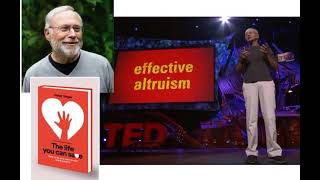
In this interview, Dr. Chris Stout talks with Charlie Bresler, PhD, former executive director of The Life You Can Save, about his unconventional career path—from psychology professor to Men’s Wearhouse president to nonprofit leader—and how he partnered with philosopher Peter Singer to build a high‑impact giving organization. They discuss the ethical foundations of effective altruism, the stark statistics of extreme poverty and global health, and why a dollar from a high‑income donor can achieve far more overseas. Charlie explains how the nonprofit curates and vets charities, using an in‑house evaluation team and a broader cause‑fund approach, and describes the "leverage model" (approximately $1 spent on the organization yields $17 for recommended charities). The conversation covers the "overhead myth," emphasizing impact over administrative costs, and the psychology of giving, including the identified‑victim effect, philanthropic graffiti, and social‑norm influences. They compare direct cash transfers (GiveDirectly) and graduation programs to traditional micro‑finance, argue for supporting smaller, high‑impact NGOs over large bureaucracies, and outline giving standards—from a baseline 5% of income to the aspirational goal of giving as much as one’s wealth can afford, citing examples like Chuck Feeney. Charlie offers practical ways for listeners to learn more, obtain free copies of Peter Singer’s book, and get involved with The Life You Can Save.
Chapters
Living a life in full is a conversation you always wanted to have with that person who gave an amazing TED Talk, or the author of one of your favorite books, or that inspirational Olympian you always wanted to know more about. It's graduate level conversations with those making a difference in the world and in the lives of others. This show brings you new ideas and approaches so that you can live a life in full. I'm your host, Dr. Chris Stout and I hope you enjoy this episode. This episode is sponsored by our new video course, how to Publish in the New Millennium. From Scientific Journals to Best Sellers, it's an asynchronous course offering so you can watch it when it's convenient for your schedule. It's based on eight video lessons and provides three hours of material with new concepts, stories and examples and it includes several attempts and humor. You'll learn about the best ways to submit a manuscript to a peer reviewed journal, the mechanics of book contracting, what publishers are looking for, how to evaluate and negotiate a contract, royalties, advances, copyright and ownership, why to never first submit a manuscript to a publisher when you need an agent and when you don't, and the differences between publishers. You'll learn about ebooks, print on demand, Amazon's CreateSpace and KDP programs and other non traditional approaches to publishing, along with how to tell if a platform is of high quality or not. We do a deep dive into marketing, how to create media kits and what goes into them, along with examples how to create a great Amazon author page, how book signings work and how to be invited to do library talks and the economics of both, along with developing speaking engagements, promotional tours and being a podcast guest, as well as a number of other publicity aspects of. We cover blogging and provide additional resources to help you in crafting your work and making it better. This is a rich, fun and fact filled course that covers everything you need to know from a practical and actionable perspective. It's for anyone wanting to get their written work into the world, be it academia, popular media, or both. Join the Masterclass in Getting Published. To learn more, please visit tinyurl.com getting publishedcourse thanks welcome to another episode of Living Life in Full. I'm your host, Dr. Chris Stout. Extreme poverty has devastating effects on over 700 million people globally every year. 5.3 million children under the age of five die and more than half of these deaths could have been easily prevented and if they would have been fortunate enough to have been born in the United States. In 2020, the world saw global health surpass, pardon me, global wealth surpass $400 trillion for the first time in history. Yet climate extremes and economic slowdowns led to 811 million people to go hungry. And the pandemic pushed nearly 100 million people into extreme poverty, creating a historically unprecedented increase in the number of global poor. Peter Singer has famously noted that we have an ethical obligation to use some portion of our wealth and privilege to save lives and reduce the unnecessary suffering associated with extreme poverty, defined as living on less than a dollar and a quarter a day. A decade ago, Charlie Bressler became a volunteer executive director and co founder of the Life youe Can Save, a nonprofit dedicated to reducing extreme poverty. Through his financial support and leadership, Charlie helped Peter Singer develop the organization from the ground up. The Life you Can Save's mission is to inspire more people to give effectively and end world poverty. Charlie has famously said that it's a privilege, not just a responsibility, to save lives, reduce suffering, and empower livelihoods. Through using the financial resources he and his wife were lucky to have and through the hard work of helping to grow that number of donors to amazing nonprofits, Charlie is the first to say that his career has not exactly been linear. Charlie went to New York University for his undergraduate degree and received a Master's degree from Harvard in Social Studies and education and a second master's and PhD in psychology from Clark University. He then served as Director of Behavioral Medicine for the California School of Professional Psychology in Fresno, where he was a full time professor and founder of a teaching clinic for treating anxiety and stress disorders. He next became head of human resources, stores and marketing, and ultimately president of the Men's Wearhouse. Charlie now lives in Washington State with his wife Diana, a family physician who partners in supporting the life you can save. Welcome to the show, Charlie. I feel like we're kindred spirits.
Well, thank you very much for having me on this show, Chris.
So I know that in February last year you stepped down as executive director of the Life you can Save, but you certainly remain on as a major donor and active board member. But to start off, could you tell us how you transitioned from psychology professor to president of Men's Warehouse and then on to executive director of the Life you can Save?
Sure. It was really what seems in retrospect like an accident and probably a fortunate accident. What happened is Diane and I were in Fresno with our two young children and we decided that we didn't want to raise our children in Fresno, California. For those of you who are listening who don't know, it's over 100 degrees Fahrenheit most days for four months a year. And they're really, unless you drive an hour or an hour and a half, you're really hard pressed to be in really interesting nature, which was very important to us. So Diana and I decided that we would move to the Bay Area. And since she's a family doctor, a female family doctor, even in those days, it wasn't very hard for her to get a job. And I had decided that wasn't likely to get a tenure line job at one of the major universities in the Bay Area that I might want to teach in because I hadn't been really focused on publishing a lot of research. And so I was thinking that I would probably start an anxiety and stress disorders clinic for a psychiatric hospital that had recruited me to do that in the Bay Area, when an old childhood friend, George Zimmer, asked if I would consider joining the Men's Warehouse to start a training program. And I was like, I'd never thought about being in business before. And I said, gee, George, I guess I would. I mean, I'm not that anxious to start another anxiety clinic start. So if you would pay me more than I was going to make at the Anxiety Clinic, given how expensive it is to live in the Bay Area, I would consider doing that. I didn't really think beyond that. I just said yes. And so that's how I got started at the Men's Warehouse.
Wow. And then how long was your tenure there? Because it sounds like you certainly moved on up the ranks, clear up to being president of that. What. What period was that?
So I started the Training program in 1993, and I first had responsibilities for the human resource department, which in those days had an emphasis on employee relations. It was a newly public company and had really did not have really a significant employee relations department, even though it had a very rich culture as a baseline. And so one thing led to another, and eventually I became head of stores and head of marketing, and as you said, president. So in 2008, so that was 15 years later, I was president, and I had been president for three years. And I decided that I better do something more consistent with my values than selling suits and making money for shareholders. And so I made the hard decision to go into George's office and say that I no longer wanted to be at the Men's Wearhouse, that I didn't want to be at the next CEO. And it was a little bit disruptive since I was slated to be the next CEO and the board and George and I worked something out and they offered me a consulting arrangement which I was willing to accept because I wasn't sure what I was going to do. I knew I wanted to do something socially useful. So that consulting relationship went from 2008 to about, oh, I'd say 2014 approximately. And. And then I stopped. So I started in 1993 and I ended completely in 2014. What is that, 21 years? Something like that. So it was a long time. And when I started back in 1993, I really wasn't thinking beyond the first year.
Wow, what a run. So is it true, I think I saw in my research that you came upon Peter Singer's work by reading one of his books on vacation. Is that right?
Yeah, I think it was in 2012. We were actually vacationing at George's house in Hawaii and which he was very generous with and my family was there and I read, I don't know why I picked it up, but I read a book by Peter called Practical Ethics, which is a pretty serious philosophy book. And then I followed up by reading the life you can save and the rest is history as they say. I was really, I guess it just precipitated some thinking on my part that it would be really nice to work with someone like Peter and to use the money that Dinah and I were lucky enough to have to help develop that organization. Since stepping down at the Menswears as president, I had worked in two part time HR consulting things as a volunteer. They were both really rewarding. I won't necessarily get into them now, but when I read Peter's book I thought, Jesus is amazing. I really agree with so much of what he said and I haven't done very much about any of this. So I wrote Peter an email. I'd never even heard of him before I started reading these books. And I said that Diane and I might be interested in helping develop the organization. And one thing led to another and we had a number of conversations and I went to see Peter's TED Talk and that was the first time I met him in person and we agreed to start down this path together.
Wow. What was it like on that first connection meeting with him? In talking about this, did you talk about just the ethical, philosophical aspects about it or did it quickly segue into the mechanics of putting things together and building the organization?
Well, I'd like to say that I actually remember in detail what we talked about, but I don't. But I know that I at a. That I felt really intimidated when I first met Peter. I would, because here he was A world famous philosopher. And I think in one philosophy course as an undergraduate, I think we read Plato and Hume and Kant and Mill. Fortunately we read Mill. So they gave me some insight, Peter might think. And. But he was such an easy guy to relate to. So we talked about our lives a bit, I think, and we talked about what it might be to start an organization. But it didn't go very deeply. But we did strike a deal very early on. And I don't know if it was during that conversation or one subsequent conversation, but I said to Peter that I wasn't looking at this stage of my life to really have a boss who is going to micromanage the operation, but that if he would agree to not micromanage the operation, I would agree to do nothing to harm his brand. And we shook hands on that. And I have to say that Peter has been perfect to work with, as has the other members of the board. And I don't think I've done anything to ruin this brand. So I think we both, I think we both kept our end of the market, but I do remember being intimidated. But over the years that has completely faded away and Peter and I and Diana have become friends and we've hiked together in Australia. He's visited our family farm. So yeah, it's been, it's been really good. I wouldn't say we're super close, but I would say we're quite respectful of one another and pretty good friends.
That's great. What a wonderful partnership. Well, you know, I got in preparation for this, the 10th anniversary edition of the Life youe Can Save that Peter did. And that was kind of pivotal to you guys connecting up. And I really loved it. It was incredible to see the updates and kind of learn what was able to be accomplished and in some sense, like just within 10 years of the organization. I felt one of the. A key argument that, you know, Peter seemed to have in both the editions is that really our money does more, ours, meaning people in the United States, money goes. Does more, goes further overseas. Is that, you know, kind of the basic key of Peter's thesis, or would you say something different?
Well, I think absolutely. The dollar using US Currency goes a lot further overseas because things are less expensive to get medical care. There's also needs, as you mentioned in your introduction, particularly health related needs that just don't exist for most people in the United States. There's still obviously a group of very underserved people in the United States. In spite of whatever social safety net we have. There are homeless people There are people with chronic psychiatric problems. There are people released from prison, all of whom could be not getting basic needs, but the basic needs that are unmet in the 735 million people before the pandemic, that number is about right, as you pointed out in your introduction. It's more now those people have needs that can be easily met with very inexpensive care, which we can talk more about. That just would cost dramatically more in the United States. So there's more of those people by far in the developing world, and the cost of remedying their problems is dramatically less. And it's that combination that leads people to people, Peter, to advocate donating in the developing world with the help of. To try to end extreme poverty, which is actually would not be that difficult to do.
Yeah, well, I think the book articulates that in a, pardon me, very persuasive way. I mean, I'm probably kind of a biased reader of it anyway. You and I spoke off mic just a smidge. I also have a nonprofit that I founded a few years back, and we focus on global health. And one of our partners is in Tanzania. And while we all know that treated bed nets are one of the best ways to prevent malaria, we were working with two hospitals there that had. There was just a really bad malaria outbreak. And it was sort of like, you know, yeah, it would have been great to have the bed nets, but, you know, we're now dealing with hospitalized people that are sick with malaria. And long story short, we found very quickly that rather than materials, it was better to send funds and long, because we were very outcomes focused, too. We found that the entire treatment protocol for those individuals at that point in time to basically save their life. We had a disproportionate number of kids also, so it just really gave them their lives and saved their lives was 73 cents a life. And I wrote that up on LinkedIn because I was just flabbergasted by it. So I'm a firm believer of how much further dollars can go with proper stewardship and proper application. So I think it's an amazing kind of 10x or whatever else in terms of if you want to look at outcomes, I guess, you know, part of it, too. You know, there's the kind of the cliche of, you know, charity begins at home. And I don't know if that, you know, is meant to be, that we should just, you know, donate, you know, locally or whatever, but I think it's a very persuasive argument that, you know, the global reach and global Aspect, you know, does provide for people that probably don't have those safety nets. And is that all part of it as well, too, from your perspective?
Yeah, I mean, it is. It's a fact that only about 6% of U.S. philanthropic dollars go overseas. And that's. There's an amazing amount of money that's given in the United States. It's about almost $300 billion given by individuals every year. But most of that money goes to people who are in their own communities and. Or who to organizations that compel the person because a friend asks them to give to that organization or they have a relative that died of heart disease or cancer. There are all kinds of immediate pulls on people's philanthropic dollars. There's also the churches and synagogues that people give to that capture a lot of philanthropic dollars. And I think it's just emotionally a lot more compelling to give locally, where you might even see the benefit immediately of what you're doing, or at least you can imagine the benefit because, for example, you know what it's like to have to go through chemotherapy, or you know what it's like to have heart disease or any of the other kinds of places that people give money. The cost effectiveness of those donations, as you point out, is very small compared to giving, say, to a child or a pregnant woman who has malaria that can be cured relatively easily and that are most vulnerable to that disease. But it's very hard to feel the same impact of a donation to somebody that far away. So I do think that people want to give locally. And one of the things that the life you can save is doing is trying to get people to understand the value of splitting their donations. Although many of us give all of our money overseas, we don't expect people to just all of a sudden go from giving all of it locally to all of it overseas. But we do think that maybe people would consider diversifying their giving more.
That's good. And I want to get into some of those examples, too, that the book highlights, I think are very poignant. In the preface, Peter says, at a minimum, I hope this book will persuade you that there is something deeply askew with our widely accepted views about what it is to live a good life. And this is kind of where I think he starts to talk about the whole, the moral aspects and our ethical obligations. Can you kind of, for our listeners, maybe couch that in the context of, like, how to live a morally good life in the concept of being helpful to others in need?
Well, it's very funny to tell people how to Live a morally good life. I think it's easier for Peter, who is exemplary and who also is an ethicist and a philosopher and has an extremely well worked out, consequentialist, utilitarian perspective. But I can personalize it. And I think for me, you set an idea of what would be an excellent life or almost a perfect life. What it would mean to be what kind of community member, what kind of parent, what kind of spouse, what kind of friend, and all the way to your obligations to society and the world in terms of your footprint, your carbon footprint, your giving to help people through philanthropy or charitable giving. And what works for me is to get a sense of what it would be to live a perfect life. And whether you put it in secular terms or you put it in religious terms and you're trying to emulate Christ or Buddha or whomever. I think having a concept of perfection or what it would be to really be doing the most is helpful. But know that you're always going to fall short of that in every area, both as a spouse, as a parent, as a community member, etc. And as a charitable giver. But to say to yourself, it's not okay just to do what I've been doing. I have to do better than that and I have to improve myself. So I'm a believer, maybe because I didn't start from being necessarily the greatest person in the world, but I'm a big believer in. In what we call in sports, personal best, and really trying to improve incrementally each month or each year in all of the areas that it's really important to live a good life. And I think I've mentioned a number of them. A number of them. And I think giving money to the people who need the money the most is part of what is necessary to live a good life. And I think we have to continue to give more and to give more effectively. Because I think when it comes to charitable giving, it isn't a matter of just giving more or giving 10% of your income like tithing, but I think it's taking some responsibility for making sure that where you're giving that money is going to be really effective. So all of that combines to being a really good life. And I think it ladders up from how you interact with people in your own community to everything you do for society. And it's a very big challenge to be a highly ethical person. And I think setting the challenge for oneself is a big part of doing it.
Yeah, I think it's very. A good point a good aspirational kind of aspect. And I think your operationalization of the aspects of the book into being the nonprofit of the life you can save kind of is a helpful step in that move towards effective altruism and being able to know that we've already kind of established the baseline that our dollars can maybe do more go further in resource poor areas outside of the United States. And I think the other aspect then sort of the question that that begets is, well, how do I pick what's kind of what's out there? And you've talked about, I've seen excerpts from things that you've written said on the website too about developing a different way to give. And I guess the life you can save as an organization is a way to do that. It's a collection of vetted nonprofits that the organization has selected and curated. Can you share with our audience that aren't familiar yet with the organization and with the website how those nonprofits are selected and how you curate them?
So when I got to start working with Peter, he had a number of nonprofits that over the years he had decided, based on his conversations with a number of researchers, that were highly effective. And so we had a set group. Shortly after we became a formal nonprofit, we found a panel of experts, we called it. Peter was one of them, but there were three others who were well versed in charity selection. And so we didn't try to emulate GiveWell's primary research because they were doing an excellent job of doing the primary research. But we believe that their scope was too narrow, that we needed more causes and more charities to offer. So we have our panel of experts looked at other organizations and took charities from other places like Impact matters, founders pledge, etc. And recently we've changed the process from outsourced panel of experts to an in house charity evaluation team. So we have somebody who came to us from the World bank and Berkeley, a PhD from Oxford who really understands the whole concept of charity evaluation, has done a lot of randomized control trials himself in Africa. And he has a woman who works with him who worked in a health department in the United States, who's a data expert. And so the two of them have taken over the responsibility for actively curating more charities and grouping, as will happen this year, grouping charities into cause funds, if you will, that will be actively managed by them. And we hope to grow that charity evaluation team over the years so we can do more curated research for specific individuals who want it, who may be considering very large donations. So we're doing it differently than GiveWell because we want a broader cause network, as I said, and a larger number of charities, but we still want to carefully curate these charities to make sure that there's maximum impact.
That's great. I just. It is so helpful to have that kind of, you know, whatever offsetting of that for people that really know how to do those kinds of evaluations and to in some sense, really, you know, kind of make it. Make it easier. I. One of the ethos of our nonprofit was to say that it shouldn't be so hard for us to do humanitarian work or to do global health work, that kind of thing. And it also, with you guys, it shouldn't be so hard to select, you know, to, you know, have to figure out what are the right metrics and what are the right outcomes and what's, you know, the right structure of the entity and the ethics of the people running it and stuff. You really kind of take that out and make it so much easier for people to use. And we'll put this in the show notes too. The link to your website is just superb.
So our model is that we want to make smart giving simple. It's crazy that it's easier to find a place to stay in France or Seattle, Washington, than it is to know where to donate your money to. Most people spend more time researching where to go out to dinner than they do on where to give their money. And so we figured that not everyone is going to want to spend a really long time time curating nonprofits and trying to figure out where the most impact is. And so one of the purposes of the organization is to do that work for people. And if they want to dig into it more, we provide material that they can dig into it more on. And if they want to speak to somebody who has done the work, they can do that as well. But we really want to be available to very wealthy people who want to donate large amounts of money, as well as just regular folks who want to donate a little bit of money on a regular basis.
I love that. So are some of the aspects that we've been talking about, does this relate to the leverage model or is that something different that you've talked about?
The leverage model is something that really has guided giving for many of us who give to the life you can save itself. So one, we are. Our primary mission is to spread Peter's book and the word about effective giving to as many tens of thousands, hundreds of thousands or millions of people possible. But we also want to raise a Large amount of money for our recommended nonprofits, not just spread the word. And the way to do that, we believe, is to grow the expertise in marketing, fundraising, and partnerships at the life you can save itself. So what we are trying to do is get particularly large donors to donate to the life you can saves operation to scale our operation. And the leverage model refers to the number of dollars we spend on the operation itself itself, compared to the number of dollars we raised for our recommended charity. So, for example, we estimate, and it is an estimation, it's not an exact science, but we estimate that over the last three years, for every dollar we spent on the life you can save itself, we've raised $17 for our recommended nonprofit. So what we believe is, let's say we can find these wealthy people, which is one of my goals, one of the ways I spend my time, because we want to get regular donors, but we want to get high net worth donors to be able to see the value in growing the life you can save itself so we can raise more money for our nonprofits. Let's just say three years from now we were to spend. I'm just going to pick a number. I'm not going to pick the actual number in our three year plan, but let me just pick a number of $10 million. I know that sounds like an awful lot of money for an organization to spend, but remember at the men's warehouse, I had a $90 million a year marketing budget. And so I know how to spend money. I'm really good at spending money. I don't like to spend it that much on myself, but I really know how to spend money to market and to grow things. And so if we, let's just say we had a $10 million budget, say in 2024, our expectation or hope would be that with that $10 million, we would raise $170 million for our recommended nonprofits. And that's what we refer to as the leverage. The leverage is $1 becomes $17.
That's great. Well, and you know, what that reminds me of is in the book, Peter talks about the overhead mythology. And I remember reading about, like, thinking about, you know, oh, gosh, and you, I mean, you're not only a donor, you were a volunteer executive director of the organization as well. So, I mean, you certainly kept the overhead low with that. But for people that haven't yet read the book or maybe aren't familiar with this concept of the overhead myth and Peter's philosophy of wanting to end the overhead myth. Can you speak to that?
Yeah, I think Charity Navigator was really one of the places where people first learned about the overhead myth, or they didn't learn about it as a myth, but they started looking at organizations overhead. And we want to look at the organization's impact. So let me go back to the corporate world. Although there's a lot of emphasis on how much people pay their CEOs or their executives, the real thing that shareholders care most about is the note is the growth of the shareholder value or the growth of the stock that they they hold. They care about the profitability. They don't care about the $90 million we spent at the Men's Wearhouse on marketing. They care about how much profit the company was getting. And that how that transferred translated into the growth of their own personal stake and so translated into the nonprofit world. We are less concerned about how much we spend than the impact of what we spend. So you could have an organization that spends very, very little money on overhead, but doesn't really have very much impact, whereas you can have an organization that spends. I'm just using the example of the life you can save if we can raise the money three years from now, $10 million, which is a lot of money, but has the impact of giving $170 million or raising $170 million for nonprofits. So somebody wants to ask Peter if he would ever pay an executive director $300,000. And Peter's answer surprised people because Peter's never made anywhere close to that amount of money, and I was making no money as executive director. But his answer was, well, it depends on how much money that executive director could raise as a function of his or her being there for these nonprofits, how many books could be distributed. So they would be looking at the marginal impact of that executive director over somebody who did the job, who might not be as creative or talented. So that's what we mean by the overhead. Don't just look at the overhead of an organization. What we really want to focus is on the impact of the organization.
I love that. That's really, you know, I've seen that as well too. I mean, even, you know, like you and I probably, if we go into the bowels of the budget of the American Psychological association as a nonprofit professional organization, it's a similar kind of thing that you want to have good leadership. And if you want to have good leadership in the nonprofit area, you need to be at least somewhat competitive with the for profit arena. One of the things I really want to this is just there's two big things I really have wanted to pick your brain about. And this is the first one, a lot of the book, and I certainly get it, is on reducing extreme poverty. And it seems to me, and maybe this is my, you know, lens that I look at the world through, but it seems like a lot of the reasons for that is to then be focused on provision of healthcare services. There's story after story and data point after data point of impact on these kinds of things with, you know, vision restoration and proper nutrition, et cetera, et cetera, that can, you know, be helpful in whatever, cholera and dysentery, et cetera. And in my work, I know that there's a lot of folks that we've worked with that are thankfully not in extreme poverty, but nevertheless are in resource poor areas and still don't have good health care regardless of affordability. They're not there. We did a project in Cambodia that just are in rural areas and the economics weren't in issue, it's just the access was an issue. So is it not a brand focus? Like, it almost seems to me like a lot of your work and Peter's work is on, in my head, global health rather than extreme poverty. But what are your thoughts on that? Is that just me and my jaundiced eye of looking at everything through the global health aspect?
Not at all. I think the connection is that of the 735 million, unfortunately now the number may be 800 million or 850 million people living in extreme poverty. There's problems with a variety of different things in their life, including nutrition and hunger. But the biggest problem they face as a result of being poor is its effect on their health and particularly the health of children under 5 years old and pregnant women. So by reducing extreme poverty, you improve the health of the people who are living at such a low, low income level or by, by improving their health, you also can help lift them out of extreme poverty. But the easiest interventions by far are the ones that provide health care where access, as you point out, and medications as well, and surgeries as well to people who generally can benefit from them because they're treatable illnesses but they don't normally have treatment. So I think there's a huge overlap, if you did a Venn diagram, between health problems and people living in extreme poverty. And of course that's true of sanitation, nutrition as well, but all of the sort of the final common pathway, if you will, to use a medical expression of poor poverty is poor health.
Yeah, got it. Okay, good. That's, that is super helpful. So I Can't remember if it was the book or the research for this talk conversation with you, but I saw that Peter had done some work at or presented, I presume, at World Economic Forum. And years ago I had opportunities to be there. I met Mohammed Yunus, who had people probably know is, recognized his name as being the founder of the Grameen Bank. And he and I talked a lot about social entrepreneurship, kind of this is 25 years ago. And that was kind of a new thing. And it really seemed to be, you know, hold to hold promise. Is there an overlap with our Venn diagram to that with like micro finance vis a vis poverty alleviation or what are your thoughts on that?
So I think even though he won the Nobel Prize, which was probably at the time well deserved for his microfinance work, I think that in my mind, and I'm not the expert on this, things have evolved in a really positive direction from micro finance to two other strategies that are more successful than microfinance. Microfinance generally has the recipient paying back the loan, but the loan has been shown to be really helpful in some cases to lift people out of poverty or near poverty. But what is going on now is really remarkable. There's an organization called Give Directly, which is one of our recommended nonprofits, and you can check it out on our website. And what they have shown through really rigorous research is that if you give people money directly with no requirement that they pay it back, all kinds of great things happen. And people think, what are you talking about? If you give people money, they're going to waste it. Like the husband, maybe not the wife, but the husband's going to go out and buy cigarettes or beer or whatever. But in fact, what the research shows, and this is very rigorous research, the research shows that people use this money, by and large, in extremely wise way. For example, one of the things that they do is they immediately replace a thatched roof with a metal roof. You think, well, that that's. Why is that important? Well, it's important not only because it keeps their house dry, but they keep a lot of their food and is stored inside their house and it keeps it from spoiling. And there are all kinds of things that people do with this money in terms of buying an animal, buying seed. And the research which people can read shows that it's really effective. Just give people the money. And what's amazing about Give Directly is that these cash transfers can scale. So we could go from giving any amount of money away and then you can give it to more and more communities around the developing world. And it can be transferred through providing people with a simple mobile device to get. Get the money. And so Give Directly has really, I think, is an evolution from microfinance to something even better with a lot of research to support it. And then there is another group of organizations that's exemplified by Village Enterprise, where they put women in. And that's also available on our website to look at. They put women in groups of three and they. And they can start businesses. And these women are given the money, so they're given a cash transfer. But in addition to the cash transfer, they're given training, which makes it more complicated than the Give directly model where you just give people the cash, but the grant, what are called graduation programs. You give them the cash and you give them the money. And there's a tremendous body of research growing now to show that that's another really effective way at helping people escape extreme poverty. So I look at it as it went from micro finance to direct cash transfers and graduation programs. And so all three are important. But I think the research suggests that the last two, the, the Give direct crash, direct cash transfers and graduation programs, which are cash transfers plus education, are, are even more effective.
That's great. It's like, you know, the, the cliched aspect of giving a person a fish versus teaching them, but both in this instance. I like the fact that people are looking at things because sometimes just what you described is somewhat counterintuitive. I mean, there's lots of people that would have argued and probably did argue without the study and the data to say that, oh, like you said, they're just going to spend it on cigarettes and beer and it's going to be a big waste. So I think having those empirical studies and even where you can do randomized controlled trials, I think is huge. One of the things I want to get your opinion on, this actually isn't the second one. I guess maybe I have two and a half. But in the book, Peter takes William Easterly's perspective of William's book the White Man's Burden, about large versus small institutions. And when we were putting together our nonprofit, I was really sort of impacted. Maybe it's just timing of the book coming out was similar. But, you know, people that aren't familiar with that book was that basically Easterly was pointing out that smaller NGOs and nonprofits are a little better than lumbering large institutions like the World bank or the un. And I did a gig with the UN for a year, so I'm not biased against them per se. But I know that also in the book and your work that Oxfam and many other sort of like, like sized NGOs to Oxfam, they're not huge, they're not World bank, are endorsed by the life you can save. So do you have feelings or perspectives on, you know, the, the largesse of institutions have become so big that, you know, a lot of their funding goes to support themselves. I, I, I get what you're saying. Like, well, if they 17 exit, you know, to, to what the cost is, who cares? But do you have feelings about that of the, the smaller ones or, or versus the, the Goliaths or what's your perspective?
We have two of those big ones that are not as big as unicef, for example, but two large ones, Population Services International and Oxfam on our list. And they are very big ones. But most of the ones that we support are significantly smaller. Personally, I feel like supporting the smaller organizations that have proven effectiveness and room for funding. In other words, they know what they're gonna do with the money and if you give it to them, they're gonna use it that way it's gonna get to them and then it's gonna get to the beneficiaries. It's not gonna end up in the hands of some government official or some bureaucrat or whatever. It'll definitely get there. I think that there's something really satisfying about doing that, which is why that Diane and I have almost exclusively in the last nine years, given all of our money to the life you can save to scale because we think we're small, we want to get big, but big means to us, you know, we'd like to be a $20 million organization and we'd like to be moving, you know, 100, well, you know, 17 times 20 million. Right. So what is that? $140 million or, or more. And, but we still want to support an organization with that kind of leverage, or we want to support an organization where we know that if they get the money, things are going to happen and they otherwise wouldn't happen. So the marginal impact of our dollars is great. It feels less that way with Oxfam and psi, but because we know the operations quite well, we get the satisfaction of knowing what they're going to do with the money and we do see real impact. But I think for most people venturing forth into this international giving in general, they'll probably find it more satisfying to support a medium or smaller size organization.
Gotcha. You know, Charlie, you saying that makes me think this Is a. Brings a whole new meaning to value investing, you know, so maybe it should be called values investing.
So I'll tell you, I wish I was as good at investing our personal resources as I have been in investing in the like. You can say that investment has paid off dramatically better than any other investment I've ever met.
Amen to that. I hear you. Well, you know, you and I, we were talking off mic before, like, we're both trained in psychology, although you and I kind of have more of a clinical bent to what that was like back in the day. And Peter's book gives a lot of great examples. And in scientific studies that are kind of come more from social psychology and behavioral economics. So can you speak to like the psychology of giving? Like, why? What are the reasons people don't give to charity, perhaps?
Well, that's a great question and I wish I could rattle more of it off. By the way, my primary training, or at least equally, was in social psychology, not clinical psychology. My dissertation director was a social psychologist, not a clinical psychological psychologist. So that's just not really very important. But a lot of the research I did was more of a social psychological than a clinical. Ben. Where I got involved clinically after graduate school was in the treatment of a couple of specific anxiety disorders. But in general, my focus was more social than clinical in a lot of ways. At the Men's Warehouse, the training program, I guess you could say, was built on Bandura's self efficacy research. And I think in a lot of ways people think of that as social psychological.
Nice. Well, that tees you up. Well, then that helps give me greater clarity. That's good.
Yeah. No, I was, I was lucky to study with Jim Laird without getting into this at Clark. He was in many ways the father that I never had. And he was just. He just died recently. But he was just an amazing mentor to me. And I feel like all the work I've done subsequently benefited from the work I did from the work I did with him. I don't consider myself to be an expert in the psychology of giving, but I can mention a few things that we know from an abundance of research. And I think the most important one that guides our work in terms of fundraising and trying to influence people is what has been referred to as the identified victim. And I think this is going to be intuitively obvious to people. But a woman named Deborah Small did this research at the University of Pennsylvania, and what she showed was that people are more influenced by one person dying in the developing world than hearing that 10 million people are dying, or 5 million people are dying. And so we quote these large numbers all the time, but people can identify with one, but they can't identify with an extremely large number of people. It creates something we think of as psychological numbing. And so I think that's one finding that's really important to take into consideration. I think another one that's really important, and this gets into a question of sometimes what's referred to as philanthropic graffiti. People, people are very influenced by what other people are doing. That also I think is intuitive. So if I find out that my neighbors are giving X to Y charity, I might be inclined to at least give X to Y charity because I want to be doing my. What considered to be my fair share. So what's interesting is if we take the religious point of view, Jesus's, or in Judaism, I think it's called tzedakah, we take that point of view that you should be very secretive about your giving. You shouldn't try to get your name on a building, or you shouldn't brag about how much money you've given to the life you can save because it's arrogant and it's just self promoting. And what Peter points out in the book, and I think is really true of human beings is that may be that the motive is not the best motive in the world. But aren't we much more worried about the impact of their giving than the motive for their giving? So if somebody brags like Bill gates, he's given $29 billion because he wants to appear to be a really important person, do we really care what Bill and Melinda's motive was? Which might have been really pure, by the way, but we won't ever really know, or do we care more of the impact that that $29 billion has had? And so I think that, yes, somebody might want to put their name on a building and they might want to do it for the wrong reasons, but is that an impactful donation? Now, I don't think putting your name on a building at Harvard, like when people call me from Harvard, I just want to hang up the phone because I'm not. I'm not really interested in getting money to Harvard as somebody who graduated, but from the graduate school. But, but I do think that I can understand why people might want to promote their giving. But the best reason to promote your giving is it might encourage people to give similarly.
Yeah.
And so the concept of philosophical graffiti, which sort of flies in the face of Jesus is Adam mission to be private in your giving. And to not be promoting yourself, I think is another interesting finding. I think the most interesting thing is also intuitively obvious. We like to give where we can see the impact and we don't like to give where we can imagine that it has no impact at all. Like if we get far away, maybe the money doesn't get there, etc. Etc. Or I can't really identify with a 4 year old child in Africa dying of diarrhea, but I can identify with a four year old homeless child in the United States or in my local community, even better. So those are some of the things that, that I've learned about giving. But there is a lot in Peter's book about it.
I really like that. I mean he really, it's sort of funny. He, he teed me up in the book of thinking. Okay, well here's all the, you know, spending too much on, on C level staff and then wham O says nope, you know, you get, you know, you get 10 extra dollars. So you know, who cares? Let's look at the value and you think about, oh my gosh, all these narcissistic rich people, you know, needing to put their name, name on everything. And then it's like, nope, whammo, you know, whatever impact it has, they can put whatever, you know, whatever they want to do on it. And almost kind of to the point of like saying, you know, an anonymous donation while a lot of people think, you know, that there's a group of people think that's the way to do it because of these, you know, maybe being, you know, humble or whatever. But it, I think your point's well taken. The point in the book is well taken that there are other advantages. You know, people can choose to do what they want to do. The bottom line is, you know, you know, please help and please donate. But you know, these other kinds of aspects to just not out of hand presume that they're, you know, you know, negative just because of maybe some bias or some perspective that, that they may have.
So it's taken me and Peter a lot of effort to convince my wife to be public and how much money she has donated to the life. You can say she is an extremely modest person. If you ask her where she went to school, she'll tell you she went to school in Boston. She won't tell you she went to Harvard. She'll never tell you she went to Harvard. You'd have to actually pry it out of her. So since she started giving away a significant percentage of her, the money that we've earned. It's been really hard for her to be public about it, but I think Peter has come a long way towards convincing her that whether she likes it or not, there's value in her doing it. So she's been reluctant, but she's starting to get more willing to do it. But it is really hard for people, particularly people who want to be very modest, to be open about their giving.
Yeah, well, you know, it gets all to that. We'll get to it in just a second. But all the different pledges, the founders pledge and the pledge 1% and those kinds of things too. But I want to circle back to that. I also just want to say, I don't want to get us off on a tangent, but in doing the research for your book, I also came across another group. I think you may be familiar with them, I'm not sure, called 80,000 hours. Do you know that organization?
Yes, I do. I know the head of it, Ben Todd. I met with him when I first got started in this way back when
I just got his book, Honest to Goodness, I think Saturday. And I'm just, just chomping at the bit to get into it. But it's, to me, superficially, just before I get into it, seems like there's a group. I have two adult children that are not happy with their current job situations, and I've referred them to it right off the bat in the website as well. So do you feel like we've been talking about being kind of the moral, ethical aspects of donating and contributing? I think we've been primarily focusing on money rather than talent or labor. But from the employment side, do you have thoughts or feelings about what the direction is? Is this an optimistic direction that people maybe want to not just be involved with donating, but also have these kinds of aspects vis a vis their career?
Yeah, I think there's two very different ways of looking at it. One is something that Peter and Ben would refer to as earning to give. So there's a guy named Matt Waggy who was a graduate student at Peters, who decided, even though he's an effective altruist, he decided that he would become an investment person, make lots of money, and give a very high percentage of the money makes each year to charity. And the logic there is that Matt is very talented. I mean, he went to prison, he's super smart. And the logic is that if he took a job, say as executive director of a nonprofit, he would do it really well. But if he didn't take that job, the person who would Take that job instead of Matt would have done it also very well, but would never have had the capacity necessarily to make all the money that Matt can make. So Matt goes in and decides, okay, I'm not going to take a job as an executive director of a nonprofit. What I'm going to do is do a job that's reasonably satisfying to me because it's intellectually challenged, and then give most of my money away. And that's what Matt does, and I'm just using him as an example of earning to give. And then there's another group of people that think that their biggest impact would be on becoming a member of a team or the executive director of a particular nonprofit, because either they don't want to earn to give because they couldn't stand the career where they'd make a lot of money, or they don't think they have the talent or the particular skills to make a lot of money. And so they think their biggest impact would come from actually working in a nonprofit. When I decided to stop making money and work with Peter in the development of life you can save, I don't know that I went back and thought, okay, I could either continue to make money and give it away, or I could take over the life you can save as a volunteer and help it grow. That would be more impact. But in retrospect, I think I knew, without having to, like, wake up one morning and think about it consciously, that I could have a bigger impact taking an organization that nobody at that time wanted to contribute to or run and trying to grow it, then just continue to consult, say, with the men's brows and make a fair amount of money and. Or I don't mean fair in the sense that I deserved it, but fair in the sense that it was quite a lot of money and give it away. And so I feel like in my case, I'm doing something that has the largest marginal impact for me. I think in Matt's case, he's probably doing something that has the largest marginal impact for him.
Gotcha. So in these kinds of things, I mean, so circling back to the organization in the book of talking about smart giving and giving better, and it seems like a new word that's kind of come into the vernacular over the last few years is effective altruism. And I think that's kind of obviously what we been talking about and the curation and the vetting and the outcomes and value and impact that they have. Peter then winds up the book, and maybe we can start to wind up our conversation, too, about Talking about what he calls a realistic standard. Can we kind of double click on that? Like, what are some of the ways that people can give better vis a vis pledging or effective altruism or those kinds of things? Things. What are your thoughts?
Well, one of the things Peter says is that people who are well off should consider giving 5% of their income away as a starting point. He doesn't think that's sufficient. Peter gives away about a third of his annual income. He just won a million dollars, and he gave all of it away. After the life, you can save $350,000 to animal welfare and 150,000. We had people vote on where to give it. So Peter sets a very, very high standard as to what he does. But he says that at a minimum, people who have a lot of money, and by a lot of money we mean high income but not necessarily a lot of wealth, should give away at least 5% of that income. People who are a lot wealthier than that should give away a lot more. Because, for example, if you take someone like Bill Gates at the extreme or Warren Buffett, they may give away $50 billion, but they're still left. It doesn't really matter whether they're left with 1 billion or 2 billion. It's more money than their grandchildren or great grandchildren could possibly use. And so there's been very little sacrifice to give away that money. And I think the highest standard would be to give away the amount of money that you can up to the point where what you give would cost you as much as the very people you're trying to help. That is the highest standard. And I don't think there are very, very few people that get to that standard. Even Peter giving away a third of his income doesn't get that to that standard, Diane. And I certainly don't get to that standard by giving away a significant chunk of our net worth. But we still don't give everything that would or even close that would cause us to be giving away something that's of the same value of the people that what we're giving is trying to help. That wasn't particularly well said, but hopefully it's clear. Yeah, we have a pledge calculator. So we say, I want to pledge every year to give away X, Y or Z. And you put in your annual income and it spits out a number that we think would be a really good number for you to give away. It's not reaching the highest standard, but for wealthy people, it can reach a third of their income, which when you Think about it. If you're making a lot of money and you give away a third of your income, you probably have. You still have more money than you should be able to spend unless you're buying Rembrandts or something. Right. So there really is a lot of different stuff standard. But I'm, I believe that people should do more research about where to give it. I think our website provides people a really good start for doing that research if they're giving internationally and they should try to give away more than they've given in the past till they reach a standard that they can maintain and then they can continue to challenge themselves as their life circumstances change and they may have more money they can give away or they're less concerned about college for their children or retirement. So there are a lot of different factors, but I think Peter's right that people of call it lower, upper middle class or above should easily be able to give away 5% and still not be giving away anything that is that important.
Yeah. And just for people, again, that listeners that haven't read the book yet, there's really good arguments, you know, the philosophical as well as the economic and the math of doing all that too. And we'll put that into the show notes Charlie. Probably because I was thinking about these kinds of things through looking at other stuff and through the lens of that. In the February March issue of Forbes magazine, I tore out a page. I have it right here in front of me, and it lists America's top top givers. They have like a little article on philanthropy, I suppose they do this every year and they list the top 25 and all of it. You know, most of them, probably 20 of the 25 are familiar names. You know, it's Dell, it's, It's Bloomberg, it's McKenzie, Scott, it's, you know, Soros, etc. Which is great. I'm making zero criticisms about any of this. But one of the things that really stood out to me, the way that they set this little, little table up, was that they list the person's net worth and then they list the person's lifetime giving. Have you seen this?
Did you?
Okay. It'll blow your socks off. Because so everything's all kind of like exactly what you're just kind of saying. You know, it's sort of like you, the income or whatever else is. So everybody's like, still a billionaire. They're, you know, like the, the lowest one on the thing here. Someone's given away 3, 1.39 billion and they're still worth, you know, 4.18 billion and that's number 25 on the list. But there's one person on here where the math just, just punched me in the nose. And there's a guy named Charles, he goes by Chuck Feeney. And he gave away $8 billion, but his current net worth is under 2 million. And I did a double take because you don't see any million on this table, you know. And so I looked him up and he and his wife, he's, I think in his early 90s now. He and his wife are living in a modest apartment. You can Google it and see it on Wikipedia or wherever. I think out east somewhere in a two bedroom apartment. And he has given away over $8 billion and he lives, you know, comfortably still who you know, 2 million bucks isn't bad to live on. But I was just in particularly impressed with this that you know, that you know, to have given more than what you're currently, you know, your current net worth is I think is really back to that aspirational kind of aspect of yes, it can be done. And here's a fellow who's done it and is, you know, very happy about being able to do that. And he's not, you know, he's not peacocking about it, but he's, that's just kind of what he's done. So anyway, there's great role models like you and like Peter and, and like Chuck Feeney who have been able to do these kinds of things.
I really just in terms of my own personal situation, Diane and I have given away a nice chunk of our personal wealth. But I want to point out that we live really nicely. We don't. We have two cars. One of them's a Volvo, a new Volvo, a pretty new Volvo. So it also eats a lot of gas, which is not so great. And we go on nice vacations. Before COVID with, since COVID I haven't been on an airplane. But we definitely have scaled back our lifestyle relative to people in our wealth or income bracket. But we still don't feel like we've given away nearly everything that we should and we are aspiring to do better, but we don't reach the kind of high standard of a Chuck Beanie. And I think the reason I mentioned that is A, I want to be transparent, but B, I want people to feel like you can give away if you, if you're lucky enough to have made money and even if you have made not as, not what Diane and I have made, but you've made Pretty nice money. You still, if you examine your spending and you're giving, you could probably give away a lot more than you have if you give it effectively and you could probably give it away without having to sacrifice anything that would be of such value that, that you would miss it horribly. And I think I just challenge everybody to examine how they're spending money and whether they could still live really nicely but get off the hedonic treadmill and realize more isn't necessarily better.
Yeah, hear, hear. Yeah, we've kind of ourselves tried to do that. I mean, you know, we're, we're works in progress. My wife and I, we've, we've downsized and when we moved from our last house, everything from that house fit into like one car space of a garage stall, you know, and we donated and gave away, you know, every. Everything else. And you know, we've really tried to do that. I think, you know, again, the book and seeing what you've done and personally and seeing what you've done, you know, professionally through the organization are great models and great inspirations and we'll put some of that, those examples and things in the show notes as well, I guess if you have time. I just have my final other big question that I want to ask you is that I do feel very strongly about this. You know, I wouldn't have started a non profit, I wouldn't do the work that I've done. I wouldn't. We did a book on global health, et cetera, et cetera, et cetera. But is there a shorthand way to kind of communicate this philosophy to someone that's totally naive to it, a stranger to it, like, you know, I'm at the proverbial, you know, cookout or cocktail party or I'm on a run and I hardly have any oxygen, but I want to tell somebody, you know, about you and about, about your work kind of a thing. Is there a, like, how can you influence someone? And again, you know, I don't want to be proselytizing about it at all, but I mean just to kind of say here's an approach of a lifestyle where it's important from an ethical perspective. An ethical perspective that I've adopted that others, some others have adopted to do this. Is there a sound bite or a few sentence way to kind of get people's interest and get them interested then in, you know, learning more or perhaps having that as something that they might want to explore themselves?
Well, I think Peter's thought experiments are really a good way to do it. So let me just share that. And you can see the girl in the pond video on our website. But imagine yourself walking by a pond and a little girl is drowning, but you're wearing an expensive suit and you're late for a meeting. Would you stop and save that girl? Even though you would ruin 350 or $600 worth of clothing and you would be late for an important meeting, would you stop and save that girl? And the answer everybody would say is yes. Well, those children are drowning in the developing world and they're easily saved from malaria or diarrhea or a treatable fever. And every day we're doing things and ignoring those kids in that pond. And so I think it's really important to remember that you can save those children just like you would save that child in a pond. And if you don't, it's like walking by the pond. So that's one way I would express it.
That's good. I really like that.
And then the other thought experiment that I think is really interesting because what if that person then says, but I do my fair share, I give away more than the people I know? You could say, well, what if you were walking by that pond and there were 10 kids in that pond and there were 10 adults around and you went in and you saved one kid, but when you looked around, there was all the adults were gone, but there were still five kids drowning. You've done your shift fair share. Would you go in and save the other five? And the answer, of course, is yes. So maybe we need to consider doing more than our fair share because unfortunately there are a lot of people who walk by that pond and aren't doing anything.
That's good.
So those are ideas that Peter came up with that he discusses in the book. And I just want to say when you look at the show notes or you look at the website that you please get in touch with me if you want to consider a different way of giving. And I hope that our website will allow you to do that. And for those of you that might want to join me and Diana in supporting the scaling of the organization so that we can raise a budget of 10 million and move 170 million or more, I really invite you to get in touch with me. If you want to consider being part of that team of people to really grow and scale this organization and use your philanthropic dollars that way, that is great, Charlie.
And maybe that's a good place for us to wrap up. What a conversation. You are such an inspiration and, and the work that you've done in the organization and collaboration with Peter. What are the best ways then for people to learn more? I know people can get a free copy of the book. They can listen to an audio version.
So if you go to our website, you can get a free ebook and download it. You can get a free audiobook that's read by celebrities like Kristen Bell, Stephen Pride, Paul Simon, each reading a chapter. Peter Singer. I actually read the afterword about my own experience. Fortunately for listeners, it was quite short. I think it was the shortest chapter.
It was good. It was good, Charlie. I heard it.
I think, well, you're one of three people that have listened to it, so I appreciate that. But anyway, I think, yeah, so I think downloading the book, if you're considering spreading the word in your community and you want paperbacks, you can get in touch with me and we can get you some free paperbacks. They. Or if you want to make a donation for the paperbacks, you can. The paperbacks cost us about $2.30, so we give them to people who are sincerely wanting to spread the word through paperbacks. Getting in touch with me directly at the email Charlie at the life you can save.org which will be on the show notes is another way to. To really follow up. So all of those are really good ways, but I encourage you to download the book, share the book, get paperbacks, share the paperback, but we will get you those if you want them. We're really looking for people to help. And I think my passion at this stage now that I've turned the running of the day to day organization over to Rickard Vicstrom and Stacy Black, is to really find those people that really want to help us scale the organization and in 10 years be moving over a billion dollars a year to these recommended nonprofits or more. So I hope some of you will want to join in and I hope the rest of you will consider diversifying your giving and giving more, but even more importantly, giving more effectively.
Hear, hear. And for those that might be driving in their car, going for a run and listening to this, we'll put all of those links in the show notes both on whatever podcast that you're listening to this on. They'll also show up with greater detail in LinkedIn and Medium as well, too. So, Charlie, my friend, Gosh, I'm. I will be circling back to you myself just with, with our own organization. I think there might be some connections and networking and.
Oh, that would be great publicity. Yeah.
That we can help with.
I can't. Thank you so much. For having me on the show and giving me an opportunity to talk. And you know, I know that you said that what I'd done or what Diana done or Peter is exemplary, but I can assure everybody that this is very, very self interested because in a lot of ways I'm just getting an opportunity at this stage of my life to finally be some of the person that I wanted to be and really didn't live up to. So I think everyone has that opportunity to really participate in saving people's lives in a world where it feels incredibly hopeless sometimes. We have the pandemic, we have the war that is going on in the Ukraine. We have all these things that feel out of our control. And I think one of the things that Diane and I really appreciate when we're not taking care of our grandchildren, which we can directly impact, we have the ability to save lives and improve livelihoods in the developing world in spite of all the horrible stuff that's going on in the world. And it's not a drop in the bucket. It's a meaningful thing.
Yeah. Here, here we are all citizens of the world and related to everyone. So, so. Well, thank you, Charlie. I am looking forward to what comes next. This has been a great opportunity and I really appreciate you making the time today, my friend.
Well, thank you, Chris. Thanks everybody for taking the time to listen.
Living a Life in Full is a production of Stout Media, a subsidiary secretary of Gordian Knot, LLC Assistant Producer Gracie Wong Music Dan O' Brien Executive Producer and Host, Dr. Chris Stout to learn more, stop by our website at lifeinfull for show notes and please recommend us to your friends and subscribe on your favorite platform. And as for the obligatory disclaimer, this podcast is for general information uses only and does not constitute the practices I medicine, nutrition or other professional health care services, including the giving of medical or psychological advice. No doctor patient relationship is formed. Lastly, and perhaps most importantly, I take conflicts of interest seriously. For all of my disclosures as well as show notes, please see livingalifeinfull.org podcast and my LinkedIn profile. Thanks and until next time,
More from Dr.

2025 Mercedes-Benz CLE 450 4Matic Cabrio – Owner’s Views After a Year-and-a-Half as a Daily Driver

The Complete Guide to a Successful Everest Base Camp Trek – Post-Trek Debrief

The Complete Guide to a Successful EBC Trek – Post-Trek Debrief: What I Needed (and What I Didn’t)

What Went Wrong Customizing My New 2026 Porsche Carrera T …and what I did about it!

Coming May 1 At the Intersection of High Performance and Fulfillment: A Conversation with Alisa Cohn

From High Performance to Fulfillment: Lessons in Inner Mastery with Jim Murphy

Coming March 19: From High Performance to Fulfillment: Lessons in Inner Mastery with Jim Murphy

The New Humanitarians Volumes I - III:- Inspiration, Innovation, and Blueprints for Visionaries

The New Humanitarians Volumes I - III:- Inspiration, Innovation, and Blueprints for Visionaries

The New Humanitarians Vol I - III: Inspiration, Innovation, and Blueprints for Visionaries - Forward
