Emergency Medicine and Global Health Perspectives from Academic Rockstar, Janet Lin, MD, MPH
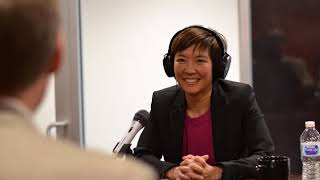
In this episode of the "Living a Life in Full" podcast, host Dr. Chris Stout interviews Dr. Janet Lin, MD, MPH, Director of Health Systems Development at the Center for Global Health, University of Illinois College of Medicine. Dr. Lin shares her multidisciplinary journey—from a bilingual upbringing and a biology/ French undergraduate degree at UPenn, through medical school, emergency medicine residency, and an MPH integrated into her fellowship—to her extensive work in global health. She discusses her roles in emergency medicine education, the International Emergency Medicine and Health Program, and the Global Health Fellowship. The conversation delves into specific field projects: a community‑engaged disaster risk reduction training program in Haiti that evolved into a locally run organization; a health‑promoter network in indigenous western Guatemala; a health‑system assessment and quality‑improvement work in Uganda focusing on malaria diagnostics and antibiotic stewardship; and emergency‑care capacity mapping in Kenya. Dr. Lin explains how she leverages business principles and an MBA to create sustainable, socially‑entrepreneurial models, including marketing the Haitian program to tourism, hospitality, insurance, and construction sectors, and expanding to other Caribbean islands. She highlights interdisciplinary collaboration through the Midwest Consortium of universities, the importance of local partnerships, and the challenges of communication, cultural humility, and fostering dissent in global health work. Finally, she offers advice to aspiring global‑health professionals, emphasizing passion, openness to diverse pathways, and effective communication.
Chapters
Living a Life in Full is a conversation you always wanted to have with that person who gave an amazing TED Talk or the author of one of your favorite books, or that inspirational Olympian you always wanted to know more about. It's graduate level conversations with those making a difference in the world and in the lives of others. This show brings you new ideas and approaches so that you can live a life in full. I'm your host, Dr. Chris Stout and I hope you enjoy this episode. This episode of Living a Life in Full is brought to you by my publishers. Some of you may know that I started a non profit center for Global initiatives about 10 years ago to do global health and humanitarian work. And if you're longtime listeners to the show, then you know that a number of our guests have that as a common thread. Humanitarian work or global health or or a combination of the both. So a nice shout out to the publishers of these three books which I'm going to highlight. All proceeds of royalties will go to supporting the center for Global Initiatives. So if you're interested, hopefully you'll get a good read that you can enjoy and also do some good by sponsoring the work that we do through the center for Global Initiatives, which you can find out more about that work@centerforglobalinitiatives.org the three books are the Humanitarian Field Guide, which is a very quick and easy put it in your pocket, take it along with you kind of guide the New Humanitarians, which I did some time back looking at about 45 different organizations, each chapter being kind of an in depth interview of them of how they started, what their work is, what their wins were, what some of their losses were, and how to kind of start your own depending upon whatever space that's in. We have three different volumes of that focusing in three different broad areas. And then finally, and most recently is why Global Health Matters. We have a website dedicated specifically to it so you can go there and learn more about it or order it, which is called whyglobalhealthmatters.org and we're very thrilled. It's an edited work and the forward is done by Jody Williams, who is a good friend and as you may know is a Nobel Laureate for her work in landmine issues vis a vis winning the Nobel Peace Prize for that back in the late 90s. And it's a edited work of 60 individuals who are just really experts in their areas and the United thread through all that is focusing on global health. So please take a look, go research them, look at those websites. You can buy them at your favorite bookseller or online through Amazon.com in paperback or hardcover or some of them. I think New Humanitarians is hardcover and Kindle or digitally as well. So take a look. Thanks very much. Welcome to another episode of Living a Life in Full. I'm your host, Dr. Chris Stout. I'm very excited today to have a good friend of mine, Janet Lynn, on the show. Janet is Director of the Health Systems Development at the center for Global Health in the University of Illinois's College of Medicine. She's also an Associate professor in the Department of Emergency Medicine and has an affiliate appointment in the Division of Community Health Sciences in the School of Public Health. She serves as Director of the International Emergency Medicine and Health Program in the Department of Emergency Medicine and the Global Health Fellowship Program, which trains postgraduate physicians to be able to practice and do research in a variety of international settings, providing access to health care in rural settings, teaching medical skills to developing hospitals, and providing humanitarian assistance and emergency medicine development within a framework of public health. In addition to clinical, educational and administrative responsibilities within the College of Medicine and the University Medical center, she founded the Chicago International Medicine Society to build collaborating relationships amongst healthcare professionals doing global health work in the Chicago area. She's earned certificates in tropical medicine and has consulted on global health issues. Her work has led her to pursue activities in Latin America, Africa and Asia. She has conducted ongoing work in rural western Guatemala, working with local health promoters and a clinic providing medical care, education and research. She coordinated emergency medical response following the earthquake in Haiti in 2010 and continues to be involved in the redevelopment of medical education and rebuilding of health care systems in Haiti. Work in Africa has been primarily in remote hospitals working with large HIV and TB populations. Other activities have included providing education and curriculum development for various initiatives throughout the world, specifically China, Tanzania and Southeast Asia. Dr. Lin has led multidisciplinary teams which include nursing, public health, medicine, business and engineering to various parts of the world in order to improve access and the provision of care in resource limited settings. Dr. Lin is one of the founding core faculty at the center for Global Health. In addition to being a member of the Global medicine program faculty, Dr. Lin has been recognized locally, nationally and internationally for her service and education. She's a recipient of the University of Illinois's Excellence in Teaching Award, a merit based award for tenured faculty recognizing academic distinction. She served as Chair of the International Section of the American College of Emergency Physicians and is the Secretary Treasurer of the Illinois Chapter of the College of Emergency Physicians and most recently and I've not been able to congratulate you on this up until now in person. But Dr. Lin won the Emerging Innovator Award for her role as principal investigator of Project Heal, which we'll do a deeper dive into. Welcome to the show.
Thank you, Chris. That's like a little historical perspective. I'm like some of that stuff I gotta change.
You remember doing all that stuff. So. And I was just mentioning that I think we have the center for Global Health and I was just talking with Tim Erickson yesterday, but I think it was him and the center that gave us the opportunity to meet. Is that right?
I believe so. If we haven't met even a little bit before that.
Okay. And I think. I don't know if it was before that or after that, but you very kindly invited me to speak, I think was to one of your classes. Was it the MPH students?
Correct. It's the Global Health Challenges course, which is one of our global health concentration courses. Courses that is required for students that are in the master's program.
Gotcha. Great. I was so. I remember being so nervous about doing it. So you were so nice and gentle. So that was. That was most appreciated. So you have in my doing your background research, really an amazing cv. It's just. It's really inspirational I think and I want to unpack it a wee bit. So correct me if I have any of my facts wrong, but UPenn for undergrad and that was biology and French.
Correct.
Which is that a typical combination back?
I don't think so. Biology was very common. Obviously almost every single pre med student was probably going into some sort of basic science course or major. What really drew me towards French was I actually started learning French when I was in second grade. Really not by choice. I grew up for several years outside of Detroit in a town culture in Michigan and they happened to start languages very early on, which was second grade. We didn't have a choice. I got put into the French class. I learned my numbers and my colors and then we moved to Chicago. So we didn't have. They didn't start language until a little bit later in grade school. But then I started it in fifth grade. And at that point you had a choice between French and Spanish. Most years people that chose French, there weren't enough people to actually conduct a French class. And so everybody went to Spanish. I was fortunate that year that there were enough people that wanted to go into French. So I actually started really formally studying fifth grade and then continued it through junior high high school and then ended up doing French in college as well, gosh.
So what's the combination then of biology and as pre med was the idea at UPenn to get into med school?
I think I always had that idea. But one of the things, for me, I think, it still holds today, is that while I am a physician, I'm very much within the health sphere. I am very interested in kind of seeing what are the different perspectives, how else do other people see health from different lenses? And I think French for me was a way for me to look at culture, see how language actually plays into not only just communication, but how people live and how do people kind of share their knowledge. And so for me, French or just languages in general, I think is a very important component of that. And we see that every day. Even in just your regular clinical practice at the University of Illinois, in our emergency department, we probably see about 30% Spanish speaking only. So while I don't use my French very much, it has actually allowed me to learn Spanish pretty fluently. So now I'm a much better Spanish speaker than I am a French speaker at this point.
Just because of familiarity then, I guess.
I mean, it's what I use. So I always tell the story to students, you know, when I first started, because. And even patients that come say, how did you learn your Spanish? And I said, well, actually, I studied French and I used to be completely fluent. I used to write papers and whatnot. And when I first started, I would try to speak to them in Spanish, but it would come out in French. Now it's the opposite. So if I try to speak French, it comes out in Spanish.
Gosh. Well, I have a hard enough time with English, so I really think that's. That's amazing. Respectful. So were your. Were your parents or other family members into other languages?
So growing up, I guess I. You would consider myself of first generation. My parents immigrated to the US for education. I mean, I was born in the US and when I first grew up, my first language was not English.
Wow.
It was Mandarin Chinese. And my parents realized when I got into preschool I needed to learn English.
That's gonna be a challenge.
So they transitioned into speaking in English. But I think if it's because of that, I don't necessarily know, but I've always retained, you know, language. So I can't read or write Chinese, but I can speak it conversationally. And so I think that was gravitation that I had in general. So, I mean, even if it was, you know, was French, I kind of got put into a class, but I really loved it. I Mean, I loved kind of learning about the culture, learning the language.
You hadn't had much English under your belt by second grade to then start getting into French, right?
Oh, well, when you're a preschool student or that age, I think you're a sponge. You learn languages pretty quickly. So, I mean, what was that, three, four years old and then. I've never actually even thought about that. By the time I was second grade, I don't think it was that big of an issue.
Interesting. Yeah. I do appreciate the plasticity that people have. It's amazing to me. I grew up in Dallas for the first part of my childhood, and a lot of Spanish speaking there. My mom spoke a little bit of Spanish, but never any formal classes or anything. But it's sort of interesting, kind of just what you pick up and other circumstances where it just sort of comes out. So I just think that's fantastic. So then medicine and then emergency medicine. So tell us about the draw into that.
So I think for a long time, I mean, I kind of always known, and some of it may have been kind of family a strive for excellence in education, that I've always had that kind of seed planted in my mind that medicine, being a doctor is something to strive for. That's always been in the back of my mind. But what I think really attracts me to medicine, especially when I reflect upon it today and thinking about biology, French, what were the things that really grasped my attention? And some of it is actually the culture side of things. It's understanding where people are coming from and kind of understanding the biology of diseases, conditions, why someone views themselves as healthy versus not. And then where does kind of the social science side come into play? So for me, that's what medicine is. It's more about not just learning kind of the diseases, the terminology, how to take care of someone, how to treat someone, how to identify that, but really what are all those interactions? And that was really, for me, what medicine is. And in determining emergency medicine, I think that was an interesting path. I went into medicine really loving working with my hands. And so I think a lot of the spatial type of things really is interesting to me. I like working and kind of thinking through puzzles. And so most of my medical school career, I thought I was going to be a surgeon using my hands, doing whatnot. And I remember when you started the clinical rotations, I think one of my first clinical medical rotations was internal medicine. And we had, I think two, three months of internal medicine and the interns who were on my service that I learned from Were were emergency medicine residents. So I remember joking with them. And in my naive medical school mind, I'm thinking people tell you, well, you should, whatever you want to go into, you should be very comfortable with the day to day, the bread and butter. And I thought, you know, I thought of emergency medicine as chest pain. I don't really want to deal with chest pain all day long. I want to use my hands. So I would joke with them saying, look, I have no desire to be an emergency physician. I don't want to have to deal with chest pain and abdominal pain all day long. And it was really kind of funny because as I went through, I mean, almost to the very end of my fourth year, I thought I was going to be a surgeon. I had actually set up, you know, away rotations, audition rotations, tried to find kind of the leading trauma surgeon. He happened at that point in time to be at Oregon, arranged an organ, you know, surgical rotation. The earliest was in August, so I had that gap in July. But at the very end of my medical school clinical rotation thing, I had to do a pediatric rotation. And part of that pediatric rotation had a week of spending a week in the emergency department. That was when I started thinking, well, maybe this might be of interest. I really, really liked it. I mean, you could see you can use your hands, there's some procedures. I liked having to think on your feet. I like the fact that people presented. The undifferentiated patient was a puzzle. So you kind of had to kind of piece together things and be comfortable with not necessarily having all that information. And I liked that. So based on that one week experience, because I had that gap and I don't think emergency medicine was quite as popular as it is now. Set up a clinical rotation for my, you know, my first fourth year rotation in the emergency department.
Wow.
The first day I set foot, I knew I was like, yep, I'm going to be an emergency physician. This is great. And I took a little bit of step back. I was like, well, what am I going to do about this surgical rotation? I don't feel right going and trying to ask for, you know, this letter from this well renowned person. And it turned out great because then you kind of draw the connections well, you know, trauma very much. There's an emergency medicine component to that. It allowed me to actually see the emergency department at Oregon Health Sciences. And so it actually turned out great.
Wow.
And I remember seeing those interns who were then now my seniors when I went through and they just laughed at me. But they're like, we knew it. We knew it from the beginning.
Just took you a while.
But I don't regret it any bit.
Gosh. So. And to me, I also think. And I'd like your thoughts about this, but I think there tends to be, like, in the Venn diagram of international global health kinds of things in emergency medicine, too. Right. Because oftentimes there's certainly lots of puzzles in global health. There's certainly lots of. I mean, I guess in a United States hospital, you have lots of resources available to you, but you're sort of more resource starved in other places. So was the emergency department a harbinger for global health, or was that also something that you had had before that?
So I had no idea that global health or international emergency medicine really existed until I started emergency medicine. And even prior to this, I had the language component, I had the biology component. In undergrad, I had the opportunity to spend a summer in Panama, and it was more tropical ecology. It was a lot of field work, if you. We were stationed at the Panama Canal, where the Smithsonian Tropical Research Institute was. And I studied two things. I studied spiny rats, spiny rats, and I studied butterflies.
Okay.
Sound like two ends of two very different things. Two very different researchers with whom I worked with the butterflies was kind of more of an independent project. The spiny rats was because of a researcher that was down there, and I was intending to stay the rest of the summer. And we looked at foraging patterns of these rats on the different islands in Lake Gatun. And my question was really looking at, well, do the foraging patterns of these spiny rats play a role in the diversity of the plants of each of the islands?
Wow.
Didn't really go very much apart, but it was kind of an interesting thing.
You like puzzles. Wow.
So when I found out that there was kind of an international emergency medicine thing, fellowship opportunity, I was like, this is great. I can like all these things that I kind of had bits and pieces of language, this kind of travel component, the biology side, the medicine. I was like, this is the best way you can combine everything.
Yeah.
And I do have to hearken back. You mentioned, you know, Tim Erickson. Well, I think Tim Erickson and Mike Van Royan were two very early people that were the ones who shared with me the fact that there was something like this. And so I do have to kind of, you know, applaud them, for one. Knowing how to actually draw me in, I suppose, but really helping to shape, I mean, my career currently.
That's great. So Tim and Mike had done residency At Chicago, at University of Illinois at Chicago. And then what's the trajectory with you then getting involved in and. Well, first I want to get to global health. But with your mph, was that simultaneous with your md? Was that post md?
It was post MD So MD residency and then as part of the International Emergency Medicine Fellowship program, and we still do it to today, is that you get your MPH through your fellowship.
Oh, perfect.
So that was a lot of it. And having been the director for it for. For 11 years, I recently stepped down. I think it's a really important component of global health because public health serves the foundation of all of the work that we do, whether it's in the humanitarian sphere, whether it's refugees, whether it's development, if you're thinking about. If you're interested in nutrition, if you're interested in any component of it.
Violence.
Violence, exactly. I mean, almost any health issue that you talk about today, the foundation in that is. Is really public health. And all too often, as clinicians, sometimes you lose sight of that. What I see in the emergency department is I look upon the emergency department as almost like a petri dish for public health issues because it's very easy to kind of get bogged down into, you know, they're coming into the emergency department for ridiculous complaints, what not. But then, you know, especially now, I think we look upon, and many people do look upon the emergency department as a safety net for. For those people that otherwise don't have.
Sometimes it's a proxy for primary care, too, right?
Exactly. Exactly. And so when you look at it from that lens, I think it opens up a lot of opportunities for what. Not only what emergency medicine and emergency departments do, but what emergency medicine specialists can do. And I think that really does translate into a lot of the work that I do, whether it's international or local. And really thinking about while we are providing an access to care and we're hopefully improving the delivery of care in some way. And I mean, we're recognizing there is some sort of a resource limitation, whether it's coming from the patient side, whether it's coming from the system side, whether it's coming from a knowledge side.
Well, and you can see resource limitation, you know, in Chicago's backyard, too. I mean, the aspect, like the point of like primary care because, you know, insurance issues or. I was on the board of health in Lake county for a number of years and through issues of just undocumented immigrants being nervous about going, you know, when things kind of change politically and then not getting any kind of healthcare until it's, you know, something becomes very dire. So I totally agree. I think the aspect, I like your, the point of like petri dish back to your biology of, of being able to see what are the kinds of things that are growing and flaring up by virtue of whatever kinds of social, political, systemic things that exist or don't exist. So then, with your background, as we were just chatting before the show started, you're now also working on finishing up your MBA as well, at University of Chicago.
Correct.
And the draw for that was Glutton for punishment. Great.
That's what most people think, right? Either that or I'm going to be the perpetual stuff student. It's actually been many, many years since I've actually been back in school, but it's something that I've actually been thinking about prior to this for several years. And I might point the seed to two people. One is my husband, who also has a business background, but the other is a colleague of mine. When I started sharing, I was actually at a dinner and shared a presentation with actually at the time, time, the dean of the school of business about kind of work in Haiti that I've been doing. And he was intrigued and he's like, well, I don't see why you couldn't kind of bring in some business component to this. Never really thought about it that way, but got connected to the executive director of the Social Entrepreneurship Institute at uic and we really connected. And with this Haiti program, which was really a community engagement disaster risk reduction training program, really trying to tap into community resilience factors and provide kind of at least the knowledge and some basic skills to understand not only disasters, but how do you actually reduce the effects of disasters? And kind of flipped it a little bit. You know, we're always constantly thinking in the health sphere, well, how do we actually fund a program? How do we actually make it so sustainable? And all too often we think about, well, it's donors if we have grants. And a program not always, but lives and dies by whether or not you're able to secure a grant or not. And so it got us thinking, well, how can we flip this paradigm a little bit and really effectively what it kind of switched to a little bit or pivoted to was thinking about, can we actually market this community engagement disaster risk reduction training program as a small business and then use that as a way to make it financially sustainable? We have a cohort of community leaders who have now demonstrated the fact that they can train people they've, on their own, have trained, probably over 400 community members themselves with the program that we actually trained them with. But then can we actually give them some small business skills training to effectively market themselves as a small business that trains different entities on risk reduction? So we spent one summer, I had a grad student in, an MBA grad student and an MBH grad student who spent the summer really trying to identify one. What are those industries with whom this might be actually beneficial and also determining what's the value proposition then for each one of them. And so we identified these different industries.
You don't typically talk about value prop in medicine.
No, exactly.
Unless it's pharma, but yeah, exactly.
And so we saw all these. We identified the hotel industry, restaurants, so tourism in many ways, but also telecommunications. Insurance, though very rudimentary in Haiti, but it still does exist. Construction companies, especially, you know, post earthquake. There's a lot of economic development towards rebuilding. And also other organizations that are actually doing kind of the work that we do. Could we actually. Is the value proposition to them is that these leaders actually could serve as consultants to actually train people. So that was kind of, you know, ingenious.
That's great.
Wow. It's a work in progress. We've been able to provide marketing skills to them and we were hoping to actually get them enrolled in an entrepreneurship camp, which is now delayed. But despite that, even one marketing skills kind of mini camp that they got, they, the group, their name is Dietrid, was able. They were able to secure actually training just last week. So they trained a community member after I think, a series of fires, and they were asked to actually train the community. And in June, which is what they're really excited about is they're actually training a university, a local university in Haiti, and they actually secured all the funding for it. So it's really kind of amazing.
That is great.
But I guess to get back to your point about mba, so where did this start? Well, it kind of started there just thinking about these are these opportunities you have people coming from a very different perspective and are there ways of us kind of leveraging that? And what I see for myself personally is not only I feel like we need to learn a little bit more about business principles, but also leadership. I don't think we get very good formal training in leadership in medicine. So that's one side. And the other thing for me, which is a little bit of a pie in the sky idea or aspiration, is really, you know, when I start thinking, how can I combine these skills? So the skills of clinical medicine, of global public Health and then business acumen to really have an impact. And so it got me thinking, well, you know, what do we as clinicians and health professionals are always seeking for is funding. But could I, with these skills then kind of pivot myself in some ways to be on the other side to actually help foundation organizations? Actually, I wouldn't say dictate, but guide where should funding actually go? So of course that would be of appeal to a corporation where someone actually has the business acumen, but then also the street knowledge and the street cred to say, you know, I've been in the trenches, I know kind of what these other issues are. So that's kind of like this pie in the sky type of thing is, you know, know, is there some way to kind of stay within health but pivot it.
Yeah.
And utilize the business skills?
I think that's so great. I mean, it seems like, you know, you should have a lot of life skill credit, you know, coming in if U of C accepted such things. Because I mean, you've held so many different leadership positions, have you? I know you're just midway through, but what kinds of things have you seen or might you do different leadership wise or what kinds of. Have there been models or how does that, how might things go differently now that you've had a bit of that under your wing?
I think some of it's process. I mean, it's understanding the process. You know, I think people always debate, you know, are leaders created, are they born? Yeah, the classic, you know, the classic type of thing. I think it may. It's probably a combination of both. I think there's definitely skills that people can learn to become better leaders. And I think that's very important. I think what's really important is just understanding how do other people think so that you can actually optimize your leadership. I don't, you know, I think that's the greatest skill. And then the other thing is just kind of getting perspectives from people completely outside of your industry. People that aren't familiar with you. I'm not familiar with a lot of other kind of industries. Oil and gas.
Yeah.
Real estate, even finance. I mean, to me finance is just this big bubble. But I mean, now, you know what, I just took a finance course. I'm in a finance course right now. So it's really having that understanding and what you end up seeing is more overlap and it's a language, it's a different language. But then you realize these are the similarities, these are differences. This is how I'm supposed. This is How I can communicate with someone to actually get the message across. And I think that's actually really important from a leadership standpoint. And if you're looking at it from a healthcare standpoint, we know how to talk amongst each other. People will, even if we don't complete a sentence, people kind of know where you're going. What you realize is someone coming from a very different perspective, they have a different understanding of what we know. And so really understanding that language and how to communicate is just as important. How do you actually position yourself is just as important.
Do you in your cohort, are there other physicians?
There are, there are, there are 11 other physicians, which is actually, I think the most that they've actually ever had. It's growing.
I think that's a good sign. I mean especially I like your point about, you know, historically the model, the paradigm is, you know, external funding, you know, from, you know, an award or that award could be private donors, could be, you know, whatever, grants and things like that. But the sustainability aspect of it, to kind of even start off the bat with ROI and making decisions and determining what kinds of resources to be able to be used is a wonderful model for the kinds of things that locally or globally. I think that's fantastic. It sounds like your early returns are very promising as well too, I hope. And you also have a very solid thread. I think a lot of folks at UIC share this skill set and you in particular of really a research focus and a data driven focus. Do you see parallels to that too with the school of business?
Definitely. It's different because I felt like some of these subject matters I've never been exposed to and learning kind of a new data set. Especially more and more today with marketing. A lot of it's data driven. Social media has a big influence on that. But all the data that big data that people are able to connect and collect, I think plays into that. I mean there's the same research terminology that people talk about and it may not be exactly the same language, but they have talk about methodology. You talk about how do you actually collect the data and then what do you need to do to analyze the data. Stats are stats, stats are stats and research methodology is actually the same. So I think it's definitely applicable.
Yeah, I've really seen that too as things have changed. So Haiti, do you speak Creole as well? I wouldn't be surprised.
I speak very conversational. I can say hello. It's French based. And so this is where I've actually had to resurrect my French, where I run into that when I try to speak French, it comes out into Spanish. That's when I'm actually in Haiti. And so, yeah, and it's hard to. Creole is interesting because it's very much a phonetic language. If you try to read it, it's a little bit difficult to read because it's phonetic, but you sound it out, you're like, oh, I know that word because it has its root in French.
I see. All right, so and then in Rwanda, because it seems like, you know, you've got. You've got Haiti, you got Guatemala, you got Rwanda.
I mean, Uganda.
Oh, Uganda. Thank you for the correction. All right, so Uganda. So to step us through, I want to hear about both Guatemala and Uganda.
So, and this is where this historical thing I am currently. Most of the work that I'm doing is actually Haiti and Kenya now. Okay, so Guatemala was really, I would say, the formative work that I did. And Uganda was also, you know, really another kind of rural medicine type of setting. But Guatemala, how I got introduced with that was really working with health promoters. So where we worked was in an indigenous part of Guatemala, the western portion. So mostly Mayan, A lot of people were not Spanish speakers, but indigenous Mayan, but worked with a health promoter network that was started by the Catholic Church. But how we contributed, and I think what was so important is not necessarily the fact that we were providing care, but we were actually lending some legitimacy to the health promoter network of lay health people that were given kind of the basic health skills to actually extend care to villages that otherwise didn't have access. And so that was really kind of my formative foundational work. And after the Haiti earthquake, I responded as emergency responder, did acute disaster response, worked with an international organization, but after that, having seen the people suffer, but also see the resilience of the people and the fact that these are some of the most enduring and in many ways positive people I've actually ever met. Really wanted to go back, and it drew back from a lot of this work that's more rooted in the community and so went back to Haiti. And that's kind of how the entire this community engagement disaster risk reduction program started. It started a little bit in spits and parts because the first year we went back, we worked with an internally displaced camp, which turned out to be the largest Haitian run internally displaced camp. And so we provided some health care to that. And that was literally about a year after the earthquake. We were hosted by a parish and there was a clinic on site that was Run by Haitians. And there was a hospital that was half built where MSF Doctors without Borders, had actually stationed themselves. But about maybe a week, two weeks prior to us arriving, MSF pulled out. And so that was kind of empty. And the Haitian physicians were still running the clinic. And so we provided care. As a result of kind of the reality of Haiti, we wanted to potentially go back. We couldn't. That camp got disbanded. But I made contact with the key, the head physician, and he became a very good friend of mine. I brought him that following year to Chicago for three months for a visiting scholarship. But then we ended up returning to his neighborhood. And he wanted to, after that, start kind of a small clinic in his neighborhood to provide care. And so we based ourselves there and to introduce ourselves, but also to get ourselves kind of acculturated to that community. We ended up doing a community disaster preparedness assessment. So we interviewed about 162 households in that area just to get an understanding of two years since the earthquake. What kind of disaster preparedness had these people encountered, seen, experienced from an individual level, from a household level, from a community level. And then in addition to that, we actually interviewed people from the local mayor's office and then also people from that clinic.
Wow.
And that actually, as a result of the findings from there, we saw two things. One was that not that much had actually happened in a formal way. There's a great desire to get education, training. There are a lot of different resources, but not kind of connected in any way. And it's really hard for people to tap into. So those are kind of the frustrations. But on the flip side, what we saw was that there was great family support and social support. And so utilizing that information, we effectively created this community engagement disaster risk reduction training model. And it was what they call kind of the community based participatory research, because it really was created not just by us alone, but really with the community and going back and forth and seeing what worked, what was appropriate in their community, iterating to. In iterating. So it took us about three years to really get to that training program. But then after that, we were able to at least one, test that for kind of knowledge acquisition and acceptability of the format, which was positive, and then subsequently replicated it in another neighborhood, so still in Port au Prince, but a slightly different neighborhood with a slightly different cohort to make sure that it was replicable, generalizable. Yeah, yeah. And then did that again. And then that's when we started thinking about, well, how do we actually Scale this up. And so we, through that we've been really able to grow that. And you know, the group that we have that was, they were one of our first groups and one of the first groups that we even tested the activities with, but they just kind of stood, stayed along with it. And within our training program, at the end, it's modeled after kind of a three kind of module approach where the first part is defining kind of the issue. So for us, disasters, what's disaster risk reduction, what do all these terms mean? The second component is really thinking about identifying assets and resources that are already inherent in the environment in which you live. And the third component is trying to figure out, well, now that you know this, what do you do about it? And one of the key features of the, of that third component is that they're all required to actually create what we call a next step action plan. And so at the end of this training, they have to go through this exercise where they identify, now that they've got this training, what are they going to do about it? So they have to identify with whom, what are they going to do, how are they going to do it, the who, what, where, when and why. And so this one group, as part of their thing, I would say, most people would say, I'm going to share it with my family, I'm going to share with my neighbors, maybe I'll share it with my fellow students. But this group said, we want to form an organization and we want to train our community members for this. And this is this group that basically within that year, they formed an organization, got themselves registered as a national Haitian organization, drew up a constitution, elected their president and whatnot, and then went on to do trainings.
Wow.
And the first time they actually organized to do a training, it was a little less than a year after they had gotten that. And they came to me and they said, well, can we put a budget and send a budget to you, because we want to do a training? And they said, well, we want to do a training around Carnival. And I'm like, well, why do you want to do this around Carnaval? This seems a little suspicious. And so I had a grad student who was there spending the year there and kind of seeing kind of a lot of this move forward, and kind of asked her, well, you know, what is it that they really want to do? And they came back and explained, well, Carnival, you know, it's a celebration, but there can be a lot, because it's a celebration, there's a lot of people that are congregated in that area. There's oftentimes a lot of violence and people, you know, with the parades, they get into the electrical like wires, they get electrocuted. So they wanted to do the training ahead of carnival so they can educate the community about these risks. So then I heard that and was like, they get it.
Yeah.
Thank you.
Some disasters you can't predict and some you can.
But I mean they grasped the concept and the idea and it's really because of them that I'm still working with them and going back because. Because every time I see them, hear them, communicate with them, whether it's through WhatsApp or whatnot, I mean, they continually surprise me.
That's great. Well, I mean, I think one of the critical factors too is to have those local partners. I mean there's a certain amount of familiarity that you can have in cultural awareness and learning curve and all that. But the fact that they're the indigenous folks and they know what's going on and that they can feel even comfortable enough to you to say, hey, here's the deal. Because I mean I'm sure you've seen it as well too. But I've seen lots of instances. The proverbial west knows best and the hubris that people go of I know everything and I'll tell you how to do stuff versus the reciprocity and being able to truly partner with people to be able to make a change like that I think is critical and it's
amazing to see the other thing too I think is exciting even this year because while, you know, I think it will hopefully continue to grow in Haiti and hopefully we will get a full on entrepreneurship camp for them. But really, you know, it's gotten me thinking about how do we actually make create this as a model and can we actually replicate this and you know, as a first step thinking about what's one step removed. So it's thinking about the Caribbean island nations. So we are hopefully embarking this summer of doing a site needs assessment in St. Kitts Nevis and really with the idea of trying to define the model of how we do this. And you mentioned local partners, identifying a local partner, doing a needs assessment and then from that needs assessment it will inform how do we actually make sure that this training program is contextually specific and appropriate and then deliver the training program and then try to identify community leaders from that and then support them.
So I'm, I'm very hopeful when might that start?
So we are going to be going in July. It's with actually A nursing faculty from the University of Illinois. So it's another wonderful, great partnership in terms of really thinking about interdisciplinary medical
school and Saint Kitts too, I believe, and a variety of allied health and things too. So. So that. Would that be a potential partner angle? You'll find out.
We'll see.
We'll circle back in August and find out.
The connection is actually through this nursing faculty who actually had worked in Saint Kitts Nevis with their disaster management cohort complement within the government of Saint Kitts and Nevis. And so that's kind of the connection. And when she reached out and they were actually really very interested in. In thinking about kind of a community engagement model for risk reduction. I think it's on a lot of people's mind when you start thinking about not only recent events in the Caribbean, but climate change, natural disasters. What are some of these skills that we can provide, which may not be oftentimes tangible in terms of you give them a stick or something like that, but really education, knowledge and training.
I'll have to. We'll look it up and put it in the show notes. I need to do a little research to get a precise set or names of people or website. But I know a few years ago there was a nascent developing consortium of psychological associations in the Caribbean as well too, looking to kind of deal with more the psychological first aid and after the event, trauma sequelae, psychological kinds of things too. And it seems like that might be a natural fit with that. I know that they were also doing some things in Haiti and I think now they're having a focus in Puerto
Rico, of course, definitely.
So then how do you go from there to Africa and within Africa, Uganda? Those don't seem supernatural connections that I would think of.
No, no. And I think, and this is when people hear kind of things I do, I think they feel like one. Where in the world are you.
Exactly.
I was going to say where in the world. The link I think really ties down to really looking at systems development and not any one particular disease or location, but really honing in that question of how can we either improve either the access of the. The delivery of care in some sort of resource limited setting. And oftentimes where I end up going is not because, like I said, this is where I want to go, but it's because the connections. And so it's people that you meet or an experience that you have and you feel like there's a connection. And you cannot discount the importance of kind of the local partnership and building that trust and so that's kind of how that happened. Uganda actually happened because of a medical student. And it wasn't even a medical student at the uic. It was a medical student who I think at the time was in New York. She was part of amwa, the American Medical Women's Association. Colleague of mine was the president of American Medical Women's association, said, hey, there's a student who's actually starting this organization. Would you want to get involved? I was like, I'd be happy to kind of talk with her and see what she's doing. She started this organization because she got a small little seed funding from family and she had spent some time in Uganda as an undergraduate and befriended someone there and decided that they wanted to start a clinic because there was no clinic in that area. And so it kind of ended there. And we kind of had this like, let me know, keep me abreast. A couple years later, one of my medical students at UIC comes to me. She's like, you know, I heard of this, I met this girl, she just started this organization and she's really looking at this and I really want to be, to help out and do something with it. And it turned out it was the same organization. And I told her, well, you know, I think this would be great. If you want to try to organize maybe like a medical student international rotation, I will help facilitate it. I will be your faculty preceptor for it. And so that's actually how it happened. So we brought along, I think that first year, 10 medical students and then a couple public health students. And we did a little bit of an assessment, we provided some clinical care. And it really became kind of one of those areas where we wanted to focus on kind of what are the public health issues or what can we do, not only just providing kind of medical care, but what are things that will help define what are the needs in that community. And what we moved towards was really the recommendation of trying to identify effectively health promoters. And so kind of the health promoter network to kind of reach out and do that. They call them volunteer health teams and was great to see because as we were there and that was kind of the biggest mechanism and way and need that we could see in this clinic. The government of uganda actually trained VHTs and they were in that neighborhood. So we kind of saw that. So that was really. And then we did a lot of different kind of satellite programs, right, Related to that. We actually did a health seeking behavior assessment just to kind of see what are the patterns of health seeking in an extremely pluralistic healthcare system, you have witch doctors, you have the traditional healthcare system, you have the government healthcare system, private. How do people one seek care? And then one of the things that came out was they. People in the community would say they actually identify clinics to go to based on trust, that they trust that they provide good health care. So that ended up leading us to look at a couple different things. You know, one thing that they had the capacity to do was do malaria smears and to basically use something where it's not just a clinical diagnosis and then you treat, but clinical diagnosis, laboratory basis and then treatment. So we wanted to do almost. We introduced like a QI of just looking at, well, if, you know, community members are saying they go to this clinic because they trust the clinic, well, can we demonstrate from a QI perspective, are they doing healthcare work that is actually, you know, of quality? And so we did find definitely that it was. But it was interesting because with pregnant patients, it's a little bit different, but most of the time the care was, you know, like there was some alignment with kind of laboratory diagnosis and not. It's always a challenge because you don't always have access and people have incomplete treatments, so you don't necessarily know. So we were able to at least demonstrate that that was. Seemed to be good, like it was trustworthy. But as a. As a offshoot of that, what we also recognize there's a lot of antibiotic misuse or. And so like, we talked and then another student actually looked into kind of antibiotic use and use and misuse and why do those perpetuate and what are some of the kind of the social and cultural kind of context in which this actually works? So that student graduated a couple years ago. We're hopefully finalizing that manuscript.
Wow. Oh, that's fantastic.
And so we're waiting to hear about that. But as a result of that, I ended up moving to Kenya. More not so much because of the work, but really about thinking about sustainability again, what are opportunities to build outside of maybe one person, but maybe looking at more at an institutional perspective. And that was really the justification for the move from Uganda to Kenya.
So Kenya is fairly new a couple
years, about three years now. My connection was Bob Bailey from School of Public Health because all of his HIV work, the seminal work that he's done with male circumcision and hiv, Kisumu, Kenya, was the site and so went in with an interest of looking at universal screening for HIV in the equivalent of an emergency department setting. It came back with the people that they're very interested in emergency care capacity building. So we've been kind of doing an ongoing assessment with them to try to map out emergency care capacity at the county level. And so really doing some facilities and kind of knowledge understanding of emergency care at the top three tiers of the public health care system there.
Is there an infrastructure for labs and things like that?
Yeah, I mean it kind of depends, definitely. I mean some hospitals have connections with say like CDC or Walter Reed there really, so they do have a lot of research going on. But then when you get to some of the other public health care hospitals, resources is always a big issue. You know, having access to the resources or the adequate or the appropriate resources is always an issue.
I know a lot of the things that you do are vis a vis training and assessment, diagnosis, treatment. Are there also training for lab technicians and things like that in any of your programs?
We haven't focused on that specifically partly I think, because that's not my area of expertise. But I think when you start thinking about healthcare systems and that's one large component of that for certain, you know, I think most of the focus, you know, right now has been looking at emergency care capacity where some of our strengths are in terms of emergency medicine training, potentially providing some level of training for existing physicians. Have been working with a UK based, well actually it's UK and Kenyan based organization. They kind of started a very basic approach to kind of the acutely ill patient and using that to train existing care providers in these Kenyan hospitals of how to identify sick versus not sick.
Yeah, yeah. Are there overlaps with like emergency. I don't know the vocabulary for this, but like emergency medical, emergency medical medic personnel, kinds of things too. Yeah, Or a first responder. I don't know what the right term is.
Yeah, so I mean, I think there's a lot of different interest. I mean not only from a physician side, but there's also the clinical officer, which the closest equivalent would probably be here in the US like mid level providers. And then you have the nurses and then you have our emergency medical technicians that kind of can serve in that pre hospital area. And then you also have the lay people, so like the first responders that may be laypeople that get some, you know, at least initial recognition, you know, whether it's scene survey, basic hemorrhage control, identifying, you know, fractures or stabilizing fractures and having that training, I mean that's all part of an emergency care system.
Wow. The complexity of that is just mind boggling. And then again finding Resources, getting, getting appropriate training. I was involved with a program for a short period of time that was based in Cambodia. And their model, there's like an expat US Physician who had just sort of kind of taken this on to be his thing. And he was like on a dirt bike and he would just sort of do rounds that would take like about a month because he was always going to these rural spots. And the idea to kind of scale him was that back to the trust issue, which I thought was interesting and so critical that there in these. Just naturally in these villages were midwives. And the midwives were really the trusted health care providers, and they sort of became the de facto health care providers with no necessarily additional kinds of training beyond what was, you know, midwifery. So, and they were very game to, you know, learn more, be able to expand their skill sets and do things. So we had put together some models and trainings and things like that that they could do. And at least similar to what you were talking about, like the quasi first responders, at least to be able to stabilize until they could get the person to another place or until that doc came back around with meds or what have you. So it's, it's really an ingenious, industrious kind of approach.
Right. And it's also, I think, really good resource utilization. You don't need to train necessarily or identify and train new people, but you already have people embedded in that community, which is, I think, the great part of it.
Yeah, yeah. And it's, you know, it's. We haven't really. I don't want to go down a rabbit hole of politics and things, too, but it was interesting with thinking about the cultures and being respectful to it. When we were there, we met with some folks from the Ministry of Education and met with the medical. Like this was Phnom Penh in the medical school there. And it was all, all the education was done in French and the nursing school. All the education was done in English and in the peoples in the areas, it was Khmer. So it's sort of like this Tower of Babel of, you know, trying to have people communicate and do appropriate assessments and all these other kinds of things. And it was sort of like, that was something we had never faced. You know, we didn't realize, I mean, typically one or two, but, you know, three, it was just, just a, you know, another kind of different kind of challenge to learn how to get around and also to be respectful of, you know, just. And, and we've met other people that, you know, spoke fluent Russian, you know, because of occupations and things. And it was just sort of like, gosh, you know, beyond just, you know, dealing with broken bones and bugs. I mean, there's a lot of other kinds of things. Again, that you have to come in with this great respect and, you know, control your hubris or, you know, here's a better way to do it. It's like, well, this is what we have to deal with. Whatever kind of resources, culture, language. So this is probably not a fair question, but. But do you have a favorite project? Is there something where you've really, for whatever metrics you choose that you've had good impact or you just warms your heart? How do you pick?
I don't think I can actually. I mean, I think it kind of. They all have a specific place, and each one is important, which is why every so often I will go. It's like, well, should I actually let something. That's hard and you can't. I mean, and I think you have to learn how, like, there is kind of an ebb and flow to each project for certain. And some of it's, you know, based on the fact and, you know, whether it's right or wrong, you know, in terms of still being based in the US and really understanding kind of what our role is, that I am never going to be the local expert, but. But really what I can provide is some sort of technical expertise and to actually improve that and so that we can actually share that and then hopefully give our partners the skills to then use what they've learned to then actually grow it. I mean, I think the ideal for me is always, in many ways to be able to kind of plant that seed, see it grow, and then just let it grow and see, say, hey, I can take a step back and be proud of it at some point. Or someone might say, oh, that person made. And I can say, maybe at one point I had something to do with it.
That's good.
But it is a big, you know, it's like a very big picture thing. I think emergency care is one of those things. I think one of the nice things is that we're not doing this in isolation. You know, there is a whole movement even coming from who that really started kind of an emergency career systems department. And really thinking about that. And there's been a groundswell of development in Sub Saharan Africa to try to develop emergency medicine. So this is definitely not done in isolation.
That's great.
So that's kind of the other hope. Is there really human resources for Development.
Well, it does seem, I mean, to take it away from emergency medicine for a second to the global health aspect. I mean, even just sort of in our own backyard, I mean, center for Global Health at UIC at University of Chicago, at Feinberg, Northwestern. I've just learned, I was ignorant, that Loyola's developing one. Rush has got one. I know you, Madison, so and just, you know, sort of here. And I think one of the evolutions of seeing how some of these, you know, have been in the past of the silos of that, you know, we didn't talk to one another, and I don't know if it was you and your colleagues at uic, but is there still the events where, like, one day it's at uic, one day it's at ufc, and one day it's at Northwestern where there's like a consortium set of meetings, or does that still exist?
There is the Midwest Consortium, the Midwest component of the cugh, so the consortium Universities for Global Health. And that's starting. That's still ongoing. So annually they rotate locations and it's actually the Midwest, So it incorporates St. Louis, Wisconsin, Michigan. And so they've continued to do that every year. I think it was a couple years or no, probably more than a couple years that it started. But it started out with our Chicago Consortium of Universities that were doing this and then really brought in other, you know, Milwaukee does quite a bit of work. Madison does quite a bit of work. Even St. Louis and actually St. Louis University and Washu really both do work.
We'll get all these in the show notes then, too. That's great. I mean, it's sort of somewhat hard to keep track of those kinds of things. I mean, and that, I think, is also great in the sense that there is such growth and interest and it is so cross, multidisciplinary. So on that note, I mean, it seems like you are such a. I don't know, like, I don't know if you're the hub and there's lots of spokes or what, but it seems like every single project, as I was doing background, you were so integrative with things, you know, I mean, even including, you know, like engineering and, you know, and it's like, I just. I love that because if you start to deconstruct those kinds of things, of course everyone has their specialties in their niche. But if you do that, you know, with blinders on and without integration, be it the culture, be it the services offered, be it the, you know, Ministry of Education or Ministry of Health or Whatever it is, in whatever country it is that you're doing it. What were the roots of that, do you suppose, for you of looking to see these diverse pieces and put them together? Is it back to puzzle solving or how did. Because not everybody is like that, even in the global health system. I think you're a good example of that.
It is a little bit of that puzzle solving. I think that's, you know, when I start looking at things, that's kind of the drive to actually get my mba, to get exposed to other cultures I love, you know, sociology, anthropology, understanding kind of not necessarily the root cause, but where are people coming from and recognizing that's not just one side. And so I see opportunities in terms of how do you actually fit all these things together? They're all influenced. And so that's always been kind of an ethos of mine. Even when, you know, doing kind of trips where you bring students along, it was never just one cohort of students. It was really trying to push that whole interdisciplinary concept. You know, as a medical student, you can learn a lot from a public health student. Public health students can learn a lot from a medical student. But we've also had, I had a high school student come with, no kidding. You know, we've had engineers come with, we've had the nursing. And so you get a different exposure to the same subject matter, but you're really seeing it from very different perspectives. And so I think that's, that's where the richness comes in and I think the deeper understanding of really, what's the problem. I mean, it's very easy to just say, this is the way to go, this is going to be the answer. And then afterwards find out that it's not quite right and then justify how it is right. But I think that's the way I've always approached. I mean, even when I look back at, even undergrad, my biology degree, I opted to take some of these courses that I don't think anybody would want to take. I took a bird watching class that I had to get up at 5 o' clock in the morning as an undergrad in. And that's kind of unheard of when you're like what, 18, 19 years old to go and catch birds in a mist net and tag them.
Not just observe them.
Not just observe them, but I mean, it's things like, you know, like the tropical ecology or taking certain things, just getting a very different exposure. I think it just helps to get a better understanding.
That's great. And I think it also creates Better opportunities for students, better opportunities for great outcomes, because you're not missing. I mean, there's always going to be something, but the more comprehensive and integrative and synthetic, you know, the better the outcome. A couple of last questions. I know we're starting to run long. I don't want to spend all afternoon with you, which would be great. What do you see as really being kind of the most salient challenges in global health today?
That's a hard question.
Big one.
I know it's a big, big question. I am going to get back down to communication, I think. Not just kind of the act of communication, but really being able to communicate not only needs and wants, but the fact that if not done well, it can come off and it can completely derail a program. And so having that. And maybe some of it's about understanding, maybe some of that's about being open to dissent. But really, I think, yeah, communication.
Yeah, that's really a good point. And open to dissent, that it doesn't become either sort of a group think, oh, well, this is, you know, what Dr. Lin thinks, so this is what everybody else needs to think. Or, you know, this is the orthodoxy. I can't go against it.
Or that's.
That's. And that's probably tough, I mean, to, you know, to foster dissent and foster different perspective and opinion when it, you know, exists there. But people, again, out of cultural respect or whatever, to say, well, you know, I gotta keep my mouth shut, but, you know, then it goes off the rails.
Right, right.
So, last couple of questions. What advice would you give to someone interested in doing the kinds of work that you do? I imagine there's different routes, but do they need to be undergrad, French, biology majors, then med school and MPH's and then finally top it off with an MBA?
Definitely not.
All right. Different roads to it.
Definitely different roads. I think the biggest thing is to really reflect upon what is important to you as an individual, if you're able to tap into what is important to you. I think that gets reflected not only in the interactions you have, but in the work that you do. And so having that passion, I think, is really, really important. There's multiple different ways of getting to where I am at right now. And I will certainly not say that my way is the correct way or the right way or the only way, because I know it definitely is not. But I think the line and the string that's common amongst all of those. There's an inherent passion and, you know, really tapping into what makes you, as a person tick that is reflected upon then the work that you do. And it could be, you know, someone else's interest may be health related, but from a very different perspective. Maybe it's from a financial standpoint. That's kind of where, you know, micro financing came out and micro Lawrence seeing something else and having a contribution, being also willing to think outside of the box or being open to ideas. It's not uncommon that someone says something that may mean absolutely nothing in context, but it's whatever that word is stuck in my head and it starts me thinking about, oh, well, maybe I can think about it this way. So being open to different views in different ways. Because sometimes you're set in this and then someone says something and you didn't really think anything of it and all of a sudden you're like, oh, maybe. I think that gets back to the communication side is being open and about communicating. One thing I've learned is that unless you voice your thoughts or your opinions, no one's going to know what you're thinking. And that can't help you try to move forward. But also it may generate an idea in somebody else that can build upon that too. That's great. Great.
I love that. Well, thank you, Janet, just for today. It's just been fantastic. It's a nice opportunity to catch up with you. It's been too long since we've seen each other, so I think it's probably at a Global center for Global Health fundraiser or something is probably one of the last times and I need to get back down on campus more often. So I just always respected your work. This gave me an opportunity to kind of go down some of the avenues that I was always kind of curious about. And I always joke that this show is my opportunity to sort of scratch the itch, you know, ask the questions that might seem kind of, you know, like non sequiturs in other venues. So thank you for that and a chance to be able to have other people here and be, you know, as inspired by you as I am. So thank you for being on the show. Last thing, just if listeners want to learn more about your projects or contribute or participate in some way, what are the best websites or places to try and reach out?
Well, I think websites are hard to keep up.
Yeah, that's true, that's true.
So easiest is to email me. Are you sure you want this?
Could open the floodgates. Are you on socials or anything? Twitter or anything?
So at some point in my whole trajectory, I probably have Twitter, Instagram, Facebook, of some ilk. I just don't. I don't use them very much. The CGH website does have a link to kind of at least the work probably needs to be updated a little bit, but I think that's at least a good starting point. You know, I still say email, even though I may not. If you're, if you're forewarning me, just I will forewarn people, then it might take a little bit of time.
Fair enough. That's good. Well, we'll get all those kinds of details put into the show notes. So again, thanks so much for being on the show. I really appreciate it.
Yeah, thank you very much.
Living a Life in Full is a production of Stout Media, a subsidiary of Gordian Knot, llc. Assistant Gracie Wong Music Dan o' Brien Sam Rude Graphics Larry Newberry Executive producer and host, Dr. Chris Stout to learn more, stop by our website alifeinfull.org for show notes and please recommend us to your friends and leave us a review on itunes. Thanks.
More from Dr.

2025 Mercedes-Benz CLE 450 4Matic Cabrio – Owner’s Views After a Year-and-a-Half as a Daily Driver

The Complete Guide to a Successful Everest Base Camp Trek – Post-Trek Debrief

The Complete Guide to a Successful EBC Trek – Post-Trek Debrief: What I Needed (and What I Didn’t)

What Went Wrong Customizing My New 2026 Porsche Carrera T …and what I did about it!

Coming May 1 At the Intersection of High Performance and Fulfillment: A Conversation with Alisa Cohn

From High Performance to Fulfillment: Lessons in Inner Mastery with Jim Murphy

Coming March 19: From High Performance to Fulfillment: Lessons in Inner Mastery with Jim Murphy

The New Humanitarians Volumes I - III:- Inspiration, Innovation, and Blueprints for Visionaries

The New Humanitarians Volumes I - III:- Inspiration, Innovation, and Blueprints for Visionaries

The New Humanitarians Vol I - III: Inspiration, Innovation, and Blueprints for Visionaries - Forward
