Getting Started (and Better!) In Private Practice - Dr. Chris Stout on PsychBiz
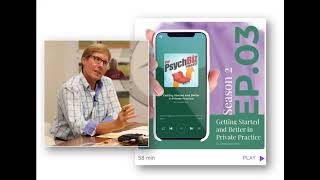
Dr. Chris Stout wrote "Getting Started in Private Practice" to fill a gap in practical business guidance for new clinicians. His second book brought in experts on marketing and technology, while his broader work includes UN humanitarian projects, a LinkedIn presence since 2013, and a podcast called "Living a Life in Full."
Chapters
Are you struggling with your private practice?
Do you need ideas about how to expand and grow your mental health practice?
Would you like to listen to seasoned experts share their successful strategies and story of success?
You've come to the right place. Welcome to PsychBiz Season 2. Welcome to Season two, Episode three of Psych Biz. I'm Howard Baumgarten and it's a privilege and honor to be with you today. Once again, I want to personally thank you, the listener, for your comments, feedback, and really participating in what's becoming a wonderful community of sharing and learning together in regards to all things private practice. So thank you for your participation, for listening, and for sharing about our podcast with others.
We're grateful.
Last spring, Sarah and I came up with the idea that it would be fun to start interviewing experts in the area of practice development, not only who bill themselves as important people who know how to build a strong private practice, but who also themselves have been or are psychologists or clinical mental health people. And so we decided to start this journey and in our last more previous episode, you heard from my friend Donald Altman. Today we're going to hear from Chris Stout. And of course in our next episode, you'll hear from Lynn Grodsky. These three people are phenomenal folks who have been instrumental in my practice development and I'm sure some of you already know of these folks. We sat down with Chris in late spring 2021 and had a wonderful conversation about his endeavors related to humanitarianism, his center for Global Initiatives, his writing and research and podcasting that he does himself, as well as of course, the landmark books that he wrote on practice development. I am so pleased to bring you this interview. You know, Chris is really done so many different things over the course of his career. He's a LinkedIn influencer with over half a million followers. He's the founding director of the center for Global Initiatives and an APA International Humanitarian Award winner. He's been featured in prominent books and magazines and interviews. He's had guest appearances and he has lectured and provided keynote addresses all over the world in his particular areas. So without further ado, Sarah and I are proud to bring you the interview that we shared with Dr. Chris Stout. Enjoy,
Sarah.
I am so excited. We have a wonderful guest on our show today. His name is Dr. Chris Stout and I like to call him my friend. We met a while back in early 2004, 2005. Really a happy accident and we'll hopefully talk a little bit about that. Dr. Stout is an amazing human being who has done so much throughout his long career. I know he has much more time and more career left in him. He is a psychologist, a trained psychologist, author, humanitarian, LinkedIn influencer, and so very much more, including a podcaster. We're so excited that you're here, Chris. Welcome. Thank you so much for being on Psych Biz.
Absolutely. It's an honor. I'm anxious to talk and great to see you.
Yeah, great to see you. You know, I discovered you when you came out with the book that's right behind me, Getting Started in Private Practice. And I think you published that in 2005, if I'm. If I remember correctly.
Very good. Yeah.
I was teaching my course on private practice at University of Colorado and looking for really just a meaty book with lots of techniques and strategies and really good resources. And I absolutely love just. Just how much information you put into that book. And then you later came out with an edited book, Getting Better in Private Practice, and it just really allowed me to build even more resources for my students. And you were gracious enough to, you know, be willing to allow us to use your book. And, you know, I'd like you to share with our listeners, first off, how you got involved in a project like this.
Great question. The genesis of it was sort of an iterative process. I had gone through a professional school program, and the idea of it, while there was a heavy component of academia and research and a traditional dissertation, a lot of it was really sort of focused. A lot of myself and my classmates were expecting to go out and go into private practice or go into some kind of practice. And probably eventually, back in that era with the dinosaurs, you know, the big goal was to go into private practice. And I was kind of always waiting for that class. I had professional issues. I had ethics, I had this, I had that. And no one really kind of talked about deconstructing the nuts and bolts of, well, how do you actually start a private practice? So I, as a lot of people did, you know, apprenticed, if you will, and worked in private practices as an employee, saw experiences by virtue of practicum and internship and postdoc of what it was like to work in a hospital, work in a private practice, and work in different venues. And by virtue of that, you started to learn, like, well, how does billing work and how does marketing work and how does lease arrangements for your offices and all these other kinds of things come together? So that's percolating and moving along. And then, as you know, I like to write, and I was doing a lot of research in a variety of different kinds of areas, and had some books come out prior to this, and had a working relationship, very nice working relationship with John Wiley and Sons and had done some prior work with them. And the. My. My iterative process was as I was also teaching in a couple of professional schools and a couple of colleges of medicine, and I would always try and insinuate the private practice aspects into whatever I was teaching. So if it was an ethics class, then we talk about marketing and we talk about, you know, appropriate kinds of billing. Well, how does billing even work and how does insurance work and how people get there. Some people inadvertently get themselves in the crosshairs because they've inadvertently tried to be good to their patients and get them a cut on their. What their hourly fee is, but find out inadvertently that that's against their contract with their insurance company and who's paying them, and that could be considered fraudulent and nefarious and all these other kinds of things. So there's a big component of risk management to that as well, which I felt was very appropriate. In an ethics class, when I was teaching objective assessment, I could teach people how to score an MMPI and an intelligence test and this and that, but people had no idea how to bill for it. People had no idea, you know, how much does it cost to have, you know, a computer program to SC score your stuff and how, you know, what's a CPT code, what's a CPT code for testing? All these kinds of things. That really, again, the good part of our training, and I'm sure yours was the same, is that you learned how to do the appropriate work clinically and ethically, but you had no idea, you know, coming out of, like, you know, how to manage. So I would give these talks, I would bring it into my course lectures, and I found that students really did like it. So then I started going to outside kinds of talks at our state association meetings and apa, and I'd get good feedback from other people and say, hey, you know, this was good, but I'm really kind of curious about how this works or how that works. So I would keep notes, and then I would add that to my next iteration of the next class and then finally got to the point of just saying, well, I have all these notes. I have all these class lectures. I should probably kind of consolidate this and just make it easy for people and put it into a book. Because I was like you. I couldn't really find a book that was hitting on all the high notes of kind of what I wanted to put together. So I pitched it to Wiley for those in the audience that are interested about writing and things like that. I also. It's actually kind of part. Part of a series. So back in the day, Wiley was very much into series. They have a series on treatment planners that Art Youngsma did. They had a series before I came along on various psychological kinds of tests. I forget exactly what they were called, but there were these small little books that was like a brief few pages, not small, but I mean physically small, talking about IQ testing or talking about personality testing or something like that. And they had a series of 20 some odd of those. So I pitched them with the idea of a series of getting started in. And the first one was getting started in private practice because it was kind of an umbrella. But then I also. There's also getting started in forensic practice that I did with a colleague. Getting started in coaching practice that I did with a colleague. And then Wiley kind of changed directions and they weren't real into the series books. So we went on for a few years with that and then it just sort of died a natural death. And then Wiley came back because thank goodness the book was still selling well. It a nice shelf life to it because it's sort of as, you know, it's one of those basics. It's sort of like, you know, how do you put together this, how do you put together that? And a lot of people coming out of graduate school don't know how to do that. So they said, hey, you need to do a second edition. I was like, oh, I don't want to do a second edition. Because if you go to Amazon and you see there's a first edition and a second edition, you always buy the second edition. And I thought Excel hasn't changed and spreadsheets haven't really changed and accounting hasn't really changed. So there's really nothing for me to say new about this. So I thought I really want to have a companion book where I don't. I'm not in competition with myself. So I said to Wiley, let's keep getting started as is, so people know, you know, about getting started. But let's come up with kind of a cousin that's, you know, getting better at it. So I've already started my private practice. Now how do I get better at it? So as you mentioned, this one turned out to be edited because I thought times had changed and, you know, I wanted to bring in all the different, not all, but a lot of the different kinds of flavors of practice that are out there that I was not an expert in, like sports psychology. So I went out and recruited a friend that was an excellent sports psychologist and other people that were really great at marketing and other people that are really good about websites and digital this and social media that and electronic medical records. So all these kinds of things. I thought I could spend three years trying to research all this and then trying to write about it, but why don't I just tap my friends and make new friends and colleagues to have them write about that and they can be published? They're the great people that then have people reach back out to them and say, hey, I read your chapter in this book. Could you tell me more about this? Could I hire you as a consultant? So we wound up doing it that way. So, long story for a simple question, but it's been a nice run with them and they're still very popular, so I'm very proud of them. And obviously it also creates opportunities for me to meet people like you.
Well, I really appreciate what you said about the two differences, the main differences between the first and the second, because that's why when I was teaching the curriculum at bu, we were using both versions at one point. Because your book, the first Getting Started book that you wrote with another co author was very much the nuts and bolts, like you were saying. And what I loved about what you said in your answer, too, is this whole idea of how do you blend business concepts with ethical, responsible, clinical behavior? And, you know, that's how that was the. That spoke to me a lot because those are the principles that I built my curriculum on and how I do my consulting. And so that became an important part of your resource. And then with the Getting Better series, I think you did a great job of not creating competition for yourself because all these other experts weighed in with different perspectives. And the way I look at that second book is really a series of essays on how to be better at business in private practice. And you're right, there are so many other people involved in that project that folks from my class would go reach out to them or say they like this person and why, and maybe why they like one better than the other. It really stimulated a lot of great conversation in my classroom. And so I'm grateful to you for that. And I know so many people are grateful that you wrote both of these, that you edited the second one. You wrote the first one, and of course, I'm grateful that you wrote the foreword on my Private Practice Essentials book. And hopefully all three of them are so Distinct and separate. Because I do think that when you ask experts different ways of approaching private practice, you're always going to get something a little bit different and maybe even a lot different, and folks need to have different perspectives. Wouldn't you agree?
Oh, absolutely. Yeah. One size fits very few. And again, right back at you with your book. I think it's interesting to me to have something that was just sort of rarely talked about, certainly in graduate school when I was in. And that is so critical because I remember I did another article called but you signed a contract about how to vet a contract and how to look at these things. And there's so many easy ways that you can be just walking down the street and get waylaid by something because you just didn't know the right questions to ask. And it's not that it's complicated, but I think through your work and through the work of the contributing authors, to getting better and to the. The fun I had with the development of getting started just really does speak to how there is such variation and there's different kinds of considerations that play in, and then there's still some fundamentals like the economics of it and budgeting.
Yeah. There's a whole new division within psychology itself that is the business of. Of how we run our clinical work. And I'm honored and proud to be among folks like you who have done amazing work in that. And that's not all you've done. I mean, that's so little compared to so many other things. And I want our listeners to learn so much more about you and how you've expanded your touch on society, used from within all who you are, from the role of psychologist, humanitarian. And so I know Sarah is dying to ask you a question, so I'm going to turn it over to her.
Yeah. So, I mean, just one of the things that we often talk about on our podcast and with our listeners is different ways that practitioners can stretch themselves and try to do different things that might be outside of their comfort zone. And, you know, I think in a lot of ways you're an example of someone who's done that successfully because you're involved in a lot of different socially relevant causes. You're writing the center for Global Initiatives that you founded your podcast, like, you do all of these different things. So maybe you could just talk a little bit about how you've incorporated all of those different things and all of those different areas of focus kind of cohesively into what you do and been able to do so much.
Okay. I don't Know that it's been cohesive, but it sort of feels like it's part of the secret of this is just living long enough and doing a lot of stuff over the course of. For me, it's been like 35 years. So it just adds up over time. But I kind of have referred to and written about being an accidental humanitarian and maybe that's a way to approach answering your question. It never was like I took a class in humanitarian intervention. I didn't. There wasn't a specific direction in that way. But nevertheless, I feel like it's good to have a direction. And for me, psychology personally, I think for a lot of others, gave me a lot of tools where I could go in those different kinds of directions, where I could. There are a lot of times where I was like, you know, quote, unquote, the only psychologist in the room where I could kind of bring in some of my training that might be relevant to what was going on. I also got very active in the American Psychological Association. I got very active in my local, which was the Illinois Psychological association. That then got me involved in political advocacy for patients and patients rights and access to care. Did that on a legislative committee in Illinois that grew into being a federal advocacy coordinator for the APA. And I did that for 12 years. That then got me to the Hill every year we would go and meet with our elected officials and present. And that was kind of anxiety producing. But that then brought in with it advocacy politics, understanding how that whole process, legislative process went at the state and federal levels. A bit of leadership. You were always writing a column about what you're doing. Always encouraging people back then to write, you know, nowadays to use some digital means to reach out to their elected officials and feeling, you know, and feeling good about that. That then grew to. I always had an interest in international kinds of work. The APA has a position for non governmental organizational status, NGO status with the United Nations. Parallel that we were starting our conversation with Howard about the books. I was also writing in that arena with a different publisher with Prager and was elected and made it into doing a stint with the United nations for a year in the late 90s. This is obviously before 9 11. And I was like the first person to go out. I, on my own dime, would fly out to New York every month to the United nations and attend meetings and participate, which was heady and great. So my other publisher had heard about this and she said, oh, I've got a guy you got to meet. His name's Harvey Langholtz. He Works under Mandolin Albright, who was ambassador to the United nations as Secretary of State. Blah, blah, blah, blah, blah, blah, blah. So he and I got together and he had done a book called the Psychology of Peacekeeping. I had now by this point developed a nice cadre of friends and colleagues, kind of more from the psychological side. He is a PhD social psychologist, most recently at the College of William and Mary. And we put together a set of talks around the psychology of diplomacy and then we did collected those talks and then put them into a book. So to your point, it's sort of like all of these different kinds of things. You know, you could kind of focus on it from an advocacy perspective in terms of being active in doing things. You could focus on it from more of a writing or academic perspective of giving talks and lectures and bringing it into the classroom and then, you know, culminating in a book. Once you do a book, then that leads to typically more lectures and talks and things that then broadens out your network to be able to start to meet other people or people that were in your book, then introduce you to their colleagues because they know that you have this focus that might be similar to another friend's and that just, you just cultivate that early on for advice as best as can fit to others. You know, I was always saying yes to everything, you know, to a fault. My worst year, I think was around 1999. I was traveling so much, I flew over 100,000 miles. I missed my birthday, my wife's birthday, my son's birthday, my, my daughter's birthday and my wife and I anniversary. And it was just sort of like it was a bit too much for me and for them. So it's sort of like, okay, I need to kind of tap the brakes. But I think there's a lot of arcs in people's careers, in their work, where you're really, you know, you're grinding it out in undergrad or graduate school or your first few jobs and that type of thing. And then you get to a point where you kind of, you try these things, see what fits, see what doesn't fit, discard it. And I was really, you know, I probably spent, you know, mid career, probably 10 years, ish, trying on these different kinds of things and letting go of some and keeping some on and keeping some on and going, you know, more full, full throat into it. So, so that's just kind of a generic aspect of it. The, the personal side. I like to climb. I'm again like, I like traveling. So one of my goals was to try and climb the seven Summits, the tallest mountain on each of the seven continents. And kind of my first big climb was Kilimanjaro, which is a good starter. And just sort of unbeknownst to me, this is 92. I met a fellow who was working as a porter. Long story short, he and I became just very close friends. And that's ultimately come to culminate in our collaborating over the last, well, since kind of since 1992, but more seriously since probably about 12ish years ago and we helped develop a kindergarten. We continued there. I started my nonprofit help support them. So all of these things kind of, you know, the climbing leads into that, the travel leads into that, the wanting to help a friend out leads into that. And all of those things again with a very nice, wonderful collegial network of people that are willing to, you know, roll up their sleeves and lend a hand. It's just all kind of, you know, have been the seed planting and the saplings that now, you know, are bearing fruit
with, with. With regard to what you said about mid career and having and I was coming Back to the 1999 year, you were talking about balancing personal with work and realizing what it takes to balance something I think a lot of clinicians struggle with is that work life balance. Can you say a little bit more about that and what you learned from that year and how you made some different decisions?
Yeah, it becomes kind of an issue of really making some separations, having a willingness to start to say no to things. It's always very flattering. It's always very much an ego boost when some says, oh, would you write a chapter for my book? Would you come give this talk? Would you help me out with this or that? And if it was something, it was almost like it was probably stretch goals for me with some things where I felt like, well, I could kind of do this, but I really can't do it, do it all on my own. An example of that back to writing that same publisher that connected me with the person with Harvey at the UN they said 9, 11 had happened. So this is right after 99 and all that era of being really busy. And she said, hey, would you write a book, you know, about. You know, I had done a lot of work with children and trauma clinically. And she said would you be willing to do a book on something around terrorism? And I said, well, you know, I can talk about trauma, I can talk about kids, but I can't really talk, you know, about that, you know, in a great way. And she Said, well, what if you edited it? So again, rather than me going back like the getting started or getting better, I'm trying to become, you know, quasi expert or a pseudo expert or a journalist, you know, reading about all this stuff, putting it into a cogent story and then presenting that story, more journalism than. And expertise. I said, you know, well, let me, you know, go back to my network. Let me just, you know, toss this idea out. I did. And you know, people were very interested in doing that. And so then that led into that project. So for me it was, you know, it's there, there's downsides to editing a book too. You know, the herding cats kind of a thing, making sure everybody hits deadlines and all these other kinds of things. But it was one of those things where if I. It was either no, totally to the project or kind of of saying, do it, but I can edit it if you want me to edit it, let's talk. If you don't want me to edit it, then it's going to have to be a full stop no. So kind of slowing down in those ways and having more of a willingness to say no really then causes you to have a focus of saying what's really important to me, what are my priorities? What are the things? And some things could be a priority, but just I didn't have the bandwidth to do it. So I would have these sober conversations with my wife and say, hey, there's this thing. And she's a psychologist too, so she gets all this stuff. So what do you think about that? What should be, should we be doing that? Should I not be doing that? And we didn't always agree, but it was very good counsel, pardon me, to be able to kind of suss those out. And the meta process of that then I think sort of helped me have a framework to say, well, what is important? What's coming up in my life? And also life happened during the 2000s. My wife, we've lost both of our parents and I had a big climb planned and my wife's mother had a heart attack. So I was like, well, I'm not going to go on that climb, you know. So again, it goes back to what your priorities are and willing to, you know, kind of set your values and do your best to not, you know, waver from those. And at the end of the day when you look back, you go, okay, well, you know, I can always figure out a way to climb again. But you know, this is, this is important. This is where I really need to devote my time and effort.
Wow.
It's interesting because I think you have to have a long term vision, an availability to, even though you may not know exactly where that vision is going, an availability to the people you serve. And then you have this whole other life, this personal life that dictates choices that are made. And I think when you're running the show and you're the owner of your own company and mental health, which is, is you own, I don't know how your ownership works, but you own several different projects. And what's interesting is that you have to be able to make decisions on the fly that are very important. And I think clinicians, you know this, Chris, they're trained to think a certain way in graduate school. And so a lot of fear comes out of that training. Like what happens if I color outside the lines? Right. And I know that you, you probably color outside the lines more than just about any clinician, trained clinician that I know. How in the world do you do that? You seem to do it fearlessly. And so what would you say to our listeners who might be fearful about even just broaching, going over that line, you know?
Yeah, I mean, I am certainly. It's nice of you to say fearless, but it doesn't feel that way. So. So thank you. That's not what my experience of this. I guess I get, you know, impassioned about things, but man, I am super, super cautious about the stuff that I do. I have been sideways in quite a few international experiences where I've sort of been, let's say, caught in a country or I've had a border crossing that's not gone well or we've been, you know, approached by someone that's heavily armed and situations when it's something kind of more domestic and back home, it's, it's the, the risk. You know, I've always had like a very strong risk management you of perspective when you do humanitarian work as a psychologist. Part of it, part of my humanitarian work has been in structuring things and building things, like helping create a curriculum for a kindergarten to create in Tanzania that gets vetted by the Ministry of Education. So I'm working collaboratively as a leader in that with others that have much better expertise in education and the Tanzanian culture and collaborative with people there and with people here domestically. So, you know, those, those kinds of things that you always kind of have in the back of your mind this level of respect of where, you know, it's not a West knows best. There's, there's no hubris you really kind of recognize your place. You're not going to be like the proverbial white savior kind of thing. And there's not a, I mean, you can, you can use the, the ethical principles of psychologists to be able to do that. There's also some, you know, ethical guidelines that are out there. Just finishing up a collab chapter on a book for APA called Going Global. So a lot of these things have been very present. There's a growing literature on those kinds of things. So those help you. Even though I feel like the outside of the lines has been creative in developing things that might not be parochial per se to some psychologists, there's a lot of international and global psychologists that do this all the time and do it better than I do. But to be able to do that with a respect and to do that within an appropriate set of efforts, ethics, guiding what it is you do and what it is you don't do, you know, it's kind of been my guiding light with that and to, you know, to always seek consultation. You know, I've always, as I'm sure with you and a lot of listeners, you know, you have a mentor and I found it's helpful to have mentors outside of psychology as well, in particular law, you know, so the guy that helped me start the center for Global Initiatives is a Harvard J.D. and he, he always has an eye out to make sure that everything's copacetic and good and ethical and tight. And then as long as you're within those kinds of thick lines, then you feel safe and what you're doing is appropriate and proper for people.
I wrote about that in my book, having infield and out of field mentors and the importance of that. I agree. Because it gives you that extra perspective that one needs.
Yeah, you don't know what you don't know.
That's right. You don't know what you don't know. Absolutely. You know, now you're using the platform of LinkedIn to talk a lot about the influence of the pandemic on our global community. And what an amazing thing. I know Sarah wants to ask you a little bit about your use of social media and LinkedIn in particular.
Sure, yeah, Yeah.
I just, you know, you have, you know, LinkedIn influencer status. You have a ton of people who follow you. There's. Can you talk to us a little bit about how you built such a following and kind of how you've approached using LinkedIn as a, as a tool to connect with more people. Kind of what you use it for sure.
I've been with LinkedIn for a while now. Golly Molly. Probably 2013, I think. I mean, I've been on LinkedIn as a customer, user, whatever, for ages, but I was writing a lot and I find LinkedIn's a really good place. Any kind of social media like this, but in particular LinkedIn, where people, you can toss out an idea, you support it. I joke now that it's hard for me to. It's hard for me to write APA style because I'm so used to putting in hypertext links to things and I can't write one paragraph with like five hypertext links not being embedded in it someplace because it's sort of like, yeah, here's my point and here's where it is, and here's my point, and please do click this link because they say even more about it. So that's been kind of fun. And again, back in 2013, a good stretch kind of thing. I don't know exactly how it was other than maybe just visibility in the years of LinkedIn. And maybe I was just a bit of a different voice because I was like a psychologist writing in the, in the healthcare space, behavioral healthcare space, the global space. A little bit of leadership here and there in those domains that I could bring a different voice to it. So that was great. They invited me to be a LinkedIn influencer. And back in the day, this has changed a little bit these days, but they gave you an editorial calendar, so every month there was going to be a focus and there's an expectation that you, you deliver on that focus. So then I sort of felt like I was a stringer, you know, for a newspaper or something. It's like, well, here's this area that, you know, again, back to, you know, the earlier questions of I'm acting like a journalist, you know, because I may not have, you know, particular expertise, but, yeah, I can go out and research it and I can tell you about it, but not from personal experience or anything. And over the years that then, you know, sort of evolved, but it was a good, good writing exercise as well. So then it comes back, what do I want to spend time. There's. There's certain things in the past where I've had these itches that I needed to scratch. I would just, there'd be a topic that I wanted to talk about and I just, you know, I didn't want to wait 18 months or to get, you know, rejections because I wanted to talk first person that I wasn't going to send it to a, you know, peer reviewed journal. And it wasn't a good fit for a peer reviewed journal. So I could post these ideas out and test them out and get, you know, there's comments and people, you know, are very willing to give you a comment especially you know, if it's something that maybe isn't as pleasant as you might be hoping for, so, but nevertheless helpful. So that then kind of helps you formulate your ideas, figure out other perspectives, hear other people's perspectives and points of view. And it's very educational and very growthful. And then over time as LinkedIn has developed, I would try and focus and kind of have more of this niche that was in behavioral health and in research and in global health and humanitarian intervention. And then I would start to do these series because I find myself, I was writing kind of so much it would be like, you know, they like long form but you know, not 10,000 words or something. So, so I'd break things up. So I did one on like the one I'm kind of like topical stuff like artificial intelligence and how it could not be creepy. And then I would do things about. I had like a three parter on, on how a lot of research that we do, we find out later, you know, can't be replicated. And why is that? And you know, just very, you know, I found it just intellectually very curious and kind of freaked me out about, you know, back in, when I was doing my own studies of like, oh my gosh, what was going on. So that's all been fun. And then LinkedIn most recently, as Howard was referring to, has started newsletter opportunities. So I used to, with my center for Global Initiatives, just had, with my email list a newsletter that I would put together on a monthly basis and send it out. So it was, you know, subscribers and it's all free and just, you know, kind of a passion project. But then once LinkedIn did that, I thought, oh, this is a way easier format and platform that I'm familiar with and maybe I can reach even other people because LinkedIn, LinkedIn's got a much larger audience than my email list. So that's been nice. The focus was because I was so concerned about disinformation and problems. And since it's a pandemic, a global pandemic, it seemed kind of a great overlap of what's good science, what's legitimate reporting versus fake news and baloney and bad science, which I've written a lot on on LinkedIn that I could have this newsletter where I would vet things to make sure the sources are good and reliable. Go to town with my hypertext links. If people want to go back to the original sources, give all my citations. This came from Sally Smith, who's at the New York Times or whatever. And do that on a weekly basis. And it's a little tough because if you've looked at them, they're fairly long form, but they're very topical. So it's literally like week to week. You're not going to read something about the pandemic that's a month old. You're going to read about something that maybe you've missed over the course of the last week. And that's really kind of caught fire. That's separate from the followers that I have that's got like pushing. Last check was like around 125,000 subscribers. So, yeah, so that's the kind of feedback that, you know, it's nice to get that traction and it's like, okay. And that's very motivating. You know, if you had 10 people doing it, you know, the amount of time that I put together, do to put it together, I would say, okay, well, this is a nice experiment and you do that too. There's plenty of stuff that I've done that, you know, winds up in the trash bin. So, you know, this is just survivor bias of what we're talking about. The stuff that's publicly available because people see it, but it's having that kind of umph and the time now where I'm at in my career to be able to devote those, you know, that legitimate amount of time. And again, it's this nice overlap of I want to fight against bad science or baloney science. I want to, you know, these are global issues. So I talk about India and I talk about Brazil and I talk about the UK as well as the United States, and I talk about, you know, the different biological aspects of why vaccines are, you know, legit and important and don't have microchips in them. So, you know, all of those kinds of things seem to fit and to me and my head, push forward the message of what the center is. And it's just another tool to have people know this is what our center does. We vet legit science, we share it with the public, we do it for free. You know, it's what we call open sourcing, humanitarian intervention.
That's amazing. And then you also have a podcast, Living a Life in Full, which is like an interview style podcast where you interview people from all different walks of life. So I mean, that's amazing too. Can you tell us a little bit about that and maybe just kind of how it got started?
Sure, yeah. You know, podcasts, everybody's got a podcast. The old joke would be when you were unemployed and had nothing else you could say, well, but I have a podcast. So I think it's matured and ripened a lot over those years. Some time back. And part of it was, again, I'm just like this nerd about wanting to get information out there. If it's journal articles, if it's newsletters, it's giving a talk, if it's a book, if it's a whatever. And there's a long tail, a long lead time to getting a book out, there's a long lead time to getting a peer reviewed journal accepted in the first place. And I've got wallpaper of rejections of the years. But the nice thing about a podcast is that you can get it done. You can interact with people. Like, I'm having a nice time talking with you guys today. It's not like an interview where I'm trying to take copious notes and then get the quote right. And you know, all that iterative process. It's sort of like other than post production, once the interview's over, you're done. You know, like, as you know, we were talking off mic beforehand. But I do some write up about that and post it places. But it's kind of nice to do that. You can be spontaneous this way and then you can share that information. I recently had a guest guy spier on and he talked about something that I've been trying to adopt, which is learning in public. And I felt like, you know, having a podcast is a nice way for me to sound, is to let people know how dumb I am with all the questions that I ask and what I don't know anything about. So it's a magazine style show for people who aren't familiar with it. We have people from all walks of life, from around the world. Very diverse, neat, fun group of people. Most of them still to this day are people that I've known and worked with in one way or another, which is fun and as well as new people, which getting to know them is fun as well. And there's typically some kind of humanitarian thread or philanthropic thread through their work. They tend to be very complex people, which is fun because they, you know, they oftentimes lately it's been because they've got a new book out. But so we talk about the book, we talk about how they did the book I love getting into, like you, Howard, with, you know, the nuts and bolts of how did this book come about? But also, yeah, I like to talk about them and their bios and, you know, all the other kinds of cool stuff they've done for 10 years before the book came out. You know, that's. That's kind of fun. So I find that about you. Yeah, well, yeah. Yeah, but it's more embarrassing for me, so. So that's fun. We drop once a month on the 1st of every month. We're on every platform that I can think of out there. So if you have your favorite, usually you're able to find us. And we tend to go along for them. I love rabbit holes. I love stories. And again, the people are fun and interesting. And then I write it up on LinkedIn and other places with tons of hypertext links. So if they get inspired by somebody, I have show notes on my website so they can learn more about them. They can volunteer and get involved in their projects, things like. So it's again, back to the center for Global Initiatives. It's a way for us to kind of be out there and help spread the word, inspire people, educate people, turn them on to someone that maybe wouldn't necessarily be like, for all of us. I've learned about a lot of people I would have never heard of had I not listened to somebody's podcast on something. I'm thinking, like, why would I have an interest in figure skating? And then all of a sudden, oh, this is fascinating. So we try to be that way and. And again, just opening up for people to be able to, you know, to join us and to, you know, spread the word of whoever's message, if it's getting their book or learning about their nonprofit or whatever it is to help them, to help spread the word.
And the title of your podcast is Once Again
Living a Life in Full. And our website, yeah, if you come to our website, we've got most of them archived there in the show Notes. And it's. The website is a lifeinful, so people are, you know, more than welcome to come to that. Again, everything's. No paywalls, no anything like that, no premium subscriptions. It's just available everywhere, all the time.
Great.
And we'll put all of your information in our show notes today for sure, so that our listeners can find you on LinkedIn and on your podcast. And I know, you know, I read a local article about you, about your accidental humanitarian work, and in that article it says that you are willing to help Anybody that wants to start a nonprofit, you know, for good causes and whatnot. And I hope that our listeners, you know, can contact you for, you know, sometimes I get folks that want to open up a nonprofit adjacent to their private practice and then contact you about that.
Yeah, absolutely. Can I go down a rabbit hole with that real quick with you, you guys?
Yeah, go for it.
Well, so back in the day, my JD friend Ralph Musicant, so tip of the hat to Ralph, said I was doing all this work and he said, do you have an oil well in your backyard? Are you funding this all yourself? Because we're, pardon me, starting to grow and then having associated costs with it too. You have a website, well, that's not free. Pardon me, do all these things, travel and whatnot. And he said, you need to start a nonprofit. So, long story short, his wife's also an attorney. And we put together. They did it pro bono and put it together for us. So everything's humming right along. We had about six, seven projects going on. And we're about two years into it and someone comes to us from Ukraine and they had contacted us, everybody. We don't go search out people, we don't throw a dart on the globe and someone finds us. And then we said, oh, or we find them and we say, oh, let's come be helpers. It's the other way around. Back to the network. Someone says, I heard you're doing this or you did this. So anyway, they came back to us, they wanted to, to have us partner on a USAID grant to work in something called Internauts in Kiev in Ukraine, which are sort of like orphanages for people with profound disabilities. And we go, we start to get into it. I would probably have been the key person to work on it because they wanted to do a baseline assessment in this grant of what's called the War to Atmosphere Scale. Moose Moos was the author of that, which you would know. And so long story short, it was going to be a three year grant and it was going to require going to Kiev four times a year, once a quarter for a period of 10 days to two weeks. And so we hear their pitch and we see what the grant's all about. And then I start, that's that they take off and the board and I kind of look at each other kind of sideways going, okay, let's do the math. Four times a year, two weeks a year. I don't have vacation. We all have day jobs. I should also say, too, the center for Global Initiatives is all volunteer. I don't get a nickel from it. Everybody's a volunteer that does anything that they do with it, all pro bono and volunteers, myself and board of directors, everybody else included. And it was like, I don't either, man, even if I did, am I going to go home back to my thing? To your earlier question, being able to say no to things like, oh, hey everybody, we just got this new deal and I'm not going on spring break anymore with you guys for the next three years or whatever. So it just wasn't scalable. And the long story short to that story was that the grant didn't get funded, but it was a big eye opener for us to say we can't. You know, we were committed to the countries and the work that we were doing, but it didn't require that much, you know, in country kind of work. Once we got the ball rolling, it was being partners and providing resources and things to our colleagues there. So we did a pivot. And as you would know from business and other listeners, probably from practice kinds of things, that that's a good thing to, you know, a pivot is sort of like, if you're not familiar with the term, it's sort of like saying for us, I'll just talk about it. With our situation, we had done a lot. My board said, you know, we, we know how to use Web 2.0 tools back in the day to be able to do fundraising. We know how to do this, we know how to do that. All of that has value. So I started writing on LinkedIn about how it shouldn't be so hard to do humanitarian work if someone wants to go out and do a project. Like if you start a 501c3a nonprofit in the United States States, filling out the paperwork and stuff is not a fun nor easy task, especially if you have zero expertise in it. So we, you know, we had attorneys that did that, that have lots of expertise in it and did it, you know, for free. We, there are fees that go along with that. We had to get registered as a company in the state of Illinois. So there's like $750, you write a check to the secretary of state and there's all these other kinds of things and tools of filing taxes. I thought, you know, it's a totally different kind of tax form than what we do as individuals or business owners. So I, oh my gosh. So we found that going through all those processes that we had gone through has value to others. And so back to that point of open sourcing humanitarian intervention, to say can we reduce the friction? Can we lower the speed bumps? Can we take down the fences that make it hard for people that want to do something to be able to do that something. So we've done it in two ways. One is to say, some people come to us and say, you know, whatever, I have a friend, I have a family member, I was on a trip, whatever it was, and we were in this area and there's an agricultural start, but they have a really difficult time getting water. And we would like to be able to get a well drilled in this area. So the point is that they have one specific project in one specific area. They don't come to me and say, hey, I want to build a drill, a well, and I want to create a company that drills wells throughout Africa. And I want to get a board of directors and I want to get a website and I want to wait 18 months for the IRS to hopefully say yes to create a 501C3. And I want to, you know, publicize, you know, blah, blah, blah, blah. They say no, I just want to dig a well, I just want to get a well done, or I want to get a road paved, or I want to get a bridge built. So they might have one specific thing that's a one off thing that, you know, that they've done, done, done and done. So we help them do that. We put them together with, with other networks or we can act as a fiscal intermediary that we take no, no profit from. If people want to make a tax deductible donation, they can do it to us. We keep a transparent accounting and then provide those funds to do that job. The other kind of group of people that come to us are the, are the opposite. They say, you know, this is my passion. I do want to create a 501C3. I do want to, you know, I want to understand what all those hoops are to jump through and, and we will do free consultations on being how do I go about that? And kind of almost like you'd appreciate this from a clinical perspective like informed consent if we're gonna get involved in this, what's behind the curtain. So I'll have a few conversations with them at length to kind of demystify all that and then what we've done because we found that the one offs were fine and we continue to do that, that's still available free anytime. But we put together a program that we have two courses, so one's in humanitarian intervention and the other is kind of more of a hands on leadership course of how to go through and build your own nonprofit. So and if people want to, you know, some people just want to learn that. And then we do charge a tuition. The tuition then pays our. We have a faculty that's put together. They're all volunteer. I'm on that faculty. I'm a volunteer. We donate our time and the dollars that come in to support that go directly to our center to help support them. Because I'm really the world's worst fundraiser. So I thought at least I can provide kind of maybe some extra value doing that. I like teaching and my other faculty members like the teaching. So that's all a good thing. And then through that process, they can then start to develop. You know, it's kind of see one, do one, teach one, then they can go out and start to do their work. If someone doesn't care about the certificate, doesn't need someone grading their papers, so to speak, then all of our materials are freely available too, again, just for the asking. So our entire library, our entire curriculum, people can just, you know, ping me and I can give them the links to it. So it goes again back to our open sourcing, humanitarian intervention that we hopefully we've done a lot of this stuff. It saves anybody else that wants to do it from, you know, they can Google it. They could do all this research themselves. There's no magic to it. But that we've just saved, trying to be a step saver and save the time and the hassle of doing all that.
That's great. It's like a clearinghouse of resources available to them at their fingertips with one person among many others, but one you who have developed this whole concept. And again, really providing something to really help folks reduce those barriers, lower those fences like you mentioned.
Exactly right.
That's amazing. Now, does the center for Global Initiatives, I think. Doesn't it have its own website as well?
Yes. Yeah. So it's. It is. It's a bit of a mouthful to type in, but it's centerforglobalinitiatives.org so just feel free to go there. There is a ton of. We've just recently. I'm also proud of. It seems recent because it took so long to get done, but we've redone our website for 2021. I think it's a little bit more navigable. We've got downloadable Express Excel spreadsheets for things. We've got lectures that you can watch that are direct links to YouTube's YouTube videos. We've got. If you're doing international travel work. Once we get beyond the COVID restrictions, discounts on airfare, we don't make a nickel off of it. But it's just again, a way to kind of lower that limitation of being able to get and do things because people don't have enough ability to necessarily pay for things out of pocket. We've got downloadable books. I mean it's just really kind of a sipping from the proverbial fire hose of all the materials there. So it's not like you need to go through and download and read everything, but just to know that it's a resource there that when you're working on a project, oh, hey, maybe the center's got something already there and I don't need to spend 12 hours on Google to be able to get ahold of it.
That's great. What a tremendous resource. Dr. Style. We're so grateful to offering that to our listeners.
Thanks.
Okay, we got one final question for you. I might know the answer to this, but we'll have to wait and see.
Okay.
Everybody needs something fun to do outside of all the hard work that we do, even when we love what we do. What is your fun thing? Can you share that with our listeners?
Oh, golly. Well, this should come as no surprise if people have stayed awake listening to me drone on like this. But there's a lot of stuff I like to do. Most of it tends to be outside and again, it's overlapping stuff. So I love hikes, I love running outside, I love trail running. I've got a gravel bike and a road bike. So I like once the weather. Now we've moved to Wisconsin, Northern Wisconsin. So wintertime it's kind of more cross country skis and snowshoes. So I love being outdoors. And then sometimes I also like to be on two wheels that have a motor that if I'm kind of tired of pedaling. So over the past few years I've kind of created this weird hobby of, you know, designing and building and restoring custom motorcycles. So I've had a couple of bikes that have been in some shows and done well, so probably be tweaking it. I've been kind of looking for a new project bike. So it's just sort of, you know, kind of fun. I have this mechanical bent that I like to, you know, scratch that itch every so often as well too. So it's, you know, it depends on the day you ask me. It's like, you know, right now I'm working on my bike, so I'm kind of thinking more about that. But, you know, I also still love, love the writing, love the reading, love the doing the research for the podcasts and reading people's bios and work. So it's, it's varied, but, you know, it still kind of circles back to the more intellectual, you know, stimulating kinds of things like that and conversations with you guys.
We've so much appreciated where we are. So you've given us so much information and shared so much of you, which is so amazing to get to know you. I mean, you and I have over the years, you know, emailed back and forth, and I think we had one call a long time ago, and, and I feel like we've gotten to know one another, and I certainly got to know you a lot more in this interview. And I'm so grateful for you that you've taken your time with Sarah and I to, to speak with us today.
Well, absolutely. It's an honor. And I've enjoyed our relationship over the years, too. It's always a big compliment. I feel like there's a certain level to books or to LinkedIn or whatever that, you know, when you put yourself out there, you know, it's sort of like it's, you know, it's your baby, it feels very anxiety for me, very anxiety producing. You know, you hope people like stuff, and it's so nice and confirming, like, you know, again, not everybody, you know, you're not always everyone's cup of tea. I get that. But it's very reinforcing and it's very nice to be able to have these nice benefits, to have these kinds of conversations, to develop these kinds of relationships with you. And I hope also in the future with Sarah, now that I've had a chance to meet her and start to get to know her. So, you know, it's all those additive kinds of things. So then in the future when something comes up and go, oh, Howard would love to know about this. Oh, Sarah, this is right up her alley. Oh, you know, it's that kind of a thing that you're maybe top of mind but not underfoot, you know, of people so that they, you know, that they know that you're there to help. If you have a skill set that might be beneficial or be 1 or 2 degrees separation from someone else that can so more than happy to, you know, share these kinds of things. And if anyone in the audience, you know, there's something we might be able to help out with or point them in the right direction, that's. That's what I do. I'm happy to do that.
We'll have all your information in the show notes. And of course, we're going to be giving these two books away to our listeners later on so they can have your book and go through that and, and, and, you know, help them, help them better their private practice. Dr. Stout, we are so grateful. Adventurer, humanitarian podcast. So much more psychologist. I mean, all the things you've done has been such a great career and you just keep going. And so thank you for sharing so much of who you are with our listeners and we'll hope to have you back sometime.
That would be great fun. Thanks again. I appreciate the time today and you're very flattering. Thank you so much. Wow.
What an amazing interview. That was so much fun to sit back and just listen to Chris share about his career and his life and how one thing led to another. He's such an integrative, compassionate, and passionate human being for what he does, from teaching others how to build a successful practice to the center for Global Initiatives, this wonderful project that has opened much so, so many doors for so many folks and really improved our world. So, Chris, we're so grateful that we had this opportunity to interview you. I hope you, the listener, really appreciated this wonderful and amazing interview. Please share your feedback with us. And of course, if you write a review of today's episode and psych biz in general, take a screenshot, send it in to howardwardbomgarten. I'll send you a copy of Chris's private practice building material book. And of course, we have a limited supply, so do it as fast as you can before we run out. Next episode, we will be featuring our wonderful interview with Lynn Grotsky, one of the pioneers of practice building, writing and development. So look for that. We're very excited and, and of course, as always, enjoy your practice. And for Sarah Gershon, I'm Howard Baumgarten. Please take a look at our show notes and make it a wonderful private practice day.
More from Dr.

2025 Mercedes-Benz CLE 450 4Matic Cabrio – Owner’s Views After a Year-and-a-Half as a Daily Driver

The Complete Guide to a Successful Everest Base Camp Trek – Post-Trek Debrief

The Complete Guide to a Successful EBC Trek – Post-Trek Debrief: What I Needed (and What I Didn’t)

What Went Wrong Customizing My New 2026 Porsche Carrera T …and what I did about it!

Coming May 1 At the Intersection of High Performance and Fulfillment: A Conversation with Alisa Cohn

From High Performance to Fulfillment: Lessons in Inner Mastery with Jim Murphy

Coming March 19: From High Performance to Fulfillment: Lessons in Inner Mastery with Jim Murphy

The New Humanitarians Volumes I - III:- Inspiration, Innovation, and Blueprints for Visionaries

The New Humanitarians Volumes I - III:- Inspiration, Innovation, and Blueprints for Visionaries

The New Humanitarians Vol I - III: Inspiration, Innovation, and Blueprints for Visionaries - Forward
