Hacking Biopolitics, A Cautionary Tale with Heather Dewey-Hagborg
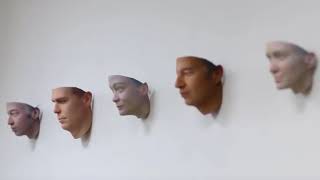
Artist Heather Dewey-Hagborg discusses her DNA phenotyping work, including 3D-printed faces from forensic samples, and her projects to evade genomic surveillance. She explores how commercial DNA services and forensic genealogy enable biopolitical control, and why she created DIY tools to help people obscure their genetic data.
Chapters
Living a Life in Full is a conversation you always wanted to have with that person who gave an amazing TED Talk or the author of one of your favorite books, or that inspirational Olympian you always wanted to know more about. It's graduate level conversations with those making a difference in the world and in the lives of others. This show brings you new ideas and approaches so that you can live a life in full. I'm your host, Dr. Chris Stout and I hope you enjoy this episode. This episode of Living a Life in Full is brought to you by ATI Physical Therapy. If you need physical therapy, choose ati. ATI offers exceptional care, trusted expertise and remarkable outcomes customized to your needs. ATI has over 800 clinics coast to coast in 25 states. When want to start feeling better fast? ATI can help address chronic pain or recovery from an injury or surgery expertly, quickly and conveniently. ATI's first program uses a performance based methodology to safely return injured workers to their workplace. FIRST is designed to increase strength, endurance and cardiovascular functioning. ATI's sports medicine provides athletic training services to help athletes get back in the game. ATI has hundreds of professional collegiate, high school, middle school and club relationships nationwide. ATI also offers a variety of specialty services including home health, hand therapy and women's health. To Learn more about ATI's advances in evidence based practice, clinical outcomes, and their innovative new smartphone app, please visit atipt. Welcome to another episode of Living a Life in Full. I'm your host, Dr. Chris Stout. I'm very excited today to have Heather Dewey Hagboard, a transdisciplinary artist and educator, as our guest on the show. Heather has a BA From Bennington College, a Master of Professional Studies in Interactive Telecommunications from New York University, and a PhD in Electronic Arts from Rensselaer Polytechnic Institute. Heather's work has been shown internationally at events and venues including the World Economic Forum, the Shenzhen Urbanism and architecture biennial, the PS1 MOMA, and her work is held in public collections in the Pompidou center in Paris, the Victoria and Albert Museum in London, and the New York Historical Society. She and her work have been widely discussed in the media, from the New York Times and the BBC to Art Forum, TED and Wired. She's won a number of grants, residencies, and awards for her work. She's a former Assistant professor of Art and Technology Studies at the School of the Art Institute of Chicago, and is a Visiting Assistant professor of Biodesign at Parsons the New School, an Artist Fellow at AI now, and an affiliate of Data and Society. She's also a co founder and co creator or curator of Refresh, an inclusive, politically engaged, collaborative platform at the intersection of art, science and technology. Welcome to the show, Heather. It's great to have you on.
Thank you. Great to be here.
And we were discussing kind of where in the world is Heather? So you're in Munich right now. So what brings you there? We'll start off with that.
Sure. Actually, well, I just came from Berlin. In Berlin, I was working with the Artificial Intelligence Now Research Institute, which is normally in New York, but is in Berlin for the summer because the founder, Kate Crawford, is doing a fellowship in Berlin for the summer. So I was hanging out with those folks in Berlin and then Stockton at Munich, because actually I live part time in Munich. I go between Brooklyn and Munich. That's where my partner's based.
Wow, that's great. So let's take a step back in time. I just have, like, such a full agenda. You know, I promise I won't, you know, take five hours of your day today, but I want to start off maybe a little linearly, and then we can certainly go on tangents and orthogonal and whatever other direction. But I understand from the research that I've done that going to undergrad was really kind of a turning point for you. Can you tell us why that was?
Sure, yeah. So I went into undergrad, I think, with some idea that I wanted to be an artist and some idea that that might have a kind of conceptual basis to it in terms of conceptual art. And in undergrad, I went to this highly interdisciplinary school called Bennington College, and they really encouraged us to break down the boundaries between disciplines and kind of hybridize everything in a kind of mix. And so I took classes in visual arts, but also in sound and philosophy, and most importantly, computer science. And so at that point, I started really thinking about the algorithm as having a kind of materiality that could be used as a form for artwork and started getting deeply into artificial intelligence and machine learning. And that really defined my path forward for many years after that. So that was. I graduated from there in 2003, and for many years after that, I was working with machine learning systems explicitly. And that led me then into thinking about surveillance and really still characterizes a lot of my thinking today.
Wow, that seems so early on. I mean, the whole aspect of looking at art and artificial intelligence and technology and coding and algorithms seem like two, not just different parts of the campus, but different parts of the universe, it would seem like. And that sort of thing, I think, is the synthesis of that and the Synthetic aspect of looking at those things really, you know, is an appeal to me. And I am just, that's, I guess why I'm such a fanboy of your work and the things that you've done. So your senior thesis was net lingua is. Am I pronouncing that correctly? And yeah, tell us, how did you come up with that idea? I think that was just an amazing project.
Oh yeah, that's a real blast from the past.
I did my research.
That's great. So, yeah, I was basically really interested in the philosophy of language at the time and thinking about models of the evolution of language, kind of pondering how is it that we came to have any kind of shared language in the first place. And I was really interested in creating these kind of emergent models and looking at embodied sensory based models of cognition. And so I put together this system that was this kind of hybrid experiment and art installation that was consisting of these agents. And each agent would have a sensor. So one might have a light sensor, one had a temperature sensor, humidity sensor and so on. And each of them was situated outdoors. So it was a piece that took place, installed on the lawn of my college campus. And each agent would basically be sitting there and sensing the world around them. And then when they sensed something new, they would create a word for it, a kind of phonemic composition to represent that sensation. And then they would start sharing these names with each other, the names for their sensations. And if, if there was a kind of new word introduced and they would share it with the group and they would all begin to create this kind of shared language together of these novel words to represent numerical kind of sensations. And then the idea was that from, that, from this kind of basis of coming up with these words, they would start to develop more complex relationships between the words. So looking at time series relationships between the sensations, for example, and then creating these kind of meta relations as well. So what it ended up being was this kind of sound installation that you could walk into and you would see these human scale devices that would be speaking something that sounded quite a bit like language but was really this inventive private language of their own.
That's, that is, that is just, that's so amazing. I mean, just the, you know, it's like synthetic biology or something, except, you know, applied to linguistics. I think that's just, that's terrific. And so you, you've got the art, you've got the technology, and then you start to bring in really science into things and you got then into DNA phenotyping And I think then that resulted in really, one of your more controversial projects, Stranger Visions. Can you tell us about how the. What got you into DNA phenotyping and what Stranger Visions is all about?
Definitely. So I, over the ensuing years, I started looking deeply at these different kinds of surveillance systems. So I was looking at speech recognition, and then I was looking at facial recognition. And I did a number of projects exploring facial recognition algorithms and systems. And what I learned was that any kind of system that could be used for recognition could also be turned around and used for generation of images. So I did some early experiments in 2007 in a project called Spurious Memories, but kind of drifting through what I thought of as the dreams of the imagination of a facial recognition system and generating these kind of phantom faces from that model. And then in 2012, I had been kind of following along with what was happening in the field of do it yourself biology. So this movement that had been trying to make biotechnology more available to people, kind of make it cheaper, invite people into the lab so that they could do experiments without needing a ton of resources to get started. And I had this kind of pivotal experience where I was sitting in a therapy session, and maybe I'd been watching too many forensics shows or something, but I was staring at this painting across the room from me, and I noticed that the glass covering the painting was cracked, and there was this hair stuck in the crack of the glass. And I sat there for the hour of the therapy session, really just completely entranced by this hair and kind of imagining this person who must have been sitting on the therapeutic couch and leaned back and then gotten this hair stuck and ended up kind of relating to this person and really wondering what I might learn about them from this trace of themselves that they'd left behind. And then when I left that day, I started noticing that these kinds of forensic artifacts were really everywhere in New York City. It was like cigarette butts and chew up gum and people clipping their fingernails on the subway. And, you know, I realized that this was actually information, and we were shedding this incredibly personal information all the time without giving it a second thought. And that really inspired me to dig into that and learn how much could I really find out about a stranger from nothing more than a hair that they might have accidentally shed. A therapy session.
Wow. So a while back, I think you and I maybe have different times, but it's sort of a Venn diagram of overlaps with different conferences and things. And a bazillion years ago, I was at a TED Conference and I had the opportunity to meet Kurt Anderson. And then I saw that you had taken a sample of his and created a DNA portrait of him which looked just amazingly like him, except a little bit younger, which sort of makes sense because you can't really judge age by DNA. So tell us about that and tell us about the process of making the 3D masks.
Sure. Yeah, that's really an interesting connection. So I had, in 2012 I started this body of work called Trans Revisions where I started picking up these kind of forensic artifacts and actually extracting DNA from them and analyzing the DNA to generate profiles that I would use these kind of computer vision algorithms to transform into generative facial predictions. And so the way that works is I would get a genetic profile and then I would have this system create maybe five different possible versions of a person's face based on that profile that might vary in a number of different ways. And so I started exhibiting these. I would output them as 3D printed portraits. So it's a form of digital generative art that's created really entirely algorithmically. And I output these again algorithmically as these 3D printed full color core treads that are printed life size. So they look really uncannily like a real person. You walk up to them and you see this face and then you see this kind of sample that it's derived from and have this feeling of, you know, that could be me, that could be my DNA. And early on, I think that was in 2013 already, I was contacted by Studio 360 and asked if I would be interested in doing a kind of radio project with them that ended up being a radio and a small video project as well. Looking at phenotyping, this act of. So forensic DNA phenotyping is this effort to create a kind of portrait of a person based on DNA data. And so I said yes. And I started working with one of the reporters there and they gave me this anonymous sample and then asked me to generate a portrait from them. And actually I thought that I had this suspicion that the sample would be like the father of the journalist.
Sure, yeah, yeah.
And then we had this sort of plan that we were going to have this unveiling of the portrait in my studio and then the person would come and see their portrait in person. And actually I was completely shocked when Kurt.
Yeah, it was him.
It was really. I mean, it seems really obvious in retrospective moment. I mean, I had no idea.
Well, yeah, out of a million faces. Right, right. And what did he say? He said it was sort of like a Matt Damon, younger Matt Damon version of him or something, I think. So it's like. Yeah, I can kind of see that too, so.
Exactly. That's kind of the point, because these types of predictions, I mean, first of all, it's very subjective. There's no criteria that have been established scientifically for assessing the accuracy of these types of facial predictions. And so, you know, like I say, I would generate five different versions and then choose a portrait that felt. Made me feel something that resonated with me in some way or that somehow captures the essence of how I was viewing that data of that person. And it could have been a different face, you know, that I. It's sort of, in a way, this probabilistic event that it happened to have these things in common with him and kind of share various traits with him, But a different version of that face would probably share different traits, you know, and have some of the other ones absent and so forth. So it's a lot of us sort of reading in and having a desire to find connection or difference between two faces that we see side by side.
I think I, you know, you really brought the art to the science of that. It seems like, you know, in terms of, you know, you as a. The artist, part of you bringing that out and making those kinds of decisions and, you know, everything, you know, color, proportion, etc. So from there, I think it's, you know, we're starting to get the. The harbingers of, you know, using, you know, things for good or for evil, so to speak. And. And it seemed like, you know, your joke about maybe, you know, watching too many, you know, forensic shows or something. The whole idea of forensic DNA phenot really seemed to be something where you brought a bit of a warning. You were kind of a beacon or an early voice in an article you wrote called the Sci Fi Crime Drama with a Strong Black Lead. Can you talk about that idea and what was behind that for our audience?
Yeah, definitely. So when I started Change of visions in 2012, I was primarily thinking about surveillance. First of all, I mean, this was still pre Snowden era.
Wow.
I was thinking about vulnerability of the body as a source of electronic information. And then I was also trying to call attention to this practice that I could see would be coming. I thought in five years that would be this phenotyping practice. I could see that there were already publications pointing in that direction and that this was something we should be having a larger social conversation around. Whether we thought this was okay with the kind of regulations and limits that that should be and how we should assess it. And then I was actually really completely shocked in 2014 when I saw that already a company called Paramount Nanolabs launched a service they call DNA Snapshot selling
oh my gosh, to police.
And I was honestly completely alarmed by that. I mean, first of all, because everyone started pinging me and asking me if it was my work.
No. Wow.
Then I realized that I had to kind of refocus my efforts to critically engage people with the creation of the phenotype itself. So it wasn't enough to sort of point out that it was happening or would be happening in the future, or to kind of worry about the visibility that we might have, genetically speaking, but that really we needed to critique the tool itself. And so I started talking about that in my lectures. And then I wrote this article, Sci Fi crime Drama with a strong Black Lead. To really dig deeply into the stereotypes and biases that get baked into these types of machine learning models. And we see this across the field of AI. This is one of the exciting things that my colleagues at the AI Now Research institute are spending a lot of time on really making it clear how much these kind of artificial intelligence and machine learning models are permeated by bias from the very beginning. And then with phenotyping, it takes on this kind of even more concerning role, I think, for two reasons. One, because of the legacy of genetics in eugenics. So this kind of long history of typology and using the biological as a basis for discrimination, and then if you kind of connect that up with the history around racial discrimination in the United States, and in particular, looking at racial profiling as a police practice, it becomes very concerning that a reductionist model that kind of leaves room for you to project your own subjectivity in the context of a police use is really not accurate enough for picturing a suspect. That that's too much of a kind of open system, and that it also is, at the same time, too reductionist in the sense that it creates a kind of racial stereotype portrait of a suspect. So there's not a whole lot that this company can predict with certainty around what someone might look like based on their DNA. They can make guesses about things like what the person's ancestry is. And there are clues, of course, about our ancestry and our DNA. I mean, it's passed down across the generations. But that has a very slippery relationship to race and to the social construction of race. And so I think that's really the focus of that article, is trying to unpack how race gets constructed in the phenotypical image.
That's great. I fear that, you know, historically looking at forensic evidence, you know, was always kind, you know, you'd have dueling experts, you know, in court and, you know, people can interpret things in different ways. And, you know, my background as a psychologist, I dabbled in, like, with learning a bit about forensics in the context of psychiatric institutions and incarceration. And there's things, you know, legal statutes around, you know, passing the fry test that used to exist. And I think that's even different now in terms of interpretation of data. But all of a sudden DNA came on the scene and then people felt like they had, you know, a lock stock, you know, bulletproof kind of approach to evidence. And then, you know, AI comes along, you know, in parallel, but different tracks. And then people feel like, oh, you know, there's like, again, back in my world, you know, a lot of algorithms are doing a better job of diagnostics in radiology, for example, than humans. So people then all of a sudden, you know, pray at the cult of AI that this is, you know, better than us and does a great job. And then you combine those two of saying, hey, let's mix DNA and AI together and we're going to have this potent, you know, crime fighting tool or something that's going to identify people or whatever. And I think, you know, thank goodness to again, you're bringing voice to this and exposure to this to be able to have people see that things are, you know, a little bit different and, and not necessarily, you know, should we take these new technologies, whole cloth that they're, you know, that they're ripe and they're mature and that there's not, you know, bias introduced into them. I mean, I remember again, back to psychology that, you know, there's concerns about cultural bias in intelligence testing. There's concerns about cultural bias in terms of how psychiatric diagnoses are made. You know, biases on both parts. So, you know, these things are really kind of near and dear. And, you know, again, the fascination that I have with your work of being able to bring these out in current contemporary times, with the current contemporary technologies in a context of, you know, politics and artistic understanding. So from that, you know, I don't know if you've tracked it or anything, but like, do you have any thoughts about, like, the Golden State Killer case that's kind of, you know, dying down now, but. Or organizations like Ancestry that store and potentially use DNA that people, you know, willfully submit to them? Do you have any thoughts about that? About vis a vis the context of misuse of DNA?
Yes, definitely. So this is actually a very close relative subject that I was just tackling in my most recent project, which is called T3511. So this new piece of mine is a four channel video installation and it explores the story of a biohacker that falls in love with an anonymous saliva donor. So she purchases this stranger's saliva online and then basically takes it and sends it to 23andMe and gets back a data profile and then kind of starts combing through the data and learning more and more about this person. And then it kind of gets more obsessive as the time goes on and she begins actually culturing their cells from their saliva and becoming a bit too involved with her imagining of what the stranger might be like and ultimately tries to actually figure out who they are to reidentify them and to try to find them in physical space.
Wow.
And that's based on real published research, which is also a lot of the kind of theoretical underpinning behind how a case like the Golden State Killer case was able to be or to bring a suspect out of thin air. So we don't know yet if they're going to be convicted. So, yeah, I think the process that I'm pointing to in 23511 and that the Golden State Killer case rests on is highly related to scientists Johnny Ehrlich's work with Reidentifying anonymous donors via their DNA. So what he showed in this kind of famous surname inference paper is that if you have a kind of genetically male subject and you have a patrimial society, a society where last names are handed down from father to son, and Y chromosomes are as well, there's this direct correlation between those two things. And so you can use that, you can exploit that if you have someone's Y chromosome data to make a pretty good guess about what their last name is.
Wow.
And that's pretty amazing. I mean, so if you have two pieces of data, you can really start to triangulate and reidentify a person based on that data. And that's exactly what's happening with this kind of genealogical forensic research as well, that if you take DNA sample from a cold case and then you submit it to a genealogical website like GenMatch, which is what we saw with the Golden Stakeholder case, that that will start to allow you to begin to put together a family tree to find people that are related to this person from their DNA. And you may then be able to Sort of trace down that family tree and put it together with other bits and pieces of evidence to make a pretty good guess about who that person might be.
Wow.
And that is really something to think about and consider. I think when we think about, for example, the coming together of all of these different databases. So we have the mandatory database, that's the codis, it's followed as the criminal database, although it contains not just people who've been convicted of crimes, but also people that have been accused of crimes, also victims of crimes, all different kinds of people, unidentified remains, all are connected to this centralized state database. And then we have the growth of these option databases and that's where we have ancestry DNA. Coming together of these things along with these public databases like GEDmatch, I think really opens a lot of questions and I think people should really think twice about submitting their DNA and their data to these sources that are clearly becoming proxy criminal databases.
Yeah, yeah. And obviously, as there's concerns about privacy and concerns about, you know, even informed consent, laws change and, you know, you know, privacy sort of waxes and wanes depending upon circumstance sometimes. And you know, we've got, you know, HIPAA and we've got a variety of confidentiality laws that, you know, in psychology, psychiatry, medical practice are very, you know, strong kinds of things. But there's still, I mean, I can, I could tell you a half dozen, you know, exceptions and certain circumstances that, you know, don't necessarily, you know, does a person remember 10 years later from their consent that they sign for a release or what those, you know, and how laws may vary from, you know, internationally or state to state or what have you. So. So we're going down a political alley that I just have to then talk about you. I used to, years ago, used to attend the World Economic Forum in Davos. And I can tell you, and as you experience, you know, it's a pretty heady group of folks, maybe not the most artistically oriented or politically oriented or open minded kinds of things. But were you invited there because of the meeting that you had with Chelsea Manning and the Earth. Well, the work that you did with Chelsea Manning, probably Chelsea.
So it's a bit the other way around. Okay, so my work with Chelsea Manning began while she was in prison and that began in 2015. And she sent me her kind of DNA samples, so cheek swabs and hair clippings.
Hey, let me out of prison. Yeah, set this. Tee this up for us too. I'm familiar with the Chelsea Manning's backstory, but why was she, for our audience, why was she in prison? What was up? And why was it kind of unusual with her prison circumstance?
Yeah, sure, absolutely. So in 2010, Chelsea Manning, who at the time was known as Bradley Manning, was incarcerated for information that she made public showing the prevalence of civilian torture and deaths in the Afghanistan and Iraq wars.
And.
She was sentenced in 2013. And the moment of her sentencing was also when she announced her gender transition, and she was sentenced to 35 years in prison, which was really an incredibly lengthy sentence for boy. And from the moment that she was sentenced, her image was completely suppressed from the public. So no one was allowed to visit her. No one was allowed to take a photograph of her. Her face had literally been censored. And since this was also her gender transition, a way we can imagine that actually no one had seen Chelsea Manning, that the pictures that existed only were depicting Bradley and Hannah. And so in 2015, I was contacted by Paper magazine, and they were conducting an interview with Chelsea through the mail, because that was the only way that you could conduct an interview while she was in prison.
Wow.
And they wanted some kind of picture to accompany this interview. And so they had this idea. They'd seen my work with DNA phenotyping before in Stranger Visions, and then they mentioned it to Chelsea, and it turned out that she'd seen it too. And they both thought that this could be an exciting way to basically give her a face, so to give her back this image that she'd been denied. And so they got in touch with me, and I was really excited to work on that project with them for a couple reasons. I mean, first, because I was really inspired by her courage in making this information public, but then also because I was really grappling with the limitations. And as I was discussing my concern over the reductionism of the phenotyping tool, and while I've been writing and talking about it, I hadn't figured out yet how to show that in artwork itself. So I was still kind of trying to figure that out, trying to sort that through. And I realized in thinking about Chelsea, that there was a perfect opportunity there to showcase at least some of the limitation around the prediction of genetic sex, that by showing multiple versions of her portrait with different gender parameters, that we could begin to sort of open up that discourse a little bit, to open up the interpretation of the face from DNA.
Fantastic.
And so that's what we did with her portrait. So we went through. She sent me these samples from prison, and I went through the same process that I went through with Stranger Visions. Except at the end of this process, we generated two portraits to represent her. So one that was, in quotes, algorithmically neutral. So one where the kind of sex parameter is left out of the face, and then one that was parameterized female and proposed so showing this kind of stereotyped image of what, according to this algorithmic model, a so called female face would be supposed to look like. And when you see the two side by side, I think, I hope that it prompts you to ask questions about what that even means. And what does it mean to embody something like sex or gender in a computer model?
Yeah.
And so the 3D prints of these portraits premiered at the World Economic Forum in January of 2016, which was a really pivotal time for her case. I mean, so in having her image totally suppressed, then this gave her visibility at one of the most elite and inaccessible events of the year.
That is just amazing. So how did someone at the wef, like, read the article in paper or how did that. You know, how the invitation came about? Because again, it's. I know that they are very, you know, there's a huge push, you know, there has been for years to be very inclusive and, you know, bring in, you know, lots of diverse, you know, on every scale and measure. But do you know how you got your ticket there?
Well, first of all, I didn't get a ticket. Oh, no, actually invited just Chelsea's portrait.
Well, that's not right.
Chelsea wasn't there.
Okay. We were going to.
Her portraits were part of an exhibition. So it was an exhibition called the Future Starts Here. And that exhibition basically commissioned the portraits. And that was the context of the work at the World Economic Forum. And then the funny thing was that, I mean, so actually neither Chelsea nor I saw them all in person long time afterward.
Well, that adds a bit of bizarreness to that.
Perfect. In a sense. Yeah.
Wow. Well, so now we've built the tension up. So tell us, what was the outcome with Chelsea?
Exactly. So, I mean, the really interesting thing that then took place, I mean, so as we know, then the election happened. And so in the United States, Obama's exit from office was approaching. And it was clear for those of us who are following along with Chelsea's case that this was kind of her last moment to push for a commuted sentence. And so I started thinking about how I could contribute to her campaign for clemency. And we came up with this idea together to write a comic book that would narrate our collaboration together. And we called it Suppressed Images. And you can do it online also. So@suppressedimages.net, the whole comic is out there. And so basically, the comic goes through the story that I've told you today, shows the depiction of her sending the samples and extracting the DNA and generating the pictures. But it ended with one kind of crucial difference, which was this speculative last frame that showed our envisioning of Obama commuting Chelsea's sentence and then her being freed and being able to come and see an exhibition of portraits in person for the first time. And the really incredible thing that happened was we published that comic book on the morning of January 17th, and then that afternoon, Obama did actually commute her sentence.
Brava.
That is just. That's incantating this feature that immediately came true.
Well done. Life imitating art. Here we go again.
Really exciting. I mean, it was one of the most amazing moments, I would say, of my whole life, actually, was hearing that announcement. It was so. It was particularly incredible because at the time, I mean, again, in retrospective, everything seems obvious. Right. But at the time, everyone told us that we were crazy, that she was never going to get possible. We were wasting our time. And then, you know, it happened.
Yeah, I just love that. That is just truly amazing. So was it from there then your solo exhibition, Genomic Intimacy, or what? What's.
Exactly.
Okay, tell us what.
That's right.
Just tell us about that.
Sure. The next thing that happened was. So about five months later, she was actually released. And we did a solo show together in New York last summer that was called A Becoming Resemblance. And that show was the premiere of a new project that was a collaboration between the two of us called Probably Chelsea. And that piece kind of picked up where the first. So the first piece that was Two portraits is called Radical Love. And then probably Chelsea expands on that and pushes it further and shows 30 different interpretations of Chelsea from her DNA. And so what you see when you look across that is a probabilistic representation of different ways that for DNA data could be interpreted. And you can see that they're really diverse and really different. So not just varying in terms of sex or gender presentation, but also with different skin colors and different facial shapes and eye colors and representing really the many different ways that pieces occur to make data tie to different populations around the world.
That's great. So then did that. Did that lead you to. I mean, you've already mentioned kind of the concerns around surveillance, etc. And then you got into DNA spoofing. Is that sort of the next evolutionary step of your work?
Well, that actually came much earlier okay. So way back, so after I finished with Stranger Visions, after I started actually working with Stranger's DNA, I began thinking about, well, what could you do to protect yourself in an era of ubiquitous genomics? And if you have people like me snooping at your DNA, how would you find your data from them?
Yeah.
And so that led to two projects, DNA spoofing. That was a playful collaboration with Aurelia Moser and Alison Birch and Adam Harvey that showed kind of a DIY guide to ways that could help each other find their DNA. So things like swapping gum and sharing hair and fingernails and things like that. And then the kind of follow up to that, that was a bit more serious was this project called Invisible. And that was a project I made that was offered by an imaginary biotechnology company called Biogen Futures. And it was basically the first ever genetic pharmacy product. It was a set of two sprays, Erase and Replace, that you could use for wiping away and covering up traces of DNA.
Wow.
So Erase is basically bleaching water, which is incredibly effective, but you don't want to put bleach on everything. Right. And so the replace spray comes in for what I like to think of as soft or sensitive surfaces. And that's basically a DNA obfuscation spray. So it consisted of DNA from 50 different sources mixed together with preservative. I would keep it
temperature for a long time. Wow, that's. That is so clever. I. I saw a clip of you on YouTube and I'll. We'll put all these websites and everything will show up in the show notes because I mean, part of it's, it's fascinating to hear the stories, but it's also just terrific fun to see these, you know, works and, and being shown. So we'll have all that in the show notes. But I remember seeing a clip where you're like speaking at a, like bioinformatics conference or something. And it's sort of, it's one thing to see you like on stage at a. You know, to Ted. It's another thing, you know, I'm just thinking, oh boy, you know, wait till these folks hear what she has to say. So, I mean, that was really a fun intervention, actually.
That's right. That was the way that I launched my genetic privacy company. Actually was invited to speak, speak at this Bio IT industry conference. And it was like 7,000 people in the audience.
Wow.
And I got up and talked about my work profiling strangers and then said that basically I was launching, I think my new company, Premiere product would be called Insta P play the commercial for it. And everyone took it completely seriously.
Yeah, it was great on the video because they left the Q and A in too, because I thought, oh, man, I have to hear what these people say. So it was. Yeah, I mean, it was like Heather is like watching a piece of performance art, you know, so.
Yeah, exactly. That was my favorite question that came up, actually, in that Q and A, was someone asking, are you going to give the unique fingerprint of this spray to the police so that they can kind of deconvolve the evidence at the end of the day? And I hadn't thought about that before that moment, so I think I said like, oh, I'll give that some consideration.
Right, right. Yeah, that was. That was great. So. So does this lead up to kind of like the amalgamation of all this to like the concept of hacking biopolitics or tell us what your thinking is behind that?
Yeah, so it all weaves together. I mean, I think thinking about the biopolitical moment that we're in, so thinking about genomic data and visibility and how that feeds into systems of power in both the state and the corporate level. And then when I started thinking about more recently, and you were touching on this earlier with this idea of genomic intimacy, is really looking also at how that plays into our configuration of desire. So what does desire and connection, things like family and relationships, look like in the post genomic future as well? And so that's what I've been hearing about most recently. That's where my post genomic love story came from. My saliva donor and my beginning to think about how these relationships might be reconfigured in the future.
That's great. So, gosh, just sort of like have to take a pause and just take this. So I just, again, I love the like, as you just said, weaving of all these things together, because once I think people see your work and understand your concepts, it almost seems perfectly natural that these things, you know, would go together as opposed to thinking that they're so diverse. And my earlier comment of, you know, different tracks and different rails. So I had the opportunity to first, you know, sort of meet you and learn of your work at the Contemporary Museum of Art in Chicago. Recently. You presented, and you were, as noted in the bio, co founder and co curator of Refresh. Can you tell us a little bit about Refresh and what its focus is?
Definitely. So Refresh is about elevating voices that have been historically marginalized in the field of art, science and technology. So in particular women, people of color, Artists with disabilities, this kind of spectrum of people that have been really left out of the mainstream discourse in this kind of specialized field that I'm connected to. And that really was inspired by a campaign that I worked on with a group of women that was called kiss my Rs. And the campaign was calling attention to really rampant sexism that had been going on that had. Which has been sort of the, for better or worse, the industry standard festival and award in this field of art and technology in particular, and media art for about 30 years. And what I realized in going through the data of this conference, of this festival was that they had been giving this really lucrative award out every year to multiple individuals, but that they almost never had given it to a woman in the 30 years.
Wow.
The festival. And so several years back we created this campaign because my artist called attention to that. And then the following year we wrote a kind of follow up article in the Guardian, brought even more attention to it. And then I started thinking, it's not enough for us just to call attention to the problem. We really want to do something else. We want to do something proactive and show people what they're missing. Show people these really amazing artists that we think are so inspiring and that aren't getting the kind of recognition that we think they deserve. And so that was what inspired Refresh to come together. And then we have a wider mission also of really thinking about how to sustain an artistic practice in our. And how to do that in a way that's ethical and responsible and inclusive. Lots of different types of diverse voices. And so our inaugural exhibition is actually going to take place opening February 7th, and that will be in New York City at the Hunter College 205 Hudson Gallery. And that will showcase a wide variety of really brilliant artists that we've been pulling together from around the US and around the world, all of whom are looking at our contemporary moment and thinking about new ways of examining the future and helping us think about how we can refigure the future. I think of a future that is inclusive and diverse. I think my goal with that is that we can use this as a way to really envision some progressive future, some future that we can rally behind. Because that feels to me like the thing right now that's so slowly missing is some kind of vision of what we can work towards.
I so appreciate that and hear here. I mean, I have a number of friends that are in the artistic community from just that I've known since undergrad and new people that I've gotten to learn and get to meet like you and Lauren McCarthy, who. Is she part of Refresh's work too? Is she going to be?
She absolutely is, yes. So she'll be in our exhibition.
Great. Yeah. We're queued up for listeners to hear she's going to be one of our guests, probably first part of 2019. We'll have that show with her. And in my research on Refresh, you guys have some really great statistics. And I'm kind of a nerdy quant kind of guy. And it refreshed. It was neat. I had heard this and forgotten about it, but the Guerrilla Girls talking about the history of invisibility of women artists and their wonderful quote of do women have to be naked to get into the Metropolitan Museum? And I just thought that's so spot on and.
Exactly. I mean, and it's still true, right? There's many more naked women represented as artists.
Exactly. I know. And furthermore, your stats were really sort of amazing. I'm just going to read a quick quote because I think it's important for people to hear because it is such a big deal issue. The statistics in 2016 confirmed that more than 90% of the winners of the major art festival and the arts folks who self identified as male, only two out of the top 100 top selling artists at auction are women. The difference in price between the most expensive female and male artists is also vast. 44.4 million versus 179 million women have largely been excluded from history, criticism, curation of major art historical movements, even when they participate in great numbers, as the case of, like at the, in the case of Abstract Expressionism. So even in those areas, and to think about, you know, not just in terms of, of being an artist, but just all the other kinds of aspects of criticism, of history, of, you know, probably, you know, teaching as, you know, curation. I mean, it's, it's not the one little spot and everything else is, you know, butterflies and unicorns. I mean, it really seems like a, you know, a pervasive thing. So the aspect of bringing, you know, maintaining, you know, these kinds of issues in the forefront of the artistic community as well as then, you know, shepherding and mentoring and giving vision and hope for upcoming artists, I just really tip my hat. I think that's a very fantastic thing. So.
So thank you. Yes, I mean, that's exactly the point. I mean, we're really trying to have a kind of reparative discourse emerge from this project. And we believe really strongly that it isn't just diversity for diversity's Sake. We really believe that by having this inclusive vision of what the future is, of what art is, that that will really bring together new ideas, that our visions of the future are tired and we can't just be looking at these same white, Eurocentric, patriarchal views. We really need to open that up and by opening it up, will refresh our ideas of what that future can be.
That's fantastic. It really gets back to the old sort of ingrained and thus perhaps invisible biases that are all part of, you know, whatever orthodoxy exists. I mean, I remember at the Chicago talks and show the, you know, how so many AI programs were, what, predicated on George Bush or something? Because at the time they were developed, his was the most frequent picture or something, sort of like man, you know, so it just sort of push the notes on. Yeah, yeah. So, I mean, it's those kinds of things where people can start to understand, I think with great clarity, you know, how bias can be introduced. And in some ways, you know, people feeling like it's. It's very, you know, egalitarian or very agnostic. And, you know, lo and behold, it certainly isn't. So, again, just thank you. Thank you for your work. So I don't want to dominate your time. I just could just spend a lovely afternoon with you and it's probably starting to get late in Munich, but thanks so much for taking time to be on the show. I am such a big fan and I really feel like I and others get so much from your work. Are there any other shows or projects that our audience should know about? We'll put in the show notes. The February showing of refresh in 2019. Anything else cooking that you'd like to share?
Oh, I'm so bad at remembering my schedule.
I know you do have an aggressive schedule, so. Well, tell us.
Exhibition that's up right now in the Victoria and Albert Museum. So if you're interested in the story around Chelsea Manning, these original two portraits are currently on view at the Victoria and Albert Museum. And the exhibition the Future Starts here. So I definitely recommend checking that out. And in general, I would say I have a mailing list that you can sign up for on my website. And I tend to post upcoming shows and projects there, and there's a lot coming soon. I have several new projects that I'm working on that I'll be exhibiting starting in the fall. And so I'm not ready to talk about it yet, but sign up and you'll get all the details.
Excellent. Good. Well, we'll put show notes. We'll have links to your website and people can sign up and we'll, you know, keep the the excitement budding. So best places to see your work online or or in person. You just noted you know, what's showing now, but is your website the best or, you know, where would you direct?
I would say my website. And also so Deweyhackwork.com is my website that has my portfolio and then my gallery in New York is Friedman Gallery and they have also a nice representation of the work including the project that we were talking about, probably Chelsea.
Great, Good. Well, we will get all those in the show notes and I really do encourage everybody that's kind of been inspired and more hopeful about the future and what things can hold and just curious about looking at the visuals and auditories that go along with Heather's work. We'll put all that in the show notes. So Heather, thank you again. You've been a great guest. It's very exciting to do this deeper dive and learn more about the fine aspects of, you know, from whence you've come and the creative things that you've done. It's just been a pleasure. Thank you so much.
Oh, thank you so much. It was a great conversation. Thanks for having me.
Living a Life in Full is a production of Stout Media, a subsidiary of Gordian Knot, LLC. Assistant Producer Gracie Wong Music Dan O' Brien Executive Producer and Host, Dr. Chris Stout to learn more, stop by our website A lifeinfull for Show Notes and please recommend us to your friends and subscribe on your favorite platform. And as for the obligatory disclaimer, this podcast is for general information uses only and does not constitute the practice of psychology, medicine, nutrition or other professional health care services, including the giving of medical or psychological advice. No doctor patient relationship is formed. Lastly, and perhaps most importantly, I take conflicts of interest seriously. For all of my disclosures as well as show notes, please see livingalifeinfull.org podcast and my LinkedIn profile. Thanks and until next time,
More from Dr.

2025 Mercedes-Benz CLE 450 4Matic Cabrio – Owner’s Views After a Year-and-a-Half as a Daily Driver

The Complete Guide to a Successful Everest Base Camp Trek – Post-Trek Debrief

The Complete Guide to a Successful EBC Trek – Post-Trek Debrief: What I Needed (and What I Didn’t)

What Went Wrong Customizing My New 2026 Porsche Carrera T …and what I did about it!

Coming May 1 At the Intersection of High Performance and Fulfillment: A Conversation with Alisa Cohn

From High Performance to Fulfillment: Lessons in Inner Mastery with Jim Murphy

Coming March 19: From High Performance to Fulfillment: Lessons in Inner Mastery with Jim Murphy

The New Humanitarians Volumes I - III:- Inspiration, Innovation, and Blueprints for Visionaries

The New Humanitarians Volumes I - III:- Inspiration, Innovation, and Blueprints for Visionaries

The New Humanitarians Vol I - III: Inspiration, Innovation, and Blueprints for Visionaries - Forward
