I’m in my 60s but My Biological Age is in the 20s – Here’s How Yours Can Be, Too
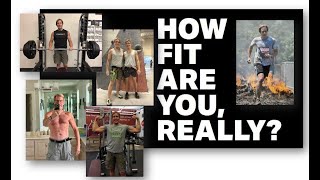
Dr. Chris Stout, a 66-year-old psychologist, has a biological age in his 20s through extreme fitness and discipline. He skips DNA tests for free functional measures like grip strength and one-leg stands, follows a vegan diet with strategic supplements, and uses cold swims and high-heat saunas as hormetic stressors. Six core habits: cut refined sugar, do 18-hour fasting, eat more vegetables, check vitamin D, do vigorous cardio, and get bright morning light.
Chapters
Foreign. Welcome back to the Deep Dive. Today we are attempting the ultimate health shortcut. We've been handed this intense, highly regimented longevity formula from one specific ultra athlete.
And that athlete is Dr. Chris Stout. He's a 66 year old clinical psychologist who get this, has a biological age that consistently lands in his 20s.
He is 20s.
Yeah. So our mission today is to unpack this mountain of source material, I mean intense athletic feats, a super committed daily regimen, and really figure out which parts are evidence based science and which are just the eccentric choices of an elite performer.
Exactly. We're distilling this massive stack for you to give you that 8020 shortcut. Which is what are the core habits that underpin this extreme vitality that you can actually apply right now for a better health span.
Right. Without having to quit your job to train for a double marathon.
Yes. We want the essential fundamental toolkit from this extraordinary commitment separating the non negotiables from, you know, the nice to haves. And here's the fact that should convince you to stick with us. Dr. Stout wasn't. Well, he wasn't born this way. He was an obese child. He weighed more at age 12 than he does today at 6 foot 1 and 163 pounds.
Wow.
He's on Medicare right now, yet he's training for an Everest base camp trek which includes ice climbing in the notorious Khumbu Icefield.
That transformation, I mean, from a challenging start to world class functional fitness at age 66, that's just compelling.
So let's start with that foundation. Dr. Stout brings serious academic rigor to his own body of work. I mean, he's a full clinical professor at the University of Illinois, Chicago's College of Medicine faculty at Northwestern.
Right. And he's run a global health nonprofit. That credibility, it really matters when we start to examine, examine these extreme routines.
It does.
And what's most refreshing about his philosophy is the primary takeaway. There is absolutely no secret here.
No edge of pill.
None. He even acknowledges the absurdity of others spending what, $2 million a year trying to reverse aging with weird injections and machines. His life is just built on disciplined, consistent lifestyle choices.
That reframes the whole conversation completely.
He channels that ancient warning from Paracelsus beautifully. The dose makes the poison. And in this context it means you have to be smart. Not only about what you consume, but also, you know, how hard and how often you push your body.
So it's not perfection, it's finding the right dose of discipline.
Exactly. The dose that works for you.
Speaking of dosage, the sheer volume of his physical challenges, that's what really establishes his functional fitness. He calls them his weirdo challenges.
Okay, I like that.
My favorite is the tank curling challenge.
A tank curling chump. That sounds less like fitness and more like logistics. What is that?
It's a measure of endurance and functional strength. He curled two 45 pound dumbbells, 90 pounds total. 90 pounds total? Yep. For 20 reps across three sets, that's 2,700 pounds moved per circuit. And he repeated that circuit 41 times.
Wow. Okay, so that totals 110,700 pounds moved. That's about the weight of an Abrams tank.
So.
So that's not just strength. That's functional endurance and stamina. Which is exactly what keeps older athletes capable of moving through the world safely and, you know, powerfully.
And it's not just weights. He's completed the Murph Challenge twice.
Oh, the Murph is brutal.
For anyone who doesn't know, that's a mile run, then 100 pull ups, 200 push ups, 300 squats, and then another mile run.
All while wearing a 20 pound weighted vest.
All with a vest. Yep. When you combine that with his ultra distances, 100k races, double marathons and successful summits, you realize his focus isn't on vanity at all. It's on rugged, real world endurance.
That kind of profound commitment requires knowing exactly where your body stands, which. Which brings us to measuring biological age. Everyone wants to know their number, right? And Dr. Stout is curious too. But he cautions against putting too much faith in the common commercial tests. You know, the blood draws, the cheek
swabs, the ones you see ads for all the time.
Those are the ones. The underlying tech, like measuring DNA methylation, it's advancing really fast. But these tests are costly, and experts agree they are not yet fully reliable for individual assessment. You have to interpret the results with extreme caution.
So if the expensive tests are still questionable, what can our listener do right now, for free, to gauge their biological
function, you shift focus entirely to simple, no cost, DIY functional measures. These are arguably more relevant because they connect directly to your physical capacity, your ability to avoid injury.
Okay, so they require multiple body systems to work together.
Exactly. Balance, strength, core, neurological, functionall of it.
So what are these specific tests?
First, the one leg stand test. Balance naturally gets dramatically worse with age. And the inability to balance is one of the biggest predictors of falls, which
are a major cause of mortality in later life.
A huge cause. So the test is simple. Cross your arms over your chest, stand on one leg and just time how long you can hold it without uncrossing your arms or shifting your feet.
And the second one, a core measure.
The plank hold it tests core strength, endurance, spinal stability. If you can hold a proper plank, a straight line from head to heels for more than two minutes, you're showing really impressive functional strength.
And what's interesting is how he applies this. He doesn't just do two minutes on a mat every morning. He trains for balance constantly. Yeah, he stands on one foot sometimes on unstable things like a Bosu ball or a slack block for minutes at a time while, like, brushing his teeth.
He's leveraging the power of habit. He's trying to mitigate falling, which is a huge focus for longevity. And he makes the practice automatic. It becomes subconscious.
Okay, so from movement to fuel, let's dive into the high octane diet that supports all this.
His core diet is strict. It's vegan, unprocessed, focused on whole grains, raw when possible, and minimal sugars. That's his non negotiable foundation.
But this is where the personalization comes in. And we have to pause because one detail just leaps out. He drinks a 12 cup pot of coffee every day.
A full pot.
For 99% of people, that dosage is wildly dangerous. Jitters, anxiety, sleep issues. How does he justify that?
He justifies it with highly personalized data. His genetic testing showed he metabolizes caffeine extremely quickly, so he clears it from his system efficiently. This allows him to maintain that high dose without the usual bad side effects on his heart rate or sleep.
So that's a crucial teaching moment right there. Yeah. His extreme choices are based on his specific genetics. You can't just copy his 12 cups habit.
No, please don't. But some of his other dietary quirks are great general strategies. For instance, he takes a daily spoonful of inulin.
Inulin?
It's a prebiotic fiber that's naturally sweet. And he uses it specifically to intercept and cut any sweet cravings. It's a tactical food substitution.
Smart. He also mentions drinking lemon water daily. Is that for the trendy alkalinity thing or is there a real reason?
It's largely functional. It helps with digestion, boosts immunity, might help with kidney stone prevention. But he correctly notes that the whole idea that lemon water significantly changes your body's ph is. Well, it's largely unsupported. It's more of a digestive aid.
And he's completely eliminated alcohol, which we'll get to later. What does he use as a substitute?
He's a fan of the growing zero proof market. So dealcoholized wine, zero alcohol beers. And he specifically mentions Monday alcohol free whiskey as his go to. He removes the poison but keeps the ritual.
Okay, his supplement stack, it's huge. But let's just focus on the essentials for an older vegan athlete performing at this level.
Right. Given his training, volume and plant based diet, protein and energy support are key. He takes over 60 grams of soy protein daily. And crucially, he takes creatine, 20 grams a day, split between morning and evening.
That's a massive dose.
It is. And it supports muscle performance, volume and cognitive health.
And for a man in his mid-60s, I noticed DHEA on the list. What's the thinking there?
DHEA is a hormone precursor that, you know, naturally declines with age. At 100 milligrams a day, he's likely using it to support hormone levels that maintain muscle mass and energy. Zinc and vitamin D3 round out the critical list.
And what's maybe most notable is what's not on the list.
Exactly. A complete absence of prescription medications.
The man is running on fuel, not pharmaceuticals. Now back to movement. His training is a hybrid of all these high intensity methods. Goruk Mtntou ER Grad crossfit. But what really stands out is the dedicated focus on one specific grip work.
Yes. And if we connect this to the work of longevity researchers like Peter Attia, we see why. Grip strength is a key marker for physical function. It's a statistically robust predictor of lifespan.
A proxy for overall muscle mass.
A strong proxy. If your grip strength declines, your overall capacity for strength and resilience is probably declining too.
So how does he train this incredibly important indicator?
It is intense. He does bodyweight, hangs with focused breathwork. Then he moves to pull ups five sets of five reps. But here's the crazy part. He moves to a maximum time hang using only a fingertip hold.
Just his fingertips.
Literally just his fingers curled over the bar.
It sounds brutal on the hands and forearms. Yeah.
And he finishes with three sets of 30 plus second isometric close grip, chin up holds. This targeted strength is what ensures he can handle the rigging. And climbing on a mountain like Everest,
that level of intensity requires equally intense recovery. Let's look at his specialized tools. I see he uses a back bridge and correct toes.
Yeah. These address specific issues from decades of intense training. The back bridge is for decompressing his spine every evening. Vital after the compression of running and rucking.
And the correct toes. Why does he need to separate his
toes he said that years of tight boots and running shoes caused his toes to start to bond together. Correct. Toes are silicone separators that mitigate this, restoring natural foot alignment.
Crucial for balance on a mountain trail.
Absolutely. He also uses an O2 trainer which was designed by the martial artist Bass Rutten.
For breathing endurance.
Exactly. It's a small device that provides resistance when you inhale. The goal is simple but powerful. Increase your inspiratory muscle endurance. It's non negotiable for high altitude climbing, but great for anyone's cardio efficiency.
We've covered movement and fuel. What about environmental stressors? Heat and cold exposure are very popular now. How does he combine them?
He does both. He's a member of the Polar Bear club. So he does cold swims in Lake Michigan and he pairs that with consistent heat exposure.
How hot and for how long?
30 to 45 minutes in a sauna at 175 plus degrees Fahrenheit.
Wow. What's the rationale for that long at that high of a temperature?
While the sources he cites point to a growing body of peer reviewed literature supporting heat stress for longevity, the theory is that this induces beneficial hormetic stress. The idea that a small dose of stress makes the body stronger.
But this needs a huge warning label.
A huge one. Anyone considering this needs physician clearance. Those high temps and long durations carry real risks, especially cardiovascular ones. This is not an area for casual experimentation.
Okay, we've deep dived into the extreme. Now let's pivot the most actionable advice. The 8020 principles for the listener who is not planning to scale a mountain. What's the biggest bang for the buck from all this?
This is the distillation. If you are overwhelmed, just focus here. These are the six recommendations that yield maximum returns.
Okay, lay out the first three.
First, eliminate refined sugar to the greatest extent possible. That is step one. Second, practice time restricted eating. Aim for an 18 hour intermittent fast and try to eat in line with your circadian rhythm.
So no late night snacks?
None. And third, maximize your vegetable intake. If you struggle with that, a micronutrient smoothie is a great way to jumpstart the habit.
Okay, so it's not just what you eat, but when you stop eating. What about the next three?
Fourth, get your physician involved and monitor your vitamin D blood status. You really want to aim for a dose that gets you between 40 and
60 nanograms per milliliter, crucial for immunity and bone health.
And fifth, get some form of meaningfully vigorous cardio for at least 30 minutes. A few times per week. This isn't a casual walk. This is getting your heart rate up in the last one and sixth. This is often overlooked. Get bright blue light sunlight during the day as early as possible after you wake up. And then you have to strictly avoid that same blue light as much as possible in the evenings. Protect your sleep quality.
That's a practical blueprint. But he emphasizes that avoiding the bad stuff is just as important. The core warnings are brutally. Don't eat crap, don't drink, don't smoke.
Let's focus on the first two based on recent data. First, ultra processed foods. We're talking about foods made from ingredients that have been through multiple industrial processes.
So high in refined sugars, unhealthy fats, artificial ingredients.
You got it. And a huge 2023 meta analysis found a direct link between higher consumption of UPFs and an increased risk of developing and dying from cancer, obesity and heart disease.
And what's frightening is that these UPFs now make up over 50% of the average US diet, which makes this the
most fundamental and honestly, probably the most challenging habit for most people to break.
That statistic alone should be a wake up call. Okay. Now, alcohol. He eliminates it entirely. And the data seems to overwhelmingly support that choice.
What's fascinating is the data showing how significantly alcohol accelerates biological aging. That's the measurable cellular decline of the
body distinct from your birthday. Right.
High alcohol intake is linked to two key biomarkers of shortened telomere length, the caps on our chromosomes and accelerated epigenetic age.
So drinking heavily isn't just damaging your liver, it's literally shortening the lifespan potential of your cells.
Precisely. Studies show heavy drinkers experience years of additional biological aging, and the effect is even more pronounced in younger people. The data also suggests liquor is more detrimental than beer or wine.
It's all intense focus backed by data. But he makes sure to add a human element with his final piece of advice, which he calls easy peasy.
The easy peasy advice is about realistic consistency. You have to cut yourself some slack. Don't let a cheat day derail you completely. The goal isn't perfect adherence.
It's to work until healthy choices become
automatic, until they become the default. That consistency is the real key to longevity and not the extreme feats.
You don't need to move truckloads of granite in a strongman challenge, which he did.
No. But the foundational habits, diet, vigorous movement, managing stressors, those are non negotiable for maintaining functional youth.
Remember Dr. Stout's motivation? He started as an obese child, that first act of running would have been embarrassing for him. So what small positive habit could you start today? Maybe that one leg stand while brushing your teeth? Or just eliminating one source of refined sugar.
Something that if performed consistently, would feel automatic six months from now.
Find that small, non embarrassing starting point and just commit to it.
More from Dr.

2025 Mercedes-Benz CLE 450 4Matic Cabrio – Owner’s Views After a Year-and-a-Half as a Daily Driver

The Complete Guide to a Successful Everest Base Camp Trek – Post-Trek Debrief

The Complete Guide to a Successful EBC Trek – Post-Trek Debrief: What I Needed (and What I Didn’t)

What Went Wrong Customizing My New 2026 Porsche Carrera T …and what I did about it!

Coming May 1 At the Intersection of High Performance and Fulfillment: A Conversation with Alisa Cohn

From High Performance to Fulfillment: Lessons in Inner Mastery with Jim Murphy

Coming March 19: From High Performance to Fulfillment: Lessons in Inner Mastery with Jim Murphy

The New Humanitarians Volumes I - III:- Inspiration, Innovation, and Blueprints for Visionaries

The New Humanitarians Volumes I - III:- Inspiration, Innovation, and Blueprints for Visionaries

The New Humanitarians Vol I - III: Inspiration, Innovation, and Blueprints for Visionaries - Forward
