John Rossman on Innovation, Leadership and Making Better Decisions
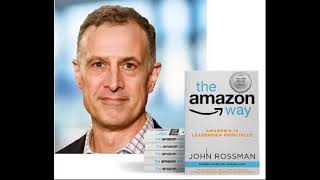
In this episode of the "Living a Life in Full" podcast, host Dr. Chris Stout interviews former Amazon executive and author John Rossman. Rossman recounts his early days at Amazon, where he helped launch the Marketplace business, and explains how Amazon’s unique leadership principles and decision‑making frameworks—such as regret‑minimization, one‑way vs. two‑way doors, and a bias for action—drive the company’s relentless innovation. The conversation covers the evolution of Amazon’s multi‑side flywheel (retail, AWS, logistics, advertising, devices, and content), the addition of a 15th leadership principle centered on the Golden Rule, and how frugality, resourcefulness, and customer‑obsession are operationalized. Rossman shares concrete examples of turning cost centers into profit centers (e.g., Amazon Prime), using metrics that focus on customer lifetime value rather than averages, and applying the "dog‑fooding" mindset to create new markets. He also discusses the cultural tension between startup agility and massive scale, the importance of the five‑whys for root‑cause analysis, and future challenges such as regulatory pressure, automation, and unionization. The interview ends with practical advice for leaders, a promotion of Rossman’s Digital Leader newsletter, and resources for his books and consulting practice.
Chapters
Living a life in full is a conversation you always wanted to have with that person who gave an amazing TED Talk, or the author of one of your favorite books, or that inspirational Olympian you always wanted to know more about. It's graduate level conversations with those making a difference in the world and in the lives of others. This show brings you new ideas and approaches so that you can live a life in full. I'm your host, Dr. Chris Stout and I hope you enjoy this episode. This episode is sponsored by our new video course, how to Publish in the New Millennium. From Scientific Journals to Best Sellers, it's an asynchronous course offering so you can watch it when it's convenient for your schedule. It's based on eight video lessons and provides three hours of material with new concepts, stories and examples and it includes several attempts and humor. You'll learn about the best ways to submit a manuscript to a peer reviewed journal, the mechanics of book contracting, what publishers are looking for, how to evaluate and negotiate a contract, royalties, advances, copyright and ownership, why to never first submit a manuscript to a publisher when you need an agent and when you don't, and the differences between publishers. You'll learn about ebooks, print on demand, Amazon's CreateSpace and KDP programs and other non traditional approaches to publishing, along with how to tell if a platform is of high quality or not. We do a deep dive into marketing, how to create media kits and what goes into them, along with examples how to create a great Amazon author page, how book signings work and how to be invited to do library talks and the economics of both, along with developing speaking engagements, promotional tours and being a podcast guest, as well as a number of other publicity aspects of we cover blogging and provide additional resources to help you in crafting your work and making it better. This is a rich, fun and fact filled course that covers everything you need to know from a practical and actionable perspective. It's for anyone wanting to get their written work into the world, be it academia, popular media, or both. Join the Masterclass in Getting Published. To learn more, please visit tinyurl.com getting publishedcourse thanks welcome to another episode of Living a Life in Full. I'm your host, Dr. Chris Stout. I bet you are an Amazon prime member. Not because I'm clairvoyant, but because half of the US Is half. Did you know that three quarters of all product searches begin on Amazon, not Google or some other search engine? Or did you know that Amazon is valued at $1.6 trillion and has become one of the fastest growing B2B companies in history with Amazon Web Services, or that Amazon is projected in its 2023 revenue to hit 780 billion with a B. Our guest today is the Expert on the Amazon Way. He literally wrote the book on it. John Rossman is a former Amazon executive and now Managing Partner at Rossman Partners and is the author of the Amazon Way. John is an expert in leveraging the Amazon Leadership Principles to help others innovate, compete and win in the digital era as he teaches business leaders and founders how to be like Amazon. John's been featured by the New York Times, cnbc and elsewhere as a leading innovation speaker and advisor on strategy, leadership and digital transformation. He holds a degree in industrial engineering from Oregon State University. And while at Amazon, John played a key role in launching the Amazon Marketplace business as the Director of Merchant Energy Integration, which is now responsible for over 55% of all Amazon orders. He then went on to have responsibilities for the enterprise business at Amazon. John is also the author of the popular Amazon Way blog and writes a weekly newsletter titled the Digital Leader on Substack. As a thought leader on digital and innovation strategies, he's also an advisor to companies and leaders working to innovate and compete with more agility and effectiveness. His book The Amazon Amazon's 14 Leadership Principles is a best seller along with two companion volumes, think like 50 and a half Ideas to Become a Digital Leader and the Amazon way on IoT 10 principles for every Leader from the World's Leading Internet of Things strategies. Welcome to the show, John. It's great to have you on, Christopher.
Thank you very much for having me.
You bet. I know that Amazon was a formative experience in your professional life. What drew you there and what was your experience like in getting hired?
So I was at Amazon from early 2002 through late 2005. So it was a long time ago and we'll talk more about that. But what took me there was I was working for a startup company. A lot of people don't remember kind of what happened in 2001, but there was a big the dot com bubble burst and everything. So not only did funding dry up, but all the technology spend also dried up. And so at the end of 2001 I found myself looking for new employment. I had been a partner at Arthur Andersen before the startup, and a former colleague of mine was a finance director at Amazon and he and I always kept in touch and he was like, you know, you ought to come over and start talking to us about a strategic initiative that we're Thinking about. And so in late 2001 I started having meetings and quote unquote interviewing over at Amazon. And it took a long time to finally figure it out. But then In March of 2002, I started as the director of merchant integration to help play a key role in launching the marketplace business. And we went live with the marketplace business in November of 2002 for essentially the holiday season of 2002 with a brand new apparel category at Amazon. At that point Amazon, 90% of the business at Amazon was books, music video and holiday 2002. So the fourth quarter of 2002 was Amazon's first billion dollar quarter. Right. And so I think you referenced a forecast of $780 billion for 2020. Was that 2024?
2023.
2023. And so we had our first billion dollar quarter that, that holiday. But what drew me to it was, you know, it just felt like we're competing for the future. Right. And that's what, that's what I've always been interested in was like doing new and interesting stuff. I'm easily distracted and I like both the concept and the action that goes along with trying new things and seeing if you can get them to take hold and to actually work out. And so to get, to play a role in building a network essentially of, you know, we envisioned tens of thousands of sellers. We didn't envision millions of sellers, but we were envisioning tens of thousands of sellers to sell to Amazon customers and to make the buying experience, the customer experience as trusted as buying from Amazon, the retailer. You know, that that was a really enticing value proposition in a company that, you know, and this is where the story really picks up is even though Amazon has changed, you know, call it tens of thousands of times since, since I've left. Right. And in both size and complexity of the business, how they go about thinking through situations, how they think about leadership, how they strive to be a low bureaucracy organization, how they think about small teams, how they think about accountability, how they, how they write ideas and try to get to clarity and thinking those things are exactly the same as when I was there. I'm always testing my understanding and concepts and practices with people that are at Amazon today. And that's really, I think what the power of Amazon is, is like this consistent set of approaches for how we operate. And I've hopefully just kind of captured part of that story to help make it available for others.
Yeah, I think you really have. I want to segue into your book next. This tees it up Nicely. I do want to say though that it is kind of shocking that one company can like dominate both consumer and enterprise technology in a way. I think that's certainly unique, never been done before. And I read or heard someplace that AWS is really kind of the engine behind Amazon's financial success and it just happens to also sell consumer goods. Is that right? Is that an appropriate characterization?
Well, I think that is accurate and I think it goes even bigger and broader than that. Right. So you mentioned Amazon retail and aws, the cloud computing business. But there's other categories where Amazon is a powerhouse too. And I would mention two would be logistics and these are actual logistics services that they sell to third parties. And the advertising business now at Amazon is the real profit generator at Amazon now complementing aws. And then it goes beyond that, right? Like it goes into devices and, and publishing and content creation and, and that's why I always say like, I think Amazon is the most interesting company of the digital era. And it's both because of what they do as well as how they do it. And it's the how they do it is transferable to others. But yeah, they are a multis sided conglomerate business, but it's not a conglomerate in the way that most companies are conglomerate. So most companies are conglomerates. Like they kind of share a balance sheet and they on PowerPoint they look like they're integrated together but they really do not interoperate that much together. Amazon is a flywheel driven business, meaning each component of the flywheel is an independent business but it leverages and adds momentum to other aspects of, of the business. And in that way they are a really interesting organization. And these leadership principles go across all of them and the data and the platforms go across all of them. And so it really is an interesting company. I'm now a student of the company. It's obviously been a long time since I've been there. But how they go about it is I think a fascinating. It really is kind of a complement to traditional management science. It's really a new management science to be used in the the right ways at the right times for the right companies.
That's great. It certainly is not a digitized version of GE or something like that. So I totally get what you mean. And it reminds me of, I think it was basecamp. A lot of their ethos is to kind of like solve their own problems and then all of a sudden find that that technology also solves a variety of other problems. And you know, that's kind of my understanding of Amazon as well too kind of looking at internally, well what can we do to make this work better? And then all of a sudden, you know, we find that oh, that's a product too that other people can, can benefit from. So I have a lot of that
concept is called dog fooding, right?
Yeah, eating your own.
And so that's the concept of hey, we, we build products we can use and we use our own products. And that really is the genesis of where AWS came from was in holiday 2003. We had a tough time with website stability during the holiday that which is peak season of and coming out of that it was clear like we had to create infrastructure and approaches that would allow us to scale. And Bezos was the one who's like hey, that's great. Self service interfaces, provisioning management tools for infrastructure, but have external customers because external customers are always going to be more demanding than internal customers. And so we turned it inside out, right? We created self service interfaces for infrastructure, on demand infrastructure. And Amazon found that developers loved it. And then they turned it, they go oh there's a business here, right? And they really leaned into that business. And so that's a powerful pattern for both improving yourself as well as discovering new markets, which is to think through how would I take my true core capabilities, turn them inside out and force myself to make them, you know, self service feature rich, cost competitive, scalable so that I could actually win market. Guess what? You're really going to rethink how your processes, how work gets done within your organization if you go through that exercise.
That's great. Wow. Well again this is a good transition to let's do a little deeper dive in the principles and start off with contexting it perhaps with your book. So I really want to start off with what a couple of others have said about it. Brad Stone, which I would be so nervous, the guy that wrote the Everything Store and Amazon Unbound to critique a book on Amazon. But he threw bouquets. He said the Amazon Way. In the Amazon Way, John Rossman brilliantly illuminates Amazon's secretive corporate culture, using his rare insider's perspective to show how Jeff Bezos has created unique systems that facilitate good decision making at all levels of the company. And actually an old friend of mine back from Davos and World Economic Forum days, Hubert Yuli, the former chairman and CEO of Best Buy and author of Heart of the Leadership Principles for the Next Era of Capitalism, said, I first read the Amazon Way in 2014 at the time when we were still early in our turnaround efforts at Best Buy and found it extreme stimulating. In his new edition, John provides an updated, in depth and invaluable view of the principles that are fueling Amazon's extraordinary business success. John's suggestion to add a new principle focused on the Golden Rule is a great one for every company, as more than ever, we need business to serve the common good. So I just want to echo and underline that praise. I really enjoyed your book. What spurred you to write it and create a whole series on it?
Yeah, so after I left Amazon, I was a partner at a management consulting firm and one of my clients was at the Gates Foundation. And it was probably five years after I'd left Amazon and I wrote a white paper, one white paper, and it was about self service. It was called. Oh, God, what was it called? It'll Come to Me. It was about self service, kind of the discussion we just had about making things self service and how that forces you to rethink your capability. And my key client at the Gates Foundation, a guy by the name of Greg Shaw, Greg pulled me into his office one day and he had the white paper and he goes, oh, this is really good. And then he pointed out kind of a half dozen things I could have done better in it because he's a journalist and editor by background. And he's like, I really think you ought to think about writing a book. Because in the Pacific Northwest where we live, we are starting to see. So this is 2012, we're starting to see the impact that Amazon has. He goes, I don't think the rest of the country and the world really understands this company. And so the smartest thing I did was I talked him into being my partner on these books. And we still work together today. And so we then kind of picked the storyline, the lens of the leadership principles as the way to tell that first story. And so we released the Amazon Way, the first edition in 2014. We just released the third edition of it because they refresh their leadership principles. And I think the perspectives deserve being refreshed once in a while. And I wanted to add a little commentary relative to Amazon to it and everything. So that's what kind of spurred me to, to write the first book. And then as I got into these invitations to come out and talk to leadership teams like I got to, I actually went and met with Hubert Jolie and his leadership team at Best Buy and we had a couple hour discussion about it. But as I got into those conversations, I just saw that there was like, oh, I need to document all the little strategies and ideas and concepts that come from Amazon. And so then I wrote a bigger book called think like 50 and a half ideas to become a Digital Leader. And that's really. I consider that to be like the full playbook of all the little mechanisms, strategies, techniques to consider from Amazon. And so I consider these two books to be complementary to each other. One's kind of the setup story and the leadership principles. The second is kind of the deeper dive of all the little techniques and the full playbook.
Nice. So in this third edition, I kind of teed this up also about the 15th principle and the Golden Rule. Can you talk about what you mean by that and how you came up with it?
Yeah. So I really took this as a thought experiment, right? I was like, What? The past 25 years for Amazon have been great, but what do I think from a leadership standpoint? From a leadership principle standpoint, like, are there adjustments that they need to make in order to compete and continue to be successful for the next 25 years? As I thought about that, this is 2019, 2020, and Amazon is undergoing a tremendous amount of PR challenges in the news. I was like, I think that there's a new leadership principles and I'll read the suggested leadership principle. I really wrote this not as a critique to Amazon, but it was a suggestion to them to consider how to adjust your principles for the next 25 years. And so the suggested leadership principle 15, the golden rule. Treat others as you would like to be treated. Employees, vendors, partners, brands, small companies, competitors, press, critics, community. Contribute and be a leading steward of your community. Foster and lobby not for your best interest, but for future innovation and competition's best interests. Conduct yourself both personally and as an organization in a way your mom and your kids would be proud of always. So ironically, and I cannot say I influenced this, but I also can't prove it didn't influence it. Shortly after I released this edition, Amazon came out with two new leadership principles which cover more or less the scope of which I was driving towards. They came out with strive to be the earth's best employer. And success and scale brings broad responsibility. And so I think it really gets to thinking forward and understanding they're no longer the scrappy, underdog of a company. When I was there, right, like we were called Amazon bomb. Amazon.com right. Amazon Amazon.org because we obviously didn't know how to make money and everything, right? Well, that's not the Amazon of today. And most importantly, it's not the Amazon of the future. And we need society and democracy needs big companies like Amazon to really, you know, lead the way and help preserve the environment that allowed them to grow and be successful at. And I think that's what they're getting at in their new leadership principles. What I'm getting at in the suggested leadership principle that I got, that I wrote about and what we need to foster from a policy standpoint is just preserving this environment that allowed Amazon and other companies to be small startups at one point and to scale to be massive platforms at this point.
That's great. You know, it's interesting to think about that. I mean it's, I would certainly kind of give a tip of the hat to you in the context of having said that and you know, then it be adopted, you know, this kind of way or, you know, at least being somewhat, you know, influential into that or at least you're certainly channeling the still important aspects of, you know, what the golden rule can bring to, you know, corporate responsibility and the, you know, kind of once you get to this large size that all of a sudden there are new things that you do have to be responsible for that are different than being that, you know, that scrappy, underdog startup. So I do want to circle back though, because it seems like on the one hand there's sort of like this, you know, customer obsession is one of the key aspects of how Amazon's DNA is set up. But you also share very transparently a very uncomfortable interaction you had with, with Bezos that you learned like, I don't know if you had said it or someone said it, but it was in the book said that Jeff really doesn't care about your feelings. Can you talk about that experience?
Yeah, that was, that was a quote that I used in the book from, from somebody else. But you know, it's a, it's a demanding environment and all Jeff or others ever asked is just like you should, you should understand the details of your business better than I do. Right. And I think that's actually a really fair, a fair expectation as a senior leader in a company. And so I just tell a funny interchange of a meeting we had and really the message was to the whole room, it was kind of pointed at me, but the essence of what he was telling me was like, hey, your title may be Director of Merchant Integration, but I want you to be thinking and acting like you run the entire third party selling business. And if there are other constraints, other bottlenecks, Like you have the permission after those bottlenecks and be thinking about optimizing the entire business not just your function. And so that really gets to, I think, one of the secrets of Amazon, which is how to appropriately not let organization structure, jobs and titles and seniority get in the way of doing the right thing. And all too often we are way too respectful of those things. And we know, like, we are not really getting at the truth. We're not talking with transparency, we're not really showing our hand as to what we think, but we're holding back because we're interpreting kind of the social norms and the expectations and jobs and titles to be like, well, I'm in my little box and this is kind of what I do here. And that's all Jeff was ever doing. So every senior business leader has their moments, and they should, because you have to create high performing environments to really accomplish hard activities and solve hard problems. And so in no way was anything ever inappropriate, but it, but it was always fun and spirited and, and you know, as soon as the moment was over, like, you're just moving on with business and everything. And so it was, it was a really fun environment and it was a demanding environment. And that's the way I think, you know, really good businesses should act, which is, you know, have high expectations of each other.
Yeah, it sounds also empowering too. I mean, the fact that, you know, you, you may not have felt like, oh, I'm overreaching or, you know, this is out of bounds, but, you know, it sounds like that's, he has these expectations and they're not unrealistic and it kind of gives you tacit permission to be able to think beyond your whatever job title or department or whatever. I like that. So there's some areas that really stood out to me from the book in the Amazon way and philosophy and tenets that I'd like to maybe have you unpack a little bit. I've got maybe like four or five of them. One of the ones that really stood out was the philosophy or concept of regret minimization. Can you talk about that? That?
Yeah. So that's, that's one of Jeff's decision making frameworks. And, and he used that when he was considering starting Amazon and he was a young vice president at D.E. shaw in New York. And he had a big bonus that was coming due and, and he was like, pretty comfortable. And he was like, like, hey, how do I decide whether to go start what will likely be a failure or stay in this kind of comfortable role? And he said, I asked myself the question, when I'm 80 years old, what will I regret? Will I regret staying at D.E. shaw, while I regret not trying to start Amazon. And he came to the conclusion that he would regret not having started Amazon. It's a good framework for big decisions. We had a big family decision to make about six years ago and we used that. We were considering whether to move down to Southern California and we used that framework as like, you know, because it was, it was a big kind of one way door decision. And you know, we use that to help us make the decision of like, all right, do we kind of go for it or do we stay in kind of our comfortable place? And we decided to go on a family adventure for a few years down in Southern California. So it's a good. And the key point is you gotta have different decision making patterns and frameworks and approaches for different types of moments. And so one of them that they use at Amazon is this concept of one way doors versus two way doors. And one way door decisions are these big life changing, business changing decisions that are hard to undo. Well, those are the decisions that you want to slow down, you want to bring to the center, you want to take your time with. The other type of decision is a two way door decision. A two way door decision is a decision that if you make it, if you're wrong, you can actually reverse it. And just understanding that speed matters. In business, calculated decision making and risk taking is important and we need to have an eye towards keeping the pace of decisions appropriate for the types of decisions that we're making. And what happens in most organizations is they don't understand the difference between different types of decisions. They don't encourage people to have calculated risk taking and they don't debate, well, what type of decision is this? This is a one way door decision or way door decision. And the other thing they tend to do is they don't creatively think about, well, how would I take what appears to be a big decision and actually break it down into smaller components that I can make two way door decisions and test and learn from them? Right. And so all of this is kind of, it's really a combination of a couple of the leadership principles. There's one that's called bias for action. Speed matters in business. Many decisions and actions are reversible and do not need extensive study. We value calculated risk taking. So that's kind of the front end of this point, like, hey, we got to make good decisions and we need to do them at pace and we need to be smart about how we do that. But then the second connected leadership principle is the 13th leadership principle, which is called have backbone, disagree and commit. And that leadership principle is all about respect, respecting the process of making decisions. But once a leader makes a decision, we all wholeheartedly work towards making that successful. And you combine those two together and you can just go, oh, if we can do that consistently, we're really going to have a high performing decision making engine in our organization.
I like that it seems too, I mean, correct me, this is just sort of like an impression I got from it. But that in a lot of ways Amazon, historically and currently and probably in the future in my head, almost acts like a venture capital firm where they make, you know, a variety of decisions and let's call them bets. And you know, some of the big ones, like just disproportionately, you know, pay off and then that more than, you know, compensates for the, the failed ones. You know, like it's like it to me in my head. I just always kind of think of like Amazon's highlight reel. It's sort of like a little Midas touch kind of thing. But then you think about, well, the Amazon phone didn't really take off and Amazon Fire didn't really take off. But you know, there's all these others that are successful. So is it that kind of an esprit de corps too to say, hey, let's go through these, you know, different kinds of one way, two way door kinds of decisions. But then also if we, you know, if we sprinkle our bets, put our most, you know, brilliant minds and funding and whatever it takes to actually make this happen with an expectation of success that we can lean into the home runs and not worry so much about the strikeouts.
Yeah, you've got it absolutely right. And you know, being the most interesting company of the digital era, they operate both at scale and continue to be this startup and idea machine. And it's that unique combination that they both operate big businesses at global scale and they continue to make both small bets and big bets in their business. And they understand how to calibrate between those. Those are not the same things. And so you need different types of tools, different types of leadership, different types of governance, different types of approaches. But what most companies do, they're pretty, especially successful companies, they're pretty good at operating their current business model, their current operating model for their current customers in their current environment. And they apply that framework for how they evaluate decisions, how they evaluate what success and failure is, how to make resource allocation decisions, how they run projects and programs. They apply the exact same approach to new and small ideas and businesses. And that fundamentally doesn't work most of the time. And so you really have to have a delicate and subtle approach. And that's really what you mentioned, my newsletter, the digital leader newsletter and digital transformation, that's the playbook that I'm trying to unpack. Kind of through that newsletter is understanding how do we both operate at scale and create the mechanisms and the environment in which small ideas can flourish. And that is what I think true digital transformation is, the ability to do that. And that's where the winners of the next 25 years are going to come from, is companies that can both operate at scale and continue to have ideas that flourish and start from the nothing.
It's an interesting approach to think about that. You and I were speaking off mic before about, you know, some of the work that I do is around working with startups and they're, you know, now at some point, you know, some are more mature companies and doing well. So then I start to think about the leadership, you know, aspect of what you just said and then still trying to have this, you know, whatever philosophy of trying to, you know, take the best of both and be able to, to apply them no matter what. If you're, you know, a founder of a 10 minute old startup or if you're a founder of a 10 year old startup and kind of where do you grow from there? And that maturation aspect, I thought one of the things, and I don't know, I guess it really doesn't matter when it started, but I really liked your discussion of the five whys in terms of being able to understand a problem. Do you see that from a leadership perspective as starting from day one or is it something that results after a company becomes more mature?
It can happen from either. But the five whys are really about how do we get to root cause of a situation, like the underlying truth of why does something happen and the natural reaction to a problem, a situation, an error is we immediately address the obvious symptom, but that oftentimes isn't the true root cause. And so the five whys is just one technique of helping us slow down a little bit, stay in what's called the problem space a little bit longer versus always jumping immediately to solutions, stay in the problem space a little bit longer and try to get to a deeper understanding of why did this really happen and addressing the true root cause of the situation. And so that's really kind of part of operational excellence that you have in companies. But if you do that really well, that technique will also lead you to questioning other bigger fundamental assumptions or observing trends or opportunities that let you then try something that's truly new and different to innovate. There's a direct connectedness between operational excellence and trying to improve the experience for today. Efficiency, quality, speed, cycle times, all of those things, as well as then creating an environment for which new ideas can come from.
So one of the things I have been wrestling with and why I'm excited to get your opinion on it and ask you about it at some level and I apologize if these are being too stereotypic to things, but you know, there's been a phase shift, it feels like in a lot of startup companies that provide a great deal. I think the pandemic and I want to get to Amazon and the pandemic making a couple of questions too. But the pandemic has certainly changed the perspective of working away, working from home, different ways to collaborate, you know, different tools and ways to do that. But the prior pre pandemic there seemed to be almost kind of like a meme level kind of perspective on startups. Just there's, there's beer at free beer at 5 o', clock, there's free snacks throughout the day. There's you know, bring your dog ride your skateboard through the office, you know, kind of do kind of, you know, whatever that, you know, back in the dinosaur era when I started working that would have, you know, just been the ticket to getting fired. So you know, a lot of liberal, abundant kinds of perks and benefits and flexibilities and things like that. Then on the other hand, and Amazon being quite innovative and quite the leader in that there's also you talk about sort of its infamous frugality of like Jeff talking about like taking the light bulbs out of the vending machines and you have a whole section like on the no more free Advil. And that just seems to kind of be the 180° opposite of kind of where things are now. So I don't know where Amazon is in the midst of all these kinds of things or post pandemic, but do you have any thoughts or feelings or leadership recommendations of what a founder or a leader of a mature company, how to deal with those kinds of things.
Yeah. So one of the leadership principles of Amazon is frugality and it reads like this. Accomplish more with less constraints, breed resourcefulness, self sufficiency and invention. There are no extra points for growing headcount, budget size or fixed expense. And while the Amazon is not the same type of, of what I would kind of consider Kind of penny pinching organization as I was there. But we were fighting for our survival at that point. Right. So it was appropriate. They still use frugality as a core principle in helping to solve important problems. Right. And so all of that is just around constraints and doing more with less, which if you think about it from a, an environmental and sustainability standpoint, well, those are really important concepts and principles to operate from, to not be wasteful of our precious resources. And you know, relative to kind of the lead in to your question about, you know, work environments, I think it's super important that we have an environment where people can be at their best. It's appropriately relaxed and because that's when people are the most creative and are really able to solve problems. But what happens is like all of life is a pendulum swing that swings too far and we forget like this is a business and we are oriented towards outcomes and we are oriented towards focusing on making little steps every day so that we can have the champ, maybe have the big moments, the championship moments down the road. And I think too often in some companies, they forget why we're there. And it's to run a successful business. And so a lot of companies balance that really well. Some swing over to the pendulum one way or the other too often. And you just need to have the right perspectives and a set of principles with mechanisms to help find the center at where you're balancing both, both creating the right environment so the best work can be done. But also like that, it is focused on the work and on the business.
Gotcha. From a metric side of things, it also seemed like, I think, gosh, I think you had one of the appendices was on the mantra of free cash flow. Can you speak to that?
Yeah. So, you know, I'm an engineer by background. I thought I knew how to, to measure and understand things from a data perspective. And I learned a whole new level of how to use metrics in the business to understand your customer better, to come to better insights and to take action relative to those insights. And one of the little secrets that I'll mention here is what most companies do is they orient their metrics kind of to the average or to the median. And once you start becoming good, then those metrics become uninteresting. Right. You're essentially just telling yourself like, hey, we're doing a good job, we're doing a good job, we're doing a good job. And that's not interesting at all. You're not understanding or striving to get better with those Types of metrics. What you need to do is tune your metrics to find where the signal signal is, where's the imperfection, where are customers not happy, where we're not hitting their expectations, where are we not having quality? Where are we having quality issues? And so you always need to be recalibrating, retuning and adding to your metrics. So you're finding the signal and the imperfections and then create the environment in which you take those signals and you do something with them. Right? You go into those operational excellence moments and you rethink the fundamentals tenants of the situation and try to find opportunities for innovation. And that just isn't the way most organizations are really geared. And so metrics are the key instrument in which we enact so many of these principles of listening to our customer, striving to get better and looking for new ways to innovate.
I think one of the ways that you also describe, I just have to say it because once I read it, it became so, so blatantly obvious to me. But I never stopped to think about it until your book. And it's like that same aspect of looking at those metrics and looking at maturation of your customers, et cetera, et cetera. It seems like Amazon has also been able to like magically, brilliantly take a cost center and make it a profit center, make it into a profit center like Amazon Prime. It's sort of like, you know, nobody likes to pay for shipping, the business doesn't like to have to pay for the shipping. But if you can have everybody prepay their own shipping, it's like brilliant. And I know there's a lot of other things that come along with being a Prime member kind of thing and those are all beneficial. And Amazon Prime Video, etc. Etc. The list keeps growing, but I think that's brilliant. And then the other thing you make a really good point about is like ease of returns. Where a lot of other companies, my wife, I won't mention the company, but just had gotten a gift for someone, the gift didn't work out, they tried to get a different size and just kind of going through this ping pongy back and forth thing of, you know, they don't take returns or they don't do exchanges, they have to return it and then it has to be repurchased and it was just this humongous hassle. And it felt like, you know, 19, 1990 or something of that kind of a problem versus, you know, Amazon just, you know, oftentimes I, you know, Sometimes you just say, oh, keep it, you know, keep it and we'll just, you know, send you the proper size or what have you. So from that kind of an idea of taking a cost and then making it into a profit center or taking things like other companies just, you know, don't have the philosophy of it or don't have the technical capability of like making a return so easy, but that cues up an individual to say, you know, I will continue to shop at Amazon because it's so easy. Easy to just ship it back. Or if it's something trivial of a cost, sometimes they just say, you know, keep it and donate it, do whatever with it. What are your thoughts about that in terms of lessons learned for other kinds of companies and maybe even if you could speak to it, you know, that, that, that's all kind of retail oriented, but even outside of retail.
Yeah. So the underlying economics and principles behind this is understanding lifetime profitability of a customer versus just optimizing for or short term metrics like order metrics or things like that. And so the underlying principle is that if a customer trusts buying and doing business with you, they will do more business with you over the long term. And so many of Amazon's true innovations have been counterintuitive moves that benefit the customer. They challenge the status quo and they feel like short term financial detriments, like why would you do that? But if you look at the actual lifetime value of the customer, it breeds loyalty and lock in and builds a moat around your business. And it does apply to almost any other business of looking at like what's the friction in the experience of being a customer and how do we turn reducing that friction into a strategy or a mechanism, a tool that actually differentiates us and creates a lock in for our customers. And so prime is really just, it's a customer loyalty program and it's a lock in to the Amazon platform. It's just brilliant. And they lose money at a prime level, but they make up for it versus the customer lifetime value of what a prime customer means to Amazon and that counts. Counterintuitive move and trying to optimize for long term enterprise value versus short term financial optics. It gets to a lot of the aspect of why Amazon has been successful and what other companies can learn from them.
I love that. That is so brilliant. I know we're starting to get a little tight on time. I have a couple of last questions if you're still good.
Oh for sure.
Awesome. Good. So does Amazon have an Achilles heel? You wrote in your book I think that Bezos himself predicted Amazon would go bankrupt one day, which here we sit in 2022 and that seems just impossible. But what are Amazon's weakness? Does it have an Achilles heel? Will it go bankrupt one day?
Yeah. So I mean the full context of his observation was that if you look at the history of companies, they're typically pretty short lived and all he's trying to do is make it so that Amazon doesn't die during his lifetime. Right. And when you, you look at life through that lens of like, how do we actually create stewardship and sustenance and play the long run of how we create an ongoing and enduring organization, you're going to do things today, you're going to bear some expenses and invest in some ways that if you're purely short term oriented, you wouldn't do. And so Jeff's just saying like, we have to continue to be humble and we have to continue to find ways to grow and to innovate or this is what happens to any company. What do I think Amazon's Achilles heel is? I think it's sheer size at some point could become an Achilles heel. And they've got a new CEO, longtime Amazon leader, new CEO at Amazon, Andy Jassy, just the chair of the board now and everything. And Andy's clearly rethinking a lot about Amazon and that's exactly what you should be doing. It's like don't let your past positions trap you into what is the right thing going forward. And think like Amazon. One of the chapters I wrote was one of the ideas from Amazon was this concept of never say never. And it really is about don't let your past positions lock you into what the right thing is to do going forward. And so I think one of the Achilles heels for any of these massive platform companies is their sheer size. And so kind of like what do you do with that? So I'm not predicting anything, but I think that that just starts to be an issue both internally as well as primarily externally. And the regulate you just start and Amazon is already experiencing this. Just the regulation, regulatory burden starts to become a pretty big factor in the business. So what do they do with that? I think is a really good question and a fun one to tease out.
Well, and Amazon's in the news these days, like with New York, they've now gotten unionized. Have any crystal ball projections of where that might go? Is that just a tempest in a teapot or is that significant in the start of something?
Well, you know, I think that if you look at the new leadership principles that they added. Strive to be the earth's best employer. They clearly recognizing like there's opportunity for them to build a safer, better work environment, especially in the fulfillment centers. And I know that they're doing some pretty creative things to help do that. The forecast that I would have isn't necessarily a great one and that is that Amazon at some point may be able to create more or less completely automated fulfillment centers. And so if we continue to, to apply all of this negative pressure relative to these situations, it's like, you know, these in most communities are really good jobs. And so I would just be careful about being scrutinizing too much just because of their size, what these jobs represent. And so I don't know what they the forecast is from a union standpoint, but I do worry about the path of automation and what that could mean for jobs.
Gotcha. So do you have an Amazon strategy for Rossman Partners?
Well, I mean I definitely have a growth strategy and my strategy is really how do I help others take these principles and others and really help them rethink both their business strategies and the leadership models that are necessary to help them be successful there. And I have a set of partners and team that helps me do that and it's tremendously rewarding the type of work that I get to do.
That's great. So we mentioned earlier on I want to just kind of wrap up and, and do an underline of this. You have a very popular newsletter, the Digital Leader, which I am a subscriber to. Can you share with the audience what all it covers?
Yeah. So the value proposition for the Digital Leader is it's short tidbits and tricks and tips for innovators and strategists to help make change happen. And so it's a weekly easy to read newsletter with a specific idea and actions you can can take to help make change happen. And I talk about Amazon, but a lot of things much broader and stories and examples much broader than just Amazon. And it's been a really fun and effective way at connecting with people and helping to bring them practical tools they can use to help make change happen in the business environment.
Yeah, I like it a lot. I'm a big fan and I would recommend people that kind of, regardless of what whatever level you are founder, to establish business technology or outside of technology, whatever, to take a look at it. So how can someone get a subscription and what are some of the other ways that learners can or listeners can listen to other shows that you've been on or best ways to learn more about your books or subscribe to the newsletter.
Yeah, so the newsletter is on substack, so you can just search John Rossman or the Digital Leader newsletter at substack and you can always get ahold of me on LinkedIn. It's really easy. John Rossman. And then, you know, my website is the amazonway.com the-Amazon-way.com or rossmanpartners.com but really LinkedIn is the easiest way and I'm happy to get connected and sign you up for the newsletter. The book's at Amazon. It's available in paperback, Kindle or Audible version. And please, if you read them, leave a review.
That's great. Good. And we will put all those. I know sometimes people are on a run or in their car and can't jot these down, so we'll get everything in the show notes for that as well too. So man, thanks so much John. This was really fascinating. It's always kind of a treat for me to have an engaging book that then stimulates other questions and thoughts and ideas. And you have just given us really kind of a how to toolkit, not only in the book but in our conversation today. I really appreciate your time.
Well, thank you. Thank you for your preparation and all the work you do. And you know, my, my best days are days when I get to work with leadership principals and I always say like it's, it's none of this work. None of these books are about Amazon. It's about you and how can you prepare yourself for the future and become the best, you know, digital version of your organization. And those are my best days when I get to work with teams on kind of thinking that through.
I love it. I love your creativity. It certainly comes through and the spark and energy you have as well. So again, thanks for today. We'll get everything in the show notes and I really encourage people to reach out and learn more about your work. They will be very happy they did.
Thanks.
Living a Life in Full is a production of Stout Media, a subsidiary of Gordian Knot, LLC. Assistant producer Gracie Wong Music Dan O' Brien executive producer and host Dr. Chris Stout to learn more, stop by our website A lifeinfull for show Notes and please recommend us to your friends and subscribe on your favorite platform. And as for the obligatory disclaimer, this podcast is for general information uses only and does not constitute the practice of psychology, medicine, nutrition or other professional health care services, including the giving of medical or psychological advice. No doctor patient relationship is formed. Lastly, and perhaps most importantly, I take conflicts of interest seriously. For all of my disclosures as well as show notes, please see livingalifeinfull.org podcast and my link to in profile. Thanks. And until next time,
More from Dr.

2025 Mercedes-Benz CLE 450 4Matic Cabrio – Owner’s Views After a Year-and-a-Half as a Daily Driver

The Complete Guide to a Successful Everest Base Camp Trek – Post-Trek Debrief

The Complete Guide to a Successful EBC Trek – Post-Trek Debrief: What I Needed (and What I Didn’t)

What Went Wrong Customizing My New 2026 Porsche Carrera T …and what I did about it!

Coming May 1 At the Intersection of High Performance and Fulfillment: A Conversation with Alisa Cohn

From High Performance to Fulfillment: Lessons in Inner Mastery with Jim Murphy

Coming March 19: From High Performance to Fulfillment: Lessons in Inner Mastery with Jim Murphy

The New Humanitarians Volumes I - III:- Inspiration, Innovation, and Blueprints for Visionaries

The New Humanitarians Volumes I - III:- Inspiration, Innovation, and Blueprints for Visionaries

The New Humanitarians Vol I - III: Inspiration, Innovation, and Blueprints for Visionaries - Forward
