Jon Gertner on the Stories Worth Telling
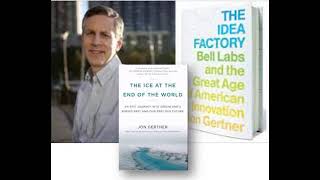
Journalist Jon Gertner discusses Bell Labs, where he grew up near its Murray Hill campus, and why the transistor and other breakthroughs happened there. He also describes reporting from Greenland's melting ice sheet and the feedback loops that accelerate sea-level rise.
Chapters
Living a life in full is a conversation you always wanted to have with that person who gave an amazing TED Talk or the author of one of your favorite books, or that inspirational Olympian you always wanted to know more about. It's graduate level conversations with those making a difference in the world and in the lives of others. This show brings you new ideas and approaches so that you can live a life in full. I'm your host, Dr. Chris Stout and I hope you enjoy this episode. This episode is brought to you by the new fellowship and certificate programs now being offered by the center for Global Initiatives. As you may know, the center is an all volunteer organization and the same is true for the faculty in these programs. So all the tuition goes to support the work of the Center. It has always been our ethos to open source humanitarian intervention and these programs use the same approach in that all the materials we use are freely available all the time to anyone, everywhere, even if you don't take a course. We have built a world class faculty and contracts with other universities, medical schools and partnered NGOs. There are two fellowship tracks, one for those wishing to start their own nonprofit or non governmental organization and one for those seeking mentorship for career development and advancement in humanitarian work. Our initial certificate programs include humanitarian intervention, social entrepreneurship and global health practice. Please consider taking a world class masterclass with us. Visit alifeinfull.org and click on the CourseWorks tab to learn more. Thanks. Welcome to another episode of Living Life in Full. I'm your host, Dr. Chris Stout. How do we make sense of the ideas of the present that might determine our lives in the future? How can we weigh the legitimacy of new technologies and sort through what is hype and what is not? Well, that's what John Gertner, a veteran journalist, editor, historian, and author, seems to have figured out. John is a contributing writer at the New York Times Magazine and is best known for his work on science, technology, innovation, business, and society. His journalism and reviews also appear in Wired, the New York Times Book Review, the Washington Post, the Wall Street Journal, and a number of other print and digital publications. John served as an editor for Fast Company, Money, and the American Lawyer. John's a graduate of Cornell University and is on the faculty of Princeton, where He teaches the McGraw seminar on writing. His first book, the Idea, Bell Labs and the Great Age of American Innovation, was a New York Times bestseller. His latest book is the Ice at the End of the An Epic Journey into Greenland's Buried Past and Our Perilous Future. We'll be doing a deep dive on both of his books, as well as his approach to writing and journalism. Welcome to the show, John.
Thanks for having me. Chris. Great to be here.
Absolutely. I've been looking forward to it. As I noted in your intro, you've done a lot of writing in magazine and newspaper with a focus generally on contemporary issues of, like I said, science, technology, and business. But in your books I found a quote where you say you like to tell the stories of historical endeavors or historical episodes which have had a significant but underappreciated influence in our lives. And you go on to note, I'm trying to pay close attention to certain aspects of our past so we can better understand the present and perhaps the future. And I thought that was so unique and very refreshing and really kind of a benefit to us as readers. It was sort of like your books are like reading, you know, like digital or print documentaries. Let's maybe start off with your first book, the Idea Factory, and I'll cue this up by reading what some impressive others have to say about it, starting with Walter Isaacson, he said in his New York Times Book Review, filled with colorful characters and inspiring lessons, the Idea Factory explores one of the most critical issues of our time, what causes innovation, New York Times said. Riveting. Mr. Gertner's portraits of Kelly and the cadre of talented scientists who worked at Bell Labs are animated by a journalistic ability to make their discoveries and inventions utterly comprehendable, indeed thrilling to the lay reader. And they showcase, too, his novelistic sense of character and intuitive understanding of the odd ways in which clashing or compatible personalities can combine to foster intensely creative collaborations. So this book, it talks about the exploits of a generation of scientists that were working at what I would say is arguably the 20th century's greatest laboratory. And you go into looking at the methods and the importance of technological innovations. In the process of looking at that history, I'm curious, maybe just to start off, what spurred you to ride it 60 years after the fact, after it had happened?
You know, there's a couple answers to that question. I had grown up actually very close to Bell Labs, literally geographically. So really less than a mile away. And my hometown, Bell Labs, I should say, wasn't just one laboratory. It was sort of a network of laboratories that served as the research and development infrastructure for the phone company, which during that period of time in the mid to late 20th century was a monopoly, really. And one of the largest of Bell Labs laboratories was in Murray Hill, N.J. and I'd grown up near there. And although my family didn't work there. It sort of was like our hometown steel mill in some ways. Like, there were so many families involved with Bell Labs and the sort of. Sort of myth of the place, as well as what they were doing there. That it was, you know, certainly sometimes, you know, high security work. That it was, you know, sort of on the edge, the very edge, the bleeding edge of technology was very well understood by me early on, although I didn't really understand what they had achieved over the previous, say, few decades. So that's part of the answer. But I think, you know, as we kind of go through the world, you know, we kind of forget where we came from in our childhoods and the like. And I had found myself working as a journalist for the New York Times Magazine and increasingly writing about technology and how it was affecting the world. And I think. I think it's probably generally true to say that, you know, when you're writing long magazine features, you oftentimes start thinking, okay, well, you know, what can I do? That's a really bigger project, you know, the next step up. And I really wanted to write a book and I wanted to write a book about technologies that have changed the world. And I wondered if I could kind of refract that through Bell Labs. And I didn't really know at the time that I started the project that I would find such a rich cast of characters to tell the story. And that was my good fortune. So I think what I began the book thinking was that this was a lab that had really changed the world and how it had invented, you know, the basic building block of electronics, which is the transistor. And a lot of laser theory came out of there in the early lasers and cellular phone system designs. All sorts of sort of essential communications technology that really formed the networks that we rely on today. I knew that that was the case. I just didn't know how I would tell the story. But that's what I learned later.
That's great. You describe it as at the time of kind of the country's intellectual utopia. What you. What did you mean by that?
I think so. I mean, if we look at today, I think, you know, we can look at, say, Silicon Valley, where a lot of the tech, I guess, infrastructure and talent, I don't really like that word, but I don't really know what other word to use is located or maybe, you know, down in Austin, or we have these sort of centers of technology and learning and certainly universities like MIT and Caltech and these sort of bright dots on our map of the country. But at the time, really, Bell Labs was just an enormous organization of PhDs and engineers who were really some of the most accomplished people in the world who would come from all over the country, all over the world to work on, you know, to find new knowledge. Because Bell Labs could kind of fund almost anything being attached to this sort of monopolistic phone company. And you know, when I, when I say it was sort of epicenter for, for achievement and technology, I think that was really true. There wasn't really an organization with either its breadth or its depth at the time. There was nothing like Google today back then, going back to the 40s or 50s or 60s. In many ways. These organizations of today, whether it's Microsoft or Google or Facebook or the like, have taken a cue, I think, from Bell Labs, from that kind of concentration of intellects, the exchange of ideas, the notion that some scientists really just need free rein to sort of pursue ideas. A lot of that really comes back to Bell Labs. It was really the sort of originator for how, in the words of one of the executives at Bell Labs, how you create an institution of creative technology.
I think you. It's an interesting point from what you just said and that you make in the book as well, that there is such a unique, and I don't know that it really exists anymore. I guess a lot of well funded faang companies could do these sorts of things, but back in the day in medium era, you really needed to be at a research institution, a university setting, and if you were at that, then it was really up to your grants to be able to bring things in. And by the nature of grants, that meant that someone already had some kind of interest, that federal interest, NIH or something that was looking to fund these kinds of things. But I could see that also being a barrier or a limitation to creativity. And a lot of people have written that sometimes having boundaries and limits and lanes can stimulate creativity. But it seems like it was more so the opposite here at Bell Labs. Was there sort of a secret sauce to being such a place for innovation? Maybe we can segue into some of the leaders there and some of the good and the bad of their leadership styles. But maybe was there some ethos or something in the water there that stimulated that, the structure of it? What was it?
Yeah, I think there's a lot of factors. I mean, it's true that. And it's a great question, by the way, because it's sort of this kind of essential question, like if we want to recreate it, for instance, like what what do we do? Or what lessons can we learn? And we have to sort of say, okay, well what was special about it? And you know, I tend to say, and I think this is still true and will remain true, that it was the right organization working in the right technological area during the right era and moment when a lot was happening in telecommunications, when the right group of people were assembled. But I would add that also Bell Labs was a kind of hybrid and sometimes hybrids don't work, that they can kind of be limited. But it was neither an academic institution, as you noted, relying on grants or sort of a government funded laboratory where there wasn't access to the market. Bell Labs did have access to the markets by keeping connected to the phone company. So one of the great inspirations, one of the great prods to the scientists was actually making technologies that could be used. In fact, there was even, even some of the most sort of high minded folks there who I would interview, you know, took great pride in the fact that their ideas were actually applied. They turned into, turned into products or turned into algorithms or the like. And that was, that was one of I think the special elements of Bell Labs, that it wasn't a pure government funded lab, although, because it was a monopoly, it had great, great, an enormous ability to sort of work on projects over many years without necessarily rushing them to market because it didn't have that competition. But at the same time it did have markets whereby it's, its engineers, its scientists could actually use knowledge, knowledge to sort of practical applications. And I think that was, that was vital as well.
Yeah, really kind of, you know, you think about the, the R and the D of research and development and I appreciate so much the fact of just looking at, you know, pure research and, and you know, kind of science and technology for its own sake. But it is an interesting thing then to, you know, with your interviews with people that there was a certain, you know, level of pride even though they might have seen themselves as, you know, traditional bench scientists, to actually see it, you know, take take root into the world. It just, I have a really dumb question, but can you talk about like why was it called Ma Bell?
Ma Bell was, was not so much about Bell Labs as well as, as much as the larger phone company. And you know, it's a, it's not a dumb question at all. In fact, I'm sort of racking my brain very quickly. I mean, Bell, you know, took its name from Alexander Graham Bell, who was one of the inventors. That's a kind of complex question. Did he Invent the telephone or not, but Bell Telephone Laboratories was the full name of Bell Labs. And at&t. American Telephone Telegraph was often known as Ma Bell. I think the phone company was, I might add, very, very good at publicity or we might even say propaganda. Being a monopoly made, made it sort of vulnerable, vulnerable to attack by critics. Vulnerable that maybe competition could serve American customers better. On the other hand, Ma Bell gave the sort of phone company this sort of monopolistic, monolith, a kind of warmer, kind of more nurturing side.
Very cool.
I think it was pretty effective, at least for many years.
Yeah, that's true. You know, and it reminds me too, because you had mentioned like MIT and it, like back in the early days of the TED conferences with Richard Saul Ehrman and whatnot. I had an opportunity to meet Nicholas Negroponte in the Media Lab out there. And it seemed like they kind of were in my head. And I have not kept up with it in the last decade since he's not been there and stuff. But it seems like that almost kind of had that kind of ethos that you could have people that were just kind of curious about certain kinds of things. But to me, it almost seemed, you know, poorly named of Media Lab because it just always seemed like it would be, you know, things beyond some of the stuff that they worked on. But it was that kind of thing where you could take these esoteric why in the world are you even curious about this and then be able to, you know, within a relatively short period of time. I would think in technology calendars that they would have some kind of application to it that we would then see, you know, maybe kind of standing on the shoulders of some of the, the ethos and practice that they had at, at Bell Labs, you talk about too, the problem rich environment. And I thought, you know, there's some things that I certainly took for granted, like dial tones and a, and a hang up button and stuff. Can you talk about those kinds of things a little bit for the audience?
Yeah, for sure. I think, you know, in some ways it goes back to what I'd mentioned before, that being connected to a company gave you a venue for your applications, for your ideas, that you could turn them into products. It also gave the engineers and scientists, both working in basic science, but especially in applied work there at the labs gave them an almost bewildering set of problems. And this was really goes back to the very start. If you want to build a phone company from scratch, what do you do? If we look back even to the early part of the 1900s, when it was extremely difficult just to get a telephone call to go from coast to coast. A lot of those problems had to be solved through engineering and sometimes through basic science at Bell Labs. And the question you had brought up was actually to the cell phone, which came a little later. First, of course, there were landlines and there was this question of how do you create a long distance system and how do you create switches so that everybody can talk to everybody else? And that's absolutely mind boggling problem, especially with some of the older technology that existed at the time. And Bell Labs discovered they had to create new technologies to solve those problems. Now, when cellular telephone systems came along, there were sort of different questions. You know, how do you, how do you create cells of geographic regions? How do you create cell towers? How high should those cell towers be? But there was this other question that some of the early people who were working on these phones were like, should a cell phone have a dial tone? Because a dial tone was sort of part of the old landline system where it sort of indicated the circuit was working well. But what they discovered was that actually you didn't need a dial tone. And in fact, if you had one, it might put too much strain on the system. Connect the cell phone to the system needlessly. But why not just have the user put in the number and then hit push or go and then connect into the system when they were ready. Not only did that put less strain in those early sort of fragile cellular systems, but it created the basis for texting and all sorts of other things that we. That came later.
You know, it's interesting, I remember as a boy that, you know, I grew up with the era of a rotary phone and, you know, the dialing it back and then, you know, the number of clicks, I guess, was sort of like the code to have whatever needed to understand what number it was that I was attempting to dial. And even like the evolutions of phone numbers, you know, like once there was cellular, then we know we needed all these, you know, other area codes. And then, you know, you needed to dial A1, and then you no longer needed to dial A1. But I remember in the transition from rotary to dial, you had your, you know, one through zero, so to speak, and then you had this little star and this little hashtag. And I remember, I forget if it was like Walter Cronkite or somebody used to have a show that was on just for a little period of time on CBS, like around the early 70s called like 2021 or something like that. And they were like, you know, giving these little peeks of like all the new cool gizmos and gadgets. And they were talking about, like, in the future we'll press a star button. We'll need these two buttons because they will allow us to do other kinds of things. And I thought. And it took like another 10 or 15 years for those to even do something. But I thought, what crystal ball these folks must have had to, you know, to be able to foresee, you know, and to plan and do that. And you give a lot of great examples. I mean, some, some. I mean, I thought this was kind of cool. But even just like telephone poles, like there was a whole research branch of people trying to figure out, you know, like, is a, is a gopher going to chew up a telephone or whatever, an animal, a critter going to, you know, so. And the fact that someone just even stops to think about those kinds of things. So can you share some of those things? Of the robustness and how they saw, you know, their time span? It was sort of like, like the guys out at the Long now foundation, you know, that they really look, you know, into the future and what's going to be durable and, you know, what's going to be obsolete.
Yeah, no, I think you hit on a really important point, which was that being part of that organization, unlike say, being part of the tech company now, it not only allowed for a kind of long term thinking, but it necessitated it. If you were in charge of both the present phone system as well as the future, because you're a monopoly, you had to really think in those terms, okay, how will the system evolve? Because the system would evolve because the people at Bell Labs would make it. I mean, it was a lot more complicated than that in the sense, like, you know, there were local boards that would sort of, you know, okay, whether. Whether the phone company could charge more and there were all sorts of oversight kind of issues. But I mean, in a sense these were. There was literally like a kind of group of people who were ahead and sort of articulating the future of communications technology, or at least thinking it would go in the direction that they pushed it. As we now know, the Internet kind of came up from behind Bell Labs and sort of changed everything. But at least for many decades, they were charged with this idea. How do we think long term about the future of communications? It could involve phone poles and sort of thinking, how do you make a phone pole last 50 years? How do you make cables last 50 years? I mean, some of Those early, early phones, like those rotary phones you grew up with, and I even grew up with two, were built to last like 30. Some of them still function pretty well. They were these sort of industrial grade instruments. So, you know, that, that was very much a part of both, I think, the engineering as well as the manufacturing, but also the ideation at Bell Labs, that kind of notion of where do we go next and what problem do we need to solve to get there. And you know, it was all, it was certainly all part of their mandate.
Can you talk about like the juxtaposition of that kind of perspective which some might think of as. I'm just going to characterize it very sloppily, like big and slow versus what we hear today. You know, it's just, it's like become a meme of quick and nimble, you know, and fail quick and blah, blah, blah. Do you have a philosophy or a thought about that? I mean, I know you're a journalist, but put on your pundit hat for a second. Do you have perspectives on that from what, you know, from your research for the book and meeting with these folks versus what we we see and other kinds of things that you see in the writing you do contemporarily?
Yeah, I mean, there is, you know, like a lot of slogans. There might be a kernel of truth there and there probably is that, you know, that smaller organizations can be more nimble and can move quicker. I think in some ways it sort of depends or has depended at least historically on what kind of work you're doing and what are the actual technological needs to sort of get there. I mean, to put some specifics on it. I think the managers of Bell Labs, who we haven't really talked about, were really, really good at what they did. And there's a character, well, there's someone in my book who points out, you know, these were people who were really good at managing ideas. You know, they weren't necessarily focused on managing people all the time, although some were very good at that. But I think, you know, the best of them at Bell Labs, who became really sort of the main cast of characters in my book, people like Mervyn Kelly or John Pierce pretty much understood that you could really get fantastic ideas out of small groups of people. The catch was that sometimes you really needed large groups of people to actually implement them, especially if the technologies were super complex, like with communication satellites like Telstar, the first kind of active communication satellite, or building these cellular phone systems. But I mean, in terms of the kernel of a real Groundbreaking idea. You could really kind of be nimble and create small groups of Bell Labs, which is what they did. So I think if I'm answering your question the right way, I think what I might say is that Bell Labs and was not blind to the notion that big organizations can move slowly. But at the same time, it seemed to me, if I looked at so many of these historical examples, that they did understand that small groups given the freedom to kind of create and sort of almost self create themselves within the ranks of scientists and engineers at Bell Labs could do some remarkable work. The catch was again, like sort of implementing it. And I think if we look at it today with ideas and sort of putting ideas into the sort of technological world we live in, with software, it's certainly a lot easier and quicker. Facebook or Google can roll out something new and it can be out there very quickly. A company like Tesla is interesting. They take a long time to create new cars, but they can do software updates instantly on their cars. So, you know, we can see that sort of, you know, hardware is harder, it's slower, sometimes it's very slow. But you know, I think with software, and I'm probably not saying that much that's new to people, but I think, I think what it requires is a little bit more nuanced view of big organizations being slow and smaller ones being nimble. I think it's a, it's a slogan that startups like, but I don't know if it's really true.
Yeah, good point. Let's segue into some of the people that composed the book and the folks that you've had opportunity to learn about and to write about. You mentioned Mervyn Kelly and he was real big into the interdisciplinary teams, right? I mean, that's where like the solid state work was done, right? Right. And then you mentioned too, like Kelly was there, like one of his things was to focus on what was not known, which seemed kind of maverick at the time, if I recall correctly. Is that right? Can you talk a little bit about that?
Yeah, sure. I mean, Mergyn Kelly was a kind of, you know, like a lot of people from Bell Labs, he came out of sort of nowhere from a poor family in rural Missouri and he kind of rose up through the ranks working on vacuum tubes and was, was a real kind of great manager of people and ideas and really his great greatest claim to fame, which was by the time he had risen to the top of the head of research at Bell Labs, right after World War II, Kelly decided he was going to create a group to look into these new materials, which were becoming more and more focus of interest at Bell Labs, which were semiconducting materials. And Kelly's priority was trying to figure out some way to make a faster a solid state switch or a solid state amplifier for the phone system, which would really solve a multitude of problems, both for connecting callers as well as getting calls across the country. As you noted, he decided to hand pick a group of people. And the idea of getting a multidisciplinary group together seems kind of obvious today. I mean, but at the time, it was sort of radical. He kind of decided that what you really don't want is 10 physicists in a room talking to each other. That's not to get anywhere. Which kind of went against the sort of academic hierarchies and notions of the day and what he thought we was needed at Bell Labs to solve this problem, which he thought was a profoundly difficult problem. How do you use solid state materials like silicon to kind of create a new switch or a new amplifier? You would need chemists, you would need engineers, you would need circuitry experts, you would need physicists, you need the best people at Bell Labs and metallurgists, especially material scientists working on this problem. And in 1945, he created this group, and the sort of, you know, great moment in history happened a couple Years later, in 1947, really right around Christmas Eve, when a few scientists working on a slab of semiconducting materials created the first transistor.
It's. Yeah, it's so fascinating. So then let's talk about Shockley. While he was at Bell Labs, one of his management approaches was to have this, an open door, which maybe. I don't know if that was radical back then as well, too. But then also, if. If I recall correctly, he sort of had an edict or a rule that folks weren't to compete with each other. I mean, even if it was like, you know, who they managed or whatever. And then Phil Anderson said this was, you know, that was the banana peel for his route out the door from being a manager there. Can you talk about that philosophy and that tension?
Yeah, I think the sort of philosophy or the management kind of directive was more general, beyond shock. It was right, as you said, open doors, sharing of knowledge. Regardless of hierarchy, whether you won great prizes in physics or not, you were not to. If somebody had a question, you were going to answer it, regardless of who they were. And it was collaborative culture, which I think doesn't or shouldn't mask the fact that these people were Naturally, very competitive, too. I mean, they'd gone to the best schools can imagine.
Yeah, yeah.
And Shockley both fit into this culture and chafed against it. I mean, he was incredibly competitive, and he could never quite quell those instincts within him to the point where he was the sort of manager of the semiconductor group, of the Solid State group, as it was called, looking for this transistor, began to compete with the people working for him. And that's right when Phil Anderson said he had transgressed something you were never supposed to do at Bell Labs, that was kind of the beginning of the end for Shockley. Now, Shockley's fascinating character. I mean, he's. He's demonized, rightly, because of some of his social and political views, but, you know, at the same time, an absolutely brilliant scientist and, you know, to talk to people who knew him, although there are fewer and fewer left in the world. But I kind of had the good fortune to interview a bunch of people who did, you know, said, you know, he had the literally the quickest mind of anyone they'd ever met, and he. He really could be generous with his insights and his knowledge, but also had this kind of very hard competitive edge that ultimately I think, undid him.
Well, I think you talk about also like the. I don't know if you coined this, but the competition myth. I mean, how does that play out with open doors and people being by nature competitive to get to the level of scientific ability and. And brilliance that they had?
Yeah, it's a great question. I'm not sure I have the answer. I can say that at Bell Labs, it worked. Competition worked. It was helpful. Competition between people, competition between teams. Sometimes Bell Labs created competing teams in later years to pursue the same problem, thinking different teams would do well by competing and come up with different solutions. However, I think there's this question, can you be collaborative and competitive at the same time? And it's sort of a paradox. But I think it did work at times there. And partly that takes good management. Partly, I think, to some extent, probably depends on the personalities of the people involved. Can they kind of take the high road and Bell Labs, A lot of times they did. It was a different era. It was a different culture. It was a different time of sort of being allegiant, I think, to the company that you were working for, when you couldn't just say, well, I don't like my manager, I don't like my colleagues. I'm going to go to the next tech company. So, I mean, they oftentimes made it work or made themselves in mannerable. But it's a great point. I don't think there's a simple answer there, but I think there was a kind of paradox and it did benefit the company oftentimes.
I want to talk about too, speaking of, of management and stuff, you refer to like people kind of earning the ability to be eccentric and can you talk a little bit about Claude Shannon?
Yeah, I mean Claude Shannon is just a sort of wonderful character. You know, I talked a little bit about how the managers of Bell Labs were so exceptional, but Claude Shannon didn't really want to be a manager. He didn't want to do anything like that. He just wanted to kind of tinker. And he, you know, worked in his lab kind of, you know, on problems that to many of his colleagues were sort of puzzling. But you know, I think as we know now, he was decades ahead of his time. I mean, his first great achievement was something called information theory. It was first called communications theory. It was a kind of governing set of principles for literally how to send a message digitally from one place to another most effectively. And it's kind of been an incredibly helpful tool really for 70 years since he came up with this sort of set of equations. But Shannon also later went on to sort of build kind of automata and robots, game playing machines. He loved to play, create his own games and let them challenge people. He would invite into his office what we now I think would call AI in its very primitive forms. He was toying with, you know, really well, well before his time. And you know, I think Shannon's eccentricity just as a person kind of matched the sort of eccentricity of his pursuits at the time. You know, he would ride his unicycle up and down the halls of Bell is while smoking a cigarette or he was juggling at some point and pogo sticks. He tried to kind of ride smaller and smaller unicycles to see how small he could ride them. And a flame throwing trumpet he would play. Yeah, so he was, he was a lot of fun, but also in some ways kind of remote to people. But I think when we, when we think of, oh, Bell Labs was full of geniuses. Shannon was sort of that kind of perfect example of somebody who was eccentric and sort of, you know, well, well ahead of its time and was given, was given the room to kind of do that.
Yeah, it reminds me a little bit like of Richard Feynman and stuff of, you know, wanting to learn how to, you know, pick a lock or get out of hand. You Know, just all these other kinds of, you know, other, other things as well. But yeah, very much, it seems, again, part of their, their DNA. I want to maybe wrap up this and, and get on to some of your other work. But I have one last question. One of the things that you also very, you know, transparently talk about is that, you know, not every time at bat was it a home run. Can you talk a little bit about some of the Mrs. With Bell Labs?
Sure. I'm the one big kind of colossal belly flop that I talk about in the book that I think is a really good example is the picture phone, which is interesting. I mean, Bell Labs, I mean, the scientists and the engineers at Bell Labs failed all the time. And, you know, they were working in such a difficult area at times that, you know, to really push the edge of technology forward. You know, most of your experiments are going to fail, but it's a little different when the company gets behind an entire product. And the idea, which I think harkens back to what I was talking about a few minutes ago, that these were people who were sort of the future of communications in the country was vested with them. So how were our systems going to evolve into the future? And one answer was that, okay, we're not just going to talk on the phone anymore. We're going to talk through screens. We're going to have kind of these televised exchanges, sort of a melding of telephone calls and television. And the answer was the picture phone. Bell Labs was going to market it, not Bell Labs. Excuse me. Bell Labs was building it, but AT&T and its manufacturing arm, Western Electric, were going to sort of create this. And it really didn't work. It was a complete failure. And it wasn't so much that it didn't work technically, although it did have technological problems, and that the bandwidth of the systems at the time wasn't really large enough to kind of handle that kind of video and audio information that was kind of flowing through the wires. But it was that people just, just weren't ready. And, you know, with the system, as I talk a little bit about in the book, you know, I think Bell Labs sometimes wasn't really good at the human factors question. Do people want to be seen while they're talking on the phone? I mean, do. Does, you know, can. Just because a group of very accomplished and wise engineers think something should be the future of technology, you can't really make it. So. And, you know, this was really just hundreds of millions of dollars that went down the drain. The network of people who used the video conferencing software at the time or system. You know, the picture phone was very small and it's hard to want to buy into a system. And again, this was pre Internet. So you know, one difference we have now, we could say that Bell Labs was just early and in a way they were, they were kind of had the right idea but at the wrong time. But you know, with the Internet, with Zoom, with you know, Google Chats and FaceTime, we know that there was some truth to their idea and that did catch on. But it didn't really have the infrastructure or the right generation willing to embrace it.
Yeah, you see these kind of of cute black and white things of what the future was going to look like that were, you know, filmed in the 50s or 60s and you see, you know, the fellow with his pipe, you know, talking to somebody on his picture phone that's kind of oval shaped or something and. But I remember actually in the 90s again at some tech conference where it was an AT&T, they showed like an AT and T ad, it's like a 32nd or 60 second spot and it was kind of a Blade Runner esque circumstance. You know, it's like rainy and dark and shiny and stuff. And there's a woman who is evidently traveling and she goes to a payphone in a booth and she puts in her quarter or whatever currency and then on the payphone a screen lights up and she says goodnight to her child, you know, at home. It was just sort of like this, here's the future, you know, here's. Here's this woman traveling for business and she's who knows where and blah blah, blah, but she can still call up on a payphone in a phone booth. And it was just such, you look back at that now and you think, wow, phone booth and wow, payphone. It's just sort of an interesting thing of that versus what we actually do have today. It was AT&T had. It was them trying to create the future and the best. Taking a look at what you knew today and what you were used to today, but adding a little, you know, tweak of pixie dust to it and making it what you had, you know, they were, I guess, working on or hopeful for.
So it's true. And I mean, it's a great point and I think that I'm often amazed, you know, we can look at things like that and say, well, you know, these people just weren't that bright about the future. But these were really some of the smartest people in the world. And then. So we can't say that they were. They weren't bright, they weren't intelligent, they weren't knowledgeable. It's just that it's very hard to imagine what comes next.
That's right. Well, this is good. So let's shift into your next book again, another wonderful piece of work. It's called the Ice at the End of the World. And again, as a prelude to what other people have said, it was named one of the best books of the year by the Washington Post, the Library Journal, the Financial Times, and the Christian Science Monitor. The New York Times Book Review said, fascinating and encyclopedic, with prose so lucid it's easy to overlook its elegance. Gertner manages a magic trick transforming his hybrid book from one of physical to intellectual adventure. Science said, must read for those who are curious about the history and exploration and pursuit of science. And then one of the things you said about the book is that you were hopeful that it helped helps readers experience at least some of what you encountered, the grace and wonder and the increasing fragility of the frozen north. So for folks that aren't yet familiar with it, it's a book where you go into 150 years of exploration and investigation of the ice sheet and even further back with the history that I want to talk about. But it's a story about the progress of scientific discovery, but it's also kind of the history of, of environmental technological tools. So there's this, you know, you're getting your tech back in there and it gives really, it's like it's a good foundation to help give what I felt was a profound understanding of kind of where we're at and maybe why we're at where we're at with the climate crisis. And this research was probably a little different than what you did for the idea Factory. But you slept by calving glacier, you drank from meltwater streams, you joined with NASA teams measuring the ice sheet, and you cruised through iceberg strewn waters in the strange light of Arctic midnight. So before we get into the book, what was all that like experientially for you, man? Gosh, you were kind of doing your plimpton there.
Yeah, no, it's great. Get out in the field. Right? So, so it's interesting. I mean, I guess I should take a step back. So, I mean, I do, for the New York Times Magazine, have a kind of job where I write different kinds of magazine features and not just about communications technology or innovation. And oftentimes I do get to Go out in the field and do some real interesting sort of experiential type reporting. And the Idea Factory was very much a book where I worked on both interviewing people, veterans who had worked at this organization, and a lot of archival work of digging through files, really day after day, year after year, in a way that sounds like drudgery, but actually was pretty exciting. And the Eyes at the End of the World, and you definitely nailed it. I mean, I think if the Bell Labs book was hopefully answering the question, okay, you know, what is innovation? What causes it? You know, why did it happen so well at this one laboratory in time, I wanted to look at the idea of discovery. How did we literally discover these particulars of climate change? Part of those answers are technological and part of it are just scientific, but it meant really going out there with people who are still doing this work, because as we know, climate change is very much that act of discovery is still happening. So it was great. I mean, it was. It was. It was a thrill for me. It was certainly one of the great experiences in my life. And I think I went to Greenland, where Greenland has the second largest ice sheet left from. From the ice age. Antarctica is the largest on the southernmost part of the Earth. But, you know, taking a number of trips there and just understanding both the kind of depth of work that was going on there. But it's true. It's just fun to hang out people who are passionate about their work and are brilliant and to sort of understand and get a window into sort of both how they see the kind of history of the earth as well as the present sort of critical nature of where we're at and where it might go next. And all those things came together for me in that kind of research.
So what, what spurred this project? You. You didn't live near Greenland, so. So what were you doing a piece for. For like a. An article, and then it grew into the book or. Or what got you to Greenland?
Yeah, I, you know, I. I had been writing a lot about climate change at the New York Times, and I think I was looking for a way I'd use the word frame to tell that story. And, you know, certainly I wasn't and the first journalist to try and write about climate change. And there were great Books by Bill McKibben and Elizabeth Colbert that were wonderful. I don't think I wanted to do that kind of book because somehow I also wanted to sort of explore the technological side of climate change. It probably is not the most popular thing to say, but one of the most remarkable things about climate change is that it's a great. It's a testament to our technological abilities that we understand climate change. It's one of the great technological achievements, I think, of the 20th century, that we've used our tools and our insights to really understand the plight of the warming Earth. I think I wanted to tell that story with a little more depth. That question of, okay, what's the frame to tell that story? Is it drying rivers? Is it? I remember doing a long story about the Colorado river and I thought maybe that would be it. But increasingly I became interested in sea level rise and the sort of question of are the ice sheets going to reach a point of no return? These sort of large, complex systems, which is an ice sheet which are really hard to measure, which have been the sort of focus of attention of a really kind of small group of passionate scientists for probably 40 years or so. Is there something there that tells a larger story? So I think that's probably the genesis. And then there's the sort of, kind of finer details, which is, okay, I have to convince my literary agent and then my book editor to get on board. And I did. Fortunately, that was my thinking.
Let's maybe start off as for level setting. What, what, what is Greenland? Tell us about what Greenland is like. Because I think people, myself included, very naive. Don't, you know, you always think of cold places. You think of, you know, Antarctica. But as you mentioned, you know, in this, in the Northern hemisphere, what Greenland is and why it's so important.
Sure, I always say that, well, Greenland's not Iceland. You know, Greenland is
good marketing.
It's also much closer to the U.S. u.S. It's the largest island in the world. If we don't include Australia, it's got, it's home to about 56,000 people, most of whom are Inuit descent that came over probably from, over the ice, from Canada, from northern Canada maybe 800 to 900 years ago. And the rest of those living there are Danish or European descent. And Greenland is the remnants of the Ice Age. The ice age hasn't really ended in Greenland, I think is probably the easiest way to say it. And for the past few hundred thousand years, it has snowed in Greenland, but that snow hasn't melted. And over time, that snow has compacted into the second largest ice sheet in the world. And that ice sheet holds a tremendous amount of water locked in upon this massive island of Greenland. At its, its thickest, it's in the center, it's about two miles thick. And the shorthand worry about Greenland. And why Greenland matters to our future is that if all the ice in Greenland were to melt, sea levels would rise about 24ft. So it would drown all the great cities of the world. And the question, and we know Greenland is melting, we've been measuring it, which I go into that parts in the book of how we measure it, which has been really just an extraordinary technological achievement. But how fast will it melt? How soon will it melt? Does Greenland's ice sheet reach a point of no return? Maybe in the next few years or few decades? Where, by this system, once it starts melting, can it ever come back? So those are really important questions about Greenland. But if we want to know, you know, the future of, say, New York or Dakar or other cities around the globe that are really threatened by sea level rise, increasingly we have to look to the north, to places like Greenland that are really unstable, that are melting at an accelerating rate, and ask, you know, how fast is this going? Can this be stopped? How do we know what we know?
You kind of start off in the beginning of the book with some really fascinating history, and it kind of made me think, you know, the. The explorers kind of turned into de facto scientists. Can you talk a little bit about some of those folks and maybe a highlight reel of who did what and why it was important?
Yeah, I think I probably used to think when I was just a reader, before I was writing books, that writers know where a book should begin. And what I found is that you're sort of wrestling with this question. You know, even if you're sure of what you're writing about, you're not always sure. Okay, how does. How does a book begin? You know, does it. Does a book on Greenland begin in 1945? Does it begin earlier? And increasingly, I think I did become more and more interested in this sort of band of explorers that really started first charting the ice sheet in the late 1800s. And these were people, Fridjoff Nansen and Robert Peary, or two names, a Norwegian and an American, and a few who came just a little bit later who really were explorers and scientists. I think, you know, today the line between explorer and scientists is pretty delineated. We think, well, okay, you're either there for adventure or you're there taking readings and doing that. But, you know, you're right. I think back then it was very much a kind of combination of the two. And Nansen, who was the first person to cross the Greenland ice sheet, it had never been crossed, and he did so in the 1880s, really was a scientist and was notion a PhD in oceanography. And he, you know, he took very meticulous readings. And a lot of the later explorers, like Alfred Wegener, who was obsessed with Greenland, he also was known for the theory of continental drift, which preceded plate tectonics. But Wegener was, I think we could say, both an explorer and a scientist. And it didn't. They were kind of hybrid, and they combined the two in their work. And in a way, I guess they had to because Greenland was so formidable. And to do research in a place like that really required skills that went way beyond the skills of just a laboratory scientist.
Sure. Well, you. You talk about, or maybe you talk about in the book. Maybe let's discuss it now, too. Like how the. The French in the 50s, you know, sort of created a station and outpost, and then the Americans in the 60s with Camp Century. Can you talk about those two entities?
Sure, sure. I think World War II really kind of changed things. And afterwards, you know, these French teams, as you said, sort of, you know, they started to use, you know, mechanized transport on the ice sheet and created these sort of sophisticated outposts on the ice sheet where people could stay all winter long and take readings, temperature and barometric pressure and could even drill into the ice, which became a kind of very valuable tool for taking readings. We know these as ice cores today. But back in the 50s and 60s, this was a very kind of early scientific endeavor. If you drill into the ice sheet and pull out a core of ice, you can actually read through those layers of old ice, almost like an almanac of time and weather. And this was an idea that eventually became a very, very established tool of climate scientists. And the French team tried, was really, I think the first great ice core was done at a place, as you mentioned, called Camp Century. And a lot of glaciology in the 60s and even today owes a debt to the Cold War. The Americans after the war thought that they had to create a kind of understanding of how you wage war, how you outpost a military in an Arctic environment, that if the Soviet Union was going to attack the United States, they would do so on a direct line of sight from Moscow over the Arctic to Washington or something. There were all these fanciful planning, thinking this. And what it translated to was that vast amounts of money were put in by the Americans into creating kind of sort of understanding of polar science for military purposes. And the Army Corps of Engineers had a group of people led by a few glaciologists who sort of used this opportunity for science, you know, well, there's money and the federal government is going to give us a lot of money and we'll do just fly planes up there and use it to do investigations. So in addition to building a massive air force base in northern Greenland called Thule Air Force Base, at some point the American military complex decided that maybe they could try to create an under the ice sheet military base. And this became known as Camp Century. They literally dug these kinds of trenches and then covered them over with kind of aluminum reinforcements and then the snow would pile up on top of them and they created these vast caverns under the ice and they installed these trailers under there and they created a real kind of functional place for a few hundred people who were stationed there for a few years. And they brought a little pint sized nuclear reactor to provide electricity.
Dr. Strangelove?
Yeah, and for me and for the purposes of my book, what was really interesting was that some of these scientists from the Army Corps of Engineers used one of the rooms that had been hollowed out and they drilled down into the ice, they drilled into the floor, but they drilled down to the bottom of the ice sheet all the way to bedrock and they pulled up an ice core to try and understand the history of, of climate in Greenland going back literally 100,000 years.
Wow. Wow. So from that time then I believe from the book, if memory serves, that that was sort of abandoned or decommissioned or whatever. There's still activity and whatnot there, but there's now more commercial activities. Rare earth metal mining, is that right? Or tell us what some of those, what's going on in and if those are threats and why.
So yeah, I mean as the ice sheet recedes it becomes kind of more of a opportunity I think for countries, whether there's a China backed group looking at owning rare earth mines. I mean it's believed that some of these stretches of Greenland now being kind of revealed by the receding ice sheet as it melts, you know, harbor some of the, sort of most could harbor some of the most productive rare earth metal mines and even lithium in the world. And you know, this is, this is untouched land. This is, this is land that hasn't really been exposed to the elements. It's been covered by ice for tens of thousands, if not hundreds of thousands of years. So you know, to the Greenlanders and to the Greenland government, understandably in a, in a poor country, it represents economic development. And I can't at this point some of the mines have started going, they're still in their early stages. There are other mines for precious Gems like rubies and gold as well. But I think the rare earth mines, I think we'll see that increasingly over the next next decade or two.
Wow. So. And I can't imagine that that would be beneficial in any environmental kind of way with anything.
No, it's a very messy, It's a very messy process.
You reported that in, in 2019, it was similar to 2012, that the ice melt was 532 billion tons. And to kind of give some perspective for that, that, that that's the equivalent of covering California with four feet of water. Is that right?
Yeah, that sounds, that's, that sounds right. I mean, there are all sorts of amazing analogies. But yes, the 500 billion gallon tons is correct. And so, you know, Greenland, it doesn't, we can't say it melts more and more every year. It kind of fluctuates. There's variability. Some years are small melt and some years are extraordinary. These melt events were kind of a warm weather system just gets trapped over Greenland. And Greenland also loses a lot of ice by these calving glaciers that break off tremendous icebergs into the sea and they in turn float away and melt. But what we know through really, I think satellite observations have sort of shown us over the course of the last 20 years is that on average, Greenland loses about 300 billion tons of ice every year. And that number growing and sort of, that question of where it goes and when it becomes sort of destabilizing is a big, big worry. There are these kinds of feedback loops that kick in that as the ice sheet melts and as it decreases in altitude, the snow and the ice cover face warmer temperatures, so they melt more and the snow also gets darker. Well, or if there's less snow and more ice, it's darker and it absorbs more solar energy. So it's kind of like the more Greenland melts, more Greenland melts and we're in this cycle.
And that's, I think you say in the book, it's pretty unstoppable. Right. I mean, we all need to be concerned about our daily living and our negative impacts on, on the environment. But. Which is great. But do you, again, I mentioned earlier, you know, I know you're a journalist, not so much a pundit, but from your research, you're being there, you're seeing what you've seen. I'm sure, comparing, you know, in alternative points of view and different, you know, skeptics and scientists and everything in between. Do you have a general opinion that you'd like to share about what, you know, what, what's happened, what's in the future of Greenland?
Sure. I think the answer is we don't have a certain future like the future of really climate itself. We can follow different trajectories based on both human behavior, which we can see what kind of policy changes we make over the next decade or two in curtailing our use of fossil fuels. There's also this question of sensitive sensitivity of the environment, which we're not entirely sure how, how the earth will respond. We sort of know that there is a range of sensitivities, but we don't know how, how fast or how dramatic that response will be, although we know it, it's going to be serious and it's going to be very significant. So with the future of Greenland, a certain amount of ice loss is absolutely baked in already. It's going to happen. The question is, can we stop that ice loss by holding temperatures steady? If we limit temperature rises to 1.5 degrees, somehow Celsius, does that curtail the worst of the melting in Greenland? And there's a lot of, I don't know, questions there. I mean, I think if you ask a lot of glaciologists, you do get a range of opinions for how much ice loss there will be this century. So it could be anywhere from 1 foot to 4 or 5ft. But it gets very murky when you look farther ahead because again, it kind of circles back to that question of, okay, will humanity sort of turn this thing around? And if it does, what happens in a complex system like an ice sheet? Does it kind of spring back? Does it grow back? Does it just cease to melt? And those are, those are profound questions I'm not really sure we have the answer to.
Wow. Well, I also want to say with, for any of the listeners and I'll put this in the show notes as well. The photography on your website for this part for, for you have your body of work, but for this book is just spectacular. It is, it is so beautiful. Oh my gosh. And some of the. I know there's different versions of your book and hardback and paper bound, but with some of the photography that's on the covers and stuff, it's just spectacular. I mean, I really encourage people to read your work but also the visuals that have gone along with it are just impeccable. So just really make you feel for, you know, the words. You paint beautiful stories and images with your words, but, but it really helps bring it alive to visit your website on it as well too. So great work. With that.
Thanks, Chris. Thank you.
So let's maybe shift, if you don't mind. Are you still good for time?
Yeah, yeah. Oh, good.
Good. Awesome. Good. Because this is. Now I want to nerd out with you in terms of your writing and just kind of shift to your work in general. I'm always curious because I've been blessed to have a lot of folks where I can talk, like with William Green, who introduced us, and others that are just wonderful writers. And I'm always curious about people's writing processes. There doesn't seem to be a formula or everybody's a smidge different depending upon what it is and who they are. But could you maybe. I know you teach the course at Princeton. Could you maybe step us through your course? I love looked at the syllabus and you talk about, like, how students learn how to determine science and climate and technology and innovation, which. Which are the stories worth telling, and then how to conceptualize and investigate and structure and write those pieces. Can you maybe just think out loud about, you know, what your process is in particular and. And how you go about. You know, we've touched on a little bit, like, how. What spurred you to write this book or that book, but can you maybe unpack that bit little. A little bit more for us in some of the journalistic pieces that you've written, not just books?
Sure, sure. Yeah. I should just note the Princeton. I was a visiting professor there for one year. Hopefully someday in the future I'll get back there. But I had a wonderful year teaching that class on science technology. But then the pandemic came and we all went home.
I'm sure it was a treat for your students. I hope it comes back and it's online. Maybe.
Yeah, yeah. But, yeah, I think, you know, it's gonna sound right. I read everything I can. I try and follow everything I can. I, you know, read news digests. There's, you know, there's probably a sort of intuitive process that happens in terms of I try and absorb a lot of information, but then I try and synthesize it and, you know, what's important here. I think, you know, I'm gonna. I'm gonna bring up an example of a story I wrote for the New York Times Magazine about an island in the coast of Virginia called Tangier Island. And it was, you know, a story. I, you know, I read the science digests and I saw this sort of small academic piece in Scientific Reports, one of the scientific journals about sea level rise in Tangier island, which is essentially a sandbar in the Chesapeake Bay, with a rich culture of crab fishermen and a very, very small 14 miles off the coast kind of culture of a sort of isolated island, but a beautiful place. And I think, for me, a story like, it kind of hit me. Well, this is a really interesting way to talk about both sea level rise and sort of, what do we do with some of these places that have, you know, great value, not only to the people who live there, but, you know, probably some great cultural value, but, you know, can we save them? So I think in some ways, and I hope this. This sort of gets a little bit question. Just look at that question. Look at that sort of story as a sort of, you know, is this a subject that's representative of a much larger topic? And, you know, as a journalist, you sort of. You read the academic paper, and then you sort of say, okay, well, how can I do this? Can I call some people, try and figure it out? Is my editor interested? How would I execute this piece? And, you know, for me, that was. That was. That turned, I think, turned into sort of one of the stories I'm proudest of, you know, and it became a story that became, you know, should I save Tanjir island from oblivion? And it got at this, like, larger question, you know, what is our responsibilities to each other? Can we stop this sort of inexorable kind of. Of sea level rise and erosion that's kind of imperiling this island that might not be there in 20 or 30 years? How much money do we do to save it? All those questions sort of came together. They're both mostly in a way that I hope people who are reading it could say, oh, okay, this could be my town next, or it could be my city. So that gives maybe one window into the process.
That's great. What's like, is there a Day in the life for you? Like, what would that look like? Or A Week in the Life of John?
Yeah, I think, well, the pandemic definitely made things strange. And like a lot of journalists, it was difficult in the sense of being used to kind of going out into the field, interviewing people and. And really, as much as I like writing, I mean, one of the great pleasures in life is really just kind of getting out and talking to people and finding out things I didn't know and being surprised and trying to communicate that to readers and doing it remotely, doing it by zoom is really hard, I think, in some ways. Yeah. So fortunately, yes, back, I think, a little bit in the sense that I tried to start making reporting trips again. But, you know, I would say I divide my time. If I'm not teaching, I divide my time kind of half and half between magazine stories and then books. And, you know, sometimes some weeks I'm traveling and interviewing people. On a typical day, I might make wake up and have a list of phone calls to do or planning for trips or transcribing interviews that I've done already. And that's different, I think, than the writing process because, you know, having written two books, at some point you kind of say, okay, it's time to write. And those days are different. I'd say that, you know, the periods of time when I'm writing, I usually work in the mornings and try and get about a thousand words per day. I usually sit with in front of a big pile of documents and pages, and I try and have one huge folder for each chapter in the book and kind of try and go through it methodically. But, you know, the writing time is when I really stop doing magazine stories and stop going out into the field and just sort of hunker down and try and create a real rhythm of, you know, write all morning, break for lunch, and then maybe spend the afternoon thinking about what I'm going to write the next day.
That's a nice process. Have you ever had, like, a research assistant or is it all shouldered by yourself?
I haven't. It's just been me. It would probably be great. My daughter has helped me from time to time.
Oh, nice.
And that's been great with transcribing and that kind of thing. But I'd like to think that I'm organized, but I don't really think I'm as organized as I should be or would like to be. And I keep a lot of stuff up in my head and it's a little messy, but somehow I do tend to believe that subconsciously I sort through things. And when I do sit down to write, it's nice to sort of be surprised that I can kind of recall a lot. So I would say I wish I had a little bit more of a kind of meticulous process or organization of file cabinets and documents. But I kind of do the best I can in my own sloppy way.
Do you record interviews or just take notes?
I always record interviews and I always transcribe them myself, generally when sometimes I get help from my daughter or from. Actually, my sister helped a bit. But I do and I transcribe myself. And this goes for the magazines both because I feel that a lot of times when I'm working on stories I'm often working on stories that are beyond my realm of knowledge. I can't say. I mean, even if I have a beat, I feel like when I'm interviewing people, I'm always learning something new. And if I were a faster writer with a notebook, maybe it would be okay. But I would much rather concentrate on the questions I'm asking and then when I'm transcribing the interview to focus again on what that. That person is saying. So I find it's just. It's a slow process, and it's. It's laborious, but it's. I think I find it to be enriching.
Yeah, I can't imagine not, you know, I mean, because, you know, because usually what I do is, like, make notes. And this is thinking more back in my clinical era of, you know, like, paying attention to what's being said to me and maybe highlighting something that I want to circle back to or that I need to, you know, do a first further, you know, conversation about. But, you know, having recordings. And there's a period of time in my training, too, where we did video. And it was just immensely helpful to be able to. You know, there's so many data inputs that you just. I would just always feel like I was missing something otherwise. Right. Can you talk a little bit about. And if it's too personal, that's fine, too. I respect any and all boundaries, but, like, how does a person get started with writing for the New York Times Magic magazine or Wired or the Washington Post? I mean, do you. Do you write a piece and submit? Do you. Do you pitch an idea and they say, that sounds great, John. Or a variety of smorgasbord of those things. Tell us about that.
Sure. Yeah. I mean, the time. My relationship with the New York Times Sunday Magazine goes back, I think, about 20 years. And I was fortunate that I wanted to do features. I think I was. I was working at Time Inc. Which doesn't really exist very much. That kind of group of magazines. And a friend had introduced me to an editor who was working at the Sunday magazine at the Times. And that's part of. Part of the challenge is finding a sort of receptive editor. And then I make pitches. I still pitch stories. If I'm. When I'm finished with the story, I kind of work up maybe a memo of two or three ideas, and I send them over to my editor at the Sunday magazine. I say, what do you think? And he'll chime in and say, you know, this one looks interesting, or these two look Interesting. You want to develop them or, you know, or I could see using this one maybe for a tech issue and I might expand the pitch. He might have some advice on how to do that. And then we'll take it upstairs to the editor in chief who makes those decisions of what to assign. And sometimes I still strike out. You know, sometimes some ideas don't work. I wouldn't say that they, I strike out once I start them, but sometimes just some ideas or some pictures never go forward. And that's okay.
Sure.
And with Wired, it's pretty much the same situation. With book reviews, it's a little different. Sometimes I just have the good fortune to, to sometimes open my email and it's like the book editor at the Times or the Washington Post asking if I want to review something and hopefully if I have time and it's an interesting book, I like to do that work too.
Do you have the luxury to say no to things?
Well, sometimes, yeah. I don't think it was a luxury. Sometimes I just have to because if I'm, I mentioned before when I'm doing the book writing process, I kind of, I kind of try to shut down all outside writing just to focus on the book.
Do you try to calculate like how much time something's going to take? Like, you know, books obviously are years, but there must be some times where you have to, you know, pay the, pay the bills in between with articles or book reviews or things. But how do you calculate time or how do you calculate like this article is going to, you know, take X hours or weeks or whatever?
That's a, that's a really good question. I mean, certainly book reviews are quicker. You know, you can kind of figure how long it'll take you to read the book. And you know, writing a book review can be just a couple days. But yeah, I mean, with the some sometimes for the Sunday Times and especially, I mean, pandemic made everything complicated because things got delayed and obviously, you know, more timely stuff got into the got priority. But yeah, I try to, I think my way around that problem is just to kind of always be working on something. And I kind of figure as long as I'm always working on something, then actually the income will hopefully be generally steady. And if I'm always working on a magazine story and always working on a book, I can kind of keep things going. I'm fortunate. My wife, wife has a good job. She's a psychologist. So we're two income family and that's been a great benefit to me.
That's great So I know you have an agent in representation, but how did you go about getting your agent? Was it always the same agent? Have you changed? Is there a downside to having an agent?
Yeah, no, I've been fortunate. Sarah Burns is my agent. And Sarah, I met her many years ago when I had written an article. I think it was in 2003. I had written an article for the New York Times Magazine back then called the Futile Pursuit of Happiness.
Remember that? Yeah. William told me. That was one of my first introductions to your work.
Excellent. Oh, yeah, yeah. I mean, it was about, you know, some early happiness researchers. I mean, Daniel Kahneman is probably the name people know most, but also Dan Gilbert up at Harvard, and sort of how they were kind of trying to figure out what makes us happy, how we kind of process those emotions and how it affects our behavior. And after that story came out, I had a few calls from agents who wanted me to turn it into a book. And I didn't really want to turn it into a book. I kind of felt like, well, it was a magazine article, and hopefully it was a good one. And. And I just. I couldn't see spending two years writing about happiness. It just wasn't. I mean, other people have done it and done it well, but it wasn't. You know, I think it goes to the heart of, you know, if you want to do a book, you have to really. The only thing that's really going to drive you is your own curiosity. You want to do a good book. And I felt like my curiosity had been sated by working on the story, and. And it was out, and it was great. I was proud of it. But Sarah Burns had called me and said, you know, we came in, I chatted with her. She was a young agent. She's probably about my age. And I think I told her, I said, you know, I don't think I want to do a book on this, but I'm kind of really interested in this idea of Bell Labs. And I told her about Bell Labs, and she said, well, you should be doing a book on something you're really passionate about. And so really, that was. Wow. That was probably like 10 years before the Bell Labs book came out, or nine years. So I think probably a year or two went by, and then I finally sent her a proposal, and we worked on it, and then we sent it out a few years after that. And it was a very slow process. But Sarah still represents me. She worked on the Greenland book, and hopefully she'll work with me on the next book, too. And when I say I've been fortunate, I'm fortunate in that, that, you know, it's just that I think she's very much a believer. Like do, do what you want to do even if it's not the most marketable idea in the world. Because you know, if you're not working on something that you're powerfully curious about or that you find meaningful, it's just gonna, you're not gonna. And torture. It'll be torture. You're not gonna end up with a great book and you know, you're not gonna, you might not even finish all those things. Sort of guidelines guide my thinking.
I've said that quite often to students in dissertations. You know, you really, you really need to be in love with it because you're going to be spending quite a bit of time with it. So that's, that's a good point. So maybe just to wrap up any. Do you have a book in the works now or anything you can talk about? What's, what's cooking?
Yeah, I'm trying to home in on. It's going to be something about long term thinking. I'm trying to sort of figure out the, the context of it. I mean the sort of. I'm very interested, you'd mentioned durability in the long now group and long term thinking. I'm very interested in sort of some kind of book that sort of looks at sort of, I guess, 20th century human endeavors where we've actually really done some remarkable sort of long term thinking. So I think the notion that we are, are kind of short sighted and always kind of looking for the quick return is not quite right. And so I think we have a lot of sort of models and guideposts out there if we want to sort of think longer term to solve some of our bigger problems, whether it's climate change or more democracy or whatever or you know, pre pandemic planning, all those things, public health measures. I think there's a lot of interesting examples out there. So that will be the subject, the execution sort of coming together a little bit. I don't know if it'll be like sort of one big story or sort of a kind of mix of several different kinds of chapters about different endeavors. I'm not quite sure yet.
Oh, that'll be great. Have you been to the interval?
Only virtually.
Okay, yeah. Yeah, that definitely have to be one of your stops. It's a kind of a cool place and I just saw, I haven't been able to nail down, but I saw the two Guys that did the recent documentary on Stewart Brand. And I'm just. I'm sitting here thinking, man, everybody involved in the long now would be just a fascinating character. Character in particular, Stuart. So that would be.
Oh, yeah, they do tremendous work.
Oh, my gosh. Yeah.
And he's. He. I don't know Stuart, but I mean, I know he's doing a book or has done a book on maintenance, which is certainly a really interesting idea and title and topic.
Yeah. Wow. Well, that I will keep. Keep my ear to the rail as that comes together. I think that would be another fascinating work. We can have you back on for. For a second round once that comes out too. So that sounds great.
Oh, that would be a pleasure.
Well, what are some of the best ways for people to get ahold of your books or to follow your work or to connect?
Sure. You know, as you mentioned, I do have a website, johngurtner.net My books are Amazon, certainly a bookshop, which I love, and independent bookstores, too. And you can reach me through my website. There's an email as well. And try and answer all my author queries as well as I can.
That's great.
Yeah, that's pretty much it. You know, I should mention that after I wrote the Bell Labs book, some of these old Bell Labs engineers would literally call my home phone because that's what they used to do, the phone. Then they'd be like, john, I just read your book.
That's so great. Of course they called you on your own phone, right? Yeah. There's probably no one's phone number they can't get. John, that little back door in the Bell Lab. Oh, that's great. Well, thank you. This has been just a treat for me to be able to have the opportunity to pick your brain, to talk about the stories, to learn a little bit more and get in between the lines and satisfy some of the little margin note questions that I was putting together as I was enjoying your work and. And your website as well, too. So thank you for the time today and looking forward to what comes next.
Oh, thanks so much, Chris. It was great.
Living a Life in Full is a production of Stout Media, a subsidiary of Gordian Knot, LLC. Assistant producer, Gracie Wong, you, Dan O', Brien, executive producer and host, Dr. Chris Stout. To learn more, stop by our website at lifeinfull for show notes and please recommend us to your friends and subscribe on your favorite platform. And as for the obligatory disclaimer, this podcast is for general information uses only and does not constitute the practice of psychology. Medicine, nutrition or other professional healthcare services, including the giving of medical or psychological advice. No doctor patient relationship is formed. Lastly, and perhaps most importantly, I take conflicts of interest seriously. For all of my disclosures as well as show notes, please see livingalifeinfull.org podcast and my LinkedIn profile. Thanks and until next time,
More from Dr.

2025 Mercedes-Benz CLE 450 4Matic Cabrio – Owner’s Views After a Year-and-a-Half as a Daily Driver

The Complete Guide to a Successful Everest Base Camp Trek – Post-Trek Debrief

The Complete Guide to a Successful EBC Trek – Post-Trek Debrief: What I Needed (and What I Didn’t)

What Went Wrong Customizing My New 2026 Porsche Carrera T …and what I did about it!

Coming May 1 At the Intersection of High Performance and Fulfillment: A Conversation with Alisa Cohn

From High Performance to Fulfillment: Lessons in Inner Mastery with Jim Murphy

Coming March 19: From High Performance to Fulfillment: Lessons in Inner Mastery with Jim Murphy

The New Humanitarians Volumes I - III:- Inspiration, Innovation, and Blueprints for Visionaries

The New Humanitarians Volumes I - III:- Inspiration, Innovation, and Blueprints for Visionaries

The New Humanitarians Vol I - III: Inspiration, Innovation, and Blueprints for Visionaries - Forward
