Living a Life in Full: All Things Running
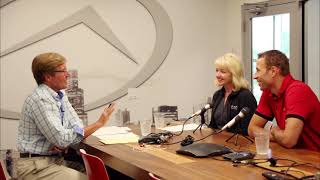
Physical therapists Rita Ator and John Duncombe discuss running from injury prevention to ultra-marathons. They cover training strategies, nutrition, recovery tools like compression boots, and bio-hacking practices including cryotherapy. Both pursue the goal of running a marathon in every U.S. state.
Chapters
Living a life in full is a conversation you always wanted to have with that person who gave an amazing TED Talk, or the author of one of your favorite books, or that inspirational Olympian you always wanted to know more about. It's graduate level conversations with those making a difference in the world and in the lives of others. This show brings you new ideas and approaches so that you can live a life in full. I'm your host, Dr. Chris Stout, and I hope you enjoy this episode.
I'd like to welcome you to today's episode. I'm really excited about it. We've got Rita Ator and John Duncombe, two good friends of mine, but also two extraordinary physical therapists with amazing backgrounds that we'll get into. And they also have amazing resumes with regard to their running abilities. Half marathons, marathons, handfuls of shorter distances, triathlons, ultras, things like that. Just really amazing and inspiring people. And they kind of come at it from a perspective that I really appreciated and why I wanted to have them as guests. Because they have worked with a lot of runners in getting people back to running that have had injuries, that have sidelined them, myself included, and they've been able to sort of titrate down what's helpful to prevent injuries, what's helpful to get people back out on the trails and the roads and into their sports, and then also apply some of those same kinds of things to their own lives and their own training regimens and things. So we'll do a deep dive into things like diet and different kinds of ways of preventing the injuries, quicker ways to get back from those injuries and really being able to improve your time, improve your performance and stay injury free. So if you're a runner or even a wannabe runner, if you wanna start getting into it or getting into triathlons and things like that, then I think you'll really wanna stay tuned for this episode because we kind of deconstruct that and talk a little bit about my history of just being able to get into running. When I was a little boy, I had a variety of different kinds of orthopedic issues and problems and really could not run. And we talk about learning how to run and being able to of those transitions and weight loss and just really life changing kinds of things. So if you're a runner and want to stay injury free, if you're an injured runner and want to get back out, if you're a wannabe runner, or if you want to lose some weight or improve your times or whatever, then again, stay tuned. You're not going to be disappointed.
Well, welcome John and Rita. It's great to have you here on our inaugural, inaugural first podcast. So this is fantastic. Just as by way of a little background John, you want to tell us about your history and kind of what you do at ati?
Sure. Physical therapist by trade. Went to Wisconsin Madison back in 99 2000. I've been a PT for almost 17 years now. Took a first job on the hospital system base in downtown Milwaukee and then made the transition down to ATI back in 2001. We only had at the time two, soon to be a third clinic down in Joliet. So it's been quite a transition for myself to kind of watch the company grow. Spent about 13 years doing straight clinical work. Helped open clinics, kind of bounce around different Chicagoland suburbs. Took a break and went to Michigan to do some hands on training, then came back to join ATI and most recently spent about two, two and a half years doing more corporate based work and did acquisitions and mergers based on the EMR system. So a lot of training things and kind of traveling based and now translating shifted back to the clinic the last two and a half weeks part time. So I'm there three days a week and still incorporate here about a day and a half.
Great. Fantastic. Rita, how about you?
So professional career wise I. Well I went to Eastern Illinois for athletic training first because I couldn't run track there, that's why I did that. And then it led to me meeting a gal who was doing pre physical therapy and so then I followed in her footsteps and went to University of Illinois Chicago and she was in the class ahead of me and throughout that time I was running and whatnot, but not competing. Anyway, I finished there, started my first job at Orthosport, was with them in orthopedics primarily for 20 years and then ATI bought them in 2007 and I continued on and from the time that ATI purchased my education background I feel like exploded with being able to do a lot more things and have a lot of more opportunities for education and advancement and I really have loved that. So I'm very manually based now as opposed to totally exercise based in the past and have the sub specialty of lymphedema besides the ortho that brings me year to date and I'm in the clinic 100% of the time.
Wow. Fantastic. Well that's great. Well the reasons I want to. I mean obviously I know you guys and I don't know as much about the physical therapy background as you know, we'll probably get into more so today, but you guys also have kind of a, you know, bring a unique skill set vis a vis running, the context of being athletes as well as treating athletes, which I think is really unique. And that's really kind of what I want to kind of get at the crux at today and some of the experiences and things that you've had. So, Rita, you give me your CV vis a vis running. So you didn't run in college, but you wanted to?
No, not competitive. Well, so truly my initial running was like in elementary school they would hold these field day events every year at the end of the year and I always ran sprints and the high school coach saw my sister and I, who were twins, running and he then really heavily said, you're doing track in high school. So he was preordained. Yeah. And we excelled at it. And it was primarily always a sprinter though. And our senior year we made it downstate and we actually in the small school division were ranked. And it was like that just is where I really, truly fell in love with Eastern at that time and then more so running. So then when I got to Eastern, I thought, okay, I'm going to walk on and see if I can do it. And I saw two other girls I competed against. I'm like, I'll never make it. So the next best thing was being able to be with the athletes via athletic training. So that's why I picked that curriculum and then really started more distance training at that point in time, pretty much daily running than when I was there because that was my outlet for stress a lot. So then my husband and I were married and we both liked to run. So we continued together and then started entering 5Ks all the time and began just doing that not really competitively, more just for fun. Then I started triathlon, sprint, distance only and did that for about 12 years in addition to running 5Ks. And then in 2000, I remember I bought the shirt training for 2000, it was the first marathon I ran and then did 13 fulls and I don't even know how many. A lot of halves? Yeah, probably more than that. And then just have continued now. I just told John I haven't run in a week now. It's a great outlet. You can do a lot of things during it and it gives you insight, I think, into patient care too, on what you're experiencing. If you, as I said, don't give up. You know, there's always a way and so to do things you love and I always try to figure out that method with patients now, so that's great.
Well, I think, you know, you certainly have the vocabulary having been from, you know, throughout elementary school to high school to college to post collegiate and then distances and sprints and everything else in between. That's great.
Yeah, it's been fun.
How about you, John?
Running for me. Started about age 5, started playing soccer. Kind of passion for soccer and playing it pretty much year round for 21 years straight. Wow. So inside in the wintertime and traveling teams during the fall and obviously during kind of the U6, U8, U10 kind of divisions as we all kind of played in the county kind of stuff. Did some traveling, kind of select teams. Played all through high school, played through college, did some basketball kind of here and there, but kind of soccer was the main sport and kind of just kept me going. Played midfield, which is obviously both sides, offense and defense. So I was pretty much running non stop. And looking back now, I never really got that tired. Which had kind of parlayed in my now kind of, you know, long distance running, but potentially was going to do track. I did that in middle school for about two years more kind of mid distance, the mile 800 kind of, but wasn't never fast enough to be a sprinter. Probably would have done cross country had not also been the same time as soccer. So I kind of lost out after grad school. Still kind of ran much like reading stuff. Kind of did some 5Ks, some 10Ks, always kind of had the interest to try a marathon. Knew that I could do the marathon distance but never had time to train for it to then go up the speed I wanted to. So I just kind of pushed it off. And I think that was my kind of mental excuse to then not have to go try and do it. Because obviously the racing, the. The race is the easy part. It's kind of, you know, side imports the hard part most times for most people. Right. And then about a decade ago, kind of got the bug again. Kind of did some mini races here and there, again, short ones, didn't do much during my late 20s, early 30s. Just kind of working too much and traveling. Just kind of recreational running for health benefits and then kind of got the buck to try some more races. Did a marathon about six years ago. Kind of liked it.
Which was your first one?
First one was Des Plaines Trail marathon that they have in the fall.
He's kind of a trail guy, right?
Kind of a trail guy, yes. So the roads are okay in time, but definitely kind of have My passion in the woods and stuff, I see more so at night where it's nice and quiet, me and the deer and the animals kind of go out and play together. And I'm looking forward to that. Runners kind of high in that wall to kind of have that challenge of kind of push myself through it. But the wall never came. And I was like, all right, I'm tired, I'm fatigued and stuff. But the reason that I need to stop, I can't go any further. So I was kind of almost kind of ticked off, not upset.
That would really make me mad.
Had a decent time again. Wasn't fast enough to qualify for Boston quite yet, but I'll probably do so in the future. But I got to thinking, where's my wall? Is it 50k? Is it 50 miles? So did those distances. Did a 63k, did an 85k, done 200 miles this past year. So just kind of kept growing and I still haven't hit that wall. So again, running love and stuff, for me, it's very kind of like a time to kind of get away from the world. I don't listen to music at all. So it's just me and my thoughts, of which sometimes there are plenty. Other times there's hours of just silence and just breathing and running and kind of taking in nature. But I really kind of challenge something. Just kind of see how far I can go. And I never look at the watch trying to figure out, I have to run another hour. I can only run for another hour. Like, why can't I go further? How far can I go today? And I kind of had those mental, I guess, self kind of hurdles kind of get across.
But that's great. Yeah, I really appreciate the meditative aspects of it. I did a double marathon on trails a couple years ago and I had had like all my music set up and, you know, my little MP3 player and everything. And I thought, well, if it runs out of electricity, you know, because I don't know how long this is going to take me. And I had another one as a backup and never listened to it. Yeah, it was just like such a kind of a nice thing. I mean, I totally get the whole meditative kind of thing. And then I told my wife, you know, like a lot of times it's like, oh, I gotta go run. But the way I kind of set this up was that I get to go run. And sort of really that reversal of like, you know, when you're, as you guys know and as listeners, you know, probably feel this Too. There's a certain level of. You feel like you're prepared for things, and then you actually kind of get to the point of where you're looking forward to it, as opposed, you know, oh, it's drudgery or I'm afraid of it or what have you. And I think it's different for me, I guess I don't know about the two of you, but that I feel like I'm always kind of competing against myself. You know, you hear the cliche of, you know, run your own race kind of thing, but I always feel like, you know, because I know I'm never going to win anything, so it's like I can just kind of do it and then get into my meditative stuff or get into, you know, all the other kinds of things. And I cannot. I don't know if this is as ocd, you know, for you guys as it is for me, but I have, like, this little digital recorder. Not a. Not a player. And I cannot go for a run without that because I will come back and I'll have, like, you know, six new ideas or 10 new ideas, depending upon however far I've gone. Because my head just kind of goes into, like, thinking about, you know, a PowerPoint presentation or a paper or something like that. And. And it's just. It's great because the worst thing would be, like, if I'd be like, X miles out, not have my recorder and have like, three ideas, and I'd be like, going, okay, I can't have any more ideas. And I can't forget these three, because historically that would be the case. I'd be back like, oh, gosh, I had this great idea. So, yeah, I think it's very interesting because I also have to focus on my breathing. And I think then that also gets into a very much of a meditative, mindful kind of state as well, too. So that's very cool. So do you guys have favorite distances? I mean, you're doing sprint triathlons, you're doing marathons, half marathons. You're pushing the envelope with harder and harder and further and further ultras. Even though you're. I know you're looking for that wall, but is there, like a favorite to say, hey, I really like 50s, I really like halfs. I really like sprint distance triaths. You know, do you have a favorite or.
I think for me, currently probably a 50 mile is my favorite. I can keep the speed up and be competitive with most runners, obviously, minus the elites. It also kind of falls back on my Family life. And I can't ask my wife to take care of the kids for three days. So I can go running for 30 hours. As much as I'd like to. I definitely enjoy the longer distances for more of the challenge. So definitely hundreds. I'm doing 117 mile this coming fall and stuff, which I'm sure we'll talk about later on, but. So I think the further I go, the more I like it. But I also have to respect her time. My children I want to go see. So if I can do a 50 miler in six and a half, seven hours, maybe 10 hours total, drive there, warm stretch and kind of drive back home and be on some kind of local race. It's a day, a half a day versus taking a whole entire weekend away from the family time.
Yeah, that's a good point. I mean, when you think about the duration of these kinds of things, I mean it's. And iron distances with triaths and things like that, it's like. Yeah, it's not just. You think about the elite marathoners. Two hours and five minutes are all kind of done and then the window closes for the others. And we can get to this too. I mean, it's been such an interesting thing with the people's day or not. You can have the races that you're feeling prepared for and looking forward to, but then sometimes you just. It's just. It's not your day, no matter how prepped, because it's the weather or something tweaky with your GI or something like that. But Rita, to circle back. So then do you have a favorite distance?
I love the half. That's probably my favorite half marathon. Yeah. I feel that I can successfully complete that. And I wouldn't say competitively maybe sub 2 hour, but I think that for me that's ideal. But the time to train, especially working, it's hard. And when you get to run what you were saying, that is so true. Like I want to be able to have the time to complete as much as I can of the training schedule or whatever I put myself on. And interesting. When our kids were small, we did buy the baby jogger and we took them with us. One would be on a bike, one would be. And we actually probably had some of our better runs when we would do that because I think it gives you resistance. So then when you get to the race, you actually are better than. Yeah, but I. I don't know about you guys, but I have that adrenaline rush at the beginning of a race and it's Almost like the dry mouth where you're so anxious about getting going and I have to get into a zone, and then once I'm relaxed, I feel like I could go forever. But I do hit the wall on the full marathon.
I found the wall, John.
Yes, I have, for sure. I think it's that 23 on a full.
Yeah, well. And I know, John, your kids are maybe a little too young. I just. I remember seeing the training wheels off the bike thing with your phone. But I know your son's quite the runner and triathlete, and do you think you put some of this to his, seeing what you and your husband were up to?
Oh, yeah. Certain. For sure. Actually, when he was 18, he ran the Chicago Marathon with me and had not trained a single day and finished ahead of me.
I was like, you hate that.
Yeah, it's good to be 18. But he has now turned into truly a runner and triathlete, and swimming was not his forte, but has become with a coach he's been working with. And actually he just is starting a position with Lifetime Fitness, which is kind of right up his alley anyway. Great. Yeah, it definitely rubs off. I believe both kids are very. They love athletics. My younger one's not so much into cardio right now, but I think he'll get it.
But, you know, I feel like historically, like, more so, like with my generation is like, you didn't, like, maybe you go, you know, toss the ball around, you know, with your parents or shoot a hoop or something like that, you know, with your. Your parents, but you didn't go out for a run with your parents, you know, and there weren't. I mean, in the 70s, there weren't 5k races and stuff much thing. And. And I feel like, you know, like, we have the opportunity now to kind of grow up with our kids doing these kinds of things and having them beat us. And, you know, we'll see. I'll meet you at the finish line, you know, a few minutes after you kind of a thing. So, I mean, it feels much more like a family kind of thing where it is one of those sports and it's also, you know, you don't need, you know, I mean, triathlons are a little different because you need water and a bike, but, you know, you really don't need a whole lot of, you know, shoes and some time. And it can be at night, it can be on trails, it can be on pavement. You know, it's. It's. It makes me think of John, you with your. One of your goals to Run a marathon in every state. Can you tell us a little bit about that?
Going pretty good. I've got eight, I think almost nine states kind of knocked off so far. But again, it's finding time to go do it. I'm blessed to have a couple different jobs that take some travel so I can just toss in some shoes. And again, finding time is sometimes challenging when you're working and teaching a weekend course. But I'll get up if I need to, midnight or one o', clock, and go do a quick marathon as I call it, and then go work the rest of the day.
You know what it sounded like you said. So you get up in the middle of the night, you've traveled to Timbuktu, you're probably in a different time zone, probably a smidge jet lagged. You know, I imagine if you're like me, you know, you kind of have, you know, your head's kind of in the what am I going to be lecturing on the next day? And rather than kind of catch up on your sleep, get over your jet lag, whatever, you set your alarm to, get up in the middle of the night in a strange city and get your GPS watch to go clock a marathon.
Go explore. Yeah. Gosh, that's amazing.
That is really amazing, man. So have there been any interesting experiences doing that? Anything or just all pretty.
I took a run once in a remote town and there was truly no roads to run on. There was the one road in the town and then there was the interstate. So around the interstate for about 10 miles, which was kind of interesting.
On the pavement,
the shoulder of the interstate.
So you could hop off if you needed to.
Exactly. In the traffic. Safety first, secure. So that was kind of unique. I've never gotten lost. I've found some unique trails and didn't quite know where I was. But I have a good memory to kind of work backwards and leave some trails kind of here there's some crumbs to kind of get back out of there. But really nothing too outrageous. Really. No major incidents. Didn't get stuck or hurt and then have to call for help to get back and see numerous animals. But no one ever attacked me, which is good.
That's very good.
Been pretty safe.
Wow. Well, Rita, would you say have you ever had like a memorable, like best race or even memorable, best run or anything like that?
Oh yeah. Actually my best one was in Cary, Illinois, the half marathon.
Oh yeah, yeah.
Because I wanted to beat a co worker of my husband.
Good motivation.
So we crossed the finish line then you know, a few minutes later, here he came and we were already holding our medals and waving to him. It was because he was like, oh, your wife's running. And my husband's like, yeah, I'm going to cheer on. So a friend of mine was with me too, but that was very memorable. But also he reminded me of this. We were talking about this triathlon we did in Michigan in Three Rivers. And there's only about 600 people in this race and many of them were elite. So you could opt out of the swim and do a 5K because the lake was not really conducive. It was very muddy and weedy at the edges and that's where you went in. So I kind of looked to step in and I'm like, I don't know if I can do that. So I chose to run the 5K. So I'm running and you know, with a large group of people, so they start us in waves. But this girl comes and she passes me and she has two Oser Flex prostheses on. She passed me.
Wow.
So then, you know, we get to the bike. I passed her on the bike, so I felt good about that because it was a 40, 40K, I think bike. So was well ahead of her on that. And then here I am on the 10k and she passed me again. So I'm like amazed. So her and her husband sat with us. They have a huge breakfast at the end of this race and there are all these volunteers cooking everything you can imagine, pancakes, bacon, egg, everything, breakfast wise. And you just sit down like on picnic tables around the ground and have conversations with people. And so we were talking with her and she was a rep for them. So that was so memorable. And she was like, you know, they approached me because I was always a runner before her amputee or amputation. And it was traumatic, her amputation on one of the legs. And I think both of them actually were. They were damaged in some accident. So she decided to become a runner. But that was very inspiring. It was like, wow. And she did beat me by quite a lot. Wow.
That's.
They were eating when we got there.
Well, you know, and one of the things you said too, reminds me, it seems like there's so much also like community with a lot of these races and things. I mean, be it like the esoteric, even, you know, smaller ultra kinds of things, but it's like even though people are in competition with one another, people are still always kind of like watching out for one another, always kind of supporting one Another and I remember more. So I did a lot more bike riding in Indiana before I got into running and as an undergrad. And you would have these, you know, 100 mile rides or 60 mile rides or whatever, and you'd have these little, you know, stops if you wanted to along the way. And it'd be similar to what you said, like with the picnic tables and stuff. I mean, people would, you know, especially on bikes when it wasn't competitive, really. I mean, some people competed, some, so to speak, just because they wanted to have good times and things and push themselves. But you just kind of hook up with a group of writers who are about your same pace and you're wide variety, very heterogeneous mix of people with the single unifying thing of wanting to be out on a bike on a nice day and challenge themselves at whatever level. And it's just really, really wonderful to kind of do that. And again, I don't know, not that it's a competition with basketball or anything like that, but it seems like one of the nice unique things about these kinds of sports these days or even more, you know, ex gamey kinds of things or whatever, that they're climbing or whatever, that there's a lot of, you know, camaraderie with it, even though it might feel very individual at the time. We all run our own race, we all climb our own line or whatever. But to be able to have that, I think it's just, you know, a nice little, little bonus with it. A nice little thing to, you know, again, bring in, introduce family and friends and things, you know, husband and wife kinds of things is really nice.
I,
when I was a kid, I was very fat, which wasn't cool when your name's stout and at least you're tall. Yeah, well, I wasn't thin and I had all these orthopedic issues and stuff. And I was in what I referred to as clodhopper shoes. I never had a pair of tennis shoes until I was like 12 years old. So I was not running around or anything much like that. And all these other kinds of things with my feet and my knees and whatnot. And that plus a passion for Oreos kind of, you know, helped me get a BMI of about 33 when I was 12 years old. So one of the things when I started to lose my weight was I got into running and I started watching what I ate and things like that and, and that helped a whole lot. But one of the things that I then started to suffer was like shin splints. And it issues and all these other things. Just because I inadvertently was a trail runner, because this was on a farm. So it was like the trail was for a tractor, not for hiking or anything. So it wasn't hard surfaces. But the quality of shoes back then too, kind of wasn't what they were today. So I just get laid up shin splints and just be kind of miserable after that. Then I think I got my first pair of Nikes or something. And that was just sort of like just a huge game changer. I could actually go run even a little further, not be miserable for two days afterwards and felt real good about it. And then over the course of time, I started to realize. Then I started having hip issues and things. And Rita, I can violate my own hipaa. You know, Rita helped get me back on the road. And I was having all sorts of issues with running. And I think one of the issues that I was having was just with my wonderful new Nikes, it was, you know, heel strike. Heel strike. Heel strike. And I read Born to Run and got, you know, was very curious about that. And I've tried to adapt my running style to be more, you know, forefoot, midfoot kind of thing. And then again, that plus the help that you gave me, Rita, made a huge difference in getting back on the road and getting into further distances. From your experiences as runners and your experience as physical therapists working with runners, do you have opinions about heel strike, forefoot, barefoot, those kinds of things? Favorite shoes, Any endorsements?
Do you want to go first?
I think mechanically the heel strike is what you want to try and avoid. It just doesn't make a lot of sense for all the jarring that takes place both in the foot, the knee, the hip, up the entire chain. So definitely more of a mid foot. I didn't do some barefoot training back and stuff. I read the book as well by McDougall and Stuff. Born to Run kind of liked it. I think a lot of folks have kind of jumped that bad way and gone too far. And I've seen lots of foot injury, lots of toe kind of fractures and stress, fracture of the foot because of that aspect. And they kind of push the needle too far to the edge. And I think you can do some barefoot training, but not so much. Very fun running for those long distances. Some can do it, but it's definitely not for everyone. So shoe wise, you kind of have different kind of camps of minimalist. You do more of a heel drop. No heel drop. You know, it's kind of more what's Your comfort level. And then if you do more trail stuff, need to have some more cushion. Obviously hokas are big because you're like a cloud you're kind of running on. But then you also lose the connection proprioception on the ground itself. So you kind of want to have some feel but not too much. And so these are kind of figuring out a good kind of blend of you have your minimalist shoes, your kind of mid range shoes with a nice cushion, but still a good kind of rock plate to kind of have the good springboard and push off so you don't lose all that propulsion. Then you have your kind of max cushion shoes for your trails and your kind of, you know, pavement kind of runners. So it's more a matter of kind of where you're running. And I've actually taken some shoes and switched out shoes, different styles on the trails during the race based on what kind of section I'm on. Is it more hills, is it more meadows and stuff and just kind of kind of almost like playing like a. An f. One kind of car will change tires if the race conditions can change my tires more or less.
Wow. I've never. That's, that's really brilliant. I've brought spare pairs of shoes figuring that, you know, because I. I really have an issue with blistering and stuff. And I thought, you know, if I. If they got wet or whatever, then I wouldn't be miserable or whatever until I could change back or something. So that's clever.
How about.
What are your thoughts?
Yeah, I definitely agree midfoot strike as opposed to, I mean, spike sprinters, of course they're going to be toe, but heel strike, absolutely not. That's too much force. They say eight times your body weight at heel strike transmitted. So if that goes up into your spine, which were your issues.
Yeah, do the math. Yeah.
So definitely I feel strongly about the midfoot and then, you know, just the propulsion portion of it to your body position. And I was mentioning the chi running is like all but posture oriented. So what we traditionally teach patients for good positioning of their body and all different aspects of their life work or whatever. And so I've really tried to be cognizant of that and aware of that just to keep joints safe. But I think imbalances lead to a lot of injuries too, like, you know, lack of stretching or, you know, shin splints. I always have had a strong feeling about that's lack of calf stretching. And a lot of times that's in kids who don't do it enough. Or they don't hold them enough. Hold them long enough as far as stretch. So trying to bring that into the clinic with patients who are coming in with pain, but also the aspect of, you know, someone who is training and they need to be able to compete, but they have this nagging injury. So how can you get them through that quickly to allow them to compete? That's a challenge.
Yeah, that's the hardest part. I mean, the hardest part of a runner is to not get injured, because you always want to run. And even when you're injured, you want to run. And then, you know, the whole what's good, what's not that sort of a thing. So. Wow, that's, you know, it raises, I think, a lot of interesting issues, too. Thinking about the McDougall book, like, talking of. I think it was in there that he talked about, like, the Russian track team or something, would the first thing they did was have to jump off a ladder and land barefoot, you know, know, on a solid floor. And the Stanford University track team, one workout a week, was barefoot on the grass and things like that. And, you know, I've noticed, too, because I'm just, you know, kind of always experimenting and stuff and different shoes and different trails and just kind of see how my feet feel during it and how they feel after it and stuff. And one of the things I've tried to do is just even as much as possible, just be barefoot kind of around the house, in the gym with two weights.
Yeah, yeah.
I always, you know, unless I'm in a public place. Yeah. I lift barefoot and everything else. And I just feel like that has helped me adapt because it was much different when I first started it versus what it is today. I don't know if this is real or not, too, but it seems like my shoe size is bigger now because I feel like my foot, like clown shoes or something, you know, just. It's really kind of gotten away because I think historically, with these orthopedic shoes, shoes and what the science was back then, you know, I think it was McDougall's book where he talks about, like, your shoes sort of become this de facto cast, you know, and that you find it up and, you know, you think about, you know, Asian women and whatever, how many hundreds of years ago. And I thought, you know, that's kind of what I think the orthopedic thing was back in the 60s when I was a kid that, you know, they were trying to do to fix whatever was wrong with my feet. And it's like, well, didn't quite do it.
Yeah. Foot control. Foot position, I think. And that's kind of similar to orthotics. Do. I mean, sure.
Right, right. Well, how do you guys. I talked about, like, fueling for being obese with Oreos, but how do you guys fuel for your races? Do you have special diets? Go to foods. Avoid foods. Any different during season versus off season.
I'm very sensitive in my gi. So, yeah, I have to be very careful. Like before a long race, marathons or half, I do pasta, but it's usually just with, like, butter sauce. No tomato sauce, no veggies, anything like that that might produce an irritable reaction. And during the race, though, I love cliff blocks and goo. Got favorite flavor. Oh, I like the cherry strawberry, but not Gatorade as much. I have to water that down because the sugar will get to me. Yeah, it's thick.
Yeah, it's just. It's not. Yeah, same here. Not my cup of tea. So how about you, John?
Definitely no diet during the normal kind of days of the week. I'm definitely blessed to be married to a dietitian.
Oh.
So for me, it's not a matter of finding the right food. Do I eat two and a half or four servings? So it's more. Portion control is my issue, but that's why I gotta run further distances so I can eat more.
Yeah, yeah. Burn it off.
Tree race. I'll definitely do some car loading that week. I try and stop it by around Tuesday, Wednesday of a Saturday race. And then do more salads and fish and kind of leaner proteins prior to that.
Yeah. I've heard that the proverbial orthodoxy before was like the night before. Now I hear it's like the night. The night before.
You have that main carb thing, like the lunch or dinner of the day, that half prior to the race, and then have your fishes, your salad and stuff and your kind of later foods kind of prior to that. So you don't have that excess carb sitting in your system. You need to have the fuel and the muscles ready to go that morning.
That does make sense.
Do you guys ever lose your appetite in distance races? I hate that during the heat. Yeah. It's like I need it. And this is kind of like my reward. You know, I'm doing this so I can, you know. Do you know, you know, whatever. And, you know, I've had that same thing. I did the Chicago 50 50, which is beautiful. On Lakeshore or on. Yeah, well, like up and down Lakeshore Drive a few years back. That was my first ultra. I did the 50k, not 50 mile. And I forget. I was like, there's like a turnaround or something, like at Shedd Aquarium or Adler or someplace. And they had just this huge table of just. Just looked like, you know, just nirvana of everything that you could kind of want, you know, that was kind of decadent and whatnot. And nothing looked good. And I thought, I gotta eat something, you know, because it's gonna be a while before I get back. I wasn't really carrying anything. And I remember I got like a handful of peanut M and Ms. And then just like, ran with them in my hand for a while. I thought, well, that's probably good. You know, they're not gonna melt my hand. And I'd, like stick one in my mouth one, and like, go for a while and then finally crunch it and stuff. And I thought, oh, this is really, you know, I think it's. It's fascinating because you would certainly think. I get maybe. Guess it goes to your point of like, you know, your digestive system and going, well, what's good and what's not good? But then also knowing that you need to, you know, force things. And what you, John, you and I were talking about, like, what was it, hyponatremia or something? Hyponatremia, yeah. So then what's that? When your kidneys aren't working, Kidneys are
kind of shutting down more or less because you're taking on too much fluids and you can't keep that good balance between. Between enough volume of fluid and enough food to kind of go into the cells. So you actually kind of do yourself a deficit by going too far the opposite in the extremes and have some
major issues that doesn't necessarily. I mean, I know it's probably more part and parcel with distance, but I mean, people that experience that at shorter distances, too, right?
That aren't.
Yeah, yeah. Gosh, yeah. I think it's those kinds of things. I mean, I think that it makes me think of the whole, you know, there's, you know, obviously going to be a, you know, trainers or medical personnel or something, you know, from a 5k area now, I guess there's mile milers now, you know, making a comeback and stuff, which is kind of neat. But, you know, I know that. Oh, what is it? Badwater, where they have designated medical stops and they check your temp and they check your pulse and stuff. But, John, was it you that was telling me that was a temperature? There are some biometrics that don't seem to really make a whole lot of difference.
Well, they had a recent, I guess, conference more or less at the Western states couple weeks ago, and they said that they used to measure people's weight at different kind of stations. But actually a weight loss wasn't very helpful to try and figure out. This person can be in kind of failure and stuff internally with their organs, so they're not going to more taking blood draws and trying to figure out, as you change with the internal matrix of your kind of systems in your tissues, in your blood to try and find the kind of markers to say this person going into shock, this person dehydrated too much and trying to figure out how to treat them best. And you don't want to get the person who's got too much fluid more fluid because you think they're dehydrated and then cause a bigger issue. So they're trying to kind of find better ways using science and I guess more technology versus just an actual look at the person, check their heart rate, look at their weight, which isn't a good marker.
So. And you know, the salt tablet issue, that was a big deal for a while. I think people still do it frequently. And when the Chicago had that shutdown because of the temperature. Yeah, we were in that year, we were running and we hadn't made it far enough where we got blocked off and had to stop. But my husband and I had prepped for it and we were because we had been running in the heat. So I think it's your acclimatization too, to the area and how well you know your body too, of what. What's a good feeling and what's a bad. Like if you feel wobbly or. Or if you feel like, you know, spots and chill.
I always tell my pacers and stuff for my long runs, check in and stuff and asking when's the last time that I peed, when did I eat and stuff, Am I still actively sweating or am I feeling cold, am I warm? Because obviously that's going to change throughout the race as I go further and further along, get more calorie deficient and you kind of balance it out. And I tend to get kind of mentally groggy around 65 miles. And it's for me more of a sodium, potassium, magnesium kind of balance. Or I need to have a different kind of food now versus not really hungry, but my mind's hungry for more. The kind of neural connections.
Interesting.
Wow.
So that kind of break through that I'm finding in and kind of keep going.
Everything's okay. Wow.
You do know you're bad when you go those days especially, I would think you really get to know what you need and what you physically crave.
Right. What's normal, what's not normal. Or this is. Oh. Or. Or whatever. Yeah, I think it's hard too because there's. What's one of the new things of the philosophy that when you feel like you want to stop, you still have 40% more or something like that kind of a thing. And I think that's. I get that. I understand that psychologically. But it's also like having that. Well, be careful too though, that 40% more, 20% on the way to that may not be a good thing. So I remember I was at a wilderness medicine conference out in Big sky some years ago and they had a fellow, I think it was from Boston. It was really a disturbing video to see and to learn about. But it was a runner in a hot Boston and he got overheated and he passed away. They ice. They, I mean emergency, you know, did everything they could, got him to the hospital, ice bath, blah, blah, blah. And I. And they found that even after he had passed away, they were still monitoring his body temperature and it continued to rise up. Yeah. Which people hadn't thought was even possible. So I mean it really gives you an appreciation of having this balance between pushing through something that is. I mean some of these races are miserable. I mean bad water and it's just hot marathons, hot 5Ks or whatever. But then knowing that there really are limits and boundaries. So I appreciate that thought of having better medical tests or immediacy of things to be able to say, well yeah, historically it might be if this then push fluids. Well, if this, but not if this other thing push fluids. So that's good. So talked a little bit about training, talked a little bit about eating and stuff. I've been joking with people that sort of sleep is the new black. What do you guys think about rest and recoveries? How does that fit into yours or your patients lifestyles with running and keeping in shape?
I would say sleep as much as you possibly can and do not follow me. So I'm the anomaly of I'll get four to five hours a night and still function fine, travel, do my runs, my distances and as far as I think can still be a productive human being. So I know it's not very healthy. I try and get more when I can, but definitely I think we need to especially like after my race, if I do a long ultra, it's 100 mile race. I'll then take the whole entire next week off and not run at all. And the time I would run I try and sleep, stretch, kind of recover more or less and get that by a chance to heal before I start hitting the trailing in for the next race, you know, a month later.
How about you Reena?
Oh, I definitely, I need seven to eight hours. Oh man, for sure. Probably 10 years ago. I might not have John wait till you get to this end though. No, but I think that's a key is getting the adequate rest. But after a long race though, I usually will. I'm pretty much an advocate for three to four days of let the muscles rest and hydrate and stretch and then begin short distance or cross train.
How about in your practices? What kinds of injuries do you see racing or running related in the athletes that you've treated or the weekend warriors that you've treated? What tends to be the Is there a most frequent. Is there top five?
I would say probably your shin splints, your implanted fasciitis, your it hip bursitis. It man kind of that complex is probably the top three that I see the most of.
And those are resulting from poor biomechanics and stuff.
Poor biomechanics, probably over training, lack of flexibility, not a good warm up program and stuff.
And yeah, yeah, definitely all of those things. And just not knowing too when you're out of balance, some people are like wow, I didn't realize I was tight in whatever muscle group and once you point it out and show them then it's. I always think of the shin splint though when your foot has to rapidly pull up or dorsiflex so quickly, especially for sprinters or cross country season is where it always comes to mind. For me if they're not stretching near enough and that calf is so tight their anterior tib is working over time and it fatigues out and they don't realize that they think that it's something with the bone or you know, oh, I have a muscle injury here. Well, the muscle injury is coming from another area of tightness in the body.
Well I think that's one of the nice things with working with physical therapists is the fact that you guys do the therapeutic aspects but you also do such an educational aspect aspect with things too to help people understand their bodies. And this is how this works. It's like again like McDougall said in the book, no one teaches anyone how to run really. They teach you how to swim, they teach you how to shoot A ball, they do whatever. But there's sort of like this absence of something. And just about every single sport, unless you're in a canoe or something, you need to run. So it's sort of interesting to think, think about that absence, but then just the whole, you know, I think the evolution that you guys have spoken about of like, what it's like to be a runner and then how much you get into understanding your body. And I think you guys can be sort of an accelerant to the people that you work with to help, you know, they can skip a lot of the stuff that, you know, that you've learned through graduate education or through your own experiences and, you know, be able to get them back on the road or get them, you know, get things going, you know, better for them. So I, you know, I think that's a key thing with the work that you do.
A good cheat sheet. Watch a toddler squat like a two year old, perfect form. Watch a five year old run. Fantastic form. They have no biases, they're not tight, they're not weak and they have perfect form. So just, yeah, result back to being a toddler and stuff. Be just fine, you know.
Interesting. I. We did have a parent though, bring their child in to learn to run. He was very uncoordinated and so we did break it all down into each component. Foot, knee, hip, core and posture. And he's so cute though. He really did learn to run really well. But his parents noticed on the basketball court, like he was lagging behind and he just looked disjointed and uncoordinated. And so the mom is an athlete and so she brought him into. And she goes, I don't know what to do.
That's great.
So it was fun, I mean, to notice that.
I mean, what a difference that'll make in that young man's life. I mean, just performance and feeling better, not getting injured and stuff.
So much fun though.
Before we started, you had mentioned this chi running or whatever. What's that about?
Yeah, so this actually came about from a young lady who had a traumatic ephemeral head injury and had avascular necrosis, so ended up with a total hip before she was 40. So she's like, well, my hip is gonna wear out probably in 20 years or so. I want to live normal. I want to be with my children. She has little small children. And so she introduced me to it. She encountered it first with the, the gentleman who originated and his name escapes me and I was looking for it here, but anyhow, she brought me the video for the introduction to Chi running. And so as far as Tai chi, it's all about movement and energy and they break it down into individual components of how your leg should move, how your arms should move, where your body alignment should be, and then propulsion. And that's where I had. That is really. It's truly a lean. And you pick up your speed by the amount of lean of your body and things like that. But they're big, midfoot striking.
So it's a similar kind of thing learning how to run.
Yes, yes. But I think her point was, and theirs also is that if you use these techniques, you prevent injuries because your alignment and your positioning is so good that you're not going to overuse or overstress an area. And then it becomes, the distance becomes the bigger question mark, I would say, because this would be more for intermediate distance. But it does give people hope if they do go through something like that a young age or if they're elderly and they want to still be able to perform as a referee in football. But I have a guy with bilateral hips and knees.
I'm like, he's a football ref.
Yeah. And he is running and basketball. Yeah.
Wow.
But I think it's just. And it has made me look at patients, you know, each day is different, every patient's different. And I think that what they teach us many times helps us grow as professional professionals and utilize those things for other people then to positively impact their recovery. So I really, I mean, I love the technique and I think I may end up going to the seminar with her.
Well, keep us posted that I'd like to learn more about too. Speaking of that then, do you guys have. Rita, you had mentioned cross training. Do you guys have feelings about yoga, weight training, things like that or. I mean, I know that certainly non impact things can be helpful to get over injuries or weaknesses and things, but any. Do you guys recommend it, do it yourselves, see benefits or.
Definitely, yeah, I definitely practice yoga at least once a week. I'm trying to weight train once or twice a week and I think a lot of runners kind of have that scared factor of I don't want to get big and strong. Yet. We're finding with the research that the more you do with your sprints and your weights, you actually can run faster and further. So the more speed training I do, I can translate that to a longer distance running at a faster pace where you think, okay, I need to go out and train at that distance and that pace, which is great, but you kind of have the good cross training of running and have the flexibility to have good form, the strength, the endurance, the quick fibers for a quick burst up a hill, down a hill. So you gotta definitely kind of have a good balance. So for me, just movement of any kind should be a component, whether it's swimming, yoga, bike riding, cross training, rock climbing, you know, kind of take your pick, but you just, you know, kind of switch it up so you're not doing one thing. Kind of stagnant.
Yeah, I would agree. I think also the core component of. And you know, we keep talking about that, but I do think people who do yoga and Pilates have a much improved body awareness and position sense and that allows them to use that as a cross training avenue for running and improving their capability in their runs.
I can certainly see why that would be. You see it, I think a lot of times when it's problematic. I think it's interesting then to break down some of those stereotypes though, of saying historically maybe the only cross training would be, well, maybe something with a bike or maybe some different kinds of runs. But to not be afraid of going in the weight room, I think that's great. We've all got busy lives, we've got families, we've got work, we've got responsibilities, we've got all sorts of things going on. How do you guys stay motivated?
Wait, no, but also, like that's your outlet if you love an activity to do that gives you some solo time. And I pray a lot and I use that to do a lot of that. So pretty much, yeah. Because I incorporate that into my everyday. So if I incorporate it with my run, then it's easier, it's more efficient. Remember, cheaper by the dozen. Efficiency expert.
Right.
I can do many things at once.
That's good.
Do a massage and hold somebody's baby. I did that yesterday.
That's good. How about you, John?
I definitely agree. Kind of a more kind of peaceful time, both in my head and stuff. Emotionally, physically, you know, religiously. Definitely. I also fall back to a patient I took care of as an intern at the hospital system. He actually was a guy who was a year ahead of me in high school and I saw the name of the board kind of walk in the room in the hospital bed and stuff. Figured, okay, he has some kind of issue, maybe he broke a leg, you know, do some kind of, you know, easy kind of pt. Well, he actually had a tumor in his spine that shifted and he fell down the stairs, couldn't get up and was in essence paralyzed from the Waist down. And I was like, guy my age, you know, a year ahead of me and stuff. Walking one day, walking downstairs to get a snack, and then boom. Now your condolences. Kind of paralyzed. Worked his way back. So I saw him as a intern twice a week. I went there on Saturdays on my off days for two hours in the morning, hour in the afternoon, three hours a day of therapy. Less than six days a week. And the second to last day that I saw him, he walked five feet on his own.
Wow.
So pretty much without getting too teary here.
Yeah.
Every morning I wake up and go, get your freaking butt out of bed. You have two functioning legs, you have good lungs. You have nothing to be ashamed about. This person worked his tail off to take five steps in a exoskeleton kind of walker device. And he was ecstatic, which was just. He was in tears. And I'm like, and you're complaining because you have the chance to go for a run and you don't want to do it? Yeah, not a chance.
Yeah.
So that's from. Yes, that's a good. Flip that switch if I'm feeling kind of, you know, tired. And he had a long day, kind of jet lagged, and it's like he would give his right arm to be able to have that for one day. So. And I've seen him since. We still kind of chat once in a while. And yeah, he's doing fantastic using the cane at times, but pretty much fully functional.
Driving, walking, ambulatory and functional.
Kind of made a full recovery. So it's just those little kind of small things I think we all kind of fall back on is to keep us going.
What kind of gratitude? I mean, to be able to have that kind of appreciation, you know, or even like you, you know, with your memorable marathon of the woman with the prosthetics, you know, I mean, gosh, that's, you know, probably a similar kind of, you know, appreciation that she had to be able to be out and mobile and ambulatory and things.
I did actually an ATI 5k we used to help way back in the day down in Joliet. And I think I actually came in second. That race usually. I used to win it most times, but I lost to a gentleman pushing his mother in a standard hospital wheelchair.
Oh, my gosh.
Now, mind you, I ran a 1730 ISH 5K, so book it.
He must have had the thing propped
up, and I legit an older lady in a chair and stuff. He got on a pair of shorts and he pushed her in a standard wheelchair, not a running wheelchair, nothing. Like, you went down to Silver Cross, picked it up and it had like SC in the back and stuff. And I flat out. I could not catch him. I'm like, that was the most impressive feat of running I've ever seen my entire life. He just smoked me.
That's.
Yeah, that was very, very humbling.
Well, there's isn't. There Wasn't there a father and son
that did the Ironmans Every year he tows him on a boat and stuff and push them in a bike and does a jogging stroller and raises money and stuff for whatever kind of disability he may have.
Yeah, those.
I saw the Iron man of that.
Those kinds of things are just. I mean, man, it just tears your heart out, but boy. And again. But gives you that gratitude and appreciation.
The human spirit can just take you anywhere.
I think what you said, Chris, we get to.
Yeah, yeah.
As opposed to. It's something I gotta do. I say about weight, but, you know, it is true what you say. You get to do it. It's something that we're alive to do.
Let me. They have a little bit more lighter questions, music or no music when you run.
Nope.
No.
I know what I said before with my Ultra, and I didn't. But I have had times, like, in training where I'll have, like. It's actually stuff that is almost like ambient, like trancy kinds of stuff. Housey kinds of stuff. Just. I don't know why it. Because it's like there's almost no rhythm to it. And that's how I'll start. And then by the time I get to the end, I'll try and mix it up with some little intervals and things like that and have these ones, I mean, three doors down and a couple of others I just have on my little list. And, man, it just feels so good just to sprint. And for me, the tempo was just exactly with my foot strike and stuff like that. That. So I remember hearing. I think it's been reversed, but there's a marathon in Minneapolis that they outlawed earbuds and music to and stuff, which I thought was, you know, kind of interesting. So I guess it's, you know, kind of to each his own. But, I mean, I had found that when I was training for my first Ultra. Oh, gosh. I can't think of the band Collective Soul. I listened to them. I had like, I don't know, like three albums or something on my little player. And it's so funny. Like, I'm so conditioned to It. So now if I randomly hear it somewhere, it's like, oh wait, where am I? What am I doing? Yeah, gotta go run. So. But again, it was like always in training and never in races. And in my head I was thinking I would use it in the races and just never felt the need for it. It's sort of like one of those, you know, it's like having the spare pair of shoes or the backup or the whatever. If I need this, it's my insurance. But you know, never, never needed to do that and just went in a different place and heading a different place.
Those rock and roll marathons, that's what they're known for.
Yeah, right. For having a band.
The mini marathon Indianapolis does that, which. That's a lot of fun. You run on the racetrack.
Oh really?
That's the only place where there's no band. But you know, you're seeing yourself on the big screen running on the Indy 500 track. Yeah, that's an awesome.
That's cool.
And they check you coming into the track. They're looking at your numbers and I don't know if they scan them now. They probably have.
I did the soldier field 10 miler some years ago and you stop on the 50 yard line of Soldier Field and my son Grayson just did the Illini and you're on the 50 yard line of the, you know, down at Champaign. So those are, those are neat, you know, the whole Jumbotroni kind of thing.
So simmerdy Chris. I will listen for my speed workouts. I'll put on some trance. I. For some dubstep. Just. It kind of had that metronome effect and that kind of upbeat tempo to kind of keep going. But anything that's, you know, longer than probably a half hour distance or any kind of, you know, longer ultra and stuff. It's definitely, yeah, you know, music free.
And I have, you know, get the head clear the bizarreness of, I mean here's, here's a weird thing like I'm not going to mention what I'm training for right now because it's so goofy and I don't know if I'm going to do it or not. But it's, it's, it's not exactly ultra stuff but like when I've just gone like for hikes, I listen to podcasts.
Sure.
And it's just sort of like because I'm out there for. I'm like you, except you're running but it's just sort of like, just so you know, I don't know it just gets my head in a totally different place and I lose track of time and get into, you know, if it's a good one of kind of, you know, what they're talking about. And I thought, you know, who would have ever thunk that? I mean, the technology today to be able to even do something like that.
You also learn so much too. Like cousin multitasking.
Yeah, yeah, exactly. Exactly. Yeah. Get some continuing ED or something, you know, while I'm out there. So challenge for the both of you. Think about this. What's been your craziest race and why? Good or bad, sideways or up or down.
So I think I had two. When I lost that 5k here with ATI to the person in the wheelchair. That was very crazy.
That would be crazy.
And then my first hundred that I did because I had to walk the last 10 miles in a monsoon downpour. Oh, I was on pace for like a 19 hour finish. And then once we hit mile 90, like just past 90, it just opened up.
Oh, my God.
At night. And you couldn't see the trails, which were three inches deep in water with rocks and roots. And if I wanted to run, I couldn't because I couldn't see the headlamp and go right from the light. So you turn the headlamp off. Now it's pure darkness. So I had to walk. Then your core temperature gets cold and you can't run then. And yes, I had a nuisance death mark with my Pacer 10 miles finish.
Oh, gosh. Oh, Just gutting it out.
And every ultra since it's rained, you
know, you raise a good point of, like, trails can be bad enough with roots and rocks of ankle twists and trips, let alone being invisible three inches underwater.
Oh, my God.
Oh, golly. All right. How about you, Rita? Contact races you've been in.
Well, he brought to my memory then. I probably, I mean, I do think about it often, but this was actually high school running, the state track meet my sister and I always handed off to each other in the relays.
Oh, neat.
And it was a downpour and we were actually. I can't remember. We were in first in the finals and I was handing the baton to her and the. The water was just rushing over the track and it's that tartan which we had the little mini spikes on. But my. I just could see her hand and I just touched it and the water just whipped under my feet and I fell. So the baton flew in the air. She actually did get it within the correct zone and took off. But we Ended up in last, so. But, you know, it was like kind of an experience of, oh, my gosh, how did that happen? That one? And then, you know, we were talking about the nutrition thing one Chicago Marathon. There was a lady way ahead of my husband, Ike's. We usually would stay together, and she was just reeling side to side, and it looked like she was trying to eat something. I couldn't really tell. So finally we got up to her. Well, she was definitely delirious. And so I had her come over and sit down, and then this other guy came over to help us. So we stopped in the middle of the race right at Chinatown. I'll never forget. So my husband's like, I'm staying here. You run. And I don't know what possessed me, but I sprinted under the viaduct and up to Chinatown to a paramedic. And they came back with me, and they're like, well, what do you want to do with her? And I said, I don't even know.
What do you want?
I just don't want her.
Isn't that your job?
I used to run her here.
So we ended up going on, and. But anyway, they were like, what do you want to do with her? And I'm like, I don't know the lady. I mean, I. Obviously, she needs medical attention, but I don't think she knew where she was. She was from a foreign country, too, so she didn't speak English, so. But she did have, like, something. A bar of some kind. She was trying to eat, but I don't even think she was making it to her mouth. But I don't know, because me in that. And then we did finish. I think we probably walked the last before the finish, the half mile or so, because that's like mile 22, I think.
Yeah. You're doing little wind sprints in between.
Yeah. That was very memorable, though.
Gosh.
What. How do you guys recover? Any tips? Vitamin I or. I know you've talked about, like, the compression.
Yep. Got some compression boots I use from a friend of mine. Very interesting to be able to implement those. Probably half hour each morning, another hour each night for the first, at least week, week and a half afterwards.
Do you guys blister? Yeah, me too. I do. Golly, man. I just thinking about. I probably got a blister.
Toenail loss.
Yeah. Yeah. Toenails are optional, so those gone.
I've got like four or five on right now.
I went for a pedicure, and I said, can I have a discount?
I've been on some climbs where we Talked about morbid things in the evening, like, well, if you had to lose a toe, which toe could you live without? That'd be a lot easier. Just prophylactically get them all removed.
There are some ultravioletted that have them taken off.
Gosh, their tips or their toes or
the toenails removed surgically. Just have surgery.
Why bother?
You falling out to cause issues? It's like there's really no functional purpose to it.
Yeah, yeah.
It's not that uncommon.
We don't grow them long enough to protect that.
Yeah, right, right. So any celebratory rituals or anything like that? My daughter is like big into ice cream treats after hers. That's the way she celebrates.
So I do an apple fritter.
An apple fritter. Those are good.
Chipotle burrito.
There you go. Okay, that's good. Good replenishing types of things, I think recovery wise too.
I do a lot of the. I make a drink that I have each morning so it's either blood orange or grapefruit with some ginger, some turmeric, some Himalayan sea salt and coconut water. And I'm trying to have some golden milk which is obviously just some turmeric and some cinnamon and some almond milk each night.
I've become a real fan of turmeric. Yeah, a natural to anti inflammatory stuff. I've been experimenting too. I went vegan a couple years ago just for the whole anti inflammatory stuff. And now there's a new book out called the Plant Paradox that I just got. And I haven't gotten too far into it, but part of his thesis, which really is radical, is that a lot of grains, quite a few nuts and a lot of fruits, including things like tomatoes, he feels are inflammatory. So it's like, oh geez, that's like just a menu of everything I eat every day. Yeah, it's like, well, I guess I'm going to be eating microbiotics soon. So I haven't quite gotten into that. But I thought, you know, I just, I kind of all of us, we kind of human guinea pig ourselves and see, well, you know, if you do this, does it make a difference? You do that, does it make a difference? And the hardest part is like when you do multiple things simultaneously and you presume causality and is it placebo and all this sort of a thing? So I'm currently trying to write up a fairly brief blog post on it for LinkedIn about those kinds of things and diet and whatever other kinds of stuff and just different ways of doing it because the other new things Are like the periodic fasting and 8 and 16 and that sort of a thing. Then John and I were talking about. I experimented with the cryotherapy. So the going into the changeover. Yeah. And having that and everything I've learned about it, I just did it once. There's one nearby here now. But it was an interesting experience. But I think you really have to have like three or four or five under your belt really, to kind of experience something that's really significant into it. And it's. It's fairly expensive to do. I had like a, you know, nuts for coupons and suckers for trying other things. But, you know, you know, the traditional ice baths and stuff they talk about, you know, it takes a while to get to the therapeutic benefit and it's kind of misery, you know, until you get to that point versus this. You're sort of like flash frozen, you know, it's 180 seconds and it's done. And it's always like, wow, that was it, you know. So I think, you know, there's. So it's interesting that. And I've seen more so with cycling, and I've not seen it with triaths, but more so with just competitive cycling of people doing E stem before races. And I've never seen it in running. I've seen people, they'll get their bikes on the little trainers and kind of get going and whatever and get their blood in their thighs and stuff, loosen up. But like sitting in a, like a, you know, like a chairs we used to take to our son's soccer games and, you know, pull the bike shorts up and get an E stim before the race.
So like a neuromuscular stim.
Yeah, yeah, yeah, yeah. So I thought, well, that's interesting. So I just, I feel like we're sort of like on, you know, with the quantified self and all the different kinds of ways to measure and like you were talking about with the, you know, the differences in bloods and stuff that we're really kind of on this new era of, you know, tracking stuff and getting to certain points of, well, what are the right metrics? What are my right metrics or your right metrics? That sort of a thing? I guess it also makes me think of John, you were telling me about, is this the first time that they've been looking for doping with.
Yeah, first in the Western states, had to do a blood doping afterwards. So all the top performers and just some random folks would just be taken, once you cross the finish line, right into a Tent and do a blood draw. I think it's fantastic.
Yeah, it's. It keeps stuff clean.
I think so, too.
I just saw a headline. I guess Lance is getting back into cycling.
He doesn't want a half ironman in Hawaii.
I know he's into tri hats. I'm like going, holy cow.
He can. Legally, competitively, he can do certain events that are not sanctioned by, you know, different kind of departments and, you know, kind of, you know, races.
But, yeah, it's a whole. I mean, it's. It really get, you know, you think about the theoretical biohacking, you know. Well, is biohacking just. You know, I've got, you know, I can test my blood, I can test my urine, I can test this, I can test that. I can tweak my diet. I can do whatever. I can have an estim before, you know, you know, kind of, you know, where's drawing the line of, you know, versus doping and things and a measure of true performance.
Yeah, but do you remember back whenever they first did muscle biopsy? Like, that was probably in the early 70s. I remember the exercise fizz labs. That's where the research all came out of to figure out what muscle type were you. And then you considered your training based upon that.
Fast fish and slow training.
Yeah. Yeah. But that was like a big breakthrough back then.
Right, right.
And now the things, they.
Take a peek on the inside.
Yeah, right. Really getting into the. Yeah, that type of thing. So. All right, well, we're kind of getting towards the end of time. Just a couple of last questions, if you guys don't mind. Any bucket list running, triath, athletic things that you guys have.
I like your 50. 50 states, but I don't know if I didn't. Dean Carnazes did 50 states of 50 days.
He did, yeah.
Current one, which I think actually he's doing. He's trying to do a marathon. Every single country.
Yes. Oh, my gosh, I heard about that.
Yeah. Just stuff with like, obviously the Uzbekistans and Turkmenistan to get access and, like, he would land his jet and he'd do a marathon on the tarmac and then take off. I said, yes, you can come in, but you can't leave the airport. He's like, all right, that's good. You know, just don't shoot at me, please. So I think he's gonna try and pull it off, I think this year, embarking upon that, like a 275 day,
kind of kind of run thing, Odyssey. I love stuff like that. I mean, it's just such imagination and Such, you know, there's gonna be crazy stories about that sort of thing.
So one of my goals is to do either try not an Ironman, maybe an Olympic with my son and maybe another marathon. I would love to be able to be in the race with him instead of watching him. That's nice again someday. But also a foreign country marathon I've not done. So that would be an ideal thing.
That'd be nice. Yeah. Not marathons and stuff, but I mean I just, I felt like when I've traveled similar not to the, the extremeness of yours are in the middle of the night, but you know, just to go for a run in a new town, be it in the States or someplace else, is just kind of a nice way to kind of get a feel for things. You know, feel for people sometimes feel for traffic, a feel for nature, depending on, you know, where it is that you're at and doing that. And I thought it'd be kind of funny and fun to like write a little article or something like running around the world, you know, just not, not in a linear way but just in, you know, just those little episodes or you know, just whatever little experiences and things, you know, that, that you can have. And you know, I just, I think it's interesting too how now, you know, we've, we've not had like, you know, there's like, you know, track clubs and stuff. In 40s, 50s, 60s, in the 70s we started to get, you know, 5Ks and then that became 10Ks and 15Ks and 10 milers and half marathons, marathons, etc. But then you now we've got Spartans, mountains and we've got tough mudders and we've got, you know, whatevers. We've got ultras of all different, you know, flavors and varieties. And then we've got. What's the, there's like the, the Grand Slam. Do you know that one? It's like, like running like some crazy ultra in like four deserts or five.
Well, there's the, the four desert challenge.
Yeah.
Which is Antarctica, which actually is a desert. The Gobi Sahara. And then you do obviously the, the oh, what's the fourth one? Or Moroccan or something desert.
And then if you do them all in a year, I guess that makes it the Grand Slam or something. Yeah. Then there's like climbing the seven summits plus the north and South Pole.
And then there's the multi day stage races.
Yeah. It's just, it's really. Yeah.
Bigger and for the challenges.
Yeah. And the crazy, what Berkeley, Barclays, Barclays Yeah. Barkley marathons, which is just craziness at a whole nother. Whole nother kind of level. So. Okay, now put on your I'm gonna
take on that bucket list question first. Yeah.
Oh, sorry, sorry.
No problem. Mine is gonna be definitely doing a full Iron man sometime. Probably once my joints for the deteriorating breakdown.
I'll try and once he slows down
into another iron man running wise. Gonna hit the lottery this year for western states for next year and try and hope my 4% chance of getting in comes through.
Is it down to for real based
on the number of tickets and stuff? Yeah, it's around a 4% chance of your first time getting in.
Do people legacy in all the time too? I mean, are you guaranteed?
Yeah. The next year you go to NF2, then N of 4 and 8 and 16 is kind of keeping your tickets increased pretty much around five to six years. You've got a pretty solid chance of getting in. I think they had someone go seven years of boast before that person had like 64 tickets and they were almost a shoe in. So that's no guarantee. It's all. Wow. Yeah. True.
It's still random.
Yeah, I didn't realize that. Wow.
Wow.
Gonna run the Grand Canyon rim to rim to rim more just run versus actually race it.
Wow.
Definitely try and qualify from Boston sometime. And then actually embarking upon this fall, my ATI Foundation Run, which is a self supported 117 mile race going from the Des Plaines Clinic where I work now, up to the Grafton, Wisconsin clinic.
Oh my gosh.
So tell us a little bit more about that. Tell us what the stops are and tell us about the foundation.
So the stops are hopefully gonna be none if I can keep going. I'm trying to do 117, less than 24 hours. Gonna use the clinics that we have as an aid station more or less, and try and kind of prep some stuff along the way.
Brilliant.
Pretty much just pack up my gear and my bag and head off and going.
I would have come to that.
Yeah. That's really brilliant.
So there'll be some stuff coming out. I'm gonna do some stuff with actually with Sam in the next week. Week to kind of get the web patients up kind of finalized, to kind of join in and do portions of it and. Or kind of be a aid station kind of volunteer. But just kind of head up there and be doing the Des Plaines river trail for about 35 miles up through here through Illinois, and then on the roads going through Kenosha. We're Seeing up to Milwaukee and then kind of hit the lakefront trail for a while and try and stop off at a couple ATI clinics and kind of check in and shake some hands and so forth and maybe use the restroom.
What's your windset?
So October 6th, that Friday.
Okay, good, perfect.
Around a four o', clock. Start in the afternoon, then have a cookout up in Grafton afterwards on Saturday.
Get the compression boots.
I don't think it's going to be that hard. Only because it's flat.
Yeah.
Whereas most of my ultras and stuff have huge hills and stuff in the Kettle Moraine over in Indiana.
Oh gosh. Yeah.
West.
Oh yeah. Kettle Moraine in Indiana. Oh my gosh.
I think this may have like 16ft. You have elevation gain total from start to finish. So it should be pretty easy in terms of relatively flatland.
There's some benefit to the flatland.
Sometimes I'll just do a little run kind of here and there and as I say, kind of go for a long jog and finish the day after.
Gotcha. Last technical question. There going to be a sub 2 hour marathon?
Yes, I think so too. Yeah, for sure. We're getting close now.
Will there be a sub 2 hour on a legit course with no car? Legal?
Yeah. Legal. Yeah, whatever.
Flying duck formation kind of help via little small sticky pads on your Expedium powered shoes. Maybe not. I think 202. I think Kip Chang had the two, three and stuff in Berlin a couple years back. I think that's pretty much pushing a boundary of legit on your own kind of race. And this is a fantastic course. That's just the peak day. Some guys spot on. Have some kind of wind assist at the right kind of place. But I do see someone going that distance with these kind of, you know, the Nike kind of, you know, setup, so to speak, on that, you know, racetrack. They can definitely get some too because he was so close.
Yeah, yeah. Flat as long as.
Yeah. I've seen similar kinds of things with setting land speed records on bicycles that they'll do it behind. Like a fast car that has this big wind buffer is your problem.
Just protects wind resistance and stuff.
But I can't imagine on half inch pavement contact kind of things. So do you guys have a prediction of when that'll happen under the controlled circumstances?
Controlled circumstances. Probably in the next three to four years.
Yeah, I would agree.
I think Adidas has a program going right now. They're working on their sub two programs.
Well, that'll be interesting. You know, between the I mean, think
about the 205 when that broke. It was like, wow. You know, everybody was like, oh my. Amazing. So not that far away.
Yeah. Yeah. Well, it's just seconds. So it's like the, you know, the four minute mile. I mean, I remember, you know, with, you know, all the scientific peer reviewed journals said that, you know, the human body cannot run a sub 4 minute mile, blah blah, blah, blah, blah. And then once the black swan event of Bannister doing it, you know, all of a sudden and then I forget the statistics. I actually looked this up a while back, but it was something like within, I think like another year to 18 months. Like, I don't know, another dozen people.
Exactly.
And it's sort of like, you know, here the psychologist to me comes out, it's sort of like, you know, it's not like they got the Roger Bannister, you know, singlet and shoes combo or the new Gatorade, you know, hot setup or something. But you know, just the psychological knowledge that this, you know, if you psychologically all the journals and all the exercises,
you're told you can't do it.
Yeah, it's impossible.
So.
Okay, we'll get as close as we can versus, you know, here. It's been done.
Well, okay, if you can do it, why can't I?
Yeah. And then it. I forget what the current record is, but I, it was, I think it was whatever, like within three or five years after Banister, it got, you know, reset again, you know, so not just, you know, broken.
So you have high school kids going some four.
I know, isn't that crazy? I was just listening to another podcast of this guy who was, who ran a some years ago. He's got a new book out, but ran a 401 and he was like ranked number one in the United States and like number one or number two or three in the world kind of thing. You think high school? Gosh, it's just crazy. It's like you're not a pro in high school. You got class, you got a variety of other kinds of things.
Girls to 400 ran a sub 50, like a 486 or something. And that was the first time ever for a female to break.
Yeah, it's really. I mean, you just think of, you know, the different kinds of things with whatever genetics training, you know, you know, the whole nine yards of kind of how these things are going so well. Listen you guys, this has been just a great way to, to kick this off.
This has been fun.
I can do it all afternoon to end up. Do you guys have any resources, books, podcasts, websites, tips, tricks or anything that you'd want to have listeners hear about that you like that think are helpful with any of these kinds of topics, be it injury prevention, recovery, running, inspiration, anything that comes to mind?
Well, I just for me, I think like, don't believe everything you hear. I hate when you see something on the newscast and it's like, oh, this is great for you. Or when people say, oh, running is terrible for your knees, you shouldn't do that. And it's like, okay, what are they basing that upon? So I think like literature, the current literature that's out there, that's reliable and proven, investigated, you know, that can be reproduced as well. So more of the medical journals. Yeah. Scientific based. I like that personally. So. And if I can reference that for people, I am happier to do that.
But I've heard a good one. Not so much with that topic, but more so with like around supplements and you know, vitamin D and vitamin all that, whatever is in current, you know, you know, controversial supplement or whatever. It's called examine.com and examine.com is like not sponsored by any supplement industry or pharmaceutical industry or anything like that. And they just, they're these, I think they, they'll sell like subscriptions and things. I think is sort of how it's, it's profit motive is. But they do an unbiased look at what the literature is. They keep up, you know, pretty well on what the literature is. I, I haven't looked on the site in a while, but I remember the last time I looked at it, I was like, wow, that's really pretty impressive that they, you know, look at this so because I think one of the new issues that's coming out, just quick little tangent is around like looking, you know, when people use 23andMe or look at getting some of the genetic kinds of things besides just, you know, finding out about your ancestry and stuff. There's a Find my fitness Rhonda Patrick, who's a PhD biochemist, Brainiac, you can take your 23andMe data, send it to her and she'll scrub it against what the literature says. And I hear people kind of do this every quarter just because there's new studies that come out or whatever. And I think some of the things, like some people, there's a budding literature that some people don't quite metabolize certain B vitamins as they should. So if you're like, I think it's like methylated. I'll get this Straight in the show notes. But something like methylated vitamin B is something you can get as a supplement versus just the regular plain vitamin B complex. And if you have the gene that doesn't metabolize it properly, you're just kind of wasting time and money and not getting the proper B vitamin use that your body would need out of it. So certain kinds of just again back to the biohack and stuff of like just kind of knowing it's not like, you know, whether or not you're going to get Alzheimer's or something but you know, just kind of, well, what can I do to tweak my diet? So you know, I'm trying to be healthy, I'm taking supplements but maybe I need to take a different supplement because I don't metabolize it the same as everybody else. So yeah, so but I think to your point, you know, there's also Quack watch which is good to kind of, you know, sort out some of those kinds of studies as well too. So how about you John? Any go to resources websites.
Websites I go to routinely are competitor.com and ultrarunning.com more so just kind of the related research, potentially memorial races and who's doing what and kind of things that kind of get on the radar for. I kind of follow Dean Kearney's approach of read and consume everything possible, yet follow no one and just take it all in and just go to your own kind of trial and error. And right now I run with baby food and stuff as a food source so I can digest it quicker and stuff is more kind of fuel based versus actual solid foods and it works very, very well. So you kind of try some new stuff kind of here and there, but just do your own thing and kind of make sure it kind of works best for you.
That's great. I think that's a good point. I hear a lot of people saying, I really don't want to give advice because what I've done may not work for it works on an N of one kind of thing. But I think the, the contrast to that or maybe an augmented way to think about that is to do like what you said, learn like the Carnese approach, hear everything, say this is crazy, I would never do that in a million years. Fine, then don't do that. This sounds like it has potential. I'll try it. Wow, that was a mistake. Never do it again or wow, this is the key and this has really been helpful. But I think you can learn a lot without having to go through gobs of Trial and error kinds of things or. Or certain kinds of things that maybe just are good fits for you.
I listen a lot to Tim Ferriss podcasts and rituals. I do a lot of reading stuff on Darren Olene on the super life kind of food sources and stuff. And it's kind of odd kind of nuts and berries you kind of find in different kind of regions and kind of try those out.
That's good. We'll put all these in the show notes too.
Excellent.
If people want to get in touch with you. Good ways to get in touch. What websites Twitter handles or.
I am 100% not on social media.
Okay.
I've never seen a Facebook page. You're under.
Under the radar there. All right.
So definitely just, you know, ATI stuff. Obviously you know John Dundon coming ATI pts and good email address. Well.
And you were just on espn.
I was just on ESPN radio last month. A little kind of blog and on some muscle soreness.
Okay. So people can find you there on espn. All right.
I'm sure I'm out there and stuff. I teach. I was used for Great Lakes and do some stuff for Ace and those guys so they could just people google
you and see where you pop up.
I think it's myself. There's an English poet from the 1700s who also has an.
Is it the same spelling?
He may have just the same social media presence.
I'm sure he probably ran too.
How about for you, rita?
This ain't rita.ettertipt.com and I am on Facebook and Twitter and Instagram and other places. Sorry, John.
We'll see you out there running with your son on Instagram. See that marathon.
So yeah, my son actually just did his first run with me this past Tuesday on July 4th. So he took his trim wheels off about a week and a half ago. She was loving that. So he's always asking dad, can I run with you? It's like, yeah, you can. But I'm going 20 miles this morning before work and I started at 4. So I actually waited and went later. We did a quick 4 miler. He loved it and he actually went the whole. Actually I did a run with my daughter who's three and a half and him around the block. So I'm probably between three tenths and four tenths of a mile. She was exhausted. She went inside and stuff and he hopped on his bike and we went and did 4.1 miles. So he maintained probably a good 10 minute kind of pace. Took two breaks for some water here and there.
Wow.
And crashing the trees as well. He got a cut in his face,
but he survived full contact bicycling, so.
Yeah. So he just kind of enjoyed it. He kind of like you said, with your son, now has his chance to go for a mom and dad and.
Nice.
I figure if I can train him long enough to go for longer ones, he can be my buell, my mule, and then take my food and my fuel and I can just run and just say, you know, slow down here and take some food off of him and.
Brilliant. That's good. Yeah. And then put him to work a few decades later. You can trade off. So.
Exactly. Be his Pacer and his crew.
That's very cool. Well, thanks, you guys. It's. It's great to spend time like this. I mean, I. We've known each other, you know, all of us, each other for quite a few years, but it's sort of never had an opportunity to just kind of sit down and do a little bit of a deep dive into these kinds of things.
Thank you.
Organizing.
Yeah, absolutely. This has been great fun. So we'll wrap up today. We'll be posting show notes on any of the details and whatnots and looking forward to our next guests. Take care, you guys.
Thanks, Chris.
Thanks. Living a Life in Full is a production of Stout Media, a subsidiary of Gordian Knott, llc. Assistant Gracie Wong Music Dan o' Brien Sam Rude Graphics Larry Newberry Executive producer and host, Dr. Chris Stout. To learn more, stop by our website, alifeinfull.org for show notes, and please recommend us to your friends and leave us a review on itunes. Thanks.
More from Dr.

2025 Mercedes-Benz CLE 450 4Matic Cabrio – Owner’s Views After a Year-and-a-Half as a Daily Driver

The Complete Guide to a Successful Everest Base Camp Trek – Post-Trek Debrief

The Complete Guide to a Successful EBC Trek – Post-Trek Debrief: What I Needed (and What I Didn’t)

What Went Wrong Customizing My New 2026 Porsche Carrera T …and what I did about it!

Coming May 1 At the Intersection of High Performance and Fulfillment: A Conversation with Alisa Cohn

From High Performance to Fulfillment: Lessons in Inner Mastery with Jim Murphy

Coming March 19: From High Performance to Fulfillment: Lessons in Inner Mastery with Jim Murphy

The New Humanitarians Volumes I - III:- Inspiration, Innovation, and Blueprints for Visionaries

The New Humanitarians Volumes I - III:- Inspiration, Innovation, and Blueprints for Visionaries

The New Humanitarians Vol I - III: Inspiration, Innovation, and Blueprints for Visionaries - Forward
