Mountaineer, Entrepreneur, World Record Holder, and Mom: Jenn Drummond on Becoming BreakProof
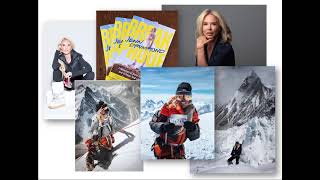
In this episode of the "Living Life in Full" podcast, host Dr. Chris Stout interviews Jenn Drummond, a Guinness World Record‑holding mountaineer, entrepreneur, author, and mother of seven. The conversation weaves through Jenn’s early life in Holland, Michigan, her large extended family, a year‑long exchange in Sweden, and her shift from aspiring soccer player to finance professional. Jenn recounts her challenging fertility journey that resulted in seven children, the founding of her financial‑planning firm, and the decision to become a stay‑at‑home mom while still pursuing ambitious goals. A pivotal 2018 car accident becomes a catalyst for embracing surrender as a super‑power. Jenn describes how the accident spurred a "bucket‑list" year that led to her first major climb (Ama Dablam) and the pursuit of the Seven Second Summits, culminating in a Guinness World Record. She shares practical advice on selecting expedition teams (food, safety record, Sherpa depth, language, logistics), her physical and mental training regimen built around parenting duties, and her approach to altitude medication (limited use of Diamox, reliance on dexamethasone). Recovery practices, family‑centric climbing activities, and the creation of her book Break Proof are explored, including the title controversy, the quit‑vs‑stop framework, and the "dying by living" mindset. Jenn offers strategies for staying present with children while away (videos, letters, Hershey‑kiss jar, satellite phone), and recounts her harrowing K2 expeditions, emphasizing a people‑first philosophy. The later part of the interview delves into her relationship with renowned Sherpa guide Mingma G, highlighting his expertise, decision‑making style, and how Jenn’s reputation enabled her to choose top guides. Jenn reflects on a key passage from her book about embracing challenges to expand personal edges, and she shares a mental‑reset tool—a Milky Way video over Everest base camp—available via a text‑in request. The conversation closes with calls to action: promoting a coffee‑table photo edition of her book, directing listeners to her website and social media for the book, consulting services, speaking engagements, and offering the video clip as a resource for stress relief. Throughout, themes of resilience, mindset, purposeful risk‑taking, and integrating adventure with family and business are highlighted.
Chapters
Living a life in full is a conversation you always wanted to have with that person who gave an amazing TED Talk or the author of one of your favorite books, or that inspirational Olympian you always wanted to know more about. It's graduate level conversations with those making a difference in the world and in the lives of others. This show brings you new ideas and approaches so that you can live a life in full. I'm your host, Dr. Chris Stout and I hope you enjoy this episode. This episode is brought to you by the nonprofit I founded, the center for Global Initiatives. The center is an all volunteer organization so there are no salaries and thus all tax deductible donations can go to the work. While our key country partner is in Tanzania, our work is global and generally focused in the areas of education and healthcare. We also help others to get their nonprofits started or augment others project based initiatives. It's our goal to open source humanitarian intervention and to help make it easier for others to do more good in the world. We are proud to have been ranked a great nonprofit every year since 2011 and to have achieved a Platinum level rating by Guidestar Links. In this episode's show, notes will take you to published articles on our outcomes, a number of helpful tools and downloadable resources which are all free always. Please Visit us at CenterForGlobalInitiatives.org and be sure to watch our video at Patreon.com DrChrisStout to learn more. Thanks. Welcome to another episode of Living Life in Full. Hello, I'm your host Dr. Chris Stout. We all have an Everest, even if you're not an alpinist or a mountaineer, we're all on individual journeys, facing ascents and descents as we strive toward our personal and professional peaks. Whether yours is to achieve a big, audacious goal or to find a way to coexist better with your mother in law, how to navigate the journey is up to you. You can choose to stop, to turn around, or to keep going. And you can choose to find meaning in the challenges along the way and embrace the joy of the journey. And what if you could transform challenges into triumphs? Well, Jen Drummond has a lot to say about how to do that through resilience, determination and mindset. Jen is a Guinness World Record Holder for being the first woman to climb all of the seven second Summits. She's also a successful business owner, international speaker, author, host of the Seek youk Summit podcast, and the mother of seven record remarkable children. She also helps others create thriving businesses and lasting legacies of Their own through her speaking and writing. In fact, we'll do a deep dive into her new book, seven Strategies to Build Resilience and Achieve youe Life Goals. Jen, it's great to have you on.
Oh, thank you for having me. It's an honor.
Oh, it's a pleasure. So there's so much to cover. Perhaps we could start with your origin story. You lived in Holland, Michigan, which I researched and saw, has an elevation of 610ft, and you come from a big family. 60, 65 cousins, I think. What. What was your childhood like there?
I had a magical childhood because I was related to everybody.
Yeah.
We did these Easter egg hunts, and you would have all your aunts and uncles and your parents, like, cheering you on on the side, and they'd hide golden eggs, and everybody would celebrate or yell or whatever. It was just this big, loud fe family. And it was funny because I didn't know that was abnormal until I started getting older, and I'm like, wait, you didn't have Easter egg hunts with all your family? Like, what, you went to, like, a park with other people? Like, how did that work? So it was just funny.
That's great. So then after high school, was it off to Dallas and smu? Is that right? Do I have my facts straight?
Yeah. Yep. So in high school. Yeah. Go Mustangs. I was an exchange student in high school, so I went to Sweden for a year, which probably, you know, planted the travel bug for sure, because I was like, oh, wow, there's a whole world out here besides my little bubble. When I came back, I went to smu. I was planning on playing soccer. And then I got there, I realized I didn't really want to be a professional soccer player and decided not to continue playing. So I ended up transferring to Hope College, Holland, Michigan, and graduated from Hope.
Gotcha. And around those times, you were also quite the athlete. You're a gymnast. You also are a skier and triathlete. Is that right?
Yeah. And, like, some of those things I picked up a little bit later in life just to stay busy and active. And tell you what, if you want to meet people, join a triathlon group, because they meet all the time. They're in every single city and state, and it's a great way to get out there.
That's a great point. I have a good friend, Sarah Fix, who actually, pardon me, has a. She coaches a lot of triathletes. She did. Gosh, I can't tell you how many times she's done Kona, and I think she's Always been like, in the. When she's done it, I think always like in the top 10 of women finishers. And she was, I think, a little late to it as well too. And like, after having, you know, three kids, that's when she got into Ironman distances and stuff. So that's crazy. So was coming from a large family then kind of the context for having your own large family?
You know, I think it gave me permission to have a large family. I was originally hoping to have a couple children, but I had fertility issues. So I went down to meet with some fertility specialists. We tried a whole bunch of different things, and for a long time nothing worked. And then all of a sudden, they came up with a chemical cocktail that turned me into a hen. And I caught one of eggs, they put them in a petri dish, and I had 14 embryos.
Wow.
And I was like, oh, wow. So they planted two and I had my son Jack. And then it was time to decide what to do with the rest of them. And at the time, I could either use them, donate them, or destroy them. And when someone struggles to get pregnant, destroying them was just not an option. Like, oh, my gosh, we can't do this. Are you kidding me? That'd be the worst thing ever. Donating them just felt like my whole life I'd wonder if I had a kid out there, right? Like, are you my kid? Are you my kid? Instead of are you my mom? Are you my mom? And so I'm like, you know what? I'm just going to use them and whatever happens, happens. And that's what's on going supposed to be. The doctors thought I would get three or four kids. I got seven, which is amazing. And yeah, actually, I'm very blessed and lucky because they. It's so much fun. Like, so much more fun than I ever thought it would be.
That's awesome. I've little excerpts and things that I've learned about that. It certainly is the case. I want to circle back to that as well, too. So was this like, in parallel with you starting your company? Was it like starting the family and company simultaneously or kind of step us through? What's the order of that and what was that like for you? Experientially?
Yeah. Okay. So I. I was one of those kids that thought if I made a whole bunch of money, I wouldn't have problems in life. So I was definitely chasing careers that I knew were stronger financially when I first went to college. I was studying sports pre med when I was in college, and I was Taking. I think it was biology. I know it was chemistry. It was my chemistry teacher, and I was struggling with some of the formulas or something, and he was the same teacher I had for a couple courses. And he pulled me aside and he's like, hey, Jen, because I do think you could be a good doctor, but I want to ask you a couple questions. I'm like, okay. He's like, hey, do you know anybody in your class? Like, yeah, no, I don't really know any of the kids in my class. He's like, do you know what the kids in your class normally do on the weekends? I'm like, no, I have no idea. He's like, they're at the library. Do you know where the library is on campus? And I'm like, yeah, I think I've been there. And he's like, all I'm saying is, is that this would be the next decade of your life, essentially is spending time with people like this and studying in the library and blah, blah, blah, blah. And he goes, I just don't think that fits your personality very well, so just think about it a little bit. And I remember being so angry at first, like, who are you telling me not to do something? Right, right. And I really enjoyed my business courses. I had a friend graduate ahead of me. He took a job in finance. And I remember him coming back to visit and he's like, jen, you need to get into finance. He goes, you are so expensive, and this is going to teach you how to work with money. So even if you don't like this field, you're going to have skills for life. I'm like, okay, cool, let's do finance. And so I flipped over to finance and got into investing, which, thank God, I learned the time value of money and all those different little things early on, right? And I hated the career at first because I showed up to the first day of my job. I graduated from college a year early because my friend's like, hey, they're gonna hire people right now. You should just graduate. So I went to the registrar at school and he's like, yeah, you actually have enough credits. You just have to take a coup this summer. I go to my parents, I'm like, hey, I think I can graduate in three years instead of four. Like, okay, well, if you do whatever job you take, you need to stay at it for a year because otherwise you're going to look like this young college kid that can't make their mind up. I'm like, oh, that's fine. I got a job I can stay at this job for a year, no big deal. I show up to the job and I'm like hi, I'm Jen, I'm the new financial advisor. And the receptionist was like, oh hi Jen. She's like okay, over here in the corner and is a telephone and a phone book and like here you go. I'm like, oh no, no, I'm not call center, I'm a financial advisor. He's like sweetheart, you have to build your book of business. You're going to use the phone. I'm like what? Why did I not ask any of those questions in the interview? And so for my first three weeks on the job, I mean I went home every day sobbing. I had never heard the word no so many times before. I remember calling college and being like, hey, this is Jen, I just graduated, I was kidding, I want to come back. And they're like the semester started, you can't just come back in like you know, like you're graduated. And I'm like oh my gosh. And calling my parents was not an option. Like I'm like, I will die before I call my parents is up. So when you have those, and it's kind of one of those lessons you learn, right when you have restrictions, you have to get creative and play within the lines that you have. And you know, we played all the games where you put up a mirror and smiled at yourself. So you were smiling and dialing. I brought in one of these little guns that had a sponge ball at the end of it. So then you'd shoot it, but the ball wouldn't go that far because it was stuck to the little thing by a string. And so anytime somebody was rude to me, I'd pretend shoot them. So then I got ahead of the game again and like all that stuff and the thing about finance in dialing is that it's a numbers game. So you learn how to become unemotional in the situation. Just do the thing and realize, hey, every 100 dials I'm actually going to make like a thousand dollars. That's not the end of the world. And so then you start looking at it like that and then you start collecting and you get ahead. And all of a sudden I was doing really well and I decided to start my own financial firm. So and then once that got up and running, my goal was to be a stay at home mom. So I started hiring myself out of roles so that I could do the mother her journey.
And yeah, so then were there any, had you had any kids yet? At that point in time, when you said, okay, now motherhood's kind of my next phase, and I need to kind of tap the brakes on the business part and get that, you know, get that to take care of itself.
You know, as a financial planner, you become very planned and things.
Yeah, yeah.
I'm like, okay, well, here's when Junior, you know, so 2006, I had my first son, and I still worked through that because having one child is like having an accessory. You just have a purse that you bring everywhere. And that's how it felt for me. Then I added number two, which Joe came in 2008. I was like, oh, wow, this is a lot busier than it was with just one.
It doesn't just double. It's like somewhat quasi exponential.
So I can't imagine seven, not a plus one. So then I realized, okay, now I have to start, like, shifting. And that's kind of when things started to hire stuff for people. And then I wasn't really working that much at all. And I had the kids. You know, my kids were born from 2006 to 2012.
Okay.
So very tight in years. And about, like 13 or 14. I was like, man, this mom stuff is a lot of work without a lot. I mean, it was satisfying, but you don't get the. It's a long term endurance game. It's not these, like little sprints that it's, hey, I did this, and 10 weeks later, I have a paycheck check.
Right, Right.
Hey, I did this. And I don't know if it's gonna work. And I'm gonna find out in 25 years. So it was. We'll see. I ended up moving with the kids to park city, Utah, in 2015. We lived in Michigan prior, and there just wasn't enough outdoor time. Like, winters in Michigan are pretty harsh.
Yeah.
Having that many boys stuck in a house for that many days in a row just wasn't good for any of us.
Right.
We had gone skiing in Park City and they have, you know, these gorgeous sunny days all winter long. They plow the soccer fields and everything. So you can still have soccer practice in January, or you can go ski on the hill or, you know, all these things. I'm like, we are moving.
Yeah, this is good.
This is a way better lifestyle than what I was doing before. So relocated in 2015, 27, you know, 16, 17. I just remember feeling a little guilty that I wasn't, like, ecstatic that I was a stay at home mom. I'm like, man, everybody wants to do this. And I'm kind of spinning my wheels a little bit. I don't really love going into classrooms and helping kids with glue projects. And I'm definitely not that mom that has the holiday sweater with matching socks and hair ties.
You do not strike me as that kind of stereotype type.
No. And I'm like, I'm glad there's those women. I mean, amen. Like, I love you. You and your Pinterest is fantastic. It is just not me. And I just was like, okay, well, I'm just going to, like, wait till these kids get to college and then I'll get back to me. And that was, like, the story that I sold myself on. I'm like, this is just a season. It will be fine. I'll get back to me. Just hold tight and make it happen.
Gotcha.
But then returns in 2018.
Yeah, December 18th. You teed that up perfectly. So, December 18th, 2018. Tell us where you're at and tell us what happened that afternoon.
Yes. So I am driving, ironically, I am driving to a town nearby called Heber, Utah, to get a new driver's license because I had lost mine skiing the weekend before. Like, somehow it fell out of my pocket. And it's interesting because on the way there to the driver's bureau, a song came on my. On my playlist, and it was a song that I had, like, meditated to or journaled this word surrender to for the two months prior. Someone introduced me to a book by Michael Singer called the Surrender Experiment. And prior to this point, surrender was a weakness. And no way. And how does anybody think that's a superpower? And finally, after journaling and reading and listening to different music, I was like, you know what? Surrender is a superpower. Like, this is amazing if you can figure out how to surrender. I bring that up because it's interesting. I, like, heard this song on the radio. I'm like, you know, if I died someday, this is a song that I want to have played at my funeral. I go to the dmv, I get my license. I drive home. I get into a car accident where I run into a semi truck that wasn't going speed. I went to get into the fast lane. He bumped over at the same time a little bit. My passenger side hit, hit the rear bumper of his second trailer, and I started going end over end. So I went end over end three times, lost that momentum, and then rolled probably 10 to 12 times sideways. And thank goodness this is going up a hill versus downhill, because then the momentum would have continued. So I was, like, losing momentum. And the second the car hit the semi, I was like, if I surrender, I'll survive. If I don't, I'm done. And so I just remember being. It was going so fast. It was going slow. And anybody who's been in these circumstances can understand where I put my hands on the steering wheel. I put my head on the headrest, and I remember going, okay, I have enough momentum. I'm gonna go over again. Okay, enough momentum. I'm over again. Just breathe out. The car's bigger than me. I need to roll with it because I don't have the strength to go against it. And it was just. I talked myself through the whole thing, and when I was hanging upside down in the median, and things started to. You know, everything was slow. And then all of a sudden, you hear sound returning. Sounds distant at first, but then it starts getting loud. And there's a guy that came running to the car, like, are you okay? Are you okay? Are you okay? And I could hear him, but I wasn't registering what he was saying. And then he peeled back the windshield because it was shattered. And he caught eyes, looked at me, and he goes, are you okay? And I remember thinking, based on your facial expression, I am not. So close my eyes.
Oh, golly.
So I closed my eyes and I wiggled my fingers and toes. And I remember saying out loud, I can feel my fingers and toes. I can feel my fingers and toes. And then the guy said, you're gonna be okay.
Wow.
Okay. So I sat there, and he's like, we're not moving you because we don't know what's going on. Wait till the ambulance comes. Yeah. So the ambulance came. I went to the hospital to get checked over. I came home the same day. I remember walking into my house, and it's a moment I'll never forget. I shut the door behind me, and I just stood there for a second, and I could hear the kids screaming, you know, like someone had rollerblades on. Right?
Was typical home chaos. Right?
Typical home chaos. There's pizza on the kitchen counter. Like, just all the things. It was a total, you know, chaotic moment. And I was never so grateful. I'm like, I love this.
This is so great.
I love this mess. This is perfect. Why did I ever care about it before? And the crazy thing was, is Christmas was the next week. It was a week exactly for Christmas. And my kids were opening Christmas presents. And I remember my oldest saying, mom, you're not chasing us with the garbage bag. What's going on? I Know, I think that mom died. This mom is just sitting here being like, I love this mess. Beautiful. And I don't need to be picking up wrapping paper before it hits the floor.
Wow. So did the kid. I mean, you. I know you had injuries. Did the kids, like, notice that when you got back home? Or the kids say, hey, mom, where's the car? How did you break the news to them? And what was that? What was their reactions like?
Yeah, you know, they. They didn't notice that the car was busy because their kids, you know, whatever. Yeah, I was definitely bruised. I had, like, cuts. I had to go in, actually, a few weeks later and have some surgery done that we didn't pick up on right away. But, you know, they don't know. Yeah, they. I mean, in their mind, you know, they bang their little monster trucks together and everything works out. So that's the mom thing, right?
Oh, gosh. Wow.
Yeah.
Well, can you imagine, too, Jennifer, like, one of the kids or some of the kids would have been with you that day, you know, like, oh, I'd
be in a loony bin.
Gosh. Yeah.
Question. And that's like. That's the other, like, it's. Life just happens for you. I know we hear it, like, but when you actually live it and you observe it, you're like, it truly happens for me. And I remember, like, oh, I'm gonna take two of them with me and we'll go to lunch. And for some reason, they're like, I don't want to go. And I'm like, I don't have the energy to fight. So you're gonna stay. I'll hurry and I'll be back and. Yeah.
Yeah. Gosh. Wow. Well, I want to go heavy into climbing and do a deep dive into your book. So I'm guessing, you know, probably for the rest of our conversation, we' bouncing around a lot because those things are so intertwined. But I want to set a context for listeners who may be unfamiliar with what the seven second Summits are. So I'm going to just kind of go through this in your little resume here with. With your achievements. So achieving this is considered more difficult challenge than the seven Summits, which is the highest peak on each continent, and the group that includes Everest and Denali that probably people are, you know, very familiar with. Very few male climbers have completed the seven second Summits, and until you no had ever done so. So again, brava with that. So. And help fact check me here. So last year, I believe on June 1, you set a world record as the first and only woman to ever accomplish this feat with your successful summit of Mount Logan and your campaign began on December 16th. Kind of interesting, almost two years to the day, December 16th, 2020, of that accident with Ojos del Salito in Chile and then Mount Kenya in Africa. February 2021, Gorka Dik Tao, I think if I'm pronouncing that right, in September 2021, Mount Tyree in January 2022, K2, which I want to also do a deep dive on in July 2022, and Mount Townsend in November 2022. So did it, did I get my facts straight as my research square on all that? Gosh, man, it makes me just be hypothermic just reading about that, all those things. So, yeah, I don't know if you know, but I. I've done three of the seven summits and a bunch of stuff kind of elsewhere in Sri Lanka and the United States and Canada and whatnot. So I have deep respect for, you know, any and all of these kinds of things. It's just really pretty amazing. So. And I just, I wish, you know, people that maybe aren't alpinists or mountaineers or haven't spent time at altitude or in these kinds of circumstances. I really want to emphasize that this is an amazing accomplishment. And I know, like, just when I put the, the years in there too, I mean like to do, you know, three, including K2 in 2022, all in one year. It's. It's good because you're kind of probably in shape, maybe you have some leftover, you know, acclimatization, so to speak, to deal with altitude. But just that the hecticness of going through and getting to these places, I mean, none of them are, you know, just, you know, you drive to in an afternoon. So anyway, deep respect, I think that is just really awesome. So I know there's kind of a cute story about one of your sons kind of encouraging you with you initially, I believe, started to just do Ama de blomme for your 40th birthday and you'd already done a little bit of climbing, you'd done the Tetons, I think in 2016. But tell us maybe what the Ama de Blomm and what your son said to you that kind of got you on this trajectory with the seven second summits.
Yeah, so here I am, I'm alive after this car wreck and I 2019 becomes this year of the bucket list because I'm no longer afraid of what other people will think for some reason, like when that when that, like, come to Jesus talk happened with myself in 2018, in the car wreck, I realized everybody that I value opinions of, it's going to die at the same time, I am right? Like, we're all in the same era. So why would I want to live my life restricted by things that they're suggesting or Society's imprinting? So 2019 was, this year, the bucket list. What do I want to see? What do I want to experience? What do I want to do? Everything's on the table. There's nothing that I can't, like, put on this list. And on the list was climb a mountain. So in 2020, I was turning 40. I mean, you know what? I'm going to climb a mountain for my 40th birthday and launch this next decade of life and blah, blah, blah, blah, blah. And Ama the Blonde was the mountain. We go back to the beginning of 2020. We can all remember a great thing called Covid. And so I was not going to be climbing anywhere anytime soon. And in fact, I was homeschooling seven amazing humans. And so one day, one of my little guys was struggling with his math homework, and I'm doing that parent pep talk. We do hard things. You've got this, blah, blah, blah, blah. And as kids do, they talk back. And this particular son says, mom, if we do hard things, why you climb in a mountain called I'm a dumb blonde instead of a real mountain, like, Mount Everest, thinking, I'm a dumb blonde. I'm a dumb blonde. I'm a da blonde, honey. Not I'm a dumb blonde.
Love that.
Finish your homework. We'll look at Everett. I was like, that little. Little, Little, right? Like, are you kidding me right now? And I think that's, like, how life works, right? It's funny. Like, we make it serious. Like, life is funny. My kid heard Amma de Blomme as I'm a dumb blonde and told everybody that I was coming to mountain called I'm a dumb blonde. So we looked at Everest, and I called the coach, and the coach is like, oh, yeah, I can get you ready. I'm like, you know what? What? I'm gonna climb Everest, and I'm gonna show my son that whatever our Everest is, we're capable of summiting.
Wow.
So, yeah, so that, you know, like, why not? Again, perfect timing for the mood that I was in and the things that was going on. I'm like, everest sounds fantastic. Away from my family for three weeks.
There's side benefits here.
Yeah. Yeah. I have been with these children 24, 7 for days on end. And I don't even like them anymore. So here we are.
Oh, that's funny. You know, and I have to say too, I made a clipping kind of in my, my little clip kit of notes for us to talk about. I had pulled this from tail end of last year. There's an article in Wall Street Journal talking. It was entitled Mount Everest is on Thin Ice. And let me just grab this clip here. It said that I thought this was just awful that 18 people have died on the mountain this year, meaning 2023 according to the Himalayan database, making it the deadliest stretch in ever Everest's history. And I think everyone has any listener, you know, has a understanding and respect for, you know, what the challenge of Everest is. I think sometimes people, you know, like with, with crack hours, you know, into thin air and movies and things along those lines kind of maybe trivialize it or you know, everyone getting stuck at, you know, the Hillary Step and you know, just kind of everyone making it a bucket list vacation kind of thing. But to have this deep respect for what the mountains can do and for what that kind of challenge can do. And then also, you know, just the fact that also this article goes on to talk about how climate change is making things so unstable. And I think it's making, you know, a variety of climbs, you know, K2, which we'll talk about is just, you know, the, the death Mountain, really. But I think, you know, that again, back to, back to you, Jen, is like, I think I'll just, you know, my training mountain will be Everest. You know, it's sort of. And it doesn't even count towards this eventual seven second summits in a sense. I mean, it's good training, but. Oh my gosh. So, so maybe let's. I want to talk about Everest. I want to talk about all your climbing. But before we do, do you have like a favorite expedition or a favorite mountain? Would, would Everest be it or, or what's on your, your, your top, you know, five list, so to speak, or your, your number one, your greatest hit for an expedition that you've been on. That's. That's gone well.
Yeah. You know, it's funny like each expedition is. It's like picking a favorite kid. Right? Like there's so much unique. Fair enough. For each one.
Yeah.
I will say, I mean as crazy that sounds ama. The bomb has been my favorite.
Ah, okay. And it's.
And I think.
Is it on the way to Everest?
It's on the way to Everest. And like, the. I think a few things went into that one. We were the first team back in the Kumbu when, like, Nepal opened in October of 2020. And so we, like, got word that they opened. We booked flights basically, for the next day. We had to go through bazillions of COVID tests. They kept us in Kathmandu for a week, making sure that we still test the negative every single day.
Wow.
And then we flew there. I mean, they were super cautious, which I totally respect, because, you know, there's no cars in the Kumbu. There's no medical facilities. Right. So it's a big deal if something got into there.
Yeah.
And we came through there. We were the first foreigners that any of these people had seen in forever.
Wow.
Right? So, like, all of a sudden, for them, they had tourists coming in all the time, blah, blah, blah, blah, blah. And then it shut down, and there was no one. And we were the first came back. And so we were almost the sign that life's returning. Like, it's okay. Right. So we were blessed by a lot of llamas. We had all the hotels and everything to ourselves. Everybody was so starving for people and interaction that everybody was really. You just bonded with the locals so much more because there was so many less distractions and, you know, just all the. And then when we were on Amblom, it was only us. There's nobody else there.
Wow.
And so you have this, like, pristine, magical, glorious environment, like, that is only for you. Yeah.
What a rarity.
Oh, you're right. And, I mean, I'm brand new to climbing, so I have no clue that this was.
This is a big deal.
I'm like, oh, you guys. Like, no wonder why people love this. This is amazing. Are you kidding me? Like, awesome. Like, I would soon find out nine months later on Everest that that is not the case. Like, the place is crazy. There's tons going on. You have your own little village, blah, blah, blah, blah.
Yeah.
But that climb was so special. And it's kind of like your first one. That's a big deal.
Right? Right.
And so it was just like, everything. I mean, I flew into the Kumbu, and I remember seeing mountains for as far as you could see waves. If you looked into an ocean, and I had tears coming out of my eyes, like, wow, there's this type of stuff on our planet. This is spectacular. Like, all people have to see this. This is. It's like if you look at the Grand Canyon in a photo, you're like, okay, that's cool. You go to The Grand Canyon. You're like, oh my goodness. Are you like, what? Like that photo doesn't even begin to do it justice.
Yeah, well, that's. I, you know, Hear, hear. And again, I guess at the, you know, the, the added hassle of a post, but then the nice rare benefit, I hope that will in some sense that we don't have to go through any Covid experiences again. But then just what a wonderful way to start that. And probably, I would suspect, maybe also kind of gave you the bug, so to speak, to say this is this kind of experience, this kind of beauty, this kind of rarity to be in. Let's rinse and repeat and do that elsewhere. So I want to deconstruct like the climbing expeditions components. Can you tell us about how you get on an expedition team or how you selected one? I think I. My research said that you did. Like, I've worked with Madison Mountaineering. So how if someone's, you know, they hear this podcast, they're interested, they want to learn more. What's a good way for someone to like, you know, how do I vet an expedition team or how do I select one? How did you go about doing that?
Yeah, well, one, you have to get really honest about who you are as a person.
Okay.
Right. Because there's a lot of different expeditions out there that offer different things. And I've gone with a lot of different teams just to learn that and understand that and, and realize that all, not all teams are created equal, which I originally was naive and thought, but, you know, like, food wise. Right. So the nice thing about working with Garrett Madison, if you are from North America, you're getting food that you're used to eating. Right. You work with a team that's from Pakistan or Nepal or some of these other places. Their diet's very different than ours and that's the kind of food they're going to serve at base camp. And I'm not saying it's bad, it's just different. So if you're. Yeah. It's not what you're used to and you're already in an environment that you're not used to and you're already like, like, like how many new things do you want to take on at a time is something that you want to think about and how, like, well, is your stomach going to handle things?
Right.
And want stomachs distress on what you're doing? Not saying you'll get it, but it's just. It shows up. Right. So safety being paramount. Right. So what is their safety record? What have they turned around on a mountain before? What's their depth of Sherpa? So a lot of people on these bigger expeditions that you get to have Sherpa on, which were only a couple for me, you know, they all have like a famous one, but how deep is their lineup? How many times? Because you might not be with the famous one because you're not famous, you might be with somebody regular and you want to know that they've done it before because there's a different level of confidence and understanding if you've been there before or not sure. How trained are they in high altitude? How much English do they speak? What are just like little teeny tiny things like that, that all teams are equal. If everything's great, when things go wrong, that's when you start seeing like who can handle it and absorb it and make things still go okay.
Yeah, it doesn't take much for things to start to unravel. I mean, any of the, those variables, you, you. That's a great checklist. I mean, any of those kinds of things, you know, here or there, you know, no big deal. But you know, if, if one of them starts to go wrong and depending on. Because they're also, you know, hierarchical, like, you know, certain little things, no big deal ever, even if they go wrong. But other big deals, you know, it just then cascades and boxcars into, you know, some of the calamities that, you know, that's, that's gotten a lot of public attention. For you personally, how do you train physically and psychologically for these kinds of things?
Well, have seven children, you've got the mental game figured out real fast. Just letting you know, this is easy. I don't have someone ask me to do something. Annual mom, 10 different times, 10 different places in this house. We're good. And then from the physical standpoint, you know, it's really just, just being honest about your schedule and your life. And when you're doing these big expeditions, you're in life threatening situations, so you can't skip a workout, right? Because if I skip the workout, I'm being undisciplined and I'm disrespecting my family. And it's a lot for all of us to take on and know the environment that I'm walking into. So I have to do all the things very seriously because it gives confidence to myself and it gives confidence to those that love me that I'm in situations that I'm going to make right choices or I'm fit enough to be able to work my way out of them if something goes wrong. But yeah, my training very much looked like getting up before the kids went to school. Getting a little bit of a workout in, dropping them off at school, working out some at soccer games. I'd be the mom on the sideline with a 12 inch step backpack full of water bottles. And I'd be going up and down that thing the entire soccer game so I could watch Junior and still get fitness in. Right.
Brilliant.
So was my training those long, sexy hikes that people get to do when they're single or retired? Absolutely. Never. But I did get training in the way that it worked for me. I lifted weights with some of my boys and just. We made it work.
Nice. Nice. Yeah. I'm reminded of the cliche, you can't cram for a marathon. I think the same is certainly true for any kind of serious climb and expedition. I became a big fan of Diamox. And on kind of my first big high altitude, which was Kilimanjaro, I saw another. There was a French team ahead of us and they had someone that they kind of carted down on a single, like a unicycle wheeled gurney because they had gotten, gotten sick. So. And I, I have a, A lot of good friends that are emergency medicine docs and stuff. So I've learned about hape and haste and acute mountain sickness. How, how about you? Have you had ever issues with acclimatization or do you boost with Diamox or any, any tips or experiences that you want to share?
Yeah, so I have not played. I did time ox once because I had a headache and I woke up the next day with a headache and I realized I'm allergic to it. So if you have a shell.
Oh, really?
You cannot do Diamox.
Wow.
Yeah. And so I do, I do acclimatize pretty easily. Once I started understanding the symptoms and everything else like that, I realized I wasn't struggling at the time that I took the Diamox, but the Diamox sent me into a different level. But, yeah, no, I'm, I do bring dexamethasone, which is steroid, so if something were to happen, I could start taking that. I just did Kilimanjaro with my three oldest sons last month.
Oh, wonderful.
Oh, good. Yeah. And I brought all those drugs just in case, but I didn't let any of them take them at all.
Yeah.
And they all did fine. So I do feel like if you are paying attention and you're going at a pace that works for your body, you can do it without them, because there's side effects next to those, right? They make you go to the bathroom a lot. You know, all the retain water, blah, blah, blah. So I always feel it's best to go without unless you have to, right? And then bringing something that if something goes wrong, you have. You can kind of feel the shock to your system. It was interesting. There was on Everest, one of the helicopter pilots flew us somewhere for something. And I asked them, I'm like, like, you know, what if. What advice do you have being the person that pulls people out of here if there's a problem? He goes, if I were you, he goes, I'd run your oxygen as low as possible. Always leave room. So, like, they kind of ran those oxygens that, you know, you could run it at 1, 2, 3, or 4, and that give you the flow rate. He's like, 1, your oxygen tank's gonna last longer if it's running slow. Two, if something happens and you fall into a crevasse or whatever else like that, and we can flip you from a 1 to a 2 or a 3, that calms down your parasympathetic nervous system. If you're already maxed out, you're using it faster. And I don't have anything to let your nervous system know, hey, it's okay. And so that was interesting to me, right? So I was like, okay. So I kind of use that philosophy in all things. Use as little or whatever, as much as possible so that if something happens, you have room to have the benefit
from that thing, gas in the tank. So, you know, and I've also heard. I've never, thank goodness, had these experiences, but I. And I've not had a radial keratotomy. I know sometimes people will get that, you know, to get rid of their glasses and stuff. But I've heard at altitude, oftentimes people that have had that process done then, like, have it almost, like, fail. Like, then, you know, then they've got vision problems, you know, at the worst possible, you know, place to have vision problems. I've also heard that at altitude, sometimes people. People's fillings fail. So I've never had that, thank goodness. But I got a kit that you can do, like an emergency amalgam if you needed to. But it's fascinating to me, the physiological effects, because we're not obviously adapted to those kinds of things other than acclimatization, but still, we've always heard about the death zone and things. But these other kinds of little things that can really kind of make for Lack of summiting or just a miserable experience.
So a thousand percent, my friends will tell you, like, if they had to pick between going to a dentist or a doctor before they go for the climb, they'll go to the dentist all day long. I'm like, okay. And if you think about if you go scuba diving, right, that's one thing you have to check, and it's the same thing the other way.
Yeah, yeah, exactly. So. So with all these kinds of things, then, like, once you're back home, what's your. Do you have, like a recovery regimen or anything, you know, of, you know, recuperation and getting, you know, back at some level of sea level or what's it like for you once you're back home?
Well, you feel like a million dollars.
Yeah, that's true.
So much oxygen, you guys, you have no idea. I'm swimming in oxygen, and I'm just standing here. So it's kind of. So. And it's funny because when you first come back, you know, when on expedition, you normally lose a little bit of weight, right? Then when you come back home, you actually gain a little bit extra because your body's like, oh, wow, we're back to normal. And then you level out a few weeks later. But I always thought that was interesting. I was using one mountain to help me get ready for the next mountain, to help me get ready for the next mountain. So I would normally come home and take two weeks off and do nothing or, you know, yoga or Pilates or whatever I felt like doing. And then I would start ramping up, training again. And I always did training and periodization plan. So it would be like, depending on how far the next mountain was, it'd be like six weeks. And we would ramp up in the middle, then ramp down, and then have a week off. And then we do the next six weeks and kind of do something similar. And that has just boosted my foundational fitness and then allows me to work on specific things for the specific climb coming up.
I love that. And you've stayed pretty injury free, is that right?
I have, but, yeah. No, I've had no injuries.
Yeah, Well, I think having that kind of regimen and that kind of discipline as you've described, I think goes a long way. I mean, it's not, you know, it's. It's a great insurance policy to, you know, help mitigate that or even if there was, you know, that you can get, you know, kind of bounce back and get going. So, you know, speaking of your boys going on the. The kilimanjaro trip. Was that your idea? Was that a training thing? Was that their idea? Mom, you get to climb, you know, you want to climb now with you or tell us what. What cued that up and what that experience was like?
Well, it would depend on when you asked them if it was my idea or their idea.
Okay, okay, fair enough.
First it was, mom, you climbed all these mountains. We really want to do one with you. And I'm like, okay, well, I'm going to take you to do Kilimanjaro. I haven't done it yet myself. And I know it's. There's not a lot of, you know, cross. You know, there's no risk, really, except for acclimatization. So it's a safe one to take your kids on. And it's a big experience. And so it's getting closer to go. And then, of course, all my kids, friends are going to Mexico for spring break and the typical high school Mexico spring break, right? Like, we don't want to go climb. We want to go to Mexico with our friends. I'm like, you're not. So we're going to Kayla Mounjaro. So we went for. We did the seven day route just because I wanted to give us the best chance of succeeding.
Well, you want them to have a good experience too. You know, it's like, yeah, they, they, they. They may not grind as hard as their mother does.
Right, right, right, right. They're like, okay, now we know why mom's such an animal.
Yeah, exactly.
But they like, the first day, they hated it. Right? The first day is pretty hard. The second day they're like, this is okay. The third day, they're like, why don't we have wi fi? The fourth day you were like, I don't know, mom. This stuff's forever. I'm sick of this. Da da da da da. And then the fifth day, we summit and they. We were the. We were the last team to start in the. The first team to get up there. And we were up there for about 30 minutes before another team met us. And we took photos, we celebrated and whatever else like that. And so then the next two days, they're like, this is my favorite trip ever. This was amazing. I'm so excited we did this. And so it was like all of it. You know, success makes everything worthwhile, right?
Yeah.
And it was. I mean, it was such an awesome experience. And I had some of my boys brought friends that, I'm gonna go again. I'm gonna take more people and do this Again, because I think their ages, they can't BS their way up to the top. Like my kids come and like their way through so many things, it's embarrassing and there's no way to do that. And we'll grump about carrying a 12 pound pack and then they've got a guy in crocs carrying a 45 pound pack, singing songs and excited about life, right? And it just puts so much in perspective. Even one of my boys was like, mom, this people, these guys could work at Panda Express and they'd be so happy. No one's happy in their jobs in the United States, at any place we go to. I'm like, I know. You know, it was just like so good for them to witness and experience the power of enthusiasm, the power of endurance. Like just all the things like you cannot teach the lessons they learn in a week.
Yeah.
That easily. Unless you have an environment like that.
Exactly. Oh yeah. And all those little interstitial kinds of things that they notice. And the 180 degree turnaround from, you know, crappy pants to, you know, being big, enthusiastic, you know, now we're, we're climbers. So I had, we have two children. My son was co captain of his high school climbing club. My daughter and I just kind of more hikey kind of thing. We did Pikes Peak together a few years ago and the Tetons, we stayed at the climbers ranch, which I really love being in the American Alpine Club. And my daughter was fairly lukewarm about that. But we also, we had like a walkout basement in our house and we had bizarrely, just these unusually high ceilings in the unfinished area. So I built a climbing wall. We had had hand holds and campus rungs and like I had little like backward out pitches. And I ran quick draws from the ceiling joists, which were the floor joists for the first floor so we could rope up. And they had harnesses like when they were little. And it was just, I really, you know, because I enjoyed climbing so much and I wanted to introduce them for climbing at young ages. And I've really, you know, and I think now you've experienced this too, that climbing can be a very family participatory kind of thing, you know, be it technical rock climbing or wall climbing, you know, at a gym or at home, versus you know, the wonderful additional experiences and education they can get when you, when they get to travel and you know, do something, you know, fairly. You know, Kilimanjaro is a significant mountain. I think that's really a wonderful opportunity and experience as a parent and as, you know, the relationships that you have with your kids.
Yeah. No, and I think, you know, speaking of climbing, even if you're not a climber and your child is interested in it, the cool thing is, is when you're belaying them and they go up and they get to problem on the wall that they can't see. Right? Like, so I remember taking two of my boys and he's like, I'm stuck. I can't figure it out. And you try to tell him, I go to the left and you can reach up and it's right there. And they're like, I don't dare. And you're like, okay. So then they come back down. Then you can. I film them so I can bring the film up so then I can show them where they are. And then, okay, now I can see it. So they can go back up there and go further and they get to the. I mean, there's so many lessons. Sometimes you need to climb down to climb up. And here's the different perspective that I have than you have. And let's do this. And I think it's just such an awesome experience on so many levels.
Yeah. Hear, hear. Well, I want to continue to talk about climbing, but I want to shift to your new book, Break Proof. But before we do, I want to share what some others have had to say about it. Pardon me. Scott Jeffrey Miller, Wall Street Journal and Amazon best selling author and host of On Leadership, said, jen's book is like an inoculation. For those of us with audacious goals, quitting on ourselves is vastly less likely. With Break Proof as an essential life manual. Whitney Johnson, CEO of Disruption Advisors, a Thinkers50 top 10 business thinker and Wall Street Journal best selling author of Smart Growth, said, a gripping, unflinching look at the struggle of adventure which manages to be relatable and actionable even if you've never scaled a peak. And what's truly remarkable, she's the mother of seven seven second summits, seven children. Break Proof, thy name is Jen Drummond. And Glenn Stearns, Wall Street Journal best selling author and star of Discovery Channel's Undercover Billionaire, said, I wholeheartedly recommend Breakproof to anyone seeking to transform their life, overcome obstacles and achieve their most ambitious goals. It's a powerful reminder that with the right strategies and mindset, you can be truly break proof. And I agree, Jen, it was really an enjoyable read. Was, was this your first book?
Yes.
Oh, you.
Yes, it was.
You are a natural. What, what spurred you to write it?
Oh, a friend. Watch who you eat lunch with and what they suggest. A friend of mine who was an author, I went out to lunch and I was giving him some feedback of some of the adventurers I had been on, and he was like, like, you've got to write a book. I don't even like mountaineering, and this stuff is fascinating. He's like, are you kidding me right now? And it was like, you need to write a book. As in, like, do you want brownies or cookies for the dessert today?
Right.
So I'm like, I can write a book. This will be fun and easy. Oh, my goodness. That is a battle. Right? Like, you put words onto a white piece of paper and you have to have a cadence and are you giving enough information or too much information? And are we flowing? And if people don't climb, are they going to understand it and, you know, just all the little things that go into making it what it is?
Yeah. So what does it mean to be break proof, Jen?
You know, to me, it doesn't mean that we're not going to break because in the break, we have proof of what is working or what is not working, and we can decide if this is our mountain or if it's time to pivot and climb something else. So to me, being break proof means you're being honest with yourself and what your desires are and you're always pursuing.
And you also, in the book, you talk about how you've got. It really is encompassing. Like, there's being mentally break proof physically, emotionally, spiritually, professionally. And we can apply this in a variety of different kinds of areas. I want to make clear, I know we've been kind of nerding out together as climbers, but for people interested in this book, it's not necessarily at all specific to climbing. You use those as examples and wonderful illustrations and moving illustrations. But these, the ability to be break proof is for any and all of us in any of these different dimensions of our lives, right?
Most definitely. In fact, like, I think the climbing part is just the reason why we use it is because I can take the reader to each adventure, highlight a story that's in a very black and white environment, and then give them that tip and be like, oh, okay, this is how this applies to my life and what I'm doing, which for 99.9% of the readers is not climbing a mountain.
Right. Yeah, I like that. So this nerdy people that listen to my show a lot know that I like to nerd out with authors as well as climbers. But did you originally, was it going to be called Quit Proof? Is that right?
Okay, so I never liked the name Quit Proof and the publisher did.
Oh, really? Oh, I like Break Proof so much better.
Me too. I'm like, Break Proof is like, we break, break through and we break. Like, whatever. Like, quit. Like, quitting to me is like, I quit smoking. I don't know. It just has such a negative energy to me compared to.
Yes, yes.
And the publisher was like, it's SEO friendly and da da, da da. And everybody buys books online, and so we need to go with Quit Proof. And I'm like, okay. There's a guy, though, in Florida that has, like, some branding around Quit Proof about, you know, boxing and MMA type stuff. I don't know. Oh, no, no. You can't trademark a book title. So, you know, you could have a thousand books named Integrity and nobody can do anything about it or whatever. And I'm like, all right, fine. So they bully you into picking the. The title. Well, so of course we go with Quit Proof, and then within so much time, we get sued by this guy in Florida. No kidding.
Wow.
I know. And the publisher's like, well, we don't want to fight it, even though we'd win. So now we'll go back to Break Proof. Like, see, you just gotta stay with what you write and just wait it out because you will win, friends. You will win.
That is wild. I published a book a while back in the early days. I've written a lot. And it was called from the Other side of the Couch. And I had interviewed, I'm People may know, a psychologist, and I had interviewed a number of psychologists and psychiatrists for it to kind of get, you know, the. The background. What's it like to be on the other side of the couch? You're not from the patient perspective, but from the provider perspective. And that book came out, it did pretty good. And then probably about three, four years later, I saw this thing and it said, from the other side of the couch. And I thought, oh, this is cool. Some, you know, something's picked up about it or, you know, there's some kind of, you know, additional press or something on it. And I look and it's by like, Joe Blow. And I'm like, wait a minute. And I contacted my publisher and they said, yeah, they said what you said, you know, it's like, oh, you can't really, really trademark or, you know, copyright a book and title or whatever. So they. They were not willing to, you know, go after this or anything. So I'm glad to hear that yours turned out was such a nice way to do that. It's. It is interesting to see that that is a possibility to. To go after somebody with it. So did you. Did you have an agent or how'd you pick. How'd you pick your publisher? How'd you shop the manuscript? Maybe just a little bit more of the. The mechanics, the authorship mechanics behind it.
Yeah, so I had a literary agent and we were looking at different ways of doing the book, and we went with Mango Publishing. And the main reason why we met with Mango is because they could turn it around so fast. I wanted to play off the momentum of setting the world record and having those pieces go where, like Simon and Schuster and some of the other brands were two years out.
Oh, yeah.
And I'm using the book to get on speaking stages and share my message that way. So the sooner that I could get it out, the better off I was. So that's one of the big reasons that we went with Mango. They have a big online presence and do a lot of stuff that way, too. And since that's how most things are purchased, it felt like it made the most sense.
Oh, that's brilliant. That's good. And you're absolutely right. I mean, I've done a lot of stuff with Wiley and Prager and abc Sileo and stuff, or Clio, rather. And yeah, it's just like, you know, it's. It's like the writing of the book almost time is shorter than the publishing of the book. So that's. That. That's a good tactic. That's a good strategy. I like that. So I want to dive into the book. There's some chapters that I want to kind of unpack and have you, you know, kind of help and share with our audience. And in chapter two, you talk about the concept of quit versus stop. And that I really. That really resonated with me. Could you unpack that for. For listeners?
Yes. So, you know, here's the thing. If we give our permission ourselves, permission to stop something, then we might be willing to take on more things. I was one of those people where it's like, if I'm going to do something, I'm doing it to the end. Well, after my car accident, I'm like, life's too short to spend time doing things I don't like, so never mind that philosophy anymore. I'm going to do things until I. They're not right. And I'll give a perfect example. I went on a private plane shopping with One of my friends once, I was like, oh, my gosh, why would I not do this always? This is amazing. TSA is quick. We can leave and take off whenever we want. Like, all the, like, the beautiful aspects of it. And so I came back from that trip, and I called a pilot, and I got. I started taking pilot lessons.
Oh.
And I go and I realize, like, how much time you spend planning your crash. Okay. Like, you literally, like, you're up in the air and you're like, oh, wow, this is a pretty view. And then that thought is gone. And then you're checking every single gadget on the dashboard to make sure it's functioning the way that it's supposed to. And then you're scouting the entire scenery that if all age broke loose right now, this is where I'd safely land this plane. And then you're like, oh, for two seconds, oh, wow, this is a really pretty view. And then you're doing that whole routine again. And the only thing you practice when becoming a pilot is how to crash. Like, how to land and, like, survive. Crash.
Oh, God.
I would come home, and now all of a sudden, instead of, like, looking at my entire environment, I'd be, like, scanning my environment for problems. Okay? Having seven children, there's endless problems
to
use to come home with. And so I'm like. I said I was gonna do this, so I'm gonna stick with it. So I stick with it. I stick with it. And it's, like, time to take the final exam. And my instructor says, hey, Jen, you need to call the insurance company and let them know. So I call my insurance company, and my Premium is, like, 10x what it was before. I'm like, what are you talking about? They're like, oh, yeah, this is like, everybody die. Like, I'm like, what? And I said, you know what? Between me, like, having the attitude I have when I come out of this program and I can't, like, switch my brain that fast, the amount of premium increase I have. And then the idea that I went into it was like, I'm gonna save my family so much time and so much whatever, because we're gonna just fly private down to Florida instead of whatever. I took my two children, two of my children once on, like, a test flight to fly over our house, because I thought they'd think that was really cool. It was not cool. They wanted to know why they didn't have snacks where their TV was. And once we got up in the air, they wondered where the bathroom was. I'm like, there's none of those things on this plane. Just look and appreciate where we're at. Right. I'm like, this. I can't fly. And parents. And there's, like, this, right. Like, none of it was working out, like, as I originally envisioned, like, Kokomo playing me happy. Like, you know, I thought it was this. Yeah. It was not what it was. And so I stopped. Stopped. And I stopped because it didn't make sense. And I didn't stop and, like, sat on my couch and be grouchy and complain and do nothing. I just use that time and energy towards something else that made more sense. But I wouldn't have known if I didn't, you know, kind of flip over the rock and find out.
Yeah.
And so I think it's really important for us to realize we know. We know and the heart of our hearts, whether we're stopping or quitting. And I think quitting, that's bad. And stopping is 100% beautiful.
I love that. That. That just. That needs to be bumper stickers. That's really. That's excellent. In chapter three, you introduce the concept of dying by living. What. What do you mean by that?
Dying by living. I feel like there's so many of us that just go through the motions in life and never really live, right? Like, we're following these external cues, like, this is what it should look like, or this is how it should feel. And then all of a sudden arrived to that place. You're like, what? This is it. Like, come on. And so to me, like, if we really keep in perspective that every day we're dying, it really changes the game on how you live. Because, hey, if I only have this much time left to be on this. This planet and do this thing, maybe it's supposed to be a little more fun, right? And what can I do in this moment to add a little bit more fun or joy in my life and not take things so seriously or spend so much time doing things that don't fulfill me.
That's good. I've heard sometimes people refer to that as just sort of like sleepwalking through life, you know, that we just kind of get set in our, you know, our ruts, and we just kind of, you know, continue on. And I think. I think someone. I'm gonna get the cliche, the quote wrong, but they said that the only difference between a rut and a grave is the length and the depth. And that's why it's so appropriate to have you on a show called Living a Life in Full. Because I think you're really kind of the poster child for being able to do that in a variety of professional, athletic, familial, different kinds of ways. We've discussed so far in this conversation as well, too, about how the generalizability of climbing to life, and there's good metaphors and examples and things that you used in the book. One of the things that you wrote was that climbing is the laboratory of my experience and thus a great metaphor to be able to learn. Could you say more about how that fits for you and how that might fit for others? And they've read the book and they're trying to apply this in their daily lives and how they structure things for themselves?
Yeah. I think one of the biggest lessons I took away from that, this climbing thing, is big mountains take big teams. So big goals, big pursuits, big ideas. Takes a big team to make it happen. And I think so often we think, oh, I have this huge vision. I need to do it myself. Zero. Humans do it themselves, like 0.0. So I'm feeling overwhelmed or exhausted or I start trying to negotiate with myself. I'm like, oh, I was being crazy. I just really want this now. I pause and I say no. I don't know if negotiating with myself is the best first step. The best first step is who can help me to get to where I want to go or to make this easier, to find a shortcut or help Sherpa the bag or do whatever and. Or who's you get involved in your pursuit. The easier the how becomes and the actual more enjoyable it becomes. Because, like, you, you could climb Everest by yourself. It would take forever and be crazy, but you could do it. It's been done right. Like smaller teams that do it right, but because there's the Icefall doctors, and there's actually a doctor at basecamp, and you have chefs and you have Sherpa, and you have a rope setting team, and you have all these different players. When I get to climb Everest, it gets to kind of be fun because I don't have to think of every single detail or every single scenario, every single people that take care of that. So I can do this piece. That's great. And, you know, I think that applies to all of our goals. Big mountains take big teams.
That's good. In chapter four, you talk about your critics. And personally, for me, I did some of my seven summit climbs before we had kids, but I was married. My wife was not a big fan of me being away. And then once we were parents, likewise, the kids weren't a Big fan of me being away. In particular, my son, who was old enough to know what I was, was leaving to do. And I. Oh, I just had this horrible time back in 2007. He. I was heading to the airport. This was actually just to do Whitney. It wasn't, you know, overseas in that long, but he just burst into tears because he wanted to go and et cetera. And I found it kind of difficult to argue with other people, as well as my own family and friends, as to justifying being away. So one of my strategies that I continue to do this day, I started something called Summits for Others. I have a nonprofit that I run called center for Global Initiatives that does a lot of global health and actually started as a result of my climb in Tanzania and Kilimanjaro. But I sort of. My wife and I kind of. We had this detente that I would not do any more international climbs until our kids were in college. But I could climb in the state. So that was kind of what our detente was. So today, now, there's WI fi connectivity, there's FaceTime. I think Colin O' Brady was like the set a record in the sense of, like, he's the first person to WhatsApp or do something, you know, from the top of Everest. And it's a lot easier today to stay connected. But, man, when I was gone, I was off the grid. I mean, there's no cell phones, there's no anything like that, which kind of made everybody made me feel lonesome, you know, because being away from my family and friends, but also, you know, made for great anxiety for those that I left behind. What do you have some tips with regard to, like, best ways to be like a present, mom, when you're not present, be it climbing or, you know, business or any of those other kinds of things that we can apply in our own lives.
Yeah, there's so many things you can do now. Right. So I. I have. Have done little videos for my kids. My nanny has kept. And if somebody was having a hard time, I would like they could play the little video from me that was just to them.
Oh, brilliant. Oh, I love that we have these
devices that we can do all the time. I wrote, I had letters for them, and we had a jar in the kitchen that was filled with Hershey hugs and Hershey Kisses. And it's the only time that they were allowed to have candy whenever they wanted. And it was like one kiss equaled a million of them. Real life, right?
Oh, that's.
I mean, it's the Silliest little thing.
I love that.
But they loved that. And then, you know, I do have the Garmin tracker, so I can text them. I have the sat phone so I can call them.
Nice.
At, you know, Everest Base Camp. I could zoom call and from base Camp. Right. So, like, technology has definitely shortened that gap. Distance.
Yeah, that's. It's. It just. It makes me feel like Methuselah or something. I mean, I just remember like the. It was sort of like the good and the bad. It was back in the day. It was sort of like when I would go for a climb in the 90s in Africa. It was like my beep, my, you know, this is really dating me, but my beeper wouldn't, you know, obviously work over there. And it was sort of like, you know, I guess that was bad that I couldn't be contacted, but it was also kind of good because it really gave me a mindful before mindful was even a word. A mindful state to be so present and in the moment. So. Oh, yeah. So, okay, well, from Hershey Kisses and those little videos and stuff, I want to talk about chapter six. I'm going to tee up K2 for us. But as a. As a background, it's the second highest peak in the world, but it's also the deadliest. As of 2018, according to my research, 23% of people who had attempted to summit K2 had died. However, only a few hundred summit attempts at have been made on K2, as opposed to over 6,000 on Everest, which has a fatality rate of 4%, which isn't, you know, anything to write home about. But still, compared to K2 at 23 is quite, quite, quite drastically different. So maybe you could tell us about your K2 experience and maybe start with what? What? It's just like getting there.
Yeah. So K2 is not awesome to get to.
Can I quote you on that?
Just letting everybody know. So on average, you get to go to all these little tea houses and you have, like, running water and so it's making you food and you're like, oh, this is so cute. And K2, you are in the middle of nowhere. You're actually, like, in between an unsafe war zone. So, like, if they want to send a helicopter, they have to send two of them because one's a dummy and, you know, all the things. And you have to set up your tent every day and take it down and melt water and. And like, all the things. So it's just difficult to get to the base camp of K2. The culture is very different than Nepal. Right. You have a Muslim based culture versus a Hindu Buddhist based culture. So that plays into things too energetically, I feel. And K2 is like, if I had to compare the two mountains, Everest is like your happy grandma. And I mean, it's huge. It's like unapologetic, but it's very loving. And you get to K2 and it's like angry grandpa. Right. And so it's just jagged and sharp and it's very steep. And I mean, it's crazy when you're climbing a thing because you're almost playing frogger with these little teeny tiny rocks that are falling from above. And a rock falling at that rate in that distance sounds like a bullet and can actually cut your jacket and cause you to get stitches. I mean, it's crazy. So it's just an entirely different experience. And my first experience on K2 was in 2021. I had just had success on Everest and in fact I had success on every mountain thus far. So I was like, oh, this mountaineering thing's pretty fun. Like you just climb about and you go. And 2021 in K2 was not that story. There was not a lot of people climbing that year. Which again, goes to big mountains. Take big teams because of the COVID issue and not you had to be vaccinated and vaccines were not available all over. So a lot of teams didn't end up coming. I climbed the Pakistani team and nice people just didn't have the depth of experience that you have when you have a lot of teams out there. And especially Nepalese because their climbing season is much longer than the Pakistan climbing season. So it's easier for them to have more experience faster because they're doing the thing longer every year.
Yeah.
And it was a year that it was warm. And when it's warm, avalanches are higher risk. And we actually lost the teammate to an avalanche, which is horrible because here I think I'm going to climb a mountain. Then you end up burying somebody, which just doesn't even give you a plate. Like, you don't you do this motion when you're there and then you come home and you unpack it. Because in the moments, you just don't have the space to really even navigate anything that's going on. Except, like, what? Yeah, okay, what do I need to do? What does this situation call for? And yeah, so that was my first failure per se. I don't know if it was a failure though, because when I had the choice race to continue to Climb or go back down and take care of my team. I chose my team.
Yeah.
And I think a lot of times in life we have this decision to make. Do we want people over peaks?
Yeah.
And I'm a firm believer in people first. The peaks will always be there.
Yeah.
Not everybody lives by that motto, but it's something to really consider, I think.
Yeah.
And then I went back to K2 in 2022. Big season, big teams, a lot of support. The weather cooperated massively that year. It had record summits, which was exciting and grateful that it played out the way that it did finally. But it was not, you know, when you fail something that's in your brain, and when you go back, it's a different type of energy to take you to get back there.
Yeah. Was that the successful one with Ming Banjit?
Yes. I did thing Maji. And, you know, like, when I. Because here the first year I went with a Pakistani team, I don't even know if they had one person on the team that had summited K2 before.
Oh, my goodness. Oh, boy.
Yeah. Just like. And we had really experienced climbers on the team, but the mountain doesn't care about experience the mountain about discipline and diligence and, like, always surrendering to her power or his power or whatever you want to gender assign it. I went back in 2022, and the reason why I picked Mingma g is because he set the ropes for the winter ascent.
Oh, really?
Yeah. So he was responsible for, you know, the team that climbed in the winter. He ran the rope setting and all that kind of stuff, and had been up K2 a handful of times, along with most of the team, the sherpa on the team. And the cool thing about somebody that knows the mountain, they know what rules to break and what things to not do. So, for example, we were the only team that had a camp in a different location up at the top. And I thought, why are we here? And he goes, well, it's a little bit longer of a summit day, but if something happened to that serac and it fell, the other camps are in line with that sirac and we're not.
Wow.
You know, and so, like, you know, easy to follow the crowd. But, like, Mingma g was smart enough to be like, hey, this is why I do it this way. And I'm. I'm confident in doing it differently.
Yeah.
Because I've done it that way. And I'm. I'm studying the mountain. I'm studying the snow. I'm looking at the angles. I'm thinking about where things are going to fall and run, and this puts us in a safer spot. And so I just really respect him as a climber. I respect him as a decision maker. I respect him as a team builder. Now his food is horrible. I had to bring a whole bunch of extra things that I normally didn't have to bring on an assignment. But that's funny. I don't care. Right. Like, I was more worried about safety than.
Exactly. Yeah.
All the other details.
So you had talked earlier about, like, having, you know, kind of the. The. The superstar guides go with, you know, the superstar climbers. So how did you. By virtue of your resume, so to speak, your climbing resume. Is that how you got connected with mingma G? And maybe also. Well, I want you to answer that question. But for people that don't know who Mingma G is, could you also give a quick little bio sketch of who he is and his. What he's been able to do and then how you guys got connected?
Yeah. So I had done okay. So I did my first climbs with Garrett Madison. Absolutely love him. And he is fantastic human to work with, has fantastic crew. He definitely pampers and babies his clients more, which pay for it, enjoy it, like, by all means. As I started getting more confident in my skills and ability, I was willing to work with some other teams and just learn different ways of doing things. Not better, not worse, just different perspectives. So I did Mount Everest with Nim and Elite Expeditions. And so then that introduced me to more of the Nepalese guys. And you kind of got to know everybody. You just get to meet different people. And it's such a sport that it's fun to get to know other teams in different ways of things. And so I knew Nims. Nims trusted mingma G with his life, so why wouldn't I trust mingma G with mine? And I called Mingma G, and I had already built myself a pretty good reputation in the space of being a strong, fit climber. So it was. I had choices.
That's nice, right?
And who I wanted to go with. And that's important. Like, if you show up and you're the pain in the butt client that's crying and needs everybody to wipe their buns, you're not gonna have choices when you want to do other mountains, but if you're somebody that takes care of their stuff and is respectful to everybody on the team and is a good human, you can climb with anybody you want.
Yeah, yeah, yeah. And he's like, what? What all has he done? I mean, he's like, kind of.
I mean, he has so many records, I can't even begin.
I know. I'll.
I'll. I'll climbs him without oxygen and with
oxygen and like, a lot of stuff.
Even more so, which is impressive. Is like. I love it. Like, people like Nims who have done amazing things, but I love even more people who empower others to do amazing things. And I would say Mingma G is amazing at that.
Yeah, he's quite.
Not only is his accomplishments, but what. He supported others and their accomplishments.
Yeah, I mean, he's kind of like, almost like the. The poster boy for, you know, the Nepalese, you know, Sherpa community and families and things too. And like, likes to. He likes to be in the limelight, but also likes to give back and likes to share, which is great. I think that's great. So a couple last things. Are you still good for time? I got a few more questions I want to cover with you. Is that okay? Okay.
Yeah. I'm a little tight, but yes.
Okay, we'll go quick. I just. I again, loved your book. Big fan. One thing. Here's a. Here's a tip. I wish there were pictures. So I'm gonna. I'm gonna put links in the show notes, but listeners need to go to your website and see them. They are spectacular. So I'll. That. That'll appear. People need to take a look in the show notes, and I. Jen, I would recommend if you feel the need to make a next book, it needs to be a coffee table version with photo. They're beautiful. Oh, my gosh. And. Oh. So anyway. Awesome. That would be awesome. Last thing, vis a vis the book, page 189. In the conclusion, you write, quote, I've always believed that to live truly, one must embrace challenges, seek growth, and push boundaries. And close quote. And that, Jen, that really touched me. Could you say more about that and ways listeners could apply that perspective. Perspective. To living their lives in full?
Yeah. You know, I think we find our edges by pushing up against them. And if we're not pushing up against them, they're closing in on us and shrinking our world. And so you kind of get in the habit of one or the other. And so I really think it's important to check in with ourselves and be like, am I failing? Am I not hitting 100% out of the park? Because if I'm failing, then I know I'm pushing and finding my edges, and I'm expanding those. And it's in those moments that I find we find our rewards and we find out who we are and what we're made of. And it allows us to keep improving and becoming a better version of ourselves. And if we don't do that, then our world gets smaller and, like, little things that were easy become hard.
Yeah. Hear, hear. I agree. Well, Jen, we've covered a lot of territory, literally vertically and globally. Is there anything we've missed that you want to add before we wrap up?
No, I just really appreciate this interview and being able to share the story. And I know that all of us are living our own stories or have our own mountains, and we're on this journey together. So if anybody's listening and watching, wants to reach out and needs encouragement or is taking on something huge like, I would love to support you and encourage you. I do have a gift for everybody because the videos and stuff are fun. If people want to text the word Everest, okay. To the number 33. 7, 7, 7.
Okay.
You will get a video clip of the Milky Way galaxy going over every Everest base camp. And it is the coolest clip at any time. I'm feeling overwhelmed or crazy or stressed or anything. I just look at that little clip on my phone and I remind myself, like, okay, we're these little people on this planet circling this galaxy. Like, why am I freaking out? And so I love to share that with people because I think sometimes, like, little things like that can help you reset. So again, it's just text the word ever to 33, 777.
Great. I will put that in as well. So what are some of the best ways for listeners to get your book to learn more about you, to connect, to get. Learn more about your consultation services, get you to be a keynote speaker, those kinds of things? Jen.
Yeah, Check out my website, jenndrummond.com and that will have all of my social media handles so you can figure out your platform of choice and reach out and say hi.
Great.
I'm active on LinkedIn and Instagram for the most part.
Okay, super. I will get those in the show notes, so. Oh, my gosh, Jen, I just want to congratulate you on all of your amazing accomplishments, your wonderful family. This has been a treat. Your book was just such a joy to go through. You are truly an inspiration and I appreciate you making the time to be able to have a wonderful conversation today.
Well, thank you for the opportunity.
Living a Life in Full is a production of Stout Media, a subsidiary of Gordian Knot, LLC. Assistant Producer, Gracie Wong Music Dan O' Brien Executive Producer and Host, Dr. Chris Stout to learn more, stop by our website at lifeinfull for shown notes and please recommend us to your friends and subscribe on your favorite platform. And as for the obligatory disclaimer, this podcast is for general information uses only and does not constitute the practice of psychology, medicine, nutrition or other professional healthcare services, including the giving of medical or psychological advice. No doctor patient relationship is formed. Lastly, and perhaps most importantly, I take counsel conflicts of interest seriously. For all of my disclosures as well as show notes, please see livingalifeinfull.org podcast and my LinkedIn profile. Thanks and until next time.
More from Dr.

2025 Mercedes-Benz CLE 450 4Matic Cabrio – Owner’s Views After a Year-and-a-Half as a Daily Driver

The Complete Guide to a Successful Everest Base Camp Trek – Post-Trek Debrief

The Complete Guide to a Successful EBC Trek – Post-Trek Debrief: What I Needed (and What I Didn’t)

What Went Wrong Customizing My New 2026 Porsche Carrera T …and what I did about it!

Coming May 1 At the Intersection of High Performance and Fulfillment: A Conversation with Alisa Cohn

From High Performance to Fulfillment: Lessons in Inner Mastery with Jim Murphy

Coming March 19: From High Performance to Fulfillment: Lessons in Inner Mastery with Jim Murphy

The New Humanitarians Volumes I - III:- Inspiration, Innovation, and Blueprints for Visionaries

The New Humanitarians Volumes I - III:- Inspiration, Innovation, and Blueprints for Visionaries

The New Humanitarians Vol I - III: Inspiration, Innovation, and Blueprints for Visionaries - Forward
