New Practices for a New World: The Power to Transform with Chris Majer, MPA
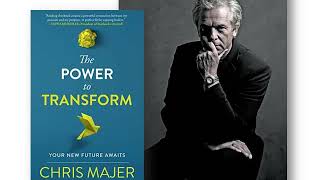
Chris Majer, founder of the Human Potential Project, discusses his new book The Power to Transform, which argues that real change requires embodied competence and practice, not just understanding. He explains how organizational transformation depends on three things: mood, systems, and management practices, and why attitudes can harden into what he calls psychosclerosis.
Chapters
Living a life in full is a conversation you always wanted to have with that person who gave an amazing TED Talk or the author of one of your favorite books or that inspirational Olympian you always wanted to know more about. It's graduate level conversations with those making a difference in the world and in the lives of others. This show brings you new ideas and approaches so that you can live a life in full. I'm your host, Dr. Chris Stout and I hope you enjoy this episode. This episode is brought to you by the nonprofit I founded, the center for Global Initiatives. The center is an all volunteer organization so there are no salaries and thus all tax deductible donations can go to the work. While our key country partner is in Tanzania, our work is global and generally focused in the areas of education and healthcare. We also help others to get their nonprofits started or augment others project based initiatives. It's our goal to open source humanitarian intervention and to help make it easier for others to do more good in the world. We are proud to have been ranked a great nonprofit every year since 2011 and to have achieved a Platinum level rating by Guidestar Links. In this episode's show, notes will take you to published articles on our outcomes, number of helpful tools and downloadable resources which are all free always. Please Visit us at CenterForGlobalInitiatives.org and be sure to watch our video at Patreon.com DrChrisStout to learn more. Thanks welcome to another episode of Living Life in Full. I'm your host, Dr. Chris Stout. I hope this finds you and yours safe and doing well. As good timing would have it, we're fortunate to have Chris Major as our guest today. Chris truly demonstrates living a life in full. He's the Founder and Chief Executive Officer of Human potential project, or HP2. Chris earned a BA in Political Science and went on to study Organizational development, earning a Master's degree in Public Administration from the University of Washington, after which he worked as a political consultant. He was also a competitive rugby player for 11 years and then began work as an entrepreneur for founding the first iteration of HP2 in 1981. The company designed and delivered a series of groundbreaking programs to the US army and to the corporate world, where they soon began garnering and generating remarkable results and accolades. Under Chris leadership, the firm grew from a startup to a company of more than 80 professionals working globally. In fact, Chris was the principal architect of organizational transformation projects for such corporate clients as AT&T Co, Cargill, Microsoft, Intel, EDS, Amgen, Capital One and Alliance Life. He has worked and conducted seminars and consultations across the United States in Canada, Mexico, Argentina, France, the U.K. australia, India, and Malaysia, just to name a few. He's also been featured on the Today show, the NewsHour, and with Charlie Rose. And his work has been written about in Time, Esquire, People, Men's Health, and Leaders magazine. He has served as chairman of the board to the Seattle Community Youth at Risk, as a board member of the Mount Zion School, chairman of the Mobius Science center, and continues to be committed to building a better world. In addition, he's been a student of aikido for a number of years. All of these influences have come together to shape his work, much of which is now detailed in his new book, the Power to Transform, which, by the way, I very much enjoyed and want to discuss quite a bit on the show. So, Chris, it's great to have you on.
Well, thanks very much. It is, of course, great to be with you and as you noted, with you in these particularly new, challenging and trying times. Who would have thought, huh?
Yeah. For the audience who we were just chatting before the show started that, you know, some of the work that Chris is doing is quite in demand. So I do appreciate you taking this time, man. It's much appreciated. So I want to get into the book and I want to get into the human potential project that I'd like to begin. Maybe just if you could share your background story for the listeners, like maybe start with your rugby playing days and career.
Oh, you know, all these stories, they all start the same way. There I was minding my own business. Well, my rugby playing career. I grew up in Spokane, Washington, you know, the classic high school football thing, and went to the University of Washington. And you know, at the age of 18, 19, let's, let's just say I had some issues with authority. So, okay, I did. I lasted all of about three or four hours on the Husky football team and, and then they tried to recruit me to the crew team. And you know, being from Eastern Washington, crew is not a big thing.
Right.
And, and I said, well, okay, wait a minute, let me get this straight. You want me as an 18, 19 year old kid to get up at 5 in the morning, go out in the cold, the dark, the wet, and row around on Lake Washington. Oh, and you want me to get a buzz cut as a rite of passage at the time when, you know, it's all Jesus Christ Superstar, everybody's got, you know. And so I thought about that for about two seconds and went, no, thank you. And one of the guys in my fraternity house played this game that I'd frankly barely even heard of called rugby. And he drugged me out there and I fell in love with it. And, you know, four years, three or four years later, I'm captain of the team. And I went on to play first division for a club site in Seattle for another eight or nine years. And as I tell everybody, you know, it was a life altering or life shaping period of time, but I also have like the lost decade. So while everybody else is building their family and their careers in their 20s, I was working, you know, enough just to support my rugby playing habit, having a good time. So that got me started. And then what I think will be of more interest to your audience here is I had my very first kind of. I don't even know what the right phrase is anymore, you know, magical moment, transpirational, mystical experience in of all places, the Seattle Tacoma Airport. Oh, okay. Yeah, exactly.
That's a new one.
You're not the spot you normally look for these things. No. So. So every year there used to be this fantastic rugby tournament down in Monterey, California. And as a sidebar, I. One of my life goals is I want to meet the guy who convinced the Monterey Carmel Chamber of Commerce that it was a good idea to invite 30 rugby teams down for a weekend on the seven to play on the polo grounds of the 17 mile drive. The most hoity toity. Yeah, the most hoity toity place in the car. This is like inviting Attila the Hunt and some of his pals week. You know, what could go wrong here? So, so anyway, we're. We're going to the tournament and I get to the airport and went, oh, crap. The book that I was reading I left on my bedside table. I need something to read. I'm not one of these guys who could just get on the airplane and, you know, stare at the seat, right? So I go into the bookshop at the airport and, you know, you don't need me to tell you what those things are like. You know, there's the spy novels and the bodice rippers and all this kind of stuff. And then strangely, I'm kind of looking at this wall of books and I know this is going to sound strange, but literally one of these books started talking to me. And I'm not talking like an audiobook here. And I was like, okay, well, this is new. First I'm kind of looking around like, who's talking? And it's this funny little book way up in the corner. And it was kind of One of these things is not like the others. So I pull this book down, and it's called the Ultimate Athlete by a guy named George Leonard. I'd never heard of him, but I thought the title was catchy. And I. So I just kind of flipped through it and I thought, perfect. I can pick up some tips and techniques for my game, and maybe I can learn something that'll be useful for this tournament. So I bought the book, get on the plane, I start reading it, and pretty soon I'm like, wow. I. This is a whole new language for me. This guy's talking about synchronicity and intentionality and this seemingly magical energy called key and some martial art called aikido, and some guy named Richard and his black belt test. And I'm kind of like, I don't know what this is, but I like it. Yeah.
Yeah.
And that's what set me, Frank. That's what set me down this particular path. I mean, prior to that, you know, my destiny. The family business when I grew up was a Ford dealership. My grandfather had it, my father had it. I was supposed to be third generation, you know, I finally told my dad, I just. I couldn't see myself wearing a white belt, white shoes, and selling Pintos.
So that's good. That's better than a plaid jacket doing used cars, I guess.
So listen, my formative years when my dad's. My dad's interpretation of daycare was he would leave me with the used car salesman every afternoon, apprenticeship. So, yeah, that's. That's how I got shaped. Go ahead.
Well, I was gonna say. So did that. Then. Was that sort of like the early seeds of. Of sports mind or. Or.
Oh, absolutely. Yeah. Okay. So I. I finally. Around the age 30, 31, my body wouldn't take, you know, the constant abuse.
Sure, yeah.
And I also had to have the conversation with myself that might actually be time to grow up here.
Oh, man, how sad.
But I'd remembered. I remembered from George's book this martial art called aikido. And I thought, you know, I'd always been interested in these things. So I went around and I. I went and looked at a karate class, and I said, interesting, but these guys are just pretty much learning how to beat people up. I already know how to do that. Or rugby player.
Yeah, exactly. That's second nature.
Yeah, exactly. And then. Then I went to this kung fu class and thought, well, this is much more interesting and stylized, but you're still just beating people up. And then I went to this aikido class. And there's something completely different. Well, wow. There's no punching, there's no kicking. This is very interesting. So I started studying aikido. And in that study, I met my first business partner. He was a sports psychologist. And now this is in the early 80s, when sports psychology was still seen as something akin to voodoo or black magic.
Sure, yeah. Yeah.
And we just got to talking and sharing, you know, this and that over coffee. And next thing I know, we had this idea. We were going to take kind of some of the energetic and philosophical practices we were learning in aikido from the east and combine them with psychological and physiological stuff from the West. And we built this unified body of work. And we built. The first iteration of the company was called Sports Mind. And it was all about how do you bring the mental aspect into the foreground in sports? And so, absolutely, the answer to your question, the book is absolutely what set me? And then here's how this thing goes. So we get to work, we build this body of work. We're doing tremendous work with our athlete clients who are all individuals, and they're seeing stupendous performance improvements. The only problem was this is in the days before Nike and Adidas exist the way they do now, all of our clients were amateurs. And so they were broke, doing great work, not getting paid.
Yeah.
Flaw in the business plan.
Yeah.
So we turned our attention to teams. We saw the same thing that everybody's saying. You could take a group of individual players whose individuals were terrific, put them together on a team, the team would stink and go, okay, well, rationally, that makes no sense, but it happens so much, and not just in sports. So clearly there's something here to learn. So we built out a new body of work. We called it team cohesion. We coined that phrase in 1980.
Wow.
And went to work with national teams, Olympic teams, the Seattle Seahawks back in the. In the AFC days. And much to our surprise, that work caught the attention of the Army. And that was never in my playbook, you know, and so suddenly I find myself down at scenic Fort Hood, Texas. Yeah. Which if you've never been there, I recommend you keep it that way. You know, it's. You know, it's a massive army base, but so I'll spare all the details, but we ended up doing a couple big projects down there at Fort Hood, one of which got front page coverage on the Army Times, which is the Army's newspaper. And so I'm sitting in my office one day and I get a phone call and, Mr. Major, this is you know, Sergeant Jones, Colonel Potter would like to speak with you. And I'm thinking, Colonel Potter. Colonel Potter. Why is that. That's that guy on mash. Exactly. I'm like, I thought it was. I thought one of my goofball friends. Yeah, you idiot.
Tell. Tell Hawkeye to call me later.
Exactly. Exactly. Get Hot Lips. Right. So. Phone rings again in about two minutes. A different tone of voice this time. Mr. Major, this is Sergeant Sarso. This is. I'm calling on behalf of Colonel William Potter, you know, of the 10th Special Forces Group, parenthesis. He doesn't really appreciate being hung up on.
Oh, my.
Okay.
Even as a civil, that's kind of scary, right?
So. So this. Let's. This leads to that. I get on the phone with Colonel Potter, and we have this long talk. And next thing I know, I'm on my way to Fort Devens, which is way outside Boston. So you can't get any farther away from Seattle than Fort Devons. Right? So, you know, this is back in the days when you could still meet people at the gate at the airport. So I am met at the gate by six really big guys. Now, I'm not a small guy, but these were big guys. And. And the Special Forces guys don't wear all that colorful stuff on their unif. They just have their name and rank in a little green beret tucked in their epaulette. So they are. They're talking to me and escorting me through the airport because Colonel Potter has a specific time, and we're running a little behind schedule. So we're moving through, you know, the local airport. And everybody, of course, is staring at me with, like, finally, they got that terrorist Carlos.
Your military entourage.
Yeah, I don't know who this guy is, but let's get out of the way. So this is a nice way to travel. So anyway, we end up, you know, getting to work on this Special Forces contract. And all this time we've been building relationship. Now circle back to the book. The book, you know, written by George Leonard. George has become a mentor to me. So I asked George, I said, george, I need somebody to fill in on this team. He says, well, you remember the last chapter of the book? This guy named Richard and his black belt test? Oh, yeah. I'll get you that guy. So that all came full circle. So I had George mentoring me. I had this guy I'd read or read about a couple years ago now working for me.
That is so cool. Yeah.
What are the odds? Who. Who would have pegged that, right?
And it seems such a Natural. Because I know enough of your history that doing stuff with the military probably wasn't in your DNA from your younger years.
Exactly. Let's see, leading marches, anti war marches down freeways, working with army.
Well, you know, it's all about the pivot, right?
Well, it's the pivot and a little bit more discerning mind, a little more, you know, maturity and that's right.
So, so I guess maybe this is maybe like a meta question, but I mean, talking about transformational change, was that then like a, what was that the, the genesis or the start of going from Sports mind to HP2 or. Tell us, tell us about that and transformation.
Well, let's see. So we did this work with the military. We worked almost exclusively with them for three or four years. And at the end of that I said to my, which was then a small team, there's only, you know, six or seven of us. I said, look guys, we have had the opportunity, an extraordinary opportunity to design, develop, test and authenticate a really powerful body of work. And we've done it in two arenas where performance matters and where you can measure it. First with athletes, then with soldiers. Okay. And right up to the pinnacle, up to and including, you know, this year long classified project we had with the special Forces. I don't want to spend my whole career training soldiers. In fact, let me be very clear about that for your, for your audience. Doing the work with the soldiers was absolutely the most rewarding, extraordinary stuff we ever did. The process of getting to do the work. The Army's contracting process was sufficiently odious that I don't want to have to hire three extra people just to do all the paperwork.
So imagine.
Yeah, so we're going to turn our attention to business and the challenge. It's actually going to be more challenging than the sports and military. Everybody looks at me like a nut. So I said, no, I don't mean physically. I mean, think about it. In business, there's no timeout, there's no spring training, there's no stand down, there's no off season. Right? Yeah, it's a continuous game, which makes it a little hard to know how you're doing all the time. Plus, on any given, and we use the term team loosely now, there's a vast gap in the level of competence and commitment on the part of the players. How do we work in that arena?
So not everybody's got the same motivation.
Yeah, not even close. So we, we put together this body of work and I said, okay, here's, here's what we're going to do. I'm going to put together a business plan. We're going to go out because I want to treat this as a company. So you'll notice that unlike lots of other people in the Space Bar, my stuff's never had my name on it because I don't want it to be all me. Then it's, then it's a cult. Besides, if we're trying to build a business, you know, it has to be scalable. If, and I'm not trying to pick on him, but just as a simple example, if Tony Robbins gets run over by a bus, it's over.
Yeah. Yeah.
All right. So for me, it's the, it's the work. The work has got to stand for itself. So we built out this ideal program. I built a business model. I was, I don't know, 31, 32 something at the time. And I'm going out in the early 80s, early to mid-80s, to raise money. There was no venture capital funds, there was no angel investors, and none of that stuff existed yet. And everybody looked at me like a nuts. You know, what do you, you don't know how to write a business plan. What do you mean you're gonna go, right? What are you crazy? Well, those are all three important questions, but let's see. Let's, let's not dwell on that. Most likely. So, so I went out. The very first guy I talked to says, this is the coolest thing ever. Wrote me a check for $400,000 in 1984.
Okay. You know how many, you know how many startup founders?
What's so hard about that? Yeah.
You know how many startup founders you just inflamed just now?
So, you know, I'm sitting there going, what's the big deal? If only I know.
If only I know.
Wow. No. So how long did that take you? 10 minutes. Wow.
Wow.
Yeah. So then that's that. We pivoted. We put together a simple little program. We needed someplace to test it. One of our investors, partners owned a manufacturing company. They were a subcontractor for Boeing that made doors for airplanes. Little, little 300 person machine shop in a little town called Shelton, Washington, which you could barely find on a map. If you go another 50 miles west of Shelton, you're in the Pacific Ocean. So my thought was, if it works here, great. And if it doesn't work here, nobody will ever know.
He's gonna know, right?
Yeah, nobody will ever know. Well, it worked way beyond our expectations. And then, you know, as you begin to listen more to the big story here. You can't help. At least I don't help. But see, Providence has been playing a role here all along. So that was my first client because my second client was at and T
again.
Yeah. Business obscuria to centering in the circus.
Wow.
We went from five guys in a little cubby hole at Pioneer Square in Seattle to 85 guys in six months. And as I tell everybody, the business succeeded despite my best efforts. And wow. Yeah. And boom, there we were, center ring in the circus.
Let's. Let's take a quick, quick pause on that. How did you scale so quickly? My gosh. I mean, just the. The. The hiring and stuff. I mean.
Oh, yeah.
How did you find that? This is all pre Internet stuff. You didn't have glass door or LinkedIn or something, just networked or. How.
What was your. Remember when I said providence?
Yeah.
It was the strangest. I mean, I literally never had to go and try and find anybody. They found me. And it just was weird. I mean, I don't say weird. It was providential.
Yeah.
People would turn up on the doorstep. I have no idea who you are. How'd you get here? Well, this guy who knows this guy told me about what you guys were doing. It was so fascinating, I just had to come right down here.
Wow.
Well, you arrived at exactly the right moment in time. So, you know, I was just like that. So I got this guy, and he knows that guy. And we're picking up, you know, old s. Trainers and lifesprings guys and having to reboot them rather considerably and wow. And bada bing, bada boom.
I tell you, I have a friend, Keith Farazi, and his. His kind of his sweet spot with Farazi, Greenlight, is the whole networking. He did a book a while back called never eat lunch alone, and it was sort of like.
I think.
I think you could have been a case study for that.
I mean, it was. I mean, literally never once did we have to go and look for anybody. They just. Just showed up at the right moment in time.
So how long was your.
It was quite extraordinary.
How long was at. And t. And then. Then it sort of. My guess is that, you know, that was a stair step thing. Then you're doing stuff at. Oh, it was Microsoft.
Often you're doing early days. Yeah. Just launched us all over the place. And then we'd go through these peaks and valleys and then. No, you can't be on the upswing of the roller coaster forever. So we. We had, you know, lots of drama and stuff. And my Then my partner and pseudo big brother just keeled over dead one weekend.
Oh, Chris. Oh, my gosh.
Devastating. And then everything went in the toilet for a while. So rising from the ashes, you know, we built it back up again. And, you know, it went through a couple iterations. And then we had the great economic collapse. We're back to ashes. And we build it back up again. And now we're back to ashes again because what's the very first. You know, we literally had the. This entire year's worth of work canceling. Oh, all this stuff happened.
Gosh. Oh, Chris, I had no idea. Oh, wow. Well, we'll have.
So we'll have you back on a year. Part of the bonus for doing the interview. We're going to be moving in with you.
Yeah. Okay. Well, all right. Well get some more stuff done. So transforming left and right.
That's it. That's right. Not quite the transformation you had in mind.
Well, there you go. So. Well, so obviously this, the. The area that, that you specialize in is transformation. And I've had, like, at the place that I was at before my current circumstance, we had, like a Chief Transformation officer. So at some levels, I think, you know, it's sort of come from. It seems like you've at some level sort of pioneered certain kinds of things of, you know, coining terms and kind of being early in on a lot of these things that now sort of become household words and household phrases. So let's talk about the space of transformation, and it's become the focus of your latest book, the Power to Transform. And I have to say I want to say quite a few things about the book and then I'll let you say a word or two maybe. But I really found it kind of reminiscent of Steve Covey's 7 Habits of Highly Effective People in some ways. And I really, I mean, I have found myself over the course of the years using bits and pieces of that and, you know, and begin with the ending in mind and, you know, the proverbial, you know, I'm too busy cutting down the tree to sharpen my saw, you know, some of those kinds of things. But for yours, with this book, I liked the style in which it's almost like it seems like you could have, like, a companion workbook with it or something. I mean, I just, you know, I got a little Moleskine book out and, you know, made my little, you know, tasks and tracking stuff and stuff like that. So. But before we get into the book, I want to say I am not alone in the level of enjoyment I had with it. So I'm going to read some, some quotes and some endorsements here. So Howard Behar, I may be mispronouncing his name. Yeah, he's.
Okay, we know who you're talking.
Thank you. So, yeah, retired president of Starbucks said that it the book is the perfect fit for aspiring leaders. Charles Koppelman, who's the chairman of the board at Martha Stewart Living Omnimedia, said of you and your book. Kris is one of a kind. He's clearly established himself as an innovator and leader in developing human potential. This book is the key to getting your life on track and staying on track. An absolute recommendation. And Nike's director of HR said that Chris's new book makes the powerful transformation, makes power, makes the power of transformation available to everyone. So high praise, man. Congratulations.
Thanks. Yeah, thanks. I appreciate it.
Well, go ahead. Go ahead.
No, no, you go ahead.
Well, well, I, you know, one of the things about it, and I'm going to kind of like bounce around between the chapters and stuff like that. One of the things I liked about yours, which I think is somewhat distinctive, at least with a lot of the other kinds of, of writing in this area, first of all, there's a lot of schlocky stuff and not in your book, but. Yeah, but you know, in those airport, you know, bookstores and stuff. So, so it's, you know, this is for folks that aren't familiar yet with your book. This is a much different caliber almost, it seems almost like a different genre. So again, so keep, I want listeners to keep that in mind. And one of the things we'll talk about why I think that and maybe why. Why it is that way. Not just my opinion, but you take a lot of what I think for most folks would be kind of complex, philosophical and as well as linguistic concepts, and you are able to kind of take them and use them to inform practices that then can result or can create this transformational change. And historically, from what you described, you know, since the work with the military and work with corporations has all been with, you know, sporting teams or military teams or corporate. Corporate corporations and corporate teams. But this book is focused on the individual. So tell us about how, how those concepts and the things that you've done kind of in your day job with, with large entities and teams of people down to the individual level. Tell us about, like, what made you think to do it that way and how did the book get started?
Well, well, let's see. Yeah, everybody. It's funny because everybody always Asks, how long did it take you to write that book? And I tell them, 25 years.
Right, exactly.
Damn, you're slow.
No, no, that was the research.
Yeah. That was actually making sure there was something useful to say. Well, let's see where to get our head around. So here's what we learned in working way. Go back in time working with athletes, working with the military. You know, if you're trying to build a team, you know, everybody knows this in a cliche sense, but the team is only as strong as. As the, quote, weakest member. So. And that doesn't matter if it's a sports team or a business team or an orchestra. So. So what we were beginning to see is if we're going to. Well, so then the other issue was all the work that was called, quote, transformational back in the 60s and 70s and in the 80s, you know, life springs and asked and all that kind of stuff was all about individual transformation. And we had come up through that kind of model, and yet we were the ones, really. That's why none of those guys were ever successful in business. They didn't understand that transforming an organization is not the same thing as transforming individuals. That is a very different thing.
That seems so obvious, but I never really thought about that.
That.
Yeah, think of the Werner Earhart, you
know, stuff tried for years and just never got anywhere. Because transforming an organization is very different than transforming individuals. At the same time. What we knew is you can't transform the organization if you don't transform individuals. Yeah. So we would start. So our program. And what was the genesis of the book? Our program was, you know, long, because it took a while to get through all this stuff. So we started working and building and generating extraordinary results. And the good news is at, AT and T, they were very particular about tracking all this stuff. And, you know, these were dark days. At, AT and T. They'd gone through divestiture and losing people and losing money and everything. Yeah, exactly. And so, you know, it was. It was a tough time, but we were. We were able. In fact, I finally got a call one day from a woman I'd never heard of, and she says, you know, Mr. Major, we're the independent organization that does the annual attitude surveys and employee surveys for AT&T. And we just got to know, what are you doing with these people? I was like, excuse me. She says, well. Well, we've actually had to break out in our survey the people who've been through your program, because their numbers are so dramatically different. They're actually skewing the results of the whole thing. Wow.
You're welcome.
Yeah, sorry.
That's very cool, man.
But now here comes the but. But we would track these things over time, and after about 18 to 20 months, they'd start to go back down. And in fact, over 24, 25 months in many cases were worse than where we started. So we were completely both mystified and horrified. Like, wait a minute. That didn't fit. This was how I began to learn. That didn't fit with any of our transformational models.
Yeah.
And so what we began to see was. Aha. There's three variables you have to pay attention to if you really want to transform an organization. The mood, the systems and process, and the management practices. And what the individual transformational work did was essentially transform the mood. So you went from people who were in despair and resignation.
Wow.
And distrust, to ambition and confidence and all these things. But then if they got thrown back into an environment with the same old dysfunctional management practices and systems and processes that didn't acknowledge or recognize anything that they were doing, it was just a matter of time before all that good stuff would wear off.
Wow.
So that's when we begin to build out and change our program. So when you ask me, the genesis of the book, the book was, you know, literally 20, 25 years in the making and three months in the writing. And what I, you know, I'm with you, and I actually resisted for years writing a book because what I came to see and where we differ from everybody else, in my view, we as a society have been sold a bill of goods about what learning really is. We seem to think that it's the acquisition of information, ideas, insights, understanding, you know, because understanding is the holy grail. And we went, no, it's not. You know, what we know from our work with athletes and soldiers is, I don't really care what you understand. I want to know what you can do.
Yeah, right.
So our interpretation is learning is the development of new competence, a new capacity for action. And our product is what we call embodied competence. Embodied means you can take the new action without having to stop. Think about it, look it up in some book. It's automatic, ready at hand action when you need it. Competence is simply the capacity to consistently produce the intended outcome. Now, what we know is, and here's the thing that I want you and your audience to pause on is what we know now is that while the mind understands and understanding can occur in an instant, in the end, it's the body that learns, and the body only Learns one way, and that's through practice. And no amount of understanding ever produced competence. Only practice does, huh.
Like, like motor memory kinds of things. Is that along?
Well, yes, yes. And it's a little more than that, but yeah, think of that. So if you think about it, you know, well, anything that you're good at, how did you get good? You didn't get good by reading about it in a book. You know, what the book does is it produces an awareness of a possibility. Oh, here's this whole new world that I don't know anything about. But hey, it might be cool to learn. So, you know, if you're. Take a simple thing, you want to learn how to, you know, cook Mexican food. I'm just making that up. You can read books about it, but until you get in the kitchen and start making stuff, you know.
Right.
We don't know. We don't know if you've learned anything. And it's the same thing in business. People want to. I want to read all these books about leadership. Well, okay, great. So then what we got is kind of an annoying know it all. But he. She hasn't developed any new practices. You know, act like the same old jerk you always where you just got a big bookshelf, whoopee do.
That's good. Well, so. So. And that's this, I think. Was it like chapter three or something? Because you. You have Learning in a New World, I think is the title of that chapter. And. And that's where I think you talk about, you know, the embodied, you know, competence aspect of it. And it also kind of reminds me of, like, how was it Adam Grant? I forget who it was. Did the book, you know, the Power of Habits, that sort of a thing, where I could imagine very much in a military circumstance where you don't have time to, like, stop or to read your guidebook or to look something up, you know, in the back of the appendix or something. You've got to make, you know, split decisions. You've got to have stuff almost like, you know, the proverbial, you know, cliche of being on autopilot, you know, just being able. The reflex to be able to do this. And then I could see on the individual level where maybe the stakes, I guess you could argue, could be, you know, just as high. Maybe not like and death, but I mean, you know, the stakes are. It's important. So whatever that means in terms of high stakes, of how a person approaches their life and how a person, you know, wants to, you know, have development and stuff. And I Think it was also that I got to tell you, you're good at coining phrases and stuff. I think that was the chapter two. Is that the one where you talked about psychosclerosis?
Yeah,
I like that a lot. So. So just. You can do a better job of explaining it than I can, but it seems like that, hey, you're.
You're a trained. Like, you know,
I didn't coin it, though, man, I'm jealous.
You know, we all know, you know, as everybody tells you, as you get old, and you have to be careful about arterial sclerosis, right? The hardening of the arteries and stuff, so you got to exercise and do all this stuff, right? And as I tell people, I said, look, that is absolutely true, but there's another thing you got to pay attention to, which as you get older is psychosclerosis, which is the hardening of the attitudes. And if you're. If you're not careful, you know, and you don't engage in keeping all that neural network active and learning, you're going to be that guy who's standing on his porch, you know, you kids get off my lawn.
Yeah.
And, you know, nobody wants to be that guy, and yet it happens. So let's back up a little bit. So we don't like the notion of habits. You know, as I said, habits are for junkies, okay? And habits in the military, habits get you killed because you become predictable.
Okay?
All right. So what we'd like is we have practices, right? So you've got two types. You know, we could do a little Johari window here, but you've got a conscious and unconscious practices, right? And generative and degenerative practices that build what you want or that detract from what you want. And so the key to all this is to bring awareness to the whole process and understand that, you know, all this. You. You said there's a bunch of junk out in the market. I call it dribble and Pablo, which is, you know, you got all these tips and techniques and, you know, the Hallmark card, motivational stuff, and all those kind of posters. Yeah, yeah, yeah. And it, you know, okay, if it gives you a little burst of something, fine, but don't confuse that. So people say and say, oh, are you a motivational speaker? And I know, hope not. We talk about, you know, the conversation we just had about authentic learning. I said, look, there's three ways I can get you to do something. I can inspire you. So, hey, if you come over here right now, something great is going to happen. I can Intimidate you. If you don't get your butt over here right now, this big guy's gonna hit you. Or I can entice you, right? Come on over here. I'll give you five bucks. Come here. But I can't motivate you. Motivation is an internal state that occurs when you see that by taking some particular new action, something that you want is likely to occur. Right. So when we talk about, you know, motivational speakers. No, you're not a motivational speaker. You might be an inspirational speaker, but you're not a motivational speaker because, you know, you can't actually motivate anyone. And as I tell people, I say, look, motivation is to authentic development as cotton candy is to nutrition. It's okay. I mean, I like cotton candy. Everybody likes a little treat every now and then. You know, that's fine. But don't confuse that with anything that's going to actually sustain you.
That's great. Yeah, that is great. You need, like, an appendix in the book of.
Just these.
I love those. So. So in the context of that. And I remember there was, like, a graphic you had of like a stair step kind of thing, like, talking about the levels of competence and stuff. Have you ever thought about that in the context of. Because I also, you know, have worked with a lot of folks in particular, like. Like graduate students who feel like they suffer from the imposter syndrome. Like, oh, I'm in over my head. I really don't know what I'm talking about. Someone's going to find me out. I'm really a fraud. I shouldn't be in this program or whatever. How do you. How does that reconcile or where does that fit in with, like, levels of competence? Because at some level, pun intended, I guess that you think that, you know, they're. They're, you know, you get to master, you get to this, you get to that. But is this separate from that? Like.
Like people that feel like, yeah, well, there's some moment in time. Let's see. Where. How would I explain this? Rational, Normal, rational people will, at some moment in time, have that experience. I certainly know I did. Look.
Yeah.
Yeah. When we. When we're doing all this stuff with the army here, here's how this goes. I mean, all right, we'll let the proverbial cat out of the bag. So I get myself down to Fort Hood. I'm from Seattle, Washington. I never been to Fort Hood in my life. It's August. It's August. Okay? It's 98 degrees and 98% humidity. At 8 o' clock in the morning, I'm down there thinking, I need to be Mr. Professional. So I got my sport coat and a tie and a shirt on and I had to change them because I couldn't get from the door to the hotel to the car without being all sweated out. Right. Good God, what is this place? So, all right, so I get in this room, it's room full of colonels and brass. And I'm a little nervous because as you noted, my history here was anti war protest. These are not necessarily my peeps. And then they start talking and start talking about, oh, yeah, you know, the work that you guys did with the Dallas Cowboys. That really impressed us. And I'm thinking to myself, I didn't do anything with the Dallas Cowboys. Oh boy, what the hell's he talking about? So, but I'm, I'm sitting there smiling and, oh, yeah, yeah, oh yeah. Me and Roger Staubach, we're like this. And they keep going. And I realize suddenly, dawn of me, oh, crap, they think we're somebody else.
Oh, wow.
Okie dokie then. Far be it for me to disabuse them of that.
Your Last name isn't McKenzie.
Yeah. Yeah. So we go do this whole thing and. And all along they're thinking there was somebody, but by the time we're done, they're like, oh, this is great. It's better. You know, that's great.
All you needed was the opportunity, so.
Exactly. So. But then I get back to office and my guys are all like, you did what? And you promised them what? We don't know how to do all that. I said, it's okay. We've got six weeks to figure it out. Let's get busy. So, you know, so were there any moments along the way where I'm thinking, oh my God, what do we do? And what if they find out? Of course. But at the same time, I blended that with my confidence. And, you know, it's a fine line between confidence and arrogance.
Yeah.
So, you know, but I can ground that. Look, every time we've had a challenge like this, we've risen up to meet it. If you're in graduate school. Well, you know, I was going to say you earned your right to be there, but apparently with some of these, you know, cheating scandals, your parents paid for your right to be there. Okay, yeah. So let's dismiss that and go with, all right, you didn't just go fall off the bus and end up in graduates. So, yeah, you're, you're right at the Edge. And you should be not questioning, can I do it? But you should be alert to, you know, I'm on the leading edge. It doesn't get any better than this. You're in the infinitesimally small percentage of people who ever get to graduate school. So you need to look yourself in the mirror and say, okay, let's knock that off and get busy here. Right?
That's good.
Yeah. You know, you got the slap that little internal whiner around every now and then.
And it's a good balance. I mean, in the one sense, you know, not to be on the whiny side of things, but then on the other side, not to be so full of yourself and chock full of hubris, so to speak, you know, to think that, you know, you're God's gift to whatever your circumstances. So it's a, you know, and I think the, the genuine, authentic aspect of that is the, the competence that, that I think you mention of. So. So you have another pardon me chapter called It All Moves from the center, and that starts with an interesting trip to Africa. So can you talk about that experience and what you learned from it? So I'm glad you survived it, first of all.
You and me both. Yeah, Otherwise this would be a pretty boring interview. Bunch of white noise.
Oh, there's this guy who didn't make it back.
Yeah, so we heard about this guy. He could have been somebody. So let's see, this was in the late 80s. We've been rocking this stuff with AT&T. I mean, we were working groups of 80 to 90 people on this four and a half day program. We were running as many as six of them a week in different locations around the country. Just a logistical. I don't want to call a nightmare is a logistical magic. And so my crew and I, you know, I had three guys who just gave up their apartments because they were never home. They put everything in storage and they would just go from program to program. We did these ropes courses and stuff, and these are my, you know, my jungle gym guys. And they were out building and running courses, and they get done, pack up all their stuff and off they go.
Wow.
And, you know, we got to be on the watch list from Hertz. Rent a car. Just. It's a. Rent a car. Nope, it's a truck. It's a construction. Oh, it's an off road vehicle. It's.
It's our hotel for the evening.
It's our hotel. Don't give these guys any cars, for God's sake.
Funny.
Yeah. And you know, it's not a good thing when. When I finally won, at some point, I said, okay, enough of this road. When I'm getting birthday cards from Hertz. Rent a car. Oh, my God, enough already. Enough. So we're a little fried. We needed a little break. And so our whole philosophy is really simple. You can't teach something. You don't live. Okay? So one of the elements of our program or one of the central themes of the reason that you guys are all here, you, the participants, is to explore your edge. We want you to push your edge. And the thing about it is, you go right up against that point where every little atom in your body is shrieking, I can't do it. I can't. I can't. I can't. And then we just want you to take one more step, and you will literally transcend that fear barrier. And I don't know if you've ever had the experience, but if you get somebody doing some of these physical events and their whole body is shaken and you can watch it, they will literally transform in that moment. There's. There's like, this little barrier, this membrane that they can literally step through into a whole different world. And it's extraordinary to watch if you know what you're watching.
Yeah.
So we're like, okay. But we. We, you know, doing ropes courses and stuff is nothing for us how we build the damn thing. So we've got to find our edge. And so one of our guys said, well, look, you know, let's go find someplace in the world that's wild while there's still some wild left to find, Right? So Africa. When none of us had ever been to Africa, we. We met these. Met up with these safari guides. This is how old I am. As you remember the old TV show Bonanza, the Cartwrights. Well, this was like the. The Cartwrights of Africa, of Tanzania. There's this family, and they lived in a compound, these three brothers, and they were safari guides. And they had come to Africa because their parents were missionaries and et cetera, et cetera. And so, fine, so we get there. We spent, oh, gosh, five, six, seven days, eight days, just kind of getting used to being there and going to game parks and getting the feel for things. And then we trekked for 10 days up and down these hills in the Maasai land. And we had a Maasai chief who was our guide, you know, and we're all thinking we're these big, sophisticated guys, you know, and we're talking to him many this. This guy's 35 years old, you know, wears sandals made out of old tires and a toga and carries a stick and a little short knife, and he speaks three languages.
Wow.
You know, okay, fine.
You win.
So at some moment, I mean, it was just. Some of it was kind of hilarious. So we're. We're trekked and we all got, you know, we look like the. We're right. Stepping right out of the. A catalog from REI or something, you know, because whatever kind of gadget you want, we got it, you know. Well, after about five days of lugging all this crap around, now we're starting to look like the REI delivery truck is, you know, going over bumps and the back door flipped open or something, you know, so we're just dumping stuff. And I don't need this, and I don't need that. And my. My. My little highlight of this part of the trip was we. We came into this little Maasai Bowman. We were so far out there, we've been to places where they'd never seen white people before.
Okay, Gosh.
So there's these two kids, I don't know how old they were, teenage boys. They were in the middle of the assigned manhood ritual. And, you know, it's the 80s, so I got a Walkman with me, right?
Yeah.
So. So I put this Walkman on this kid's ears and I had a. What was Paula Abdul something on this. It. And I hit and I hit play. And the look on his face, the most amazing thing you've seen. And. And he just went nuts. And then he's listening, and then he takes off with my Walkman.
Thank you.
Oh, no. Everybody in the region had to hear it. So. So he came back about two hours later looking a little sad because the batteries have died. He didn't quite understand that, but it was absolutely fascinating. So then the whole point we were here was, okay, now you're ready. We're going. We're going to the wild, right? And the wild is seriously wild. So there's this game preserve in southern Tanzania that's about as big as the state of New Jersey, and they had exactly two game wardens to patrol the whole thing, Right?
Gosh.
Yeah. So we go down and meet with the game war named Warden, and he's going to come along with us. And we're thinking, well, why we're not actually shooting anything. We're not, you know, yeah, we do shoot some birds and stuff, live off the land, but we're not here to hunt. And our translator explains that. Oh, it's it's not for your protection. It's for his protection. Excuse me. Well, they've got a big poaching problem going on down here, so we're going to send him with you because there's more of you and you got a few guns.
Wow.
Wow. Okay, well, so then we have this great moment in time, right? So we're getting ready to leave, embark on this thing. There's all this. You know what? It looked like Safari Joe's. Now we got all these Land Rovers and the guy's explaining to us, okay, let's be clear. When these Land Rovers leave, there's no way out of here except you got to get to the other end of the. This. Which is 10 days up this river.
Wow.
It's in the dry season, so I use the term river loosely.
Yeah.
And you need to be clear that if any of you get seriously hurt, you're probably dead because we've got no way to get you out. You know, there's no. This was before cell. Well, even if there were cell phones, satellites, nothing. Yeah, there were new satellites. So let's just be clear if you want to do this. Well, of course, you got 10 guys who's gonna go, oh, no, not me.
Right. Yeah.
I came all this way, and now.
Yeah.
So then. Then. So then the. The. The. The game warden asked through the transfer, says, ask, tell them you know about poachers. So they said, you know, these guys are nasty. They just murder animals and etc.
Etc.
And I said, well, so we had this big conversation, a couple of the old s. Guys. Well, we'll talk to them. We'll get their lives back. We'll transform them. We're all like, what, have you lost your mind? And so the game warden finally came. He couldn't speak English, but you could tell he was. He was kind of losing patience and kind of watch him roll his eyes and he says something translators says. He just says, enough talking. Let me be really clear. We come across poachers, we're going to kill them. Wow.
Oh, boy.
Yeah. He said, oh, well, okay, he says. Then he goes, well, what do you think? We're going to capture them and they're going to come along on our trek list for 10 days, convert them. Yeah. They'll kill you at the first chance they get. So, you know, wake up.
Gosh, you thought the odds were serious to begin with. The ante has been raised.
This just took an interesting turn for the difference. And. Okay, so off we go. Well, we were in the wild, in the book for 10 days, and we only saw two. I think it was two. Two elephants.
Uhhuh.
Both murdered by poachers. Gruesome, gruesome stuff, man. They just. They machine gun these things and then take a chainsaw to their skull to get the I. And then they just leave it there. Well, after. After the second one 1, the mood in the group changes. I Bet we had 1, 2, 3 former Marines and a former army guy. And one of the marines was a marine scout, which is their special forces. And then, you know, I. And I've been doing special Forces. All of a sudden, you could just feel all the guys kind of going back in time.
Yeah.
Okay, time. Time to rethink things. Oh, boy. Reboot.
Yeah.
Never mind. Trying to avoid these guys. Let's go find these sons of.
Wow.
So. So now we're on the hunt. So we came close to him a couple times, but never found. Well, anyway, so what the poachers do is to drive animals so they can get them. They'll set fires, you know, massive forest fires. So between the time we scouted from the air where we were going to do this trek and we got there, the poachers had been in there and set the whole thing on fire.
Oh, my gosh.
Yeah. So we get there with this big, like. Oh. So for. For two and a half days, we would walk through about two inches of ash, and the only thing that didn't burn was apparently anything with thorns on it.
Okay, great.
Plus. Plus, we're getting. Plus we're getting eaten by tsetse flies.
Oh, my God.
Which, if you don't know, they're like a small horse fly. And so when they bite you, it's not like they bite you and fly away. They bite and start chewing on you. Hurts like hell. So we would douse ourselves in deet, and what we found out was it was like an attractor to them. Great. So, okay, enough of that. So. So you got to get what the mood's like now. After about two and a half days of this, well, finally we come out of the burn area, and everybody relaxes, and we're going and we come around. Well, first I'm thinking, like, as we're in about day two of this desolate stuff, I'm sitting there thinking to myself, well, here's how smart you are. You paid to go on the Bataan death march. Brilliant work. So we finally come out of this, and we come a lot around the little. Little bend in the river, and, oh, there's a pride of lions drinking at the river. And we just kind of come around this little corner. We're no more than 20 yards away from.
Huh.
And, you know, they see us and. And then they split, and one band goes upstream, the other goes downstream. And the problem was the upstream band was the adults, and the downstream band was all the cubs.
Oh.
So we're in the middle.
Great.
Yeah.
Great positioning.
Pretty much the last place in the world you want to be.
Oh, boy.
So now all of a sudden, everything goes into this. I don't even know how to describe it, because I've been studying aikido and we've been learning the centering practice about, you know, how to be present and everything, and everything just kind of goes into this. What I've heard about, but had never experienced this, this, this. This space of no time. So in, you know, literally in no time, we watch our. Our main guide, who we call Tarzan. All of a sudden now he's gone into Joe Montana mode. So he's backpedaling, rocking around into his rifle. The guys are circling up, and we've been coached really clearly about what to do if you get attacked by a lion. As you put your backpack between you and the lion, and whatever you do, don't run because they'll. They'll chase you down. That triggers their prey response, which sounds really rational when you're doing that on a chalkboard. Right.
Versus feeling their breath.
I got it. I understand. Yeah. Well, now, I'm sure you've heard lions roar before. Yes. It's a pretty impressive thing when you're in the circus or the zoo. Yeah. When they're 25 yards away and they're feigning charges at you and there's no bar. It's personal. Yeah. This is not like, oh, make noise now. It's like, you, I am coming for you. Your ass is mine, boy. It vibrates your biology in a way that I have no way to describe.
Pretty primal.
Yeah, exactly. There's the right word. So all I can tell you is in that moment, I had this. The only way I can explain it is almost like deep seated genetic memory of, oh, yeah, I know this space.
Wow.
I've been here. I've been here before. And for me, everything, it just. Everything got calm. It was quiet. I couldn't really hear anything else around me. So then we said, okay, let's all move to the river, towards the river, and we'll let them get back together. Well, as we go to the river now, this hippo erupts out of the water because we're now we're in his territory, you know, he comes roaring out of there. Well, hippos are more dangerous than alliance. You know, like, what the hell? So I'm sitting there thinking to myself, Holy. You know, 30 minutes ago I was bored out of my mind on the Bataan death march, and now I'm in the middle of an Indiana Jones movie. You know, what's going on here?
Wow.
So we found a way up the riverbank, got ourselves out of that, and boy, talk about, you know, adrenaline rush and stuff.
Oh, my gosh.
Okay, everybody to take a moment and let's breathe. Wow. Yeah.
Oh, so. So in that context then, I mean, it kind of. I guess there's a real life example operational thing of. Of, you know, the. I get why it all moves from the center, you know, kind of thing of being able to then have. And also to your earlier points and of our conversation in the book of not. Not having time to say. Now, let's see. What did they. What did they say on the chalkboard? I put my backpack between. Between me and the lion. Or do I, you know.
Yeah, exactly.
You know, you.
What are we supposed to do? What are we supposed to do?
Yeah, so, I mean, certainly. And I think, you know, to your point too, in the book about making these things, you know, through, you know, kind of a conscious. Certain kinds of things have become a conscious effort if it's not something that's already ingrained in a person or practiced into a person or part of a person's, you know, whatever. Just their. Their. Their genes, let's say. So. So I want to be respectful of your time. I have a couple other things I want to talk to you about with the book. Towards the end, you. I can't remember if it might be the last chapter. You have a. You do have a chapter called Being a Stand, and you kind of, you know, juxtapose that in kind of a quizzical kind of way to, I think, bring the rest reader into. What's Chris mean about Take a Being a stand? What's that mean? Can you tell your. Tell us your thinking about what being a stand means and what you talk about in the book about it?
Yeah, let's see. Well, you know, everybody's heard the phrase take a stand, you know.
Sure.
You know, take a stand and la, la, la. I think there's a difference between taking the stand, which is you see lots of people. Well, you know, I'm drawing the line in the sand. And then, you know, Mike Tyson would say, till you get hit in the face. Right.
Everybody's got a plan.
Yeah, about that. About that stand, not so much. And so what I saw was it's really not about what you're doing, but who are you being? If I'm being a stand, that's very different. There's. There's a different level between taking and being. It's like the difference between talking and doing. Right. So if I'm being a stand, I don't necessarily have to talk about it or say it or anything. It's all about who am I in the world, who am I going to be for the world, to the world. How am I going to interface with the world if I'm a Stan, you know, for. The example I use is in the book is for the safe and well development of children. Okay. Well, that will reflect how I am with my home life, likely my career choices, everything else, you know, and the problem I find with most people is they don't really stand, you know, for anything. And if you don't do that, then obviously you get swayed by everything. So it's really a question of coming to terms with, well, who are you? And you look at your life and you go, if I were to ask my, you know, the people whose shoulders I'm standing on, just my own family, the gym, multiple generations, would my grandparents look at me and say they're proud, you know, that what we sacrificed to enable you, you know, was worth it, you know, and, you know, too many people are kind of, well, you know, I got my cubicle. Well, okay. But that wasn't the answer to my question, you know, so. So it's. To me, this is the. The culmination of all the work that we've done is enabling people to really get in touch with what is it that you really care about? What do you want your life to be about? Because if you just kind of bounce around from this and that and this and that, you're just kind of taking up, you know, resources that we could better put elsewhere. I'm sorry, but, you know, there's enough stuff going on in the world that we need people who are clear and committed and focused and up to something with their lives. And that doesn't mean everybody's going to be, you know, Gandhi or Martin Luther King. I'm not saying that at all.
Right.
You know, if you look at, you know, look at the people right now, all the health care workers, as you know, in this moment, we're in the midst of this crisis, and probably people won't be listening to this to this until it's kind of calmed down a bit. But we've got all these hospital workers and doctors and nurses who, who are clearly a stand for the health and safety and well being of the people in the country. That's what it is to be a stand.
Yeah.
You know, then we got all these hand wringers and opiners who want to, you know, picket them. And now you should do this differently. And it's like, oh, sit down and be quiet. You know, you're a stand for bullshit and we don't need that.
That's good. So you, throughout the book, you talk about, you know, building a practice that helps to stay calm while the world around you is like, you know, in chaos and swirls and confusion and facing down daunting challenges, be they hippos or lions or life or cubicles or whatever else, and trying to be consistent in terms of making choices and having choices. You have a great chapter on that. And how would you advise, I mean, you know, as we're talking right now and as we talked before we started recording about these days of consciousness. COVID 19 or COVID 19. So, like, how would you advise readers these days in the. The coronavirus era to use your book or how to be able to adapt some of the, the lessons and practices that you have in these current times? Chris?
Well, very good question. I think to begin with, the work that we do on centering couldn't be more timely than what we're facing. People literally get. They get prone to panic and worry and concern and uncertainty and all that is just because you're not present.
Yeah.
You're time traveling. You're often time and space.
Right, good point.
We need you to, you know, we need you to be here now.
Yeah.
So right here, right now. And that's what center is all about. It's being present, open and connected. Being here in the moment, in your body, in what's actually going on. Not what might happen, what used to happen, what's here, right here, right now. And if people can come back to that space, they'll be in infinitely, infinitely better shape. And then, let's see. I think as a society, you know, in terms of leadership, we made a mistake, which is this whole notion of social distancing. And we've got to go with physical distancing, but social connection. Right. Because, you know, I don't know.
Yeah, we should call it physical distancing. Exactly.
Physical distancing. Yeah. Yeah. So, yes, we need to stay safe and be mindful of all that, but we can't, you know, we can't be looking at each other like we're all serial killers or something. You know, you go outside and people are kind of looking at you furtively and it's like, no, you know, we're all in this together.
Yeah.
And we've got to figure out ways to stay connected while we're dealing with it.
And I think, you know, it's. It's interesting to see how it's sort of like literally and, and metaphorically migrated, you know, like how European countries dealt with it, how Asian countries have dealt with it, and kind of the lessons learned. And I think you raise an interesting point. I mean, under normal circumstances, it's good to be centered, it's good to be mindful, it's good to have self care. And I think again, your book speaks to a lot of those, you know, kinds of tools. I think, you know, the. For people that haven't had a chance to pick it up yet, that the, the exercises that you have. In the end of every chapter I made reference to it and you know, like keeping a workbook or kind of, kind of creating your own little notebook of practice. I think it's those kinds of things in the literal practice of those that I think can be helpful. You can apply it to whatever point. You know what, I don't care what your age is. I don't care what your job is. I don't care if it's Covid, you know, post Covid.
Pre.
Covid. Whatever, that they're very actionable standards that, that people can use. So. So I would highly recommend, I think, you know, I know you didn't write the book, but with this in mind because it came out before all this hit the fan. But I think you're very present to. To have these kinds of skills. And I think again, it just speaks maybe to the psychology of these. These are techniques and approaches and methods and practices that, you know, can be beneficial, you know, in spite of, you know, crises and, you know, whatever point someone finds themselves in.
I appreciate that. And you're right, I'm not that clever to anticipated all this. I'd have done a better job of getting the house set up. But be that as it may, yeah, the book is literally full of, yeah. Material that will be useful to people and. But as a cautionary note, as you noted earlier, it's not full of tips and techniques. Yeah, that's, you know, it's full of new ways to build new practices, to build a new you. That's what it's really all about.
Yeah.
And we could use some new you.
Yeah, I should, I should build upon that just a little bit more too. It's not like at the end, I, I've. We've all seen lots of books where at the end there's like a little summary which is nice, or there's like, you know, here's two takeaways or three takeaways from the chapter. You actually, you know, you, you, you give, you, you take the reader to task on, you know, here's, you know, there's paragraph after paragraph after paragraph of do this and then do this and do this and don't just do it once, you know, start to, you know, know, develop a practice out of it. So that's, I do want to make that distinction that this isn't, you know, some little, you know, you know, five quick tips to quick fixes and stuff like that, so. Well, listen, Chris, I want to thank you for all taking this time today and all the time you've given us out of your kind of crazy schedule with a lot of the work that you're doing that is related back to the coronavirus. And just to be able to get to know you a little bit better and to know your work and to do this nice deep dive into just a very terrific book that you've done. For listeners who would like to know more about you or human Potential project or the book or other aspects of your work, what are the best ways to follow you or to find out more about you?
Well, you can, if you wanted to learn more about the book, obviously the book's available on Amazon. Amazon or we have a site for the book, which is thepowertotransform.net and you can actually go there and download assignments. And there is a little capacity to do work and stuff there. They want to learn more about our corporate work. It's human potential project.com and we're actually building out a new kind of consumer capacity, although we'll have to see what happens to that since it's all about getting people together for programs. So that's probably not going to happen anytime soon. But if you want to find out what we're up to, that's hp2online.com great.
Great.
And then lastly, if there's just, you know, we're starting, you know, I do speaking engagements and it's funny because they, you know, all the live ones have been canceled, but we got a whole bunch of online ones coming up, which is kind of interesting.
Excellent. Okay.
And that's just ChrisMajor.com okay, good.
Yeah, well, and as those come out, you know, reach out to me. I'll put that in all of my outlets and things, too, so we can kind of, you know, create a community around this as well, too.
Great. I appreciate that.
Have the, the physical distance, but not the social distance. So I like that. Well, again, Chris, thanks. You are just, you are a wellspring and just really, I very much enjoyed this conversation. Your life is very much one that has been lived in full and can't wait to see what you come up with next. Man, I appreciate the time.
All right, well, thank you very much. I appreciate the time as well.
Living a Life in Full is a production of Stout Media, a subsidiary of Gordian Knot, LLC. Assistant Producer Gracie Wong Music Dan O' Brien Executive Producer and Host, Dr. Chris Stout to learn more, stop by our website at lifeinfull for show notes and please recommend us to your friends and subscribe on your favorite platform. And as for the obligatory disclaimer, this podcast is for general information uses only and does not constitute the practice of psychology, medicine, nutrition or other professional healthcare services, including the giving of medical or psychological advice. No doctor patient relationship is formed. Lastly, and perhaps most importantly, I take conflicts of interest seriously. For all of my disclosures as well as show notes, please see livingalifeinfull.org podcast and my LinkedIn profile. Thanks. And until next time,
More from Dr.

2025 Mercedes-Benz CLE 450 4Matic Cabrio – Owner’s Views After a Year-and-a-Half as a Daily Driver

The Complete Guide to a Successful Everest Base Camp Trek – Post-Trek Debrief

The Complete Guide to a Successful EBC Trek – Post-Trek Debrief: What I Needed (and What I Didn’t)

What Went Wrong Customizing My New 2026 Porsche Carrera T …and what I did about it!

Coming May 1 At the Intersection of High Performance and Fulfillment: A Conversation with Alisa Cohn

From High Performance to Fulfillment: Lessons in Inner Mastery with Jim Murphy

Coming March 19: From High Performance to Fulfillment: Lessons in Inner Mastery with Jim Murphy

The New Humanitarians Volumes I - III:- Inspiration, Innovation, and Blueprints for Visionaries

The New Humanitarians Volumes I - III:- Inspiration, Innovation, and Blueprints for Visionaries

The New Humanitarians Vol I - III: Inspiration, Innovation, and Blueprints for Visionaries - Forward
