Octavia Goredema on Doing Work that Matters
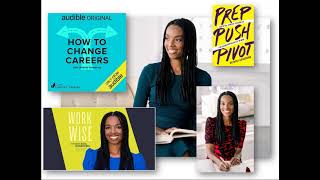
Career coach Octavia Goredema built the 2010 Agency to help underrepresented women at companies like Google and Nike. She shares strategies from her book Prep Push Pivot: the three phases of career change, how to find mentors, and when to pivot versus stay.
Chapters
Living a life in full is a conversation you always wanted to have with that person who gave an amazing TED Talk or the author of one of your favorite books, or that inspirational Olympian you always wanted to know more about. It's graduate level conversations with those making a difference in the world and in the lives of others. This show brings you new ideas and approaches so that you can live a life in full. I'm your host, Dr. Chris Stout and I hope you enjoy this episode. This episode is brought to you by the nonprofit I founded, the center for Global Initiatives. The center is an all volunteer organization so there are no salaries and thus all tax deductible donations can go to the work. While our key country partners in Tanzania, our work is global and generally focused in the areas of education and healthcare. We also help others to get their nonprofits started or augment others project based initiatives. It's our goal to open source humanitarian intervention and to help make it easier for others to do more good in the world. We are proud to have been ranked a great nonprofit every year since 2011 and to have achieved a Platinum level rating by Guidestar Links. In this episode's show, notes will take you to published articles on our outcomes, a number of helpful tools, and downloadable resources which are all free always. Please Visit us at CenterForGlobalInitiatives.org and be sure to watch our video at Patreon.com DrChrisStout to learn more. Thanks. Welcome to another episode of Living a Life in Full. I'm your host, Dr. Chris Stout. How do you get the job or position or career where the work that you do matters, and not just to your employer, but to you? Few experiences in life are as awful as the feeling of being trapped in the wrong career. But how do you find a job that truly resonates with you? And once you've found it, how do you develop the confidence to take the necessary steps to arrive at the career of your dreams? Or how do you recover from a career setback and seize new opportunities? Or what if you're returning after a time away from being in the workplace? How do you deal with the uncertainty behind a career change? And what gives you the confidence to hit the reset button on your professional life? These are the questions, areas and issues that Octavia Goradima thrives in as she works to help others navigate their own personal career success. Octavia is the host of the Audible Original series How to Change Careers with Octavia Goradima and the author of Prep Push Essential Career Strategies for underrepresented Women, published by Wiley, which we'll do a deep dive on. Octavia founded 2010 Agency, a career coaching practice where she has coached leaders at Google, American Airlines, Tinder, General Motors, Nike, and Dow Jones, to name but just a few. Her insights have been featured in leading media outlets including Fortune, cnn, Fast Company, Harvard Business Review, the Los Angeles Times, the Guardian, and Black Enterprise, among others. During the pandemic, she co hosted HBR now, the last Harvard Business Review's weekly show on leadership. And this year she contributed a chapter to the Harvard Business Review's new book, Navigating the Toxic Workplace. A dual US And UK Citizen, Octavia was appointed Member of the Order of the British Empire by the Queen in recognition of her work, which is one of Great Britain's highest civic honors. Originally from England, Octavia now lives in Los Angeles. Welcome to the show, Octavia. It's great to have you on.
Oh, I'm so happy to be here. Thank you, Chris.
Oh, my goodness. Your career and life are so rich and fascinating. With the background that I've been doing, I'd really like to start there. Can you maybe just even tell us about holding dual citizenship? How did that come about?
Oh, accidentally.
Okay, fair enough.
Accidentally, but then intentionally. I'm originally from England, born and raised in the uk And I. I graduated from the University of Leicester, which is in the Midlands. I moved to London. Well, in truth, I actually moved to London just before I graduated because I landed my first job before my graduation ceremony. And so I moved down and went back to graduate and then went back to work again.
Why does that not surprise me?
And I really thought that was the biggest I'd probably ever make, moving to the capital. If anyone listening has visited London, you'll know what I'm talking about. It literally has everything. It's one of those rare cities where you have finance and business and arts and culture and everything in one place. And so that was such a vibrant move for me. I wasn't really thinking beyond that, but. But then I fell in love. And I met a man who had to relocate with his work to the United States. And I was intrigued by America. I visited the east coast, went to New York. But that was as much as I knew. Just, that's all I knew. And so when he said to me, would you consider going to California? I was like, I don't know about that. I really don't. But he was quite persistent. And then serendipity. I was working at a company that was acquired by a American global entity, and they had an office in Los Angeles. And so I asked, can I transfer to your Los Angeles office? And they said yes.
Wow.
And so that brought me to the United States. And I thought I was going to be here on assignment, in essence, maybe for a year, maybe for two years. Well, this is now home. I am now a US Citizen, and I can't imagine living anywhere else.
Wow. So as you're a member of the Order of the British Empire, should I be referring to as Lady Octavia or what's the proper honorific? And tell us how that came about.
Well, that's so kind. Just Octavia will work just fine. But it came about because after spending some time here in Los Angeles, I moved back to London, which ended up being only just for three years. But in that time, I was really at a crossroads, Chris. I didn't really know what I wanted to do next. I had ideas about what I wanted to explore, but I didn't know how to do it. And the one thing that I realized was that I needed to connect with other people to who were doing interesting, vibrant, creative, entrepreneurial things so that I could help figure out my next steps. And I went to a conference, and I was sat at a table with some incredible women. And at the end of the event, I was like, would you be interested in connecting again? And they said, yes. And so from that yes, I started a social enterprise called the 2010 Club, and it was a circle for black women in business to connect, to share what they were doing, and to support one another. And from that, we started doing work with school children in London and mentoring and doing events. And I was writing about this work, and I ended up helping the Prime Minister with a campaign that the Prime Minister had. And then I moved back to the United States quite, quite suddenly, actually. My husband and I knew we wanted to eventually come back, but when the opportunity presented itself, it presented itself kind of swiftly. And so we seized the opportunity and moved back. And I had no idea that I had been nominated for this honor until I received a voicemail from the Cabinet Office.
Wow.
So you haven't responded to a letter we sent you that I didn't get because my address had changed quite good, quite quickly.
Wow.
And it was asking me if I would accept this honor for work that I'd done to support black women in business. And it was such an incredible surprise. And so that was in 2012, so. Oh, my goodness. 12 years ago.
Wow.
So, yes, that's how I ended up thinking that.
That's wonderful. That's so. You know. And you would just probably think it's like some prank call or something like. Oh, yeah, right, of course. Yeah. So in doing background and we were talking about this a little bit off mic, but I just kind of want to give almost a highlight reel that we have kind of a lot in common. And not for me with the royal honorific, that is. But you and I both have LinkedIn newsletters that focus on career and life. We both published with Wiley, which is just kind of cool and fun. I just actually inked probably six weeks ago. I need to buckle down on this, but another contract with them to do a second edition of a book that I had done some years ago.
Congratulations.
Yeah, thanks. It's the first time I've ever done a second edition and I've talked myself into that. It's easier than the first, but now I'm not so sure now that I actually have to do it. You and I both are very meta. We like to write about writing, which is kind of fun. And I want to talk a lot about that. We'll get into probably more tail end of our conversation. We both write and keynote on career development. We're both into mentoring. And then in doing again, background, I see that we have some shared friends and contacts and three of them at least have been on the show. Michael Bungay, Stanier, Eduardo Bernicio and April Rene have all been on. So it's kind of like this is. We need to have like a little separate club or something, I think.
Yes.
Were you guys all together at Thinkers50? Is that right? Do I have my data right on that?
No, I actually have not attended Thinkers50.
I thought you were there. Well, there was something out there that maybe I just willed it or the universe was telling me that. Of course that you've been at something like this. Do you know those folks though, too? Or am I in error with that?
I absolutely adore Michael's work. His book Do More Great Work has been my go to. And I can't remember how I first encountered his book. I can't remember, but I read it every year. It's. It's a way for me to like, recalibrate and to really think about what I. What I. Where I want to put my intent and what I want to reach for. And I noticed on one of my rereads on I think the penultimate page, Michael has this call to action with an email address. And so I sent an email and just talked about how impactful his work has been to me. And he reached out and he has since become such an incredible mentor and advocate. For me, it's just been he is
such a genuine, authentic, you know, kind spirit. I knew of his work way back when he was doing Box of Crayons. I mean, I think that's how I first kind of came across him. So it does not surprise me at all that, you know, he's, he's your speed dial and shortlist. So. Well, let's maybe after having said all that, and there's a lot of other overlaps I'm sure we'll want to dig into. But let's maybe start off with your Audible Original series. What was the spur for doing that? Was it because of your own career pivot or. Let's unpack that a little bit.
Oh my goodness. So my Audible Original series, How to Change Careers, does bring to life my experience of changing careers and guides other listeners on how they can make a pivot of their own. But it happened accidentally. I received a message via my website about this project. Would I be interested in taking a call about it? And I think what the Audible team didn't realize was that it was exactly the sort of project I was dying to do. So I was so excited to receive that message. I didn't really know when I received the message whether I was on a long list of potential people who could do this for them because they already had the topic in mind. But what I realized when I got on the call was actually no, they wanted me to do it and they wanted to see if we could have really quickly.
You're so modest and humble, that's why.
And so it was such a, such a surprise. But I have to say, Chris, it was maybe the most fun project I have worked on in a very long time.
Really.
I hadn't written specifically for audio before. When I wrote my first book, everything, my first book is prep, push, pivot. I'm a first time author and it was such an incredible experience, but every part of that experience was new to me and I was really identifying how to find my voice and what I wanted to share and how to convey it as I wrote it. I wasn't really thinking about writing for audio, even though my book is also an audiobook. And with this project, this Audible Original, it's specifically for audio. So from the outset I was thinking about that medium and it really enabled me to become a better writer. It was such a fun project to dive into and it felt like a full circle moment to actually have the opportunity to share my journey to that point and to help support others who were looking to perhaps what their next chapter could be and look like and how they could move towards work that truly aligned.
I really did enjoy it. Thank you for sharing it with me. So in the context of thinking about it for an audio book, was it, what. How did it make you think differently? Was it like, well, I can't have an illustration for this or there's no graphic so I need to describe it in words. What was that like? How did you go with that?
So first of all, the Audible original format that I have, and I'm not sure if all the originals that Audible release follow this format, but first of all, it's shorter than a book. So my book prep push pivot is approximately 50,000 words. And so my script for this Audible original series is about half, just under half of that. It's very. My book Prepot is also action oriented, but this series was even more so, I feel, because you've got someone who's listening and who's thinking through what they're going to do next and then there's exercises that I'm guiding that person to do as we move through the content. And so also I wrote a script versus a manuscript. And so for anyone that has written a book, you'll know some of the parameters that there are for writing a manuscript. It's very prescriptive. So there's the, the actual content creation and the structure and of course in the flow and all the things that you put in the butter. But then there's actual parameters that you have to adhere to from an editing perspective, from style guides, it's very, very thorough. This was much more freeing. I was the one who was going to read this script and so my editor said, put it down on paper however you want.
Talk about being in your voice.
Right? Yeah. So if you want to underline certain things, if you want to italicize certain things. And so that was actually really fun and freeing. And so then I was constantly talking to the page as I was writing and that was a really fun thing to do. And I hadn't really thought ahead about the recording when I was writing it, but I thoroughly enjoyed the recording process as well. And so it was just a really rewarding time.
Good for you. That just seems so challenging and intimidating to me. I mean, I would just go off script all the time. I would just totally mess. I would make whoever in the engineering studio be so angry at me trying to do something like that. And. And I also, I just want to, you know, clap my hands and give a bravad too, as well, that it's part of the Great Courses series. So, I mean, it's not, you know, I think that aspect of it. I mean, did you feel sort of professorial in that aspect of the. The teaching and learning? You as the teacher, professor and. And audience as the student, pupil.
Oh, my goodness. So at first, when the production team, you know, were engaging with me, and you're. You're absolutely right. It's the Great Courses team, which is rebranded as Wondrium first, I was a little bit in awe, like, oh, my goodness, okay, yeah, what do I need to, like, deliver here? But what I quickly realized was that they were looking to me. Even though they approached me with the topic, they were like, what's your take on this? How do you want to do this? How do you want to divide this into the five sections, the five lessons that my Audible original contains? And I was like, oh, okay, fantastic. Because it's the first time that I've been asked specifically to do a project. I was a little nervous at first about will I be able to meet their expectations. But then I realized, actually they wanted to see what I wanted to share and how I wanted to guide a listener through this. And it was just so fun. I thoroughly enjoyed it. It gave me time to really reflect on not just what I thought I should do or others should do, but what I've learned from what I perhaps did try and what I would do differently when the opportunity presents itself. And, you know, Chris, I'm. I'm endlessly curious and fascinated in what's new, and I'm constantly wanting to learn. So I'm someone who's constantly making pivots large and small as I navigate. As I navigate my next steps. And so it felt really special to have a moment just to reflect on where I was and what I'd learned from my journey so far, but also knowing that there were even more pivots to come and to also be there in that moment. For someone who no one can see what your potential is, they can't see it until they start to get an inkling, right? And for them to start to get an inkling, you have to believe in that yourself, and you have to start to lay the foundations. And you're often doing that sometimes with some resistance, right? Not just your own, but from, you know, perhaps the people around you or from gatekeepers. And so it can be a really lonely spot to be in that building phase.
Right?
But it's so important because without that, none of the rest can come. And with the benefit of Hindsight, you can see that, but in the thick of it, you don't necessarily know how this is going to go.
Right.
You have to dig deep and you have to perhaps trust in something when you can't quite see the end line. And you're also maybe not quite sure how to get closer to that. And you can only know with hindsight that you were doing the right steps or that you were kind of adapting to learnings as you go. And so I felt so much responsibility, but also just pride in being able to be able to be that voice that someone could listen to as they're figuring out those next steps wherever they are on that journey.
Well, you sort of gave, you know, the third party tacit permission, you know, to be able to go on those journeys and to feel, you know, to say that the discomfort or the anxiety or the what's going to happen, spookies are okay, you know, that that is part of it. And, you know, I've often shared, I'm sure you have as well, too, to say, I mean, my feeling is, is that it's. It's good to have a direction, but it's also fine to vary from that. I mean, I'd rather it to go in some direction and then be able to do like you were saying, like then to be able to have that pivot when you say, well, either this wasn't what I thought or, well, I think I've done everything I can. Now it's time to do something new. And then the pivot might be still born and augmented from the past experiences that you've had, maybe from that most recent job or maybe from some training three years earlier or whatever, but all of come together to then, you know, give you greater likelihood of success in that, you know, that. That penultimate or the next step that you want to do. So I think. Let me check this out with you. I think a lot of this, you know, is. Is kind of part of mindset. And you discussed the differences in a growth mindset versus a fixed mindset. Could you share what your thoughts are on that?
Yes, and I think that probably has been one of the. The most transformative breakthroughs for me. And I. Maybe this is taught more to people as they're going through school and education. I hope it is, but it wasn't something that I was really aware of until I was getting in pretty deep into my career. But it's basically, in essence, knowing that you are not predetermined. If you have a growth mindset, you will have the ability to evolve and learn from mistakes or setbacks or however you determine a misstep or an obstacle versus a fixed mindset, being that, well, if you don't know how to do something, or if you don't have that skill or if you haven't reached that marker, then it's going to be very, very difficult for you to do. So if you make a mistake, then there's something. There's an area where you failed and, and actually it's an opportunity to learn, evolve and grow and to. And to lean into that. And I think it's also very hard because, you know, whether when you're in school, you. It's getting the grades, you know, getting the right grade. When you're applying for jobs, it's getting the offer. You don't want to make mistakes at work. You want to be seen as competent. You want to be seen as reliable. But here's the thing. You know, careers are messy. They're really messy. They don't get less messy the more experience that you have.
Right.
You perhaps have learned how to do something cassette way, but it doesn't mean that, you know, everything that you look forward to is new terrain. And so it's, I had to learn and give myself permission to learn as I go, make some mistakes, figure it out, ask for help. And I think everyone needs to give themselves that permission, whether they're making a pivot or not, because it's just so essential. And we can be our own hardest critics in every sphere. Whether it's looking at a blank piece of paper when you're trying to figure out what you're going to write next, or you walk out of the meeting that you maybe feel that didn't go the way that you wanted to, or. And it's just, it's just a moment in time. It's not what necessarily happened in that moment. It's what would you do next?
Right.
What did you learn from it? How do you want to grow?
Yeah, yeah, exactly. How to be growthful with it. And also just not to, like you said, not to, you know, beat ourselves up about it or obsess about it. You know, as a clinical psychologist, I see that a lot of times with folks, you know, with anxieties and depression, both, that those are the kinds of ruminative kinds of things where they, you know, are perhaps harder on themselves than, you know, what the situation, you know, would indicate. So also in the audible series, and I think it's lesson four, you talk about using LinkedIn for gaining feedback. And you and I were chatting about LinkedIn off mic before we got started, could you share that technique? Because I think it's really, you know, very, very powerful.
So I think there's so many ways that you can use LinkedIn to, to learn and observe and not just in terms of making connections, which is what I think a lot of people might inherently first think of either LinkedIn for looking for a job because there's jobs that are posted on there, of course. And then of course you can research companies, of course, and research people that might work, a company that you might be targeting, but just to learn, observe and grow. I am endlessly fascinated by the resources that I see people share on LinkedIn, the perspectives that I get to listen into or read or learn from. And of course, yes, then the forging connections with people that you may never even end up meeting face to face, but you have the opportunity to gain an insight into what they do and what they know and also contribute to conversations too, is just pretty unparalleled to me. And you know, I have to be honest, Chris, I'm pretty shy. What forced me out of my comfort zone with social media in general was the fact that I'm a first time author. And you have to share what you're doing.
Yeah, exactly. If you want people to know what you're. Yeah, exactly. They're not going to go sniff it out on their own. Exactly.
You've got to share what you're doing. But that wasn't inherently how I'm wired.
But you do it. I'm going to give you a little teeny pushback because you do it in a way that's helpful. You know, it's not just a rah rah. You know, let's look at what Octavia did today, you know, kind of thing. I mean, you do it in a way, especially your newsletter. I just love your newsletter. I mean it's, it's so like concentrated and I was going to say concise, but I mean it's concentrated because the, you know, it's not, you know, War and Peace, it's not long form. But the thing, you're very topical, you're very stay on point and then you give a lot of, you know, sometimes story, but always actionable, you know, kinds of things like, well, okay, great, Octavia, now what do I do? And you tell us, you know, well, here's some steps, here's what you can do. So I think that's, that's also powerful. And again, tip of the hat to LinkedIn. We need to get them as a sponsor But I think that there's very few other platforms that is that way. You know, you see so much vitriol and trolls and hatred and whatnot. But I think that, you know, sincere people that want to, you know, get the word out there and do good work like you do, you know, it's a wonderful platform.
Oh, well, I, I agree about the benefits of the platform and thank you so much for the feedback on work wise my LinkedIn newsletter. But I have to say, Chris, I actually am consuming and reading more than I'm sharing on LinkedIn because I, I am constantly quite inspired and invigorated by what I see. And I think that's part. That is partly how I'm widening, that I get energized and this why I've loved being a career coach. I get energized by seeing people in their zones of genius and by seeing people navigating their next steps. And I'm endlessly fascinated about the building blocks for that and how they do that and, and I'm just so curious, but also interested and inspired by people's journeys because everyone's journey is different. And one of the things that I always encourage people to remember because not everyone feels that social media can be helpful sometimes and especially Even platforms like LinkedIn, which have so many benefits, that can be a lot of, you know, comparing and contrasting and like, well, I, I don't see how I could fit in or how I see doing more than me, or I see people doing this. And I think what you have to remember is that even if you start at exactly the same baseline, with exactly the same credentials, qualifications, skill, expertise, and even if you're running what seems to be the same race, your experiences, pace, outcomes, results will be completely different to someone else. Even if it looked like you were coming from identical backgrounds, it's not going to be the same.
Yeah.
And so, and I think the thing to do is to compare your own growth to where you were before or what you've been done in the past and what you're proud of and, and what you want to do next versus what someone else might be doing alongside you.
That's good. I think you could learn, you know, via mentorship or role modeling or role modeling by proxy to get inspiration from others, but then, you know, to use it as a, to use yourself as the benchmark, you know, well, have I grown? Is this, you know, I talk a lot about growthful mindset, but am I actually really doing it? Am I applying it in my professional life or my, my life Life, you know, it reminds me too. I had, we were talking about travels and stuff off mic, but I had a lot of times a problem. This isn't going to be a big public display of things that people wouldn't already know, but a lot of times when you're in a profession or a guild or whatever, we all have conferences and we talk to each other. So psychology conferences, you know, the majority of people there are psychologists or graduate students. So we all kind of talk together and that's, that's fine. That's great. And we can really, you know, go deep in a variety of. Oftentimes like to go as broad as I do deep, but you kind of can't do that at, you know, certain guilds or memberships or whatever. And So I think LinkedIn is a way to do that. And, you know, you have control of it because you choose what you want to take a look at or do a deep dive or ignore. But I gave a talk, I got the gumption up. I don't know why it's escaped me now in history, but it's a while back and I submitted a proposal to give a talk at an international conference on policy issues because I was interested about the intersectionality of policy and politics and psychology and behaviorism and behavioral psychology and blah, blah, blah. And I thought it felt like doing my dissertation orals or something. I was like, I think I have an idea. It's probably pretty half baked and there might be a lot of mean people to tell me how stupid and wrong I am. So I submitted this paid this abstract and proposal. It got accepted. It was in Cairo. And so, yeah, so I go and, and it was just, I got a lot of good. I got a lot of criticism and critique, but it was all super helpful. And because I was speaking kind of to this broad spectrum audience of people that were not psychologists, they were, you know, political scientists, they were policy wonks, they were government officials, they were, you name it, but no psychologist of any, you know, stripe there. They were also multicultural in diversity. You know, they were folks that were Egyptian, there were folks that are other Middle Eastern, there were folks that were from the uk, blah, blah, blah. So it gave me sort of this amalgam of different points of view that were quite, quite different from, you know, coming from a WASPy psychology, Westernized, you know, kind of west knows Best kind of thing. And I got this, this, you know, kind of big dose of multidisciplinary diversity, new points of view. And I also. Octavia, you'll dig this. I You know, I made some friends and relationships and I kept in touch with those folks and would kind of just bounce ideas off them, saying, hey, you know, this was. You said this about what I had said there. I've come to do more research and I'm kind of thinking this, am I off track? And they would, if I was, they'd tell me they'd get me back on track, or if I was correct, they would validate me and say, yeah, keep going. So, you know, that was great. Yeah. And, and, and it wound up in the, the good news of it, the happy ending was that with those relationships and as deep as we got into some of those things, I pitched an edited book not with Wiley, this was back with Prager. Yeah. And we got it accepted. So I did about four chapters in it, I think myself, and then edited and contacted my, my new friends and said, hey, you really know a lot about xyz. I know just enough to know that you really are the expert. Would you mind writing a chapter on xyz? And, you know, they would say, well, let's, you know, what's all the particulars? And they said, yes. And then I talked, you know, to another one, said, you're really an expert in abc, and I know not a lot other than you're the expert. Would you be interested in joining XYZ chapter author and myself on these chapters and contributing something? And it was just. Octavia. It was just a wonderful, you know, it's just sort of like this super terrifying thing as you've talked about and written about, of, you know, kind of getting up the gumption and going in to go do it, but then, not that everything always turns out unicorns and rainbows, but that, you know, kind of taking that next step and feeling a little, you know, imposter and unworthy, but then to develop these relationships that then, you know, I still keep in touch and we don't write together as much anymore, but, you know, keep those going. So, so I just.
That's an incredible story.
Oh, thanks. And I think. And it just made me think of that by virtue of what you talked about in the, in the Audible, because I thought you, you, you walked that walk as well yourself.
Yes. And it's only with the benefit of hindsight, as you're recounting that story to me, you can see all the ripple effects that, that one decision to move out of your comfort zone and perhaps, I don't know where you hit apply to, to go and speak in kind of, but that decision that you made just had. Well, there were so many benefits in the moment once you were there, but then just also after you got the feedback and then what happened next. And that's a beautiful example of just how multilayered our experiences can be and how someone might see the end result of the book that you had with Prager. But there's so much more in terms of value and benefit that also might be invisible to anyone else. And, and I love that. And you know, I'm endlessly curious about the invisible work that it takes to do our best work.
So from that now, your book did your book, your book came out before the Audible series, is that correct?
That's right, yes. Push Pivot came out in January 2022 and the audible series came out the following year.
That's okay. I wanted to make sure I got my facts straight now. So the full title is Prep Prep Push Pivot Essential Career Strategies for Underrepresented Women. And I really enjoyed it. And I'm obviously not the target demographic for the reader audience, but my daughter's a recruiter. We were talking off mic about that and I've recommended it to her and to her colleagues as well.
Oh thank you.
Absolutely. Easy, easy reference. And before I want to now be book nerdy and do a deep dive into the content as well as its structure. But before I do, I want to first share what some other people have said about it. So Cosmopolitan UK said needs some work motivation. Author Octavia Goradima is an award winning career coach and this is an indispensable guide for women looking for a new job, dealing with job loss, pivoting to a new career, or returning to the workforce after an extended absence. Marissa Grimes, Gallaber, Chief Diversity and Inclusion Officer for the United States Tennis association, said, I wished I'd had this book earlier in my career. Regardless of what level or stage you are in in your career, Prep Push Pivot is an essential read for women of color looking to achieve their professional goals. And Vanessa Wallace, British Paralympian, said, this book is a must read. Prep Push Pivot is packed with practical and motivational career advice. And Octavia, this is very high and well deserved praise. Brava. Again. So, so the book, let's start off with it and kind of deconstruct it for folks that haven't had a chance to get their hands on it. The book is divided into three comprehensive sections. Perhaps you could walk us through each of those to start us off.
Yes, of course. So my ethos for writing this book was, well, there were two things first of all, I wanted to write the book that I wish I'd had as I was embarking on various moments of my career. So there's a very selfish reason.
Good.
In terms of my own needs, but also that, you know, I. I've had the privilege to work as a career coach. I've coached tens of thousands of professionals across the United States and beyond. But I recognize, Chris, that most people don't have access to a career coach when they need it the most. You know, coaching is expensive. It's. And also, I mean, I know certainly when I was in the first 10 years of my career, I didn't even know it exist. I didn't know anyone who was coached right.
Yeah.
I wouldn't have even known where to start even if I was aware of it. And often because of the cost, and especially if you are working with someone one on one, if your company is supportive of coaching and paying for that resource, it might be reserved for more senior professionals. And so what I wanted to do was to, to create an action oriented guide that someone could read at their own pace and that could help them walk through a scenario that they may be facing. And it's divided into three sections. So prep is really about laying your foundations. And it starts with knowing your worth. And that's more than just what you may earn or want to earn. But I talk in that section about the importance of your career values, and your career values are unique to you. And no one really asked me those questions until I was myself coached for the first time. People might ask me, well, Octavia, what do you want to do next? Or what are you interested in trying? But no one had really asked me deeper questions about what motivates and inspires me, about how I personally define success, about what type of environments I want to be in, about what support I know I need to thrive, about what I perhaps want to try more of and what I'm ready to let go of. And then there's also the times when you might be reeling, maybe you've lost an opportunity such as a job and you're trying to figure out how to, to rebuild and re anchor that foundation. And then there's also, of course, the money part, because especially if you are an underrepresented professional, especially if you're a woman, what we earn matters more than ever before.
Yeah.
The gender pay gap. Regardless of how you cut and dice it, whether when you look at an array of industry sectors, that gap persists.
Yeah.
So having an awareness of what our earning potential is and learning how to have those conversations when it matters is really important. Push is talking about how you can move forwards in a number of different ways, whether that's positioning yourself for that next opportunity or a promotion, or also about how you might decide to take a step back from certain responsibilities, or how you might want to coexist, competing responsibilities that you might have if you're a caregiver and also pursuing your career. And then pivot talks, of course, about how you can make pivots in terms of how you work, whether those are large or small pivots, from changing career to perhaps maybe shifting industry. But also it's about how you can be pivotal to the advancement of others. And that is something that is really important to me. I believe every single one of us, even as we are pursuing our own paths and reaching for our goals and figuring out our next next steps, there's always going to be someone who's looking at us and would like to have had an opportunity that we've had. And I think it's so important to remember that and to be very mindful about how you can pay it forward for others in actually very straightforward ways. Even if you aren't mentoring anybody, even if you're not a senior leader yet, there are so many ways that you can pay it forward and enable others to reach that next step. You can answer a question, you can share how you did something, and then the book closes with a toolkit that you can use which guides you on how you can update your resume, how you can document your career commitments, how you can constantly be considering and evaluating the next steps for your career roadmap.
I really love that in a variety of ways. I want to make a couple of comments on it. Last thing first. I just really love forms and worksheets and, you know, again, when we were talking off Mike about those, you know, lists and things like that just really resonate with me. And it's nice to. I think for maybe you and I, they become. They come very natural, but I don't think that's necessarily the case for everyone. So the fact that you give those kinds of actionable tools, which is kind of, I think, part of your DNA, as you do in your writings, and this book in particular, is really great. And I really love the whole idea of, like, it's almost like a. I think it's a cliche, it's escaping me, the precise wording of it, but like saying someone was pivotal in my career, you know, I mean, it's sort of like nowadays it's so Much, you know, from Reid Hoffman with LinkedIn talking about pivot. I think he even has a podcast or used to a podcast called Pivot. But you know, everybody thinks about, okay, I was going this direction, then my career changed this way or whatever. But having someone pivotal in your life, having someone pivotal in your career, that mentor that, that spouse, that loved one, that professor or whatever, that really resonates with me. One of the things you talk about that makes me think about someone being pivotal is a career change maker and personal champions. Can you tell the audience about what are those and how does someone go about finding them?
So if you think back on perhaps your own journey, there might be certain conversations or individuals who really made an impact with you. It could be something that they said that planted a seed, or it could be an idea that you shared with them that they gave you a perspective on, or an introduction that they made either to someone else or even just an opportunity or a resource to explore. And there were all these like mini moments that matter that happen. And I encourage people to, wherever possible, have career focused conversations. And it doesn't necessarily have to mean, hey, Chris, I'm looking for this next job. Can you introduce me to someone? It doesn't have to be as transactional as that. It can actually be, hey, Chris, I'm really fascinated by X and I'm exploring how I can do. Yes. And just by talking about what you're interested in, what you want to do more of, or something you've done well, can, can really open doors. And you know, there was a study done, I think I mentioned it in my Audible original series by MIT and LinkedIn. And they were talking about, often when people are looking for their next opportunity, you think about, okay, well, who have I worked with before? Who are the recruiters that perhaps I've spoken to before? Who should I perhaps get my resume to? And it's easy to underestimate, actually the people who are on our periphery. You know, the people who perhaps don't know our whole backstory and don't know all our biggest things, but actually might know someone that could be helpful for you or might recommend an event that you should go to or might mention your name, you know, to someone else. And, you know, that just happened. And for me recently, you asked me if I was at Thinkers50 and it made me smile because I wasn't. But someone talked about my work there and the person they spoke to has opened up such an incredible opportunity for me this year. It's just like degrees of separation that can actually Be so impactful. And so sometimes people can feel shy talking about what they're interested in, what they want to do next. But I encourage people to do it without any expectation.
Right. Yeah. To take the transaction out of it. It's hard, though. I mean, it's.
I'll.
I mean, you know, some. There's the cliche that, you know, people's favorite topic to talk about is to talk about themselves. Or when you want to have an icebreaker, just, you know, ask the. Whoever you're talking to to tell them something about themselves and people, you know, just unload. And I find that that's not the case for everybody. I mean, I have two people that will remain nameless in my family that hate talking about themselves, and they hate. Almost kind of hate when other people talk about themselves as well, too, that it's puffery, that it's, you know, ego, that it's, you know, all these kind of negative things. So do you have any tips or advice for folks like that that kind of feel like, oh, it's just I'm being a showboat, you know, as opposed to.
Oh, I absolutely.
Share those. Share those. I have two people. I need to have hear this.
Yeah. So if. If you have that. That exact inclination, ask questions of others. Ask them about what they're doing or perhaps what they've experienced recently or. And ask another question related to it. And when you learn more, even about someone that you might think you know very well or someone you've just encountered, it starts to create a dialogue. And it's not necessarily about you asserting yourself in that conversation. It's just about curiosity. Be endlessly curious. And in those conversations, there can be so many things that you uncover. You learn something more about the person you're with, number one. But you might get inspired just by something they share. It might not even be directly connected to anything that you're doing. That happens to me all the time, Chris. I have conversations and I'm like, oh, I learned something new. And that's actually really interesting to just know that someone's doing that or has done that or is considering that or is exploring or that always been to that place. And so don't. Don't see that you have to go in with an elevator pitch and you have to hit all the points, and then you, you know, email your resume afterwards. Yeah, there might be some conversations like that. But just. Just be curious, okay? Ask questions. And if you're talking to someone, you know, they might in turn ask you a question. And if they do, don't be shy about talking about, you know, Pat, perhaps whatever they've asked you about, but don't feel you've got to dominate a conversation. Being a really active listener is such an underestimate, underestimated skill, I believe, because I have applied that so many times have been conversations that I've had with someone justice reference to you. Well, just a few questions and that was fine. Six months later, I've remembered something and I've been able to reach out with an idea or a suggestion that has been great for them.
That's great. I like that. Good. Thank you. So we've talked about pivots hitherto and yon here, but can you talk about, like, when someone's in their work situation, how do they determine whether they need to kind of go towards the gradual shift or more of an immediate pivot? Are there any kind of warning signs or any kind of canary in the coal mine to be on the lookout for in their experience? Yeah.
And everyone's situation is going to be different. And so one of the things that I encourage people to do pretty regularly is to just sit down and really think about. I call them career values in my book, prep, push, pivot. You can call it whatever you want to in terms of your practice, but really just sit and think. It's not a performance review. It's not goal setting. It's just like, what do I want to experience more of? What do I maybe want to do a little differently? What am I ready to let go of? And it might be small things, it might be large things. And also getting really clear about what success means for you, because that might vary over the course of your career, but that also is going to be very different from someone else. Right. Not everyone is motivated by salary and title and where they work. And maybe you were motivated by that for a while. Maybe now there's extra things that matter to you and how you define success. What do you want your career to feel like and what do you want to experience as you're doing it? Because sometimes you might be wanting to make gradual shifts exactly where you are, but you want to have a different experience because your values and how you define success have changed slightly. So take the pressure valve off of thinking, I've got to make a big decision. Am I quitting my job or am I doing this next thing? And actually just look back inside of yourself and ask yourself some really important questions. And then when you've looked at what your answers to those are, then you'll have a much clearer idea of what you need to move more towards. And you'll also be able to see, is this something I'm going to do gradually over time, or is this like, oh, there's a hard stop coming. Right. Fix this quickly because it's really important to me. And then also we have to be mindful that we don't operate in silo. There are a lot of factors that impact how we work, where we work. We might have responsibilities, we might have dependents. You know, we, we might have employers or clients. And so there's a lot of considerations. It's, it's sometimes rare that you can make unilateral, immediate decisions for what you do. So give yourself grace as well as you navigate those. But it's really important to be your own advocate because our careers are the most valuable and the most personal investment we'll ever make ever. No one else knows how that feels. No one.
That's great. I like that. Give yourself grace. That's very quotable. So with that then, as a coach. So you can either be specific to you in a past experience with someone or a generality for any kind of listener. But how do you coach someone to determine if it's time to quit when enough is enough? Is it a speed bump or is it a cliff? You know how.
Yeah.
What are ways to look for audience listeners to evaluate themselves?
Oh, my goodness. So I've been coached through that and I've also guided myself through that and I've also supported other people.
You're the, you're the person to ask.
Yeah, through that as well. And I wish I could say this is the three step thing. And you, if you hit these three things, you know what to do. What you have to do, Chris, is you have to trust your gut. You have to trust your gut. And even if you're not able to necessarily immediately flick a switch and transform whatever it is you might be looking to, to make a change in or adjust. Trust your gut. And if you're, if there are questions around that, be curious, test a few things out and have conversations with others. But also remember other people's opinions are very subjective. They, they can maybe help you with some of the mechanics of certain things you don't know, but anything outside of that really is for you to experience and explore. You know, when I became a first time author, I spoke to so many of the authors and I'm so thankful I had the opportunity to do so because I didn't know anything. Right. I knew I wanted to, to do this big thing, but I had so many questions and I was kind of smart and I didn't ask all of them at once. I'd kind of incrementally like get this
list together step by step by step.
And I spoke to so many people and I'm so glad I did. You know, it answered some immediate questions. It planted seeds. But also my experience as an author is not the same as theirs. There are some commonalities, of course, but the reason it's not the same is because how I define success is very different to how they might. And the same applies with any job or any project or any responsibility. It all comes down to how do you define success and what matters most for you, and what support do you specifically need to move closer to what you want to experience?
I like that. So I have to get back to my checklists and things. One of the things you do talk about where you have added steps to it. You have a thing 7 steps for creating your career change roadmap. Could you maybe give us some highlights of that? I really.
Oh my goodness, yes. It's like it's in my Audible original series and it's for anyone who hasn't listened to it yet. It's like a menu option so you can listen to that episode and think specifically about an area that you might be struggling with and then choose which of the components might help you the most. Choose your adventure. Exactly. I love that analogy. It's like that, you know, I very much believe generally and don't feel you always have to go it alone. Even though your experience is personal to you, do reach out and connect with others. It could be that you're getting perspective on how you present yourself for a new opportunity. It could be your not everyone has mentors on tap. Some. Some of us are fortunate to have that, but not everyone has that. So don't underestimate how powerful just one conversation might be. Or I loved what you shared about moving out of your immediate sphere and going a little broader. Sometimes taking yourself out of what's familiar can be so invigorating in terms of just giving you time to rethink or recalibrate. I also, I think, talk about role models as well. Mentors are one thing, but there might be role models that you can actually look at from a distance and learn from. Can I read their book? Can I listen to an interview they've done? Is there something that they've shared? Is there an article that they've written? Is there a YouTube conversation that they've had? I do that constantly. I'm constantly inspired and can sometimes get out of feeling stuck. And then I think the other thing, and I maybe talk about this a little in the series, but it's something that's become even more important to me ever since is if you're feeling frustrated and stuck and feeling things aren't quite going the way that you want them to. Take the best care of yourself while you navigate that. Don't punish yourself as you navigate that. You know, get more sleep, you know, eat good food.
Isn't it such a paradox? I mean, in those circumstances, it's like we just, just, you know, just rot and molder, you know, the times we really need that self care. Yeah, yeah, exactly.
Yeah. So do the nice things, the things that you might think of. Oh, I do that. When I've got past this and when I've, you know.
Yeah. Reached this pin, everything's perfect. Yeah, yeah, exactly.
No, no, no, no, no, no, no, no, no.
That's good.
Do it now.
Yeah. Hear, hear. So do you think someone or what are your thoughts? Like I think about Chris Gillebo. He kind of. I don't know if he orig. Sort of being the, the godfather of the side hustle. Do you have thoughts about side hustles before a career jump? Or like I've also heard the term intrapreneur, like where someone might be working in a company and then they say, hey, I've got this idea. Can I. Like Google's famous for this, you know, the. Can I. Can I hot house this little idea and see if it turns into something. What are your thoughts about those?
Oh, I love that idea. And sometimes people think side hustle is something quite, you know, predis, you know, predetermined in terms of, well, you have a job and then you, you do this on the side. It could be a lot of different things. Maybe you volunteer, right. An organization and it's in a industry or a sphere or using a skill that you want to test out and see if you want to do more of. Right. May there are lots of different ways that you can test things out and that might not, you think, fall into the side hustle umbrella, but really are an opportunity for you to just explore whether that's as a project or whether that's as an, you know, an ongoing perhaps commitment that you might have over a period of time to see how it feels. I think it's really valuable. I think it is though also important though, to really think about if you're taking on something extra, what are you going to let go of? To make space for that. And how are you going to set yourself up.
Up for six, not just add another 40 hours to your week?
Yeah, it's really important, and I've learned that the hard way. I recently had to have that conversation with myself that, okay, I want to reach for some new things that are really exciting for me. And I also still want to write because, you know, I've got writing for. Just wondering. So, okay, what do I let go of to make space for this new thing that actually I need to make sure I give attention to? Because we're not superheroes. And you need to make sure that you give yourself even more space than you think you might need.
That is excellent advice. That is excellent advice. I know. I'm just keeping an eye out on the clock. I have a few more questions. I'd like to talk a little bit about writing and kind of nerd out with the book and the mechanics of it. Is that okay?
Or you could. Oh, I'd love to. Okay.
Well, just a minor shift.
Shift.
But we'll. We'll keep talking about career stuff, too, because it all overlaps. So people that have been longtime listeners to the show know that I like to talk a lot about book design as well as content. And I just want to call out. There's a lot of parts about prep, push, pivot that I found so engaging as a reader. First of all, I love the Q and A in every chapter. It feels very engaging, you know, in that kind of way that like. Like I might read a question, go, like, well, wait a minute, I need to go back. And I haven't really thought about it that much. So that's very, very helpful. You've got specific steps to take in other chapters, which is really kind of cool. You bring using women's stories. You bring a lot of the points alive that way, which I think is even for me, being a male, it's very generalizable. I get it. And I really liked your create a scary list. So could you explain to the audience what that is for folks who haven't read the book yet?
Yet, Yes. I think a scary list might be things that you sometimes think about, but you just want to do that once. But I don't know. I don't know about that. You know, write those things down. And, you know, if sometimes fear is excitement, I think I read somewhere someone say that, and I love that perspective. That actually could actually just be a lot of excitement. Really concentrated.
Yeah, yeah. Douche of anxiety. Yeah.
It's like really actually could be really, really fitting. I guess roller coasters are a great analogy for that, aren't they really?
And for careers and things too, right?
Exactly. And you know, for a long time, Chris, being an author was on my scary list for the longest time.
Right, right.
You know, I didn't think I was good enough. I didn't think I could get a book deal. I, I then didn't know, okay, can I actually even write a book? And I got it. It was on a. Scabulous. Because it mattered so much to me.
I love that. Well, it's like I can't remember the author right now off top my head. But, you know, do hard things kind of a thing, you know, that this. I mean, some. Sometimes it's physical and athletic and longevity related and other times it's, you know, for you in this, you know, a person could argue that it's a intellectual thing, but I think also for you by virtue of the gift that you've given to your readers and your listeners, that it's, you know, it's a humanitarian intervention. You know, it's something that you have helped change people's lives. And then the, the people's lives that are in those people, you know, the, the, the partners and the children and you know, the employees and the direct reports and everything else. I mean, that's, that's your tackling your scary list and being able to put a check mark by the book authorship and the audible work, I think is a gift to all of us. So again, just very grateful and indebted. Another part that this alludes to, and I actually have the book open right here beside me because I wanted to make sure that I didn't miss it was your dream bigger toolkit in. At the tail end, in chapter nine. Could you. Again, I wish this was video. I could just hold it up to the camera. But could you talk about what's in that?
Yeah. So as you navigate reading the book, there's some things that I didn't want to get lost in the shuffle. And I truly believe that your career values underpin everything. And there's something that you need to keep coming back to and also keep rewriting as you think more about experience, more things. And so in the Dream Bigger Career Toolkit, which Chris just referred to, it's right at the back of the book and it's a space for you to. And pencil would probably be best because then you can erase it when you.
It changes. Right? Exactly. Yeah.
You can write down your responses to the questions that I ask. There's so many questions in this book, because coaching is about asking questions and it's about paying attention to the responses with no preconception to what the right response is, because there is no right response. And then you can use those values to then start to think about any goals you might have. Because if you try and think about the goals before you really thought about your career values, you're kind of going about it the wrong way. And another, there's a lot of things in the Dream Bigger career toolkit, but my favorite part really is the My career commitments section, because these are basically the personal pledges that you have to keep making to yourself. Because with all the best intentions, with your career values all lined up and you're ready to go, oh, my goodness, there's going to be things that knock you sideways ways. Right? There's gonna be.
Yep.
It's just guaranteed.
Yeah.
It's not all gonna be, you know, straightforward from here on in.
Right.
There's gonna be so much and there's gonna be so many times when you're like, what on earth am I doing and why am I doing this? And so I've used this exercise when I've done one on one coaching and someone's like, really in a difficult moment and we kind of put pause on what's actually happening in the moment and we come back and we're like, okay, why are you doing this work? And in order to do it to your best ability and to feel like you're thriving, what is it that it will take for that? And if things are hard, what would you want to remember as you're navigating that and what are you building towards? And that helps you to zoom out a little bit and to think about the bigger picture before you zoom back in and experience all the things that you're experiencing. That's great because, you know, from the breadth of work that you've done, Chris, there was always going to be moments where, like, it feels like the house is burning down, you're trying to salvage and, you know, figure out. But you have to remember your foundations that you're building are so important and they're yours. And you have to just remember what it is, what those foundations are and what your commitment is to yourself as you navigate the tough points. But also the highs too. Right. Because it's still that foundation is there for both scenarios and everything in between.
Yeah, it's so well put. I mean, it's so grounding to have that. And sometimes when you're in the fray, you know, if it's you know, know if it's going good and you're busy or if it's not going good, you know, and you're, you're chaotic, you lose sight of those kinds of things and that, you know, that kind of, you know, back to the. You know, your values as your compass can be very much, you know, setting you, no pun intended, in the right direction with those kinds of things. And I also want to give a shout out, big fan of like, the annotated links in your recommended resources section. I just, I love those kinds of things. So back to the.
Oh, you're the first person to tell me that.
Oh, no, I really do. No, you know, I've seen, you know, other, like, it's. It's handy, like if you get an E version of a book or something, because then the links are hypertext and you can just like pop out of the book and pop onto the site and stuff like that. I've seen people use. There's Michael or who. Somebody. I. Some, some. I read so many books, but, like, you know, now there'll be like QR codes, you know, and you can download a worksheet and stuff like that. So I just love those things because it helps also. I mean, there's points in your book that are very solid and evergreen and then there's other kinds of things of, like, tools and resources to say, you know, this will just augment what I just got through reading, or I read this. I get what she's saying. But now what? Well, it's like we'll click on this and that might take you to the. Exactly, you know, the now what that you're looking for. So I love those kinds of things. So what was it? How did you come up with these kinds of formats and design aspects and checklists and toolkits and scary lists and. And what was your process with that?
I think I was coaching while I was writing the book. And I was also. I was also doing the series for Harvard Business Review that you talked about. I had a lot of things going on at the same time.
Gosh.
And I was thinking, I. That's what it's going to be like for anyone reading the book. They've got a lot of things going on at the same time.
Good empathy.
Yeah, right, right. They've got, you know, the job or looking for a job, and then they've got other commitments and things that their employer probably doesn't even. That they also are doing, you know, in their own lives that are going on with them because our lives are multifaceted. And so I didn't want to make any assumption that, you know, reading a book is a real investment, Chris. You know, and so I wanted to have some points of reference that someone could come back to at their own pace and use how they chose to. And then your point about including the Q and A at the end, I thought that was really important because I didn't want, as an author to feel, well, this is what I say, and this is how this chapter ends. There's still going to be more questions, and I wanted to kind of share some of the questions that I hear often about these topics and give that more personalized, direct. This is what Octavia would say to you. Response.
Yeah.
To conclude the chapter versus just some statement that closes out a topic that actually doesn't just end there when you finish that.
Yeah, pithy last sentence. Exactly. Yeah, exactly. Well, and it also just tees up nicely for, you know, kind of consolidation and then getting into, you know, the freshness of whatever the next chapter is going to be. So. All right, that's good. So again, I'm just kind of keeping an eye on the clock. The. Let's see. I had one more question. I just lost it. Oh, values compass. So, okay, that's. We got that. So, first of all, thank you for the work that you put out into the world, the work that you've done with the books, and the kinds of things that you have coming up. We've covered a lot of territory, Octavia, but are there any things that we haven't discussed that you'd like to share with the audience?
Oh, my goodness, no. I think we covered so many good things.
Thank you so much. My pleasure. There's lot of things that I was curious about. This has been awesome. So as best as you can share with us, kind of what's next for you, where's your career compass pointing to and things like that.
Oh, my goodness. So I am so endlessly curious, Chris. I am setting myself some really big new goals for this year and about really stretching my own professional development and growth, but the one consistent thread is writing just gives me so much joy. And so I've been very intentional even while I've been building and creating and recalibrating some of my next career steps that I really have stepped up my writing alongside. That's. It's kind of separate but connected, actually, because it fuels me. And so you mentioned my newsletter. I was very intentional about writing twice a week versus just once and, you know, holding space for even more writing, moving Forward. I regularly contribute to Harvard Business Review. I've had a career column at Newsweek for the past few months, and I'm about to embark on my, what I hope will be a next big writing project as well. So I'm incredibly excited for that. And yes, I just, I'm just really looking forward to learning new things and connecting with new people and having some really incredible experiences.
Oh, that's wonderful. Those are wonderful goals for everyone. So it's, it's, it warms my heart to hear you be like so into the writing because it just makes me think back from the audible work of how anxiety producing it was. You know, it's like, how am I gonna, how am I gonna produce 50,000 words and how many, you know, and it's like, and now it's not, it's not at all, you know, on your scary list. It's, you know, it's very full throated. And again, I just have to say it's a benefit to all of your readers, myself included, that you, you know, that you, you, you just talked about. I'm going to circle back to this. You talked about how much you feel like you get more than you give on LinkedIn. And again, I would gently push back and say, I don't think that's true. Octavia. What you do is take what's there. Thank you very much. Read it, synthesize it, organize it, make it easy for someone like me and others to be able to enjoy and read. And then, you know, work on myself, work on my work, try and be of help to others in the aspects that what you write about resonates. I mean, you create a wonderful distillation in a very thoughtful and I say provocative in emotive in a stimulating, intellectually stimulating kind of way that I just find very rare, honestly. I mean, there's a lot of newsletters out there everywhere, Substack and Medium and everywhere. And yours is one of the few that I, you know, reconsist A, that I subscribe to, B, that I read consistently. Yes, I, I'm a big, big fan of that. And we'll put a link to that in the, in the show notes as well. So having said that, what are the best ways for our audience to get a copy of your book, to listen to audible, to connect or follow you, etc. To get on your mailing lists, etcetera, etcetera.
Oh, thank you. Well, with regards to my book Prep Push Pivot, you can find it in the business section of your local bookstore if you like to go to a bookstore or you can find it online wherever you love to buy books. And you can listen to how to Change Careers with Octavia Gore Redima on Audible. And then my website, octaviagoradema.com is a great way to connect with me. If you want to just read the first chapter of Prep Push Pivot before you buy it, you can can click on a banner at the top of the website and you can start reading it right away. And then I send an email newsletter every Sunday and to my email community to help you just think about the week ahead and your career values and what you're reaching for. And so, yeah, those are some of the ways to connect with me.
Good. And I am a subscriber to that as well. And I have to say too, your book is everywhere. It is. It's so cool. Like, like, you know, when I'll see you in a bookstore or something with it, it's like, okay, it's at the airport. Okay, it's, you know, it's just, it's, it's as it should be. It's such a tickle. It's such a thrill.
It's been such a joy. Oh, and there's one other thing I should mention. You can get it at your library. So if you, if you, like me, love libraries. Because I love, love, love libraries. Nothing gives me more joy than when I've seen my book in Wellington, New Zealand, or in Panama in the library. So please do check out your library as well. I believe you can also. So you can get the audiobook version, but also the hardcover version at your library as well.
Excellent. Okay, good plug for public library. So, Octavia, I just want to say that our time together today has just been a gift to both me and to our audience. Your wisdom, your transparency and sharing of your experiences and your work all really demonstrate how you live your life in full and in service as others as well. So thank you for your time and work.
Oh, thank you so much, Chris. It's been such a joy to join you for this conversation.
Living a Life in Full is a production of Stout Media, a subsidiary of Gordian Knot, LLC. Assistant producer Gracie Wong Music Dan O' Brien executive executive producer and host Dr. Chris Stout to learn more, stop by our website at lifeinfull for show notes and please recommend us to your friends and subscribe on your favorite platform. And as for the obligatory disclaimer, this podcast is for general information, uses only and does not constitute the practice of psychology, medicine, nutrition or other professional health care services, including the giving of medical or psychological advice, no doctor patient relationship is formed. Lastly, and perhaps most importantly, I take conflicts of interest seriously. For all of my disclosures as well as show notes, please see livingalifeinfull.org podcast and my LinkedIn profile. Thanks. And until next time,
More from Dr.

2025 Mercedes-Benz CLE 450 4Matic Cabrio – Owner’s Views After a Year-and-a-Half as a Daily Driver

The Complete Guide to a Successful Everest Base Camp Trek – Post-Trek Debrief

The Complete Guide to a Successful EBC Trek – Post-Trek Debrief: What I Needed (and What I Didn’t)

What Went Wrong Customizing My New 2026 Porsche Carrera T …and what I did about it!

Coming May 1 At the Intersection of High Performance and Fulfillment: A Conversation with Alisa Cohn

From High Performance to Fulfillment: Lessons in Inner Mastery with Jim Murphy

Coming March 19: From High Performance to Fulfillment: Lessons in Inner Mastery with Jim Murphy

The New Humanitarians Volumes I - III:- Inspiration, Innovation, and Blueprints for Visionaries

The New Humanitarians Volumes I - III:- Inspiration, Innovation, and Blueprints for Visionaries

The New Humanitarians Vol I - III: Inspiration, Innovation, and Blueprints for Visionaries - Forward
