Putting Values into Value Investing with Guy Spier
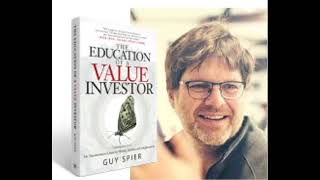
Guy Spier, a Zurich-based investor, explains how thank-you notes started as a manipulative tactic but became genuine practice that shaped his character. He paid $650,000 for lunch with Warren Buffett through Mohnish Pabrai, a catalyst that led him to redesign his fund's fees and prioritize relationships over profit.
Chapters
Living a life in full is a conversation you always wanted to have with that person who gave an amazing TED Talk or the author of one of your favorite books, or that inspirational Olympian you always wanted to know more about. It's graduate level conversations with those making a difference in the world and in the lives of others. This show brings you new ideas and approaches so that you can live a life in full. I'm your host, Dr. Chris Stout and I hope you enjoy this episode. This episode is brought to you by the new fellowship and certificate programs now being offered by the center for Global Initiatives. As you may know, the center is an all volunteer organization and the same is true for the faculty in these programs. So all the tuition goes to support the work of the Center. It has always been our ethos to open source humanitarian intervention and these programs use the same approach in that all the materials we use are freely available all the time to anyone, everywhere, even if you don't take a course. We have built a world class faculty and contracts with other universities, medical schools and partnered NGOs. There are two fellowship tracks, one for those wishing to start their own nonprofit or non governmental organization and one for those seeking mentorship for career development and advancement and humanitarian work. Our initial certificate programs include humanitarian intervention, social entrepreneurship and global health practice. Please consider taking a world class masterclass with us. Visit alifeinfull.org and click on the CourseWorks tab to learn more. Thanks. Welcome to another episode of Living a Life in Full. Hello, I'm your host, Dr. Chris Stout. Guy Spier is a Zurich based investor and the author of the Education of a value investor. Since 1997, he's managed Aquamarine's privately offered investment funds with assets under management valued at over $250 million. Guy previously worked as an investment banker in New York and as a management consultant in London and Paris. He has an MBA from the Harvard Business School and holds a first class degree in Politics, Physics, Philosophy and Economics from Oxford. Guy currently lives in Switzerland with his wife Lori and they have three children, Eva, Isaac and Sarah. Welcome to the show, Guy. It's great to have you on.
Yeah, it's great to be here. Thanks for having me. I feel privileged to be on your show actually.
Oh my gosh. You're very kind. Thank you. I feel very much the person to be privileged to have you join us. There's so many things I want to talk to you about a little, you know, I know we were talking about, about. I think we first met in Davos and as glts back when we were both children, but I think I saw you. This has just been an itch I've needed to scratch. Were you at the 2019 Berkshire Hathaway Annual meeting?
Well, you know, I've been at a single Berkshire Hathaway meeting, but one since 1995. So yes, I was certainly the last physical Berkshire Hathaway.
Well, you know, it's such a small venue, but I swear my daughter, she was studying and now thank goodness she's graduated with her degree in finance. So we had a father daughter trip to go to the annual meeting in 2019, and we were waiting in the airport for our plane and we were sitting there having a bite or coffee or something and I swear I look across and I think that's Guy. And I didn't want to make a fool of myself, of course, coming up to you and saying hi or something and it not being the case. And my daughter's like, no, what if it's not him? So anyway, I just wanted to, I thought that was you. And that's good to know that it was. So I'll circle back to her and let her know that's good.
Well, you know that more than anywhere else, those of us who've been married, who have had a wedding day experience understand that on your wedding day your experience of the world is extraordinarily different in that you're the center of attention. And so a lot of people coming at you. And not that I'm the center of attention at the Berkshire meeting, but in a certain way because my whole life for the last 20 years has revolved around interacting people with people who are also fans of Warren Buffett and Berkshire Hathaway. When I go to the Berkshire meeting, it's about as close as experience as I've had to being on my wedding day. And the thing that you tend to do that I tend to do just for your and your daughters comfort is that I, at that meeting, I tend to look down and I tend to not catch people's eyes because if I do that, then I'm just going to be in constant conversation, won't get to where I'm supposed to be going. So it's quite possible you saw me and if I would have been in the mode of looking up, our eyes would have caught.
But yeah, yeah, we might have caused you to miss your plane, I'm guessing so. Well, so now we've got our context and I had that very important question answered, but there's so many things I want to talk talk about with your life. It's so fascinating. Maybe we could start with after you finished your MBA and your first position in my research. I've read that your first job was really not unlike the proverbial Wolf of Wall street saga. Can you tell us a little bit about what that was like?
Yeah, happy to. Even though when I look back, it's a very, very painful episode. And I recently just rewatched the Wolf of Wall street on a long flight that I was on. But the firm on Wolf of Wall street is called Stratton Oakmont. And at our office was at number 44 Wall street, believe me in. On the broker's floor, which was on the 14th and 15th floors, the word Stratton Oakmont was mentioned. It was a word. It was. It was the name of a firm that I heard many times. And there were people where it was well known. I mean, I cannot confirm it to you, but there were people whose job prior to being a broker at DH Blair was dealing in drugs. And what you saw. Yeah, and they were really good at dealing in drugs, which meant that they were even better at being brokers in a certain way. The fact that they were planning on breaking the law was a given. And they just figured out that breaking the law by selling people stocks, selling widows and orphans, speculative stocks was a better way to make a lot of money. But if you imagine that somebody who's a drug dealer ends up in a situation where they have to either lie and. Or sell somebody short, one way or another, this is. They were in their element in a certain way. And I would just tell you that what happens in the Wolf of Wall street is that the movie has very, very strong sexual overtones. And the reality of my life at D.H. blair. Well, first of all, I was on a different floor to all of those brokers. I was in the supposed investment banking arm, which was all civilized, but I had all sorts of reasons to go up to the 14th and 15th floors as I tried to sell my deals. And it wasn't. The movie sort of shows you in salacious detail some extraordinary events that we probably shouldn't mention on the podc. It's not like I actually saw that, but there were at least once or twice when some young ladies with quite a lot of lipstick would be sharing the elevator with me. And I could only imagine. And so it was not completely out in the open the way it is in the movie. But the fact of the matter is, about four or five years after I left, the firm was shut down by the national, the nasd, the regulatory body for those kinds of companies shut the firm down for securities violations. It is kind of scary because I really was refusing to see what was in front of my eyes. And had I stuck around, it was bad enough I was tainted enough when I left that had I stuck around then I would have been way more tainted in the assumption that I knew and that I was an active participant would have been greater. Wow. I think that, you know, I would tell you that I know exactly where I was when I decided that I was going to write about that in my book. And I think that that was a really, really key and in a certain way, a kind of a miraculous moment, because for the 12 or 15 or so years after that event, I kind of wanted to forget I'd ever worked there. And I had. I knew other people who kind of just wanted to Dr. From their resumes. And that would have been something that it certainly would have been possible. And it was a moment of kind of realizing that I had to engage with the facts of my life and accept them as they were and that I wasn't going to shy away from them from a general public. And in doing that, I had to take an enormous risk that maybe all of my investors would read that and would never want to invest any money with me ever again. And the realization that I was willing to take that risk because living a truthful life was more important was kind of an important step for me. And it's interesting that you bring it up because now it's no longer a moment of pain for me to remember it. It's a moment of honesty, and it's good to be honest. It's something that, as we've seen in the current US Political scene, is severely and unfortunately lacking. And it's just really, really important. Forgive me, because I'm rambling a little bit, but there is just a piece of the book War and Peace, in which the Russian general, who is a real life figure, this general is called Kutuzovsky, is speaking to his Austrian counterpart, and they're about to face down Napoleon's army. And the reality of the matter is that they're not going to win this battle. Napoleon's army was riding strong in that part of Europe and nobody really wanted to fight him. And in theory, these allies were coming together, but in practice, they different members of the allied group did not want to fight. And there's this amazing scene that Tolstoy describes where the. And I'm not sure if it's Kutuzov who says these words, but he basically gives the reason why he is unable to help this general who's under, is about to come under overwhelming attack. And Tolstoy says, describes it, and he says, I know I'm lying about why I can't help you, and you know that I'm lying about why I can't help you, but the fact of the matter is you can't challenge my lies. And so we're just going to assume that they're true. And that's tough. And so this kind of ability that we see in the world today was something that Tolstoy saw at the time to brazenly lie about something that is obviously false. And to do it in a way in which you say, you kind of, your whole demeanor is saying, you know I'm lying and I know I'm lying, but it doesn't matter because I'm still going to get away with it is kind of scary. And that was a moment when the time that I wrote the book that I was, you know, I kind of committed myself in a certain way to a life of truth. And that is a wonderfully liberating thing to do. My inspiration for it was Mahatma Gandhi and his autobiography, the, the story of his experimentations with the truth.
That's good. What you say reminds me there's a term called folly, adieu, which is shared madness. And in psychology, psychiatry, there's oftentimes when two people are in a very close relationship and one person has a set of delusions and false beliefs, but the other person in the relationship is psychologically fine. They start to adapt and adopt and start to believe those kinds of things because of their, you know, their, their whatever loyalty or commitment. So it's, it's sort of an interesting, that just sort of reminds me of that, of this shared madness that it seems like a lot of people, you know, seem to be kind of part and parcel to these days at a, at a very world stage level. So.
Well, let's, and, and just to dive into that, that's fascinating term. I've never heard that before, and I want to learn more about it just to go to the US Scene for a second. There are some key moments when reality ought to intervene and eventually will. One is the law courts. So, you know, I would tell you that I was open to the possibility that this election had been stolen by massive fraudulent votes. But there's a moment of truth when you have to bring your case in front of a judge. And what is interesting is I read in an article today that even Trump's lawyers, when they bring these cases in front of the judge. They don't make the extreme claims that they're making on Twitter and social media because now they're servants of the court, if you like. I would also say that, you know, in spite of all of the venality of Congress, finding out where the vote goes in Congress, because we don't have the time to evaluate all of these claims, but seeing what the judges do, seeing what the lawyers do, seeing how the cases are decided, and then seeing what the votes do in Congress, I think are moments of truth, if you like. And actually we can argue that our political setup is actually a way of countering these fole et de. I mean, in a certain way, you've got Trump and his supporters, which are a folies, but then you have mechanisms in society that allow reality to intervene and court systems and public square, parliament, Congress are where that happens. And I wish more people would pay attention to it. But back to you, because it was gone down a rabbit hole.
No, no. Well, let's circle it back because I think one of the things that spurred this with your experience early on was this getting to your book. And let's unpack it a little bit. So the full title is the Education of a Value, My Transformative Quest for Wealth, Wisdom and Enlightenment. And I have to tell you, I've read a lot of investment books and big fan of that genre, if that is such a genre. And for listeners that aren't yet familiar with it, I'll put links in the show notes so that they can get a copy and take a look. But it is not your traditional, it's not your father's traditional investing book, as some might say. In fact, it may be one of the most untraditional books on investing. I think that's perhaps ever been written. It's a transparent memoir really, of your transformation. I looked it up in terms of some stats. It's very popular. It sold over 50,000 copies. It's been translated into eight languages. And if people are familiar with it, they can certainly understand the volume and the translations. And I have to say, Guy, I mean, you and I were talking off mic before about your striving for the things that you read. But you also, I think maybe the germ of that is striving for intellectual honesty. And it's one thing to be intellectually honest, but it's also another thing to kind of unearth and expose one's own feelings of greed or arrogance or envy, which you kind of go into in full throat in your book. And you're as honest as you are humble about talking about this transformation and the raw emotions that kind of went along with it. So was it this catharsis that you were looking for that spurred you to write it? Or what was it that made you take such an approach and just even the. The fortitude to write such a book?
You know, it's funny. You'll think that there's some kind of high motive, virtuous motive, but the brief story that will explain where I was coming from is the king is showing his kingdom to the assembled crowd. And then he says, you know, and he has, of course, the beautiful daughter that needs to be married off to a worthy suitor. And then they look down across the river. They're on a kind of a mountain on the side of the river, and they see a man running away from an alligator and then swims at full speed, having escaped multiple alligators trying to attack him, gets up to the other side, dries off and joins the crowd. And he says, the king says to the crowd, something along the lines of, now, that is the kind of heroic behavior that I would like for the suitor to my daughter. And he turns to the man, he says, what motivated you to do that? Was it because you wanted to marry my daughter? And the man just says, me? I was just trying to escape the alligators. So in my case, you know, I had this narcissistic idea that I would like to have completed my life with having written a book. So take into your mind narcissism and then take also into your mind envy. I had a number of friends who had written books, and I was envious of the fact that they had written books. And I said to myself, I'd like to have written a book also. So actually, to use another term from a guy called Paul Girard and Peter Thiel and David Perel have made popular, I had. I was in the full throes of mimetic desire. So that is where the motivation to write the book came from. And then as things happen when you have a deep desire, every now and then, you know, God smiles on you or fate smiles on you. And my dream came true. And suddenly I'm walking around with a book deal, which I've, of course, accepted. And now there's at least a month or two or three of extreme fear and panic when I ask myself, what kind of horrible book am I capable of writing? What on earth can I write that is. That is going to be worthwhile? And also, by the way, which is an important Thing is the realization that I'd rather have tried and to have sucked than never to try at all. So the realization that. Which came with the signing of the book contract, that one way or another, a book by me was going to be published. And it might be a crappy book, but now I'm living in this state. This is the equivalent in my story, is the man is now halfway across the river and he's being chased by alligators. And it's like, how the hell do I get away from the alligators? And I'm saying, so now that I'm in this, and now that I know that one way or another, at least a crappy book is going to come out. And believe me, there was plenty of garbage that I'd written. And I asked myself the question, what can I actually write where I have relative expertise and where I can make a meaningful contribution to what's already out there? And not being a university professor, not being somebody who spent his life studying one subject or another, the one topic that I knew I was an expert on was my experience of things that are not universal, but that many other people have experienced. And so I knew that I was onto the right path by opening up on my experience. And I think that it was the desire to do everything possible to make sure that the book didn't suck that made me dig deep into myself in order to expose myself. And I was also in that, motivated. I've already mentioned Mahatma Gandhi's autobiography, which is subtitled the Story of My Experimentations with the Truth. And also by another book, David Hawkins has a book called Power vs Force. And he talks about the power of truth in the world and the power of truth in one's own life. And so I was deeply motivated to try and get that truth out there, knowing that that would serve the readers. But if you think that. That, you know. And I think in so many cases, if something good comes out of us, the person who did it afterwards wants to appear to the world as if they came from a place of mastery. And the reality is that most of the time, I think when something good comes out of us, it doesn't come out of a place of mastery. It comes out of a sort of a combination of extreme fear, extreme desire to succeed. You know, you're struggling your way through. It's not as if there was. I serenely wrote that book. It was. It was a struggle. A bit like the alligator, the guy with the alligator. You're. You know, so. But, you know, it's interesting because a Number of things came together. A combination of envy, mimetic desire, narcissism. That kind of got me to one point, and then at another point, the desire not to suck, the desire to do everything possible not to suck, and the willingness to say that, you know, if it turns out that I do suck, then I'll take that as part of my fate, was part of what brought it together. And I think that what's important for the listeners, Chris, is that, you know, what we need to do with the emotions that we feel is harness them for good. And, you know, any human is going to feel some of the baser emotions that we have, like envy, like narcissism. And I think a key thing is to take those and harness them. It's okay to have them now harness it in a good direction. And I can't say that I've done that often in my life, but every now and then I find a way to surf those emotions to a good place. And that's kind of what happened with the book. Wow.
Well, I highly recommend it for people that aren't familiar with it. Again, I've written a lot. I have not written anything close to the education of a value investor in any measure. But again, just the. I have to tip my hat and show my appreciation to the public of the. I can't, you know, the. The transparency in which you, you know, shared what things were like for you. And that kind of transformation. It's hard for me. You know, I've known you kind of post a lot of these things, and it's just hard for me to get my head around you as being a greedy, arrogant, envious kind of person, you know, so the transformation certainly has stuck, Guy. And you have been so much more giving, I think, than. I mean, that's just kind of the, you know, what my default is when I think about you. So.
But just two things, I hope you don't mind my interjecting. One is that when, you know this, Socrates said that the unexamined life is not worth living. And at the point where I wrote the book, I had been through about a decade of Jungian psychotherapy, navel gazing, looking inside. And I think that the perspective that you get from doing that kind of psychotherapy is that it's okay to look inside. And when you shine light on the shadows, then what is there is never as scary as what you thought was there. So don't underestimate the power of sort of like that first orientation came probably from the willingness to start doing psychotherapy 10 years earlier.
I totally get that. I think the pushback on that sometimes is just people's defenses get so entrenched, and, you know, people look for excuses and validation and rationalizations, and to be beyond that is no easy task. So, you know, there needs to be a little bit of a victory lap for you with that, because it's you. You.
That's very kind.
Yeah, you say it as if it's easy, and I know it wasn't. So. So, again, that's. And. And then to do it so publicly, as well, too. So. Well, was.
Thank you.
Help me get a timeline here. So was the experience from. With Blair, was that then kind of the genesis for Aquamarine Capital or. Or how did that come about? Aquamarine. And tell us about listeners, what Aquamarine is about, and.
Yeah, sure. So I was at business school, had dreams of being a financial master of the universe ala Gordon Gekko, desperately wanted to succeed in my first job and make good on the fact that I'd been made vice president and all those good things. And, I mean, the first moment in the book, utter, utter disgust with myself. I mean, that's kind of this rising sense that I have, but I kind of don't want to acknowledge it. I want to pretend it's not there. I want to pretend that somehow from the place I am, that I'm going to get out of it. And at some point, I realize that I have to make a major break. And so I'm now looking for jobs. I've discovered Warren Buffett. I've realized that I'm never going to find my way to a life that's more like Warren Buffett's life from where I am. So I realize that I have to leave, but nobody wants to hire me. And so in my case, what happens is that I'm unemployed for a number of months. And I guess my personal history is that I had taken these risks with a fallback that I could go into this business that my father had started 20 years prior, and I didn't really want to do that. The business is the import and export and international distribution of agricultural chemicals. It's a kind of a very narrow and special area that my father was uniquely qualified, is uniquely qualified for because he studied for it and worked his whole life in the industry. But he was kind of disappointed that I did not want to come into his business. But he had made some money on the side, and he could see how interested I was in the financial market, so he asked me to manage some of his money. And so that's How I. And it was after I'd left D.H. blair and I was applying for jobs and failing to get jobs, that he approached me and said, why don't you try this? And I was actually initially reluctant because I kind of wanted to continue on a professional path. And I can tell you that when you read some of the reviews of the book on Amazon, there are some reviews which just go, well, what's the big deal? This guy got money from his dad to manage. And I think that I have two things to say about that. One is that, yes, but I didn't have to talk about it. And what's important for people to realize is that probably more than half of the private investment partnerships out there, the person who's running it wants to present themselves as a, quote, master of the universe, who's there solely on account of their extraordinary talent and ability. And the reality is that the vast majority are there because they had what is called a keystone investor who invested with the person, not on account of their extraordinary talent and ability, for an account of a personal relationship. And that's just important for people in the world to know. Again, it's this commitment to truth over feeling good about yourself. So in my case, I got an extraordinary sort of help or shove or start, you know, help on getting onto a set of starting blocks that I was able to move forward with. And he introduced me to a couple of his former business partners who also invested with me. And so that's where I got going. I would tell you that I was extraordinarily scared because I knew exactly what proportion of his net worth my father had given me, and it was pretty much all of it.
Wow.
And so I was. I was very fearful of screwing up. And actually, for what it's worth, in retrospect, in 1999, there was the Asian crisis, and the fund, as it was managed at the time, was slightly levered. And it's a risk that I would never, ever take again. But at the time, if we would have had a major market meltdown, there would have been a significant, at least temporary, loss of net worth because of the leverage. And in retrospect, I was, without realizing it, I was running with a match through a bomb factory. Yeah, that's my timeline. So I left DH Blair around 1995, and then I spent a couple of years running this money in separately managed accounts. But I knew I wanted to run a fund which started in late 1997. It took forever to get the fund started, like 18 months. And then late 1997, the fund got started. And that's basically what I've been doing ever since.
Wow. So my research says that Aquamarine starts started with around 15 million and now it's grown to at least at latest data, 250 million of assets under management and over 150 investors. Is that about right?
That's right.
Wow. Congratulations. So do you consider it? I'm going to really expose myself transparently of my how naive I am to these kinds of things. Is it an investment fund that's like a hedge fund or tell us about how what's underneath the hood?
So the word hedge fund is used for two different meanings, at least two different meanings. And so some people would call it a hedge fund. I prefer not to. So the original hedge fund was a man called Alfred Winslow who came up with the idea that you could go long some stocks and you could also short or sell shares that you don't have in such a way that you can make money if the price goes down. And the idea was that if you had both of those in your portfolio, you were going to have far less risk and possibly far greater returns. And so the hedge was the idea that you would go long or buy shares of some things and then go short or sell stuff that you don't have of something else. That's the idea of the hedge. And those kinds of funds were also, or can still today be called long short funds, if you like. But it also refers to the fact that some of the earlier creators of these vehicles, people like George Soros and Michael Steinhardt, one very important source of capital for them was offshore outside of the United States, people who were investing from, from Europe, from tax free havens. And so it also came to refer to a. And there were also actually US people who did not want to invest in, wanted to invest in a private partnership. The word hedge fund also implies a non traditional source of capital, if you like, from either these offshore centers or privately wealthy individuals who send you the money directly, rather than investing through a mutual fund or through a Charles Schwab or similar. And so that also came to refer to hedge funds and didn't necessarily mean that the funds were hedged. So for example, Warren Buffett ran an investment partnership that might have been described as a hedge fund. It was really just the Buffett partnerships were a non traditional way of investing. It's in that second sense that I run, quote a hedge fund and I would just prefer to call it a private investment partnership. But many people still prefer to call the non traditional source of funds that I have as being, quote, a hedge fund. Sorry for the long answer for a technical question.
Thank you. No, I appreciate that. That's very helpful to me because I've always, in my experiences, people have seemed to have bandied around the word in a variety of different kinds of ways. So it's good to actually specifically hear it that way. Being the research nerd that I am, I looked at your top 50 holdings, and they really, you know, seem pretty straightforward kinds of things. I mean, obviously there's no surprise. The Berkshire A and B shares and things like that. Why is it like, how do you select what you select or why do you own what you own? Do you have an algorithm that's publicly chat about able?
Yeah. One thing that you should know, and it's a mistake that many people make, is that I only report what I'm required to report, and I don't report what I'm not required to report. So if you just looked at a 13F filing that reports to the securities and Exchange Commission in the United States, those securities that are American securities, but I'm not required to report to the securities and Exchange Commission securities that I own that are not American securities. So that doesn't give a full picture. And sometimes I see people who think that I've made a move or they don't see the full picture of what I've done, and I just don't comment on it. So the fundamental the fund's annual report, in which I write an annual letter that I try to make as I follow my hero, Warren Buffett, in trying to be honest with my investors, in that I'm subject to international financial reporting and accounting standards. That report requires me to disclose in a different way. Once the positions come below a certain proportion of the fund, I no longer have to report them. My point to you is that there are so many circumstances where the information that we are seeing is not the full story. And if we saw the full story, we might come to a different conclusion. It's just really important in a thousand different ways. And there are investors who are aware of and understand that and use that to their benefit. And I'll give you one example that I cannot prove to you, but I'm pretty certain is the case. Carl Icahn is a very successful and famous American investor. Often enough when he discloses, he's got a very significant position in a company. What he may not have disclosed is that his financial exposure is far lower because he's hedged out that position by buying puts, options, shorts, you name it, and he Took the long position because he wants a position of influence at the company, and he gets that with the long position. But he's engaged in trades and financial instruments that mean that he's not actually financially exposed. And the neophyte will see his public position and think he's got just the long. And he may not have. But having said that, in terms of the way I'm running the portfolio, is that pretty much not far off 100%, or call it 90% of my own. My family's net worth is invested in this vehicle. And I'm trying to run a vehicle that is going to survive pretty much anything that fate can throw at the planet in which humans survive. And so I think, I think that let's just go to consider sizes of asteroids. And obviously if an asteroid the size of the Earth collides with the Earth, then I think that it's all over for us. And so I cannot invest in a way that survives that. And if an asteroid the size of the moon hits the Earth, I think it's also pretty bad. But at some point you get to sizes of asteroids and calamities that are small enough that in spite of extreme disruption, humanity survives. Provided humanity survives, I'd like to believe that the fund survives. I'm really looking to point number one, preserve wealth. When you see some of those positions, what I'm actually saying is what is the best thing that I can come up with that will point one, preserve wealth, but point two, potentially grow it at a higher rate than we would otherwise? There's a barbell in which significant part of the portfolio is invested in those kinds of things. Then on the other side of the portfolio, I have things which I believe could make an enormous contribution to net worth. But where there are some risks that I just can't rule out the possibility that they would end up not being as worth very much in five or 10 years time. The reason why you see those positions is that for the most part, the kinds of companies, so for all of its faults, Chris, the United States is still in a global calamity. And western liberal capitalist democracies, I think is the last man standing. Possibly a close second is Switzerland and Western Europe, but the United States and probably Canada, by far and away the number one candidates. And that would mean that if you're investing with that perspective in mind, you want to have a significant portion of your net worth in companies that are domiciled and headquartered within the United States. And so that's in a certain way, rule number one, don't Lose money. Rule number two. Don't forget rule number one. That's why you're seeing that there. And it's a particularly hard time, I would say, to have that perspective, because we're living in a time when all you had to do was make a speculative bet on Bitcoin and you're now multibillionaire. And I noticed it's a kind of extravagant statement. But Chamath Palpatiya, who's somebody who's come onto my radar and many other people's radars over the last year or so, has said that When Bitcoin reaches $150,000 per Bitcoin, he's going to rename the Hamptons the champions. That's what's going on with the portfolio. And if you look at my family history on my father's side, his father and his family was forced to leave Germany in a rush. They were very well to do, industrial and intellectual family with all of their assets in Germany. And, you know, Germany succumbed to what it succumbed to, and they had to leave all of that behind. And I think that. I think we're unlikely to get that. But the world does some extraordinarily strange things, and we need to be prepared for those. And for example, owning vast amounts of land in the United States is not such a dumb idea, given what the United States is.
Wow. So these are. Would you say these are sort of like, to borrow from Nassim Talib, your approach to managing the fund with an antifragile perspective or point of view?
Yeah, the idea of being antifragile is one of the extraordinary contributions that Nassim Taleb has made to public discourse. And he's really done people an enormous service in that idea. Popularizing the idea of the Black Swan, popularizing the idea that risks are discontinuous. As he famously says, distributions have fat tails. The normal distribution. The Gaussian curve is not actually how things are distributed in reality. And the things on the edges can kill you. So you need to pay attention to their actual probabilities, which may be very different to what the Gaussian curve predicts is extraordinarily valuable. And of course, what's really hard is that actually there's an article that I need to go back and review. It was mentioned to me recently. So there's a guy called Richard Zekhauser who is a professor of something financial and economical at Harvard University, and he. He has a paper titled Investing in the Unknown and Unknowable and the Risks that We need to Prepare for. Are unknown and unknowable. And so how do you prepare for those? Not easy, but you do the best you can.
Yeah, that's a whole nother episode. You'd mentioned bitcoin and that was just a little bleep that I wanted to see if we might get into. I forget. I think it was December. I read in the journal that MassMutual, who I sort of stereotypically think is, you know, kind of a, you know, a solid, you know, old fashioned, if you will, kind of institution, bought, I think like a million dollars worth of bitcoin. And in the context of how big massmutual is, they have like, you know, 200 billion under management or something. But do you have perspectives on digital currency or what are your perspectives? I'm sure you do, but what are your.
So the very short answer is that if you'd have had me three years ago, I would have said aping Warren Buffett is that it's almost certainly a bubble and. Or rat poison squared is the famous expression.
That's good.
And now I would just say that it might still be that, but it might not. And you know, it's worth saying that there are, you know, there are no call strikes. So one of the things that I and my partners need to be comfortable with is that a successful life at some point, if you're rich enough, is going to consist of watching other people become as rich and more rich than you. And that's okay, that's just fine. Because every year, you know, some people are going to win the lottery, and winning that lottery, they're going to be catapulted beyond where you are. And not all of those people, but some of those people are going to think that it was because they were smart. And in some cases it will be because they were actually smart. So I would tell you that what I have learned to do in the course of my professional career is to value or to try to value assets that produce income of some kind or other. That means that the asset itself has the capacity to generate cash for the owner of the asset. And the obvious example would be a farm where you grow stuff. Every year the sun shines down on the soil, it rains, things grow, you harvest them at one point in the year, you take them to the market and they pay you for that. And then the next year a whole bunch of new stuff grows and you can take all of that to the market and sell that again. That is an asset that is in and of itself, cash generative, no different to a piece of real estate that you can rent out. And then there are assets which don't have that quality. And nobody's going to disagree with me. Even the biggest bitcoin bull that bitcoin in and of itself is not like a farm in that it doesn't intrinsically generate cash for any reason. In that sense, it's very, very hard to come to any conclusion about bitcoin's intrinsic value other than to say that intrinsically it may be worth zero. And I don't think you can rule that out. But having said that, and I think that what I came up with in a tweet thread that was by far and away perhaps the most popular tweet thread that I've ever done, because I got into debates with all these people, here's what I have come to understand. So here's the big danger to bitcoin from my perspective is that I asked the question I don't think I got an answer on the tweet thread was what if a substitute shows up? What if there's a perfect substitute to bitcoin? So what happens if Guy Spier and Krista have some brilliant idea about how we can make something that is perfectly and frictionlessly convertible in and out of bitcoin and has all the same functions? And is it not possible that suddenly people go and they say, well, I don't need to buy bitcoin, I can buy the Guy Spoon Kristaunt coin. And so it's a perfect substitute. And so how do you know that? The reason why the dollar is not that, doesn't have any competitors is that the United States, the institutions available in the United States jealously protect the monopoly of the dollar. That means that you can't pay your taxes in any other currency than dollars. Dollars are legal tender and there are a thousand different ways where they protect the monopoly of currency within the American economic sphere. So what does bitcoin have? It doesn't have the instruments of state, it doesn't have an army, it doesn't have a tax collection service, it doesn't have a Congress, it doesn't have all of those things. But at the same time, what I've come to realize. So that's kind of the reason why bitcoin can still go to zero. What I've been slowly coming to the awareness of is that there's this vast infrastructure that, as we know from the articles that we read, consumes the electricity of countries that has been put in place for the sole purpose of mining new bitcoins and maintaining the existing blockchain for bitcoin. And that in itself is kind of creates a strong financial interest for the owners of these bitcoin mining operations to both prevent competition, so to prevent competing coins from getting a dominant market share and protect the interests of bitcoin. So it's possible that bitcoin ends up with an extremely bright future in a certain way. That was just what, three or four minutes of Guy Spear telling you he doesn't know. But if anything, I would tell you that the two key things to tell you are that in my view the probability that it's a bubble and or rat poison squared has declined. So I want to leave very. There's a significant probability that it's not a bubble if you like. But then the even more important thing is to say that a successful life in investing is going to include many non cold strikes. Just because the bitcoin world is saying to me and many others, swing, you idiot, buy now before it goes to 150,000 doesn't mean that I have to take that. Just because I'm not going to ride that wave doesn't mean I can't have a very happy and productive life investing in companies that make paint, for example.
So not a fear of missing out then associated with that?
Well, let's just put it this way, Chris. We've talked about how the sort of, the more negative emotions, emotions like envy and greed and narcissism need to be harnessed by a moral and individual that wants to get ahead. We need to recognize those for what they are, accept that they exist inside us and move forward knowing those and using those to our benefit. So I think that very likely the fear of missing out is not something that we can deny. We have to say, yes, that exists inside me. I have a fear of missing out now. How am I going to harness it? You need to confront the evil inside you in a certain way or the things we can't just deny it and say it doesn't exist. So let's engage with it. It's okay to have fear of missing out. Now what are you going to do with it?
Yeah, that's good. I remember you had mentioned, pardon me, George Soros, I think there was some quote, I'm probably going to get it wrong but it didn't matter if you're right or wrong. But more so how much you make when you're right and how much you lose when you're wrong.
Yeah, that's right.
I feel like that's really the case in the sense of having the responsibility of Managing other people's funds and all that in the context of preserving capital and making sure that foundations are there and that those foundations are strong and solid. You recently kind of putting a lens to the future. You recently wrote about investing in a low growth economy in the context of risk taking. I don't know you if the Bitcoin would necessarily be a good segue from that to this. In one of your newsletters, can you discuss the points of what your thoughts are about investing in the low growth economy?
You know, the article or where I wrote about it is not top of my mind right now. But what I would tell you is that I think that what that's leading me to think about right now is a world in which so in the last decade, I don't know how many hundreds of millions of people have been lifted out of poverty, primarily in China. But it is really just an extraordinary result. Extraordinary, extraordinary result. Especially given that China has not adopted the institutions of liberal democratic capitalism the way the west has and the rest of the world, of the developing world has cottoned on. And I think it's extremely likely that one way or another, whether adopting our democratic Western model or by adopting some version of China's model, the rest of the world is going to lift itself out of poverty as well. And so we're going to be living in a world where everybody is fed and everybody has access to some sort of education. And maybe it doesn't happen in the next decade, but it very likely to happen in the next half a century. And so at some point the numbers that we use to measure economic growth kind of are perhaps less meaningless, less meaningful and also don't capture some very, very important human goals that we have. You know, it's a strange thing that if you pollute a field and then you have to spend money to clean the field, that is actually a contribution to your national income numbers. So money spent even cleaning up the mess that you've created is an increase in your economic numbers that the government will report to its population. That would be economic growth. But in reality have we grown. So I think that there are challenges to understanding how we earn a return in that future world and exactly how that plays out. I think that there are other people who far more on top of that than I am. But it's kind of coming through with all these measures of sustainability, economic, social, esg numbers. People are kind of saying, well, these pure profit numbers, these pure economic growth numbers are not exactly what we're looking for. I think just to close out this little set of thoughts where I'm coming to, and I've really come to it far too late, and I wish I'd gotten to it early because I think I had a sense of it is that I really did believe 20 years ago that it was not a problem for me if I wanted to invest in Philip Morris or to invest in an oil producer without taking into account what economic or what environmental destruction they were engaging in. And I think that now I'm far further away from that. Not as far away as many other people are, far further down that road than I am. But I'll give you one very specific example. It's pretty clear to me that the French National Lottery company is a company called Federal d'? Jus? Fdj. And it's actually a very. It's a nationally sanctioned monopoly and has got very, very good visibility on earnings and is pretty cheap in comparison to many other companies. And I don't think I will ever own it because I don't want to own a lottery company, because I think that ultimately that's not building a better future for ourselves. I think that one can say what one likes of Tesla. One can call it a bubble or not. But one of the things that's extraordinary about Elon Musk is that he sort of said he's only interested in building companies that help create a compelling future for the planet. And there's no question that Tesla and SpaceX are companies in the business of creating a compelling future for the planet. And that's some part of their competitive advantage. Because if we just go to Tesla for a second, they will at some point start agitating in various countries for yet more stringent emission standards. And so what you have is you have a company that's not going to be affected by emission standards at all, or even can sell emissions credits. And then you have their competitors who have been slowly strangled as they continue with the internal combustion engine, but the standards are slowly kind of like there's a noose tightening around their neck. So you very much want to be in the side of the world that's looking from the Tesla perspective than looking from the internal combustion engine perspective. So I tried to give you an answer to a question about an article that I don't have strong memories of. Well, this is good. I hope it addresses what you had in mind.
Well, yeah. And it brings up another thought in the context of current events, of looking at how in some ways the business providing technology, providing leadership to then influence policy. I think that we're recording this in mid January 2021 and I think it was last month or in the last few weeks where Toyota had publicly said, or at least that I read, that they weren't really looking to being full electric for a while. And then I swear it was like within a week later Japan said that they wanted electric vehicles by a certain target date and Toyota was like, whoa, wait a minute versus the other way around of looking at the Teslas and now these. I can't name them off the top of my head, but a number of other startup electric vehicle companies including like Zero Motorcycles and Harley Davidson now has an electric motorcycle, which seems quite surprising. So to be able to see these businesses say there is viability with this. Just about every brand I think does have a total electric vehicle in spite of not necessarily having a fully integrated grid, be it in Europe or in the United States. So it gives me great hope to see those kinds of visions in the antithesis of the Philip Morris or the, the petroleum companies to be able to influence policy in a positive kind of way that can have knock on effects that are positive for the environment, positive for investing, positive for populations.
I have to say that I feel like I've been so behind the curve on these things. I remember at business school having a debate with a member of the environmental club where I basically had this model which was a, a valid model, but wasn't. So the model was, hey, I'm here at business school and in the capacity of an economic operator to make money within the rules as set by the political system. So if you want change, that's fine. That's absolutely fine. Maybe I want change too. But you're addressing it to the wrong door if you come and address it to a economic actor, somebody who's the CEO of a corporation of some kind or other. What you need to do is you need to get the change in Congress, in the laws that are passed in all of those things and then as law abiding businesses, the business community will comply. And I really did adhere to that model. But part of the history of the last couple of decades has been a growing disaffection with the capacity of the political system to set new rules and consumers and other groups finding that if they can pressurize other parts of the system that they can actually get the change that they like. So, you know, not buying certain kinds of products or trying to find ways to lower the cost of funding to environmentally friendly companies. I just read about something called A B Corporation. I used to think that all of those were kind of futile attempts and what you needed to do was go through the legal system. I kind of didn't realize the degree to which the CEOs of large and powerful companies can influence and buy the legal system in such a way, the system by which laws are made to prevent the changes that the public wants from going through. And I think that was probably true with smoking and it may well be the case with fossil fuels. And so now I'm far more open to, first of all, pressure on business. But second of all, some businesses saying, you know what, we're just going to be this way because we know that's what the public wants. And you get these extraordinary examples like Tesla. It's taken me such a long time to cotton onto that. And it's hard because, you know, I was trained in all kinds of kind of hard accounting and economic analysis. And all of these ideas are very much around what does the public want and how do we align ourselves with kind of a touchy feely, kind of, you know, we want to make the planet greener. How do we do that as a corporation? I'm still, I still am uncomfortable with it because what I want to say is we can't make decisions on the basis of, quote, you know, inchoate feelings. We need to have hard analysis, but the hard analysis isn't there, you know,
or the, you know, measuring what's easy to measure, not necessarily what really is what needs to be measured. You know, you're about gdp. Well, I want to talk a little bit. Maybe these things are all related and interconnected, but a little bit about knowledge management and I guess maybe it overlaps with your operations in Aquamarine, but how do you. Can you share with us, like how you, what's. How do you parse your time in doing the research necessary to look for investments and vet decisions along making investments or sales circumstances and then actually also running and managing the company. I know you're a voracious reader. I want to talk about that in just a second, how you do that, because I want to be able to be like Guy and be able to do that. But what's the balance? What's the ratio? How do you do the research you do and actually run Aquamarine and all the other things that you're involved in.
So I think that what is most helpful image to hold in your mind and the best way to answer the question is the. I don't know if I've come across it recently, but I think that often, especially in conversations like this, people who run funds like to project an image of themselves as being the highly trained fighter in the cockpit of the fighter jet. And you've got all these, you know, you've got the radar and you've got all these information systems and control procedure, control things like the yoke and throttle and what have you to sort of control this highly, highly finely tuned instrument to its destination. And maybe their experience of their reality is like that. But I would tell you it's not my experience of the environment that I inhabit. So I think that the first part of my answer is to ask the listener to take that image, understand it and then set it aside. That is not what Guy Spears doing. And instead I want to give you two other images that will be far better. And one is flattering, one is not. I'm going to start with the non flattering one. The non flattering one is what you want to imagine Guy Spiers being is like a drunk in a bar. And so if, if the drinks, if you like, are potential investments, I kind of, let's just imagine that my eyesight is blurry and my hands are capable of shaking and it's kind of hit or miss what drink I'm going to pick up next. And I'm kind of, kind of, am I going to go for the Diet Coke? Am I going to go for the Chateau Lafitte which is right next to it? Am I going to end up with a kind of the Jack Daniels or the even worse, some kind of, of horrible gin that was made in some back, you know. And so why do I say that? Because you will know and anybody who's studied psychology will know that we have this image of our minds as being these rational instruments. But the more we learn about how the mind works, the more we realize quite how extraordinarily incapable of pre ending reality our minds are. And so that that image of the drunk in a bar is, is not so is really a better image to hold in our minds. And my point then is, well, if you know you're going to be a drunk in the bar, then what are you going to do? You're going to, you're going to set up that environment as well as you possibly can to, to avoid. Sorry, my phone just went off there, just switched it onto silence. So that image of a drunk in a bar is not to sort of say, well yeah, let's be drunk in bars. It's saying, okay, now I'm going to be a responsible drunk in a bar. So what will the drunk do? He'll say, look, please put the really nasty Stuff completely out of reach. And yeah, it would be nice to have some whiskey, but you can only put a certain amount of whiskey within reach. And then I need large amounts of Diet Coke and seltzer water and other things. So you're going to set up your environment in such a way that what you lunge for. So in a certain way, I am constantly thinking about the equivalent in the investment management world is who am I talking to, what investment ideas are on my desk, what does my stock monitor look like? How many times do I put it up in front of me? They're very, very basic things, but actually, interestingly enough, are not dissimilar to many of the conclusions that James Clear reaches in his book Atomic Habits, which is that simply putting your biscuits out of reach, such that you have to climb on a chair to get them, will make a huge difference to the number of biscuits that you consume every day. And so if I get up in the morning and I simply make the decision not to put on my corduroy trousers, but to put on a pair of running shorts, the probability that I end up going running is tripled. It's quite incredible. And it's simply this decision. And as I put on my running shorts, not I'm saying, yeah, I'm definitely going to go for a run. All I'm doing is saying I'm going to put up my running shorts because I think that that will help me to do some exercise today. So I'm making multiple decisions like that in my physical work environment as well as my computer environment. I mean, I've had these long conversations, not long, but conversations with my son, where I explained to him that I do not have even Internet chess on my computer, because if I put Internet chess onto my computer, I'm a freaking goner.
Playing Internet chess all day.
Yeah. With no problem at all. So the image of the drunk in the bar, you know, and again, it's funny how, Chris, the minute we recognize the baser parts of ourselves, that's when we actually develop true strength. So the minute I realized that I'm actually an arrogant narcissist, can I actually put myself to good use? So similarly, if I acknowledge that when I try to invest the fund's money, I should think of myself as a bit like a drunk in a bar that actually creates the space and the perspective to become a better investor, whereas I try and imagine myself as the fighter pilot, you know, in this finely tuned instrument with all the information at his fingertips, I'm not going to do as good a job. So I want to take you to a second image which I think is extremely, extremely empowering and valuable, which is that. So two heroes of mine, I haven't decided which image to choose. One is Sir Edmund Hillary, who climbed Mount Everest. And I kind of like that more, except that I'd never want to climb Mount Everest. But the other image would be Sir Ernest Shackleton, who saved all his men on his extraordinary Antarctic adventure. But either way, I think that what the listeners to this podcast need to understand is that you might have the idea that. That somebody in my shoes has access to all the information, all the analysis, all the people that I want and need in order to make the best possible decisions about where I take the fund, whether I buy or sell, whether I add a new position or not. The reality is I'm a bit like Sir Edmund Hillary, who's arrived in Kathmandu and knows that he wants to climb Mount Everest. And, you know, it's like, where the hell do you start? You know, there's a Mount Everest over there and there's just you, you know, and. Or another example I imagine is in the hunter gatherer world would be, you know, you're just one stupid hunter, and somehow you want to go after the woolly mammoth, because, you know, if you get one of those damn beasts, you're good for, like, another couple of years in terms of meat and all sorts of things. But I think that perspective that says, I don't have the tools, I don't even have a map of where I'm going, but I'm going to start with what's in front of me and make intelligent choices and do the best I can. And I think that my experience of the world is that there's an unfolding reality where I am no different. So I kind of do this with students and with mentees where I say, look, you arrive in Kathmandu, you want to climb Mount Everest. What are you going to do? Well, you might talk to some people locally who know the area. That would be a good place to start. Hey, I want to climb that mountain. Do you know who's been the highest? You know what paths? You're going to start gaining information. You're going to become pretty interested in boots and what are the warmest boots and gloves. You can become a great student of exactly what the warmest kind of clothing is that you can get. So, you know, the minute you set yourself at the goal, you're going to start acquiring the knowledge to help you go further down the path in achieving that goal. And, you know, In a certain way, what you need to be is on that path and acquiring the knowledge. And that is kind of what I'm doing on a daily basis. And what I tell you is that it's not the same thing, because the information environment is changing. And actually, these days, the information environment is changing at a far more rapid rate than it's ever changed. And it's worth saying that if you know what is the value of a database that everybody has access to, its value is probably zero, because everybody has access to it. And so how do you find the insights and the knowledge that not everybody has access to? Well, you know, there's at least. I mean, you and I have been to the Berkshire meeting. So if we take the Berkshire meeting, And so maybe three out of four people are people who don't invest professionally, but maybe one out of four or one out of five, that would mean a good five to 10 or 15,000 people are professional investors in a certain way. Those are my competition. They're going after the same thing. And I just give you two specific examples of ways in which I've modified what I do based on the changing investing environment. I've discovered that Twitter is a great source of investment insights, so I can ask questions to my Twitter crowd. I have about 30,000 followers, and I pay attention to other people's tweets, smart people's tweets, not Donald Trump's tweets. So I kind of. I mute all of those. But there are some extremely intelligent and thoughtful people who are out there. There's a guy called Trent Griffin, who's one of the earlier employees at Microsoft, who wrote a book about Charlie Munger called the Complete Investor. His tweets, for example, are just wisdom and insight every time. And there are at least 50 to 100 others who are similar. So I wake up in the day, in the morning, and I say, how might I use Twitter to answer some of the questions that I've got about this or that industry or this or that investment environment? Another thing that I'm playing with, and it's driving some interesting results, is that I'll write up my thoughts in a white paper or in a thought piece that I will email out as a PDF to people who I think would be interested to read it. And then what's key is that in that document, I say, look, I'm no expert, but I wanted to share these thoughts with you. If you have insights, email them back to me and I'll put them back in the document. And so I take the insights That I see, recycle them into the document, give attribution at the bottom of the document, and then resend it out. And so I'm kind of learning quite a bit about various different industries by doing that. But having said all of that, as the story of Sir Ernest Shackleton will tell us, as with the story of the many people who've tried to climb Mount Everest or other high mountains, there's no guarantee of success and the journey is hard and can end up being very painful. So you'd better like the process on a daily basis.
That's good. That's very good. So in these, I know you're a fan of expert networks. I don't know that we'd necessarily say Twitter falls into that. But is that part of your network when you send out your or first draft of your thought pieces? Is that how you conceptualize an expert network or tell us more about that.
So expert networks is a kind of an industry. The most well known, I believe, of the expert networks is Gershon Lehrman Group glg, for which professional investors might pay as much as quarter of a million dollars or more per year in order to access. And then there are kind of less expensive expert networks. There's one that I've just become a member of, called In Practice, which is an interesting take on it, which is far less a fraction of that amount of money. But I think that the basic insight that it took me a long time to get to, Chris, is that knowledge is not equally distributed in the population. And that is kind of. I can't believe it's taken me so long to figure this out. But understanding what is going on at a company in an industry is concentrated. So many people might have part of the picture, but there's very likely a very small number of people who have the whole picture. And those people, time, they're hard to get to and they're hard to access, and they're very, very small number. But if you can get to those people and get them on the phone even for five minutes or 10 minutes, the insights are going to be enormous. And so basically what the expert networks are enabling you to do is to find a slice of those people's time with you in one way or another. And look, the expert network environment itself is changing in that it used to be accessible only by a few very rich funds. And by the way, I couldn't afford those amounts, or don't believe that I could afford those amounts. But in itself, access to those experts is changing. I would say that the one big insight for me is that it's okay to pay for access. So I used to kind of have this feeling of, well, I should not have to pay just to speak to somebody, and they should actually, if anything, want to pay to speak to me because I'm this narcissistic, arrogant guy who thinks that he's a gift to humanity or something. And that perspective has changed. I now realize that those people's time is valuable. Unless I have something real to offer, then why would they spend time with me? And actually, the willingness to spend money on a conversation in one way or another is kind of like putting your chip on the table for the opening round of a poker game. There's a word for it. I don't know what it is, but it's kind of like what you need to put into the ring in order to participate and creating your own expert network in a certain way. Those documents, those white papers, the benefit of being on my mailing list is that you get to see the contents of those documents. And so you're giving something to the expert with the document when you send it. Very, very small thing, but it is something. And going back to what we were talking about, academic journals, that time delay. So there are some academic journals, as with some newspapers, where once the article is two years old, they'll give you free access, but actually once the article is two years old, it's been disseminated amongst enough people that it's not actually that valuable. It's in those first six months that the idea is super valuable. And in order to get that idea early. Yeah, you need to buy your way in one way or another, either through work or help or money or something. But it's an interesting perspective, Chris, that actually in order to succeed in many ways in life, what you want to do is build an expert network around you for the subjects that interest you.
Yeah, I think that's very true. I don't know, I hate to compare myself with you, but I have such a vast interest in so many diverse kinds of areas. When I first started off in undergrad and graduate school, it was very, very, very focused. It had to be very little overlap into other areas than once I had graduated and got into doing other things, I was able to get back into the curiosities and going down different areas and getting to meet different people and do different things. Ways to do that. It sounds like for you have obviously been expert networks in your own personal network. Other ways have been obviously as of late, Twitter. But you also are a voracious reader. And you've talked about having an anti library. The, the push and pull between having an anti library versus the danger of the collector's trap. How do you go about selecting what it is that you want to read and or not read, or do you reread books or tell us about your process for consuming books and that kind of information?
So one thing which kind of is allied and perhaps helps provide the segue is that just going back to this idea of being interested in many things, it's actually, it comes from an idea who's from a man whose political ideas I'm not sure I agree with. But Scott Adams, who claims he was originally a Democrat supporter but has been a significant Trump supporter for a while, has this concept of a talent stack. And it's a beautiful idea because what he says is, he's not the world's greatest cartoonist. Well, he's not the world's greatest artist. He's not the funniest guy, he's not the best storyteller. But when he combines his particular talents in those three, those three areas, you get the Dilbert cartoon, which is super successful. So this idea of, you know, it's okay, not just is it okay, it's actually very good to be interested in many things that feel diverse to you or to me, but that actually those things make up our unique talent stack. And if we can just keep working on that talent stack, sooner or later, God willing, we're going to find a way in which the world will value us. Not because we're the world's best mathematician or the world's best novelist or the world's best drawer or whatever the hell else, but for the unique combination of talents that we bring to the planet. Skipping over to reading. When I was living in New York, I attended a talk at one of the synagogues that I used to hang out in. And I heard something which just landed with me and fit. And this rabbi was saying that you always buy the book. Simple as that. You always buy the book. Restrict on food, flowers, wedding gifts, the book. You always buy the book. And that kind of was a change for me because at the time I was in this boat of sort of no, you know, wait until you decide that you really need the book and you really want the book. And so that, that started with me, this willingness just to buy books and to. And you know, I only came across the idea of the anti library not so long ago. But, you know, the fact that your books are there and have not been read is absolutely, absolutely fine. And to that point, when I heard first about Mahatma Gandhi's autobiography, when I had lunch with or dinner with Mohnish Pabrai, I went out and bought the book. And it sat on my shelf for at least a year or two or three before I ended up reading it. And we should not underestimate the power of serendipity for books which are within reach. The James Clear idea of put them within reach. And so, so within one's personal library or one's personal space. I can tell you that I'm constantly moving books around and where I put them in a to read pile, in the, maybe sometime pile in the treasured having read pile, that kind of is part of the idea environment. But there's another thing that I don't fully understand and I haven't fully thought it through. But so we've talked about the tremendous informational and motivational power of emotions that we feel. We talked about envy, we talked about greed, we talked about narcissism. We need to hear the positive signal in those. Well, I think that the power of curiosity and what catches our eye. So I think that a valuable thing to do is to pay attention to that. It caught our eye for a reason. There's a reason why we found it interesting. We may not know or understand the reason at the time. And so that's okay. If you can afford it, acquire it and find out the reason later. So I think that in terms of acquiring books, the simple thing is, am I curious to find out what's inside? And if I have any sense of curiosity for any reason, the desire is more likely to buy it than not to buy it. I think that I've introduced one modification to my book acquisition process is that I used to put it straight into my Amazon cart. Now I've modified it in that I have one stage before it goes into the cart in that I put it actually into a folder in Evernote and then I review that folder from time to time and buy the books because it was getting a little bit much and I was buying quite a few books that were not that high because Amazon has this, they'll put up eight other books that are designed to catch your eye with the COVID and all sorts of things. But if I'm reading through the Economist at the back, they always have some great reviews and I pay attention to the fact that it caught my eye. Why did this review over that review catch my eye? And therefore, and I go with that then. For example, Elif Shafak is a wonderful novelist whose book I just read. Now, why did I read her book called the Butcher of Istanbul? I read it because I was curious. I knew I'd learned a lot about the Armenian genocide. And so I read her book and I met her once. And so now I've got another three or four of her books. I have not read much Philip Roth, so I have three or four of Philip Roth's books around that I'm looking to buy. So the answer to the. I think that I don't have much of a process other than to follow my curiosity and let the curiosity be a guide. And that's a way better guide than what I ought to read. But then there's another modification that I would just give you, which is that I've decided that I have as a goal to have read at least some proportion of the world's classics in one way or another. So in addition to curiosity, there's the desire to have covered certain ground. And every year I read one or two books that are kind of monsters of books that are just ones that I want to have read. So I talked about War and Peace, which I read two or three years ago, and that was one of those. I just said, I don't want to live the rest of my life not having read this masterpiece of Western literature that people talk so much about. So I went and read War and Peace, and I treated it in a different way. So the perspective with which I read it really changed my ability to read it. So rather than picking up the book and saying, I want to be entertained by this, getting to 50 pages and saying, am I entertained? No, I'm not. I think I'll put it down. I said, this is going to be a book that I read a bit like one would climb a mountain. And I said to myself, sometimes it's going to be beautiful views and easy. Sometimes it's going to be hard, sometimes it's going to be interesting, sometimes it's going to be boring. But I want to have climbed the mountain. I want to have seen the view or all the views that exist on the path up the mountain. So there's about. I mean, it's not that many, that long a list, but War and Peace was one, Moby Dick was one, James Joyce's Ulysses was another. And I have to say that I never read them for the longest time because I didn't have this perspective of just climb the mountain. And each one of those books has given me something very, very special. It makes me sad that I didn't start on that earlier. What I would tell you is that I fundamentally. It's a scary thing to say. I fundamentally disagree with Charlie Munger that, you know, he sort of has been asked a number of times on fiction. And he says that he's done with reading fiction. I think that that is a profound mistake. Because the world's great authors, fiction writers. What do you say? There's more truth in fiction than there is in nonfiction. And the reason why is that these authors pull together personalities and characters that serve as archetypes. And what I mean by archetype in this case is that they serve as a guide for ourselves as to the kinds of personalities that are out there in the world. And so I think it's very, very important if I want to become the best version of myself, the smartest version of myself. I think that reading fiction will be very, very helpful to me. But, you know, I've got a whole shelf of my reading inbox which has, of course, got more books there than I could read in the next two or three hours. And, you know, I read a book about. By Boris Johnson over the last summer because I wanted to get inside the mind of Boris Johnson, the British prime minister. But, you know, I've got Morgan household. I've read most of it now, but I've also got the book by Stephen Schwarzman, the Blackstone guy. I wanted to get inside his mind. I'm looking across here to see that I've got a book about Ian.
I just finished Morgan's book, too. I just thought it was terrific fun.
I think it's a very unusual and special book. I enjoyed it an enormous amount. But I'll just give you one example, I mean, of following your interest. So Tim Harford is a writer. Columnist for the Financial Times. He's got these wonderful columns. I've got two or three of his books that I have not read. David Perel, in his studies of Peter Thiel, talks about this guy Rene Girard and mimetic theory. So I went and got a couple of Rene Girard's books, which is just. Shit. Excuse me, sitting here. So, you know, I just. And then, yeah, you know, when the time comes. And what I tell you is that it's very kind of you to call me a voracious reader. I feel like there are other people who. Far more voracious readers than I am and who do a much better job of it. But I think just one other kind of perspective that is certainly helpful for me is I treat the books as if they're one great big cocktail Party. So, you know, you walk into a cocktail party with two or three hundred really interesting people there. The one unfortunate thing is that you can't talk to everybody and you certainly can't spend days or weeks with every single person in the room. So you walk around the room and you talk to people and in some cases you make a mental note and you say, well, I certainly want to spend more time with that person. In other cases you say to yourself, well, it was fun talking to that person, but giving the choice between talking more to that person and spending more time with this other person, I'd rather do that. And so picking up a book and looking at the back cover and thinking through flipping through the pages, that's kind of like cocktail party talk. And then every now and then you'll take one of the people from the cocktail party. You spend a good two or three days or weeks getting to know them. That's reading the book. But I want my cocktail room full of people, full of interesting people, you know.
That's good. Yeah. I find myself sort of doing the same thing. I will position them of being on my nightstand or being on my desk or in certain books, wind up in certain places to be in my head, kind of read at certain times. There are certain kinds of things that I want to, you know, digest very slowly and read in bed before I go to sleep and think about it before I drift off. Other times I want to be up, I want to have a pad of paper, I want to have a highlighter. You know, I to want, want to make notes and treat it like a class almost. So I like the cocktail metaphor. That's a very nice way to put it. So that's good. I want to be cognizant of your generosity with your time. I just have a few more questions if you don't mind.
I'm totally cool. Yeah, absolutely. I have nothing else to go to. Great. Good. I'm enjoying this a lot. I would tell you I think you asked some great questions and you know that when you ask a good question, that helps me think through the answer. So you, you're enabling me to clarify my thinking and all sorts of things which I really appreciate.
Oh, you're very kind. It's a great opportunity to be able to get into some of these things that I've had curiosities about from a distance. One of the common threads throughout just I think about everybody that I've had as a guest on the show thus far is working in the humanitarian or non profit space. And I know that you have served on a number of boards in the past. Swiss Friends of Oxford University, UN Watch, Open Minds, Global Leadership Foundation. Do you have a process? I know you were also in Atul Gawande's book for investment checklists, Checklist Manifesto for Investing. But do you have a process or a checklist, if you will, for how you select what organizations you get involved with or what draws you to a particular organization or, or the ones that you've been involved with historically,
you know, not very good is what I would say, is that I don't know if it's the gold standard, but I think that I've been far less effective in terms of sort of like investing my time in worthwhile causes than say, Mohnish Pabrai has with the Dakshana Foundation. Mohnish Pai Brai set out with the goal of lifting as many Indians as he could out of poverty. And he found a uniquely effective way to spend money to tutor Indians from very unprivileged backgrounds to help them get into the top colleges and universities in India. And he's now educated, he's scaled it so he's educated several hundreds, if not thousands of students out from very, very backward environments where they didn't have running water or electricity and who are now kind of engineers earning high paying salaries. So I think that in my case, I've been completely haphazard. In the case of, for example, Swiss Friends of Oxford University, it's my alma mater and I'm trying to do a little bit to help my alma material and that's kind of not a very. I mean, it's a nice thing to do and it's in some way public spirited. But let's face it, does Oxford University really need my help? They'll probably do fine if they don't have my help. Maybe there's somebody I can help better. In the case of Hillel Neuer, I was watching YouTube videos of him and I just really, I felt like he was my voice. I felt like he was saying the things that I would have liked to have been saying. And in his case, what I did was I just wrote to him and thanked him for it. And one thing led to another. We ended up meeting and then he ended up inviting me onto his board. And I kind of did it as a way. I kind of, I'm his servant in that regard. I feel like he's a moral force for good in the world. He's willing to put himself in a position of unpopularity in order to put across messages that need to be put across and he needs friends. And if I can be a friend to him, then I'm really happy to do that. But there's no. I think that the critique of the way I've been approaching is there's no overarching logic or sort of answer to the question, is this the most effective use of your time and money and what's going to have the greatest benefit beyond you? Guy, I haven't really asked myself that question, and maybe I'll get a better answer to it in the future. But I think that to the extent that you're asking how I've just chosen those things, it's kind of been haphazard with no real logic or overarching plan or thinking behind it.
You mentioned having written a letter, so I want to maybe talk about that as well too. You are somewhat renowned for your thank you cards and thank you notes and also your charming Christmas cards, which I'm looking at because I brought it with my notes today. This year's was just outstanding, you know, thank you. It's great indoors, just unfolding. And I, I showed it to Karen, my wife, and she like opened like looks at it and she's like kind of used to the traditional card and she opens it up. I said, keep going. She opened it up again and opened it up again. It was just such creativity and such great. So tell us a little bit about why you're known for your thank you notes and what spurred the Christmas cards. Thank goodness you do it. But I'm just so curious about how they came about. They're so fun.
Well, I think that the thank you notes is something that I think that when I look at the kind of motivations for writing the book, I think that part of it is to say to the reader and the potential reader, look, you think that what you need in order to succeed in life is a degree in PPE from Oxford and an MBA from Harvard Business School. But actually what you need, as you'll see from the story in the book, is the capacity to write thank you notes. And that's kind of like summarizes a whole bunch of stuff. But I think that as a tool for success, that kind of orientation towards writing thank you notes is so much better than an orientation to trying to get elite education. For example, I mean, chapter two, for those of the listeners who haven't read it, is called the Perils of an Elite Education. And I think that, you know, what we're looking for, both as individuals and as organizations, is we're looking for recipes that are guaranteed to get us towards where we want to go. And there are so many things, there's so many people who want to say, look, I'm successful because I was smart, or I'm successful because I was creative. And that for me is very discomforting. You know, I want to be, I want to, you know, how much better is it to be successful because you followed some, you did something that everybody can do and that, you know, that I can do. And so this idea of writing thank you notes, I mean, that's a short way of saying, you know, in Robert Cialdini's terms, the psychology of influence, it's creating reciprocation tendency in others. It's. It's doing something for others before you expect them to do something for you and doing it en masse in the largest scale you possibly can. So it took me a while to figure out that this was a good thing to do. But in a certain way, if you're going to entrust your success, if you gave me the choice guide, you want to entrust your future success to that process of thank you note writing and generating goodwill versus an elite education. I'd much rather put my trust in the thank you note writing process than the elite education, which is very hit and miss. And I think that what's so beautiful about that idea is that it's something that is available to all, not just people who were lucky enough to be in circumstances that allowed them to get an elite education. And so the thank you notes, when I realized that I went a little bit off the rails in the sight of my friends, I went a little nuts because I just. There were some times when I was in New York City working on West 55th street that I did not allow myself to leave the office until I'd written three thank you notes. Wow. And so that's 15 thank you notes a week. That's, you know, have many. This close to 500 thank you notes a year, over a decade, that's 5,000. And, you know, sooner or later that builds up. And the image that I have in my mind is that of a bucket in which you are dropping water, you're shaking drops of water into it. So every thank you note could be considered to be like a little drop of water. And it takes, if you're going to shake drops of water into a bucket, it's going to take one hell of a long time, perhaps as long as 10 years before that bucket is full. But sooner or later, even with drops of water, that bucket will be Full, and then water will start sloshing over the sides and you'll see extraordinary results happening. I'll just give you one example of that. There was one person that I started. I started. I found him. For some reason, I thought he might be able to help me with due diligence on a company. And I started. So the thank you notes means that I might have written one thank you note to him, but then he would have been on the holiday card list, and so he would have received a holiday card like you did. And then I think after three or four years of that, it turned out that he was a member of the Harvard Business School Alumni Board and that they were looking for new members. And I came to his mind. I'd never met him, never met this person. We just had some very minimal interaction across email. But I'd taken those extra steps. And I think that there are so many circumstances in life where one spot comes up and there are 10 qualified people for that spot. And the real question is, who comes to mind first as a candidate for that spot? And in that particular circumstance with that particular person, I came up as a candidate. And so you get this kind of like, extraordinary result where suddenly I, even though I lived in Switzerland, didn't know anybody else on the alumni board, was suddenly a candidate and became a member of the alumni board for a period of time. So you get these very unusual results, but they don't happen right away. They happen when you least expect them and in the most unusual ways. So I would tell your listeners, if you have, if you plan to apply that approach for success in life, start now, and maybe in a decade you will get some results. But don't expect results in the first few weeks, months, or even years. And just to be clear, I'm using thank you notes as a kind of a summary for a process by which you're actually generating a sense of joy and gratitude in the other person. So it doesn't have to literally be a thank you note. It could be many other things as well. But the thank you notes is a good way to describe it. Just going to the holiday card for a second. I have teenage children. And for those of us who have teenage children, it turns out that getting photographs of our children and to have our children be cooperative and happy is not always very easy. And that was one of the challenges that we were facing. And so, you know, like the oyster making the pearl, the pearl is made in response to the flying, the ointment, something that is an irritant. So the initial impetus so it's just an interesting, this is sort of idea, this rule of life that look at the irritant and you know, the obstacle is the way look at the irritant and use it as a source for something. There's a reason why it's there. You can actually use it as a jumping off board. So the woman who designed the COVID of my book is somebody called Cecilia Wong. She herself is a fascinating person. She used to design the covers of Time magazine. So she's now my go to person on creative stuff. And so I went to her and said, we're not doing a photograph this year. What can you think of? And she came up with some illustrators. And then we looked at some of the illustrations and I loved the illustrations of Peter Arkle and I thought that you could tell a fun story. And so then we had an iterative interaction between myself, Peter and Cecilia in which we sort of came up with these ideas. And I had iterative interactions with the various members of my family for the content of the card. But I think that I would tell you two things that are interesting about the interaction. So first of all, in my experience, creativity never happens in a vacuum. So in this case, it was an iterative process between at least three of us. And I think that it's really important also that I work hard beyond what I would have naturally done to make sure that other people get credit. So, you know, both Cecilia and Peter, you know, are credited on the card. And if you do that, it's again, a kind of an example of the thank you note stuff. You know, every person who received that card, I hope, knows the name of Cecilia Wong and Peter Arkle because they're credited on the back. And there's no way I could have produced that card on my own. And so when you initiate a process early on in your career that you're going to go way beyond what is necessary to give credit to the other people who have helped you. So to succeed, you can get some extraordinary results down the road. Again, unexpected. They'll come when you least expect them and in the most unusual ways. But I would tell you that that card is in a certain way a culmination, not a culmination. It's part of that journey of working hard to give credit to other people and making sure that they enjoy their work. And I'm extraordinarily grateful, as is shown on the card, to Cecilia and to Peter, because they did it. It was very funny because Peter is a kind of very in demand illustrator. And I said wow, Peter, this was so much fun. I wish we could continue. And he said, yeah, that's like all my projects. He said, consider it having a lot of fun in a very short period of time.
Well, it's.
Which, by the way, I would say, I would tell you the way I feel about this phone call. We're having a lot of fun in a very short period of time. Well, thank you.
Good. I'm glad you're enjoying it too, because it's a great treat for me. It's so nice to hear that. And it really, I think, again, just to circle back the fact that you do that, the fact that you have done it, it's not, you know, some people might say, okay, here's a trick or here's a hack, or here's a secret way to do something, to have influence or whatever. And I feel like you do it and you coming from a place of caring about others, having a good heart, wanting to, you know, give, you know, be gracious, have gratitude and be able to take the time to do that in a time especially these days, where, you know, everything's all, you know, lickety split and people don't really, you know, connect about relationships and it's all, you know, sometimes feels very one sided or with ulterior motives in mind. And the fact that it comes from you and the fact that it's somewhat part of the fabric of who you are as a person, I think really sends a different message than what it would from other people who are just sort of doing it as a gimmick or doing it as a technique. It really becomes symbolic of who Guy Spier is. So thank you for that.
Yeah. But you give me an opportunity to say something that is really, really important and that I'm glad to be able to say is that so. So I guess it comes onto the rubric of fake it till you make it. So I don't know if you're aware of this, Chris, but I did not start the thank you note process out of this sense of pure altruistic joy and love. It was totally a hack. I was totally trying to manipulate people in the world. And what I tell you. Yes, yes, yes, that's really important. And what I tell your listeners is I'm certainly not some saint, but it's okay to come from that place. It's okay. Not only is it okay, one should acknowledge it and be aware of it. And then what happened to me was this transformation where I'm writing the note as a manipulative hack, but the process of writing the note, I think actually made me realize that I cared about the person I was writing to. But the process of writing the note changed me on the inside and made me more altruistic and more generous and less sort of looking to the matching principle. And so, you know, this, it, you know, there's this famous, sort of famous, it's well known in Jewish circles. It's the story of, so God is giving the Bible to the Jews, and there's the various jokes about God is offering the Bible to all the ten Commandments to various different people, and they ask what's inside it. And according to the story, there are many variations of it. The Jews say we will do and we will hear. And the idea, you know, in the Hebrew you say, na sev' nishma. We will do and we will hear, not the other way around. We will hear and then we will decide whether we will do. And I think that that, that's been sort of considered by many people to be a fundamental of Jewish education, is that you get the right behaviors first and the feelings around those behaviors will follow. That is probably true of so many things. And what I would tell the listeners to the podcast, if you have the intent to write thank you notes, do not worry about the fact that you're coming from a hacky, manipulative place. Just let that be and do it anyway and, and allow yourself to be transformed by the process. If you know something is a good thing to do, do it. Even if you don't have the feelings. The feelings will come later. And so I, you know, I'm supposed
to be the psychologist on this side of the mic guy, but that's pretty good psychological advice for living one's life. That's good.
And just think about this. So, you know, it's easy to be disparaging about the world of hack, but the ultimate hack is to actually become genuine about it. But that's okay. It's okay not to be genuine in the first few years of doing it, even.
Yeah, that's good. That's good. Well, if you have time, I have one last question. I can't let you go without talking about a lunch you and Mohnish had a few years ago. It was fairly pricey, and it was with some guy named Warren, Warren Buffett. What spurred you guys doing that and what was that experience like?
So, you know, full credit for the fact that I was there should go to Mohnish Pabrai, because there's absolutely no way that I would have shown up at that lunch. I'd have been at the lunch had I not become friends with Monash Pabrai first. And you know, my. So much that I've learned about being effective in the world has come from what I've learned from Mohnish Pabrai. And it just goes to show what an extraordinarily creative and insightful mind he has in that he saw the opportunity of what that launch represented. And so many people kind of looked at it and said, well, spend so much money to have lunch with Warren Buffett, that's ridiculous. And he saw it as something different. He saw it as a way to give to charity and have this extraordinary opportunity to meet somebody at the same time. And that lunch represents so much for me because the lunch itself was transformative in so many ways. But also the friendship with Mohnish that arose through the lunch was transformative for me in many ways. I learned more from Mohnish Pabrai than I did from Warren Buffett. And believe me, I learned an enormous amount from Warren Buffett. I think that in preparation for the launch, I changed some things about the fund. I changed some things about my life. In the book I write about how I showed up to the launch extraordinarily nervous because I thought that Warren Buffett would see straight through me and just see the golden ghetto wannabe that had worked at this sleazy place. Which brings us to the very beginning of this conversation. Already the launch had a transformative effect on me before I'd even shown up there because I changed my fee structure. I didn't want to be the high priced fund manager there. So I, I introduced this new share class that did not charge a management fee. I guess you probably want to ask a follow up, but a value investor, an investor, somebody who tries to get good value for their investments. I think that in the past, many people have thought about it as being somebody who pays a low price for something, who pays a cheap price for something. But you can kind of consider it play on the word of value investor to be somebody who invests in values, and sometimes to invest in values means to pay up for something. And to pay up, whether it's in terms of investment of sheer cash donation to a charity, which was the case here, or to invest yourself in some other way to get around the right people is one of the best investments that one can make. Whether that involves paying up to get a good education or flying across the country to get together with somebody whom you respect and admire is a lesson that was really reinforced for me. And it goes to this idea that unfortunately, or fortunately, it's just a reality that knowledge, wisdom, and insight are not evenly distributed across the population. And to the extent that we identify somebody who's, who's high in knowledge and or wisdom, it is completely appropriate to invest resources to get around them, however that may be. And that lesson was brought home to me in spades from that lunch with Warren Buffett. You know, after that lunch, two or three years later, he started inviting us to this brunch that he has at Berkshire Hathaway meeting on the Sunday after the meeting. And some of the people I've met at the brunch have been just extraordinary people who've been transformative for me. So that launch with Buffett has been the gift that keeps giving.
If you like a great value investment, then, yeah.
And an investment in values, if you like.
Touche. Well said. Yeah. Well, Guy, you have been so generous again with your time today and being so open and to talk about things that aren't necessarily the most prideful kinds of things of what you've gone through. I want to thank you. It's really been a intellectual treat for me. For listeners who would like to know more or learn more about your work and your interests, what are some of the best ways for them to do so?
That's so kind. Thank you. So my book is available where all good books are sold.
Okay, got it. We'll put links, including Amazon Good. Should be on everyone's nightstand.
The translation into German is one that I worked on with the translator. And so I kind of feel like that's almost like an authentic original version, as is the translation into Hebrew, but Polish, Japanese, Korean, Russian, those ones perhaps not so much Vietnamese. I actually, I'm a big fan of Twitter, so G. Spear is my Twitter handle. And at least these days I'm responsive. So hopefully by the time this comes into the ears of the listeners, it's also responsive. I have an email newsletter that I've really enjoyed building. It's now got about 12,000 subscribers. And you can find the sign up either through my Twitter account or through my website, which is www.guycom.spear my first name, my last name.com. and there you can find your, the, the, the sign up form. I think those are probably the, the best ways. And obviously I'm on Facebook and LinkedIn. You just have to search for me and you'll find me or go by one of my other accounts and you'll find me. And, you know, there's this. So I. And to the extent that I can, I'm happy to interact.
Great.
So try me. Good.
Yeah. And again, I would recommend to people to. To check those out and see because you are very open about sharing what it is you're reading and sometimes even sharing the books themselves. So it's really a treat. Those are all kind of the behind the scenes kinds of value adds that you add from what you've experienced and what you've read and kind of what you're up to. It's a very. It does very much feel like behind the scenes or behind the curtain or under the hood, something like that. So thank you. Well, Guy, again, it's been a treat. I will put all these contacts and links for the book and whatnot in the show notes. And again, I'm so appreciative of not just your time today, but the work that you do for others and all the things that you've been involved with. My tip of the hat to you and thanks for the time today.
Yeah. Well, Chris, I just need to say from my side that you've been an extraordinary interviewer. First of all, you were extraordinarily well prepared. You've clearly read an awful lot about me, which feels narcissistically a privilege about an awful lot of other things. But you've asked some really incisive questions and interesting questions that themselves could be the subject on their own of a podcast or of a talk. And so I really appreciate that because it's through conversations that we learn. And I actually learned an awful lot through this conversation. So thank you.
Oh, thank you. That's terrific. Until next time, guy, we'll have to have you on for round two.
Thank you, Chris.
Living a Life in Full is a production of Stout Media, a subsidiary of Gordian Knott LLC. Assistant producer Gracie Wong Music Dan O' Brien executive producer and host Dr. Chris Stout to learn more, stop by our website at lifeinfull for show notes and please recommend us to your friends and subscribe on your favorite platform. And as for the obligatory disclaimer, this podcast is for general information uses only and does not constitute the practice of psychology, medicine, intrigues or other professional health care services, including the giving of medical or psychological advice. No doctor patient relationship is formed. Lastly, and perhaps most importantly, I take conflicts of interest seriously. For all of my disclosures as well as show notes, please see livingalifeinfull.org podcast and my LinkedIn profile. Thanks. And until next time,
More from Dr.

2025 Mercedes-Benz CLE 450 4Matic Cabrio – Owner’s Views After a Year-and-a-Half as a Daily Driver

The Complete Guide to a Successful Everest Base Camp Trek – Post-Trek Debrief

The Complete Guide to a Successful EBC Trek – Post-Trek Debrief: What I Needed (and What I Didn’t)

What Went Wrong Customizing My New 2026 Porsche Carrera T …and what I did about it!

Coming May 1 At the Intersection of High Performance and Fulfillment: A Conversation with Alisa Cohn

From High Performance to Fulfillment: Lessons in Inner Mastery with Jim Murphy

Coming March 19: From High Performance to Fulfillment: Lessons in Inner Mastery with Jim Murphy

The New Humanitarians Volumes I - III:- Inspiration, Innovation, and Blueprints for Visionaries

The New Humanitarians Volumes I - III:- Inspiration, Innovation, and Blueprints for Visionaries

The New Humanitarians Vol I - III: Inspiration, Innovation, and Blueprints for Visionaries - Forward
