Questioning the Limits of Human Performance and Endurance with Alex Hutchinson PhD
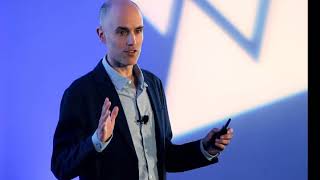
Alex Hutchinson, a physicist-turned-journalist and author of Endure, explores what actually limits human performance. He discusses the brain's role in pacing, how rinsing your mouth with carbs can boost endurance, and ultra-runner Diane Van Deren's return to racing after brain surgery.
Chapters
Living a Life in Full is a conversation you always wanted to have with that person who gave an amazing TED Talk or the author of one of your favorite books, or that inspirational Olympian you always wanted to know more about. It's graduate level conversations with those making a difference in the world and in the lives of others. This show brings you new ideas and approaches so that you can live a life in full. I'm your host, Dr. Chris Stout and I hope you enjoy this episode. This episode of Living a Life in Full is brought to you by ATI Physical Therapy. If you need physical therapy, choose ati. ATI offers exceptional care, trusted expertise and remarkable outcomes customized to your needs. ATI has over 800 clinics coast to coast in 25 states. When want to start feeling better fast? ATI can help address chronic pain or recovery from an injury or surgery expertly, quickly and conveniently. ATI's first program uses a performance based methodology to safely return injured workers to their workplace. FIRST is designed to increase strength, endurance and cardiovascular functioning. ATI's sports medicine provides athletic training services to help athletes get back in the game. ATI has hundreds of professional collegiate, high school, middle school and club relationships nationwide. ATI also offers a variety of specialty services including home health, hand therapy and women's health. To Learn more about ATI's advances in evidence based practice, clinical outcomes and their innovative new smartphone app, please visit atipt. Welcome to another episode of Living a Life in Full. I'm your host, Dr. Chris Stout. In today's episode, we explore both the physical and the psychological components of human performance and endurance. What are the ingredients that lead to breaking a record versus throwing in the towel? Alex Hutchinson, Ph.D. is the longtime Science Sweat Science columnist for Outside Magazine, and he's also a columnist for Runner's World. He's a National Magazine Award winner and a regular contributor to the New Yorker, the New York Times, and he authors the bi weekly Jockology column in the Toronto Globe and Mail. He's also senior editor at Canadian Running. His primary focus is the science of endurance and fitness. Alex was also a two time finalist in the 1500 at the Canadian Olympic Trials and he has represented Canada internationally in track, cross country, road racing and mountain running competitions. His latest book is the New York Times bestseller Mind, Body and the Curiously Elastic Limits of Human Performance, which I, by the way, thoroughly enjoyed and we'll discuss a great deal of what he's gone into in this book and in our episode. He was also one of only two reporters granted access to Breaking2, which was Nike's formerly top secret training project to break the two hour marathon and we'll also learn more about what that experience was like. Interestingly enough, Alex actually started out as a physicist with a PhD from the University of Cambridge. He spent a few years as a postdoctoral research at the US National Security Agency working on quantum computing and nanomechanics. And during that time he competed also as a middle and long distance runner for the Canadian national team. From there he went on to Columbia University and earned his master's in journalism. So Alex, I have been a longtime fan of your writing and your work and it was great to meet you at the 29029 event. So I'm just super excited to be able to have you on the show.
Well, thanks so much, Chris. It's great to be here and thanks for the very nice introduction and I'm looking forward to digging into some of these topics that we explored in a physical way at 29 or 29.
That's right, that's right. So kind of first things first. It's so hard for me to kind of do any of these shows in a linear kind of way because you, like a lot of other guests, are very accomplished in a variety of different kinds of areas. But I guess maybe the best place for me to start off was what got you into running?
It's an interesting question because I have a two year old and a four year old right now, two year old and four year old daughters. And just through a combination of circumstances, I'm actually, we're living, currently living in the house that I grew up in. And so my, my daughter just started kindergarten at the school that I went to, gosh, 30, 38, whatever, whatever years ago. And so I've been thinking a lot, you know, walking the sort of ghostly pathways of my childhood and remembering how things developed because one of my, one of my earliest memories is actually of I probably shouldn't have been waxing nostalgic, but I was telling my daughter that I had a memory of, I can't remember, it was junior or senior kindergarten. We had a race back and forth across the junior gym four times there and back in kindergarten. And I strangely, you know that maybe this says something about my psyche or something, but I actually remember winning that race in junior kindergarten or senior kindergarten and being shocked and being thinking because I wasn't the biggest killer, the tallest kid. And as a kid you sort of equate size with physical competence. But I won that race and I thought, wow, hey, I'm good at this thing. So anyway, that wasn't really the start of my running, but it's an early memory.
It might be.
Well, it might be in the sense that I then, even as early as elementary school, there was an organized team starting in grade three. And I was good at running and I liked running and just on the playground, in the schoolyard and with my friends. I was a kid who ran around a lot. And so by the time I got into high school, I was, I was training with the cross country team and, and became seriously competitive and ended up running in university. So it was a. For me, there wasn't a sort of, you know, awakening at the age of 28 of I want to be, get fit or discover this sport. It's something that I've done since, since I was a little kid. And it's gone through all sorts of different iterations in terms of its place in my life, whether it's something that I was competing at or something that I did for fun. And it says, in a sense, it sort of comes full circle because now I see run much more as a form of play like I did when I was, you know, 8 years old, than a sort of pseudo profession that it was in my 20s. But anyway, that's, that's the long answer to the question, which is I started when I was a kid and I've basically been running ever since.
Do your girls like to run?
They do. And it's, it's a, it's a, it's. Again, this is a bit of a minefield because, you know, my, my life has revolved around running. I've been a competitive runner and then, you know, writing for Runner's World and places like that. And I met my wife. We were teammates at the world Cross Country Championships when we met. She, she was a, you know, an all American runner at Notre Dame. And, and we both still run every day, so we're very acutely aware that we need to be careful, that running doesn't seem like a, you know, just a compulsion to our kids that every time they meet one of our friends, you know, the first, the first thing anyone says is, oh, I bet you kids are going to be really fast, or I bet you guys run a lot. And so they love to run. They. Absolutely. And I think we've really been careful not to try and like, push them, but, man, they, they, they, you know, even, you know, I'm up in Canada. The Canadian winter is harsh and it's. If they're not outside, they're literally running laps around the ground floor of our house and not too long ago, my 2 year old, for no reason, we were just kind of trying to have dinner and she got antsy and started running laps. And she must have done like 20 laps around through the living room, dining room, kitchen, just sort of doing it. That's what she did. So yes, they love to run and I hope they'll preserve that joy and not sort of habit sucked out of them by.
It'll be a very curious longitudinal study of nature and nurture, I suppose.
Exactly. Yeah.
You know, I was thinking about it in the context of our family that both of our kids ran in track and cross country and continue to as well now and you know, marathons and half marathons and whatnot. And I thought when I was a little boy a million years ago, there was really no activities like that that you could do with your kids. It was sort of like either someone watched someone as a spectator, you know, even, you know, think about like in the 19. For me, like in the 1960s when I was a boy, you know, there, there really weren't things. I wasn't going to go for a run with my dad, you know, he wasn't a runner. But I mean, even if, if we were, it wasn't like there was some 5k or some, some something, you know, I wasn't going to be signing up for a marathon or anything like that. Kid, you know, certainly kids do it in, in a sense almost today, but it's just a nice, I think, opportunity and nice evolution where people can kind of do that if their kids are interested in the parents are interested. It gives an opportunity to be able to do that together, which is fun.
It's very interesting because my wife and I had very different sort of introductions to the sport. I discovered it at school and it was my thing. Neither of my parents had ever run competitively or in any organized way and they didn't run recreationally like they've never run. And so it was, it was my thing and I discovered it for my wife rather. She, she had this sort of opposite experience where her dad was get. Got into marathons in the triathlons and marathons and do athlons in the 80s and 90s. And so she was eager to go out and try and accompany him. And as soon as she could ride a bike, she could go and ride a bike with him while he was running. And then she was entering sort of kids of steel mini triathlons when she was 7 or 8 years old. And so she, she grew up doing it and loving it and seeing it as something that families did together. And so we now have this sort of, let's not call it a disagreement, but a discussion of what do we do. Like we like to go to races, so should we bring along the kids and have them run in the kids 1k race or, you know, whatever the, you know, whatever the race for the 6 year olds or the 4 year olds is. And she, you know, that's her happy memory and she's all in favor of that. Whereas I think, no, no, no, let's not. We don't want to. I mean, that's the definition of us pushing them into the sport. They can see us do, we can model it, but we should let them decide what they want to do. And of course, who knows what a four year old wants to do. So we're trying to navigate that, but we certainly want to make it something that families can do together. And whether it's running or physical activity more generally, these sorts of adventures, we want that to be part of family life.
That's nice, I suppose, just keeping open to it and see what direction they start to head in. That sounds great. So that's wonderful. Well, keep me posted. I'd be very curious. So in addition to writing for periodicals, if my research is correct, one of your first books included like A Practical Guide to the Science of Fitness and maybe this is kind of the overlap with some of your academic training and stuff. And I believe it's called which Comes First? Cardio or Weights, which I think is a great title because I struggled with that same kind of thing. So tell us.
Opinions are sharply divided on whether that was a good thing. It wasn't my choice and it got a lot of negative feedback because the problem is, as you know, with the nature of exercise science is that often there aren't clear answers and that's one question for which there isn't a clear answer. So when that book came out, I did a ton of radio interviews and the first question was always, so tell me, which one is it? Which is it? And I'd give this long, rambling, meandering answer, which basically amounted to it depends. And the interview would sort of go downhill from there. But.
Well, it is funny. I mean, that's the thing. I think people that aren't trying to sell someone something will admit to, say, don't take my advice. You know, here's maybe what I know from the literature and what the science says. Here's, you know, the pros and the cons. Here's how to maybe vet an article to see if, you know, if it's, you know, if it holds water. But you know, just generalizing from one, you know, an N of one one person's experience may be perfect for somebody and, you know, just toxic for somebody else. So beyond not being able to answer unanswerable questions, what inspired you to write it? What, what brought you down that path?
Yeah, well, I mean, that's a, you know, we could spend an hour trying to reach, retrace that. That strange. You know, for me, the transformation, the decision to leave physics and become a journalist was a, was one that I still sort of, it felt right, but I, you know, I'm still surprised it happened, you know, you know, whatever it is, 15 years later, I don't know quite why or how I had the courage to just sort of say at the time I had little or no experience. I really didn't know anything about journalism, but it just sounded like something that I thought would be maybe more in tune with how I wanted to spend my days. So I started out in journalism with pretty loose conception of what I wanted to do. I was willing to do whatever it took to make a living. And I started out as a general assignment reporter in a newspaper covering car crashes and dog shows and things like that. And I knew I didn't want to do that, but I didn't necessarily have a specific goal other than to spend time thinking about and writing about things that interested me. So that when I became a freelancer, you know, the two strongest strands of interest in my life were that I'd spent, you know, a decade as a physicist, so I was obviously interested in science and also that I'd spent most of my life running. I was interested in endurance. So I started writing about the science of endurance in a sort of open ended way. And one of the, one of the key things that I came across, this is probably 2006 ish. There was a column in the New York Times at the time by Gina Colada called Personal Best, which was, it was new to me, it was refreshing to me. What it was was taking questions that, that athletes or people who have pushed their limits taking questions that people wondered about and saying, well, what do researchers know about this? As a runner, I've talked about lactic acid or VO2 max a billion times, but what do the scientists actually know about it? And one of the columns that really caught my attention was Colada wrote about lactic acid and that it wasn't what we thought it was, that it wasn't this enemy that makes your muscles burn, that in fact, it's actually a valuable fuel. And there's this reevaluation of lactic acid. And what amazed me was that. So she found the. She talked to all these researchers and it wasn't, hey, last week we discovered that lactic acid isn't what we thought it was. It was like 20 years ago we started to realize that lactic acid was different. And there's been this ongoing scientific debate ever since and lots of discussions. And I was like, if this was 20 years ago, how did I not know anything about it when I was running? And I sort of realized there was this whole world of, you know, exercise physiology, people trying to understand, you know, the workings of the body. And if it didn't fit into a sort of very narrow band of things that newspaper editors knew were interesting to people, like how are you going to lose weight? Or, you know, how are you going to get beachbody abs? It didn't get covered, it didn't make it into the newspaper. And so Collada was writing about these things and people were responding. I was, I noticed that it was always in the top. Her columns were always in the top 10 most emailed list on the New York Times website. And she eventually moved on. And Gretchen Reynolds, who still writes the Phys Ed column for the Times, started writing some of those, some columns for the Times too, on a similar vein. And I just thought, this is an amazing area that appeals to my interests, that leverages my skills. I should start writing about this area too and get serious. Not just sort of go press release to press release, but talk to the scientists and find out what people know. So I pitched a column to the Globe and Mail, which is the main newspaper here in Canada, along similar lines, basically nakedly emulating Colada and Reynolds in the Times. And they picked it up in 2008 and I started writing and that was really the, in reporting for that column, I realized there was so much more there than I could get into in a bi weekly column. So I started a blog to be able to, as a sort of scratch pad to sort of, every time I saw an interesting study, I could just say, hey, check this study out. I'm not going to write an article or newspaper article about it. But it's pretty interesting and there's some interesting nuggets here. And that was sort of the launchpad into that world for me.
That's. Wow, that's great. I mean, I certainly see the, or what I would presume was the, you know, your development towards your doctorate in physics of the Science of that insinuating itself really into, you know, how you approach your writing and the kinds of things that, you know, have been in your columns and been in the magazines and periodicals. So it makes, I think, it tees us up for a nice segue. Congratulations for your New York Times bestseller, Endure. Just an amazing book. And I have to say, you know, Malcolm Gladwell, you know, to have as your forward also, congratulations for that. That's amazing. One of the things he points out in that foreword is the interaction between our physiology and our psychology and our relationship with pain. Can you kind of unpack that for us a little bit or tell us
a little bit about that? Yeah. So this is just to zoom out for before I get. Get a little more specific. You know, I was talking just now about my sort of decision to write about the science of exercise. And there was sort of a split or two tracks on which my interest traveled. One was a very sort of utilitarian track. And utilitarian both in the sense of writing about things that people were interested in and could apply to their lives directly, and utilitarian in the sense that writing about things that editors were receptive to and I could pay my rent with. So that was very direct sort of fitness advice. And that's what Witchcraft's first cardio advice really focused on is like, how do I know how much exercise I need to do or what kind of exercise I need to do, or whether I need to stretch before? What do scientists tell us about these very practical questions? But at the same time, I had this other sort of interest from having spent a long time and continuing to spend time really pushing my limits and exploring my limits as a runner and in other ways. And so I'm trying to understand what defines those limits. What is it when I push to my limits to the point where I can't go any farther or go any faster? What exactly is it that's holding me back at that point? And I would say my, my. My starting point as a, let me say a. I guess a skeptic, a very concrete thinker, was to. To see the body as a. As a. In a sense, as a machine, which is how I get. Think 20th century physiologists mostly thought about it, that if you could understand all the parts of the machine, the, the VO2 max, the muscles, the running economy, all these different aspects, and then, you know, the fueling, what sorts of fuel the muscles run on, you can understand what are the. What are the limits. And so I could go and run a race and Say my body is capable of X today and let's see how close I can get to X. But the truth is, you know, anyone who spends a reasonable amount of time pushing their own limits and racing realizes that it's not so mathematical and that some days you're able to achieve far more than you ever thought you'd be capable of. Other days it just doesn't click. And it's not necessarily because you have the flu or something. It may be just because you're not able to get into the right headspace. And so there is that other element of trying to understand what's happening there. Why is it that some people can push much closer to their limits or that some days I can push much closer to my limits than others? And so, in a sense, we're getting into the realm of psychology here, which was not necessarily a natural fit for me. It's not where I started out thinking that I would end up. And so that's what the book essentially is, kind of a sort of balancing act or a tug of war between those two inclinations or those two views. And what I hope that I didn't end up with is trying to. Is leaving anyone with the impression that it's one or the other, but instead it's more trying to integrate how do the physical and mental aspects of human limits come together and how can we understand them as one integrated whole?
Yeah, that's. I really. Gosh, there's so many things I want to say about your book and ask you about. I mean, I guess maybe one of the first things is that is for people to understand, which I found very refreshing, is that it's not like a how to book. You know, it's not like a. There's. There's plenty of other stuff out there where you can open it up and it looks like spreadsheets, you know, and it looks like, you know, little bullet points and little log sheets that you can copy and mimic and all that. And it's. It's certainly much, much more than. I mean, there's. I mean, those are great, you know, but this is not what your book's about. Also, the format of your book, he really wonderfully integrate sort of science and studies and stories and just structurally how you put the book together in the three parts and where you would be talking about something and then you would, you know, then we'd have like a segue into breaking two. And it was. In some sense, you know, it would be like a. Here's here, we're talking about this. And now we're talking about this, but it's sort of like the application of what you've just been talking about that's been, been so grounded in the literature and what the, the science of the time or how things have evolved. So I just, I really, I really enjoyed that form. I've never, you know, seen any other, you know, book like yours with that kind of format where it is such a, in some ways kind of diverse blending. But you, you thread it together in a way that's not jarring or anything for the reader. It's just, it's, it comes across very, you know, integrated, very synthetic. And I tip my hat to you. I see why it's a New York Times bestseller because it's, it's not just the content, which also is heroic of you for all the work that you put into that, but your style of writing is just so engaging and so enjoyable. I just. Big fan of it.
That's really wonderful to hear and I super appreciate that, especially in the sense that again, I talked about the sort of two tracks, the utilitarian and the curiosity driven track of what I was writing about. And I really had to wrestle with myself with the book, knowing that it would be an easier sell if I could pitch the book as this is going to teach you how to push your limits. And I hope it does on some level, but it certainly doesn't. I deliberately, like, I'm not going to put end of chapter cheat sheets.
Here's the 10 things you should do to be able to put this chapter to use in your next workout.
Once you do that, once you go down that road, you're kind of. You then have to make sure that the rest of the book supports those 10 simple points and that the points that I was trying to make were so not simple that I just didn't want to box myself in. So I, you know, I think probably, and I have heard from some people that they just wish I'd been a little more explicit about what they're supposed to do with this information. And I understand that. I totally, I totally understand that. It's just that I couldn't, I couldn't do that and also write the book that I wanted to write. And the other thing I'll just say is in terms of the mix of science and story, obviously I worked really hard about that. And I will give a shout out to the book that I modeled it after, which is David Epstein's the Sports Gene, which to me was the. That book opened my mind. It was, I think, 2013. And I wrote a review of it for the Globe and Mail where I said, I think this is a great book, but I'm sure David Epstein's agent blanched because it's not simple, it's complicated. It's got amazing stories and it weaves it in with the science. And I read that book and that's. That was like the kick in the pants I needed to say, okay, you know what? You can write a complex book that, with, you know, with good stories, but also with science that isn't like simple and easy to put in a box and people are still interested in it, like right up to people's level. Don't write down to their level. So that was so David Epstein's sport. The sports gene was really my model for this book.
That's great. We'll put that in the show notes. I had a guest, you may know him, Jamie Metzl. He does. He's like an ultra runner and ironman triathlete and whatnot. But he also, he writes a lot and it's very topical now with what's gone on with CRISPR and hacking genomes and things like that. But he wrote a couple of novels that were sort of like, you think about historical fiction. Well, his was, I hate to even call it science fiction, but it was sort of like, like fictional science. And the science was solid, but he put it in a storyline and he got, you know, a lot of requests from folks to say, you know, this is great, but I don't know what the difference is between, you know, the, the made up stuff and the story. So his most recent book, which I don't think, I think is coming out in early 2019, we'll put that in the show notes as well. Well, is that same kind of thing that you don't have to write down to someone, you don't have to, you know, make it a, you know, eighth grade reading level, so to speak, to be able to engage people. Because there is an audience out there that wants to really know how, what does the science say? I don't want to pour through journals. I don't want to go to PubMed. I don't want to have to go, you know, to that effort, but to read it in an engaging way that still, you know, has story that can be, you know, truth, but, you know, these, these kinds of things. I think it's nice and it's refreshing to see that there's growing, I think a growing audience for that kind of work. So again, this is a perfect fit for it. So did you get pushback from your publisher about that? Do they want to have the little here's the five tips from this chapter, and here's the companion workbook and all that.
To my surprise, they didn't push me very hard. We had discussions. They wanted. They wanted to. To hear what my. My plans were, and they wanted me to understand the. The ramifications of. Of my decisions. But they were. And, you know, I was working with the same publisher, but not the same editorial team that I'd worked with on which comes first, cardio or weights. And in that one, they. They had specific suggestions. You know, they said, please add a chapter on weight loss, because that's a big hook for people. And they also said, please add an end of, end of, end of each chapter, 10 key points, a cheat sheet at the end of each chapter, which, for that sort of book, was, I think, the correct decision. But for this one, when I explained what I wanted to do, I was actually, you know, my editor there is a guy named Peter Hubbard, and he was very. He understood what I was saying. And, you know, I don't think he would have complained if I said, I'm going to write a really practical guide that's going to help tell people what to do. He would have. That would have been fine with him, too. But, you know, he understood what I was trying to do, and so he was on board right from the start, and he offered ideas like he said, you know, are there ways you can broaden this so it's not just for endurance athletes? And, you know, I basically said, yeah, there are some things I can do, but, you know, there's a point at which it gets out of my zone of expertise and just starts to look like pandering. And he agreed with that. So I didn't try and sort of say, here's a case study about how you can push your limits in the boardroom, too, you know, by pursuing, presenting a really good PowerPoint presentation, whatever.
So I, I am relieved that you didn't, because I remember someone had a real shticky kind of thing some years ago, and it was, oh, the adversity index or something. And it was basically an entire book about the parallels of mountain climbing and the. The treachery of. Of the boardroom. It's just sort of like, oh, man, talk about pandering.
So the temptation is there because there's a big audience for that. But, you know, I didn't have to.
Fortunately, the proof's in the pudding. I mean, you know, New York, New York Times Bestseller. I mean that, that tells your publisher, you know, this is, this is what, you know, the world is wanting to read. So. All right, well, let me, let me start unpacking some things in part two. Again, my fandom of your, how you've got your, your chapters put together in the Focus. So for folks that have yet to get the book, you've got pain, muscle, oxygen, heat, thirst and fuel. And I'd like to unpack some of those because you did a wonderful job of a lot of the myth busting and you sort of, you know, had a prelude to this, of the former thinking of, you know, the metaphor of a machine for the human body type of thing. And I guess first off, tell us your thoughts and your findings about. I think this will be fun for you, the debate concerning the idea of low carbohydrate high fat as a performance booster.
Oh dear, you're going to drop me right in the vat of oil. And oil, yeah, this is a controversial topic. So look, what I'll say about that is the first thing I'll say about that is that if we were having this conversation five years ago, I would have said this is a ridiculous, I can't believe you're even asking that question. This question has been answered for half a century. Waste my time talking about high fat diets. People have done all the research. It's clear, open and shut. You can't run a good marathon without a ton of carbs. And that's a good reminder to myself to be humble about what we know at any given point. Because now I'd say no. This idea of the low carb ketogenic diet as a performance diet, not as a weight loss diet, kind of caught on in the ultra running community, gosh, I don't know, six, seven years ago, maybe even more than that. And you know, the thinking is that, look, in our bodies we have this very, very finite store of carbohydrates, which is why hitting the wall is such an issue in marathons. We have, even the skinny of us, the skinniest of us, have basically inexhaustible store of fat. So if you can train your body to rely on more heavily on fat, then you'll never have to worry about hitting the wall. And it turns out, and it was actually, it has been well established for a long time, if you eat mostly fat, your body will get better at burning fat. During exercise, it will get dramatically better. You know, it'll be able to burn fat at maybe triple the rate that people normally can. Because normally the problem with fat is you've got tons of it, but you just can't access it enough to sustain a decent pace. You have to go, you have to basically be walking to benefit from fat. So it's now people have sort of done some of the science. There's still not enough science on it, but there are some studies out there and they confirm that, yeah, actually if you eat this high fat diet consistently, you will become really good at burning fat to the point that you can sustain yourself mostly on fat if you're running at a relatively modest pace, at a sort of ultra marathon kind of pace. And so, and there's lots of. Then outside the lab, there's lots of people even at a relatively high level in the ultra marathon world who are running on mostly low fat diets, low carb diets rather, they tend to supplement with carbs immediately, before and during races to top up their stores. So I wouldn't have predicted that that was possible five years ago. And it's changed my opinion. Now, having said all that, is the low carb, high fat diet, the ultimate performance diet, is it the best way to go? Does it make you faster? That's a different question than is it possible to perform well? And you know, this still remains contentious, but the best research that I've seen suggests that you're probably not going to do better or you're almost certainly not going to do better. Especially in any event where you want to have any ability to, you know, go up steep hills at a fast pace or sprint or respond to surges that, that high intensity stuff, you really need to be able to rely on the carbohydrates. So for Olympic level athletes, I'm aware, sort of if we're arguing in the seat, you know, often you'll say, you get in these debates where it's like, well, Joe Schmo, this, you know, world class athlete eats nothing but seal blubber or whatever. And it's like, if we're battling anecdotes, there are 10,000 Olympic medalists who have relied on virtually nothing but carbohydrates, including virtually all Kenyan and Ethiopian athletes who totally dominate long distance running on an international level. So to me, it's like, now there's another option. It's almost like the barefoot running or the minimalist running thing. It didn't turn out that running in minimalist shoes or barefoot shoes radically transformed the world and everyone can run faster in minimalist. It turns out there's pros and cons, and for some people it's A great solution. And for some people it's not. And I think there's some, maybe a parallel there with the low fat diets, that it's not the panacea that some people have argued, but it's actually, it can be a practical option for some people. And in some cases, it turns out it seems to work much better for them, maybe for health reasons, maybe for dietary intolerance reasons. So it's an option, but not a radical transformation.
Yeah, I think that you really raised a good point with that. In the context of what works. What do we know? You also talk about some of the changes too, in terms of how we're able to measure certain kinds of things. And it sort of reminds me, I think it was a former dean at Harvard Med said that 50% of what we teach our students in medical school is wrong. The problem is we don't know which 50%.
That's pretty much my philosophy of life, I would say. Yeah, yeah.
And it's sort of like somebody else wrote a piece a while back called the Half Life of Facts, you know, and it's sort of like there's certain kinds of facts like, you know, the earth's round. Okay, we can probably. That's going to have a long half life. But you know, the, the aspects of, especially when you get into health or diet or athletics or performance or certainly endurance, that there is just so many kind of uncontrollable variables and then you go this n of one anecdotal kind of thing and it's just there's such complexities around that. So I have to toss this odd one out about the findings of just simply swishing a carbohydrate drink in your mouth and the impact that that can have on performance. Tell me, how did you find that study? And for folks that aren't familiar with it as I wasn't. Tell us about that.
Yeah, so this is an interesting thing. So basically what we're talking about here is there was a mystery. About 15 years ago, scientists were trying to understand why sports drinks worked for short bouts of exercise. Because the whole point of a sports drink is, you know, it's basically sugar water and you're sending fuel to your muscles to fuel them. And that can be helpful if you're running a marathon and you're running out of fuel, you take a sports drink and that's going to give you an extra source of fuel. The thing is, if you go for a one hour run, there's no way you're going to run out of Fuel, you've got plenty of fuel. So there's no reason to think that adding a sports drink will help any more than if you're in your car and you've got a half a tank of gas. Doesn't help to add more gas into the tank. It's not going to make you faster. But consistently, studies kept finding that it did. That a sports drink would have a subtle performance benefit even if you were only going for, let's say, an hour's run. And so to try and tease out what was happening, one of the things they tried was, and this is about 2004, there was a study where they said, okay, we're just going to have athletes swish the drink in their mouth and spit it out to see if that's where the benefit comes. And sure enough, it still boosted performance in relatively short exercise bouts if you swished and spitted the sports drink. So they went through all the different steps to try and narrow this down. They tried artificial sweetener, that didn't work. So it's not just the sweet taste that helps. They tried tasteless carbohydrates, one called maltodextrin, and that did work. So somehow your mouth is able to detect the presence of fuel that's theoretically on the way to your muscles. Nobody knows how this works. It's still contentious. They've done brain scanning studies, so they know that if you have a carbohydrate drink in your mouth, there's certain areas of your brain that light up that say, okay, we know fuel's on the way, but they don't know what those sensors are or how it works.
Wow.
And what's basically this is, to me, this is a really clear illustration of the idea that it's your brain that's kind of holding you back and dictating what you feel to be a physical limit. So if I wake up in the morning and go for a one hour run, I will, let's say I go as hard as I can. It will feel to me like it's a purely physical limitation there, that I'm going as hard as my body's capable of. But if I then swish a sports drink in my mouth, my brain will think, ah, more fuel's on the way, and I will discover that I'm able to go a little bit faster. I'm not conscious of any change in my effort level. It's just my brain is sort of unlocking a little bit more of the reserves because it's no longer quite as worried that I'm going to run out of fuel. And the additional wrinkle then is if I wake up in the morning and eat breakfast and then go out for a one hour run, then rinsing and spitting a sports drink won't help because my fuel levels are already so high at that point that I'm no longer at risk of running out of fuel during a one hour run. So there's all these very subtle calculations going on under the hood. Your brain is sort of keeping track of how much fuel you've got, how quickly you're burning it, how long you want to keep using it for, and using that to impose what feels to you like just your plain old physical limits. So to me, that's a really powerful illustration of the role of the brain. And it's also sort of a. There is a practical side of this, which is if you're running a marathon or an ultra marathon or whatever the case may be, if you've been out there for hours and hours, it gets pretty hard to choke down more fuel. You may not want to take another gel or another sports drink. And as you get closer to the end of a race, if you're having gastrointestinal problems or anything like that, you can fool yourself a little bit. You can still get some of the boost of sports nutrition by swishing a drink or a gel in your mouth and then spitting it out. You can't trick yourself. You can't do that for the whole marathon because you will actually run out of fuel eventually, but you can trick yourself near the end.
Wow. So do these kinds of things, like reconcile these with the central governor concept or the work of Noakes?
Yeah. So to me, the rinsing and spitting a sports drink is actually one of the strongest pieces of evidence for this idea of the central governor. So Tim Noakes, South African sports scientist, proposed in the late 90s that, that we're wired in a way that we never actually push to our absolute physical limits. That in fact, if we did, you know, if we went to the point where we were truly out of oxygen or whatever the limit, you know, at our, you know, highest possible heart rate or whatever, we would do ourselves damage, maybe even kill ourselves. That if you could just keep running right to your limits, you would eventually reach the point where not enough oxygen was reaching your brain or your heart to keep you alive, and that would be, needless to say, bad, bad news. And so he said, you know, we're wired in a way that as we approach our limits, our brains on some level know what's best for us and hold us back. And of of there isn't like a piece of the brain called the central governor. You can't go into a brain scanner and find a central governor. But there's this suite of behaviors that he points to that says this suggests that we're somehow wired in a way to do this. And I think one of to me one of the clearest ones is this rinsing and spitting data that it's clear that something feels to us like a physical limit when we're not actually at our physical limits because we can change them by tricking our brains about the status of our fuel supplies.
So that then tees me up to talk about the story of ultra runner Diane Van Diren.
Yeah, tell us.
Share that with the audience. It's amazing.
So I think that that is actually a perfect setup to the idea of Diane Van Daren. So Diane Van Daren is an ultra runner whose career only started when she was, I think it was when she was 37 years old. She had never run competitively at all before that. But she had surgery, brain surgery. At age 37 she was having increasingly severe epileptic seizures that were starting to really disrupt her life. And so they removed like a golf ball sized chunk of her brain which was the locus of the seizures. And the surgery was successful in that the seizures stopped and she was able to get her life back under control. But there's always some collateral damage with that sort of surgery. And for her the main effect seemed to be that she had a compromised ability to keep track of time and place. So of, you know, in the running context, how long she'd been going, how long she still had to go to read a map to know where she was, those sorts of things. And what she found not long after her surgery is that she was able to keep running and running and to do, do that very well. And I think the first race she entered was a 50 miler and she won that. And she pretty quickly graduated to multi day races and was did very well there. And even a few years ago in her early 50s, she set a new record for a trailer across North Carolina. I think it took something like 23 or 24 days and she was running 22 hours a day like just, just an unbelievable physical performance. So, but so obviously like she's a physical marvel, right? She's an amazing runner. But the funny thing is she only discovered this after her surgery. So what happened? Well, to me, but it seems to me that this idea of a central governor that is Keeping track of how much energy we've got, how much energy we still need to burn, all of that. For a central government to work properly, it relies on having reasonable inputs of knowing how long you've been running, how long you're still planning to run, how far you need to go, that sort of thing. And for Diane Van Daren, the inputs to her central governor are not there or compromised. And so fundamentally, the question that she can ask herself when she's in the middle of a run is she has to live in the moment. She has to ask herself, can I keep going? Can I take the next step? Can I take the next 10 steps? Instead of like. Like most of us are out there thinking, oh, my God, I've already. I've only come 20 miles and I have to go 72 more miles and there's a hill and I have to go around that corner there. So we're answering a fundamentally different question. We're giving our central governors much more input about the task to come, and that makes us answer in a much more conservative way the question, how fast can I run? Than if we're just asking, how fast can I run for the next step or the next 10 steps?
Because we've got that history, repeat and sort of nagging at us a little, you know, demon or angel on our shoulders, saying, hey, man, you've already run this far, you should be pooped, so better dial it back, or dnf.
Exactly. We know all too well what it's going to be like if we maintain this pace, because we know from prior experience how hard that's going to be. And so, I mean, look, it's not that it becomes easy for her or that, you know, she doesn't suffer, but it's that she's able to manage her suffering moment by moment, which in a way sounds a lot like what people talk about with things like mindfulness. It's awareness of the present state rather than sort of maybe emotional reaction to future and still hypothetical, you know, discomfort.
Right, right. The living in the moment and even in addictive disorders of, you know, one day at a time is sort of one of their mantras as well, too. It. It sort of reminds me you're sort of like. Like the Oliver Sacks of Ultra running with her story. You know, it's just her like, wow, that's. Yeah, this the woman who could run forever, you know, or something. So to segue a little bit, you also talk about Marcora's psychobiological model of endurance, and that endurance is always being voluntary and Kind of relates to this, that it's the perspective of perceived exertion. Tell us more about that.
Yeah, and I think an important thing to say in this sort of segue is that we were just talking about the central governor, and I think it's a really powerful and interesting concept. That doesn't mean it's like we now know that humans have essential governor. And in fact, there's lots of controversy still about how the brain regulates endurance, and there's lots of debate and discussion. And one of the other theories is this idea called the psychobiological model from a guy named Samuel Marcora who's at the University of Kent in Britain. And it's very easy to get into the weeds of how these models differ and how, you know, what, everyone has their pet theory or whatever. But I think there's a lot of commonalities between the models, and I think they influence each other, and they sort of moved together in some ways and moved apart in other ways to sort of find areas of commonality. So I think the fundamental insight that Markora has really pushed with his psychobiological model is that the ultimate determinant of endurance and of the limits of endurance is your perception of how hard you're working. So you can, at a given moment, you know, if I put you on a treadmill, set the speed at a given level and, you know, tell you just keep going until you can't anymore. And then we can, we can measure, you know, a billion different things as you go. We can measure your breathing rate, we can measure your heart rate, we can measure your lactate levels, we can measure your body temperature, we can measure the contractile properties of your muscle fibers, and we can measure all sorts of things. But if we want to predict the moment at which you're going to say, I have to get off the treadmill, or conversely, the moment where you fly off the back of the treadmill, that moment, the single best way, rather than any sort of combination of all these physiological measures that we could be taking, the single best way is to ask you, hey, Chris, on a scale of 6 to 20, how are you feeling right now? How hard are you working? And at the moment, the moment you get to 20 out of 20 or 19 above 19 out of 20, you're going to stop. And this almost seems sort of tautological that you're going to reach your maximum effort at the point where you say, yes, my effort is maximal. But it turns out to be a surprisingly powerful concept and repeatable concept. It sounds very vague. You're Just giving a number rating and you can do it 6 out of 20. Between 6 and 20, or you can do from 0 to 10. There are different ways of rating effort, but basically the idea is that your rating of perceived effort is the most sophisticated integration of all those physiological things that are going on in your body. So when you say, I'm feeling like this, this is a 7 out of 10 effort, that reflects your heart rate, your lactate levels, your body temperature and all those other things. But going to the heart of what we've been talking about, it also reflects other aspects of your mindset. It reflects whether you had a good sleep last night. It reflects whether you've been fighting with your partner. It reflects how you feel about life, that all that, that may change, make the difference between, you know, 6.9 and 7.0 or something. But all these things are adding into your sense of how hard your experience of the world is at any given moment. And so that's what opens the door to the psychology of endurance. That that's going to affect your perception of effort. And your perception of effort is far, it includes all the physical stuff, but it supersedes it. It's, it's, it's operating at a higher level that you don't quit because your lactate levels reach 8.2. And every time lactate gets to 8.2, you quit. You quit because you reach the point where you say, okay, this is my 10 out of 10 or my 20 out of 20. This is the point where I have to slow down or fly off the back of the treadmill or whatever the case may be. And that, I guess the last thing I should add is that if you scratch deep enough, I think you find that now a lot of the different schools of thought about the limits of endurance fundamentally agree on that point. So they make all their theories by different names. But fundamentally, this perception of effort, that seems to be the key mediator. And I think a lot of scientists now would agree with that.
Yeah, you raised a good point that these are still, these aren't scientific facts. They're still theories, they're still evolving. There's still more data and perhaps even, you know, other theories or integrative perspectives that'll come to the fore. So I want to shift gears out of the library and peer reviewed journals to a personal story that you shared at 29029 and that's also in the book about your Sherbrooke race. Can you share that with the audience?
Sure. So basically just segueing back to what you Were saying about ideas being informed, flux. When I finally just, I sort of was researching and thinking about this book for about a decade and kind of waiting for that aha moment to like, okay, now the scientists have solved everything and I'll write my book. And I realized that wasn't going to happen in the foreseeable future. So I was, I just had to sit down and say, okay, let's write about where we are right now and hope that people find it interesting. And one of the challenges there was like, oh gosh, I've got this a ton of research. Is this going to be interesting to other people? Well, to think about that, I had to ask myself, why is this interesting to me? What, what, what has, what has sort of hooked me on this question for so long. And that led me back to a race that I had in the, I GUESS it was 1996 when I was a student at, at McGill University on the track team there that I think really formed my or really heavily influenced how I think about endurance anyway, to sort of make a long story slightly less long. My goal in university was to run a sub 4 minute 1500 meter race which was, it's sort of like it's equivalent to about a 418 mile, so kind of a poor man's four minute barrier. And I ran 402 in my second year of running in high school. I thought so I thought, I initially thought it would be very easy to run sub 4, but I kind of hit a plateau and I ran 401 or 402 for four straight years. Wow. And so by the time I was in third year university, it felt like I had reached my physical limits and that I would be lucky to run 359 and, and, and you know, there wouldn't be any more in the tank. And what happened in the Sherbeck race basically is I went out, ran the first lap and you know, the timekeeper calls out your, your splits after every lap so you know how fast you're going. And the timekeeper after 200 meters called out 27 seconds, which is, you know, radically too fast for what I was capable of.
Yikes.
And so I had the moment of panic of my God, I'm gonna suffer horribly here. But also the moment of surprise of the sort of cognitive dissonance of wow, I actually feel pretty good. And that, you know, I came through the second lap in 57 seconds. Same kind of experience of wow, that's too fast, but I feel good. And after the third lap I was just like, okay, I Don't know what's happening. I'm having, like the day of my life. Just go for it. And I ended up. So I just put my head down and ran and ended up running 352.4, which was a nine second personal best after four years of stagnation. And so the answer to the mystery is like, what the hell happened? One of my friends had taken my splits for me so that I could put them in my log, and it turned out the timekeeper was giving the wrong splits. He had missed the start or something. And so he was giving me the wrong splits by three or four seconds. So he basically tricked me into thinking I was having this sort of transcendent day.
He was your swish of Gatorade or something.
Exactly. It was every trick in the book sort of into one. It convinced me I was just on top of the world. And I sort of, you know, took off the shackles and just ran. And sort of the postscript to that is that I never, ever had trouble breaking four minutes again after that. And in fact, in my next few races, I ran 349 and then 344. So I had this sudden, dramatic, huge transformation, which, you know, and we. You know, sometimes when I've. When I've told this story, people are like, okay, but there must have been something in your training. You know what? There must have been other things, and I'm sure there was. Believe me. I've looked in my logs and I don't see it. But there are obviously a lot of things that go into it, something like that. But the key result for me was that I could never finish a race after that and just sort of be complacent and say, I guess that's what my body was capable of. Instead, I was. I was always left with like, well, what if there was, you know, more in the tank and I just wasn't, you know, like that day in Sherbrooke, what if I just needed to figure out some way of accessing it? So I think that kind of seeded my. Even in my, you know, hyper rationalist days, my. My sense that there was something more there, something more to understand about what defines our perceived limits.
Yeah, well, and certainly again, back to the stories and the kinds of experiences that, you know that this is the thread that is in endure. So what do you think the relationship is between endurance with resilience? Is it more in the vein of, like, Nassim Talaib's antifragile or how do you see the relationship between those Two things. Endurance and resilience. Yeah.
You know, so one of the places where, where I talked to researchers who were thinking most closely about resilience was there's some researchers at UC San Diego led by a guy named Martin Paulus, who are thinking a lot about resilience in the context of how do you help, you know, military personnel avoid ptsd? And what can we learn from, say, elite endurance athletes, like adventure racers, about the way they handle adversity that they encounter, you know, after four days of racing and, you know, they, you know, fall into a river or drop some. The key thing, or discover that they've gone 50 miles in the wrong direction. How do you handle those sorts of setbacks? And does. Are there any sort of key traits of people who are resilient, who are able to handle adversity without panicking, losing their performance, or perhaps even suffering from, you know, later flashbacks of it? And so they've done a ton of research. You know, this is obviously a complex topic, and I don't want to, you know, make it sound too simple, but they've done all these brain scanning studies of trying to understand what's going on in the brains of people who are highly resilient and how that can be transferred, whether. Whether that can be transferred to other people, say military recruits or as you alluded to before, you know, people struggling with addiction, things like that. And they found certain brain patterns, that of activation in terms of the nature of self monitoring, whether you're in tune with what's going on in your body, but not overreacting when something starts to go wrong with your. With your body, or, you know, when you experience some sort of adversity. The way they do it is you're lying in a brain scanner, you're doing these cognitive tests and you're breathing, basically breathing through a little mask, and they constrict the flow of oxygen through the mask. So all of a sudden, you're basically in this brain scanner, breathing through a straw, trying to do cognitive tests, and your ordinary person basically panics, and their performance goes way down on the cognitive test, and they may even panic so much they have to come out of the brain scanner. The elite performers, in contrast, not only do they handle the breathing restriction fine, their performance on the cognitive task actually gets better. They shift into a mode of like, okay, the stakes are high, something's going wrong. We need to be ready and we need to do our best. And interestingly, what they've found is the best way they've found of generating these sorts of brain patterns or these sorts of cognitive patterns in naive people is mindfulness training. They've found that that sort of ability to be in tune with what's going on and react to it, but not overreact can be cultivated through mindfulness training. So I think there's a link there. This is, I realize that's a very circuitous way of answering your actual question, but I think there's a link there to understand like there is more to resilience than endurance and there is more to endurance than resilience. But I think there's an overlap in this sort of Venn diagram of any sort of endurance task of any nature is going to involve dealing with adversity. Most, you know, in general sense with discomfort, with pain or. And you're going to have to be able to, if not brush that off, then at least cope with it and not let it throw you off your stride. And so I think that element of resilience is a crucial component of endurance, even if it's maybe not the, the only thing.
So it sounds like there might be potential to have that be a learnable thing. It's not necessarily brains are different or whatever, but there's.
Yeah, yeah, I think that that's certainly what the UCSD studies suggest, that mindfulness doesn't just teach you a skill or some party tricks that you can go into the brain scanner and see that. Yeah. Now this area of the brain is activating more when you're in a vigilant state. And this other area of the brain is activating less when you're in a panic state. And put those together and you're able to deal with adverse situations better. And they're able to see that in the, in the actual data, which is pretty exciting.
Yeah. Well, as I mentioned in the intro, you were also, I believe, one of only two reporters to cover Breaking two. And in the book you go into that and just again, a great, great story of what happened. Can you talk about the listeners that maybe aren't familiar with what Breaking2 is about and also what it was like to be able to cover that?
Yeah, for sure. So this was Breaking two was Nike's attempt to kind of super science the marathon to do every, pull every lever and knob that they could to make it possible for a human to run a sub two hour marathon. So this came out of out of stealth mode in about, I think it was December 2016. And then in May 2017, they staged a race at a Formula One racetrack in northern Italy. So at a place where the curves were perfect and the atmospheric pressure was perfect, and there were no hills and yada, yada, yada, where the, you know, the punchline of story, the end of the end is a guy named Elliot Kipchoge, who is the reigning Olympic champion from Kenya, ran a marathon in 2 hours, 0 minutes and 25 seconds. And that was about 2 and a half minutes faster than the world record at the time. So it was totally astounding. It wasn't an official world record because of the way they ran the race. They had pacemakers blocking the wind for Kipchoge for the whole race, which wasn't allowed, but it was way faster than anyone had suspected. And so they, like I said, they announced it maybe five months before the race, but they'd been working on it for about three years, and they probably spent tens of millions of dollars on this project. And so a little bit before they came out of stealth mode, they invited a couple of publications, Runner's World and Wired, to come behind the scenes and cover it in the lead up to the race. And so I had the chance for Runner's World, and a guy named Ed Caesar, who's a really amazing journalist for Wired, spent a whole bunch of months traveling around, seeing this project in action, trying to understand what sort of science can you bring to bear to help a human run faster for the marathon. And so I wrote a ton of articles about the technology, about new shoes with a curved carbon fiber plate that are supposed to make runners 4% more efficient, and about the fueling protocols and about the design of the course and the optimal temperature and drafting and aerodynamics and all these sorts of things. And it was really interesting. It was controversial in the marathon world, let's put it. Put it that way. Like it's. You take the purity of a sport that sort of, you know, your feet are all you need, and all of a sudden you're spending all this money to. To try and optimize it. So, for sure, controversial, but I guess the. The key thing I would say is my perspective on the race or on the experience has shifted a little bit over time to where I look back and say, yeah, the shoes out and the technology, all that stuff was interesting. But there were three runners in the. In the race, and Kipchoge ran amazingly, and the other two who were among the best runners in history, didn't come close. And so what made Kipchoge different? And so I've started to think a lot more carefully about Elliot Kipchoge's mindset and what made him capable of taking that mental leap? And the final postscript I should add is that so? Okay, here's the story. After the race, he ran 2:00:45. And I thought about it for a few months and I thought, you know, it just changes the nature of the marathon. Even if that's not a real world record, it's going to change what people think is possible. So I think Kipchoge in his next race out is going to smash the world record. So he was running the Berlin Marathon in September of 2017. And I wrote an op ed for the New York Times where I predicted that he was going to run 201 something, so more than a minute faster than the official world record. So I put myself out there, predicted the 201, and in Berlin it rained. So he won the race, but it was pouring rain. It wasn't a fast day. And so my prediction didn't pan out. So then he ran the London marathon in spring 2018. And, you know, so I hoped that he would bear out my prediction a little bit later. But it was the hottest London Marathon in history, actually. Wow. So again, he won the race, but he didn't set any records. So then we got to Berlin of this year of 2018 rather than in, in September 2018. I'd sort of. I wasn't making any more predictions because it had been a year and a half since we're making two. But finally he got a good day and he went out and ran 2 hours, 1 minute and 39 seconds, which was a minute and 18 seconds faster than the world record. So I sort of. I took a belated victory lapse in. I predicted this a year ago. It just took a year to come true.
That's right.
I really firmly believe that his experience running 2:00:25 at breaking two gave him the confidence and the belief to instead of going out and trying to break the world record by 10 seconds, he was willing to go out way ahead of where anyone else had ever gone. And he really put the. Put the record in a whole new stratosphere.
I just, I remember seeing videos of that finish in Berlin 2018, and it was just beautiful. I mean, just like brings tears to your eyes, you know, it's just really amazing. And, you know, it wasn't. You know, my suspicion is it looks like he still had some fuel in the tank, you know, so I can't.
It looked to me like he accelerated when he crossed the finish line. He crossed the finish line. He saw his Coach. And he sprinted across to leap into his coach's arms. And I thought, man, I've never seen anyone finish a marathon looking like that.
Exactly. Well, and you said, I think in the book too, like, were they training, like doing some half marathons or something? And he did a 59, 19. And you asked him about his perceived exertion, is that right?
And he said, well, I asked him, you know, was that it? Like, is that as fast as you can go? He said, oh, that was a 60% effort. 60% and a big smile on his face. So it's like, is he playing games with us? Is he playing games with himself? But I asked him again after the, after the breaking two race and he was like, no, that was 100%. That's all I had. That was it.
So this is great. I have just a few last questions. I just really appreciate your generosity of your time, Alex. So part two, you, you kind of, of the book, you lead readers up to kind of a crescendo that, that comes in in part three, which is the focus of. That is on belief. And you note that it's effort that matters. But then it begs the question of how do you train for effort? So tell us your thoughts about that.
Yeah, so this, yeah, this is the, you can see the, the tension we were talking about before is like, okay, all these ideas, what do we, how do we, how do we use this? What does this happen? How do we, how do we translate this into real life? And so I go through some ideas that are put this way that I, that I'm not actually recommending, but interesting, like electric brain stimulation, which, you know, you can, you can basically take a 9 volt battery and a couple of electrodes. You can, you can manipulate the area of your brain that's responsible or that's involved in perception of effort. You can make a given level of effort feel easier for about an hour. And to me, that's absolutely fascinating as a sort of demonstration of the brain's power. It's not what I want to do as an athlete. It's not, it's not sort of what my pursuit of the limits of endurance is all about. So there's, there's a, there's a, there's a sort of two roads diverge here between what's possible and what's maybe desirable, at least in my books. And there's some other stuff I talk a little bit about, mindfulness training and actually some other forms of brain training, which is, you know, it's a pretty popular area. These Days, for better or worse. But there's some pretty interesting research going on suggesting you can train your brain to resist brain fatigue by doing, for example, cognitively fatiguing tasks on a computer. So you can do these specific computer games that, that help enhance your ability to maintain a higher effort level for longer. And again, I, I, you know, like, I tried that out just for, to see what it felt like. And it's like, man, it's miserable. It's not, it's hugely time consuming. You're training for a marathon, then you're gonna say, and I'm gonna spend an hour a day sitting in front of a computer, you know, click buttons at shapes. So I felt like, again, that was interesting in theory, but less in practice. And so I ended up, as you said, with coming to the final chapter of the book, talking about belief, that feeling like, really what we're talking about underneath all of these other forms of manipulating your sense of effort is this idea of what do you believe you're capable of? And if you can alter your belief, you then alter the level of effort you're willing to tolerate, or how, or how much you believe it's possible, which will change your answer to the question of, can I keep going for another 10 strides or another 10 pedal strokes? And so then, you know, there's some, there's some relatively, maybe conventional isn't the right word, but some well established sports psychology techniques like motivational self talk, which I, you know, I'd been familiar with for a couple decades, but hadn't really taken seriously, that I had to see in a new light, that I looked at the research and thought, oh, no, wait, this is, this is a way of altering your perception of effort, and it relies on your belief. And of course, you know, not to ramble on too much, but there are all sorts of different ways of altering your belief. One of the ones that Ambie Burfoot, who's a, you know, a mentor of mine, who was also a Boston Marathon champion back in 1968, he once said, you know, the best running workout you can do in the world, the single best workout, is you do five by a mile, as hard as you can. And then when you're done, you know, with a two minutes break, say when you're done and you're lying on the ground feeling like you've just been run over by a tank, your coach says, okay, go do one more at the same pace. And you say, that's impossible. I just went as hard as I could. And your coach says, well, just give It a try and you discover that you can. You discover that you're capable of more than you can. And so that there's a. There's a parallel there between that sort of shift in mental state and the one that I went through in my 1500 race where I was given the wrong splits is you think you're not capable of something. Something allows you or enables you to change your belief about what's. What you're capable of. And you discover that you were initially wrong and that you are capable of more than you thought. So there's. There's practical ways like. Like motivational self talk, but the bigger picture, that the technique isn't the fundamental thing, that the key thing is to understand that it's the belief that matters.
I think, yeah, you had in the book, training is the cake, and belief is the icing. I think.
Yeah, so that's the problem. Writing a book about this stuff is like, I find this fascinating, but, gosh, I don't want to give the impression that having the right mindset is more important than running. Miles. This is like assuming you're already running as much as comfortable running. Here's something else you can think of, right?
This is not in lieu of necessary, but not sufficient.
So.
Oh, well, gosh, Alex, man, I could do an episode in each one of your chapters. So. So appreciate your time today and spending it with us. In closing, I'm just kind of curious, like, what's. What's next for you? Professionally, athletically? What's. What's on the horizon?
Yeah, that's a. That's a big question. And I haven't. I haven't figured it out because, you know, I've really enjoyed this journey. Trying to understand endurance or trying to better understand endurance. I'm not sure if there's. If there's more for me to say or like, my attempt here was to pour everything I knew about endurance into this one book. So basically, the book came out in February. I said to myself that I would spend. I would not think about too much about what was next until the end of the year and then reevaluate. So we're talking right now just. I don't know when this will come out, but we're talking right now in December of 2018. I've got a few weeks left of mental clarity, and then I'm gonna have to start thinking really hard. But, I mean, in the big picture, I'm gonna write another book. I haven't figured out what that is yet. It'll probably take me a while to find the right thing. Because boy, you really want to make sure that you're interested in something before you start down that road.
Yeah, absolutely. With the seriousness and the depth that you put into it. So for listeners that we'll put show notes in for the book and you have a website, what are some good ways for people to learn more about you and your other work and outlets and writing?
Yeah, the simplest place to find me is probably on Twitter. My handle is sweatscience, all one word. That's where if I have new articles or you know, or I see other articles from other people that I'm interested in or whatever, that's where I'll post those immediately. I do have a website, Alex Hutchinson.net which has more background, some of my old articles and bio information and all that sort of stuff and contact details for that matter, if anyone wants to get in touch with me.
Fantastic. Well, great. Well, you, you've been very generous with putting together such a magnum opus around endurance and doing such a fair handed, clear eyed perspective. I just, I again, I am so happy that you've put the effort into that. That's a gift to the world and a gift to me for you spending time with me today on the show and for our audience. So I wish you the best. Let's keep in touch and thank you again for such a wonderful conversation today. Alex.
Thanks Chris. This really was a lot of fun to kind of go deep and scratch beyond the surface. So thank you for taking the time for having me on.
Living a Life in Full is a production of Stout Media, a subsidiary of Gordian Knot LLC. Assistant Producer, Gracie Wong Music Dan O' Brien Executive Producer and Host, Dr. Chris Stout. To learn more, stop by our website, A Life in Full Force Show Notes and please recommend this to your friends and subscribe on your favorite platform. And as for the obligatory disclaimer, this podcast is for general information uses only and does not constitute the practice of psychology, medicine, nutrition or other professional health care services, including the giving of medical or psychological advice. No doctor patient relationship is formed. Lastly, and perhaps most importantly, I take conflicts of interest seriously. For all of my disclosures as well as show notes, please see livingalifeinfull. Org podcast and my LinkedIn profile. Thanks and until next time,
More from Dr.

2025 Mercedes-Benz CLE 450 4Matic Cabrio – Owner’s Views After a Year-and-a-Half as a Daily Driver

The Complete Guide to a Successful Everest Base Camp Trek – Post-Trek Debrief

The Complete Guide to a Successful EBC Trek – Post-Trek Debrief: What I Needed (and What I Didn’t)

What Went Wrong Customizing My New 2026 Porsche Carrera T …and what I did about it!

Coming May 1 At the Intersection of High Performance and Fulfillment: A Conversation with Alisa Cohn

From High Performance to Fulfillment: Lessons in Inner Mastery with Jim Murphy

Coming March 19: From High Performance to Fulfillment: Lessons in Inner Mastery with Jim Murphy

The New Humanitarians Volumes I - III:- Inspiration, Innovation, and Blueprints for Visionaries

The New Humanitarians Volumes I - III:- Inspiration, Innovation, and Blueprints for Visionaries

The New Humanitarians Vol I - III: Inspiration, Innovation, and Blueprints for Visionaries - Forward
