Taking the Road Less Traveled: Navigating the Never Straight Path of Innovation with Dr. Ogan Gurel
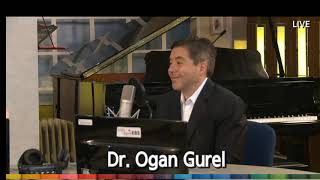
Dr. Ogan Gurel, a Harvard-trained physician-scientist, has worked across Samsung's health-tech division and now leads a startup called Novum Waves exploring terahertz medicine, which uses vibrating proteins to detect disease without invasive procedures. He teaches innovation, wrote a novel about biotech ethics, and maintains productivity through walking meetings and rowing.
Chapters
Living a Life in Full is a conversation you always want to have with that person who gave an amazing TED Talk or the author of one of your favorite books, or that inspirational Olympian you always wanted to know more about. It's graduate level conversations with those making a difference in the world and in the lives of others. This show brings you new ideas and approaches so that you can live a life in full. I'm your host, Dr. Chris Stout and I hope you enjoy this episode. This episode of Living a Life in Full is brought to you by ATI Physical Therapy. If you need physical therapy, choose ati. ATI offers exceptional care, trusted expertise and remarkable outcomes customized to your needs. ATI has over 800 clinics coast to coast in 25 states. We want to start feeling better fast. ATI can help address chronic pain or recovery from an injury or surgery expertly, quickly and conveniently. ATI's first program uses a performance based methodology to safely return injured workers to their workplace. FIRST is designed to increase strength, endurance and cardiovascular functioning. ATI's sports medicine provides athletic training services to help athletes get back in the game. ATI has hundreds of professional collegiate, high school, middle school and club relationships nationwide. ATI also offers a variety of specialty services including home health, hand therapy and women's health. To Learn more about ATI's advances in evidence based practice, clinical outcomes and their innovative new smartphone app, please visit atipt. Welcome to another episode of Living a Life in Full. I'm your host, Dr. Chris Stout. I'm thrilled to have Ogon Gorell on our show today. Ogan is a true Renaissance man. He's Harvard trained and Columbia ripened IV infested polymath and polyglot. Let me just share a snippet of his biography. He's Vice Chair and Distinguished Invited professor in Management of Innovation at Digist and Founder and CEO of Novum Waves, a new venture Advanc Biomedical Terahertz Applications, which we'll do a deep dive into. Additionally, he has academic appointments as an Honorary Fellow at the University of Melbourne and Visiting professor at Laba in Italy. He also serves as Chair of the advisory board for Posture360 in Seoul, Korea and has held many advisory and Chief Medical Officer positions at startups over the years and honestly, I really suspect that his passport is worn out. But wait, there's more. Ogan has held various C Suite and directorship positions in technology and information and has over 30 years experience in healthcare including biomedical science, clinical medicine, strategy consulting, Business development, Executive Management, marketing and research and development. Ogan, welcome it's so great to have you on.
So thank you very much, Chris.
You bet. You bet. So first, I think we met via your kind invitation. Invitation. You had a Harvard alum program called Ion Harvard while you were based in Chicago. And I had a new book out and you were very kind and gracious to help help plug that. So I. I really appreciate it. And. And gosh, was that. Was that like 10 years ago? Could that be? That just doesn't. Doesn't seem possible.
It's. It's about 10 years. That's right.
Unbelievable. Well, and honestly to the audience, my introduction really doesn't do justice to your various. What I think of as superp. Please do. Let's start off. Let's speak to your origin story. Does it include Krypton? Because I kind of think you're a superhero.
Well, thanks again, Chris. Honor and pleasure. Always enjoyed following your career and all the great things you're doing over the past 10 years. So it's great to be back together. And then you mentioned Krypton, so I assume you're referring to Kryptonite, Superman's weakness. I guess one of my weaknesses, namely not thinking I've done enough, may serve as a kind of push to accomplish more. But if you mean Krypton, as in the element atomic number 36, interestingly enough, that actually did figure once in life. That's a long scientific story.
Of course it did.
There is a Krypton, maybe not Kryptonite. The Krypton connection, that's.
That is very, very cool. So you have. You've really lived all over the world. Can you kind of run us through the litany of kind of where and when and what you were up to?
Well, I grew up in the US on the East Coast, New York City, and then went to school in Boston. But with my family, we would travel every summer to Europe. They were in the scientific field and they would attend scientific conferences and, you know, bring the children along. And then we would finish the summer in Turkey visiting relatives. So that was a large part of my childhood, traveling around a lot. And then between college and medical school, I did work at the Institut Langevin the Ill in France in Grenoble. Beautiful place at the base of the French Alps. I also did some consulting work after residency in Germany in Kiel, the very northern part of Germany, and then now in Korea for the past seven. Over seven.
Wow.
Been around and obviously traveled and so forth. Conferences and other engagements.
Yeah. I have to say you have one of the most impressive and creatively put together CVs that I think I've ever seen. It's just. It's really amazing. So seven years in Korea, does that make Korea home base then?
Yeah, essentially. So actually it turns out two places we have a home in Seoul or just south of Seoul and also here in Daegu at digis at the institute. DIGIS stands for Daegu Gyeongbok Institute of Science and Technology, one of the four Science and Technology Institute, National Science and Technology Institute in Korea.
Gotcha. So what brought you to Korea in the first place seven years ago?
Well, I came actually director, we call that position of Bujang in Korean at the Samsung Electronics CTO office in the Samsung Advanced Institute of Technology site, the central corporate research lab of Samsung. And at that time the chairman of Samsung, Yi Kan Yi, had announced that the company was going to move aggressively into healthcare. Actually this is more like nine years ago and as part of new business and new innovation etc. And so they were recruiting people for the healthcare and obviously my background in medicine and also generally, but I also had my own ideas in protein electrodynamics which I'm looking forward to talking about and what I also call terahertz medicine, which is to put it in very overview terms, general terms, it is a form of bioelectronics. I thought it would be a great combination to make the move to Samsung, a bioelectronics company moving into healthcare, try to bring a very radical new idea to medicine and healthcare.
Great.
Well, yeah, that's the beginning.
We are definitely going to be circling back to the terahertz medicine concepts and things and, and deconstruct that. So you know, Korea tends to be sort of a in the news a lot. I have an upcoming guest that is kind of an expert. He's an Oxford PhD in Asian studies. And so I hear from him a lot about kind of what's going on. But you're kind of, you know, there in ensconce seven years you've seen kind of a history of things and change. So what are the greatest challenges and or advantages for being based out of Korea?
Well, generally speaking, Korea is fabulous. I mean we really kind of, or should I say got really part of the society here. There's lots of culture, it's a very safe country, notwithstanding the neighbors to the north, which I'll comment on a little later. But you know, there's no crime or very little crime. Our daughter who graduated now got a great international education. The health care system is outstanding. Public transportation is incredible and not just the subways and the city in Seoul and the buses. But the ktx, the high speed rail and all that infrastructure is great. And the Internet, a lot of good things.
It's been a million years. I was in Seoul, gosh, I bet in the early 90s. And just, you know, at that point in time, tech was very different and whatnot, of course, but, you know, I was just very impressed by it and just the friendliness of people and just similar to what you were saying, you just feel very comfortable. And even though to me it was a very new kind of place, I felt, you know, very at home there. So I could, you know, certainly see that your experiences are really kind of spot on to, you know, my. My little sample of what that was like.
So.
So currently.
Yeah, there are, there are. I mean, I was going to just quickly say, if you haven't been here since the early 1990s, it'd be very cool if you did it. Be happy to host you, of course, and be like a dramatically, totally different situation, obviously.
Well, I will take you up on that. Yeah, I just. We should have done the show there, so that would have been a lot more fun.
I have a moment. I can tell you a very quick anecdote on how dynamic the society is.
Oh, yeah, absolutely.
Yeah. My family. So we. This was our first few months there and we took a bus into the city and we were going to some restaurants or excursions or something. And the way the buses work, they're not like in the States, they go in circles. They don't go one side of the road, and then the other side of the road, they kind of go in a big circle. So if you want to take the bus back, you basically get on at the stop you got off, go back around. Right. I mean, some of the buses go in parallel Western style. These express buses go in these circles. Anyway, in order to make sure that we got to the stop, we wanted to identify some landmark and that would give us the clue to where we would pick up the bus. So I look around the sign for a bank and I think, well, banks are pretty permanent or semi permanent. It shouldn't disappear because it's very dynamic, incredibly dynamic society. So we come back to this stop about three hours later and I don't see the bank sign. And luckily I saw it on the ground and they were like fixing it and putting up another.
In three hours.
In three hours, exactly.
Oh, man. Wow, that is quite the. Accelerated change.
Exactly. Accelerated change. So if you multiply that by what,
a couple of decades.
Anyway, but we were lucky and we got back final boat.
That's great. So career wise. So you're currently on faculty at digist. Am I pronouncing that correctly?
Okay, a little bit easier than Daegu Kyung Buk. You're not kidding.
So I'm going to be calling it the D school. Probably making it even, you know, more idiot proof for me. So it sounds, from the little bit that I know about it, it sounds like a very interesting institution. Tell us about what you're doing.
Well, DIGIS is one of the four national science and technology institutes in Korea. You and some of the other listeners may have heard of kaist, for example, KAIST was the original one, the first one. It's the most famous.
Sure.
KAIST stands for Korea Advanced Institute of Science and Technology. And in fact, KAIST was in the news just a couple of weeks ago. Apparently KAIST is very famous for robotics digits. We have robots as well, robotic research. And there was this announcement that KAIST was going to be developing military robots and there was a big uproar in the Internet and the scientists were saying, we're going to boycott kaist, we're not going to partner with them, we're not going to collaborate because they were gearing up their research for military purpose.
Wow.
But anyway, that's kaist and Korea is actually very advanced in robotics and KAIST is one of them. Digist, where I am, is one of the four National Science and Technology Institute. It's actually the newest one, perhaps not as well known, originally legislated in 2004, now has about 175 faculty, 750 undergraduates and about 500 graduates. Students. What's very special about digis, it's a true convergence university. What we mean by that is the undergraduates, for example, don't have any majors. They base Science and technology degrees. And there's no physics. There is physics, but there's no physics degree. There's no chemistry degree. These classical departments don't exist at the graduate level. We do have departments, but they are not among the classical disciplines. We have Department of Emerging Materials, Information Communications Engineering, New Biology, Brain and Cognitive Sciences, Robotic Engineering and Energy Science and Engineering.
Wow.
And so it's really a convergence university. And the Management of Innovation program, which I'm in, is converging between all of those.
That sounds like a perfect spot for you. Are they what would be analogous to bachelor's degrees OR Master's or PhD?
Yeah, these are bachelor's degrees at the undergraduate. But again, it wouldn't Be a bachelor's in physics or it wouldn't be a bachelor's in chemistry, it would be a science and technology bachelor's.
That's great. I like the integration.
Yeah. So I actually teach two courses. One is technology marketing, graduate students and the other one is fundamentals of innovation. And that's a convergence course. We go over biology, history of innovation, ancient world, renaissance, You know, da Vinci, biology of innovation, the geopolitics, the culture, science and art. So that's a fun course.
I can't imagine anyone better than you to teach that. I mean, you bring such a background of history as well as current, as well as forecasting and what the future holds. So speaking of that, I've also seen in doing background research for our conversation today that you've been referred to as a medical futurist.
What?
What does that mean,
medical futurist. A futurist, yes. Well, it's interesting. When I was doing a lot of consulting in Chicago, I actually was working with a company called SC2, which was a boutique consultancy around future of healthcare. And I developed a system, a differential equation system that mapped out the influence of technology and healthcare utilization. Technical there. The point is, how can we strategize and map out things for the future in a systematic way? That really started me on this concept of how can we imagine the future as rigorously as possible? So healthcare futurist is someone, I mean, that's not my main kind of role to do and I've consulted on, obviously is someone who imagines what the future will be in healthcare, what the implications specifically of that would be on how healthcare is practiced, how do we strategize for those changes, how do we hospital, how do we implement policies and so forth.
Got you.
That's healthcare futurism.
Yeah, I could imagine too that that is very similar to the kind of with the courses you're teaching and things like that, with innovation and technology, marketing and whatnot. So that again, that makes perfect sense to me. So I want to shift gears a little bit and we'll circle back to career kinds of things. But for a quick aside, and I guess it is an overlap, you did something called a walk for health care and it was really sort of like an ultra for walkers. Right. Or take us to what that was about.
Well, it was less about the athleticism, if you will, although I did get in very good shape and more about sort of the, How should I say, healthcare reform and healthcare understanding from a societal perspective. So this was actually back in 2009, I was in the US at that time. And I was following, as many people know, the development of healthcare reform very closely. That, as you know, came to be known over time as Obamacare. And I remember President Obama announcing that he invited top health experts to the White House to give their opinions on health care reform. Actually a little bit before the various town hall committees, these quote, unquote experts. And when I say quote unquote, I'm not discounting they're not experts. But the point was these were industry leaders. What struck me as a doctor whose training is to serve the patient is where are the people? In other words, where was the voice of the people? And so the purpose of Walk, which was from Chicago to Washington D.C. so about 700 miles, was to do just that, to get the stories from real people. And eventually. So it was about 24 miles a day, basically a marathon a day. Well, not running, just walking.
Right.
I've walked for eight, 10 hours, but I had huge blisters. Oh, you know, it was not so easy. But getting those stories was a real motivation. Got about 150 of them. I arrived in D.C. and these stories actually ended up being published.
Wow.
Stories from Illinois, Indiana, Ohio, Pennsylvania, West Virginia, Maryland.
Gosh. So was it just like man on the street kind of thing? Or how did you get the. How did you pick the people that you interviewed?
So I would just be people on the street. I had my backpack and the flag and then, you know, I wasn't sleeping on the bridges and stuff because I would send out reports. I had a big bag that would be sent ahead of me to some hotel or whatever. Some hotel days in the usual one. And we had a team in Chicago kind of organizing that logistics so they get the hotel room. And a lot of these hotels would do it when they heard the story, free or complimentary. So it was really a very team effort, if you will. And then just interviewing people on the street, interviewing people at the hotels, going into restaurants, you know, I get the breakfast and lunch and so forth and interview people there. And what was interesting is I had, I had thought I would get a lot of stories of people who were uninsured, which I did. But I also got a lot of very difficult stories from people who did have insurance. The complexities of it, the inadequacies of, Was all around very dysfunctional system. What was also interesting about the walk is there was a fair bit of local media coverage, but I found that the journalists and the, this is an interesting, should I say, critique on the current situation we have in the United States. I found that the journalists, if I was interviewing them, they really wanted me to take a position. They're like, okay, doctor, what do you say? What is your opinion? And I really didn't. That was not the purpose of the walk. In fact, I felt like I was just a conduit to these stories.
Sure.
And I expressly did not have a position. And the fact that I did not have a position seemed to suddenly disinterest these reporters and journalists. And I'm not being critical of journalism, I think it's a very difficult profession and there's a great deal of professionalism associated. But in this particular case, I noticed that if I was not partisan, if I was not polarized somehow, it wasn't interesting.
Wow.
And I noticed this. This was in 2009. Right. And now I think it's exactly. We're getting a lot of that. Like it's almost somehow if you're very. Get your 15 minutes of fame and if you're just trying to do the right thing and trying to get the facts out somehow, that's not interesting.
Yeah, yeah.
Controversial point, but I noticed that.
Yeah, yeah. I think you're spot on with that. So. Well, gosh. What, what an experience. I mean, both intellectually and physically and, and advocacy wise. I mean, that's. That just that. That's amazing. How, how long did that take?
That was exactly a month. Gosh, 30 days.
You were that man. That's, that's quite a, quite a bucket list kind of experience, my friend. That's really amazing. So let me, let me circle back to academic life. So you've, you've really, again, back to your cv. You've. You've taught everything from neuroanatomy and cellular and molecular biology to mathematical models. And it sounds like, you know, the stuff that you were doing with SG2 and things like that. So how does that happen? How, how does someone synthetic and integrative in not just their thinking, but also in their application and in their teaching and in their work and career?
Well, I really love teaching, first of all. Basically, I really like to learn. I had this quote that I shared with my students in my innovation class, which I found recently, but I just think it's great. Ancora imparo. What Michelangelo said. And it means in Italian, always learning. And I think they say, I don't know what the phrase is. See one, do one, teach one.
Right, right.
And somehow the best way to learn ultimately is teach it. You can't explain it clearly in my book, then you don't really understand it. And so teaching really forces me to learn it. And I also really love the transformation in students and participants and not just young students. I do a lot of teaching to professionals and executives and so forth. But I like to transition. Transformation that I see. One of my favorite paintings is a Paul Klee painting. Let me look at this on the Internet. Paul Klee. It's like one who understands. And it's an incredible painting. Yeah, One who understands it. That's a Metropolitan Museum. And it captures the look on the face of someone who just kind of hard to describe. That's why paintings are better than words. It captures that look on someone who understands. It's a very satisfying thing for a teacher. So I really like teaching also, you know, it's part of something very fundamental to being a doctor. The origin of the word doctor actually comes from the Latin word docera, which means teach. And we often talk about doctors being very technical. Okay. They operate, they diagnose, they prescribe, and all of these are important elements of medical practice. But fundamentally, from the time of Hippocrates, it's really understanding the disease process, understanding how to be healthy and transmitting that to the patient, as well as, of course, the whole academic framework. The teaching and learning has been very integral.
Yeah, I can certainly see the overlap. That's a really good point. You know, vis a vis being a physician and applying that with working with your patients too. So you also, you teach a course called the Mini md. What's that about?
Yeah, the Mini md. That's a fun course. Well, it's very intense.
I bet. Did you post recently you posted something about one of your exams. Was that for the Mini MD course or was that for a different course?
That exam that I posted on Facebook was the Innovation course.
Okay.
The Mini MD is a comprehensive, immersive, two day overview of all of medicine.
Wow.
Mainly for healthcare professionals. So healthcare lawyers, healthcare investors, venture capitalists, healthcare executives, biopharma executives, architects, scientists and engineers in healthcare. In other words, not for doctors and medical professionals, but for healthcare professionals medically trained.
I see.
I've taught it all around the world, in Korea, in Singapore, New Zealand, in Australia, the United States and Europe. But it's in a professional public setting, affiliation with various partners, as well as in house corporate versions, the health care companies, insurance companies and so forth. So it's a two day overview of all of medicine. And you know, I was mentioning about this transformation of the student participant, and it's a very intense course. It's eight hours a day, kind of like the Walk for healthcare.
Yeah, right. Marathon. Ish.
It just motors through everything. I mean, I sprinkle with anecdotes and stories and all that. So actually, believe it or not, participants are really staying within and engaged. But I really like to see around the time of the second day, the first, second day, the participants are really thinking like doctors. They're not going to be trained and licensed to do neurosurgery in the kitchen, but they're really starting to think like doctors. And it's just such a cool transformation like that, and they get very excited. And I've kept in touch with many of the participants, started to implement some of these things, really advancing their work and their own careers.
That's great.
That's been a great experience.
I bet. I bet it's. But it's grueling to take, but engaging. But I bet it's fun for you to teach as well, right?
Yes, it's very, very intense. But, you know, like they say in marketing, the medium is the message. So doctors work very hard. Medical students, obviously, studying for seven, and that kind of whole environment and mindset. So this is not just a knowledge dump. It's also a whole experience. So we do not dissect. We do not dissect the cadet.
That's good. I wonder how. Where do you draw the line? So that, that's.
I do make a joke. I said, do we have any volunteers? And it kind of wakes everybody up.
Yeah. Oh, that's good. That's good. So now here's. Here's something that. Well, I should say this. Like, I actually, I. I know a person that is on faculty at Northwestern here in Chicago that did part of their undergrad was like, as a music major in violin. But I know also from your Resume that in 2016 you were president of a music company. So tell us about that. Unpack that for us.
Yeah. This is a camarado music company based in Korea. It's the largest expat Korean music company in Korea. In fact, it's one of the largest, if not in the world, that combines expats and Koreans in a choir of over 100 people. And then they also have a semi professional group of chamber singers. My wife Ina was also a board member, but is the first soprano for that chamber singer. So it's. And she's still singing. I just got very busy and moving to digits and so forth, so I couldn't continuous president. But We've had over 70 nations represented since its founding in 2009. They perform classical music at the highest artistic Level, thousands of appreciative listeners. We performed for ambassadors, for the president of Korea. Who knows, when this. If this North Korean situation somehow resolves itself, maybe we can be involved in that kind of rapprochement. Wow. So ultimately, the mission of Camarada Music Company is to bring global community together, particularly in Korea, through the universal language of music.
That's beautiful. It's like musical diplomacy, I suppose, huh? I mean, that's. That's just fantastic.
That's right. Yeah.
Wow. Well, and I should also mention this and everything else that we will talk about. We'll also get a. An image of the artist that you mentioned before from the Met and all of our show notes. So all these kinds of things, if people want to, you know, go learn more about them or do a deeper dive, we'll. We'll get those all put together in the show notes. So I also know that you're. You've kind of rolled up your sleeves and have really focused a lot of your efforts and time into a new startup, Novum Waves. So what does that company do and what's your involvement with it?
Well, Nova Waves is part of a larger effort that I've been working on for nearly 30 years, or over 30 years, actually, since I worked in Martin Karpeless research group back when I was an undergraduate at Harvard. Martin Karpeles actually got a Nobel Prize a few years back in 2013. He's one of the pioneers in what's called protein dynamics and Novum Waves. And the work that I've been doing in relation to that research work, startup, et cetera, is an effort to bring to reality what I call protein electrodynamics, terahertz medicine. As I mentioned, Martin Karpless was a pioneer or is a pioneer in protein dynamics and protein electrodynamics. And terahertz medicine is the next expression of that. So
the terahertz medicine is sort of like a. Is that something that you guys have coined or is that something that's based upon this kind of work or tell us a little bit more about that?
Yeah, so this is actually area that a lot of people have been working on in various ways. The term protein electrodynamics and terahertz medicine per se, I think is fairly specific, but certain aspects of this as lots of researchers working on it. So, for example, it begins, as I mentioned, with protein dynamics. Proteins are the machinery of life. They are the targets of drugs. They are how, you know, we live and so forth. And these proteins are vibrating. Actually, they're not Static, fixed molecules, protein dynamics. And there's lots of research in this area over the past 40 years or so. We also know positive and negative in dipoles, and we also know that vibrating charges in dipoles, positive and negative, will emit and absorb electromagnetic radiation. This is basically laws of physics. That's how radios work, that's how smartphones work, and so forth. So therefore, if you put 1, 2 and 3 together, proteins, vibrating proteins have charges. Charges emit and absorb radiation. Therefore, proteins must emit and absorb electromagnetic radiation. Electromagnetic radiation. So I call this protein electrodynamic. That means that these proteins are like radios. These little molecules are like radios. Radios can be detected at a distance, they can be modulated, and proteins can be detected and modulated. If you can detect the proteins from a distance, that's a new form of diagnosis. If you can modulate them or change their sort of activity from a distance, that's a new form of therapy. And it turns out that these vibrations lie in what's called a terahertz range, which is between the infrared and the microwave, which are fairly familiar. Terahertz is a new frontier in electromagnetic physics in general. So that's another area where lots of people are working on. And so you put this all together and that leads to, to what I call terahertz medicine.
I see. Wow. So.
So it's a little bit.
Yeah, go ahead, go ahead.
Yeah. I mean, just to summarize, protein dynamics, which is a fact, as I mentioned, Martin Karpeles and others, leads to protein electrodynamics, and protein electrodynamics leads to terahertz.
Got it. Are there, is it too soon to tell? Are there certain kinds of diagnoses or problems that this might be, you know, targeted for in terms of diagnostics or therapeutics?
Yeah, there's been research done. Things like skin diagnosis for melanoma with dental caries, tooth cavities with things in the eye. I've done research with cancer and Alzheimer's, albeit in pathology specimens, but I don't want to get too technical, but there are various reasons why it's still a little bit early to have a lot of these applications going from the bench to the bedside right away.
Gotcha.
But this is, as I mentioned, a 30 year process and still ongoing. It's not, you know, a quickie, Develop an app and get it out next month.
Yeah, that is certainly not how healthcare and medicine works. So. Yeah, that's right.
In general, that's correct.
Yeah.
So, but
I'm sorry. So as a parallel to that, Then I also know that you're a novelist, you're an author, and one of your books is called Waves. Is there a connection here with Novum Waves and a book with the title Waves?
Yeah, well, actually, Waves is what you call the literary embodiment of the protein electrodynamics. Now, you might say, well, okay, that's going to be a boring. Because, you know, this guy Gorell may think that proteins are really exciting, but generally drama and whatnot is not based on that kind of stuff.
But
remember I said that if you can electromagnetically influence these proteins for therapeutic reasons, which is my goal, be done for military. So if you turn on and off a protein, you know, to cure a cancer or whatever, you could also do it, to be blunt, to kill people.
Hence the plot.
Plot. So you see where this is going.
Yeah.
And in fact, you know, I don't want to reveal a lot of stuff, but there are certain three letter agencies that are, in fact, working on that.
Wow.
And so there's a whole drama around this kind of tug of war, if you will, between trying to bring it to the medical and the military, and it becomes very geopolitical.
Wow.
It's actually a pretty intense story. And then it's not just entertainment. Like any. Any technology has good positive and negative side. And I'm not necessarily saying good and evil. You know, military purposes can serve a positive purpose, sure, depending on the context and whatnot. But the point is there are two sides to technology. And so there's a whole ethical and philosophical aspect to the book as well. Yeah, I think it's very important, you know, that there are two schools of thought that scientists shouldn't be involved in. The ethics, just do the science. And another school of thought that scientists should be engaged. I'm in the second camp. You know, Albert Einstein was very famous for this. You know, he wrote to President Roosevelt, and actually that was a catalyst for the atomic bomb. But he was also very much involved in. Another sort of ethical and political thing. I think it's very important.
Yeah, I think you're spot on. It's. You know, there's. There are tools out there, and tools can be used for, you know, nefarious, bad purposes and can be used for helpful things and building things. And you think of physicians for social responsibility or scientists for social responsibility, and, you know, the whole, you know, trying to figure out, you know, those kinds of tools and things, you know, the skunk works and the Manhattan Projects, you know, histories and. And postscripts of the scientists that felt like building sort Of, I don't know, ecumenical, all encompassing kinds of things. But it really does depend upon the political and the governmental and the social kinds of uses for good or for evil. So I'm not surprised that that would be also kind of an undertone or the, the moral story of what your book would be. And we'll also put, we won't have any spoilers to the book or anything, but we'll put in some links to Amazon and things, so if people are interested in them, we'll be able to get their own copy and take a look at these kinds of things from your perspective as a novelist as well. I think that's really cool. I guess it takes me.
If I just read the first line, I think it exemplifies what we just mentioned.
Oh, that would be great. Yeah, please. No, no, please do. That would be awesome.
So I'm not going to do an extensive reading, don't worry. But the very first sentence of the book, in chapter one, there's a prologue, but in chapter one, the first sentence writes impatient Thomas. Thomas is the protagonist, downshifted the Ford, hoping the underpowered rental would cough up more torque. So I don't know how many of the listeners or if you've done a stick shift manual, but when you downshift on a stick shift, it actually accomplishes one of two things. You can downshift to either slow down or you can even downshift to accelerate. And it depends on your intention. And that's downshifting is the gear. That's a piece of technology, but you can actually do the totally opposite motion depending on what you want to do. So I basically, by the third sentence. By the third word in the first sentence and emphasize.
I love that. That's so great. You are a man of many talents, my friend. So I guess all this kind of leads me to ask maybe the obvious question. You are amazingly productive. I mean, you know, Harvard and Columbia and Maryland and masters of philosophy and teaching all over the world and undergraduates, graduates, professionals on boards, on startups, time to write novels, raise a family. Your productivity, you know, is just really amazing. And it's not just, you know, quantity, it's also quality. I mean, just even the way you described and deconstructed the thought process about the. Your first sentence from the novel. But what's your secret? How do you do it all?
Well, first of all, I should say that, you know, not all of it is success story. There's ups and downs, sure, there's dead ends, there's sort of slow parts and frustrating parts. So you're very grateful to talk about it in very positive way and I appreciate that and I'm very fortunate to have accomplished that Few things. Still a lot more to go, of course, but by and large it just tried to keep pushing forward. There were experiences in my life that I think were very formative in terms of characteristics of not giving up or persistence, perseverance, or always trying to do something different. So I remember a lot of sports experiences when I was a kid crew rowing in Harvard. All of these have led to kind of not giving up or persistence or even surgical internship training. So I relax though. I go on a lot of walks. It's funny, when I was sometimes, you know, walking is not associated with working, but when I was at Samsung, I go for a lot of walks. People would say, well, you're not working. But actually I was thinking a lot and strategizing.
Yeah, I think that that is, that's actually the, the whole walking and thinking has become, you know, quite, I think, much more respectable these days, you know, that people appreciate the aspect of, you know, creativity. I know like a lot of times people do what they call walking meetings, you know, it'll be a, A. Yeah, exactly.
I would go, I'm walking meetings. And for my innovation class, I've been reading some biographies. Actually you were asking about productivity because I live in Seoul and I work in Daegu. It's about a three hour drive. I listen to Audible books during that time. And so I'm listening to these books, biographies of Leonardo da Vinci, Albert Einstein. And now I'm listening to reading, listening too. Steve Jobs. These are the Walter Isaacson. Oh, and they all, all of these great people were doing, you know, lots of walks. All of them, all three of them. And so I've been doing a lot of that and I'm not equating myself with fam, but I just say, wow, that makes a lot of. You know, I feel a little bit validated because I've had bosses in the past, you know, why are you going for these walks? You know, not working. So I do that. And as I mentioned, you were mentioning about productivity. I really try to do some downtime or other time like the driving that I mentioned and put in a few things into language tapes, books. I think it's like a piece of music. You want to also have the rest period, lower periods. They're actually part of the productivity, believe it or not.
Yeah, that's right. Yeah. The music is what happens between the notes. Right. That's the thing that goes so with that. And I feel like this is probably a silly question, but is there such a thing for you as a typical week? I mean, I know that there's, you know, different demands and different things and different challenges, you know, from time to time, and they ebb and flow. Probably, like you were saying, to have those rests in between. But is there such a thing for a typical week? And if so, what's it look like? Or what's a. What's a general theme that gets varied from.
Well, you know, when I've had the industry, work jobs, I've had work, hospital as a resident, and now it's an academic context or each position kind of has a different structure. So over my lifetime, I don't think there's ever been a typical week. So depending on what I'm doing, there's a certain typical week. So I try to do my teaching on Wednesdays and Thursdays because I'll maybe have some business trips or other meetings that I'll have on Monday, Tuesday and Friday. So Wednesday and Thursday is very intense. I'm teaching basically morning and afternoon. And then Monday, Tuesday and Friday, I'll try to do other things with meetings or writing in between, I'll go on walks and go on the rowing machine. So I know about typical week, but it just depends on the structure of the context that I'm in.
Gotcha. So rowing back from crew and Harvard. And do you still like. Is that kind of like your favorite workout between walks and rowing or how do you keep fit?
Oh, yeah, I'll mention something. I always try to. You mentioned about productivity. I always try to combine things. So when I walk, I actually walk with weights.
Oh.
So I'm actually doing a little bit of. So I have like 2 kilogram dumbbells in each hand. Then I'll have my Bluetooth headphones that I listen to lectures or I listen to the biographies, as I mentioned, or just music and study. So I'm kind of combining things. So you asked, you know, what's your favorite workout? Well, I'm like walking, but I'm also even lifting weights. So if you're walking, you know, 5,000 sticks, doing 5,000 curls, two kilograms. Yeah, it's a good exercise.
Yeah, no kidding.
So I like going on the rowing machine. It's a big discipline. It brings back memories of college and all that kind of stuff. Kind of puts me in that groove, if you will. Because one thing about exercise is makes you feel younger. So rowing kind of puts me back in the thick of things when I Was racing at a fairly elite level. Harbor crew. It's not just the physical, if you will, it's also the mental discipline in life. And that was a great experience. You were asking about productivity and things like that. I mean, when I was in college, to be affiliated with Olympic Rowers, National Team rowers was just an incredible. You learn about dedication from that. I mean, one of my coaches was Bruce Bell, who was on the Olympic quad.
Wow.
He wrote a recommendation for medical school and he said, ogon is very dedicated. And I was. It was funny because, you know, by him saying that, that just told me I needed to be dedicated. Yeah, I don't know if I was dedicated, but after he wrote that recommendation, I said to myself, well, I must be. I have to be dedicated.
Yeah, fulfill this.
Yeah, fulfill this. Exactly. So if an Olympic, Olympic oarsman says you're dedicated, then, you know, you have to be dedicated.
You gotta be dead. That's who I am. Oh, that's good. Very, very, very psychologically adept and therapeutic. So that's. That's good. So, yeah, so with. I mean, maybe I would argue with you. I think, you know, you're quite accomplished and I know that, you know, dead ends and wrong turns can, you know, are kind of what pave the road to being successful and being. To accomplish. Being able to accomplish the kinds of things that you've done. What's next? What. What haven't you done that, that you want to do? Is there a. Is there a bucket list that you have?
Well, I, I do want to really move this terahertz medicine forward. I think that will be a life work, quite frankly. I think I will probably the do it until the day I die. It's not going to be finished simply because it's really the future of medicine. It's like just imagine that you can diagnose without. Well, I don't want to get into technical things, but basically diagnose not just that something is there, like a spot on an X ray, but also what biological function and meaning it, but also not just detect that spot, if you will, and what it is logically, pathologically, but also even treat it at a distance instead of using drugs or surgery. And the reason I think it's the future of medicine is it's actually as a futurist and one of my jobs, Thompson CTO office, was actually to predict future technologies colleagues. There are actually fairly predictable patterns of future technology. Believe it or not, it's almost easy to predict the future. For example, we have this situation with North Korea. Right. We are not worried about their knives and their fists. We are worried about the nuclear weapons. Right. Well, technology progresses from more powerful to further away to faster. In other words, short range missiles, long range missiles and so forth. So landlines progress to one wireless. So there are certain patterns of evolution of technology. And for thousands, when it comes to medicine, for thousands of years, we've had a paradigm, what I call matter on matter. A drug which is a matter piece of substance must bind to its target, namely the protein. Hence matter on matter. We've been doing that for thousands of years. People, you know, started to scratch things from tree bark and other, you know, medicinal plants. The future will be some form of energy on matter interaction where instead of, you know, eating something, injecting something to have that effect, we have some sort of energy ray. If you sound science fiction, it is to, to exert the same effect. So the question is, when will that happen? Will it happen a thousand years from now, 100 years from now, 10 years? And what kind of energy will that be? So I think because proteins are the target, the energies have to be related to the energies of proteins that I described. And when it will happen, that's kind of my life mission, to make it happen sooner rather than later. And in fact, for anyone who's gone through the airport and raised their arms in those millimeter waves, that's actually a form of this technology, millimeter wave is slightly lower energy than terahertz. So when you raise your arms in those machines, I'm not talking about the magnetometers, metal, we are actually naturally emitting these millimeter waves of terahertz. We're made of proteins. Right.
Wow.
But the gun concealed or the knife that's concealed is made of metal made of protein, but it's not going to emit that. So they can tell from the contrast between the living and the non living what you have. So actually these airports, a very primitive form of what we have in mind on the medical side. Wow.
That. Thank you. That's a very clear, concrete, helpful understanding of that. That's, that's fascinating. Wow. So with all the various things that you do, do you have something that's in particular and maybe it's. You've just answered this question, but what do you enjoy the most? I mean, is it, is it novum waves in this work or a combination of things? What's. What gives you the most joy?
I like doing interviews like this.
Same.
Did I tell you that one of my things on the bucket list is someday, I think that's very cool.
To do what? Say that again.
To be a diplomat.
Oh, okay. Very okay.
Yeah, yeah. But that's a little bit unrelated anyway. It is related to the extent that what. What makes me happy is, or what I enjoy doing, I should say, is kind of bridging things. I like really connecting dots. That's kind of the essence of innovation where you bring two different fields together. I mean, the whole essence of this protein, electrodynamics, terahertz, medicine, which makes it very difficult. What I think is innovative about it is combining very hardcore biology with pretty advanced physics, putting those together and you get this. And being a diplomat is kind of like that too. You're bridging different cultures. So I like that bridge, if you will.
Yeah, yeah.
If you look at. If you look at my LinkedIn profile, you'll see the COVID picture, the picture in the background. There's actually a bridge there. And the reason for that bridge is I like to do the bridging. And that bridge is not any bridge. That bridge happens to. To be the one over the Bosphorus in Istanbul, which, as you know, bridges Europe and Asia. And my family is originally from.
Perfect. Yeah.
So I really like that concept of, you know, bridging between cultures. That's sort of this concept of the Camarado music company bridging between scientific fields, which is the protein dynamics. I love the teaching, which in effect is a bridge between my knowledge and your student knowledge and bridging that. So I like doing that.
Yeah. It's certainly emblematic of who I see you as a person and your work. So from this. Have you had a mentor or do you have a mentor who's inspired you?
Well, I've really been fortunate to work with or be inspired by many really great people. I could go on for a long time. There are a few people that have been particularly inspiring. One of them is Martin Karpeles, who I mentioned. Interesting story with him. This is in 1985 and I was looking for a lab to do senior thesis and I had done a lot of computer stuff and I was also studying chemistry and I just thought it would be cool to apply computers to biochemistry. And he was doing this protein dynamics, molecular modeling. He didn't have a Nobel Prize at that time, but he was very famous. And he didn't take any undergraduate. He barely even had graduate students. Lab was so cutting edge. It was postdocs. And I went to him and I said, I would like to do my senior thesis. And he said, no, don't take undergraduate.
Nope.
Well, he was a little bit more diplomatic, but also he happens to be someone who's very man of very few words, very, you know, he lived, blah, blah, blah. So I think he was gracious, but he didn't say many words right at the same time between no and, you know. Anyway, so I went a second time and he reiterated the. That it would not be possible. Then I went the third time, me in the research group. And that was a great, incredible experience. I actually presented this idea at his Nobel celebration symposium in 2014. And I asked him what's his opinion. He said, well, if it works, it would be very significant. Gave a couple suggestions.
Oh, wow.
It's kind of a continuation of what he started.
That's fantastic.
So another mentor would be Derek Bock. He was the president of Harvard when I was an undergraduate there. I never met him personally, but I saw him two times. They both made an impression on me. One of them was there was this beat up car being driven around in Harvard Square early Sunday morning. Cars out there. And I saw this car driving and I looked inside and I was like, is that Derek Bach, the president of Harvard? And I was very impressed by that because, you know, we. Well, first of all, this is in the 80s and things have gotten a little bit different where materialism is kind of showing off and so forth, cars and houses and whatever. Anyway, I don't want to get into a tangent, but the point is that always stuck with me. Here's the president of Harvard and he's driving his own car and it's a beat up, aimless car through the streets of Harvard. And then the second thing that was interesting is he gave the baccalaureate speech, which is the day before the actual convention. And I remember, you know, we were partying and everything was a day. This is early in the morning and half awake. But I remember him saying, go international back in the days before the word global became more of the parlance. So he said, go international. And I really took that to heart.
No kidding.
Harvard students should go out. And every opportunity that I had, we didn't talk about this, but I also did medical relief work. And that's Macedonia during the NATO campaign in Turkey after the big earthquake in 1999.
Wow.
So I always tried to go international. I never met him personally. Those few words, you know, me and my classmates were all very hungover, who knows what, but somehow they sank in and I really took that to heart. And another mentor was Bruce Bell. I mentioned that he was a Harvard crew coach for the lightweights and lightweight varsity and he was also an Olympian. And it wasn't just him. There were many Olympians in the Harvard Roadhouse. I think he was the one I was closest to. And that was the kind of inspiration of what it meant to be at the absolute pinnacle of excellence. What kind of mindset that was required? And I'm not saying I've achieved that by any means, but it represented a standard that I was aware of. And when you're aware of that, you can asymptotically approach it.
Yeah, well, I think that is. I totally see why these would be impactful mentors that have helped shape who you are today and guided your career and continue to be ever present in your mind in terms of, you know, what you do and what you engage in. So I want to be respectful of your time. I know for. I don't think we said this or I didn't say this at the beginning, but Ogan's been very generous to be doing this in the middle of the night because he is currently in Seoul, Korea, and I am in Chicago. So I want to wrap up with a couple just last question questions. What advice do you have for listeners who are interested in doing the kind of work that you've done or having the kind of career that you have? What advice would you have for those folks?
Well, a large part of my career has been around innovation, so I actually gave three short projects for my innovation students. Around three curiosity, observation, and passion. And I really think curiosity is very key. It's always important to be curious. So easy to just take everything. So in curiosity, I gave a short project to the students, to their undergraduates, to attend a graduate seminar that's kind of going a little bit, pushing boundaries, preferably outside your area of interest, totally unrelated to what you are doing, and to write a short paragraph. The second project was observation, and I told them to take a walk around campus. So spring here is beautiful. And keep an eye out for something interesting, strange and mysterious. And write a short paragraph. So I don't know if you noticed we're friends on Facebook, Chris, but I actually posted a video of this ant trying to dislodge its beetle that's five times its size that it was dragging. It got caught into crack between two bricks. And I'm walking and I saw that. I don't know if you saw that post there.
I haven't seen it yet.
Yeah, it was about a week ago and posted on purpose because I want my students to see it. And I was just fascinated. Is this ant going to be able to pull this beetle out from this literal valley. Imagine yourself. And another ant actually came for a few seconds to help it. It was just fascinating. And he did it. He, like pulled it out. First of all, it was amazing enough. It was amazing enough that he could drag it along the flat ground. This beetle is five times at least his size and width. Right. But it was stuck in this crevice. And even worse, there was a leaf that was also impeding it. And I actually, you know, you could, you know, do your whole life, work around this, like slow down the video and see, you know, what maneuvers did he do? Can we learn from this? It was just incredible observation. And the third one is passion. And I've asked the students to make an innovative suggestion about improving something at the university. Anything physical, infrastructure, policies, educational process, student life. And I told the students I'm going to collect their shorts, suggestions with their names if they choose. And I will actually present these to the president of the university as innovative suggestions coming out of the course.
Wow.
So curiosity, observation and passion.
That's great. The three legs to the stool of making a person better and creating the kind of person and career that I think that you've just become such an inspiration for. Ogan, thank you. So for listeners that have had this wonderful opportunity to kind of eavesdrop in on our conversation and want to learn more about you and your work and your books and things, where are some of the best places for people to go to and looking for that?
Well, I think for my book there's Amazon. The title is Waze. And I'll. I'll send you, Chris, the link.
Okay, we'll put that in the show notes.
You may already have.
Yeah, we'll get that in the show notes for everybody.
And then I think my LinkedIn profile is the best because I include my papers on there, I include the patents, you know, various links and so forth on my LinkedIn profile. That would be easiest.
Great. And people can see your emblematic Bosphorus bridge as well there too.
So that's the bridge, is there? LinkedIn profile.
That's good. Well, we will get that and then all the other mentions of the universities and organizations that you've been a part of. So again, you are such a good friend and you are such a gracious human being. I just so appreciate you making the time to be able to put this together and just to share too, that the audience wouldn't know this, but we had some technical glitches that I think were on my end. And Ogan, you were very patient, and we stepped through, and I think we've had just a wonderful opportunity to catch up. I got to get answers to a lot of questions that I've always kind of been curious about. And again, you continue to be one of my superheroes, and it's just been a pleasure to catch up like this and have you on the show.
Well, it was great, Chris. I mean, I remember our time 10 years ago, and that was really one of the best interviews on that series that I had done. So I appreciate that. And you mentioned coming to Korea in the 1990s. I think it's changed a little. So be happy to host you here.
All right, Well, I will take you up on that, so that sounds great. So thank you again. I hope you can get some rest for your challenging week ahead. But I appreciate the time today and look forward to keeping in closer touch, my friend. Thank you so much for being on.
Thanks a lot, Chris. Thank you. Take care.
Living a Life in Full is a production of Stout Media, a subsidiary of Gordian Knott, llc. Assistant Producer, Gracie Wong Music Dan o' Brien Sam Rude Graphics Larry Newberry Executive producer and host, Dr. Chris Stout to learn more, stop by our website alifeinfull.org for show notes and please recommend us to your friends and leave us a review on itunes. Thanks.
More from Dr.

2025 Mercedes-Benz CLE 450 4Matic Cabrio – Owner’s Views After a Year-and-a-Half as a Daily Driver

The Complete Guide to a Successful Everest Base Camp Trek – Post-Trek Debrief

The Complete Guide to a Successful EBC Trek – Post-Trek Debrief: What I Needed (and What I Didn’t)

What Went Wrong Customizing My New 2026 Porsche Carrera T …and what I did about it!

Coming May 1 At the Intersection of High Performance and Fulfillment: A Conversation with Alisa Cohn

From High Performance to Fulfillment: Lessons in Inner Mastery with Jim Murphy

Coming March 19: From High Performance to Fulfillment: Lessons in Inner Mastery with Jim Murphy

The New Humanitarians Volumes I - III:- Inspiration, Innovation, and Blueprints for Visionaries

The New Humanitarians Volumes I - III:- Inspiration, Innovation, and Blueprints for Visionaries

The New Humanitarians Vol I - III: Inspiration, Innovation, and Blueprints for Visionaries - Forward
