The Aesthetic Technologist: Hussain Almossawi on Art, Design and Creativity
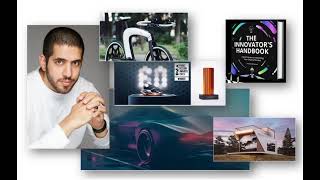
Industrial designer Hussain Almossawi talks about his work with Nike, Adidas, and Ford, and how he approaches design through biomimicry and first-principles thinking. He won first place in the DNA Paris Design Awards for a Lamborghini-inspired shoe concept and wrote The Innovator's Handbook, which includes exercises for aspiring creators.
Chapters
Living a life in full is a conversation you always wanted to have with that person who gave an amazing TED Talk or the author of one of your favorite books, or that inspirational Olympian you always wanted to know more about. It's graduate level conversations with those making a difference in the world and in the lives of others. This show brings you new ideas and approaches so that you can live a life in full. I'm your host, Dr. Chris Stout and I hope you enjoy this episode. This episode is brought to you by the nonprofit I founded, the center for Global Initiatives. The center is an all volunteer organization so there are no salaries and thus all tax deductible donations can go to the work. While our key country partner is in Tanzania, our work is global and generally focused in the areas of education and healthcare. We also help others to get their nonprofits started or augment others project based initiatives. It's our goal to open source humanitarian intervention and to help make it easier for others to do more good in the world. We are proud to have been ranked a great nonprofit every year since 2011 and to have achieved a Platinum level rating by Guidestar Links. In this episode's show, notes will take you to published articles on our outcomes, a number of helpful tools, and downloadable resources which are all free always. Please Visit us at CenterForGlobalInitiatives.org and be sure to watch our video at Patreon.com DrChrisStout to learn more. Thanks welcome to another episode of Living a Life in Full. I'm your host Dr. Chris Stout. How do you become an innovator? What sparks creativity? What goes into creating something that becomes iconic? Instead of predicting the future, what if you could create it? Well, that's pretty much what Hassan Almasami does. He easily walks between digital and physical worlds as he creates futuristic concepts, experiences and objects. Hasan is an award winning industrial designer, CGI visual effects artist and best selling author of the Innovators Handbook. He's worked across industries and around the world consulting for companies such as Nike, Apple, Adidas, EA Sports, intel and Ford Motor Company among others. He's a frequent keynote speaker on innovation and design and has taught at the Parsons School of Design, the New School and other institutions. Born in Bahrain, Hussain became, pardon me, came to the US and received his Bachelor of Fine Arts in Graphic Design from the University of Illinois and his Master's in Industrial at the University of Alberta with his thesis on Biomimetics, innovation and design. In 2019, he founded Mossawi Studios, a multidisciplinary design Studio specializing in creating memorable, iconic and bold experiences. He loves blurring the lines between the digital and physical worlds, creating futuristic concepts and experiences, and storytelling. At the time of this conversation, he's just won first place in the DNA Paris Design Awards with his Lamborghini performance footwear project, which is beautiful and amazing. Hey, congratulations and welcome to the show.
Thank you. Thank you for having me. It's a pleasure to be here.
I've been so looking forward to this. Maybe as a way to start, as a bit of grounding, could you share your creative journey, how you got started in this area?
Sure. So, yeah, start off. Super excited to be here. Thank you for having me.
You bet.
So it started for me, I'd say around when I was in middle school or high school. I came from a very creative family. My parents were both. They had artistic genes and they were always like painting and doing different kind of artistic pieces at home. So I was always inspired by their creativity.
I wondered about that. Sorry, I wondered about that. If you came from being exposed to it, it's nature and nurture there, I guess both with Absolutely. Skills. So sorry to interrupt. Go right ahead.
So, yeah, my parents, creativity and just being in a house where fostered creativity and encouraged it, really where it all began for me. And then another layer was always being into sports. So my parents were also into sports. My father, he used to play sports at club level at university. So I was always interested into sports. And it was my love of sports and design that really got me into do what I am doing today. So when I started out, like back in high school, I was just doing desktop wallpapers for fun, for NBA players, for soccer players. And we were just doing that as a way out of passion, just to create cool art stuff, you know, that you'd put on your computer. And then that passion grew and it took me to university. I studied graphic design at the University of Illinois. And when I was at the University of Illinois, I was doing lots of freelancing. Some of my freelancing was for the same basketball players that I was doing stuff for, for free, out of fun.
Wow.
And as that started to evolve and it grew, I did my industrial design master's in industrial design with a focus on innovation and biomimic at the University of Alberta in Canada.
Wow.
So I did that and then I started to, you know, I always had this dream, as I said when I was a kid, to get into these big companies, the Nike Adidas, Puma. Like this was the big goal, the big dream. So when I was Doing my Master's, I applied for an internship, design internship at Nike, and there was like 10,000 applicants. And it was a really, really hard process to get into. I mean, this was the dream for me at the time.
Wow.
And one of the reasons actually why I did my master's. Because you had to be a student. So, yeah, going against all odds, I applied and I worked really hard on my portfolio, worked really hard on my presentation skills, and luckily they chose like, 14 designers out of 10,000 applicants.
Wow.
And that's really where it all began for me, where my design career, I'd say, kicked off and my mentality changed, my mindset changed. I started to look at design in a different way. Super inspired by the amazing people at Nike, by the amazing products that they do. And that's where I really grew as a designer. And then from there, just fast forward. Worked with EA Sports, after that, worked more with Nike Adidas, and then moved on to working with Ford and starting my own studio and working with basically all these amazing companies. So, yeah, that's my story in a nutshell.
All right, well, we're gonna do a lot of digging around in that nutshell. So I think if I understand you correctly, you actually went back to you your master's and learn what you learned in getting your master's, but then that also is a bit of an opportunity door opener for you because you couldn't have applied to be an intern had you not been obviously an undergrad or graduate student. Is that right?
Absolutely. I think when I came to the US when I first came, so I came from Bahrain, as you mentioned in the intro, I came with a love for design. I wasn't really sure even what I wanted in design. Graphic design, industrial design, there's lots of different disciplines within design. So when I did my graphic design, I fell in love with 3D and the art. You know, 3D art and visual effects. So that led me down the path of industrial design and seeing what the industrial designers were doing in the industrial design program at University of Illinois. So that got me really excited, which made me want to do my master's. And then also another thing was that coming from Bahrain, I came, and I was young. I was 18 years at the. At the time, 18 years old. So I. I didn't really know how the system worked. I didn't know what I wanted, how I'm going to get into these companies. I thought it's like you just come and you apply and. But then I figured out it's much more difficult than that. You know, there's the visa process, there's the work permit, there's all that stuff. So. So I came, I guess, a bit naive at the time. And then as I started to understand, to work more and get exposed to design more, I started to understand what I really wanted and how I could get there. And there was a lot of, I'd say, failures along the way of how I was able to get into these companies and how I pursued my dream and was really persistent throughout the whole process. But it was all a learning curve. And that's the mindset that I hold today. I mean, just that growth mindset of trying to push myself and be outside of my comfort zone.
That's great. That's impressive in a variety of ways. Not just within design, but just good advice for how to manage things. I'm going to take a little sidebar here for a quick second and then circle back to questions. But I really encourage people. We're going to have this in the show notes, but even just. Just Google him and you will enjoy. Just pour a cup of coffee and count. You know, just carve out about 15 minutes to just get lost in his website. That's one of the things that, you know, when you and I first got together, that's, you know, I was doing my background and stuff on you, and it was just spectacular. So we'll get more into that. But I just really encourage you folks to do that. Maybe that'll kind of tee up, too. My next question is just basically, you know, do you have certain kinds of principles or philosophies or things that tend to guide your design approach?
I think that's something that. It's an interesting question because I think about that all the time, and it evolves with me as I evolve as a designer through my career. The different projects, the different people that I meet, the different things that I'm exposed to. So, I mean, that's basically the core of the book. Like the things that I learned within my time in the industry that I wish I could tell myself 15 years to do. So it's really basic insights or seeds that you could just plant, and it would allow you to see things differently. And we can talk about a few of them. For example, one of them is being laser focused when I have a goal or when I have a dream or when I want to work on a project. Let's say I'm designing a watch or I'm designing a keyboard or whatever. Just being laser focused on what I want to design and what I want to Improve what am I innovating on? Or a shoe is a good example. Like a shoe can be comfortable, it can be durable, it can be lightweight. Those are all things that we look for in shoes. But when I'm innovating, am I really looking for improving all three things? I think that's where you get it wrong. As a young designer, that's where I got it wrong at least. But then what I learned was that, okay, I have all these three things, they're all very important, they're crucial to the design. But I'm going to start to create three buckets, three themes. How can I make the most lightweight shoe ever? I'm going to forget about everything else. How can I make the most durable shoe? How can I make the most comfortable shoe? And then when I have these buckets and I design laser focused within these buckets, then I start to mix and match and I can put the shoe together when it comes to, you know, when I want to finalize the shoe. But throughout the process, we start to get distracted by mixing and matching too early and losing focus of what is the real problem and asking the right questions. So that's definitely one, like being laser focused and even on our dreams and goals and like, okay, I want to be at Nike. How can I get to Nike? What's the game plan? I want to be at Adidas, I want to be at this company, I want to start my own company. So I think that really showed within my work, within my process and also within my dreams and, you know, the bigger goals. And even like when I'm thinking of things outside of design, it's always being laser focused. So that's definitely one. The second I'd say is we tend to sometimes think about innovation or creativity or big ideas, that it's something that, you know, we have to reinvent the wheel every time. And that's not necessarily true, which is good news. So you can, I mean, innovation is basically remixing two ideas that exist and you can come up with something that is much better. You can take an existing product that existed, let's say in the past, and then you can take that and elevate it, look at what is a certain problem in it that I can improve. I'll give you an example. For example, there's lots of examples. Apple, when they designed the first iPhone, so it of course was super innovative. It was something that was new in the market and it had lots of cool features. But two big features in the iPhone was not invented by Apple, they were acquired by Apple. They were improved and they were adapted. And the iPhone. So the first was something called Fingerworks. And Fingerworks was technology that allowed people that had arthritis to use a mouse with their fingers and not use the mouse just to avoid the pain. So they really liked that at Apple and they acquired it and then it became the touch screen that we have in all the devices today.
I did not know that. Wow.
And then the second thing was finger. We said finger words. It's Sound jam. So Sound Jam was another application that existed out there. It was for music and had its playlist and all that. And then that became what we have as itunes today. So those were two big things in the iPhone back then. When it first came out, both were not done by Apple, both were acquired by Apple, improved on by Apple, and, you know, they packaged it in a very nice and innovative way. So, yeah, the idea of remixing ideas, I think that's something that really excites me. And even mixing ideas that are not really related. I mean, there's this book called the Medici Effect by Franz Johansen. Definitely recommend it as a read. So Franz's idea is about creating these intersections between disciplines that don't exist. How can I bring biology and architecture together? How can I bring physics and gymnastics together? So how can I, within those intersections, come up with cool ideas? And I saw that, like, when I worked in the footwear industry, I was working on James Harden's shoe. I was leading his shoe for one season.
Wow.
And like, one of the big things in his shoe was that we needed to create a good fit system for him. How can we keep him locked in? How can he avoid injury? So we started to look at the seat belt system. Like, how do you car companies do it? How do baby strollers do it? We wanted good traction. We started to look at tire companies, bicycles, cars and so on. Aerospace, how would they build a good fit system? So looking at things from the outside, bringing it to the inside, remixing it, repackaging it, that really pushes ideas to very, very far. So that's another one.
Wow.
I'll share a third one. Of course there's a few. There's more in the book. But I'll share the third one that I really enjoy in my design process. And that's the first principles method. So the first principles method, basically it's taking a product to its core, dismantling it, then starting to question every part in that product and seeing how you can innovate on it. I'll give you two examples. SpaceX and Tesla Elon Musk when he was trying to create SpaceX. So one big challenge was the cost of the batteries. They were really expensive. What he did was he dismantled the rocket piece by piece, part by part, and then he started to see what were the things that were building on the cost. How can he redo the batteries? How can he recreate those batteries with much cheaper materials? And he was able to create the SpaceX, and, you know, that was the beginning of it. And the amazing batteries that they also use in Tesla's today.
Wow.
Another example. Sorry, excuse me.
No worries. No worries.
Another example is again, back to the footwear industry. So I was working on James Harden's shoe, and I was leading that project. So I traveled to Paris and I worked with an amazing designer, Alexander Taylor, who's. Who's heading innovation in Adidas today. So what we did was we took James shoe from the past season, which was a great shoe. We took that, we put it on a table, and then we dissected it. So we took out the laces, we took out the sole, we took out the padding, we took out the branding, the logo, everything. We put it all on a table. And then we had our brief. Like, we want to make a shoe that is super lightweight. All right? So we go to each part part by part, and then we start to question, is this doing what it needs to do? Does it have to be there? Can we change this with something else? Is there any existing new technologies that exist today that didn't exist last year that we could implement and bring in? So asking those questions, it really helps us to understand if the product needs to be designed this way or how it can be improved. Because sometimes, like, we take it for granted, like our chairs, our tables, our cars, all the things around us. We think that everything is supposed to be designed the way it was done 100 years ago. Maybe it should. Maybe it's not designed perfectly. Right. But there's no harm in questioning the process of how it was designed and if we can do it today with the technologies we have. So those are three that I think are super important in my process.
I love that, you know, it makes me think of a variety of things. One thing that initially comes to mind is also, like, thinking about how, like, I'm a big Formula one fan, and I, you know, look at the cars. I've seen some of these, like, vintage races of old Formula one cars, and you just look at them and you go, oh, my gosh, why didn't they think of this wing? Oh, my gosh, why didn't they think of, you know, the halo safety thing? Oh my gosh, why didn't you know. And it's sort of like there's this iterative process, you know, over time of seeing something in action or like how you were saying, like with shoe design in the sense of, you know, well, there's so many different kinds of components or things to be able to, to build into that you don't just not. There's probably very few, maybe some elegant designs out there, but there's very few things that, you know, sort of withstand the test of time that because of technology innovations, because of, you know, creative retinkerings, like you were just now talking about how to, how can we take this apart and make it, make it even better that, you know, that we, we see in our households today or in our daily lives? So. Well, maybe this, absolutely. This is a good way to tee up your, your new book. You're already kind of giving us some very good glimpses into it. I want to contextualize some of the next questions about the book, but I want to share first of all, what some others have said about your newest book, the Innovator's Handbook. Toby Hatfield, coincidentally the senior director of athlete innovation at Nike, said, true to its title, the Innovator's Handbook is indeed very handy. Hassan has done a tremendous job of captivating the essence of true innovation in a very easy to read handbook. I highly recommend all creators and innovators to read this book for inspiration. Carl Arness, senior design director of future innovation at Adidas, said, fast, empowering, actionable, the Innovators Handbook will take your creative thinking to the next level. And Derek Sivers, author of Anything youg Want and actually also past guest on this show, by the way, said, a great kick and spark for creators. It took me three sessions to finish this little book because it kept inspiring ideas that I had to try right away. And then I have to opine on this too.
Yeah, I'd love to.
Yeah, I really, I have to agree. It's, it's really a fun and actionable read. And I have to say too. And again, so everybody just needs to like pause the podcast and go buy the book or go look at your website. But there's a meta aspect of your book that it's on. The book is on innovative design and your book itself is an innovative design. And you know, I always love to nerd out on book designs. If longtime listeners of this show know that, I just go real deep into how'd you do this and how'd you come up with that or whatever with every author I've had on. But this is next level. I mean, it is a work of art.
Thank you. It's too kind.
No, no, it's so true. I'm not done. It's an object, you know, it's not just the content. And just to say again now to be, you know, book nerds, is that it's done in soft top soft touch premium lamination. It has holographic foiling. It's got spot UV finish on the COVID You don't just don't see this every day. The interior is, I read, is wood free paper, which I don't even know what that is, and has three neon spot colors. You have great graphics, you've got great design features, you've got great animations in it. You've even got a QR code in the back to take readers to your website. And it's just such a pleasing experience to touch and to read and just enjoy the eye candy treat. So I'm applauding here.
Yeah, big fan. And it's true. I mean, like, when I was writing this book on its own, it was a learning curve for me. Just writing my first book and just keeping it short. Like this book was much longer. But then how can I keep it to the point and condensed? That was one challenge. So shout out to my editor as well, who worked with me on it. And then as a designer, I had to make it look as an object that you would put it on your shelf and it would look nice. I had to look at it through an industrial designer's lens. How can I make this book stand out? And there were like some costs that I could have just avoided. Like the foiling, the holographic foiling, the pantone colors, like three pantone colors. That costs a lot.
Yeah.
But at the end of the day, I wanted a pleasant experience, as you said. And I guess that's the thing with industrial design and visual effects, the stuff that I do. Whatever you touch and whatever you feel and whatever you see, there's always an experience behind it. How can I give you a good experience? Whether you're wearing a shoe or whether you're looking at one of my animations. Do I want you to feel happy? Do I want you to feel scared? Do I want you to feel worried? You know, like anxious? So there's a. There's a science behind it, which is very nice and just like how everything can contribute to your experience through color, through motion, through touch, through feel. All the senses.
Yeah, it's almost like an alchemy. I'll. I'll share a quick snippet with. I've worked with a variety of publishing companies and stuff in the past and I had a experience. I don't think this is speaking out of turn, but I had worked with. Well, I won't say because it happened with two publishers. So two, two well known publishers I've worked with in the past. And one was like I used to sort of in my author's contract, I sort of wrote away. I signed, you know, because this was like earlier on in my career and I was tickled to be able to do a book in the first place. Like, whatever you want, guys. You know, I'll just, I'll be happy to sign. Just tell me where. And it was like in the. I never forget in the wording of it. So that's. Maybe that's why I nerd out on, on book design. But it said I had no choice over the font. I had no choice even over the ink color of the inside. And I thought there's an option. I thought it'd be pretty much black on white paper, but it's like, oh my gosh, then, you know, you're getting kind of nervous. And then I had another experience with a different publisher and I had. I just been dying to see some of the COVID designs that they were kind of working with because we're like at the tail end of the book getting ready to go to press and she, she sent them to the. My editor sent them to me and they were. Oh, they were just awful. I mean, they were just, they were just, they just did. Not. To me, you know, the, you know, can't judge a book. But it was just still kind of this. These are, you know, kind of just almost borderline racist and just really not good in a, in a really bad way. And I felt so embarrassed and I thought, oh, we just, you know, I'm so proud of this book, but I can't have this be on the COVID So I wrote back to the editor and I said, hey, you know, here's my concerns. And you know, but, you know, I'm happy to. And she said, well, this was like a whole nother department. And I said, well, I'm happy, you know, I don't get you in trouble. I'm happy to, you know, share my ideas with them and tell them what my concerns are. And she says, no, I wasn't even supposed to show you the covers. And I was just like, oh, my gosh so it all turned out okay. She was very diplomatic and she was able to get them fixed and changed. But it's, it's, it is nice and it shows again with the many authors that I've had and superb writers that, you know, depending upon kind of how, what, you know, free, freehanded ability you have to be able to create, you know, what you've been able to create is, you know, just a testament to be able to.
And I self published. I mean, to your point, I self published. So I had that liberty of, you know, choosing the COVID and the illustrations and not worrying about costs. Yeah, yeah, even, like, even money wise, like I don't even break even with the book. But that was the least of my concerns. Like, I didn't make it because I wanted to profit from it. Right. Of course, money, profit would be nice, but that wasn't the goal or the intent. I did it because I wanted to do it. So, I mean, again, going back to the idea of dreaming big or like having a goal and wanting to do it. So money isn't always the factor that will decide if you do it or not, but if I really want to do it, then I'm going to do it. So that was really the driving force.
Well, I was going to say. So that kind of telegraphs my next question. So what, what spurred you to write it? It's not like you, you know, have a whole lot of free time to, you know, commit to doing a book and doing a book of this level of quality and, and uniqueness. I mean, it's kind of a, it's almost kind of like a yet another object or product to show, to demonstrate to the world, you know, your capacity and creativity. But, you know, what was the tipping point? I mean, it was one of those things that always kind of, oh, someday I'll do this. And then you finally did it. Or was it more like the Nike thing of saying, you know, strategically, a book is on the, on the to do list and now I need to get it done. What was it like for you?
Yeah, I mean, it was more of an evolution of how I got there. Like, I really enjoy teaching and giving workshops and talks and going to creative conferences, even when I was teaching at university. So I do enjoy giving back and teaching. That's something that I really like to do. So I was also writing, I still have it. I mean, I have a bi weekly newsletter where I write different thoughts and ideas on design, creativity, innovation. So I do enjoy the writing part of things and communicating things in a different Way, not just a visual way. So that evolved. I mean, I had a series of blog posts dedicated to innovation. It was called the Innovation Series. And I was discussing similar things as I was discussing in the book. And then it just made sense that I can package all this in a nice book and just have it out there in the world. So I think it really puts. Puts all your thoughts and ideas nicely in one place. Now, of course, if I was going to do a second edition, and this takes us back to the idea of innovation, like if I was going to do a second edition of the book, absolutely. I could improve some of the illustrations, I could improve the COVID I could change a few things, I could add some ideas, remove some ideas. I had a professor in university who used to tell me that the only thing that brings the project to an end is a deadline. So he was 100% right.
That's absolutely right.
We can always improve. And sometimes we get so stuck on just improving and improving and improving and never pushing our ideas out to the world. And that applies to innovation and product design and everything else as well. It's okay, just put it out in the world and then you can always improve. You can change. There can be a second version. There was a second iPhone, a third iPhone, a fourth iPhone. No one even remembers the first one. So it doesn't matter. You have to start. That's the most important thing. You have to start, you have to do it, you have to execute, which a lot of people unfortunately fall short on, and then their ideas never see light.
So.
Right.
So, well, in that, that vein, you also wrote about improvement via simplification. Can you speak more about that?
Sorry, one more time?
Sure. I said also in your book you wrote about improvement via simplification. Can you share more about that?
Sure. I think a good example on that is. So Phil Knight, the co founder of Nike, he mentions it in his book Shoe Dog, amazing book. He mentions when they came out with the Nike airbags, the Nike Air, when that innovation first came out. So I don't know the exact number now, I can't recall, but they came out with a tailwind shoe, I believe, and it had like 13 different innovations in it. And one of the innovations was this huge innovation which was the Nike Air Pocket. I'm sure you know what I'm talking about.
Yes.
So when that came out, it basically burst and it didn't work and customers weren't happy. And his biggest learning was that you can't shove like 13 different innovations into one shoe. I have 13 different innovations super cool. But let's simplify it. Let's make this shoe about this one innovation, about this story, and then let's build 13 different products. And then if we want, maybe we can start to mix and match one or two or three ideas. But that's the trap that we sometimes fall into. There's lots of cool ideas and we want to throw them all into one product. It can't work that way. Like, I have lots of cool ideas. I'm not going to throw them all into one book. Maybe one book is about product design, one is about innovation, one is about career. And it just gives you a much stronger messaging and a much stronger product that you can push out to the market and be much more understandable to communicate to the consumer as well.
That's a great point. You also wrote in your book, and I love the little illustration about how a lot of design answers can be found in nature or sort of. Nature is probably the ultimate designer. What works and what iterates and what evolves. And in your book you talk about, like these termite hills for building design in Zimbabwe to help keep them cool. It reminded me I'm an architecture nut. And like how the spider lily was said to a regional desert flower in the Middle east inspired Adrian Smith's vision of the Burj Khalifa or the. I listened to an audio when I was. I was at the Bilbao Guggenheim and it was Frank Gehry and he was talking about his inspiration for that Guggenheim design was from his boyhood memory of his grandmother buying a fish every Sunday and putting it in her bathtub before she prepared it for dinner. And how he would watch it, you know, undulate and the movements and things like that. And then you go look at, you know, the, the Guggenheim Bilbao and it's like, yeah, I can see that. And then, you know, sort of just almost cliche now, needless to say, but like on nature's influence on Frank Lloyd Wright in the prairie style movement. So do you see, do you, do you incorporate that as well, too, of examples that you've used from nature to inspire some of the works that you've done?
I love nature. I really love nature. I'm super inspired by nature. As I mentioned in the intro or you mentioned that when I did my master's, my focus was on innovation and biomimicry. So how can we innovate through nature? And I truly see nature as being the perfect blueprint. There's so many ideas out there, whether it's function, whether it's aesthetics. I mean, there's over 8.7 million species. Can you imagine that? 8.7 million. I read somewhere that it could take over a thousand years just to catalog each of them, which we never will be able to.
Yeah.
So that's crazy.
Yeah.
And then above that statistics, if you look at just the ocean, forget about everything else. We only know 5% of what's in the ocean. That's how much we've discovered because of the depth of the ocean. And we're just clueless of what's in there. We just know 5%.
Wow.
So that's crazy. I mean, it's really fascinating. It blows my mind away every time I think about nature. I mean, two quick examples. There's more than 45,000 species of spiders. Imagine more than 7,000 varieties of apples. Like, I always thought there's like five apples, right?
Exactly.
It's just crazy. Like, the more you see these numbers and the more you get exposed to it, it's just fascinating. Like, I have this encyclopedia called Animal Life, which I use from my days doing my masters. I still have it on my desk today. And it's crazy. Like, every detail that you read about nature, like, there's stuff about camouflage, there's about defense, there's stuff about how they build their homes and how they move and transport. So many ideas out there. So definitely a huge source of inspiration. I mean, we can also mention some examples of biomimicry. You mentioned the building in Zimbabwe, which, of course there was a biologist and an architect. And architect was inspired by the work of. I mean, they worked together and they collaborated Medici. They were super inspired by the termite mounds and how they regulated temperature through those. Through the termite mounds. So he looked at that structure and then he implemented it and he mimicked it. The same kind of structure of how the valves worked and how the temperature was going, the hot air was going in and out. And he built a government building called the Eastgate Center. And that Eastgate center, basically it runs without air conditioning. And it saved them millions of dollars. So that was like a huge innovation, Huge breakthrough.
I love that. I love that sort of thing. Oh, my gosh.
Well, another good example. Yeah, sorry.
No, go ahead. No, share the next one.
I can give you two more examples, please. Personal one and a well known one. Okay, so the Velcro, I'm sure everybody uses the Velcro. So the Velcro, it was a Swiss engineer, I believe, he was walking through the mountains with his dog. And then when he came home, he realized, like these burr plants, they were Stuck in his, on his dog's fur and also on his shoes or on his pants. So he started to analyze them under a microscope and he really was fascinated by how the structure of those birds looked. They were like looped and intertwined together. So he took it to a textile factory and they started to mimic the same structure. And then they were able to, I mean, of course, lots of iterative process, but then along the, down the road they were able to create the Velcro, which stuck together. And we use it in everyday products.
Sure.
One example that I used and I did this for my master's project was I looked at the toucan bird. Amazing bird. I love that. It just looks really nice aesthetically and also the function of it. So I was designing a trike, a three wheeled car or three wheel. Yeah, three wheel car. And basically I was looking at the toucan beak that it's 1/3 the size of the toucan bird, one third of its total size, but it's only 5% its total mass. It's super strong. And the toucan bird, because it has this huge beak, it's always crashing into trees and it doesn't really break much. So it's super strong, super durable. So how can we, I worked with a material engineer. How can we mimic the toucan beak and the structure of the beak to keep it super lightweight, but super strong? And then we studied it and then we looked at it and how it was created and built. And then we mimic that same concept and the same structure into the car that I designed. And that was like a, you know, a very nice way of moving from nature to automotive design.
I love that. I love that. It reminds me too, I saw one of your bicycle design that sort of looks, you know, like end cycle. Yep, yeah, yeah, that same kind of thing of just thinking, you know, if you didn't have the materials engineering, you know, whatever, consultation, the collaboration kind of a thing, you know, that would just never work. It would just, you know, you'd sit on it and it would, you know, bend or break.
That's a really good point. Really good observation. Collaboration is key. I mean, we. Here's the thing, you have amazing designers, you have amazing scientists, you have amazing everything in every industry, no doubt. And I'm sure, like everybody can do their own thing, but when two minds come together, even from different fields, like we talked about the Medici effect, if I was to work with you, let's say, on a product, your insights are going to be much different than my insights and when we bring them to the table, we have different perspectives. We come from different parts of the world, we speak different languages, everything. I mean, a lot of things about us are different, which is a very good thing to celebrate. And then this gives us the advantage to come up with something super powerful. So when I was working, like, at Adidas, I was also working with. Collaborating with people at mit. I was collaborating with material engineers, doctors, look, understanding the anatomy of the body, everything. Like, there's so much experience and expertise out there that you just can't do it alone. And going back to the example of the end cycle, the bike. I mean, cool. I did a bike that looked nice, and aesthetically it was nice, but when it came to function, I had to work with someone that was really strong at prototyping. I had to work with someone who was really good at engineering, someone who had worked on cars before. And we did that. So that's really key. Collaboration and celebrating that. Collaboration.
Yeah, it really emphasizes. We hear a lot today about the need for diversity and that aspect in the sense of all the diverse experiences, diverse places people come from diverse skill sets that they have and expertise to, you know, bring to bear on, in this case, you know, design and building, you know, interesting kinds of, you know, new products and whatnot. But then also, you know, just that same kind of thing, be, you know, in a boardroom or in a business or wherever else. So. Well, let's now, you know, we've talked about all the cool stuff in your book. You also talked about failures and iterations. And your book is also kind of pretty cool with, like, some pretty cool. Pretty filled with interesting statistics and factoids and stuff. I had no idea. I'm a big Dyson fan, and I had no idea you wrote that. Dyson had. I wrote this down. 5,127 prototypes for his vacuum cleaner. And, you know, so all of Dyson, you know, failure and experimentation are integral parts of the creative process. Could you maybe share a project that maybe didn't go as you had planned or. Or, you know, kind of maybe didn't turn out at all and what. What you learned from that experience.
Sure. I mean, failure can come on many different levels. I mean, even from my personal experience, I'll break it down, I'd say, into three parts. One is failing to. I mean, as I mentioned, I always had this dream. I wanted to work for Nike, for Adidas, for these big sports brands. So fail. Failing to reach my goal or my dream of getting in the industry. I failed over 80 times. And within five years, like I was applying to different positions. Sometimes it was because of me, maybe my shortcomings, maybe my portfolio, the way I presented myself. And sometimes it wasn't because of me. There were layoffs, economic situation, there weren't any openings, and so on. So that's, I guess, one level of failure. The second level of failure was when I was in the industry. Let's say I'm working on a footwear design. So when we're like, throughout the process, maybe you sketch around like maybe 50 shoes, you want to design one shoe, but you're designing 50 shoes. Maybe you love 10 of those shoes that you sketched out. And then somebody else on the team also does the same thing. So sometimes you're really excited about one idea. You think that it's going to make it through, you want it to make it through, but then you fail or you fall short and it doesn't. You don't see it, see light. So that's another way I see failure. And then the third one is similar to the Dyson story where it's, you try and you prototype. It doesn't work. You try, your prototype doesn't work. We see this with Thomas Edison. We see this with. I talk about the bubble wrap story in the book. I mean, there's so many examples of people who wanted to come up with an idea, but because they were patient and because they were persistent, I mean, these two things are a must have two ingredients that you must have in order to avoid failure and even failure. Like the idea of failure. I'm not a big fan of that word and the way that it's been used today. Just because I see it as a road bump, like it's something that happened, but now, or stepping stone, I see it as something that gives me an experience or an advantage that I didn't have yesterday when I didn't fail. And now I know more. I know what not to do. I know how to do it better. I know how to do something that somebody else might not know what to do. So I really use it to my advantage and I celebrate failure. And it excites me. Because now if this didn't work, okay, let's try plan B, plan C, plan D. Yeah. And then I also talk in the book about this idea of, like, usually when you start at point A and you want to get to point B, let's say I want to design whatever product, a shoe, for example, that is super lightweight, but because of the failure and being flexible and allowing myself not to be, not to Be too stuck to the idea. I usually land on point C, which is. I call it innovation territory. So maybe I wanted a lightweight shoe, but the answer was to make a more comfortable shoe. So even the brief can change. The questions that I ask can change. So that's super important for every designer, every creator, every innovator.
Wow. So maybe this. You have a very nice habit of, like, teeing me up for the next thing I want to ask you about.
So, I mean, we can speak more about failure, if you like.
Well, I. Maybe in the context of. Because you also have talked about the importance of an individual's creative process. You've talked about the importance of working collaboratively in diversity. You've talked about working across disciplines with people that have skill sets that differ from one another. So in the context of all that. And then also in your book, you talk about the leader mindset. Can you think out loud, share with us that aspect? When you now have started your own studio, how do you bring all those perspectives, philosophies, the leader mindset into action as you go about leading a studio yourself?
Sure. I mean, take. So working on the studio or starting my own studio. It was a big challenge for me. Or it was a big decision, I'd say, because I always had this dream to get in the industry. Now that I'm in, I want to leave the industry. But that's part of the growth mindset. We talked about the comfort zone. Maybe in the beginning, read the statistics that said that 98% of people rather stay in their comfort zone. 2% of people go out and, you know, they're in their growth zone.
Wow.
So it's really important for me. I mean, this idea of what's next, always. Somebody at Nike told me this when I was interning. He told me, always be hungry and humble. And that stuck with me like, so many years. Always be hungry and humble. Always asking myself, what's next? Okay, I wanted to be. I wanted to get an internship at Nike. I did. What's next? I want to get a full time at these different companies. I did. What's next? I want to start my own company. What's next? So it was a big decision for me. I mean, just choosing to leave because you don't know what's gonna happen. I mean, is it gonna work out? Is it not gonna work out? And then there's gonna be a whole new set of challenges and learning curve that comes with starting your own company. But. But that's the exciting part for me. And if it doesn't work out eventually. I mean, we all live once. I don't want to give away this opportunity of starting my own company.
Right.
If it doesn't work, I'm gonna get a full time job another day. It's not the end of the world. So that's super important and something I learned in the big brands and the companies. As much as I love it and as much as I respect everybody there, it was such an amazing experience. I wouldn't have been who I am today without the experience working with these companies. But at the end of the day, realistically, like I've seen so many people get laid off because of an economic situation. Yeah, you're just a number and a badge at the end of the day. I'm not saying that you can't grow. I'm not saying that you can't shine. Absolutely you can. But you have to choose what's right for you. Like when I saw this pattern in different companies where, you know, you have the egos, you have the politics, you have all these things that you didn't expect are gonna be there.
Right.
Like as a kid I thought, if I make it to these big companies, that's it, I'm in Disneyland now. Everything is happy and everything is good and, you know, let's just live life. But realistically, you start to see beyond the surface and behind closed doors that there's so much ego, so much politics, so much gossip. Of course it's different from company to company. I don't want to paint it all in a negative way, but when you start your own brand or your own company, now it's all you.
Yeah.
If I do a mistake tomorrow, I'm fully responsible for it. If I do something right, I'm gonna celebrate it with my team. So building your brand and growing your name in the industry, in my perspective, in my opinion, it's super important. And of course there's no right or wrong. Someone can work full time and be super fulfilled. Amazing. Just choose what's right for you. So that's, I guess, what I learned down the line, down the road.
That's good. You also write about action and reaction as the yin and yang of innovation. Can you unpack that a little bit for the audience?
Sure. So we see lots of products that are competing in the market today. I mean, I'll give you just two examples. Samsung and Apple, super competitive brands, do the similar, do similar kind of products. Coke and Pepsi, let's say Ford or BMW and Mercedes, just as examples. So sometimes, like when one company does an amazing idea you tend to see the other company follow along. They become followers rather than leaders.
Right?
Yeah, so. So, I mean, the space, usually everything there looks the same, but how can I be somebody who acts versus reacts? Both are rewarding, both are good. Neither of them is wrong. Like, it's not wrong to react. It's okay. In fact, you have to react sometimes because you're gonna fall behind. But then once you react, how can you take leadership and how can you start to grow and how can you lead that space? That's the challenging part and the most important part. I remember when I was at Nike, I was talking to one of the VPs of design, and I was asking, like, about design, and, like, what if Nike does something that doesn't look good? Or, you know, like, do they even care? So, I mean, basic. Of course they do care. But basically the answer was that Nike defines culture. Nike defines what's cool. So just that confidence.
Wow.
Just that confidence of what you can bring to the market, it's super important. Steve Jobs said something similar. Now, I don't know, it's word for word, but he said that sometimes our consumers, they don't know what they need, so we need to show them what they need. And he's 100% right. I mean, sometimes you have to be that person or that company that acts. And of course, it comes with consequences. Many companies have acted and failed, but they think about the second idea, the third idea, the fourth idea. And I've seen so many ideas on the inside with the smaller brands who aren't, let's say, leaders in the industry. Amazing ideas done by even other, like, designers that were put out there and proposed, like, let's do this. It's gonna change the market. And just because of the fear factor, that this idea, you know, it's too risky, it's too big. We don't know if it's gonna make it or not. They just shelf it or they just throw it away. And a few months later, I see the same exact idea come out by the leader in the industry. So fear is, I'd say, the biggest factor that pushes us back and stops us from doing many, many, many things. So whether it's a book, whether it's a product, whether it's getting on this podcast, I read this interesting thing. I just read a book called you'd Story. Well told by Rosen. Really enjoyed, highly recommended.
Okay.
So he mentioned something along the lines of, okay, no when you say no, which we are always taught to say no. Don't always say yes. No is Always safe, you know, you're always in your comfort zone. Everything, nothing's going to change. But yes is really what's exciting. Yes is what is going to take you on this journey that you don't know where it's going to take you. Yes is what's going to open many doors. And absolutely 100% right. Every time I've said yes to something that I feared or I was afraid of, I realized that it's not as scary as I thought. And it's opened many doors. I mean, public speaking, writing, getting into companies just builds your confidence as well. So I know we kind of went left and right with the answer, but.
No, that's good. No, and I totally agree with you. I mean, it's, it's the, the importance of getting out of your comfort zone. And it's also, I think it's kind of like experimenting with different kinds of, you know, whatever it is, with different kinds of media, with different kinds of processes. I mean, sometimes you find some that you have zero experience in, and you really find it, oh, this was great. You know, I'm really, you know, I never thought about this. Now I can add it to this. It can augment that. And other times you go, oh, I thought this was really cool. And it really, it really wasn't. You know, like you, like you said, you know, I can go into, I want to be full time at some, at Nike, you know, for example, and then going, well, that was fine, but, you know, I don't want to spend the rest of my career here. So sometimes it's those, those kinds of things that unless you do have that openness and a little bit of, of gumption, you know, to go ahead and, and take the leap, if it is a leap that, you know, that you learn both, this is great, and I'm going to do more of it, or this wasn't what I thought it was. I'm glad I did it, but I'm not going to do it anymore.
So you also, and we do talk about persistence and like, you know, believing in your ideas and all that stuff. I mean, but, and then the other side, there's also, like, we should not also be too stuck to our ideas. Like, it's okay to let an idea go away. So it's important to find that balance. Like, I recently wrote an article about the IQ effect, the IKEA effect. Basically, it says that if you design something or if you contribute or take part in designing or creating something, you feel too attached to it and you feel that it's so important. And that it's so good. So that attachment, it's a bit dangerous. They did a study on this, actually, when cake mixes, I think it was in the 50s or 60s, I'm not sure when cake mixes were introduced to the market, it really didn't have any traction. Like, people weren't very interested in it, really. But then when they added the element that you just have to add the water or the egg now that you're taking part in the process and the creation process, now it's different. Like, everybody thought that, oh, this is my cake, look what I baked. So just that mindset shift is super important. Same with kids. Like when you let kids cook their meal and has the vegetables and has the good stuff that they don't want to eat, but then because they cooked it, no, now they want to eat it, it's super delicious. So. And studies have shown this in different areas. So it's super exciting, super interesting.
That's good. Well, here, here we have psychology overlapping into these.
That's all you. I'm not going to get into that.
So. Okay, so this is, this is cool. So one of the things you also talk about in the book in this context of the innovative process, is the importance of curiosity. And you also, you. I don't know if you coined this, but you use the phrase curiosity sponge and different ways to be one. Can you share that with the audience?
So when I was at Nike, I met with Tinker Hatfield, one of the biggest names in the footwear industry. Tinker was one of the earliest designers at Nike, designed many of the Air Jordans. So everybody in the industry basically knows him. Very well known and respected figure in the industry. So when I met with Tinker, his. I asked him for advice. Obviously, I was young and I needed his mentorship. So he told me, be a sponge, be a creative sponge. What he meant by that was, be like a sponge that soaks water. Let everybody, like everything you see, everywhere you go, everybody you talk to, appreciate it and let it just soak in. Even if you have a different perspective, even if you think things should be different or work in a different way, just be receptive to everybody around you. And that has worked for me in such good ways. Like wherever I travel, if I meet new people, if I go to a new restaurant, if I am working on a new project, there's all like, even going to a basketball game and just seeing how the fans dress and how they talk and what they do on the court, off the court, high school students. So just being this Sponge. It really subconsciously, like gives me so much ideas and inspiration and appreciation for everything around me. So definitely be a sponge. And another thing that Tinker also mentioned that also stuck with me was experience. Sorry, experience excellence. Experience excellence. And that could be anything. I could be watching a basketball match. I could be looking at somebody who's maybe doing a Rubik's Cube. You know, it could be anything. But as long as you're seeing somebody who is doing something at the highest level, it's gonna inspire you so much to do what you do at the most highest level. And that, that was like one of the best words of advice that Tinker gave me.
That's good. Wow. Well, I want to, I want to shift a little bit. We'll keep circling back because a lot of the stuff we're going to talk about obviously pops back up in the book. But I want to maybe shift a little bit more into you and your process. So again, big fan. I'm gonna say it 50 more times before the episode's over, but you're the, the diversity of what I have seen of your work that you share on YouTube and that you share on your website and other places is so many different mediums and formats. So I'm just curious, do you have a favorite type of project that you like to work on? Is there some. Is it an object thing, is it a CG thing? Or what's. What, what's, you know, if someone, if someone, if you have the opportunity for a new contract, what would just give you the goosebumps to say, ah, this is what I love to do?
That's a tough question because you're so
good in all of them, man.
Yeah. So my background is in industrial design and visual effects. That's what I do with my studio. Basically. I'd say 80% of the work I do is visual effects, 20% is industrial design. But what gives me goosebumps, like, I just signed, I have a huge project now doing footwear design for. I can't mention his name, just for confidentiality.
No worries.
But it's a very well known figure and it just excites me that I get to work with him and I get to hear his story up close and, you know, like, have this kind of relationship with him that really excites me and that, I guess that's what excited me about working with athletes. Like when I was working with James Harden, when I would meet with Tracy McGrady, when I would meet with Damian Lillard. So all these big athletes, big names that everybody's talking about, they're on tv. And it's not just about getting close to someone who's famous. That's not the idea. The idea is that I get to get this one on one with them and, you know, get their personal story that nobody gets to hear. And then how can I translate that into a product? So definitely, I guess industrial design, depending on the project and the client excites me. Like, whether it was even working like big brands, like doing something for Apple or doing something for Nike, for Adidas, and Pepsi is one of my clients. So all these, like, you see the impact of your work. You can see it worldwide. People back home are like, seeing my work, which is super exciting, seeing my name show up at the end of FIFA 15, which I worked on. This was a game like I grew up playing. Like, I played from FIFA 97. I was playing every version of it. And then I'm. And, yeah, I mean, I guess this stuff is really what excites me.
That's great.
And, yeah, like, I was going back home, everybody was saying, this is the guy that designed FIFA. I'm like, no, I'm one of 400.
Yeah, I did FIFA. Well, let me, let me drill down a little bit. Let me circle back. Like, when you, you have this new contract with this, this person without violating any, you know, privacy, confidentiality, whatever, I'm more so the, the, the nuts and bolts of it. So do you then go to where that person is and when they're, like, at practices or when they're doing a private, you know, workout with their trainer and, like, observe them and have conversations, do they come to your studio? You know, how. What's.
What.
When you've signed the contract, what's the next step? And how. What does that, what does that process of the project look like then. Then, then when the project's over and you've delivered whatever it is you're delivering, what's in between? Sure.
So, I mean, a good example of that was even when I was at Adidas, like, working on James Harden. So when James had games in away games in New York, because we were based in Brooklyn, he would come and visit the office, and then we got to get a chance to see him one on one. When he was in Houston, for example, Adidas was doing a photo shoot with him or any other event, he had a game also. So we'd go there and we'd watch the game. We'd start to analyze how he plays. And then after that, we'd, you know, have a chat with him. We'd talk to him, we'd see what his struggles are, what he wants to add to the shoe. So that's really important, the idea of insights and storytelling and solving the problems that the athlete wants. Like, when you go to Nike, there's a huge banner there in the headquarters. It says, always listen to the voice of the athlete. And 100%. I mean, whether I'm working with athletes, whether I'm working with somebody who I'm designing a phone, I have to sit with the consumer, understand them, see what their needs are, how they hold the phone, how it maybe touches their ears, and, you know, like the specifics of that. So back to your question. I guess now that I have my own studio, I try to be as flexible as possible. Whether, I mean, if the athlete isn't in close proximity, I'll try to visit them. If they're not, then, you know, I'll try to see where they are if their time allows. Usually they're super busy. Yeah, yeah, but. But when there is a project, it's always possible to get FaceTime with them. So. So, yeah, I mean, that's in terms of seeing the athlete, in terms of the process itself. I always start with the brief. Like, what's the story? What. What are we wanting? What do you want to design? Are we designing the fastest shoe? Are we designing the most lightweight shoe, the most comfortable shoe? I really try to define the story behind it and who the athlete is and why they need it. So the why behind the project is super important. And then when we figure that out and we set a brief, then I start to move towards the actual design, which is getting inspired, doing my research, seeing what exists in the market, what doesn't exist, what exists in other industries, and then taking pen to paper and sketching and coming up with these ideas. And, you know, of course, we'll talk a bit more about this, I guess, sketching phase. It's important. And then once I do that, you know, there's a back and forth with the client, showing them stuff, refining, refining, refining, until we take it to the factory, we're testing, product comes out. So that's basically the process, but just about the sketching part. It's really important when we're coming up with ideas to think about blue sky ideas. So there's no right and wrong. Absolutely no right and wrong. And this is one of the challenges or one of the things that we did in the industry, like, what does a shoe look like for year 2030 and what does a shoe look like for year 3030. Is it going to be a shoe that flies? Are we going to even have shoes? So that just like makes you think outside the box. It really unleashes you to think about things that could not exist. And that's what we want. There's no right or wrong. So when I have those crazy ideas, blue sky ideas, I prototype it, I sketch it, and then I come back to, okay, now we're in 2023. How can I bring the future to where I am now, to the present? And what are the possibilities of what I can make with this? Maybe there's a manufacturing process that doesn't exist. We can improve on that. Maybe there is something that can be brought into the shoe that can allow me to do 5% of the idea that I want to do. That's innovation right there. So, you know, bringing the two worlds together and then coming up with an idea that is more realistic, that's super key.
Wow. So how. Thank you. I'm just so envious and curious about that process so that I didn't realize the amount and depth of research and prototyping and all that that would go into that. So I noted in the intro that you've won first place in the DNA Paris Design Awards with the lamp performance footwear project. Can you tell us about that? How did that come about and what that process was like?
Sure, yeah. So that project was. It was a conceptual project based on Lamborghini. Lamborghini sports car. And it was celebrating their 60th year anniversary. So I wanted to do something special to celebrate that moment. And I created this shoe that embodied what a Lamborghini would look like through the lines, through the lights, through the function. And what was more interesting about that was the process behind it. Like what led to the design of the Lamborghini? The same question was what led to the design of some other conceptual projects that I've done, like the Tesla soccer boots or. Yeah, like just thinking crazy about crazy ideas of what they can. Maybe it's an autonomous shoe that can just kick the ball itself and score goals, for example. Crazy ideas. But what leads to that really is two words, A question of two words. What if. What if Lamborghini did shoes? What if Tesla did a toaster? What if Porsche did tissue box? You know, then he started to think about things differently. What if Steve Jobs was to design the next Starbucks? What if Starbucks was to do the next iPhone? And so on. So this what if really takes you on a journey of thinking about things differently and looking at things through other people's. Perspectives, which is super interesting. Super interesting. And it always leads to interesting results.
Wow. I love that. Yeah. So was this like an open competition and you came up with it? Were you contracted by Lamborghini or what?
No, it was a passion project. And just like I started my journey in design doing passion desktop wallpapers. I still do lots of passion projects, which. Yeah. I mean, sometimes they win awards, which is cool. Yeah.
First place at Paris. Not bad.
Yeah.
So, okay, so now this is gonna. So we were talking about your. Your start your book and your practice and, and your work. Now we're going to talk a little bit about just something that's totally selfish for me. So as a novice or anyone else that's listening to this, that's a novice and want to get started, like, let's just say with car or. Or motorcycle. Bike, not bicycle design. Is there some kind of, like, template without having to go back to undergrad or get a master's degree in this stuff? Is there some. Something out there that is like a template or rendering software that's suitable for like, the super novice? Like, I think. Was it a Shelby Cobra Mustang that you did?
Yep, yep.
And then it looked like it was like, almost like it was just like white or wireframe. Ish. And then it was like all color and looked absolutely like it was for real. So, like, I'm sure that's. I would give me a nosebleed to like, you know, get into that sort of a thing. But is there a stepping stone, like for super ultra beginner, ultra novices to start to play with that stuff that you would recommend or online courses that somebody could take?
I mean, we are blessed that we live in a time where YouTube exists. So, okay. When I first started out, I was buying these magazines, 3D Artist Magazine, 3D World. There was a website called Good Tutorials, or I think it was Good Tutorials, which probably doesn't exist today. So it was a pain. I had to read like, step by step, look at thumbnails, try to mimic something. If I was stuck, then that's it. I couldn't really ask anybody a question. So that was like, where it started out, where I was when I started out. But today, if I have any question, if I want to do anything at any level, YouTube, everything is there for free.
No kidding. Okay.
I like 3D softwares. We have. There's lots of softwares and people ask me every day, like, what should I use? What's the best one? They're all good. Just use the one that you like. So there's like, Blender, there's 3D Max, there's Houdini, there's Maya, there's Cinema 4D. Obviously, every one of them has its strengths and weaknesses. But if you go to YouTube, there's like, crazy amounts of tutorials and how to start and how to get started. And not just for design. Like, I'm sure in any field. Like, how can I be a better writer? Go to YouTube. If I have a question on psychology, of course I'm not gonna become a psychologist, but let's say there's a specific term or something that I want to. I want to get started. I'm just curious about psychology. YouTube.
Okay.
So there's so much resource out there that I guess there's no excuse to not do something that you really want to do. Because here's the thing. Like, people usually, they talk about their dreams and goals, like, hey, I want to. I want to be the best psychologist. I want to be a psychologist. I want to be a designer. I want to be this, I want to be that. All right, then start.
Yeah.
Like, they just talk the talk and they don't walk the walk.
Yeah.
And there's this, like, excuse mindset and excuse makers that I've seen a lot in my career. If only I didn't have this, I would have been so good. If only I had a good computer, I would have done killer renderings.
Yeah.
If only this and if only that. Leave the excuses aside. Excuses won't take you anywhere. So. So, yeah, I mean, if you're truly passionate about it, if you really love it, then everything is out there and everything's accessible. So no excuses.
All right. All right, well, check back with me in six months, see what my Shelby Cobra looks like. So. All right, well, now I'm going to touch on this. Probably a sensitive subject. I know you're not a fan of nft, and I've heard a little bit about why that is, but would you be able to share with us what your experience with NFTs were?
I'm not really. I'd say very familiar or I won't say familiar. Familiar isn't a good word. I'm not really into that space. I don't know much about it, and I guess just when something comes out with a huge hype, I don't know, I sometimes, like, tend to take a distance away from it. Yeah, I mean, I know lots of people made lots of good money. Lots of people lost a lot of money. I did, like, one piece in nft, but that was It. I just want to try it out, but I never understood it. I still don't understand it. I think that type or that bubble really burst badly. Yeah. I don't know if it's going to pick up again, but yeah, I don't.
To see, like weird, you know, six bit pixelated monkeys and then to see your work.
Oh, that I would never get. I don't know if I'm getting. Getting old or if the new generation is like, I don't. Yeah, I don't want to be rough on them, but. Yeah, you get what I mean. Same man. Yeah.
So. So all right now. Okay, good. We got that taken care of. So. I'm a subscriber to your newsletter. We'll put the link to that in. In the show notes too. And you've recently talked about, in a recent issue of IT about AI and art and like the, the tool and the craftsman and, and things like that. You made a lot of poignant points about the use of AI in art and design. Where are you these days with it? What are your thoughts?
I mean, AI is a game changer whether people like it or not. The stuff that it's doing. And now there's lots of stuff being done in video and even beyond that, like I'm seeing people speak in gun. Sorry, I'm losing my voice. I'm seeing people like, speaking on different topics on YouTube and Instagram. But then it's all AI generated. So it's just mind blowing where it is.
Yeah.
I'm never afraid of it, like taking over what we do as designers or as humans. Of course it's gonna take over some things. There's no doubt about that. Like, I just had. I had a friend who showed me 20 different logos and he's like, hey, which one is the nicest logo? Because AI generated for him. I mean, in the old days, he'd go to a designer and pay him. So. So that's like a downside for a designer, I'd say.
Yeah.
But on the upper hand as a designer, with, with the skill sets that we have, different skill sets, I can use it to my advantage. I can collaborate with AI. It's like I'm employing someone. All right, give me 20 ideas. Maybe there's an idea I like. I can improve it. There's this emotion part or this feeling part that AI still lacks, and I don't know if it's going to get there. So I really see it as a strength, even when it comes to brainstorming ideas. I've been using chatgpt a bit even for my business. How can I scale my business or how can I do this or that? Some specific stuff and it just gives me some interesting ideas. Let's say sometimes it's bad ideas, sometimes good ideas, but I'm using it to my advantage. I mean at the end of the day I'm not going to shut my brain off and rely 100% on AI. I think that's, that's the misconception and the mistake.
Yeah.
And some people are like just putting out art every day everyday. AI art, like doesn't make you a designer. That's super important to know. But, but I mean I can't say that it's a bad thing. I think it's a mind blowing thing and it's scary good where it's gonna, where it's gonna take us and just enjoy the journey. You can't fight it.
Well said. I also Kevin Kelly said that AIs are A. It's like having a good intern, you know, so you don't just take what the intern did and put it out into the environment. So. Well, I just want to. You've been very generous with your time. I know you're not feeling well. I know your voice is kind of, you know, getting used up. I appreciate you being on. I have just a couple of last things in wrap up if your voice will hold through. So your book and this conversation are also just great. Lots of advice in it and as myself and other people have said in reviewing it that it is just chock full of easily consumable great examples, lots of interesting, what I call fun facts, the Dyson stuff and other examples. So it's that level of advice and that level of generosity on your part. I just want to thank you and tip my hat to that. So I guess it tees us up. What's next? What are you working on? Well, you mentioned one little bit confidence, semi confidential project. Is that. Is it one project at a time or you know, what's, what's. Do you do simultaneous things or what's. What's on your agenda for the next six months beside the confidential shoe project?
My, my brain doesn't work if I work on one thing. So I'm definitely a multitasker. Even with two kids at home. Like I guess that's been the biggest challenge just having two kids. I have a 4 year old and 11. 11 month old.
Oh my gosh. Congratulations.
Wonderful. And that's really been the biggest challenge of being the father at home because I'm working from home with them. And, you know, like, I want to be fully there 100%. You get to be. You get to experience these moments just right once in a lifetime. It's not gonna happen again. So. So that's my top priority, really. And then how can I balance that with my work, which is, again, super important and growing my business? So, yeah, to answer your question, I do take multiple projects. I enjoy taking multiple projects when I'm working on one thing. Let's say if I'm working on a shoe, I'm simultaneously thinking about a visual effects project that I'm doing, let's say, for an art piece or an installation. So I do enjoy, like, having that. And then I also have a good team around me. Like, definitely. I celebrate them and I work with them as if they're my very close friends, not as if. I mean, they are. They have become my very close friends, and I can rely on them. And that's the interesting part about having your own company. Sometimes I can't do something. Like, I would let this guy do it or that guy do it, and each one of them has their own expertise. Like, I never want to be the best guy on the team. I definitely want to be the one who can bring in talent, who's better than me, and then work with them, share knowledge with them. They can share knowledge with me, and that's really how we all grow. So. So, yeah, I mean, just having fun, I guess. That's good.
You're a good person, a good parent, and an amazing designer all on top. That's nice. Combo pack. So this has been a great conversation. We've covered a lot of ground, but is there anything else that we haven't covered that we should as we wrap up?
I think you covered everything. There's a part in the book which is interesting for the listener to know about, which is like, actionable items or exercises. So those are fun. Like, there's a chapter dedicated to that with eight different exercises of how you can think outside the box. And other than that. Yeah, I mean, whoever's listening, just dream big. Nothing is impossible. You know, never get settled in your comfort zone, and you'll. You'll make big things.
That's good. You are a great inspiration. What are some of the best ways for listeners to get the book, follow you, learn more about your work, get your newsletter, etc.
So the book can be purchased from Amazon. There's an actual physical copy, the audio version and the Kindle version. And then the best way to get in touch with me is either LinkedIn or Instagram. And what else? Yeah, and yeah, the book you mentioned. Yep, that's it.
Great. Well, I will get that into the show notes here. So it's. It's just been a treat to read your book, to get lost in your designs and your projects.
Thank you so much.
Yeah. And, and just now with this, to publicly get to know you better, I just, I want to thank you for being an inspiration and for making the world a more beautiful and functional place. I can't wait to see.
Thank you. Thank you.
All right.
Thanks for your amazing podcast and for the voices you bring on.
Well, thank you. I'm glad you're. You're part of a very deep bench and you've really added to it. Thanks, my friend. Be well.
All right. You too.
Living a Life in Full is a production of Stout Media, a subsidiary of Gordian Knot, LLC. Assistant Producer, Gracie Wong Music Dan O' Brien Executive Producer and Host, Dr. Chris Stout. To learn more, stop by our website A lifeinfull for show notes and please recommend this to your friends and subscribe on your favorite platform. And as for the obligatory disclaimer, this podcast is for general information uses only and does not constitute the practice of psychology, medicine, nutrition or other professional health care services, including the giving of medical or psychological advice. No doctor patient relationship is formed. Lastly, and perhaps mostly importantly, I take conflicts of interest seriously. For all of my disclosures as well as show notes, please see livingalifeinfull.org podcast and my LinkedIn profile. Thanks. And until next time,
More from Dr.

2025 Mercedes-Benz CLE 450 4Matic Cabrio – Owner’s Views After a Year-and-a-Half as a Daily Driver

The Complete Guide to a Successful Everest Base Camp Trek – Post-Trek Debrief

The Complete Guide to a Successful EBC Trek – Post-Trek Debrief: What I Needed (and What I Didn’t)

What Went Wrong Customizing My New 2026 Porsche Carrera T …and what I did about it!

Coming May 1 At the Intersection of High Performance and Fulfillment: A Conversation with Alisa Cohn

From High Performance to Fulfillment: Lessons in Inner Mastery with Jim Murphy

Coming March 19: From High Performance to Fulfillment: Lessons in Inner Mastery with Jim Murphy

The New Humanitarians Volumes I - III:- Inspiration, Innovation, and Blueprints for Visionaries

The New Humanitarians Volumes I - III:- Inspiration, Innovation, and Blueprints for Visionaries

The New Humanitarians Vol I - III: Inspiration, Innovation, and Blueprints for Visionaries - Forward
