The Art, Science and Genius of Alejandro Cremades - The Startup Founder’s Best Friend
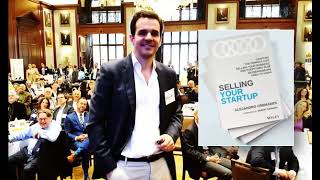
In this episode of the "Living a Life in Full" podcast, host Dr. Chris Stout interviews entrepreneur, author, and investment banker Alejandro Cremades. The conversation traces Alejandro’s personal journey from a law career in New York to founding OneVest, an early‑stage entrepreneur community that grew to half‑a‑million founders across 200+ countries, and later establishing Panthera Advisors, a boutique M&A and fundraising advisory firm. Alejandro discusses the philosophy behind his generous newsletter and Dealmakers podcast, which demystify pitch decks, fundraising, and exit strategies for founders. The bulk of the interview delves into his newest book, Selling Your Startup, outlining a step‑by‑step roadmap for founders to plan and execute a successful exit. Key topics include how to identify the right time to sell, choosing between SPACs, IPOs, or strategic acquisitions, building a target list, crafting an acquisition memorandum, using letters of intent (LOIs) effectively, structuring valuations, navigating friendly versus hostile buyers, managing post‑acquisition integration and employee retention, and best practices for equity grants and founder stock. Alejandro also shares practical advice on compensation (flat consulting fees), the importance of listening, maintaining integrity, and staying unattached to outcomes during negotiations. The episode concludes with resources for listeners to follow Alejandro’s work.
Chapters
Living a life in full is a conversation you always wanted to have with that person who gave an amazing TED Talk or the author of one of your favorite books, or that inspirational Olympian you always wanted to know more about. It's graduate level conversations with those making a difference in the world and in the lives of others. This show brings you new ideas and approaches so that you can live a life in full. I'm your host, Dr. Chris Stout and I hope you enjoy this episode. This episode is brought to you by the new fellowship and certificate programs now being offered by the center for Global Initiatives. As you may know, the center is an all volunteer organization and the same is true for the faculty in these programs. So all the tuition goes to support the work of the center. It has always been our ethos to open source humanitarian intervention and these programs use the same approach in that all the materials we use are freely available all the time to anyone, everywhere, even if you don't take a course. We have built a world class faculty and contracts with other universities, medical schools and partnered NGOs. There are two fellowship tracks, one for those wishing to start their own nonprofit or non governmental organization and one for those seeking mentorship for career development and advancement and humanitarian work. Our initial certificate programs include humanitarian intervention, social entrepreneurship and global health practice. Please consider taking a world class masterclass with us. Visit alifeinfull.org and click on the CourseWorks tab to learn more. Thanks. Welcome to another episode of Living Life in Full. Hello, I'm your host, Dr. Chris Stout. Alejandro Cromadez was a co founder of OneVest, one of the largest online communities of entrepreneurs. When it was acquired, it had half a million entrepreneurs from over 200 countries on the platform. Now he's a founding partner at Panthera Advisors, a premier investment banking and financial consulting firm with offices in New York and California. The firm focuses on small to medium sized companies that are looking for M and A advisory services as well as support with fundraising efforts. Alejandro also hosts the popular Dealmakers podcast where he interviews founders who have had multi billion dollar exits. Earlier in his career, Alejandro was an attorney at King and Spalding, where he was involved in a $113 billion investment arbitration case, one of the largest in history. TechCrunch featured Alejandro as one of the expats that is shaping New York's tech space. He's been involved with the JOBS act since its inception and he's consulted to the White House and the U.S. house of Representative. New Regulatory Changes Alejandro Gist lectures at the NYU Stern School of Business and the Wharton business school. At UPenn, he has been included in the top 30 under 30 lists of Vanity Fair, GQ, and Entrepreneur magazine. He's a Forbes contributor as well as author of the best selling book the art of startup fundraising published by John Wiley and Sons and includes a forward by Barbara Corcoran. Most recently, Alejandro wrote Selling your startup, Crafting the perfect exit, Selling your business and everything else entrepreneurs need to know. Also published by Wiley, the book includes Testimonials from over 20 entrepreneurs who have sold their company for over $500 million. We'll be focusing much of our conversation on this new book. Welcome to the show, Alejandro. It's great to have you on.
Thank you so much, Chris. Definitely an honor to be here with you and also with all the listeners.
Oh, great. Let's start with your backgr. How did you make the shift from law to entrepreneurship?
Well, I gotta tell you, it was a pretty crazy journey, you know, to say the least, because I am originally from Spain, from Madrid. And I remember I came originally to New York to do my master's degree. And then once I graduated from that, I joined King and Spalding. And I gotta tell you that for me, that was an amazing experience. I mean, having views to Central park and an executive assistant and all of that, that was like, like mind blowing. I was seeing that in the movies back in Spain, right? I had, I had this friend that he was a hedge fund guy and really mainly involved with the technology space, with investing in tech companies. And he asked me one day to go with him to this event called the Near Tech meetup, where entrepreneurs would get up on stage and pitch their companies. And I was literally the only one with a suit and a tie in that event. And I thought it was amazing though, even though I was like the weirdo there, everyone with sneakers and shorts, everybody thinking like, who the hell is this guy with the suit and tie? But I was immediately hooked. And I started building great relationships in the venture world. And eventually that led me to understand that what I wanted to do was not to push paper behind a desk, but to really, you know, go at it and build and scale companies. And then from there I went at it. I gave my notice, my family thought I was completely nuts. And I started really like sitting down on Barnes and Noble and reading books and teaching myself about that and about different types of things, you know, when building and scaling companies. And that's really how I got my start in really being an entrepreneur.
That's really impressive. So talk about OneVest. Was that then the transition from law and legal, then to onevest or were there other steps in between?
Yeah. So basically the first business was really Rock the Post was the name. And basically what we did with Rock the Post is it really was one of the very first, if not the first platform online that connected investors with entrepreneurs. And during that journey, what I really understood and realized was that it was not about just the transaction. If we really wanted to do something big, we needed to focus on everything, post transaction and pre transaction in order to really add value to the entrepreneurs. And essentially what we did is we ended up acquiring a company called Co Founders Lab that was really fostering that co founder matchmaking, which is essential. So we acquired the company and then essentially the business became one vist. One vist as a whole. And then essentially what we did is we ended up becoming a community, a universe online where we would support entrepreneurs in the journey of building, scaling, financing and exiting. And we, we raised money from like 14 VCs and essentially we grew that to over 500,000 founders in 234 countries. And then the company ended up getting acquired. And funny enough, in that transaction, I was exposed to the incredible lack of access and guidance that entrepreneurs would experience at a seat and series A financing cycles, which is the very first rounds of financings that an entrepreneur would raise. And basically to the investment banker that I used on the acquisition of one based, I share that with him, with Mike Severson. And he got super excited with it. And we knew that there was a lot of good that we could do on the transactional side. And that's really, you know, the main reason for Pantera now, my next company, for the main reason for Pantera to exist, which is for us to become an extension of the companies that we get to work with and to help them from point A to point C when it comes to raising capital.
Gotcha. So with one vest, it was sort of helping people with good ideas and scalability to be able to bring their ideas to market. And now with Panthera, it's then being able to take maybe entities that are at that level and help them go around getting their funding to be able to grow and to scale further. Is that.
That's correct. So OneBase essentially became really a universe of different assets that we had in order to support founders throughout their journey and all focus on the execution on the operational side. And there we had from basically like the very first online accelerator to a university for entrepreneurs to perhaps a network where you could connect with the first co founders or the founding team members to even also a network there where we would connect a pool of investors with opportunities. That's great. And essentially what we're doing now with Pantera is really focused versus on being focused like I was on one based on the operational side, continuing on the journey of empowering and helping entrepreneurs, but more on the transactional side where it's all about really helping them with capital raising efforts and then also with M and A efforts because fundraisings for us, we treat them more as long term relationships. And then our hope is that eventually when that company receives inbound interest to get their company acquired, hopefully they think of us because of the relationship and in many cases great friendships to really run that M and A process, meaning getting their company acquired by a larger player.
That's great. You know, you and for the audience to know. You and I were talking off mic before we started and one of the things that I've been very impressed with, and we'll put this in show notes, you know, when we wrap up, but you have a very generous streak to you. You put out a wonderful newsletter that I've been a big fan and consumer of for I don't know how many years. And it's, it's interesting because you really sort of demystify. I've worked with a lot of startups, not, not nearly as many as you do, but the, the naivete someone has a really good idea or they're really good in technology, or they're really good in coding, or they've really, you know, they've got something that's got some really good potential to it. But then you have structured and made freely available through your podcast, through your newsletter, through the books that we're going to be talking about to how to put together a pitch deck and what's the key components of a pitch deck. And as we were just saying recently, you've posted samples of the pitch decks of some big brand names in the tech area. So I just want to compliment you that right off the bat to say that that is very generous of you and I really encourage people to reach out and look at that because the quality of the work that you provide and tools and just sort of taking, pulling back the curtain to help people get to that step, I think is really something that needs to be championed and cheered. You've done a great job with that, Alejandro.
Thank you so much, Chris. Really appreciate the kind words. You know, it's amazing how, you know, it all became, it all started kind of like a hobby type of thing. Like Doing it for fun and really asking for favors, whether it was on the podcast or whatever it was. And now it has taken a life of its own. The newsletter, I think that there's like it's closing to 150,000 people following that and the podcast is over 2 million downloads and like 10,000 people tuning into every episode. So it's amazing to be able to make a difference for these founders and to really give them stuff that they can use. And when I receive emails and people reaching out and telling them the difference that it made in their own journey, that's what really makes it all worth it at the end of the day. Making a difference.
That's wonderful. So do you have a specific niche of companies that you work with or is it pretty much, pardon me, broad spectrum or do you have favorites or tell us about who it is and how do you decide who you work with? Is it just consultative that you can do beneficial things to everybody or just kind of deconstruct that who comes and knocks on your door?
I mean really, anyone that is an entrepreneur that is building a hyper growth business that is at an early stage in their journey at a seed financing cycle or series A financing cycle, those are all great candidates. It doesn't matter whether they are with an idea on a napkin or already doing good revenue. Because when you're doing a seed and a series A, it's not about historicals that much. It's all about storytelling. It's all about future and possibility. So that's why we have been able to work with people all over the world. I mean, we have a client for example, now in Papua Guinea, Bangladesh. India is our second biggest market in India. We have companies in Chennai, Bangalore, Hyderabad, Mumbai, for example. In Latin America, we helped on the capital raise of one of the largest Series 8 rounds of financings there out of Sao Paulo, Brasil. It was 100 million Series A, a micro mobility company. And we don't even speak Portuguese. Obviously, you know, our, our biggest market is the U.S. which is about 60%, you know, of, of, of, of our operations. But, but ultimately, you know, we, we given the fact of, of our nature, which is really working with early stage companies, it doesn't matter where you are or what you do. If you're looking to raise money from sophisticated investors, we are right there. Now obviously our time is limited and we can't take on anyone, you know, to the advisory obviously for the content and all of that, anyone can consume it. But for the advisory we like to foster long term relationships and we like to work with companies where we see a potential exit, you know, in a five to seven year horizon so that eventually, you know, when they get to that point, you know, they give us a call, given their relationship, to run that money process for them. And we like to become sounding boards of the people that we work with. So we like to see that there is a hyper growth nature to it. So obviously we wouldn't be able to work with pizzerias or stuff like that that don't really scale. But if it's a business that has that potential of building a business model that is repeatable and scalable, that's definitely something that we would like to work with.
That is very cool. So if you don't mind, how does Panthera Advisors get compensated? Is it a fee or do you get equity and it's, you get the payout when they merge or go public or how do you structure that?
Yeah, we don't like to touch the corporate structure and then also we don't want to be a broker, dealer and comply with all the rules that apply when you are charging a transaction based compensation because then the speed could be slowed down for the entrepreneurs or really for us, the way that we do it is just a flat consulting fee that is not subject to the outcome. And that's pretty much it.
That's great. That's good. I love the transparency of that. So you, you work with. I'm just, I'm dumbfounded with the, the scope and, and geographical breadth of the companies that you work with. Can you. This might be too tough a question, just like off the top of your head. No, but do you, do you feel like there's any common denominators in what makes a successful versus an unsuccessful kind of company? Is there, are there things that get in the way of a company being successful or things that help, you know, accelerate that, that the success for those
that do well, listening, Chris. You know, listening because you know what I see from entrepreneurs, you know, this is something out of, I think in the last 12 months I probably interviewed over and I've also been exposed to over 50 entrepreneurs that have built a 1 billion plus company in less than five years. And when you are exposed to so many people doing such great things, you build pattern recognition to really see who may have those capabilities too. And one of the things that I see that I, that it keeps repeating is people that listen. You know, it sounds so simple, but it's actually not that simple. Because when you're thinking about onboarding a customer, onboarding investor onboarding a team member. It's not listening for looking good. It's not listening for giving the right answer. It's listening to identify the concerns that are in between you and getting that deal done. And I find that in many cases, or in most cases, unfortunately, I see entrepreneurs getting in their own head and that really gets in the way. And I think that that is essential. So for all the people that are right now tuning in, my piece of advice would be if you want to do something great, you need to listen.
That's really good. I had William Green on the show recently and he's a journalist who's interviewed a lot of people in the financial space, investors and hedge fund people and whatnot. And it's a similar kind of thing. There is sort of this, this paradoxical, counterintuitive thing of the what can be very successful are very essence, essential, if you will, quote, unquote, small things that make these huge differences. And that's exactly, you know, it's sort of like not, not complicated algorithms, not some sophisticated, you know, structure or something like that, but just those basic kinds of things that are so, in some levels sound so simple, but are indeed very, very hard to do and hard to pull off and hard to be consistent with. So I appreciate that. I think that's spot on. So I want to shift and do a deep dive into your newest book, selling your startup. It's already been getting rave reviews. The front matter of the book, there's like a number of notable entrepreneurs endorsing you who have sold their businesses from, for like, you know, just amazing cash outs and stuff. Half a billion and a billion and a billion plus. I just want to give a couple of quick shout outs with regard to reviews of the book. Will Glaser, co founder who sold Pandora to Sirius XM for $3.5 billion, said of your book, Don't Sell youl Business until you read this book. Selling your startup is an essential resource founders have needed for a long time. The world is awash with advice on how to start a business, but Alejandro shares practical wisdom on how to play the end game. And Kevin o', Connor, who is a co founder who sold Doubleclick to Hellman and Friedman for $1.1 billion, said of your book, securing the right acquirer for your business on the right terms makes all the difference in your vision being realized or it being stolen and crushed. Use this resource to get clarity on your ideal target buyers and optimize the terms for lasting success. And Alejandro, I have to say, I mean, I Very much enjoyed it and bravo my friend. It's like a handbook, a step by step process to be able to sell your startup. I've read similar genre kinds of books with this and I don't know yours I just found so specific, so targeted that you could just there ought to be a companion Volume 2 should be like a companion workbook with it because it's so, so helpful. You note that it took four years to write it, but I want to hear about that. But I am also curious what spurred you to take on that project in the first place.
You know what Chris, whenever I do anything, I always look at what gaps I can fill. And when I published my first book, the Art of Startup Fundraising, one thing that it really came to mind after having done that is that there was something really big missing. And that is that people talk always about raising so much money and how successful I am raising money, all that stuff. But one thing that people really don't understand is that with money in, there's expectation of money out with returns from the. And I thought, you know man, I think I should have written this book before this one, you know, like at that point. And that's why it has been four years in the making of really understanding what is the best way to create a roadmap of something that is incredibly complex. Because selling your company is a thousand times tougher than raising money for your business. But I wanted a roadmap that was very easy to follow and very easy to understand from people that are non financial or people that haven't had the experience of building and scaling and selling a business before. But I always believe as well and now it's more and more clear that every beginning needs to start with understanding the end. Because I think that you need to know where you want to go and if you want to build a hyper growth business, a potential billion dollar business that is going to have an exit. Because a billion dollar business, you're going to need investors, you know, because it's not about the money, it's about the networks that they give you and the value that they can provide. So by having that big, that, that end in mind and understanding how that finish line is going to look like and being able to then reverse back engineer the process to where you are today and take immediate steps in order to get there, it's just going to give you that path to follow. And that is the main purpose of this book. And it doesn't matter whether you are with an idea on a napkin, whether you are right now building Your business or whether you are in the process right now thinking how to sell your business, this book is still for you. One thing that I noticed too, was that there was nothing written in this specific topic. Nothing. I mean, there's a lot of books on fundraising, but nothing on getting your company acquired. And, and I, on my last company, I did also four transactions. I did three on the buy side, one, one on the sale sales side. And I could not find anything, you know, when it came to really educating myself and getting more access to more tools and. And that was it for me. You know, for me, selling your startup, you know, was the. The ultimately what came from all of that stuff and to put an end to the madness and give people stuff that they could work with that's so
good, and that's the entrepreneur's journey. There's a problem that a lot of people have, and if you can kind of develop that solution and get it out there, that's great. So again, off mic, before we started, I talked about some experiences that I've had, more so the bad ones. And without kind of naming names or anything right now, there has been sort of a SPAC for frenzy out there. And it seems like people are sort of, you know, pole vaulting over the traditional IPO start. And, you know, your aspect isn't really talking. I mean, obviously an IPO could be a way to sell one's company, but in my experience, most recently, I'd gone through with a company that I had been with through kind of serial private equity rounds, and it helped us grow and it helped us be more of the acquirers. We had de novo and organic growth, but then we also did some acquisitions and some like, got us into some other geographic areas and all that. That was all terrific. But can you kind of talk about how does a founder know when a deal or the time is right to be able to do that? And does someone just say, you know, well, a SPAC would be kind of a quick and dirty way to do this. But do we want to wait and go like the traditional ipo, or do we want to sell to someone else? Or I want to do much deeper dives into all this, but maybe just there as a starting point. Where's that founder know when the time is right or when did you know when the time was right for you personally?
Well, I think that ultimately what you need to take a look at is you need to surround yourself with the right people. And I find that you need to have people at a board level that can provide a level of strategic guidance and knowledge and know how and experience so that they can brainstorm with you and so that they can help you in taking a look at what could be best for the stakeholders of the company. I think that surrounding yourself with that board will also enable you to perhaps have a shot and making the right decision. But it's ultimately gut feeling. Gut feeling is always the way to go. But you need to look at also the market. You need to take a look at what you're doing. You need to take a look at the opportunity as well. And then based on that, you know, you, you can, you know, whether you know, is there is a SPAC or an IPO or an acquisition is the right way to go. But here's the thing. You know, Chris, I mean there's a lot of hype right now around SPACs and around the IPO and all of that. But I do believe that the IPO could be considered like the new down round, right? I mean there's a lot of those companies doing the IPO because they haven't been able to raise more money on the private side. So they decide to either do the IPO or do the spac. So I think that a founder could make a lot more money in many instances by getting acquired by a larger player versus going on a SPAC or S1 filing for an IPO type of format. In many instances you're going to see how, because in every round of financing that you do, you're going to get a pretty interesting dilution. If you are doing a down round, dilution could be a killer. And you're going to see in many instances someone that has done around financing could make much more money than someone that has raised hundreds of millions of dollars.
That's very insightful as you say that. That's a very interesting perspective because I think oftentimes it just seems like the golden goose is that proverbial ringing of the bell at the New York Stock Exchange or something. That's always kind of people's fantasy goal. But that's a really good point. I have two friends recently who have sold their businesses and their circumstance would have never been to IPO in the first place. But I can certainly darn tell you that their experience of selling their businesses and being acquired was very positive economically, lifestyle wise, you know, all these other kinds of things. It was work to get, you know, work over their careers to get to this point. You know, they weren't, you know, in and out quickly. They spent careers doing it. But it's, it's It's a really interesting perspective because I probably had a, maybe too much of a bias or parochial perspective on just ipo. Ipo, ipo. But that's really a very good point. So you note in the book a lot of acquisitions, or maybe even most acquisitions fail. Do you have any speculation? Can you talk about why that is what you think?
Well, I mean, 90% of acquisitions fail, to be honest with you, but the failure really comes from the post acquisition side of it, from the integration, you know, type of thing. Because it's very hard to really blend one company or one culture into a different, you know, type of culture or team. And I find that that's really where you find the big drop off. I mean it's, it's, it's unbelievable like the amount of, of transactions and deals that have happened. I think that, you know, in the, for example, in the last 20 years, you know, there's been like seven, like something crazy like 790,000 transactions that have created a combined value of 57 trillion. It's ridiculous, right? But one thing that is for sure is that most of those fail because I find that the companies, they don't do much of a job when it comes to the due diligence process, perhaps on involving the HR as early as possible to really understand how those cultures are going to be blending in. That could be problematic because I think that expectations need to be very crystal clear on both sides. And ultimately what you end up finding is that you get a company that you're acquiring and then after the vesting, the team just leaves. And I find that the buyer needs to do a better job at communication. I think communication is absolutely everything and unfortunately in most instances you don't see that that communication is, is going in the way that it should flow. And that's why then on the integration everything really falls apart. There's one thing that is very interesting here, is that when a company is acquiring another company, let's say a startup, they need to know that many of the employees that joined that startup joined because they had not the entrepreneurial mindset, but the intrapreneurial mindset, which is being an entrepreneur inside of an organization. And you like the drive, you like the uncertainty, you like the adrenaline, the high speed. And unfortunately, when a larger player is acquiring you, then as an employee, that's not what you signed up for. And interesting how when it comes to retention, there is data and a paper that came out that really monitored and showed how once an acquisition is done something crazy, there's a 40% drop off of the employees that leave versus the 12% that are retained from regular hires. So it's really unbelievable. It all comes down to really mastering that communication and setting up the expectations the right way during the due diligence this time of the process.
That's a good point. It reminds me of the joke that sometimes in acquisitions or mergers or whatever that a certain percentage of the employees quit work and leave and another number of employees quit work and stay. So I think it also speaks to that culture aspect that some people are just sort of unhappy, but they're perhaps too gun shy to leave or whatever. And then that has such a negative impact on the productivity or the success of the post merger company. So you talk about with transition plans and things like that. One of the key things that you note in the book is about a founder to get their finances in order to. Can you speak to just maybe off the cuff of like what are some of the financial documents that are front and center in that kind of process?
I mean, at the end of the day, this is a process. It's interesting because it's so different to fundraising. In fundraising, you need to have all the answers ready, everything figured out for the investors. In acquisitions, you need to have everything figured out because it's not your idea, it's the idea of whoever is acquiring. So ultimately, when it comes to the numbers, you need to put together a financial model that not only is going to show where you're coming from, but where you're heading in a way that allows them to dream, in a way that allows them to interpret how your business, by being plugged into their umbrella and distribution, how it could make a serious impact, to perhaps take to another level the strategic roadmap that they have. So that's ultimately what you want to achieve when you're putting your package together and when you're going out and speaking with potential acquirers. What you really need to have developed in this case is what I call the acquisition memorandum. And that is going to include not only the story, but also the numbers. But again, doing it in a way that allows them to see what would it look like if they were to acquire your business.
Okay. And you mentioned in the book like having a five year time span, is that kind of the norm or why five years?
I mean, five years is a good time. I think ultimately it's going to vary. Some people are going to want three, others are going to go up to five. But I think that the more visibility that you can give them, probably the better.
Gotcha okay, so with that, one of the aspects of it is looking at valuation. So that's one of the things that always just sort of mystifies me on either side of the equation, like how do you value that company? And it seems incumbent upon the founder to be able to, or the chief financial officer, whoever, collaboratively putting together what the company's worth is. What are some of the variables that affect a startup's value? Or how do you go about, if you're a founder, putting those numbers together?
Well, look, I think it's all about market. So you need to take a look at who is doing what in the space. And there's different ways of really coming up with your valuation, like DCF and stuff like that. But ultimately what you want to do, and I like this one the most, is take a look at who is doing what in the space and what are the competitors valuation. Because all of that, you can find it online. Nowadays, we live in a world that is very transparent. And when it comes to valuations, you don't want to go into a process, into a negotiation process, because in a negotiation, there's always someone that wins and someone that loses. So I think that the approach needs to always be perceived as a partnership. And in a partnership, everyone wins. So when you're going in and they start asking you about valuation and all of that stuff, if they're pressing you hard, what you want to do is you want to showcase what has been the range of valuations of competitors, direct and indirect, at your same stage, and just put yourself in the middle, because that way, even if they think that the price is rich, you can still say that that's what the market is paying. So I find that that is ultimately the way to do it. And always remember that whoever talks first on valuation loses. Because the last thing that you want is to disclose a number that maybe you've come across during your financial model. But just remember that if you throw that number first, they're going to negotiate you down. But if they throw the number first, then you have the possibility to negotiate them up.
Gotcha. So there's sort of the psychology of negotiation and anchoring. Then if the founders blinks first, I guess with that. So with that, again, I'm going to show my naivete around these kinds of. Of things. In the book, you talk about valuation versus terms. Can you just mention a little bit about that for our audience?
Yeah. So at the end of the day, you know, like what you're going to come across is when it comes to the process you want to push people towards an loi. I mean, the LOI is ultimately going to be summarizing what are going to be the terms of the transaction, you know, including the valuation of the company. Okay, what do here, especially if you're at an early stage, let's say, because there's two types of acquisitions you're going to have on one end the a strategic acquisition, which is going to be aqua hires, or you know, just say a strategic deal where you're getting a larger player to acquire your business. And then you're going to have on the other end the financial acquisition, which is going to be where you're doing 5 million plus in revenues. And then, you know, it's going to be more financial acquirers like private equity firms that may want to take a look at acquiring your business. Now, when you're thinking about the loi, you know, especially if you are the strategy, on the strategy type of transaction, you want to push as many people as possible towards the loi, because then it's interesting what happens. And this goes again to what we've been discussing here, Chris, which is all about psychology, where if you have, let's say three or four people that are able to give you an loi, and this is a strategic deal, and they've already distributed this on their board, basically their, their butt is on the line. They need to get this deal done. So that's where you want this to be, to have a few of those, Lois, that are strategics, where ultimately price doesn't become an issue because they really want this bad. And that's essentially what you're going to be doing. Now the LOI is going to be summarizing the terms, but you got to be very careful when you're picking an loi, because when you pick one of those, Lois, then you're going to go into an exclusivity period, which typically is going to be 60 to 90 days. So while you've been able to generate momentum all the way to the LOI and speaking with multiple sources for a potential deal, once you pick the loi, then that's it. You're going to be locking yourself for 60 to 90 days. So you better have visibility and have clear understanding that that entity that you are picking it with, that they're highly likely to close the deal, because the last thing that you want is to go into that 60 to 90 days and then dropping out, because then you're going to have to go to the other ones and the, the momentum is going to be gone. And you're going to be in trouble and you're probably not going to get a deal or get a very like terrible deal, like much less than the number that they gave you because now they have the leverage. So whoever you're picking, make sure that you can, that you can really, you know, have that visibility into them closing. And again, you know, after you pick the LOI is due diligence, you get the lawyers also to draft up the asset purchase agreement and documents and then you just close, close the deal.
Gotcha. So that, that's a very good differentiation as to why the letter of intent is so much more important than indication of interest. And I just also for listeners do pick up the book because I, in, in the book you actually provide a sample letter of intent template, which again, I think is just golden. That's so it demystifies like, well, okay, they're talking about this, but what does that look like? And, and you show people very, you know, full throatedly what that looks like. Like you, you also, in this section in your book, you talk about getting like a target list or you know, of who might be the people you know on that letter of intent. But you, you, which makes perfect sense. But then you talk about working through it in reverse order. Why, why is that?
So, so, so basically the, the whole understanding here, you know, work, working on it, on reverse order. And Chris, if you don't mind, you know, repeating the question because I want to make sure that I'm able to give you the right answer for you.
Sure.
So reverse order towards, if you could expand on that, you talk about, well,
like having, when you start looking for merger or acquisition kinds of partners, you talk about a target list. So with, within that target list, you know, that makes sense to me of, you know, who, who, you know, who would be qualified for this, who could afford us, who's a good fit. And then, so that makes sense. But then you also say do it work through it in reverse order? Like so I don't know kind of how that, I guess how does that ordering work is my question.
So at the end of the day, what you want to do is you want to, you want to survey the market, you want to research the market and you want to see who is going to ultimately be in a position to want to acquire your business. You know, and you can see this by perhaps having some insight into what their strategic roadmap may be. Maybe you can even take a look at the quarterly earnings reports and see what they're filing. That's all public information and what they're excited about. With publicly traded companies, you can also go on websites like Crunchbase, PitchBook, and See who are the players that are very actively involved in acquiring some of the companies that are directly or indirectly competing with you. And ultimately, it's just understanding whether or not they will be able to do a transaction with you and then reverse that process towards getting started with introductory meetings. I mean, on those target lists, you know, typically you want to have. You want to go wide, and then once you understand who are the ones that are going to be the highly likely to do a transaction, then you go deep, you know, into those profiles. But really, you know, when it comes to doing this, you want to make sure that you have someone that is guiding you and that is right there with you pushing this. Perhaps, you know, like what we're doing with Pantera is that, you know, guiding the process, too, where essentially our clients, they are completely anonymous to all the targets there. And then once we start receiving interest and we're able to filter them, then we actually establish and we disclose the name of the company, and the process really begins. But you want to make sure that you are able to do that in a way in which you are not damaging the company, because you don't want the entire world to know that this company is running a process. So you only want to disclose, you know, the name and really engage them once you know that they are serious, and once you know that, you know, they could afford, you know, doing a transaction.
Gotcha. You talk about friendly, friendly buyers versus hostile buyers. What's. How does that come about? What's. What's. I understand the difference between friendly and hostile, but, like, is it someone being aggressive to, like, be aggressive into the market and they're just buying up everything in your space and you're just a victim of that? Or step us through with some examples perhaps, of what's the difference between a hostile buyer and a friendly buyer?
I think that ultimately what is in between is a very thin line, and that is integrity.
Really. Okay.
I mean, I think that in the world of M and A of acquisitions, you see a lot of people that lack integrity and also the way that they behave themselves, you know, whether they give you an LOI and then they try to renegotiate terms, and they're kind of like twisting your arm as much as they can on valuation, because that has come up on the diligent side. So ultimately, when you are doing the diligence and prior to picking an LOI, that you want to go throughout Carry out the process through. You want to do it with people that you can trust and that you can see that have integrity. Maybe one thing that you could do is ask for references, ask them to put you in touch with, you know, the CEO of another company that they have acquired recently and ask them what was their, what was their experience with them and how did they behave. Did they try, did they try to renegotiate terms, you know, down the line? I mean, all of that kind of stuff is very important because once, once you pick the LOI and you put yourself through the exclusivity period, you are at their mercy. You are literally at their mercy. Because if you really want to get your company acquired and you are not closing the deal with that acquirer, then if the deal falls apart and they end up trying to renegotiate and you say no, then it's going to be very hard to pick it back up and get a deal where you're going to be coming out on top with the right type of terms.
I can imagine. So in that process, you talk about a deal room. Are there physical deal rooms or virtual deal rooms or what is a deal room and maybe a deconstruct that for us.
Yeah, so ultimately the deal room is going to be the place where you're putting all the documentation that is going to be verifying the claims that you have made and then also for that acquirer to take a look at what's going on under the hood.
Okay.
Now you're going to be putting there all types of documents you can either use, like stuff like Google Drive or Dropbox to place all those documents and just share the link with them. Or you can, for example, if you care about privacy, maybe you want to use a system like Intralinks, but ultimately what you want to do here is you want to place the documents in there that are going to be pertaining to their research or their verification around team credentials, around agreements around the business and contracts, partnerships around the technology, maybe source code or stuff that is very important towards the intellectual property of the business. And again, in the book I provide a very clear list on what are the specific things that the acquirer is going to want to review so the listeners can take a look at that. But really it all comes down to team, business and technology or the service. So what kind of documentation can you put in there so that they can actually verify all the claims and feel good about closing the deal with you?
That's great. I know, I'm just taking a look at my clock. I Know we're on a bit of a tight timeline today with your schedule. I appreciate you making the time for this today. I just have a few more questions if we can start to wrap up with those, if that's okay with your clock.
Sure.
Great. So one of the final things as you start to wrap up the book, you talk about not issuing Founders stock. Can you talk about what Founders stock is and why it's a consideration or why to not issue Founders stock?
Well, look, I think that at the end of the day, what I always share, and that brings me to what I always recommend, Founders, is that you need to be very careful when you are setting up your business. I see many instances that people just grant equity left and right. And the problem with that is that you may create what I call the free riders. And for example, let's say if you and I, Chris, if we start a business and we're 50, 50 split and already the equity is granted, if you leave, then I'm left with 50%, just 50% that the, that the investors you know are gonna, are gonna, are gonna be able to fund and then you're gonna be a free rider with your 50% not doing anything. So that's 50% equity that is not working for the business. So I always think about these processes and for all the listeners that maybe are a little bit earlier in their stage, setting up an equity incentive plan where the equity that you're granting is not equity that is just right away going out the door, is equity that is promised and that is given in the form of stock options that are vesting over the course of time. Typically what I'm seeing now is one year Cliff, meaning that if you live before the one year anniversary, all that stock goes back to the book. And then after that year anniversary, basically monthly vesting, where every month you're going to be vesting certain amount of that stock. But I think that this is a good way to keep a cap table that is clean. And whenever you are going later on to an acquisition, the acquirer is going to want to have a very clean cap table so that it can actually help in getting an efficient and fast deal done. Because in many instances, one of the things that you're going to find is the acquirer comes in, they're excited about the business, and then the cap table is a mess where you have a bunch of like $10,000 investors that don't really understand what's going on and they're like, they're like ultimately going to increase by a mile the Bill from the lawyers. And that's just like completely nonsense.
The friends and family investors early on coming back to haunt you. So I totally, I've seen that happen.
I had one not long ago that he had, I think it was an investor that invested like something ridiculous, like 5,000 bucks or something like that. And we're talking about $100 million deal. And that $5,000 investor almost blew up the entire deal.
Oh, my gosh. Yeah. Well, that's the math of the growth of the company. That's good. Well, listen, again, I'm keeping an eye out. I could spend all afternoon talking with you about the kinds of things. It's so fascinating and so helpful. And again, it's just been a treat for me to be able to read and enjoy your book. And I've written all over it. It's just kind of a mess now. I need to get another copy. But just for listeners to know, too, that you end up in chapter 19 talking about closing the deals and the anatomy of an M and A deal closing, which is super helpful. Are there any other highlights in these last few minutes that we may have missed that you would like to point our listeners to or anything in the book that you know that I know we've done kind of a quick treatment of it, but any other highlight from the book?
Well, I think that probably I like to leave the listeners with one thing when it comes to deal making, and that is that whenever it comes to doing deals, any type of deal, it could be racing around, it could be bring an employee, it could be getting your company acquired. You always need to be completely unattached to the outcome. Because if you're unattached to the outcome, you're going to be able to get great terms. Right now, if you are attached to the outcome and you start to signal desperation, you're going to be getting pretty crappy terms. So whatever you do, always be unattached to it. And just know and remember that things will always work out. It may not be the way that you had anticipated them to be, but at the end of the day, if you're in action and you show up, it doesn't matter if plan A doesn't work because you're going to have plan B, plan C or plan D. That is great.
That is really great. Thank you, Alejandra. This has been just really an amazing education. It's been just fun, you know, being able to do some of these deep dives with you for those that are interested in getting either of your books or listening to your podcast or learning more about Panthera Advisors or connecting or following with you. What are some of the best ways to do so? We'll also put this in the show notes.
Yeah. So people can find me everywhere on social media, LinkedIn, Instagram, Facebook, you name it. But really a place that has everything is Alejandro cremates.com I mean that's basically where people can find every single information. Absolutely.
Great, great. And again, I just, I really want to emphasize the book is really a treat for those in this kind of position or interested in learning about it. It's not, as you've said, it's not premature to look at it just if you're still at the startup phase, because I think you, you really hit a good, you know, point about begin with the end in mind and you know, is this going to be a career? Is this going to be a cash out? You know, what are we going to do? So you are just really so valuable. You, you've provided such great information. I really encourage people that are in this space to learn more about you, learn more about your work and reach out and connect.
Well, thank you so much, Chris. Really appreciate it and thank you everyone for listening.
Thank you, Alejandro. Good to have you on. Living a Life in Full is a production of Stout Media, a subsidiary of Gordian Knot LLC. Assistant Producer Gracie Wong Music Dan O' Brien Executive Producer and Host, Dr. Chris Stout to learn more, stop by our website at lifeinfull for show notes and please recommend this to your friends and subscribe on your favorite platform. And as for the obligatory disclaimer, this podcast is for general information uses only and does not constitute the practice of psychology, medicine, nutrition or other professional health care services, including the giving of medical or psychological advice. No doctor patient relationship is formed. Lastly, and perhaps most importantly, I take conflicts of interest seriously. For all of my disclosures as well as show notes, please see livingalifeinfull.org podcast and my link to in profile. Thanks and until next time.
More from Dr.

2025 Mercedes-Benz CLE 450 4Matic Cabrio – Owner’s Views After a Year-and-a-Half as a Daily Driver

The Complete Guide to a Successful Everest Base Camp Trek – Post-Trek Debrief

The Complete Guide to a Successful EBC Trek – Post-Trek Debrief: What I Needed (and What I Didn’t)

What Went Wrong Customizing My New 2026 Porsche Carrera T …and what I did about it!

Coming May 1 At the Intersection of High Performance and Fulfillment: A Conversation with Alisa Cohn

From High Performance to Fulfillment: Lessons in Inner Mastery with Jim Murphy

Coming March 19: From High Performance to Fulfillment: Lessons in Inner Mastery with Jim Murphy

The New Humanitarians Volumes I - III:- Inspiration, Innovation, and Blueprints for Visionaries

The New Humanitarians Volumes I - III:- Inspiration, Innovation, and Blueprints for Visionaries

The New Humanitarians Vol I - III: Inspiration, Innovation, and Blueprints for Visionaries - Forward
