The Complete Guide to a Successful Everest Base Camp Trek – Gear
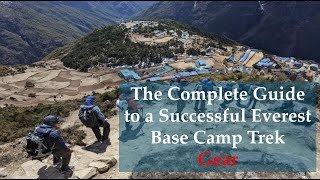
Chris Stout breaks down what to pack for a 10-day Everest Base Camp trek, from merino socks and Obo boots to power banks and a SteriPen. He covers clothing, footwear, medical supplies, tech, nutrition, and packing logistics, emphasizing that gear choices depend on weight, comfort, and budget.
Chapters
Hi everyone, welcome or welcome back to the YouTube series on the Complete Guide to a Successful Everest Base Camp Trek. My name is Chris Stout and I am the host of this series. This one is going to be focused on gear, a variety of different kinds of aspects of gear and equipment and whatnot. Before we get started, I'd like to share with you just a quick little bit of background. This appears in the other videos as well. So if this is your first time, welcome. If you've seen this before, you can skip through a little quicker. I do something called Summits for Others on every climb and expedition that I'm a part of. I do it to support a charity to do an awareness raiser and a fundraiser for that charity. So far I've done three of the seven summits. The easy ones I've climbed also in the US like in Rainier and the Mountaineers route in Whitney. I've done a variety of others internationally. My daughter and I did Pikes Peak in Colorado, I did Adams Peak in Sri Lanka, etc. And for each of these I would also try and get some publicity around it. And I guess part of that too is what these this video series does in terms of being education and awareness raising. And I also am a LinkedIn top voice author for them and I write a variety of different kinds of areas and also talk about social, social media and ethics and alpinism, mountaineering, what have you. So if you have interest in any of these, they're in the links are in the show notes below. I founded about 20, almost 20 years ago, I guess, the center for Global initiatives. It's a 501C3 charity and it really came from an experience I had in 1992 climbing Kilimanjaro and working with one of the porters there. And he and I have kept in touch ever since then. And he has now become a chaplain at two hospitals. So one of the things that we've done with them is to help them with nurses training. We've done clinical case consultations. We help them access medical equipment and medications and pharmaceuticals for their patients there. One of our volunteers was able to access a not a Jeep, a Toyota, to be able to serve as an ambulance to serve those two hospitals. We submitted a proposal that was accepted by the Ministry of Education in Tanzania to be able to start and form a kindergarten for children in an orphanage that had lost their parents to HIV aids. So we're very proud of that. All of us work as volunteers. None of us are ever paid. It's a totally 100% volunteer organization. So every penny donated goes to the work. As I mentioned, I've done three of the seven summits so far. If you're watching this video, you're probably already familiar with these, but this is, this is them. These are the three that I've done. And then this just sort of sets a context as to where Everest Base Camp lies in the midst of the heights of these others. And obviously every climb is a little bit different. This one just takes forever to get to in the first place. It's going to be about, oh gosh, 10 days to be able to get to Everest Base Camp. From Lukla hiking in on the Everest Base Camp trail. One of the things I want to talk about vis a vis gear is discounts. Before we get into the specifics of it, I'm a big fan and longtime member, I think I've been a member since 2003 of the American Alpine Club. There's different levels of membership. I think even the most basic membership level gives you discount to a various number of high end outfitters. For example, this is just, I'm just going to step you through the percentage you get off. Like I, you know, it's just amazing. Like 25 to 40% off Big Agnes backpacks, Black Diamond Catapoxy. You can also Mountain Hardware, Patagonia Outdoor Research. I mean these are all companies that I have deep respect for and use their equipment as well. So it's just really sort of nice to be able to get this kind of a discount from them as well too. So these are the, the popular brands that they have and if you go to their website and you're a member, you can also see that they have additional discounts in other kinds of areas and sometimes in store discounts and even further. This is a truncated list. The list goes on. It's probably three times as long as what you see in this slide. And there's also discounts to rock climbing, wall gyms, etc. So big fan of American Alpine Club. Good to support them. Good and support their work and then they help us too. If you're a member to be able to get these kinds of discounts, I would, I'd guesstimate that probably the amount that you would say depending on how much stuff you buy. I mean kind of once you buy some of these things you don't need keep re buying it or anything but it takes a while for stuff to wear out. I think my son has probably got 30 year old gear of mine that he wears from Patagonia. That in North Face, that's still going strong. So anyway, I would imagine that sometimes the discounts that you get for this would more than pay for your annual membership to American Alpine Club. So, big fan of this link in the show notes below to learn more and get involved. So let's get into lists in earnest. I'm gonna kind of just overwhelm you with a number of lists and items. I'm. I'm kidding. I'm not. I'm gonna give you this content, but I'm hopefully not gonna overwhelm you in this video. But a lot of these things, and I'll probably say this, repeat myself periodically, you know, tweak your lists depending upon the trip you're going, when you're going, how you're going, etc. This is just sort of a standard list that I use for everything. I mean, if I'm going to to Chicago, if I'm going to New York, if I'm going to Europe, this is the basic list that I use. I augment it specific to other kinds of trips. So I'm going to show you just real quickly the lists here and I would recommend if you have interest to opening up all of them, please do. So I've put all of them completely in a stack in issu and a link for that so you can take a look at it on your own at your convenience is in the show notes below. I'm going to be going on the Everest base Camp trek with climbing the Seven Summits CBSS group. They are amazing. They have this wonderful gear list. They have a number of other materials that talk about what to take, etc. Etc. This one's awesome. I've augmented my list with a lot of what they have in this and stuff that things I actually needed to get that I didn't have any longer that I've sold or given away or what have you. This is Travel Lights version. It's a 2025 update of their basecamp packing list that I found. I also made a PDF of this. This is just some individual that was very generous to put his. I believe it was a male system up. And how he did it's got a great little graphic there. But he did it in the context of how much stuff weighs, which I thought was genius. So. And then the. The blue that you see there are links so you can specifically get whatever piece of gear that is. So really pretty cool. It's also in the stack in the link below and the hypertext links I believe will work for you as well too. So really kind of a clever way to do it and a lot of stuff. It's super light and I thought that was so creative so I had to include that. And then finally, this is a list of what I'm going to be stepping through in this conversation today in this video. So I don't need to show you this. It's also in the links. You can download it and take a look. Get it at your leisure. So a little caveat to start off with, really, everything is your personal preference. What I'm going to give you is my personal preference. So these preferences can vary by virtue of how dirt baggish you want to be or how much comfort and bougie you want to be. If you've got a lot of porters or something, then maybe you take more stuff or maybe you want to carry everything you have yourself. So weight makes a big difference. And then price versus quality. There might be some things where you really want to spend on the quality of something. There may be other things that kind of don't matter to you as much and you want to get a discount and get the best price possible. So these are all different kinds of variables as you start to weigh what's on your list and what you make specific. And some of the things on the list may be very generic and other things may be brand new specific as well too. So like I just said, what's available, what I've shown you and what I will be showing you and I showed you a preview of is going to be available in the issue stack in the Show Notes link below. I am always updating and tweaking and deleting and adding. I'm finding a sale. I'm seeing something I thought was in great shape and I tried it out and it's not in great shape anymore. It's worn out or whatever. So I'm just always kind of fiddling around with stuff or I read a new article or watch a new video. So I would recommend you kind of do the same. Keep your lists alive. If you look at that very first list that I have, that was three columns, I put a date on it so I can kind of keep track of myself. Of have I updated, when did I update it? Because I'm always playing with it and tweaking it. So I'm a little obsessive compulsive about it. Maybe you aren't, so you don't need to do that. But that's my style. I'm not going to read all of these to you. So don't worry about that. But I might call out some things that are highlights with this. So this is just sort of, I've categorized these in different ways. So basically this is just kind of generic gear. One of the things I've heard a lot is that people say, you know, bring good earplugs. I know when I was on Elbrus actually at altitude the wind was so loud that would keep you up. I mean it just sounded like a constant roar of a jet engine. It was kind of crazy. I've heard about good earplugs are important because when you're staying in the tea houses and things that they tend to be very noisy. So that's, you know, a little tip there, pro tip there. I also want to point out pillowcase and sleeping bag liner. I've heard these are nice little hacks, so to speak that just taking your own pillowcase so you don't say icky or worn out or God forbid, a bedbug or something like that. Pillowcase. Hopefully you won't get bedbugs in your own pillowcase, but sometimes the pillowcase can be a nice little wonderful thing at night to have a familiar pillowcase to leak your head down on even if the pillow isn't familiar to you. Or you can also stuff your own, you know, stuff your backpack or part backpack, stuff your parka in it and be able to create a pillow if you don't have one. And then also it was highly recommended me to get a silk sleeping bag liner which I've just ordered and it's just come so I've not yet to use it yet but I'm looking forward to that. I think that'll make things a little bit more comfortable. You can obviously use that in a bed if you're in a tea house or in your own sleeping bag clothing. Again, this is really where personal taste comes in and climate and what you're going to be dealing with. But if I have a choice, I like merino wool for obvious reasons, it does not hold smells, bad smells, it's very long lasting, etc. Probably the stuff that I run through the most literally are my socks in the medical video, if you haven't seen it, you'll hear me complain about how sweaty and blistery my feet get. So socks are really an important thing to me. Socks don't weigh much, they don't take up much room. So if anything I'll probably even add more socks into this. It's nice to have a fresh pair of socks to sleep in Once you're at camp, etc. Etc. So in other just footwise, I guess I've got a foot fetish thing going on here, but I'm going to be climbing and being on the trail in Obo's boots. Big fan of those that brand. I've just fallen in love with a new pair of Merrell hiking shoes for days where I don't need that much ankle support and when I want to go super light, I've got a kind of an old pair, probably too old, but I'm going to bring them anyway. Of New Balance trail runners. They've got a Vibram sole and compared to the other two foot options, shoe options, they are like just featherweight. Thin gloves. I also want to point out people might say, oh my gosh, thin gloves. You're always going to either no gloves or warm gloves. Thin gloves primarily. I've heard a good tip about that. It keeps your hands from getting sunburned. So you may be in a time where it's not necessarily all that cold and you might have gone without gloves anyway. But thin gloves to keep your hands from getting sunburned. I'd much prefer to have thin gloves on than put 50 SPF goo on my hands and then catch dust on it and stuff like that. So take a look at this. Consider the things that make good sense for you and pack accordingly. Meds and first aid. I'm just going to primarily reference you to the other video in this series. There's a total of six reference you to the one on the medical kit here. But I'm going to give you a little bit of a quick highlight or a little abstract of it. Preview so just medicine, first aid. Things to kind of think about are pretty obvious. I have a whole medical kit I'm going to pull from that kit. I'm not going to take that kit. Kit. I used to do a lot of medical missions with flying doctors. So I had a much more robust medical kit that I would always take with me. But I'm going to pull things from that because I don't, I don't expect that I'm going to need all that stuff. I will need everything. The little thing there where you see with all the tapes and stuff is my blister kit. I talk about that in the other video. So please take a look at that of what all is in it and why I've chosen what needs to be in that. But don't, don't scrimp on this. Make sure that you've got the stuff that you need. And I keep my blister kit handy. I don't have it buried in a duffel. I don't have it buried in deep in a backpack. I have it very readily available. So at the first twinge of a hot spot or any kind of problem, I can immediately get on it and take care of it. Toiletries and dopp kit. Obviously this, you know, varies amongst everybody, but I really, you know, at the end of the day or the beginning of the day, you just. For me, I want to have a fresh mouth. I mean, you know, your teeth feel icky by the end of the day. So it's just wonderful to, you know, brush your teeth and floss your teeth and etc. You know, take your vitamins, have your meds handy available just in case. I'm a big fan of chapstick. I'm going to be probably too many chapsticks with me. Everybody says, and I totally believe it, bring lots of toilet paper. So I'm going to be doing that. Throat lozenges, just because you're probably going to be breathing through your mouth a lot of dry air, dusty stuff. So I'm going to take that again. Probably use those prophylactically. I have a textured washcloth, so to speak. It fast dries and it just. I feel like I can kind of use it like sandpaper and get the ick off my face when need be. On those kinds of days, if I do get sunburn, I'm going to bring aloe, but I'm also going to bring a 50 SPF. SPF sunscreen. I like the sticks better than the lotion. That's again, personal preference as to kind of what you want. And then I'm going to bring lots of wet wipes. Everybody recommends that. I think that's going to be a big pleasure at the end of the day. And keep them in a Ziploc bag because again, these kinds of altitudes and circumstances, they tend to go dry pretty quick if you just count on the, like the little pop top. Like some of them have those dry out super quick. And then Vaseline in a tube. It's sort of like a. Some people use it as a chapstick substitute. I'm not using it in that respect. Sometimes my. I get the sniffles and I get little raw spots underneath my nostrils. And I found the Vaseline in the tube is the best way to get that stuff on. I don't have to goop it out of a container on my finger and then on my nose or whatever. I Can do it with gloves on and just protect that area or treat that area. So these are kind of my tips for dealing with those kinds of things. In terms of tech, you know, obviously you need to have a converter plug for whatever country you're coming from to play nicely with the plugs that you're going to find. In Nepal, I have this cool little thing I got at a conference, a multi cord charging adapter. So it'll fit a usb, a USB C, an Apple, older iPhone, my headphones, you know, a variety of different kinds of things all in one little thing. The good and the bad of it is, the good is that it's all small and all these things are just dangling off one little gizmo. The bad thing is like if you're in a public place and you need to kind of work with whatever it is you're working with, you might really want a long cord. So I'm going to bring a long cord with me as well too. But this is nice for other kinds of situations. I'm also going to bring a, like one of those three into one plugs. Like maybe at your house you've got two plugs in the wall, but you need to plug maybe three things into it so you get these little adapter gizmos. That's nice because you can have like other people might have been plugged into a charger. You can plug this into that and then they can still be plugged in. And now you can plug in as well too, if that makes sense. Steripen. I love my SteriPen. It's probably one of the best things to clean water. If you don't know what it is. I don't have a link for it in the show notes. Just Google it and you can get it on Amazon or anywhere else in the world. I've had mine for years. I've got a little gizmo with rechargeable batteries. It comes with the batteries in a charger. I also got that off Amazon to keep it. I highly recommend rechargeables with the SteriPen because you need a lot of juice with it. That's probably the most environmentally safe and best way to do that and have it work. I'm Mr. OCD and paranoid, so I always bring a back to up flash drive with important travel documents on it just in case. Photos of my passport and details of my flight plans, etc. In that horrible situation, if I lose, if I have a computer and I lose it or it breaks, or if I have a phone And I lose it or it breaks or whatever. So I want to be able to have all this kind of stuff and not take it all, you know, on paper with me. It does require then someone to be able to have a computer to be able to pull it up. So that's a little bit of a risk. So maybe you want to back up your backup with. With hard copies. That's. That's up to you. I have a teeny weeny little cheap and super light mp3 player that I just play podcasts on. I have another cheap super teeny weeny3d3mp3 player that I just have music on. So depending upon what my mood is that day, I have those, they weigh nothing. I don't have to worry about draining my phone battery or anything. So I'm just keep those separate and actually keep them on wired earbuds. So again, I don't have something to lose. Obviously they could break, but I don't want to lose an earbud on the trail or mess with any of that sort of thing. So again, personal preference, I'm debating this. I have a mini iPad, so I'm thinking in the evenings that might be nice to be able to just download books and reading materials on. So I probably will do that. I may or may not take an old computer I have because I do do a lot of digital Nomad work and I don't want to be three weeks behind by the time I get back home. So stay tuned on that. I understand that there might be generally episodic WI fi available, so we'll see, but something for you to consider. And I also have a cool little gizmo that's a iPad, a keyboard and mouse that goes with my mini iPad. So if I bring the iPad, don't bring the old computer. I may bring that little teeny Bluetooth keyboard or I have two battery banks. Here's a pro tip too. Rather than one 20 MHz or I don't know what the metric is of how much juice they hold, but I heard a good tip and this is what I'm applying and I'm going to share with you. Rather than get one that holds 20, whatever it is, I'm getting two that hold 10 or I don't know if again, sorry about the metric. You tech people know better than I, but it's either 10 or 20,000 of whatever's amperes or something or other because you can have one charging your phone while the other one's getting recharged. You can, you know, they 22 at 10 charge quicker than 1 at 20, etc. I got one off Amazon again. Personal taste and preferences. This one has a little indicator on it to tell me how full or empty it is and it has four different little cordy things so I don't have to worry about schlepping cords that are usb, C usb, USB and others. So take a look at that then. Obviously I'm gonna bring my iPhone foodstuffs. You know this is kind of where you need to take care of yourself and creature comforts. I'm a big fan of creatine. I'm gonna bring momentous creatine chews with me. I try to take 10 grams of creatine a day. I do it right now in powder form from Hammer Nutrition but I'm gonna not have to mess with any of that stuff while I'm on the trail. So I'm gonna use chews I'm on the trail and again you just see a bunch of hammer stuff here because I'm gonna be doing that. I love ginger, I love ginger snaps, I love ginger, blah blah blah. I've got found some ginger chews that I'm gonna take. Those will be a treat. I'm a big fan of inulin as well to keep my biome straight and I really certainly want that to be the case on the trails. And I also I'm vegan so there's not a whole lot of meat on the trail I anyway so that shouldn't be a hardship but I think it's important to keep my protein levels up so I'm going to have protein bars, protein powder, etc. And then any of these gels and whatnot as need be for taste and for energy or what have you, cramps, cramp avoidance etc. When I'm traveling these are the kinds of things I'm probably going to be having with me versus being packed. Again just personally comfort be wary of you know losing something or any kind of trash or anything along those lines. So pardon me of waste. So keep that in mind. Duffel stuff when the way that this is going to work with the outfitter that I'm using. Climb the seven summits ctss. I will have three bags basically I'm going to have a backpack and osprey mid size 20 liter backpack that I'll carry with me all the time, carry with me on the plane etc I will have a large duffel that will be yak and porter carried and I will have a small duffel with clothes and stuff that I will not need on the trail whatsoever. So I will get to Kathmandu. I will sort stuff out and separate things. I will then leave a duffel that will have things that I won't need. I'm not going to need swim trunks. The travel clothes that I'm going to get to Kathmandu and back from Kathmandu, I'm not going to need on the trail. Pro tip that I heard that I thought was clever is a zip tie for the bag. My little North Face duffel just has a zipper on it like that has two tongues. So I'm going to Ziploc those zip, pardon me, zip tie those two tongues together and a lock. So the lock is maybe more visual to say, you know, hey, this is lock, don't mess with it it. But people have said, I've heard on other videos that the zip tie then will show if someone did get into it, that the zip tie is going to be, you know, broken. Sometimes people have these TSA locks that can unlock a TSA combination lock and you kind of never know that that's been unlocked. So it's probably just me being paranoid. But then obviously someone can put another zip tie back on the bag and steal stuff out of it or someone can just steal the entire bag. But anyway, this is the approach that that I'm going to take with it. So I thought I would just share that with you here. So post trip, obviously I'm recording this before I go. I'm doing this in January that you'll probably be hearing this whenever you hear it, but I'm recording it in January. Once I have done the trip, which will be mid April, I'll be finished and back probably not immediately to have time to do videos, but I will talk about it. So in those I'll probably have an episode where I talk about lessons learned and what I should have brought and didn't and what I did bring and didn't need. So stay tuned and circle back. Bookmark this so that it may be a reminder as you prepare for your trip, kind of what my experiences were. So I'm going to wrap with that. I really do appreciate you sticking around this long in the video. I want to share with you that I have a a variety of other series out there on the channel about a variety of different kinds of things that you may or may not have interests in. This is, as I think I mentioned at the beginning, this is one of six different current episodes on Everest Basecamp Trek. In terms of preparation. I also have a podcast. I also have a newsletter, as I mentioned I write for LinkedIn as a top voice. You can check out our nonprofit et cetera. So a variety of things in the show notes below which I hope you might take a look at and and drill around in and find things that you find of use. If you have questions or if you have comments or want to share your own experiences, please do. We welcome those. Put those in the comments below. That'd be great. If there are questions I or other people reading the question may be able to give you answers as well too. We can have a little community forum this way. So thank you. Please do like this. If you found it of help please do subscribe to our channel. You'll get a lot of different kinds of things that we kind of consider what we call living a life in full. And again I appreciate you sticking around to the end. Thank you so much. I wish you all the best in your adventures and your climbs. Take care. Be safe.
More from Dr.

2025 Mercedes-Benz CLE 450 4Matic Cabrio – Owner’s Views After a Year-and-a-Half as a Daily Driver

The Complete Guide to a Successful Everest Base Camp Trek – Post-Trek Debrief

The Complete Guide to a Successful EBC Trek – Post-Trek Debrief: What I Needed (and What I Didn’t)

What Went Wrong Customizing My New 2026 Porsche Carrera T …and what I did about it!

Coming May 1 At the Intersection of High Performance and Fulfillment: A Conversation with Alisa Cohn

From High Performance to Fulfillment: Lessons in Inner Mastery with Jim Murphy

Coming March 19: From High Performance to Fulfillment: Lessons in Inner Mastery with Jim Murphy

The New Humanitarians Volumes I - III:- Inspiration, Innovation, and Blueprints for Visionaries

The New Humanitarians Volumes I - III:- Inspiration, Innovation, and Blueprints for Visionaries

The New Humanitarians Vol I - III: Inspiration, Innovation, and Blueprints for Visionaries - Forward
