The Complex Elegance and Constant Contradictions of Derek Sivers
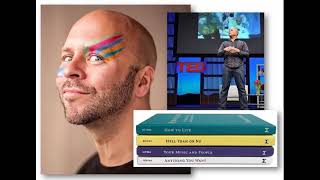
Derek Sivers sold CD Baby for $22 million and donated it all, then wrote a book where every chapter contradicts the others. He structures his publishing company so all profits go to charity, runs his own servers to avoid commercial platforms, and believes beliefs are tools for action, not truth.
Chapters
Living a life in full is a conversation you always wanted to have with that person who gave an amazing TED Talk, or the author of one of your favorite books, or that inspirational Olympian you always wanted to know more about. It's graduate level conversations with those making a difference in the world and in the lives of others. This show brings you new ideas and approaches so that you can live a life in full. I'm your host, Dr. Chris Stout and I hope you enjoy this episode. This episode is sponsored by our new video course, how to Publish in the New Millennium. From Scientific Journals to Best Sellers, it's an asynchronous course offering so you can watch it when it's convenient for your schedule. It's based on eight video lessons and provides three hours of material with new concepts, stories and examples and it includes several attempts and humor. You'll learn about the best ways to submit a manuscript to a peer reviewed journal, the mechanics of book contracting, what publishers are looking for, how to evaluate and negotiate a contract, royalties, advances, copyright and ownership, why to never first submit a manuscript to a publisher when you need an agent and when you don't, and the differences between publishers. You'll learn about ebooks, print on demand, Amazon's CreateSpace and KDP programs and other non traditional approaches to publishing, along with how to tell if a platform is of high quality or not. We do a deep dive into marketing, how to create media kits and what goes into them, along with examples how to create a great Amazon author page, how book signings work and how to be invited to do library talks and the economics of both, along with developing speaking engagements, promotional tours and being a podcast guest as well as a number of other publicity aspects. We cover blogging and provide additional resources to help you in crafting your work and making it better. This is a rich, fun and fact filled course that covers everything you need to know from a practical and actionable perspective. It's for anyone wanting to get their written work into the world, be it academia, popular media, or both. Join the Masterclass in Getting Published. To learn more, please visit tinyurl.com getting publishedcourse thanks. Welcome to another episode of Living a Life in Full. I'm your host, Dr. Chris Stout. Tim Ferriss says that Derek Sivers is one of his all time favorite humans. A philosopher, king, programmer, master teacher and merry prankster. Derek is an international man of mystery, or maybe contradiction. He's known and loved by millions, done three super popular TED talks, but he prefers to work alone, certainly when he's working and creating or playing as he'd more likely call it. Derek graduated from the Berklee College of Music in Boston and has worked as a professional musician and plays a number of instruments. He started a record label, booking agency and recording studio and he's the accidental founder of CD Baby, which became the largest seller of independent music on the web with over $100 million in sales for over 100 million dol 150,000 musician clients. He sold CD Baby in 2008 for $22 million, giving the proceeds to a charitable trust for music education, which we'll do a deep dive into, as well as his more recent donation of a quarter million in book sales to charity. He's been featured in the documentary your own Way out on the highs and lows of digital nomads. Derek launched another business, Wood Egg Publishing guides on how to do business in Asia. He's lived all over the world as well as London, the United States, Oxford, Singapore and currently New Zealand. Derek is a sought after speaker and author with four very popular books. Anything you want. Forty Lessons for a New Kind of Entrepreneur. Your Music and People. Hell yeah or no. And most recently how to 27 conflicting answers and one weird conclusion which we'll focus most of our conversation on in this episode. Oh, and one more thing. He was a clown and worked in the circus for 10 years. Hey, welcome to the show, Derek. It's good to have you on.
Thanks Chris. That was fun to hear my life wrapped up.
There you go. Yeah, I just love it. I mean it's such a bouillabaisse of fun, cool things and lots of surprises and twists and turns and things. So it's something I want to touch a little bit on in our conversation as well. And before we hit record, you and I are kind of grounding ourselves that I had seen you at the first for the first time live at World Domination Summit back with my daughter In I think 2015ish or something like that in Portland, which was really one of my all time favorite talks of yours and things as well. So maybe a place I would like to start off with is to talk about with one of the things with all the variety of things that you've done. I think a connecting thread through all those is your creativity. On your website you note that you like to make articles, books, websites, musics, companies, systems, apps and a especially new ideas. Can you say a little bit more about that? And where does that creativity spur from?
Hmm. Where is it usually feels like problem solving. I mean there's two different kinds of problem solving There's a mystery that needs to be solved or there's something that needs to be done. So as a musician, I would sometimes make a mystery for myself. Like, or a challenge. Maybe we should call it, like. Yeah, like a challenge where I'd. I'd want to combine a. Like an African bass line with a James Brown guitar part and a Beatles melody. And I'd say, hmm, like, how could I do that? Like, how you know what would be, Can I use those three ingredients to write a good song? And I would set myself out with this challenge. Then sometimes creativity comes from problem solving, right? Like when I first started selling my own CD on my band's website. And then my musician friends said, oh, wow, hey, can you do that for me too? Could you sell my cd? And I went, huh? How could I do that? Like, how can I help sell my friends music? And that's what led to me creating CD Baby was just trying to solve that problem because they were asking me to. And then now with writing my books, I'll just pick the newest one. For example, the book how to Live is written in a really interesting format where every chapter disagrees with every other chapter. So I got inspired to think, how could I write a book sharing everything I've learned so far in my life, but succinctly, poetically, and in a format where every chapter disagrees with the rest? And so that was the challenge I set out for myself. And it took me four years to do it, but I nailed it. But all of these things, to me, are super inspiring, whether I'm trying to solve a problem to help others or complete a personal challenge.
So I get it. It kind of resonates around the entrepreneurial spark of solving a problem, scratching your own itch kind of a thing. And CD Baby is a great example of that. When you talk about bringing your African drum line and your James Brown and your Beatle mashup, what, like, what happens just before that? I mean, is it like you're listening to some, you know, Beatles and then you think, gosh, this reminds me of a riff from James Brown. I wonder if, you know, we did.
Oh, no, I think what you're talking about is, like, there's just this creative urge for something that I think should exist, something that doesn't exist yet, but I want it to exist. And I'm assuming, I mean, you've met or had more of these conversations than I have. I am assuming that a lot of filmmakers, authors, painters, anybody that's creating something from scratch often has that same drive like, hey, there's this thing that doesn't exist and I'm imagining it and I think it should exist.
Yeah, I think that's true. And I think, you know, part of what the, in my very naive perspective with around the creative aspect of it is bringing things that at some level seem contradictory, which obviously your newest book is a great example of that, and bringing them together. And then through that process there is this new creation, be it a new song or a new business or a new book or what have you. So in the process of sorting those things, and like you just said, it kind of took about a four year Runway to be able to put this book together. Was part of this, you know, And I know you're also very good, you're also very busy and you also travel and you do a variety of things. But was it part of like using your well known hell yes or no decision tool? Because I'm sure there's other opportunities that have been, you know, popping up. Or was it just, you know, a Covid spark that got you this idea? How did it come up that you were able to make the bandwidth if you did need to make it? Or maybe you already had it vis a vis Covid and lockdowns, but tell us about that, your Runway to being able to get this book together. And was it by just saying, hey guys, I need to hunker down and focus on this?
Technically, I'm retired.
You're one of the most productive people in retirement, I think. Derek.
Well, it was actually a border visa control guy that told me that it was shortly after I had sold cd baby, and I was going to England just to visit. I was actually coming in with my bicycle, intending to try to ride my bike from the the bottom to the top of the uk and it was actually in Brussels at the Eurostar train. And I was just about to get on the train and they do the border control. Like at an airport, they do the border control or no, unlike at an airport, they do the border control before you get on the train instead of when you land. So he was asking me the usual questions, you know, how long are you going to be here? And I said, I don't know. He said, well, what are you going to be doing? I said, I don't know. I said, I'm just going to be riding my bike. He said, who do you work for? And I said, oh, this and that. And I was just giving these vague answers because, come on, get me on that train. But he kept pushing and he, and he said, so what do you do for a living? And I gave my usual conversational answer that I give to strangers that I don't feel like engaging with. I just say I'm a computer programmer. And that's, you know, he said, well, who do you work for? I said, oh, this and that, just for myself. And who are your clients? And I was being vague.
And.
And finally he said, all right, look, I'm not going to let you on this train because it sounds to me like you're coming in here to take a job and you're not admitting it. Oh. And I went, oh, okay. So, all right. And so I kind of, you know, put my head down a bit. I said, all right, this is really embarrassing, but I just sold my company for $22 million. Like, I don't. I'm not going to be taking anybody's job. You can go search the web and confirm what I'm telling you. And he goes, oh, why didn't you. You know, he said, why didn't you say so? He said, look, make it easier for everyone. He said, from now on, just admit that you're retired. And I went, oh, admit I'm retired. Whoa. Okay. Thank you. I got on the train, but I thought about that. It's like, from a government's point of view, the technical definition of retired is you're not employed by anybody for sure. Yeah, you don't need employment to pay your cost of li. If you don't need employment to pay your cost of living, technically, you're retired. And I'm just choosing to do things because I feel like it. So I'm writing books because I feel like it. I don't. I give all the money away. Even, you know, you've got a kind of a business angled kind of LinkedIn audience. So I'll say something that I don't usually get into. But even the way that I structured my book publishing company, I made it a C corporation, not an LLC or an S corp, because I didn't want any of the money to flow through to me. So all those books I sell, like, literally not a single dollar of it ever comes to me. It just. It goes into the C corp, and then the C corp donates all the proceeds to charity, all of it to just stay, you know.
Yeah.
$0 annual profit. Just gives it all away. So none of it comes to me. So, yeah, technically, I'm retired. So they were first. I should just say that, you know, making time. It's like, well, this is what I do. I'm. I'm just doing whatever I feel like doing. So.
And you didn't fit. You did. There wasn't a little checkbox on that guy's form, you know, for the Derek Sivers situation. So that's, that's right.
So. But I think your real question is like how do you choose what to dive into? And I think that that's something that all of us need to ask ourselves. Like what's worth doing is a, is a common question. You know, I've got all these paths I could take and so then I try to just think of the intersection of what's exciting me the most and what would help other people and what would be a smart use of my time. So sometimes it's hard to intersect those two. I could think of something that's exciting me but that might be a really dumb use of my time or something that's exciting me but is of no use to other people whatsoever. And so when I try to, when I find the intersection of those three, what's exciting me, what's helpful to other people and what's a smart use of my time, then I feel like, okay, this is worth doing.
That's good. You know it reminds me Stuart Brand Long now foundation and Whole Earth catalog and you know, just a kind of, kind of your people. I think he talks about having like a five year perspective that for, for his model and thinking about his life is that any kind of project worth doing is probably going to take about five years. Similar to your book, you said it took four. He thinks books are probably four or five year projects or startups. They're 5ish years before they really get their feet underneath themselves or what have you. I think that's to me it resonates with the hell yes or no kind of thing. And now with this kind of three legged stool that you're talking about, where can you find that sweet spot to be able to lean into? So, so do you feel like then the next things, like how is it that you then reconcile those three things when something comes to your attention or pops into your mind? How is it that you make those kinds of the decision making process to what the next thing is? Is it something always new or is it sometimes unfamiliar or is it iterative that plays off maybe programming or music or writing or how's your internal process for that of the next thing?
Hmm. I really do think that the last thing I said is the complete process. It's just like random things excite me. You know, if it excites me to start a Company versus write a book versus build a new website or learn a programming language or something like that. It's, yeah, just whatever's exciting me. Because if something's not exciting you, then it's kind of moot unless you're going to do it with this very somber sense of responsibility. Like, well, you know, this is the right thing for me to do. It's gonna be hard, hard work, but here we go. But I think if something just is haunting you, that's a good sign. That. Sorry, haunting in a good way. Meaning, like it won't, won't let you go. Yeah. Actually, you know what? That's one we didn't mention too, is persistence. There have been some ideas that have been sitting there for like two and a half, three years and they keep interesting me and they won't go away. I'm continually interested in this. So it's like, all right, it's been years now. I've been interested in this idea. I think I better do it.
Now's the time. So you are a prolific reader and kind of as a gift to the world, you do your book notes. And I just love those. I dip into those kind of every so often. And is that again, a process of like one of those things that you enjoy reading? You enjoy obviously, you know, making notes about it and thinking out loud about it and what, what Guy Spier refers to as sort of like learning in public, you know, sort of a thing. But tell us a little bit about like the, the genesis of book notes. I mean, a lot of people, you know, make notes or, you know, I, I can't have a physical copy of a book without writing all over it and dog earing the pages and, you know, doing that sort of thing. And then that sort of becomes my little bite of information in that book. But I don't, you know, I don't take the time to, to do the kinds of beneficial things. Your book notes, how did that come about?
Honestly, it's just about the same as yours. Except that because I already had my website set up and I was already keeping my book notes in a text file, I used to scribble in the pages of a paper book. But then I thought, all right, so I'm always going to have to pull down the paper book off the shelf and look at my scribbles in the margins. So I started in 2007 putting my book notes into a text file, one text file per book. It helped me search it so that say if I wanted to search all of my book notes for the word innovation or discipline or whatever it may be. I could search that across every book I'd ever read, you know, instead of having to pull down each one and say, hmm, because every now and then a. An unexpected book might have kind of a cross industry insight across discipline. Insight. Right. So say on the like, say if we're talking about. If you're thinking on the subject of trust and distrust and trust, and it might be a book on relationships and a book on the economy and a book on sociology, all might talk about trust. But that might not have occurred to you off the top of your head if you were just only putting your book notes in the margin of the book. And you'd have to remember all of the books you've ever read and to kind of pull down and remember that this one also talked about trust, even though it was mostly a book about diet, you know. So that's why I started keeping them all in text files or putting them into text files. If I was reading a paper book and I would just take half an hour after reading the book to type out all of my notes into a text file. That way also I could just give away the book. You know, as you said in my intro, I've moved around the world a lot, so I couldn't bring all these paper books with me everywhere I went. So keeping my notes in a text file was just the best format for me. So that was only for my own use for a couple years. And after about two or three years of doing that, I thought, well, it's actually no problem for me to just put these on my website. It's like an additional one minute of work. It's really no additional work. So. Yeah, so for every book I take the notes really just for my own sake. It is not a summary of the book. When you go to my website. So the web address is SIVE RS Book. That's the URL for my book notes, which now has, I think over 340 books on it. But I. And I keep adding a new one every week or two. But that's all just for me. It's really just for me. But as a side effect I put it on my site because why not? It's no extra work.
Yeah, well, again, it's a wonderful gift. I think you sort of have this very rare and wonderful generosity gene or something that gets expressed quite often in very creative kinds of ways to the work part of it then. So you've been quoted in a variety of different places that you like to be like Work solo and you like to work a fair amount of the day. The old joke of like you work half a day, day and it doesn't matter which 12 hours of the day it is. So how do you, how do you manage that? And you know, just, you know, because I also know you're a dad and you're physically active and things. How do you parse the 12 hours a day plus, you know, reading the books and hiking and journaling and all the other kinds of activities that you're involved with?
I think it just helps. I don't really schedule things with other people. So I, I just wake up and begin. So I, I don't know why I don't, I don't sleep much. Like five or six hours always just seems to be my natural time. So I, I wake up at 4 or 5am and I just start writing. And my kid maybe wakes up at 7 or 8 and I play with him for a bit and then send him off to school. And after he's off to school then I get back to writing or reading or programming or whatever I'm doing. I pick him up from school, we play and then you know, when he's out with friends or goes to sleep, then I keep working till I fall asleep. Yeah, that's it.
Rinse and repeat.
Yeah. There's no special methodology to it, just always do it. But it does really help that I'm remote in New Zealand. It's different than when I lived in New York City or Singapore or Los Angeles and people want to meet up all the time because there's such a. Hubs of innovation, you know.
Is that why you chose New Zealand?
A little bit, yeah. I moved here after my son was born because I, I was living in Singapore when he was, when he was born and it's a very, very social place. And so living in Singapore, I met up with later I counted 490 people. I met up with like two years in Singapore. So I was hyper social in Singapore and I just needed to. My son was born, he was a little baby and I just wanted to give him my time. So I was like, all right, goodbye. I'm moving somewhere. Where? I don't know anybody in the middle of nowhere.
So are you like in a rural area? You don't have to tell the town or anything, of course, but I mean, is it like rural or what's your geography like?
I wish. Well, his. At first we lived rural, but his mom grew up in New York City and she couldn't handle the small town life so now we live in Wellington, which is the capital, but still it's. I just keep my head down and stay my head down in my work.
Gotcha. You know, I have to say I. The, the first and only time I was in New Zealand, I was in Auckland and there were the Santa Fe Institute had a conference going on there, which is what got me there. And I just, I remember, I don't know, it was jet lagged. I don't know what time of day I thought it was or whatever, but it was. I do remember it was a Sunday morning. I got up and was it and the hotel was kind of near downtown. I could have a nice walk and stretch my legs and get reoriented and I walked by this church that had the front doors open and you could hear the organ and you could hear the music and you could hear the people singing and it was just sort of like, you know, I swear Derek, there's like a unicorn that flew by when that was going on. It was just so idyllic and so lovely and so wonderful. And just for that short little amount of time where I got to get to meet some of the folks that lived around that area and whatnot and have little conversations and get to know someone is in a quick kind of traveler kind of way, it was just charming and wonderful. So I just have such idyllic memories of what New Zealand is like. So I could certainly see that just being a wonderful place to raise your son and to have that time, but also have that distance as well too to be able to have that productivity. So I know that you grew up as this musician and technology guy and somewhere I forget, I don't know how recent or distant this is, but that you were also refactoring your code and doing a massive cleanup of your code and that you have your own server and stuff. So in the nerdy, if we can get nerdy for a little bit and then shift into your writing, you're tech independent, you've got your own freaking server. Which kind of sounds like today a little bit like Web three kinds of stuff. Is that something like why have your own server? Just in terms of not having to be tech dependent on anything or anyone else, so to speak. What are your thoughts about that and does it relate any which way now to web3ish kinds of things?
Nothing to do with web3 though. The common theme is decentralization, which I always have been a huge fan of. So in fact I'm going to answer your question by tying it together with something you Said a few minutes ago you said that my book notes seemed very generous of me and you said this compliment and continued on. But actually I don't think I could take that much credit for that because these things are combined. I think I'm a product of the original old web Internet, meaning I got online in 1994 when the web barely had images. It was mostly text. And images were like a new thing that they were, it's a graphic. And it was as the web was just beginning, so people were still using FTP and Gopher and Usenet newsgroups and actually most of the community was still in Usenet newsgroups. And you would dial in with your slow modem using your home phone line to connect to Usenet newsgroups, to ask people questions like, hey, I'm trying to get my reverb unit set up to my digital audio converters. Anybody else solved this problem and somebody would say, oh yeah, you need to set it to 24 bit instead of 16 bit, you know, check the switch on the back of your thing and say, oh cool, that worked. You know, thank you so much. And somebody else would ask a question that you knew the answer to. So you'd, you'd give back to this helpful community that helped you solve a problem. And the entire thing was non commercial. And it wasn't until like a year or two later that businesses started showing up in this little non commercial, helpful library type place. And I was like, make money on the Internet? Yeah, good luck with that. Nobody's gonna make money on the Internet. We're here to. This is like a community of people helping each other. Like that's what it is. And it really felt like your local library or community center. You know, it was very, just information based, just everybody volunteering their time to help others because others helped you. And that's the spirit in which I got online. And the only way to have a website back then was to host your own. And so you had to figure out how to use the Apache web hosting software and the config files and upload your own HTML files to your public directory. And that's how you made a website. And that's what I've been doing since 1994. And I just, when other businesses came along, they're, they're arguing like say Hotmail coming along, saying, hey, hey, you don't need to set up your own email server anymore, we'll do it for you. And I thought, well, I don't need you, I have my own mail server. And then other WordPress comes along and says, oh, you don't need to write HTML, we'll do it for you. And I thought, well, I don't need you. I do my own website. And so for each of these things, businesses came along saying, no, no, no, you don't need to do this anymore, we'll do it for you. And I just thought, well, I'm all set. I have my own server, I make my own HTML, I do everything myself. I host my own mail, I host my own calendar and contacts. No, I don't need you. Google for calendars and contacts. I host my own. So it's just, I've just stayed with that. But even this thing about when you said that it seemed very generous of me to share my book notes, I still don't think so. I'm still just in the spirit of the old 1994 web brew era, right? Yeah, it gave me a lot and so I give back a lot.
Yeah, that's great. That's great. You know, I'm a bit older than you and it just reminds me, back in the day I was a math major because computer science really hadn't kind of propagated at least to Purdue where I went. And I remember having punch cards and, you know, batching stuff and writing in Fortran and, and yeah, all that dectins and stuff. And I wrote this teeny weeny program just because then when I transferred into getting into psychology, I was always terrified that I was going to misdiagnose someone and treat them with psychotherapy rather than give a referral to an endocrinologist if there was something wrong with their thyroid, but they were presented with anxiety or depression or something. I just took this old Ashton Tate D base three plus program and you know, I just wrote, I. It's hardly even like a, I hate to even call it a program but, you know, just kind of wrote what I needed to do to be able to put in a person's symptoms and then to kind of sort and give a probabilistic answer as to, well, this probably is really psychological versus, you know, you probably should give that referral, Chris, to, you know, someone that's, you know, can deal with their thyroid. So, you know, maybe it's again, kind of a reflection back of, you know, kind of how you, you know, the things, the problems that you were trying to solve and just kind of taking the tools, tools at hand to be able to do it. So. All right, I have one last obligatory techie question and then we can get into the book. I Don't know how much you follow. I feel like just totally out of my depth with anything that's, you know, Web3 and NFTs. I did have a gist on that. Tried to hold my hand and explain what blockchain and stuff like that was all about. But it seems like with your tech background and the, you know, the independent kinds of things, vis a vis servers and all that. Do you have any thoughts or is this on your, your radar of like, music NFTs or like. I read that. I think it was Sound. Sound XYZ has a, like a curated platform where people are making NFTs out of, you know, some of their songs and limited editions and stuff. Is that, is that something that you're curious about or you have opinions about?
In short, no. We can all, we all just do whatever excites us and interests us, right? So some people get excited by Russian literature and some people get excited by, you know, mold and fungus growing patterns. Some people get excited by NFTs and MetaMask and blockchains and Web3 and other people get excited about training horses. So you can't fault the people. If you're really into training horses, you can't really fault other people for not being into training horses. Even if suddenly training horses is like the newest, hottest, trendiest thing that everybody's talking about on the COVID of every magazine and they're like, God, why aren't you into training horses? You're not into training horses. Everybody's training horses now. Why aren't you?
Are you investing in training in horses too? I got this deal.
Just because everybody else suddenly got excited about training horses doesn't mean I need to get excited about training horses. So, I mean, I know, I understand all of that stuff. And since I've become a programmer just over the years, I didn't start out as a programmer, but just over the years just building my own website, then building CD baby and running it. I always just did all the programming myself. I didn't have a team of programmers, it was just me. So I know how to program. And so I built my own blockchain. Like when I heard about blockchain, it's called like a merkle tree, and I was like, oh, that's kind of interesting. Okay, so each refers back with a hash. And so I built my own blockchain just to kind of learn how that works. And wow, I, I bought a bunch of bitcoin back when they were like a dollar each and, and I transferred them to some other people and then Some people transferred some to me and I went, okay, that's kind of cool. I see. All right. The distributed, you know, distributed ledger. Okay, that's kind of cool. I see how that works. And then suddenly my bitcoins that were $5 now were worth $5,000. I was like, oh, that's kind of cute. Like, they went up in value. I was like, well, I don't need these anymore and charities do. So I gave all my blockchain, all my. All my blockchains, I gave all my bitcoins to charity. And yeah, Ethereum came out and I learned about smart contracts. And I, you know, made a little test and see how that works. And I think Web3 is just the. The term they give it now is trying to make a catchy name for it. And. But, yeah, I mean, I get how it works, but it just doesn't interest me. And I think. I'm guessing, I don't want to assume people's motivations, but it seems from the outside like most people are excited about it because they think they're going to make money with it.
Yeah, yeah.
And if you remove the money aspect, they're not so excited. So I saw this happen in the music industry. You know, I was in the music industry in its heyday, in the 90s, when a lot of people were making a lot of money and they were really excited about it. And. And then as soon as, say, like the end of the 2000s came and not as many people were making as much money, a lot of people left it because it wasn't so exciting to them anymore because they weren't making so much money anymore. They just follow the money. So it was always a good test of how intrinsically somebody is motivated. Are they coming in just when the money shows up or are they sticking around after the money is gone?
Yeah, well. And again, that reminds me of what you just said, too, about the whole aspect of being able to provide helpful tips and build these kinds of things and be helpful to a community. And then all of a sudden there's this monetization aspect or commercialization aspect of it that just kind of, I don't know, makes. It certainly makes for people doing inappropriate, not. Not nice things and just kind of also spoils the community aspects of it, too. I think so. All right, well, good. I just.
I had.
Because I just, you know, I. In my head when I was thinking about, you know, things to discuss, it was sort of like this whole, you know, aspect of this, but knowing also that you were, you know, really kind of a, an early digital nomad in some sense of, you know, just even having your own server. So. Well, let's, let's shift now and talk about publishing and your books. My first book of yours was your music and people and a couple little fanboy things. I just have to say so in full transparency. I really enjoyed that. And that really kind of got me into wanting to know more about you and the talk that, that, that you'd given it world domination, etc, it was just sort of like, okay, here we go. This, this, this guy's, you know, got. Does cool things and then I need to learn more. And I also, I probably shouldn't be saying this because it's, it's a little bit embarrassing, but like, I also downloaded your audio version of it and it was just sort of neat to hear. You know, the, you have a wonderful voice and the way that you talk about the, these kinds of, you know, like just reading your book in your voice was just really kind of a fun thing to do as well as now with, with your new book. So. So having said that and embarrassing myself, your. Your latest book is how to Live 27 conflicting answers and one weird conclusion. And you've described this as your best work. So first off, you know, how, how did you come to it or how did it it come to you?
By the way, thank you.
You're welcome. Well, by the way, thank you.
So there is a book, maybe my single favorite book ever written, is called Sum S U M by David Eagleman. And what I love about it is that it's 40 short little stories, just a few pages each, that all answer one question, which is what happens when you die? But every chapter answers it differently. So it's a collection of 40 short stories, seemingly by 40 different authors, but actually by the same guy. So it's like as if you asked 40 different people with 40 different opinions what happens when you die? Tell me a little story about that. And the 40 people answer it in 40 different ways, all disagreeing with each other, of course. And I just, I love that format. And so I read the book twice over two years because I loved it so much. And then one day driving down the road, I just went like, oh my God, I want to write a book called how to Live in that format. Because everybody's got their different answer of how they think you should live. Some people think it's, do you need to be driven by habits? And some people say, no, you need to be driven by the big picture, the big goal. And other people say, no, it's. You need to live every day in the moment and just, you know, live in the now, the power of now. And somebody says, no, it's all about leaving a legacy. This is what money, or this is what it's all about. Somebody said, no, no, no, follow the money. Money is a neutral transfer of value that shows you where you're being of best use to the world. And somebody else will say, no, man, it's all about love. Life is love. Everything else he said, doesn't matter. It's just love. And each. Each of these people writes a book telling you that their answer is the answer. And it's funny, as somebody like you and me, we read a lot of books. We've read a lot of conflicting opinions. It's kind of funny then, to read a book that says, life is habit. And somebody else says, no, life is love. And somebody else says, no, life is money. And they all disagree with each other. And I thought, how fun to write a book like some, but about how to live. And each chapter will disagree with the rest. And I don't know if you had this, like, when your daughter was born, this feeling of like, I want to share everything I've learned so far just in case I die before she gets older. I want to put everything I've ever learned into writing so I can share with her the lessons that I've learned in life and want her to know I wanted to do that when my son was born. And so how to live is also me doing that. It's like taking everything I've ever learned in life, the most important things that I'd want to pass on to my kid. But then categorizing them into this format of one chapter says, live for the future, and another chapter says commitment. Here's how to live, commit. And a different chapter will say, here's how to live, be independent, which is the opposite of commit. It's completely disagreeing with it. And. But it was a way for me to share everything I've ever learned in this wonderful format. But then along the way, I realized that the whole thing had a conclusion that all of these conflicting worldviews do reconcile. And so that's what the surprise. Weird ending is about.
Well, and it really is. You lead the reader through the journey of that, you know, the juxtapositions, like. Of, you know, teeing up that. That end which. You know, which people need to get the book and see how that works. But, you know, I. I felt like such a lame brain as I was reading it. Because I'm thinking, oh, Derek's. And it's like, oh, well, maybe, maybe, you know, that seems a little surprising that he would think that. And then I read a little further, it's like, oh. And then I'd be a little further still and be, oh. So yeah, it's really kind of a, there's a certain, I don't know, it's like the emperor has no clothes. You know, there's so many different kinds of ways to interpret it and to, I mean, to like, you know, is it satire to, you know, self help books? Is it, you know, just sort of this sobering kind of thing of like, hey, folks, there's. This is kind of how life is. These are the, you know, everything's. Can be contradictory or paradoxical or, you know, ironic or whatever along with it. And it, it also reminded me, I love your, your talk of the opposite may also be true, you know, which I think also then kind of culturally contextualize, you know, sort of like this is how things work. I remember the guy. It's been a while since I've seen it. But you, like you talked about like, I think there was a, some kind of healthcare person, healer person, and that he got paid, what was it? He didn't get paid when you get
sick, when you're healthy.
Yeah. He got paid when you're healthy because that was his job.
Yeah. Which is a wonderful like reversal to think that. Yeah. Apparently it's not too uncommon in villages in China that the local doctor, you pay him something every month when you're healthy and when you're sick, you don't need to pay him because it's like he's failed at his job. His job is to keep you healthy. And as soon as you hear that idea, you go, of course, of course. That makes sense. That's a great way of doing it. And it's just, it's the opposite business model of most doctors, but it's equally valid.
Yeah.
And you know, I live in New Zealand, which is at the bottom of the earth. And every now and then people in Australia and New Zealand will take a picture of the round globe that we live on and say, you know, there's no reason to put those countries up top and us at the bottom. It can just as equally be the other way. So it's, you know, you do the update, put the sphere this way around and people go, what, you put it on the wrong side? No, you know, we live in the circle. Right. So it's, it's interesting all of these Ways where the opposite of something can also be true.
Yeah, yeah. I just.
So how. Right. It's a common thread that's fascinated me for years. So how to Live is. I mean, my book how to Live is like that TED Talk that I did in 2009 where the opposite may be true. It still fascinates.
Yeah, well, and it's, it's also. There's kind of. It's become a little bit of a joke to a cliche that the. One of the former deans of the Harvard Medical School said that we know that half of what we teach our students today is wrong. We'll be shown as wrong. We just don't know which half, you know, And I think that's, you know, it also is. I mean, this is a little different spin on it, but it just is. It seems like it's, you know, in this same maybe a little overlap of some Venn diagram of it of, you know, like science and knowledge and learning, you know, like how, you know, the more data we get, the more we, you know, let go of these past, you know, orthodoxies that everybody gets taught or everybody believed was true until, you know, that Black Swan event occurs or there's some. Something that kind of, you know, proves that, you know, the. Either the opposite may be true simultaneously and it's all perspective and culture and circumstance, or it, you know, certain kinds of things do obviously change over time and evolve or grow or, or devolve or fall apart. So I just, it's sort of, you know, with your book and these in the TED Talk, it's sort of like a. It almost makes me feel like, gosh, you know, it's refreshing to kind of be reminded of these kinds of things. And through the process of your book, it just says it so full throatedly in so many different kinds of ways. You know, it's sort of like not just, you know, the Chinese healer, it's like, oh, yeah, this way. And then, you know, you keep reading, go, God darn it, Derek.
Yeah,
So I just, I can't imagine writing that because it is like. I mean, was it. Did you feel like you were like writing poetry or something? Because it just. What was that like?
Well, okay. There's a different. Okay, sorry. So for anybody listening, if you haven't seen the book yet, it's written in a very, very succinct, almost poetry style. But that was just because, Chris, honestly, the first half of. I mean, sorry, the first draft of the book was over 1300 pages. I was like, okay, I am not going to put out a 1300 page book into the world. So then I kept reducing and reducing and reducing. It's like I don't even want to put out a 600 page book. And honestly, I don't even want to put out a 300 page book. I really value succinctness. So I kept reducing it until now the book how to live is only 115 pages. And so each sentence in that book now represents what used to be an entire page.
Wow.
Like over and over again, I've reduced what used to be a page down to a single sentence. And so there's not a single word wasted in that whole book. There is not an ounce of fluff.
That is very true. Yeah.
But also. But going back to what you were saying a minute ago. Yeah. I had to be somewhat split personality to write it because every chapter I was writing, I completely believed that chapter. So, you know, say for example, the first two chapters, the very first chapter says, be independent. And it gives all of the reasons why you should be completely independent, not dependent on anybody or anything. And then the next chapter is called Commit, which is about the benefits of picking a place and committing to it and staying and picking a person and committing to them and whether marrying them or, you know, committing to your family, committing to your children, committing to a career and staying with it. It's the opposite of independence, and yet it's also true. And so for each chapter, I had to get into that mindset. But actually, you know what, I'd actually like to. I'm gonna ask you about something to see how this idea resonates with you, because I've never talked about this before, but I often think in terms of what beliefs are useful. They don't have to be true, but how are they useful to you? And so imagine that you go on a long run every day. And when you're on your run, you have plenty of time to think. So you often think about the motivations to get you to the end of your long run. So you used to often imagine a pot of gold at the finish line and you'd say, well, I have to get there first, otherwise I don't get any gold. And that used to motivate you to get to the finish line. But then one day you try imagining that there's a tiger on your tail and he's just, you know, just a foot behind you for the entire time. And that motivates you better than the imagining a pot of gold. And then. So then you use that for a while, but Then a running expert looks at your technique and says, hmm, try imagining that the ground is hot lava. And so you try that. It helps you stay on your toes and lift up your knees more. And so even though it doesn't get you to the end faster, you arrive less tired. And then one day you just, you do this experiment where you try closing your eyes for your entire run. And even though it doesn't get you to the end faster, but like, oh, wow, it's so much more interesting to do it with your eyes closed, it means that you listen more. And after you've done the run a lot, a lot, a lot of times you think, you know what? I want to improve this trail for the other people that do this run. And that may do it for generations. So you start bringing a shovel with you and stopping every time you see a hole and you fill it in, or every time you see a bump or a root in the way, you get it out of the way. And so of course, you're not optimizing for travel time, but you're making the path better for everybody that comes after you. So each of these things are a completely different approach to your run. But now imagine if somebody came to you and said, okay, well, what is the right answer? Which is the correct way to think about running. What if somebody came along and said, I have just written a book that says the correct way to think about running is there's a tiger on your tail. This is how you need to run everybody. You think, well, yeah, I did that. It works in some ways. But that's not the only way to run. And this is how I think of beliefs, is that for one, most importantly, it doesn't matter at all whether they're true or not true has nothing to do with it. We're not looking for what's true, we're looking what works for you. Because our actions are driven by our emotions. And what changes your emotions? It's not facts, it's beliefs. Beliefs are what change your emotions. So all that really matters is not what's true, but what, what, what you believe, that's what changes your actions and that makes all the difference in the world. So, yeah, how does this, this whole idea of useful or true, like how does this work for you? You personally, Chris, I don't mean you any listeners.
You know, it reminds me of. I have to kind of lean into my, my psych stuff. Like there's the, the whole aspect. There's a guy named Leon Festinger, and he had a concept called cognitive dissonance and, you know, I think it gets back to like looking at yourself and who you see yourself internally to the external world. So, you know, am I a person who would do something dumb? You know, and if I am and I do something dumb, then that kind of fits into my worldview and I shouldn't have any dissonance between, you know, doing something dumb because it's, well, hey, you know, I'm dumb. That's what I do. Vers versus, you know, if I do something dumb and I see myself as not being dumb, I see myself as being smart or wise or crafty or something, then you sort of have to come up with this sort of reconciliation that either my belief as to who I was needs to somewhat be modified by virtue of this new evidence or this new evidence can be dismissed in some other way, that this, this doesn't really count for me, or it doesn't. You know, I'm not afraid of tigers, so if one's chasing me on my run, it's not really going to bother me and I'm just going to throw a saddle on it and ride it, blah, blah, blah. So I guess the whole concept of beliefs and how does a belief come into being? Is it indoctrination? Is it brainwashing? Is it Stockholm syndrome? Is it religious upbringing? Is it what mom and dad always, you know, preached or wanted or whatever? And I think, you know, again, it's hard for me, you know, to, you know, I think it's hard for myself. I'll just take responsibility for myself. I know it's hard for people in general, but it's certainly hard for me to try and sort those kinds of things out. And, you know, really, you know, I guess I have to like, you know, talk to trusted friends or, you know, my family to kind of say, you know, hey, I'm thinking this. It doesn't quite fit right or feel right. Maybe it's just too new and I need to break it in, or maybe I'm misinterpreting something or maybe I've got this, you know, all wrong and sadly these kinds of things for me personally come up. You know, like when there's been some kind of conflict with, you know, with someone in my family or with a friend. So I don't know. It's probably a bit of a rambly answer, but I don't know if that really gets to it. So, you know, push me if I'm not quite what you were thinking or what are your thoughts about my, my gibberish here.
No, I Like that a lot. So. But you're saying that then when you, when you have a belief, it. If it feels in conflict with other aspects of your life, like that. Is that what you meant? Like the cognitive dissonance where this belief is in conflict with life or effectiveness or reality, probably conflict with.
More so conflictual with maybe my. My view of self. Because, you know, there's the kind of thing too, like, like I have a lot of different interests and someone externally might say, gosh, that really seems contradictory. You like X. And people that like X never like Y, but you like X and you like Y. And so they could either say you're a hypocrite, you know, or you're complex or isn't that interesting? Tell me more. How is it that someone that, you know, thinks this way can also think this way? So I guess, you know, it's that sort of. It's more so like, of. From a psychological perspective of how, How a person views themselves or how I view self, my. My per. My being. And am I the kind of person that would do what I just did? You know, and it's sort of like, well, did I. Maybe I need to question why I did what I just did. Was it purposeful? Was it just. I wasn't thinking. Was it. Was I being sloppy? You know, and was that a behavior or was that a, you know, a comment or something that I did or didn't do that really doesn't fit with, you know, like, gosh, you know, it's. Maybe it's like regret or something. Like when you, you say that really horrible thing that you just, you know, 10 seconds later wish you hadn't said, and it's sort of like, oh, my gosh, you know, is that. Is that what I really feel? Is that what I really mean? You know, and how does that reconcile with, you know, who I think of myself? I'll tell you, here's another super transparent. And then we got to change the subject. But it's sort of like I'll have these, these. I'll say something in. In impulse and anger, like, like to my kids or something, historically. And then I'll like, the next day I'll be like, going, oh, my gosh, that was like, you know, you're a psychologist dude, you know, you, you know, that you don't say those sorts of things. And then I future project myself. Like, I'm this cool, hip, Zen father, you know, that just says all these, you know, you know, karate kid, you know, fortune cookie, wonderful, you know, epiphany. Things to my kids, you know, every couple of days and they just, you know, scratch their chins and you know, go, wow, dad, that was really awesome. You know, which it never, never has been, never will be. But it's, you know, it's those kinds of things where I have this, this thing of like, you know, oh, you idiot. Why did you just say that? That is not who you are as a dad. That is not how you would like to identify as a person or a partner or a friend or something. So again, I don't know if that helps or if that's just, you know, muddying the waters, but that's, that, that's, I guess it's a struggle I have with it, with those kinds of contradictions.
But that's so fascinating that, yeah, for you the identity thing that makes me wonder about the appeal of subscribing to one how to live, you know, one way of life. Because there's a, for one, it's kind of a tribalism to it. It's just like I'm a part of this tribe. Like, this is my identity. I belong to tribe abc, you know, to this. I think most of us listening to this, we can't imagine suddenly switching our religion to become Jainism or Jains or Hindu or Baha' I or Muslim. To the idea of just like completely switching your religion seems unthinkable because that would just completely go against who I am. And so I think when, when a book comes out, like say Atomic Habits, which is a wonderful book, but a part of the appeal is like, ah, yes, this is the answer. This is how I should be organizing my days. This is how I should be living my life. This is how I should be approach my work. But then a different book can come out like the four hour Work Week and you can go like, ah, no, this, this is the, like this is how I need getting things done. Four hour work, whatever it may be, a big part of the appeal is that we say like, I'm subscribing to this, I'm joining this mini religion or whatever. Like I, this is, this is the answer. I'm, this has the answer to all of the things. It's identity, isn't it?
Yeah. Yes, I think so. And let me just think out loud with you with this other real life paradox and concern that I have, like we sort of joke in my family that with my son, he, like, if you say something, he'll say like, and if he doesn't get it or doesn't, even worse, doesn't agree with it. He'll say, why do you say that? So sometimes it's sincere, like just trying to. Seeking first to understand, you know, like, well, why is it that you would think that. And that's. That's a great conversation. That's great. But when there's a little bit more of an edge to it, like he has challenged us in like, talking about, like, if this person is of this. I'm just going to kind of keep it quasi generic. If this, if person X is. And someone who he knows and cares deeply about is of this political party, how can they. If I see them as having all these one. Attributes that I don't see as being part of this other identity, how do they reconcile that? And I just sort of have this hard time trying to explain to him to say, people are complex. It's not that they're being hypocritical, you know, it's. It's, you know, I like X and Y. Most people that like X don't like Y. But I, for whatever weird reason, like X and yeah, you know, that's kind of one of the challenges that we have is. And our conversations and discussions at home of that kind of a thing. And it's almost like having a bias, honestly. Well, all people that are X really are dumb. And boy, if that person is X and they're not dumb, then they're not really X. So they've mislabeled themselves, that sort of a thing. And back to, again, psychology and labeling theory and bias and things like that. But again, to circle back to you and to the book, it's the way that you've distilled your pages into sentences. There's a potency to that, Derek, that really gets the message across. It really, really. I mean, it takes us a few pages to kind of get the point, but then you go, and again, for me, this is just dumb old me. But I get to that and I start to read the next. And like, okay, I know now. I know what I'm in for. And I start to read it. It's like, oh, God, yeah, yeah, you know, that is how it works. I have drank that Kool Aid. This has happened. I've seen this. And then you read the next paragraph or the next line or whatever, it's like, oh, yeah. So it's just. Again, I think these are very difficult. It's hard for me to even articulate with you on this show about how I struggle with it. And I know people, everyone I think that thinks about this sort of thing probably has some Kind of struggle with it. And it's sort of like the proverbial advice is hard and advice fits very few people consistently. And we're all very different kinds of people and we all have different experiences and perspectives and stuff. And again, the way that you did it, I think is just such a freaking creative, brilliant way to do that. I can't imagine if I read a scientific article about it, it would have all these things about, well, some people think this, and because of this reason, they also then think this. And then this leads people to having this kind of a conclusion versus, again, yours is really kind of this poetic treatment of it in a way that you kind of can't help but be compelled to, like, turn the page and, you know, see what the next one's going to be.
Thank you. Hey, did you say it was your son that found it hard to comprehend that people who do X sometimes do Y were categorized as X sometimes? So it's. I've been thinking about that too, that I think the truth. Truth is not simple. Truth is nuanced. I think simple works for bumper stickers and simple works for catchy slogans. That can help become like, a rule of thumb and it can help you remember. But the truth is always more nuanced than that. And so I'd actually, if I was wise and if I was in that moment with your son, I might have explained him that he shouldn't think it's weird when somebody who believes X sometimes does Y. He should think it's weird if somebody doesn't. That if somebody adopts one single philosophy and applies it to every single aspect of their life, that would be weird because even think about, like, I'm. I'm completely not political. But, like, imagine that I treat my family like. When it comes to my family, I'm a complete socialist. When it comes to my neighborhood, let's say I'm liberal or something. When it comes to my country, I'm a libertarian. When it comes to the world, I'm Green Party. You know, I want the world to be. And so, yes, those are. I can hold different approaches, but it's because the truth is more nuanced. It's different aspects. I don't take, say, if I'm libertarian when it comes to my federal politics, I don't apply that same libertarian approach to my family. That's ridiculous. So it would be weirder if somebody said that they were X and applied X everywhere in their life. In a way, I'd say that was a hint that they weren't Thinking clearly that they were just trying to be dogmatic instead of realistic.
I like that. Yeah, I like that. And, you know, in my. As a thought experiment, I can't imagine anybody that I know that would actually be that way. So that's good. You know, the variation on that is that. That's the weird thing. So. All right, good.
Okay.
Thank you. I will be venmoing you for our therapy session today. Derek, thank you so much.
Well, no, this subject has been fascinating me because I ended up reaching out to the author of one of the best philosophy books I've read just last week to ask, like, is this. Is this a thing? Like the story I told about the running and the pot of gold versus the tiger on the tail versus hot lava versus, you know, closing your eyes. Because when it really comes down to. Can be summarized by saying, I want to believe what's useful, not true. Whereas philosophy and philosophers always seem to focus on, yes, but what is true? What is reality? I'm going to debate this with you and figure out which one of us has the right answer for what's true. But just the whole conversation seems moot to me because, well, for one, I want whatever is useful to me. So, hey, if you're saying the pot of gold is the most useful to you, great. Well, tiger on the tail is most useful to me today. It might not be most useful for me tomorrow. And in fact, I really enjoy imagining different things on my daily run. I like switching approaches. So even switching is useful to me. Like, sticking with one for the rest of my life wouldn't even be useful. Yeah, so it's. Yeah, I want to adopt a philosophy that works for me to get me where I want to go today, which might be different tomorrow.
I like that. It's, you know, just a quick little segue, too, because, like, you think about the scientific method and, you know, we started off with this talking about beliefs, I think, and. And, you know, and what you just now said maybe is what triggered this of, like, you know, trying to find truth and looking at it from a philosophical perspective, but, like, if you even apply to scientific perspective or even the. The cliche joke about the Harvard dean's comment that, you know, in. In science, you try and prove the null hypothesis, so to speak, and so. Or disprove the null hypothesis hypothesis, sorry, and that you, you know, want to have a probability that within, you know, 0.5, 0.05 or 0.01 level of confidence. And there was a fellow, I forget if he's University of Toronto Somewhere, I think in Canada he did a study, published it. I think it was in something in medicine or healthcare and someone is often the case in that area tried to replicate his study study and they tried to replicate it and they did not get clinically significant or statistically significant findings. So this kind of freaked out the original author and he then read their paper and wondered maybe where they varied from what his methodology was. And he really couldn't find anything. And then he just kind of irked him. So he reran his own study with new subjects, etc. And he himself did not get the same results. So it's sort of like this, there's this almost kind of a meta scientific perspective of looking at things and it really, you know, man, it blows my mind. And then think about, well, what is, you know, what is truth? What is evidence, what is, you know, from a, just, you know, and it, you know, the, the ante is fairly high if you're like looking at medications or clinical interventions or surgical procedures or you know, those kinds of, kinds of things. But you know, it just seems like it's a variation on that same theme of like trying to find out, well, what, you know, what is the truth, what does fit, you know, And I think your, your perspective with it of, you know, kind of seeing what, what is it that works and what works today may not work tomorrow. So let's just, you know, keep open and agile to, you know, adapt as need be and then, you know, keep, keep, keep at it, so to speak. So. Oh my.
Well, you know, even the replicating studies. So Daniel Kahneman, who wrote Thinking Fast and Slow, was criticized a few years after that book came out saying, you know, some of the tests you did in there, we, we couldn't replicate them. How dare you. Let's debunk this whole thing. But once again I come back to useful versus true. Yeah, if say one of his findings in there said that, I'm just going to pick one that wasn't in its book. But it's like related. One thing that I know about is one study, one of these like social psychology studies found that people who didn't share their goals with others were more motivated to achieve them because they hadn't yet felt the social reward of telling others that they were going to do this thing. So the takeaway from that was, hey, instead of telling your goals to anybody, try keeping them to yourself and you might find yourself more motivated from now on. So when I heard that, I went, ooh, that works for me. I think too often I'VE thought of a goal, I've told the world I want to do this thing. The world rewards me just for announcing that I'm going to do this thing. And I have felt myself less motivated to do that thing now that I've felt the social reward already just by announcing it. Right. So that works for me. So if somebody comes along and says, you know what, we tried to replicate that study and it didn't replicate, so it's false, I think. Well, I don't care that it's false. This works for me.
Yeah, yeah.
That belief, I don't. Yeah. So true or false doesn't matter to me. It's what works for me right now. And that belief might not work for me next year, but for right now this is what I need.
Yeah. And you know, the same benefit of a placebo, you know, or the same benefit of whatever, whatever it is you think it is that's working, you know, then. Yeah, lean into it. So that's, that's really funny because again it's, it's back to your book with like the contradiction of accountability, partner. And you know, tell, tell the world so that you know, you've, then everybody's got their eyes on you and so you're not going to let them down, you know, and it's just again it's, it's, it's what works for who and what circumstance and, and you know, don't count on it working tomorrow because it, you know, it may be a different day tomorrow.
So.
I like that. Well, listen, I know we're, we're, I'm very much enjoying this. I do have a couple other things I want to ask you about if you're good for time.
Yeah, we're good.
So I love, you know, I think when you and I reconnected about getting to do this show, one of the things, I had just written a piece for LinkedIn called the Sting of Moral Clarity. And it was basically that was spurred by a conversation I'd had with Charlie Bressler. And Charlie Bressler was a guy that volunteered to kind of like co found with Peter Singer the non profit entity called the Life youe Can Save, which is a homage to Peter's book of the same name. And Peter, excuse me, had just recently come out with a 10th anniversary edition with some updated data and epidemiological stuff and all sorts of great research and nerdy number stuff that I love. So the concept of that is kind of then developed into this idea of effective altruism and in Peter's Book he talked about give well, and they've got a good exposure in that and a lot of people know about them. So you then took book sales. And I think it was. And so clarify for me in this. Tell me about this process. I think it was through GiveWell, then you found out about the against malaria foundation and then donated at least a quarter of a million dollars of your book sales to that. So bravo, by the way. But tell us about that process and the. Again, I'm going to say it again, Derek, the generosity that you have with these kinds of things.
I said earlier that I set up my company as a C corp so that the money would stay inside the company and never flow through to me. So that was always my intention from the beginning, to never take a dollar from any of the book sales. It was all. But I thought that the books were only going to sell maybe $30,000 worth. So I thought that that $30,000 then would be kept inside the C corp and put back into future projects to pay future editors, animators, you know, transcribers, printers. So when I put out the first two books, you, music and people and hell yeah or no. Yeah, they sold a quarter million dollars in the first couple weeks. And I went, oh my God. Wow.
Yeah, it's so awesome, man.
So first there was this like, you know, spring in my step. I was like, wee. That was unexpected. But yeah, I'm still not going to take a single dollar of that. Like, it's still just kind of sitting in my C corporation. But I was like, wow, okay. So after the wow wore off, after a couple minutes or days, it was like, well, what do I do with it? Like, I don't have anything in the works that would use a quarter million dollars. Like, I can't. I don't really want to start a new company right now that would take a quarter million dollars in funding to begin. It's like, what do I do with a quarter million dollars? And I was like, well, obviously if I'm not using it, then it should go to whoever needs it most. And that sent me down the path of who needs it most. And I hadn't heard the term effective altruism, but I just kind of did some searching partially by asking that question of who needs it most. That's what effective altruism is all effective altruism is all about is not just which organizations or people are saving the most lives, but of those that are saving the most lives, which ones need the money the most. Right. Like, if you give more money to The Red Cross right now, it'll just sit in their bank. Like, they don't. The Red Cross doesn't need more money if you give money to the Against Malaria Foundation. Yeah. They desperately need more money right now, and they are incredibly effective at saving lives. So your dollar is very well spent going to the Against Malaria foundation, because if you give them even $2,000, they will literally, statistically save someone's life. So for every $2,000 you give, somebody won't die.
Yeah.
And once I heard that, it's like, okay, so I think I've got a clear answer that a few hundred people now won't die if I send my money to the Against Malaria foundation instead of spending it on, you know, something else. So, yeah, just clear answer. That took, you know, maybe a day to figure that one out. I was like, yep, this is the right thing to do. And so, yeah, it was. I would have given it directly to GiveWell. But they even say right there, if you're talking about doing more than, say, $10,000 or $100,000, it's better to give it directly to the organization. So I just went directly to the Against Malaria foundation and forget what I've contributed. Now. I think it's closer to 350,000 by now. I just kind of kept contributing all my profits I wasn't using.
That's great. I find that so inspirational and also something that I try to mimic myself as well. So tip of the hat and glad to make it public and hopefully encourage other people to think about those kinds of things as best fits for them. So I also. I read. Gosh, I think it was this last couple of weeks that Yvon Chouinard gave away Patagonia.
Yes.
Yeah.
Great story.
And I thought, Derek, deja vu. So now, from what I think I know, and this is. I just. Maybe we can kind of wrap up with this because I just. I love, you know, these kinds of threads through all the guests that we have on the show because they're. They're generous, they're philanthropic, they're humanitarian, etc. So you created, correct me if I get this wrong, the Independent Musicians Charitable Remainder Trust. And that was what CD Baby and Host Baby, with its sale then went into. And I think that's what Yvonne did as well, too, with. With selling. I. I don't know all the details of his stuff. Yeah, something along those lines. So. So it. It. It. How did. Is that. That's different. Is that like a. What is it, 49, 47, a 2 versus a 501c3. I'm more up on my tax codes about 501c3s. But is that what it's structured like, or tell us about it and how that gets distributed or how that works or how you put that together?
Well, I'll just describe the mindset. Kind of like I just did with the books. It's like there's this initial kind of. Whee. Oh, my God. Look, I made a lot of money then. The second thought is, but I don't need it.
Yeah.
And in fact, I don't even want it. So if I don't want. I don't want to be like the dragon in the mountain, just hoarding my gold, you know, like in the Hobbit, just smog sitting on a pile of gold. Right. What's that for? It should go to who needs it. So to me, it's like, it's not social signaling. In fact, when I first did it, it was intended to be a secret, and somebody outed me later that I had done it, but it was a secret at first. So it wasn't social signaling. It was just the. It wasn't even altruistic because you got to understand, like, CD Baby was very profitable. It wasn't like, a startup that had tons of investors and was deep in debt and only broke even when it sold. It's like, no, I was the 100% owner. I had no investors. It was making, like, 4 million a year net profit.
Wow.
When I sold it. So I had already paid off all my debts. I already had a few million dollars in the bank. Just, you know, that I wasn't even using that. It was just sitting in a Vanguard account. And so when the sale of the company came along for 22 million, it was like, oh, my God. Wow. 22 million. It was a little bit of a problem. Like, what do I do with this? And I considered, like, moving to San Francisco and becoming an angel investor, and I really could, which a lot of people do.
There's plenty of folks. That situation you were in, that. That's kind of their next rung on the ladder. So.
Yeah, I mean, I. I actually even kind of dabbled in it just the tiniest bit, but just like, kind of like you asking about Web3 earlier, it's like, I just have no interest in this. I just don't care. This does not excite me. I hate listening to startup pitches and PowerPoint presentations.
Yeah. From what I know of you, Derek, I mean, that just seems so antithetical to your creativity and. Oh, my God, gosh that would just be horrible.
Yeah. And even that actually was really alienating for me from the entire entrepreneur community because, you know, having sold a company, people put me in the category of tech entrepreneur. But every time I was meeting all these entrepreneurs, I felt like, man, I've got nothing in common with you. They're talking about getting their Series A, their angel round or something, something you're trying to do and meet their Q3 results. Are you. I hate this. I need to leave now. I'm getting tired anyway. So, yeah, just philosophically, I was like, what should I be doing with this $22 million? And so that's when I. The big idea was, you know what? All of this money came from musicians. It really should all go back to musicians, like the next generation. It's almost like the previous generation of musicians will fund the next generation of musicians through cd, baby. And so my lawyer that was helping kind of put together the wholesale deal of the contracts and all that stuff, he actually had a background in tax law. So he said, all right, well, you know, the deal's looks like the deal's accepted, so what are you going to do with the money? And he was just kind of being conversational. I said, well, I'm just gonna give it all away. And he said, wait, are you serious? I said, yeah, I'm serious. He goes, no, I mean, are you really, really serious? Like, are you. Are you completely committed to giving it all away? I said, yeah. And he said, because if you really are, and in like, an irrevocable, can't ever change your mind kind of way, no tech backs, we could structure this in a much smarter way. I said, what do you mean? He said, look, if you personally, Derek, sell the company for 22 million, then $22 million will come to your bank account, and immediately 7 million or so will go right back out to the IRS and you'll give $15 million to charity after you've paid your taxes. I said, yeah. And he said, we could transfer the company into a charity now. It'll be irreversible. So even if the sale doesn't go through, it's too late. Your company will forever be owned by a charity. I said, huh? And he said, but then when the purchasing company buys it for 22 million, they will. But they will pay the charity the entire $22 million. None of it will touch your hands, and there will be no tax on it, and all 22 million will go to charity. I said, oh, okay, well, that's what I want. Then he said, Are you sure you're Serious? The entire 22 million will never touch your hands. I said, yep, that's what I want.
Wow.
And to me it was just a no brainer. So yeah, that entire 22 million went to charity and wait, but there's one little catch, is that the charitable remainder unitrust is set up in such a way that it's usually only done by older people doing it shortly before they die. It's this idea of like, put everything I've got into a unitrust which then pays out a certain amount of its proceeds of its assets to me personally every year. So the minimum I could set that to was 5%. Like by law, the smallest you can set IT to is 5%. So every year the charitable trust pays out 5% of its assets to me. And that's my, that pays my entire cost of living and more. So that's why when I say I don't want to make a single dollar from the sale of my books, it's because of that my cost of living is way covered. I'm all set. I don't ever need to make another dollar for the rest of my life because of the sale of that company. Like, the charitable trust is paying me out a healthy annual amount.
That's great. Do you get to like, do the dollars go out then to musicians? Like I, we put together a scholarship fund and it's sort of like I, I don't know, it's not necessarily a Chinese wall, it's not that sophisticated. But like, I don't get to pick, you know, who in the scholarship gets the scholarship, so to speak, just from an ethical, you know, blind kind of thing. Is that like, is that how that works for you, with, with distribution of, of the musicians part of it and the next generation of musicians?
No, in this case it's when I die. When I die. The, I've like listed three charities in order. So when I die, the entire 22 million or you know, whatever, it's grown to that by.
Okay.
Because hopefully by the time I die, that 22 million might even be 100 million.
Yeah.
If it's just invested into index funds that keep growing while I'm alive, then when I die, that entire 100 million will go out to a music charity.
Brilliant.
And yeah, along the way the charity could make donations to only, only US 5oC3s. But to me, I'm just letting it kind of all go when I die. In the meantime, like the stuff that I'm earning through other means are just the this annual amount that I get out, then I can just make charitable donations on my own.
That's great. Well, and just one thing, too. One of the things that Peter Singer talked about in his book, he has a whole chapter on, like, there's a lot of controversy around people, like having named things, you know, like the Hewlett Packard or the Packard Building at Stanford or something like that, and that people felt like there was ego. And I appreciate, you know, you're. Because of who you are and your modesty and stuff around, you know, those kinds of things. But there is. Peter makes a point that when people do see this, and I don't think he was doing it from a social signaling perspective, but that it sort of gives permission for other folks to do that. And you can, you know, that. That. Oh, well, if so. And so could do that and I'm in a similar boat, then, you know, I guess that's something that I should look into too. So there's also kind of a. A normalizing aspect of that as well, too. But I think, you know, it's a mix. It's what, What. You know, some people like the anonymity and anonymous donors, and other people like to kind of say that this is. Hey, if I could do it, pal, this is something that other people might want to consider as well, too. So, anyway, I think that's an interesting knot to kind of untie. So.
You know what, Chris? It actually, to me, that comes back to the daily run, the pot of gold versus the tiger on your tail story I told earlier, which is like, whatever works for you. If the dream of having something called Rockefeller center named after your family, if that motivates you, and that's what gets you to give away $100 million, is because you want to have your name on it, hey, whatever works for you. Sure. And other people stay anonymous, and that's what works for them. They'd rather be completely anonymous because they don't want the hassle. Then that's what works for you. There's no right or wrong answer. Whatever gets you to give the money to people who need it more is a good answer.
Yeah.
Hear, hear.
Well, thank you, Derek. You know, you are the master of insightful brevity. Is there anything you'd like to say to wrap up our conversation with.
Honestly, anybody? You know, the reason I do these interviews. I'm not here to promote my book. I don't really care if you enjoy my book. Thank you. But I don't care to sell more copies. The reason I do these interviews is honestly for the people I meet. So if you've listened all the way to the end of this interview, go to my website and send me an email. I. I don't have any team of people, it's just me. And I like hearing from thoughtful strangers. So, yeah, go to my website is sive RS and the contact link is right there on the homepage. And yeah, send me an email and introduce yourself. Say hello. Great.
And I will put that in the show notes so people can look those up as well too. So thank you for just what you do and all the content and the distillation and the sharing and stuff and the 501C3 and the trust and everything else. I think you're a wonderful role model and you're just such a. I don't know, just such a pleasure to talk with. And I've been so looking forward to this as well too. So it's been a real treat for me. And a little selfish probably as well. So I do have one final question though, Darren. Can I get some cinnamon gum or a plastic squid?
Plastic squid. And listeners, you'll have to have to
look that one up.
Anything you want to learn the context of that joke.
All right, thank you so much, my friend. I'm looking forward to what comes next. And again, just enjoy everything you do. Thank you so much for the time today, my friend.
Thanks, Chris.
Living a Life in Full is a production of Stout Media, a subsidiary of Gordian Knot, LLC. Assistant producer Gracie Wong Music Dan O' Brien executive producer and host Dr. Chris Stout. To learn more, stop by our website at lifeinfull for show notes and please recommend us to your friends and subscribe on your favorite platform. And as for the obligatory disclaimer, this podcast is for general information uses only and does not constitute the practice of psychology, medicine, nutrition or other professional health care services, including the giving of medical or psychological advice. No doctor patient relationship is formed. Lastly, and perhaps most importantly, I take conflicts of interest seriously. For all of my disclosures as well as show notes, please see livingalifeinfull.org podcast cast and my LinkedIn profile. Thanks. And until next time,
More from Dr.

2025 Mercedes-Benz CLE 450 4Matic Cabrio – Owner’s Views After a Year-and-a-Half as a Daily Driver

The Complete Guide to a Successful Everest Base Camp Trek – Post-Trek Debrief

The Complete Guide to a Successful EBC Trek – Post-Trek Debrief: What I Needed (and What I Didn’t)

What Went Wrong Customizing My New 2026 Porsche Carrera T …and what I did about it!

Coming May 1 At the Intersection of High Performance and Fulfillment: A Conversation with Alisa Cohn

From High Performance to Fulfillment: Lessons in Inner Mastery with Jim Murphy

Coming March 19: From High Performance to Fulfillment: Lessons in Inner Mastery with Jim Murphy

The New Humanitarians Volumes I - III:- Inspiration, Innovation, and Blueprints for Visionaries

The New Humanitarians Volumes I - III:- Inspiration, Innovation, and Blueprints for Visionaries

The New Humanitarians Vol I - III: Inspiration, Innovation, and Blueprints for Visionaries - Forward
