The Master Class in Getting Published | Lecture 1 - Scientific and Professional Publishing
Dr. Chris Stout covers the full publishing landscape: how to pick the right journal, navigate peer review, build credibility as a reviewer, and avoid predatory outlets. He also explains how to turn research into books, repurpose conference talks into chapters, and monetize writing on Medium and LinkedIn.
Chapters
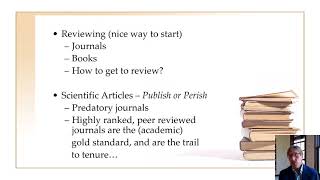
Hi and welcome to this course on how to publish in the new millennium. From scientific journals to best sellers. I'm your faculty for this course, Dr. Chris Stout, and I'm very glad to have you be here. Writing is transformative and here's an example of that. This is me before I started writing and after. I'm sure you'll all undergo similar transformations in this course. Overall we'll be covering scientific publishing, book publishing contracts, marketing tools, blogging, tutors, and much much lets start off with scientific and professional publishing. Many of us may feel like this is where we send all of our submissions to the Journal of Universal Rejection, because oftentimes it is very difficult to get published in a legitimate peer reviewed scientific journal that's of high caliber. But don't let that discourage you. I had one friend at one point in time say the two best ways to identify yourself as an author is to get published or to be able to cover your wall with rejection notices. Let's start with talking about the mechanics of submitting your paper fundamentally. And the way to start is to make sure that you're sending it to the right journal. And by that it means is the audience for who reads that articles in that journal appropriate for the paper that you've put together? Probably one of the easiest ways to do this is to take a look at maybe the top five most referenced journal articles that are in your literature review and that'll probably be a very good clue to where you should consider submitting your paper. You could have the world's best paper, great scientific findings, etc. But if you submit it to the wrong journal, maybe it's something that's more psychological than anthropological or sociological or political, rather than whatever the primary area you thought it might have been. It's going to get rejected because it's not a proper fit for that readership and for that audience. So do keep that in mind mind, to be able to increase the likelihood of that. It's also proper form and probably the most ethical thing to do is to submit your paper to one journal at a time. People that write for popular media, for magazines and stuff, may oftentimes send a paper out to a manuscript out to different popular media outlets. But that's not the way that we do it in scientific publishing. The reason for that is that let's say you have a really great paper and it gets accepted in two journals. You can't publish in two journals simultaneously, or you can't republish something in another scientific journal. So the aspect of that is that You've wasted precious time of volunteer peer reviewers and journal staff for a paper that would not be winding up even if accepted in their journal. So it's really poor form to do that. So you really do have to kind of wait through that process of doing it, which we'll talk about in just a second. When you submit something to a non, how should I say this to a traditional high impact factor journal, it can take a while to have that review done. It's done by a blind impartial review typically. Now there's digital formats that you submit your article through that are very straightforward and not anything to be scared about or intimidated about. Once you've done it once or twice, it'll become second nature. The blind aspect of this means that whoever is reviewing your article, typically it's two to three reviewers, they don't know anything about you, so that they are blind to who you are. That maintains impartiality so that there's no biases creeping in, good or bad. They see that you're from the same university, that's their alma mater. They might have a little bit more of a bias to want to accept your paper if they had not known that what university you came from, or vice versa. You know, if you're from Harvard and it's someone reviewing from Yale, you know, there could be a bias that they might look at your article with a little bit more of a jaundiced eye. So blind, impartial peer review is really the best way to go about doing this. And as mentioned earlier, it can take a while. Reviewers, to my knowledge, almost all reviewers are unpaid. They have other demands and responsibilities in addition to reviewing your article. So there are times limits if you are a reviewer that there's an expectation that you would turn it around in a reasonable period of time, or that if you, if they hit you up at a very busy time for you, let's say you're grading finals or something, you can say, hey, I'm really too busy right now, I'll, you know, check me on the next one. And then they'll just go down to another reviewer that's appropriate to review your paper. They will also typically ask in the submission process what area is your manuscript in? So that they do try to cue up proper reviewers that also have similar experts expertise. For example, if you're doing something with oncology patients, pediatric oncology patients, not only would they have hopefully submitting to the proper journal, but they'll have people that have that kind of specific expertise or sub specialty. So once it's submitted. You just kind of sit back and wait. You get on with your other activities and wait to hear back from them. Usually you'll get some kind of email ping to say that we've got your paper. Then after that you'll probably get another email ping to say everything is appropriate with your paper or they will tell you there's something that's missing or there's a file that didn't load properly and then you just simply address that, re upload the file or do whatever, take care of whatever housekeeping. It is around that I have had as quick a turnaround time so some articles as a week these days, which was amazing. I was very surprised by that. But oftentimes I would say just sort of set your expectation to be around a month plus or minus a week, you know, three, three to six weeks, something like that is probably a fair time for it. And again, depends upon the journal, depends upon the size, how many reviewers do they have, etc. Then what happens is you get notice of it, it's been accepted. That is actually a fairly rare thing. It's, it's pretty atypical to submit a paper and have that paper be immediately accepted without any kind of revisions. If so, man, fantastic. Congratulation. You are in the top 1%. I think that's a very rare and wonderful occurrence. Usually what happens is that you'll get a tentative acceptance or an acceptance with revisions. What happens then is you'll get to see the reviewers comments. Most reviewers will be very, very kind, very respectful, which is nice because you're always. It's a very anxiety producing situation to read what a reviewer said about your paper and they'll say things, some things might be theoretical around conceptual aspects, other ways to think about what it is that you've done or, and, or some people are a little bit more manuscript editorial so they might, they'll catch typos. They might talk about sentence structure, they might talk about referencing the format of your references, etc. I should also say, you know, make sure that you use the proper style. Again, I'm a psychologist so I'm used to APA format. Make sure you're up to date with the latest revision. At the time that I'm doing this course, it's the seventh edition and there have been some tweaks there that I found that I have found very helpful in terms of references like to websites and whatnot. And then you can, you have two options with that. You can accept those revisions and, and make them and then resubmit your paper and there might be some revisions where you also have the opportunity to give a rebuttal to and to say, well, I think maybe I wasn't clear on this, so I'll reframe it for clarity. But the aspects of this I really need to stick with. I'm happy to provide it, revise it for clarity, but you know, I'm not going to change this in a material kind of way and that's fine. And then they'll, you know, you'll have maybe a little back and forth with that. Maybe they'll clarify for you and maybe you've misunderstood what that criticism was or rejection. When there is a rejection, a couple things can happen with that. It can be just an outright rejection. There'll usually be some explanation as to why that is. One might be you did submit to the wrong journal. You thought you submitted it to the proper one, but it really maybe is a good fit within their editorial guidelines. I should also say too that any place you submit to right at the get go, you can review what their standards are and you can review a variety of different kinds of things. If you aren't familiar with that journal, that makes you say, well, this would be a good fit, or maybe this isn't one. I'll check for something better. But back to rejections. They may also say, give you reasons as to why. And again, this is not comfortable reading. We all get them. So don't, don't, you know, feel crestfallen about that. That happens, but take those to heart. Not to create any kind of upset feelings, but cognitively and intellectually to say, okay, this was good. I take this into consideration. Now the next time I submit this and I make these, I'll make, you know, hopefully there'll be suggestions for revision and then get back up yourself off, do what you need to do to the paper and then resubmit or submit to another journal. So getting into this may be a nice way, not just submitting right off the bat, but is to be a reviewer in the first place. It's a very nice way to start. And I did that for a number of years at the start and then even while I was submitting and publishing journals is a good way to do this. How do you do it? Look at a journal in an area where you feel like you have expertise and something to offer and that you can validate that, that you know, if you're a clinical psychologist and you've been in practice with a certain kind of subspecialty, PTSD or children or something like that, then make a point of that. Because when you submit to be a journal reviewer, you also need to kind of talk about your bona fides as to why you would be a proper journal reviewer for that. So. And typically you don't necessarily have to have a publishing background. I didn't when I first started off that was, you know, it's a little catch 22. How do I show them that I'm at doing this if I've never published anything? But oftentimes they'll take a look at your background, your training, your experience, even early career people. This could be a good way to start and try it again. Don't expect 100% of every single one that you apply to that you'll get accepted. You'll get accepted in a few and you'll get rejected from a few probably. And then once you have that opportunity, really do a good job of it. Make it a sincere project on your part to take it seriously, to put it together appropriately and to have it be something that you would be proud of in terms of how the diligence that you put into it and that you would also appreciate it good karma wise when it comes time for someone eventually reviewing your submissions. Books are also a good way to do this. There used to be a wonderful service with APA called Psych Critiques and that would be you'd get a book and you would review, you would apply for it and you'd get a book and then you would do really again kind of a yeoman's job. This was the only place I've ever done reviews for where you actually had to have new references that you cited in reviewing someone else's new book. It was a very unique and rigorous way to be able to do that. It was a very challenging thing for reviewers, but it's a very good experience. So I don't know of any of those right now that still exist out there. There may be in other disciplines. So just spend a 10 minutes on Google and see what you can find in that area and apply to do that. And again, same thing with journals. Do a good job of it, do it, have it be something that you'd be proud of. And typically those just as with site critiques, those reviews get published and those get published with your name. It adds to your resume in terms of what you've been a reviewer for and a publication about a book review. So that's great, that's got some benefits in a variety of different kinds of ways. But that is not a blind Peer review. When you do do a blind peer review for a journal as a reviewer, just like if your manuscript is getting reviewed, that is all blinded, no one knows, you know, who wrote that or anything versus a book review that gets published, obviously you get an attribution for that and a byline. So take a look, look at the journals, see the different kinds of areas about that and do take it seriously. For scientific articles, it really is kind of the, the old cliche of publishing or perish when people are in, if you're in an academic setting, the way to get higher up in your ranks to move through from, you know, instructor to associate assistant, full professor, that type of thing, or to, you know, get into tenure, it's really important to publish in legitimate peer reviewed journals. The thing to watch out for these days is something that didn't exist when I first started out. It's called predatory journals. Just again, Google predatory journals. These, the list comes and goes. New ones come up tomorrow that didn't exist today. But do not submit to those. The easiest ways to see if the, what a predatory journal is, is if there's some kind of fee or some kind of charge that goes to you when you submit. But it's basically a scam. It's a way for these journals to, they'll publish your work, they won't review your work, they'll act like they've reviewed your work. But really poorly done studies get published. It's very sad. It seems that areas with people that are really trying to bolster their CV will get anything published. It diminishes the scientific rigor of what's out there in the literature. These articles can still be found in cited and then people don't know that they're citing, you know, kind of poorly done studies. And it's just, it's, it's, it's mayhem, academic mayhem. So don't get tempted into doing that just to have something to, you know, bolster in your cv. It'll backfire. If people see that you've published in a variety of journals that are of ill repute, it'll very strongly work against you. People won't trust you. The people will see you as being naive that you published into journals that either you knew about that were bad and you didn't care because you wanted to give, get the publication credit or you didn't know about, you didn't do your homework and you've gotten that publication credit. So those are not good. Really. Just look at highly ranked, peer reviewed, blind peer reviewed journals that are the academic gold standard, and that's really the trail to tenure. We'll take a look at that next. So you can again go to Google, go to Google Scholar and take a look in these areas. There are a variety of different kinds of rankings out there in terms of impact journal. This is one that just kind of overall looks at medical, scientific literature. Again, it depends on your specialty. You know, there's different rankings and different ranking systems if you're in science or if you're in engineering, or if you're in philosophy, or if you're in the social sciences, political science, etc. They're all a bit different in a variety of different, different areas. So again, just like, you know, looking to the proper audience, look for the type of areas that you would be wanting to publish depending upon what your, your specialty and your discipline is. This is a screenshot of different ones that are out there and the different metrics for what high impact factors are. It's hypertext, as you can tell. This is a PowerPoint, so I can't click on any of these, but you can click on these and it'll take you to those journals and you can learn more about them. So highly recommend this. And again, kind of once you've done it, you don't need to go back and do this frequently. You'll get an idea of what the top 10, 15, 20 journals are in your specialty or your discipline. You can click into these and again, just continue to see on. There's nothing wrong with something that's maybe not number one or two. They're going to be highly competitive. That's fine, that's great. But still, journals that are further down the line, if they're in the top 100, that's just as well. That's just so let's take a look at Google Scholar. Probably everyone's familiar with this, but just in case you go to scholar.google.com but everyone calls it Google Scholar. When you're in this area, typically you're probably doing some kind of research and putting in articles or topics or whatever here. But also take a look in this upper left hand corner. These are editable areas that you have available to you. So part of it you can edit, I should say. And other parts are populated by Google. Parts that you can edit are you can put in your own headshot. You can, and you see this the indication of being able to edit, you can put in your name, you can then populate with whatever your academic credentials are and areas of specialty or disciplines that you have involvement in and hypertext links. This area is populated by Google of articles that have used your prior published research in their papers as well, which is really kind of cool. And then over you can add co authors, people that you co authored with. And then this is a kind of a very interesting area here as well that will pop out in just a second. One other thing is following you can put in other authors here if you care about their work and want to see when they publish something new that's kind of cool, you get an indication of that and then you can do it for yourself so that when someone else cites your articles or references you, you'll get a little Gmail notification that that's the case. So if we take a look at this area, we see citations H index and I10 index and then it lists from current year 2021. It'll go back a few more years. But this is just sort of the the snapshot on this dashboard. If we click on that and open it up, we can see from that 2021 now going back. And I can't slide this over, but it goes back to the first year that I ever had a publication. And probably most people, if you're as old as me, had been publishing as long as I have, you'll see this kind of a bar they'll be and it depends on the articles and the popularity of your articles and whatnot. But it tends to grow over time with some ups and downs year over year. So this is basically in 2013, it looks like about my high point. And I had almost 360 people cite various and sundry articles of mine during that year, the year that those articles were published by other people, not necessarily the year that my article was published. So if we go and look at citation, citation basically is that what was what? In this dashboard over here we see an all time and then we see what's been published within the last five years in that same area of the dashboard. If we take a look at hindex, this is something that I found is becoming more and more popular. It's basically as defined here, an author measure that looks at the productivity and impact of your work as a scientist or a published scholar or academic. For example, a 17 means that at least of your articles that at least 17 other papers have been cited. So a high index, like what's good, what's bad, whatever. An H index of about 20 is good, a 40 is great and a 60 is remarkable. So I can take a victory lap with mine is a 40. That's terrific. And since 2016, it's dropped to be a little bit more like 20. So lifetime average versus the last five years. I index is the other one that's listed here. And it's basically the number of publications that you've had that at least 10 other people have used as a citation. So it's just a very simple measure that Google scholars actually kind of develop themselves. So in the context, for me, I've had at least 95 publications that have used mine at least 10 times over career total. So let's talk a little bit more about scientific articles. One of my mentors early on as an undergraduate was a fellow named John Kramer. And he taught, he became the chair of the Department of Psychology, he taught abnormal psychology and really kind of was my inspiration getting involved in psychology and graduate school, etc. And one of the things that he pointed out that I did not know as an undergrad and probably a number of you do know, but just in case for those that don't, is that when you go through all the blood, sweat and tears of your research, maybe even getting funded for your research, the time it took you to collect your data, the toil of going through the statistical analysis and sorting out your data, the lit review and the hours and hours that that took, and crafting sentences and getting things really tight and then submitting, getting the whole thing put together and the anxiety of submitting it and having your fingers crossed and then hearing back and then making the edits and tweaks necessary to get it published and then finally getting it published and getting it out, you know, into the hands of other scholars is a very exciting and heady process, and talked about this with his process of getting it published. And then he got a copy of his journal or the journal that his article was published in, and he took it to his father. And his father was very proud of it. His father was not an academic. His father took it and put it on the mantle in the family's home just to display it because there was such pride in it. So that was terrific. And a couple days later, after John was. Was visiting, he was getting ready to go and his father saw it and he said to John, you know, I'm so proud of you, and I know what all went into that, and it's so great to see it in print and that's really wonderful. But if you don't mind my asking, how much did you get paid for that? And John sort of looked down at his feet and he said, well, Dad, I didn't get paid anything. For it. And his father was sort of dumbfounded by it. And I guess, you know, if you're in academia, there's that point where you learn that getting published in a journal does not pay you a nickel. And indeed, it may cost you a lot to be able to do that. Maybe you've had to pay your subjects to have them participate in your study. Maybe you had to hire research assistants to be able to get the data collected. Maybe you had to hire a statistician to run your data. Maybe you had to have a variety of other kinds of expenses to be able to manage all the things that went into finally getting that wonderful paper accepted. And it came as a shock to John's father and to my parents as well, back in the day. So the aspect of this is that we publish basically to be able to get. We do the research and the science, to be able to have new knowledge, to learn things that we didn't know about, or that we had questions about, or that we had theories and hypotheses that we wanted to look into and test, to be able to get to the point of where we're at today, and then to articulate that into a methodology that others can mimic and follow and test maybe with different populations or retest our own findings to kind of see the validation of that and the. The rigor of that and how it holds up. So just keep in mind, if you're in this course, to be able to publish scientific articles with the fantasy of being able to retire early on, it's not going to happen. Another thing to think about, though, with scientific articles that is done by a colleague of mine and a highly respected colleague that I thought was a very clever way, was that he was in an academic setting. He was looking at step families and blended step families and step parents and blended families. And at the time there was a National Institute of Health NIH grant out there for people to do research in this. This is a few decades back where it hadn't really been explored or looked at a whole lot. And what he did with that was he submitted a proposal for a grant, got the grant funding, and then went out and did a variety of different kinds of interviews of blended families, a variety of different kinds of backgrounds and ethnicities and geographic locations and socioeconomic statuses, etc. And did a very well done, robust study with a large sample size and created a lot of findings with that. That was very helpful for people doing sociological research into blended families, for clinical people working with blended families, et cetera, et cetera. Top, top, top work, very, very, very well done and submitted it and it was published in a highly ranked peer reviewed journal and also gave thanks and appreciation to the NIH funded grant for that. The ability to be able to do that study and be able to do that. And that's an expectation, any kind of grant funded study, the expectation is that, that you do a really good job and you've done what you've set out to do and that the way that a third party can validate that is that peer reviewers agree that it's a top done study and that it appears in a peer reviewed scientific journal and then everybody's happy and that's great. And he did that. And rather than just kind of leaving it at that, he had a realization. And that realization was there's also lay applicability to this. What happens with these families that are coming together? And are there takeaways, are there lessons learned that he could rewrite the paper, rewrite what his findings were, but do it into more of an applied way to a population that were not academics, but are parents of all ages. Of these kids, 20 something, 30 something, 40 something, 50 somethings, that could take away lessons of what happens when this happens in our blended family situation. What have other families that have dealt with this done that have been successful? What are other families that have had this done that hasn't been so successful? So we can learn from both experiences of what to do and what to avoid doing. And he created a very popular book with that that was sold to publishers before. We'll talk about book publishing in another section of this course, but it was a terrific idea. He did book tours. When I first learned about this, he was in the midst of being a guest on radio shows and was able to again give attribution to the fact that NIMH had funded this. NIMH didn't want any bit of his book royalties, but then he was actually able to make a very good advance and very good subsequent royalties on that popular book and was able to then also benefit all those step families and all those kids and those step families to presumably have better outcomes because they were able to find some scientists, some psychologists had taken the time to do the work, to do it in a rigorous way. Not a frivolous, silly kind of way or vain expertise, but a true expert in this area to be able to go out and do that. So I just thought this is a great model, this is a great way to spend the time to do the scientific side of it, to get funded at the front end and to also get funded at the back end and to be. There's nothing wrong with getting funding, there's nothing wrong with getting a royalty. This is how authors make their list. This is your wage of being able to do that. So again, brilliant idea. It doesn't fit with every single kind of topic. You can't do it with every single kind of paper. But it is something to keep in mind for those instances where it is a good fit to also say, do I have a popular audience for this as well? So great idea. And hopefully that's something that might make sense in some of the work that you do in the future. Another thing to think about with your writing is about presentations leading to publications. Oftentimes when you've done a presentation, there will be what's called a publication of abstracts of those proceedings. Oftentimes people will segment this in terms of their CVs or their resumes to say, you know, here's all the. Here's a. Here's my abstract of the proceedings of the national association of xyz. And that's perfectly fine to list as a public. That shows whoever's reviewing your CV for a job or an academic appointment or an advancement that you've gotten out there, you've done research, it's been accepted by another peer reviewed group of people for a presentation and that it's past muster that way. That's great. Nothing wrong with that. And that's something that's, I think, really good. But there's also ways to go around, go about it, go around the other way, which is to give a presentation and then get feedback on that and then be able to develop it into something else. A couple of examples from my personal experience. I was invited to give a talk at a symposium for the American Psychological Society a few years ago on some work that I had done in trauma on an international basis. Everyone else, pardon me, on the panel, had done work in a different specific subtopic, but in that same general kind of area. The symposium went very well. It was an all day symposium. There was probably a dozen of us somewhere between, you know, eight and 12 of us on that panel. And at the end of it we all got together and we were all kind of. It was kind of neat because we got to learn from one another. We knew just a little bit about each other's work from abstracts, but we really didn't know what the others are going to be presenting until we were there in that situation. And the person that had invited us to do that said, hey, what if we built out our presentations, built out the studies we that, that we had done and put them into each individual, put them into a chapter and we combined those chapters into a thematic book and that's exactly what happened. So that was a very nice. It was not a heavy lift. A lot of the work went into the work that I had already been doing that I got invited to then summarize into a presentation. And then I could build out that summary again predicated on the work that I'd already been doing. So it wasn't like starting from a blank page or starting from scratch to be able to put something in like that together. So that was terrific. And it was great fun working with those other people. And I could specifically work on my area and then come together and have that book, pardon me, come out as a chapter in that book. Another thing that I did was an American psychological symposium, same kind of thing. This was done with regard to political kinds of issues. And I had worked at the United nations and it was book that came out co edited with a colleague of mine, Harvey Langholz, called the Psychology of Diplomacy. He had also worked at the United nations under Madeleine Albright. We did a symposium, again kind of neat thing with other people working in similar areas and put that together as a book. My presentation was a chapter. Other presenters presentations were their chapters. Harvey and I acted as editors on that. Selecting other people that actually weren't. It wasn't just panelists. We had other areas that we felt we needed to cover that weren't in the panel and we solicited experts in those and then were able to, excuse me, create and produce that book. Another way to do that, to get into other kinds of areas was one that was fairly anxiety producing for me because it was getting me out of my comfort zone. But it was very good and growth producing. I had some ideas based on policy and based in an area that I was seeing psychology having application, but it wasn't something that I necessarily had had a whole lot of expertise at that point in time in so I submitted a talk to a conference that was non psychology related to test my ideas that was done in Egypt. So that gave me a variety of different kinds of perspectives. They were not just us based, they certainly were not just psychology based in terms of members of the audience. So I had this great diversity of different kinds of perspectives. And not everybody in those areas felt the same ways about politics that even in the United States today everyone has a variety of perspectives on political perspectives, but. But even on democratic and democracy kinds of perspectives. So I floated those ideas out. At the end of my talk. There was a Q and A and I took notes on those questions that I found very challenging areas that I hadn't really thought about, areas that I had not done research or did not have the same points of view that people in the audience had. It gave me an opportunity to collect business cards and contact information from those in the audience that came up to me afterward during the rest of the conference, to be able to sit down and have other kinds of conversations and to be able to ping each other with emails where I could have this new cadre of experts outside of again, the typical people that I would have hung out with who are psychologists only to be able to talk to people with political science backgrounds and people with policy backgrounds and people working in NGOs and governments from other countries to be able to look at these different kinds of areas. And that was wonderful. So my ideas got ripened and matured. I wrote about, I think, three chapters in this book, the integration of psychological principles and policy development, and then invited those other people that had those other voices and those other perspectives and points of view to submit chapters and to write up their perspectives. It was terrific and resulted in this book that I'm very proud of. Other areas to think about in terms of getting published in the non academic areas are professional magazines. I have had a couple pieces show up in Modern Healthcare. In my areas it was talking more about aspects of mental health and technology and predictive analytics and artificial intelligence overlap. So while it was specific to one niche area like psychology, it was also generalizable to others that might have an interest in policy issues or in technology issues or AI in healthcare settings. Also, while not a journal, the APA American Psychological association has a number of divisions that have newsletters. They also have journals which goes through the peer review process. But sometimes the newsletters are a little easier to get published in. It might be just a straightforward editorial review in those instances. It's not a blind peer review. So whoever the editor is that reviews it or their staff, they see who you are, your name and your credentials and all that goes along with it. But they tend to be very good and professional and not partial and again can give you some suggestions to tweak it or be able to accept it. It's a typical quicker turnaround time and quicker to get into print as well too. Again, being psychology centric, I hope that's okay for most of you that I think it obviously works in psychology and can be generalizable to Other disciplines. But take a look at the National Psychologist. It's a monthly newspaper that comes out. They will publish with bylines, book reviews, a variety of different kinds of op eds, a variety of different kinds of point counterpoints. So take a look at that, maybe look at a couple of back issues, see what has been written about before. See if there's areas and topics that might be relevant to you. It's pretty broad spectrum, not necessarily niche. Niche is good though. Publish in those areas as well too. So do check them out. And then Illinois Psychologist. I'm from Illinois, so ipa, the Illinois Psychological association is near and dear to me and been very active and involved with them for a number of decades again. So take a look at your state associations, be it state psychological associations, if you're a psychologist or other disciplines of your guilds and state associations, those might be terrific places to write and to publish. It also helps get your name out there and have greater recognition amongst your colleagues. Sometimes they might be reprintable things that you can use for handouts in courses or if you're giving a talk or if you need some kind of promotional materials. So a lot of benefits from writing once and using many, I think that we've seen for a number of years. Also I served as a paid columnist in some newsletters back in the day, when it was pre Internet in the late 80s, early 90s of print publications, they were looking for content. I had a specific column in a specific area looking at managed care and payer sources within behavioral health in general and psychology in particular. So it was kind of like writing op eds. But I would also have references to them and they'd be like little mini articles, which was a good discipline for me to write. Sometimes it's harder to write more briefly than it is to write more long form. Sometimes it's difficult to make your point without 15 references and be succinct. So that was a good practice. And I'm sure I don't know off the top of my head, but I'm sure there's other areas out there where you could do this that might offer some kind of payment. One way to do that, and that's being specifically hired as a columnist that can be paid by retainer, that can be paid by contract, that can be paid by piecemeal, like per column inch or by article X dollars per article. And then one other way to do it that's just kind of new. New to me is the freelance style. I've done freelance writing for decades, but I've also now started to do it in Medium. I'm sure most of you are familiar with Medium. Let me bring up the next slide with that. I'm actually paid and you can see I'll be retiring soon with this whopper of an amount. But you can take your content and you have a lot of flexibility with that content. It's not peer reviewed. This is really paid for by the audience and it's a click through. So there's a paywall. People get to read a little bit about what my articles about and then if they choose to read the rest of the article, either they're subscribers or they pay per view, so to speak, to be able to do that. So whatever articles, I don't know, maybe I've got two dozen or so on Medium, then they can click through. And over the course of the month of March, there are enough click throughs on whatever content that I had out there that I was able to make a whopping dollar and 11 cents on it. So again, don't, you know, don't, don't plan on retiring too soon on the extra income that you'll have with this. But it's easy for me. It's pretty straightforward. It's another way to get your name out there to, you know, I like to write, actually, when I do stuff for LinkedIn with a lot of hypertext links. You can put in images, you can put in hypertext links. I use it for my podcast, pardon me, as well. That's probably the most frequent way that I do it. And I'm able to embed a link of that podcast episode in it. So Medium's got a lot of flexibility with it. You can also publish on Medium just for fun. You don't have to do it with a paywall. There are some criteria. I'm not exactly sure how they judge if something qualifies for something to be behind a paywall, but that's up to Medium. You can apply for it and they can say yes or no to it. So if you're interested in that, I highly recommend giving it a shot, seeing what you can find out. So that ends our first segment of this course. Coming up next will be book publishing. I think what we've just recently been talking about tees us up nicely to think about the transition from work that we've done to be repurposed into the possibility of development into a manuscript. We'll talk about traditional book publishing in this upcoming one with a lot of very interesting things that I think will demystify that process and hopefully answer a lot of the questions that you have. I hope you've enjoyed our first segment and I'm looking forward to what comes next. Thanks.
More from Dr.

2025 Mercedes-Benz CLE 450 4Matic Cabrio – Owner’s Views After a Year-and-a-Half as a Daily Driver

The Complete Guide to a Successful Everest Base Camp Trek – Post-Trek Debrief

The Complete Guide to a Successful EBC Trek – Post-Trek Debrief: What I Needed (and What I Didn’t)

What Went Wrong Customizing My New 2026 Porsche Carrera T …and what I did about it!

Coming May 1 At the Intersection of High Performance and Fulfillment: A Conversation with Alisa Cohn

From High Performance to Fulfillment: Lessons in Inner Mastery with Jim Murphy

Coming March 19: From High Performance to Fulfillment: Lessons in Inner Mastery with Jim Murphy

The New Humanitarians Volumes I - III:- Inspiration, Innovation, and Blueprints for Visionaries

The New Humanitarians Volumes I - III:- Inspiration, Innovation, and Blueprints for Visionaries

The New Humanitarians Vol I - III: Inspiration, Innovation, and Blueprints for Visionaries - Forward
