The Master Class in Getting Published | Lesson 2 - Book Publishing -Traditional
Dr. Chris Stout explains how to publish a nonfiction book through a traditional press. Check your university contract for royalty clauses, prepare a detailed proposal with a 100,000-word target, and know that edited volumes help early-career scholars while series alignment with publishers like Wiley improves your odds of acceptance.
Chapters
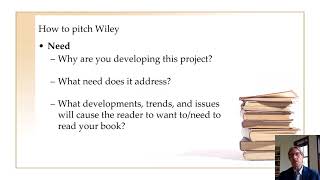
Hi. Welcome back to how to Publish in the new millennium. I'm Dr. Chris Stout. We'll be going into our second lesson today, which is on book publishing traditional style. I've been very fortunate to have had a number of publishing opportunities with some of the top academic publishers, John Wiley and Sons, Prager, Charles C. Thomas Greenwood and others. So we'll talk a lot about that contracting aspect in the second half. But first of all, we'll start talking about how we deal with publishing in the professional realm. First of all, check your contract. If you are in an academic setting, one of the key things that you want to first look at before you go down the route of publishing your first book or another book is what are your contracts? I have experience with a difference between University of Chicago's preferences and Northwestern universities. For example, if you are a faculty member at the University of Chicago, chances are there's some language in your contract that says that any book you publish or any presentation you give for that matter, the funds that come from that, a royalty from a book or a stipend or honorarium from giving a professional presentation that you get paid for goes to the university. In some instances, it might be all of it or it might be a portion of it, and that can be perfectly fine. But a lot of times when we sign up for our positions, we don't read the fine print or we don't necessarily remember all the subtle details of what is in that contract. So at University of Chicago, if you do something that's more along the lines of publishing or presenting, then chances are they want to be able to have a piece of that. If you have a clinical practice. Again, I'm a clinical psychologist, so any clinical work I did with patients was 100%. I could keep all the funds from those payments. If I were at Northwestern a little further north of Chicago, my contract would read a little bit differently in terms of these areas. I could publish and keep 100% of my royalties. I could present anywhere I wanted to and keep 100% of those royalties. But if I hit with my private practice, I would have to bring all the patients that I was currently seeing into their practice group and have to follow through with their protocols and management. They would also generally provide office space. But it's kind of an interesting kind of balance with that. So the point being, the takeaway with this is look at your employment contract with whatever university that you're involved with to see is there any language in there about publishing or presenting. Next up is taking a look at editing a Book or going solo, a first book or first publication, it really doesn't necessarily matter if you're looking at editing of work or solo. I don't think in my experience it hasn't really made a whole lot of difference in terms of getting accepted, getting the proposal accepted. It might depend upon how, what your level of expertise is. If maybe you have an early career circumstance and your expertise is limited, then it might be better to start with an edited work where you could bring in other experts that perhaps have a little bit more longevity in the areas that you want to be writing about. Sometimes editing is a little bit faster. It depends upon your topic and how productive you are and other things that you're doing. If you're soloing on your project, but sometimes bringing, pardon me, having other people come in and submit their chapters, other things happen in their lives as well. I was working on a project early in my career and one of the contributing authors, actually his house, his entire house burned down, which was horrible and obviously created a very difficult time for him to be able to deliver on the work that he was wanting to. Sometimes editing is a little easier because you're not writing every single word yourself. But I've also had experiences in the editing side of things where English might not have been the first language. I do a lot of work with international authors and English might not have been their first language. And I would work through a lot of that with them to properly get their message across. Depending upon your contract and who you're working with as well, there's always going to be someone at the tail end in a professional publishing house. It's going to be editing it and proofing it so you don't have to do all that kind of editorial work with it yourself. And you won't typically be the final person doing that, which is wonderful for yourself if you're writing a solo book or if you're editing and working with others as well. And again, it really didn't seem to make any difference in my experience. I think it might for early career people if you don't have great competency and expertise in the areas that you want to do. If it's an edited work. I started off doing editing and having edited and co edited works and that was fun. It was a good way for me to get started personally in terms of non fiction books, non academic, more based kinds of books. These are my biases, my experiences. Never write the whole book first unless you're writing something for fiction, which again wouldn't be a nonfiction academic work. And the reason for that is you will get, if you get a contract. You don't need a whole manuscript, first of all to get a contract. But if you're working with a publisher and you have the entire manuscript done, you might hear these kind of scary words to hear. Gosh, if you would have only talked to us first, you really have a focus on A. If you could have made it a little bit more A prime or B, that would have been perfect and spot on. And then you're thinking, oh my gosh, if I would have known this in the beginning, it would have been so much easier to write the entire book that way. So having it be that way early on and knowing how to write it in a way that the publisher would really like to have it be, that's a huge bonus. It saves a lot of blood, sweat and tears and hassle of rewriting, finding different kinds of reference sources. And it makes the work that you've already done, it doesn't diminish it, but it just means that you're then having to add even more time and work to it that could have been avoided at the get go. So I always run by what a proposal looks like. We'll talk about that in just a second with a potential publisher first. And it's been a huge time saver, frustration saver and step saver also. It's nice to have, it's very motivational to have that contract first. When you have that contract, you are way more motivated than just kind of on the ifcom to say, well, am I putting all this work into this? Is it an opportunity cost that if I wasn't working on this book that's never going to get published anyway or never going to get contract anyway, what else could I be doing? Could I be building a new course? Could I be seeing more patients? Could I be doing other kinds of things? Could I be having more free time and enjoying my family or my hobbies? Could there be other things that I could be doing rather than working on spending the time on putting together a proposal or a manuscript, God forbid, that never gets published. And one of the keys to this, it's not really a trick or a hack, but just in a sense, common sense, but maybe not necessarily everyone realizes this is what do they publish? We talked about this in the scientific liter lecture of not submitting a great paper to the wrong journal. But looking at what, what do they like to do? Not just content area, like with a journal. You wouldn't submit a psychological manuscript to a publisher. That's Maybe more chemistry based, for example. So, for example, in my experience, Wiley likes series. And what do I mean by that? For example, Wiley has a variety of different kinds of series. There's a great one that Art Young's started called the Treatment Planner series. And within that I was working with Art and also a friend of mine, Cam Helkowski, and we put together the College Student Counseling Treatment Planner. There was also one I did with ART called the Continuum of Care Treatment Planner. Art did a lot of these with other people as well. And then we also had that evolve into Evidence Based Practice, the evidence based practice that we also did with Wiley. So these were always, pardon me, all kind of a series books that were very thematically oriented in terms of clinical practice and behavioral health. I think Art probably has, oh, gosh, at this point, I'm guessing maybe 25 to 35 different separate titles, all under the series of Treatment Planner. That gave me an idea and I started my own series called Getting Started. So then the Getting Started series, it started off with. I found a lot of times in my teaching that even in a professional school of clinical psychology, students didn't know that we got great clinical grounding in terms of our work, but we really didn't know how to go out and start our own private practices. We didn't know how to price our services. We didn't know, you know, all the mechanics and things that went into that. And that's become actually one of the best selling books that I've ever had with Wiley. I've done a lot of lectures in that area. Pardon me, we'll talk more about that a little bit later. And then developing that also then we had another book called Getting Started in Personal and Executive Coaching. I did this with a co author, Stephen Fairley. We did another one, Getting Started in Forensic Practice that was done solo by another author. So. But it was all part of my series, which was just kind of fun to do with the good shelf life, if you will, of Getting Started in Private Practice, which is a bit of an evergreen work. It really doesn't go out of date with some of the principles and tools and things that we talked about in it. Wiley came back to me, which was wonderful and said, could we do a second edition? My thinking and strategy behind that was that's cool, I'm glad it's selling well. But if I were to find two books of the same title on sale on Amazon, and it was Getting Started in Private Practice, first edition, second edition. I want to buy the second edition. Why would I want to buy an old book, I would miss out on all the updates. I really probably don't want to buy two books of the same thing and read it twice and try and sort out the difference between the two. So then I told Wiley, I said I would be in competition with myself. A lot of the things that I talked about was like how to put together accounting tools and things like that that are rather evergreen. Excel changes bit by bit, but what you put into Excel, whatever version of it is, really didn't change. And that was a lot of what the foundational building blocks of getting started in private practice was all about. So I said, let's do this. Let's talk about getting better at private practice. So what I did with this, I edited it, I co authored some chapters, maybe memory serves about 3ish of those chapters with other experts that had more domain expertise. But I had some things to say about it as well. And we expanded it out. It made it a bit quicker to be able to put the book together. And I did not have expertise in putting together websites, but I found psychologists that were. I did not have expertise in electronic medical records. And a lot of the things that have kind of developed that didn't exist when the first book came out. I also wanted to get into niches. I wanted to get into concierge practices, I wanted to get into sports psychology. I wanted to get into performance kinds of areas that I don't have an expertise in and I didn't feel would be right. I couldn't do a good job of it. It wouldn't be ethical for me to talk about those kinds of things. So Wiley said, okay, we get it, go ahead and do that. And we did and came out with another book that I'm very proud of with Wiley, which getting Better at Private Practice and was fun to do with those people as well. So how do you pitch to Wiley? Let's say Wiley, again, is. I'm biased. I like Wiley, they like me. I've been a big fan of their books in a variety of areas, not just psychology. So if you're pitching Wiley or anybody else, you can take this advice, but this is specific to Wiley. Why are you developing this project? What is the need for this? What need does it address? What itch is there out there to. To a lot of potential readers of your book that needs to be scratched? Are there certain developments or trends or issues that will cause the reader to want to or actually need to buy your book? Can someone be competitive? You know, how does someone build it? Let's Use mine. How does someone build their private practice? If they want to do that, where do they start? Well, getting started in private practice would be a great way to be able to do that. How do they want to expand their practice? If they want to get involved? How do they build a website? How do they do marketing? How do they, if they want to get into sports psychology, do that? Getting better at private practice what's the purpose of your book? What is the book designed to accomplish? When someone is finished reading your book and doing your work, what do they know now that they didn't know when they bought your book in the first place? Are there a variety of different kinds of problems that your book addresses and does it solve those problems? I've been involved with books that are just in terms of reviewing them, that are just criticisms, that are just kind of critiques of certain kinds of areas, but really offered very little in the way of solutions, which are interesting intellectually, philosophically, but kind of, again, don't lead to a satisfying ending, so to speak, of practical kinds of things. You can get a better feeling for something. Maybe they're historical books of what the problems were, but maybe those problems still exist. So in this genre of Wiley, for example, what solutions do you provide? Not just articulating what the issues are and does it really solve the problems that you've identified? What other ways or what other. How does your book add to knowledge? How does it add to current levels of practice? What are the kinds of things that once your book is out there, that again, back to thinking about solving problems and what kind of purpose does it have and how does the work help a practitioner? In my case, because it tends to be a little bit more clinically applied or a student to be able to better understand or to improve. It's wonderful. I don't think maybe pieces of some of my books I had done one with Greenwood that got adopted for a course. But it's also wonderful if you have a book for certain kinds of classes, because that will help pitch it to the publisher to say, oh, if this book could be adopted for a course, that would be great. And it's great for you as an author too, because that means that if it's a required book that then students are required to go out and buy your book. They may or they may not, but it's just always a better thing to be able to have. And that also speaks to the caliber of that work. Be very specific in thinking about what are the distinctive selling points. Anyone can say general kinds of things it might apply to every kind of book out there. And it's not bad to say those things, but also don't do them at the cost of not talking about what are some of the distinctive selling points that your book can provide? Who is the target market and audience for your book? Is it graduate students? Is it graduate and undergraduate students? Is it graduate, undergraduate, early career? Is it senior level people? Is it government? Is it policy? Is it business? And sometimes they're not exclusive. Sometimes they are. They might be a little bit more niche. That's not necessarily bad, it just is. Probably fewer people to buy your book, but it can still be able to sell well. They also Almost every publisher I've ever worked with has wanted to see a sample, pardon me, table of contents as best as you can think out loud, what would that look like? And then with each chapter that's in that table of contents, sort of have an annotated abstract of a chapter and chapter by chapter description. What does each you could have a title for a chapter, but that might not necessarily be obvious to someone that has no idea what your book's about, what each chapter is going to unpack and what that's going to cover. What's the knowledge base that's out there? Is it going to be empirical studies? Is it going to be other books? Is it going to be current research, those kinds of things, historical reviews, what have you. And play around with some title possibilities. Chances are I've had this experience. Sometimes it just hits and it just clicks. Like getting started in private practice was relatively elegant, kind of said in what the book was all about. But there's also very catchy chapter or pardon me, book titles out there as well too, that maybe kind of cause a person to kind of scratch their head and wonder, this is curious. I wonder what this is about. So play around with that. Typically your publisher will play around with it as well too. They'll have a marketing department that will want to maybe study it or test it on people. You can do that as well. We'll talk about that in an upcoming example. Think about the length of it. Wiley will typically say we want 100,000 words or we want nothing more than 100,000 words. Usually it's on the bigger end of not being too much and too big. But there are exceptions to that, like by multi volume, which we'll talk about shortly. Who's the competition? This is a tricky one. If you say that there's like 20 other books out there that are all your competition, that can be a good thing. In the sense of saying, hey, there's a market out there, that there's 20 others. But then you also have to think about how is your book different than those 20 others, what makes yours different and honestly, what makes your book better? What areas are you covering that those other books have missed? You could also argue the opposite. If there isn't a whole lot of competition out there, there might be a good reason for it. Maybe it's something new. Maybe you were a pioneering person, an author on pharmacogenomics. When that first came out, there wasn't a lot out there. And you wrote what became, you know, ultimately became the best book, the foundational book on that. So depending upon what your topic and what area it is that you're going to be dealing with, those are the kinds of considerations to put timetable, how long is it going to take you to do this? Typically shorter, sooner is better. They want to get your book out and so do you. So, but be realistic about it. Don't say, I can do this in six months. And then all of a sudden, you know, you've dropped everything. It's made a chaos out of your life, problems for other kinds of areas of your life. Because you probably won't devote yourself 100% to working on this book. You've got other activities, personal and professional, to be able to deal with. So think about it. And obviously think about this too. If you're doing an edited work in terms of everybody else's schedules, and then I've always just added in a buffer of another quarter or six months to whatever that is, just in case. It's usually not a bad thing to deliver early, but it is a bad thing to deliver late. You can be in breach of your contract because your contract will stipulate when it is due and when it is expired, expected. So make sure that you hit whatever target it is that you have and then background information, background on things that you've published. How well have they sold? If you haven't, you know that, you know, be honest with that, that you're just starting. This would be, you know, maybe one of your first or first couple of books that you've been involved with and background on you what makes you an expert in this area, what gives you the chops to be able to, to do whatever it is that you're proposing in this book. So we talked about Wiley and Ceres. Prager likes sets of books. We'll talk about what that is and what are called GICs or general interest categories. I was actually invited by Prager, after doing a few books with them, to take over a series called Contemporary Psychology, which I liked a lot because unless you were writing about the history of psychology, basically anything kind of fit within the category of contemporary psychology was like basically current events in anything psychological with Prager. And that was fun. We had a number of books that came out in that. This is just a little bit of a sampling of it, but you can kind of see the areas that went from everything of international disaster psychology to peace to resilience, etc. So it was great fun. I put together an editorial board of experts that had areas of expertise outside of mine. So when we got a proposal, I could typically tap one of them and get that covered in one way or another. And it was nice because I could bring new authors to a publishing platform. It was just, just really fun and ahead of time to be able to do that. I've since retired from doing that, but I miss it at a certain level. It was a very heavy lift a lot of times for certain projects or if you had a lot going on at once, but very enjoyable to be able to do. There's also another publisher that I would highly recommend people to take a look at and that's sourcebooks. I have worked with people that have published with sourcebooks. I have never published with sourcebooks, but every person I've talked with that's been an author with source books, easy for me to say, has been very happy with it. They seem to be very author centric. Sadly, not all publishing houses are as kind and gentle to their authors. And sourcebooks, they have a lot of resources for want to be published authors to get published. So I'd highly recommend, even if you're not quite ready to submit, but take a look at what tools they have for you there. They're all free, they're all downloadable, and again, just a high recommendation. And again I mentioned earlier, do you need an agent? My bias is no, I've never worked with an agent. However, I have friends and colleagues that have. They have worked with it primarily in the areas of pitching a manuscript that is written. And you know my feelings about that. I find it tends to be more helpful. And most of the people that I know that have used agents has been in the areas of screenplays or nonfiction works or novels, those types of things, not nonfiction kinds of areas. So I have a friend, John Mayer, who is sort of a channels his inner Kellerman, that writes in very psychologically based kinds of novels that are great fun to read, action packed kinds of things. And I believe he works with an agent to be able to get those done. He's also done screenplays and been producers in films. So there's a variety of resources out there. Just Google it. I've read Noah Lukeman's work. Great stuff that's out there. So do seek out those kinds of people as ways of how to pitch to an agent, how to get an agent, what the benefits that having an agent can be, which, again, are a little bit outside of the scope of this course. So coming up next, we'll be kind of unpacking contracts, contracts 101 for getting your book published and what kinds of things to look for. Thanks. And looking forward to that with you. Bye. Bye.
More from Dr.

2025 Mercedes-Benz CLE 450 4Matic Cabrio – Owner’s Views After a Year-and-a-Half as a Daily Driver

The Complete Guide to a Successful Everest Base Camp Trek – Post-Trek Debrief

The Complete Guide to a Successful EBC Trek – Post-Trek Debrief: What I Needed (and What I Didn’t)

What Went Wrong Customizing My New 2026 Porsche Carrera T …and what I did about it!

Coming May 1 At the Intersection of High Performance and Fulfillment: A Conversation with Alisa Cohn

From High Performance to Fulfillment: Lessons in Inner Mastery with Jim Murphy

Coming March 19: From High Performance to Fulfillment: Lessons in Inner Mastery with Jim Murphy

The New Humanitarians Volumes I - III:- Inspiration, Innovation, and Blueprints for Visionaries

The New Humanitarians Volumes I - III:- Inspiration, Innovation, and Blueprints for Visionaries

The New Humanitarians Vol I - III: Inspiration, Innovation, and Blueprints for Visionaries - Forward
