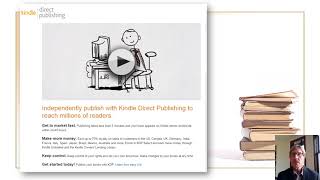
In this lecture Dr. Chris Stout introduces non‑traditional book publishing, beginning with a pop‑quiz that reveals many well‑known titles were self‑published, challenging the stigma often attached to self‑publishing in academia. He outlines four publishing pathways—traditional, print‑on‑demand (POD), vanity presses, and self‑publishing—explaining their trade‑offs in control, speed, cost, and credibility. The bulk of the session focuses on Amazon Kindle Direct Publishing (KDP, formerly CreateSpace), walking through the step‑by‑step workflow (account setup, ISBN assignment, interior and cover preparation, channel selection, pricing, royalty calculations, and expanded distribution). Dr. Stout demonstrates how pricing decisions affect royalties across Amazon’s own channels versus expanded distribution, and shows how to adjust prices for different markets (US, UK, EU). He stresses the importance of ongoing marketing, using personal websites, leveraging endorsements from notable colleagues, and gathering reviews. Real‑world examples include his “Humanitarian Field Guide” (a KDP paperback/e‑book) and a glossy picture book produced via Blurb for donor thank‑you gifts. He surveys alternative POD and self‑publishing services (Blurb, Lulu, Reedsy lists, AuthorHouse, Smashwords, BookBaby) and advises careful vetting. Finally, he warns against vanity presses, describing their high fees, low sales, and potential for over‑promising, and provides a due‑diligence checklist (BBB, Google/Yelp reviews). The lecture concludes by previewing upcoming sessions on pitching and digital publishing tools.
Chapters
Hi and welcome back to how to publish in the New Millennium. I'm Dr. Chris Stout. Today's lecture will be on book publishing, non traditional. So let's start off with the pop quiz. Which of these books do you think was self published? What color is your parachute? Very popular. In Search of Excellence by Tom Peters, A real piece by former President Nixon, One Minute Manager, Joy of cooking, or something that we have probably all dealt with as undergraduates. The Elements of Style by Strunk and White. So here we go. Here's the answers. Yes, what color your parachute? 22 editions, 6 million copies, 11 languages, 288 weeks on the New York Times bestseller list was self published, as did Tom Peters, In Search of Excellence. President Nixon's real piece, the One Minute Manager, the Joy of Cooking and Elements of Style by Strunk and White, which actually was a surprise to me with all of these. So don't feel bad if you feel like I pulled one over on you. They were all surprises to me as well because these are kind of classics that oftentimes there's a negative perspective with regard to self published books, especially in academic settings. So I should give that as a caveat right off the bat. Your department chair, etc. Your colleagues may feel like a self published book is a little bit of cheating. So if you're trying for tenure and other kinds of academic advancement and credentials and things like that, self publishing may not be the route that you want to go. There's a variety of benefits to it in a variety of other kinds of ways that we'll talk about, however, and we'll unpack how they work and how that works. Let me pull up my little laser pointer here. So this is a table to maybe take a look at, come back to this lecture and pause it in the future. But basically there's four different kinds of print on demand, self publishing, vanity presses, and traditional publishing. So in the lecture where we first talked about traditional publishing, that would be this column over here. And it kind of talks about the differences between each one of them. Why would I pick one? Or what are the differences, you know, versus we know about traditional publishing from my other lecture. But how does marketing work or who controls what, or what are royalties like, or how long does it take to get into print, etc. And depending upon what your goal is, again, if it's maybe having a moneymaker and being in business as publishing a book that's very popular, etc. That you want to have greater control over, might be more print on demand, vanity presses are probably the most exploitative in my biased opinion and cost the most and have the most difficult time. And self publishing is maybe kind of somewhere in there, between in the spectrum. So it's almost kind of a bimodal distribution. If this is what you want to do and publish yourself, publish if you will, POD is probably the way to do it. Amazon is probably one of the best ways to do it, but there's plenty of others out there. If you're not going to be going the traditional publishing route for whatever good reasons do do your due diligence and your research if this is an area that you want to go into. These companies come and go. There are a variety of listings you can see here from Reedsy about what they see as the best of the self publishing companies in 2021 and then the ones@selfpublishing.com of what their list is for the 12 best publishing companies. I have worked with Kindle and I have worked with Blurb, which I don't. I thought I saw it on here, but it's not. So I can definitely speak to him. We'll do a deep dive in this lecture about Kindle, but there are others out there and depending upon what your needs are, what your budget is, what your book is like, you may then make distinctions between these and make your choices based upon what it is that you'd eventually like to be able to have done. So let's take apart probably the biggest one, Amazon's kdp. Kindle Direct Publishing reasons. I like them and others as well too. Maybe why they hit the high rankings is that their printing costs are the lowest, they have no initial setup fees, they offer non exclusive agreements that keeps your future publishing and distribution options open. You don't lock yourself into something that you might regret in the future and the Kindle distribution of your book. So it can be converted so you can have digital easily done in digital. Some people just do exclusively digital, but you can take your print book and that can be available just like ordering any other book through Amazon available for immediate download onto Kindle or other digital book versions. Kindle Direct Publishing originally was called Createspace. In some places it still is referred to as Createspace. So when I first started with them some time ago, it was CreateSpace. So Kindle direct Publishing is a kind of a fun thing. You can establish an account with them even if you're not ready to upload a book to kind of see behind the scenes and see how things work. And they have little cute little videos again since it's Amazon, they're the big guys on the block, so they can have a lot of distribution, they can do it internationally, etc. So do. If this is an area you want to check out, you can easily go there without even having a manuscript, maybe just an idea, and start to flesh things out, see what you want to do. So let's talk about why I chose to do this. I've like, as you know, I've published with some nice publishers in the past and that's all been great. But for me personally, there were some areas that I wanted to publish a little bit more quickly. And that's one of the things that's easy to do. I wanted to have control. You might remember from the contracts 101 lecture, you have almost zero control, conceivably zero control with traditional publishing houses. So there's some things that I wanted to do with my nonprofit that I felt would be very beneficial and kind of quick and easy books to put together to be able to have out there. I might use them for giving away at the end of a talk. I might use them for fundraising if I do have a fee for them. Variety of different kinds of ways and tools to be able to get information out there. Stuff that I found myself maybe saying over and over to people. I could just kind of compile it into an easy book that people could read, enjoy and buy if they wanted to. So when you do this, and again, this is an old version, back when it was just branded as CreateSpace, you had a variety of different kinds of things that you could go through. And this is pretty much still the same today with kdp. So you get an ISBN assigned, you find out about your title, you put together your interior, your cut cover, and you complete your setup. And this is one that I had done called the Humanitarian Field Guide about inspirational stories and methods and ideas and tools, which I'm very much into. And then once I got to this point, the book was pretty much put together. I put together. You can get a template where you just basically, if you're comfortable with working in word, you can cut, cut and paste into their template or you can start with their template and just use does proper running heads. It does pagination for you. It just does a variety of things that make your make the ult that look very good and be as professional as any other kind of professional publisher would have. So at this point, now what we're going to take a look at is channels that you see here in the next slide. If we were doing channels, it would Take us to this page and you have a choice you can select. And I would recommend selecting all these, which is what this example shows is going to be in Amazon.com in Amazon Europe and then CreateSpace eStore, which is now Kindle Direct Publishing. And then you can have expanded distribution, doesn't cost anything more. And this is if it's available in paper to bookstores and online retailers, which it may or may not show up there. That's up to them. Libraries and academic institutions. Again, yes, it could wind up in your academic library or general public libraries, but self published books again, have a little bit of a negative connotation if you're trying to get academic cred out of it. And then again createspace Direct. So you just want to kind of choose all of those. Then you get to price it, which you have zero control over with the regular publishing houses. So you can up and down this as much as you choose to. And there's a variety of different kinds of strategies. There are limits. The minimum list price for the book that I had done of that size, etc. Was $9.95. And if you want to know why that is, Amazon will explain it to you. You can then calculate what your royalty would be. So you can make it. You could make it $13.95 or 2, 295 or whatever, probably. And then it will tell you for every book that sells, it's priced at $12.95 on Amazon. You'll get $4.07 if it's sold through CreateSpace because there's less cost for them. There's no ink, there's no paper, there's no shipping, it's all electronic, etc. For your expanded distribution, you don't get quite so much with that because there's higher costs for Amazon with it. If you go to Great Britain British pound sterling, then your book will price at 7.56 British pounds sterling and you'll get 1.45. And that gets converted into US dollars, obviously if you're US based. And if it gets European distribution, it's done in euros, etc. So once you change this one, it then changes everything else automatically for you. And you can play with it to say, well, I want to make a little bit greater royalty or I'd rather price it more cheap or what have you. So it's just kind of fun to play with that calculator and to kind of see how things go. This is where you. This is a more recent version of a book that I did so again, this is what it looks like now. Rebranded under Kindle Direct Publishing. You have the choices of paperbacks. You always get an ISBN, book covers, etc. And then it can be as a live ebook for digital downloads or in paperback. And in this case, we did it as both. So a lot of flexibility with it. You can, once you've priced it, you can go back, you can have a sale and you can publicize that, that your sale, your book that's typically $29.95 can be on sale for the next month for $15.95 or something, whatever price you choose to you. Also, we started off as an experiment. You can do ABAB testing, your marketing, all sorts of other kinds of creative things for talking about our marketing in an upcoming lecture. But you have total control over these costs at any point in time. We started off with the book priced a little bit higher when it was new and then decreased it to this after it had been out for a while. You also, with this, you know, it's also important to always market all of your books. We'll talk about this more in marketing with regular publishers or online. But what I did on one of my websites, a life in full for a while. I had a separate website for two years called why Global Health Matters. The website was named obviously after the book. Once that had expired, it wasn't worth the price of me maintaining the cost of that website. So I made it a page in a website that I already have, that I drive a lot of traffic to. So it had a cover of the book. I was very honored and continue to have valued friendship with Jody Williams, who is a Nobel laureate for her work with landmines. And she was very kind. She and I had lectured together at a presentation years ago and became friends from that. And she was very kind to write the foreword for this book. So that's a big selling point about it as well too. So it was edited. You know about editing books from when I've talked about that before. But it's again very important to continue to promote your books and get the word out. This is what that same book looks like. If you're to go to Amazon right now, you can look inside, you can see sample chapters, you can look at a table of contents, et cetera, et cetera. Here's its paperback availability. It's got used versions like regular books, or you can get it for free on Kindle, depending upon what kind of subscription you have with them. It's also important we'll talk about this in marketing as well too, but to get praise for it. It's called praise. A little narcissistic there, but basically to ask some friends and colleagues that are in the same space that your work is to get a free review copy of it and to opine if they feel comfortable to support it. And so dear friend Breda McGrath, who works in a variety of international areas in global health and international psych areas, wrote this about the book. And Greg Martin, etc. Etc. Some friends kind of big names in the areas in global health, Janet Lynn and Valerie from Harvard, etc. So recognizable names that are friends, that are colleagues and that are at institutions that also have good name brand recognition is a good way to be able to do that. And all of these, again, this is just actually literally pulled and you can see the copyright material. This is literally pulled from what's inside. So people that come to the website are able to say, well, what's this book all about? Or who, who cares? Who are these? You know, why should someone care about this book? And here's some name brands that tell you why it's a big deal. I'd mentioned earlier that I also used Blurb. I did this little book, Tools for Change, made it very inexpensive. This was again kind of just more so an experiment. And this became a small little picture book really, because Blurb at the time was very well known for having really high quality images in theirs. And we did this in a glossy little version. So for my nonprofit, this was a giveaway that we used. I purchased a bunch of them myself and then used them as thank yous for our donors, which was kind of fun to do. Lulu is also out there. There's a number of other publishers that are out there that provide a variety of different kinds of services. Author House is out there. Smashwords, just again, Bookbaby, There's a ton that are out there. So do you know, kick the tires, spend some time on Google, see which ones might seem to be a good fit for you in the future. Once you've started to make a decision, maybe take a look at this as something to come back to. This is from Reedsy. I really liked it. It basically talks about a traditional publisher, which we've talked about in a prior lecture, versus a vanity press. And a vanity press is again different than print on demand, a pod like Amazon or Blurb or Lulu. So these are some of the things to really watch out for, basically. Bottom line is that a vanity press will charge you thousands of dollars, send you hundreds of books that will have a high risk of moldering in your garage or basement. So those are all personal opinions, but just, you know, those are biases on my part. But nevertheless, do do your due diligence. Maybe it's a good fit for you. But these are some of the things to consider if you are considering a vanity press versus a traditional publisher or print on demand publisher. So again, they typically overcharge. They can sell you unnecessary services. They may overstate and maybe over promise a little bit in what they do. Also, you know, check them out with Better Business Bureau and Google Reviews and Yelp and the other places you may spend a little bit more than you know what you need. So do be an educated consumption. Consumer packages vary. Maybe things have gotten better than the last time that I talked about this. So I hope this kind of demystifies what goes on in the digital world of publishing. And coming up next, we'll talk about a lot of the tools that you'll be able to use for pitching your book as well as working in the digital publishing space. Thanks. And until next time,