The New Humanitarians Volume I - Comprehensive Rural Health Project - Jamkhed
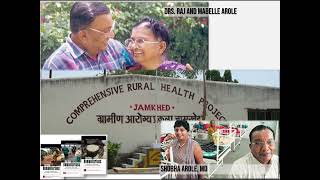
Drs. Raj and Mabel Arole built a rural health program in Jamkhed that trained illiterate village health workers and linked health, water, and agriculture. Infant mortality dropped from 176 to 24 per 1,000 between 1971 and 2006. The project treated health as inseparable from social equality and environmental restoration.
Chapters
Welcome to today's deep dive. Pull up a chair, grab a notebook if you want, because we are— we're treating today like a fascinating study session with a really good friend.
Meaning you.
Meaning you, exactly. We've got an incredible topic lined up, and we're going to be pulling all our insights today from this comprehensive, just beautifully written document titled Sustainable Transformation of Communities: The Jamkhed Experience.
It is a remarkable piece of work. It details a social and medical experiment that began in rural India back in the 1970s. But the implications of what happened in those villages, they are still rippling outward into global public health today.
Right. And our mission for this deep dive is to figure out exactly how this radical project achieved that. Because what's really striking about this story is that it isn't just about medicine or doctors or rural clinics.
No, not at all.
It's a masterclass in how real, lasting generational change happens. And it happens when you stop dictating solutions from the top down and you start empowering the marginalized people who actually live that reality every single day. To really appreciate the magnitude of this, could you maybe set the scene for us? What were the founders of this project actually walking into?
Yeah, the source document paints a very vivid picture of the paradox that is India.
Yeah.
Even just looking at the baseline data from 2007 that is highlighted in the text, you see a country that is an absolute vanguard in information technology.
Right. Massive economic growth.
Exactly. But alongside that booming business sector, You have 80% of the population living on less than $2 a day.
Wow.
You have high maternal and infant mortality rates and persistent health crises, especially among the rural poor and in urban slums.
So if you're a policymaker or a medical professional looking at those statistics, your instinct is usually to build better high-tech hospitals, right? Bring in highly specialized personnel and just build a state-of-the-art clinic.
That is the standard playbook. The underlying assumption is always that quality clinical care is the only missing piece of the puzzle. But the protagonists of our story, Drs. Raj and Mabel Arole, looked at the environment and saw something entirely different. They recognized that health is profoundly influenced by economic, environmental, and social factors. Things like the systemic marginalization of certain groups or the deeply entrenched low status of women in these specific regions.
And their backgrounds are fascinating because they are so different. Yet they perfectly complement each other. So Raj grew up in a rural area of Maharashtra, meaning he actually understood the subtle daily realities of village life and the caste system.
He lived it.
He did. When he was just 12 years old, his hometown was hit by a devastating flood, which brought an epidemic of plague. He actually watched his classmates suffer, semi-conscious and in agony, without a doctor to help them.
And that was the moment she decided to become a physician.
Exactly.
Then you have Mabel, whose upbringing was a complete contrast. She grew grew up quite sheltered in a theological seminary where her father was a professor. So she didn't have that firsthand exposure to the harsh realities of rural poverty. But her father had always harbored a dream of becoming a doctor to serve the poor. He inspired Mabel so deeply that she essentially took on his dream and made it her reality.
And they met at medical college.
Right. They bonded over this shared mission and eventually became fully qualified doctors. Even completing public health master's degrees at Johns Hopkins in the US.
Okay, let's unpack this. Because they have all this top-tier training, they come back to India, they're working in these curative-oriented mission hospitals, and they hit a wall.
A massive wall.
Raj is incredibly frustrated. They are providing this top-tier clinical care, but they realize it isn't moving the needle on the overall health of the most vulnerable people in the region. Where was the disconnect?
The disconnect was right at the front door. The most vulnerable people weren't even making it into the hospital in the first place. This realization hit Raj during a defining epiphany detailed in the text.
This is the shopkeeper story, right?
Yes. He was traveling after finishing a clinic and saw a massive crowd gathered outside a local shop. He realized the shopkeeper was actually treating patients, like more patients than Raj had seen all day.
Wow.
And Raj was indignant at first. He approached the shopkeeper and asked what he would do for someone with pneumonia. The shopkeeper said he gives them penicillin. Raj asked what he did for diarrhea. The shopkeeper said he gives them kaolin.
And kaolin, for those listening who might not be familiar with historical pharmacology, is an anti-diarrheal clay that was a very standard prescription back then.
Exactly that. It was basic, but it was effective. And seeing this completely shifted Raj's perspective.
He realizes that the people in these villages are totally willing to learn.
Yeah.
And they are entirely capable of handling basic vital health issues.
Which is a massive subversion of traditional Western medical hierarchies.
Yeah, big time.
The medical establishment usually dictates that only highly educated doctors can dispense care, but the Aarhols realized that keeping medical knowledge locked up inside a hospital was failing the people who couldn't afford to travel to one.
Armed with this realization, they arrived at the Jamkhed area in the early 1970s. And you really have to picture this austere environment. It's a drought-prone population of about 7,000 people.
No running water.
Right. No electricity. There aren't even proper roads to get in or out. The community offered them a rundown veterinary hospital to use as a clinic.
And as for their living quarters—
Oh, yeah, this is wild.
They slept on the third floor of a local merchant's house with their 3-year-old and 10-year-old children. It only had 3 walls and a leaking roof.
So they set up shop. Under those extreme conditions. And because they're doctors, they assume that when they ask the community what they need most, the answer will naturally be healthcare.
Naturally.
But when they actually asked the villagers, health was at the very bottom of the list.
The villagers said their top priorities were water, food, and shelter.
Which makes perfect sense when you were living in a trout.
So how did the Orels respond to that mismatch in priorities? What's fascinating here is how the Arils responded. They didn't patronize the community. They didn't leverage their authority and say, we are doctors, so you're going to get medicine whether you like it or not.
Right.
They listened. They realized that you cannot build trust if you ignore what the people say they need. So they partnered with an agency called Oxfam to provide tube wells for clean drinking water in nearly 30 villages.
But they didn't just put the wells anywhere, did they? The source document highlights a brilliant piece of social engineering regarding where those wells were located.
Right. They intentionally placed these new clean drinking water wells directly in the low-caste Dalit areas.
Which is huge.
In these villages, the caste system was rigidly enforced, and the Dalit community, who were marginalized and deemed untouchable by the higher castes, were heavily isolated.
That seems incredibly risky, though. Why was placing the wells there such a big deal?
Traditionally, in the caste system, sharing water sources was strictly forbidden. It wasn't just about physical separation. It was seen as a form of spiritual pollution for a higher caste person to drink from a Dalit water source.
Okay, I see.
But because the new wells had the best, cleanest water, the high caste villagers were forced to go into the Dalit areas to draw their water.
Wow.
This initiated a daily mobility and intermingling that had never happened before. It forced people to share space, and slowly, it began to crack the foundation of those centuries-old barriers.
And at the exact same time, because the water was clean, the incidence of waterborne illnesses like cholera and typhoid plummeted.
Exactly.
They treated the social disease of segregation as a prerequisite to treating the biological diseases in the water. But it's important to note for you listening that they didn't have it all figured out on day one. Their initial attempt at a dedicated health plan actually failed.
Yes.
They initially placed auxiliary nurse midwives, or ANMs, in the villages. Why didn't that model work?
The ANMs were urban, educated, young, unmarried women. The cultural gap was simply too wide.
It's just a different world.
Completely. The nurses didn't speak the local colloquial dialect. Because they were young and unmarried, they felt incredibly awkward discussing sensitive topics like family planning with the older village women.
Right.
They just couldn't connect with the locals because they were perceived as outsiders. The urban, The educated model failed entirely.
Here's where it gets really interesting. The Aroles were forced to pivot, and they turned to the community itself. They decided to train illiterate village women to deal with common health problems, calling them village health workers, or VHWs.
Imagine the paradigm shift happening here. You are taking women who had never been allowed to learn to read or write, who were often confined to their homes, and telling them they're going to become the medical authorities in their community.
The psychological hurdles must have been massive. The document mentions one trainee, Salubai, who was so terrified her mouth went completely dry and she almost quit after the first day.
They were terrified.
They were wearing saris drawn over their heads, only identifying themselves by their husband's name or their caste. How did the Aroles even begin to break down that kind of deeply ingrained conditioning?
The Aroles had to demystify not just the science of medicine, but the mythology of the caste system itself. They did this through a profoundly simple demonstration during the initial 2-week training in Jamkhed.
What did they do?
They drew blood from each of the women, and they took chest X-rays. Then they laid all the samples and X-rays out on a table and asked the women to identify which blood and which lungs belonged to the high caste and which belonged to the low caste.
And obviously, nobody could tell the difference.
Nobody.
Seeing that the blood was all exactly the same red, that the bones looked exactly the same, it completely shattered the myth of biological caste differences right there in the room.
There was one story in the source document about a woman named Lalanbai that really stuck with me as an example of overcoming these psychological hurdles. Can you walk us through what she was up against? Her story is incredible. She was born a Dalit, growing up in extreme poverty. She literally survived by eating the discarded scraps from the local landlord. She was married off at age 10 to a violent man who was so jealous he actually tried to kill her by throwing her into the sea.
That is just horrifying.
She was eventually abandoned and raised a son on her own. Tragically, her son caught measles. But because of local superstitions, the village believed the measles were a goddess's curse that could only be cured by a miracle. They denied the boy food, water, and medicine, and he died.
A completely preventable tragedy.
Entirely preventable. After she was widowed, she was totally ostracized, yet she is the woman the village leader reluctantly selected to go to the training.
Wow.
This illiterate, traumatized woman trains to become a VHW. She goes back to her village fighting the exact same superstitions that killed her own son. She gains so much respect that the current village leader, the man who sent her, actually got terrified she was going to run against him in an election.
Yeah, I remember reading that part.
He begged Dr. Mabel to stop her. When Lalimbai heard this, she just laughed and said she didn't need the political title because she already ruled the hearts of the people.
That is such a powerful transformation. But it brings up a really practical question: how did the Earls actually teach complex medical concepts to women who couldn't read or write?
They relied on the women's deep cultural knowledge to bridge the gap through brilliant analogies. If they needed to explain dehydration in an infant to a farmer, the VHW wouldn't talk about electrolytes or cellular osmosis. She would compare the baby to an unwatered plant.
Makes total sense.
Everyone in an agricultural community understands that an unwaddled plant withers and dies. They even created a flashcard game based on a local folktale about an infant crossing 7 bridges to survive their first year. The bridges represented things like immunization, nutrition, and clean water.
That is so smart. It avoids medical jargon entirely.
It does, and there is a deep layer of cognitive psychology at work there. Human memory is largely narrative-based. We remember stories far better than we remember abstract facts. By turning medical science into local folklore and relatable agricultural metaphors, the Aroles designed an education system that bypassed the need for literacy entirely.
The knowledge stuck because it was built into the cultural framework the women already understood.
If we connect this to the bigger picture, what the Jamkhed Project realized is that true healthcare isn't about charity. It's not about swooping in and doing things for people. It is entirely about empowerment. It's about giving individuals the knowledge and the dignity to realize their own potential and solve their own problems. And that philosophy applied to everyone, not just the village health workers. Look at Moses Guram.
Moses's trajectory perfectly illustrates this. He was a night watchman who came from extreme poverty and only had 4 years of formal schooling. But because the project fostered an environment where everyone was expected to share knowledge, Moses just started observing people.
He paid attention.
He really did. He watched the x-ray technician. He watched the electrician. He figured out how to run the hospital generators. He was given trust, which is a rare commodity for someone in his position.
And he took that trust and ran with it.
He did. He eventually traveled to Jaipur to learn from a famous orthopedic surgeon how to make low-cost prosthetic limbs, the Jaipur foot. Today, this former nightwatchman runs a workshop that has provided over 17,000 artificial limbs to people in need.
Incredible.
He has traveled to places like Angola and Liberia to teach his skills. People literally call him doctor. There's a beautiful quote from him in the text. I was nobody. Today people call me doctor. Money cannot buy the joy that I have in my work.
When you scale that kind of individual empowerment up to an entire community, the results are staggering. The transformation of Godegon village is a perfect example of this. 20 years prior to the Aarols arriving, this village was a nightmare.
Total nightmare.
It was completely barren, plagued by constant drought. Out of frustration and poverty, there were a dozen illegal breweries. And the caste violence was intense.
It was a community completely fractured. The Dalits would secretly poison the high-caste farmers' prize bulls, and in retaliation, the high-caste men would burn down the Dalit huts. It was an endless cycle of poverty and violence.
Yeah.
But when they invited the Jamkhed the Big Head Project in, the social workers made it clear: you cannot have good health without good agriculture, and you cannot have good agriculture if you are fighting each other.
Enter Yamunabai. She was the village health worker for Godugan, and interestingly, she was a high-caste Brahmin.
So how did she bridge that massive divide in such a violent environment?
Before her training, Yamunabai was confined to her home, never socializing with lower castes. After her training, she became the lifeline of the village. She delivered over 550 babies, mostly Dalit. The source shares an incredibly dramatic moment where Yamunobai is returning to the village in the pouring rain. She needs to cross a flooded stream holding a baby in her arms. She slips, and they are both swept away by the current before being rescued by some local men. When they scolded her for risking her life, she told them that her training had saved many lives in the village, And for the sake of the village, she was willing to take the risk.
That level of dedication completely broke down the walls in Guttigown. The village united. Rich and poor, high caste and low caste, they worked together. They built 23 dams. They dug 40 irrigation wells.
They completely reshaped the landscape.
They planted 200,000 trees on the bare hillsides. And on the health front, because of Yamunabai, they entirely wiped out cholera and guinea worm infections.
Which is massive.
Guinea worm is mentioned in the text, but for someone listening who isn't familiar with tropical diseases, what exactly were they wiping out?
Guinea worm is an excruciating waterborne parasite. When a person drinks contaminated water, the larvae grow inside them, eventually emerging through the skin, usually on the legs or feet, as a long worm.
Yeah, that sounds awful.
It is incredibly painful and incapacitating. Eradicating it doesn't require complex vaccines. It requires meticulous water management and community hygiene. By uniting the village to fix their water sources, they eradicated it completely.
And how does planting 200,000 trees directly impact the health of the village?
It goes back to the idea that health is environmental. Planting those trees prevents topsoil erosion, which allows the land to retain groundwater. When the land retains groundwater, the irrigation wells stay full.
Oh, I see.
Right. And when the wells are full, the crop yields increase. When crop yields increase, malnutrition drops, and families have an income. The trees literally laid the biological and economic foundation for a healthy community.
The transformation is measurable; it's not just anecdotal. And this legacy didn't fade when the founders faced hardship. Tragically, Dr. Mobel Aurel passed away in 1999 from a viral heart disease. But the foundation she and Raj built was so strong that her legacy only expanded.
It truly did.
In her memory, they established a rehabilitation center on the project's farm for marginalized women, widows, victims of violence, women living with leprosy or HIV.
Which brings us to Ratna's story. Ratna contracted HIV from her husband. In short order, she lost her husband, and then she lost her 11-month-old son to the disease.
Heartbreaking.
She arrived at the John Ked Farm barely clinging to life herself, not even knowing she was HIV positive at first, but the project provided her with early antiretroviral treatment, proper nutrition, and crucially, a supportive, caring environment free of stigma.
And she completely turned her life around. The text describes her as a radiant, vibrant 25-year-old. She became one of the farm's most effective supervisors, managing the dairy and the fields, and she even speaks to high-risk women about how to protect themselves. She found meaning and joy again after unimaginable loss.
These individual stories give the project its soul, but as an analyst, I always look to the data to see the macro-level impact. The numbers from Jamkhed between 1971 and 2006 are frankly astonishing.
Let's hear them.
In that period, the infant mortality rate in the area plummeted from 176 deaths per 1,000 births down to just 24, and the crude birth rate dropped from 40 down to 14.8.
Dropping infant mortality from 176 to 24 is a staggering achievement. Why is that specific drop so historically significant compared to standard medical interventions?
Because standard Western interventions like building a multimillion-dollar hospital complex would never achieve those numbers in that environment. A hospital treats the child who is already dying of dehydration or measles. It doesn't treat the root causes, the dirty water, the severe malnutrition, or the superstitions keeping the child from getting care in the first place.
That makes total sense.
That massive drop in mortality was achieved largely outside the walls of a clinic by illiterate women armed with preventative knowledge and the trust of their neighbors. And the global community took notice. Over 20,000 participants from across South Asia and nearly 100 other countries have traveled to Jamkhed to be trained in this model.
So what does this all mean? If we look at everything we've talked about today, the core lesson for you, the learner, is that health does not exist in a vacuum. You cannot isolate medicine in a laboratory or a clinic. It is fundamentally tied to agriculture, to the environment, to women's empowerment, and to social equality.
Exactly.
The Aroles proved that true sustainable transformation requires equity, integration, and empowerment. It requires shifting away from this oppressive, dictatorial style of education where the expert swoops in to save the day and moving toward a model of simply listening, facilitating, and trusting the people.
This raises an important question. As we look around at the massive complex problems of our modern world today, whether it's public health, climate change, or economic inequality, we constantly look to high-tech, top-down, expert-driven interventions to save us. But are we ignoring the greatest, most sustainable resource we have? What if the key to solving our most intractable challenges doesn't lie in building a better system from the top, but in trusting, educating, and empowering the marginalized individuals who are already living at the very heart of the problem?
That is a powerful thought to leave on. Maybe the experts we need are already there, just waiting for the tools. Thank you so much for joining us on this deep dive. It's been an absolute privilege to share this story with you. Take care, keep learning, and we will catch you next time.
More from Dr.

2025 Mercedes-Benz CLE 450 4Matic Cabrio – Owner’s Views After a Year-and-a-Half as a Daily Driver

The Complete Guide to a Successful Everest Base Camp Trek – Post-Trek Debrief

The Complete Guide to a Successful EBC Trek – Post-Trek Debrief: What I Needed (and What I Didn’t)

What Went Wrong Customizing My New 2026 Porsche Carrera T …and what I did about it!

Coming May 1 At the Intersection of High Performance and Fulfillment: A Conversation with Alisa Cohn

From High Performance to Fulfillment: Lessons in Inner Mastery with Jim Murphy

Coming March 19: From High Performance to Fulfillment: Lessons in Inner Mastery with Jim Murphy

The New Humanitarians Volumes I - III:- Inspiration, Innovation, and Blueprints for Visionaries

The New Humanitarians Volumes I - III:- Inspiration, Innovation, and Blueprints for Visionaries

The New Humanitarians Vol I - III: Inspiration, Innovation, and Blueprints for Visionaries - Forward
