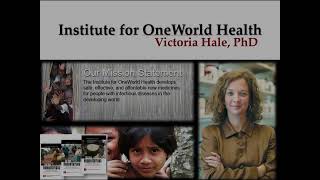
In this deep‑dive episode, the hosts walk listeners through Victoria Hale’s journey from a senior FDA and Genentech scientist to founder of the Institute for One World Health (IOWH), the world’s first nonprofit pharmaceutical company. The conversation begins with Hale’s “taxi‑ride epiphany” that exposed the stark mortality of neglected diseases in sub‑Saharan Africa and the 90/10 funding gap—only 10 % of global health R&D dollars target diseases affecting 90 % of the world’s population. The hosts explain why the traditional for‑profit drug development model, with its high R&D costs and low‑return expectations, leaves tropical diseases under‑served. IOWH’s innovative “networked‑innovation” strategy sidesteps the conventional discovery funnel by repurposing abandoned compounds, exemplified by the rescue of paromomycin for visceral leishmaniasis (kala‑azar). The episode details the scientific, regulatory, and delivery hurdles—phase‑3 trials, Indian approval, WHO essential‑medicine listing, and the hub‑and‑spoke distribution model that leverages existing NGO networks to administer 21‑day injection regimens in remote Bihar. The hosts then discuss IOWH’s expansion into semi‑synthetic artemisinin production via engineered yeast (malaria) and a Gates‑funded anti‑secretory drug program for diarrheal disease. To sustain operations beyond grants, IOWH employs a cross‑subsidization, dual‑market model: selling the same products at premium prices to wealthier patients in developing nations and using those revenues to subsidize free or low‑cost treatment for the poorest. Throughout, the narrative emphasizes Hale’s moral outrage at preventable deaths and frames the nonprofit model as a potential disruptor for the broader pharmaceutical industry.
Chapters
Welcome to today's deep dive. We are jumping right in today because we have just an incredible story to unpack.
We really do.
Yeah. So I want you to imagine for just a moment that you are a highly successful pharmaceutical scientist. You know, you've reached the absolute peak of your career.
Right, the top of the mountain.
Exactly. You've worked at the prestigious Food and Drug Administration. Yeah. And then you moved on to Genentech, which is essentially the world's very first biotechnology company.
Mm-hmm.
So you're riding in the back of a taxi, making polite conversation with the driver who happens to be an African immigrant.
Mm-hmm.
And you proudly tell him what you do for a living.
Expecting a little awe, Maybe.
Right. But instead of being impressed or asking you for medical advice, the driver just bursts into a fit of laughter. He shakes his head in the rearview mirror and says, "You guys have all the money." It's, uh, it's a remarkably grounding moment.
That single offhand comment just pierces right through the professional pride.
It really does. And for Victoria Hale, who authored our source material today, that taxi ride was a massive epiphany. Completely changed the trajectory of her life.
Because it forced her to look at the reality of her industry.
Yes, exactly. It forced her to confront this horrifying statistic she had learned back at the FDA. Up to 1 in 5 children in sub-Saharan Africa don't live to see their 5th birthday, and 10 million people die yearly in the developing world from neglected diseases.
10 million every year.
10 million. Simply because there are no effective treatments available for them.
And that taxicab moment crystallized this deep sense of moral outrage for her.
Which brings us to the mission of our deep dive today. We're exploring what she did next. Because she didn't just write an angry op-ed. In July of 2000, Hale left her incredibly lucrative job at Genentech to found the Institute for One World Health, or IOWH.
The world's very first nonprofit pharmaceutical company.
Exactly. So today, we are diving into her primary text, to understand the exact mechanics, the science, the business of how you actually go about curing the world's most forgotten diseases.
To really understand her solution, you first have to clearly define the problem. In global health circles, this is known as the 90/10 gap.
The 90/10 gap?
Right. It's the brutal mathematical reality of the industry. Worldwide, we spend about $70 billion annually on health research, but only 10% of that funding goes toward diseases that affect 90% of the world's population.
I just want you to let that sink in for a for a second if you're listening. 10% of the money for 90% of the people.
It is staggering. The top 5 infectious killers globally are HIV/AIDS, tuberculosis, malaria, respiratory infections, and diarrhea.
And those mostly hit the tropics.
Exactly. Sub-Saharan Africa, the Indian subcontinent, Southeast Asia. Over 60% of the world's population lives in those regions. Yet if you look at the data between 1975 and 1999, out of 1,393 new drugs developed, Care to guess how many were for tropical diseases?
I mean, out of nearly 1,400, I know the gap is bad, but surely a few hundred.
13. Yeah, 13. Less than 1%. And we know why this happens. Traditional Big Pharma operates on a strict for-profit model. They require a definitive return on investment for their shareholders.
So they focus on wealthy nations.
Exactly. Lifestyle drugs, heart disease, cancer— things that guarantee a financial return.
Okay, let's unpack this. If you are sitting there listening, you know that inventing a drug is ridiculously expensive. So if the for-profit model is what makes creating drugs possible, how on earth can a nonprofit possibly afford to make them?
Well, to appreciate IOWH's new playbook, you have to look at the brutal math of the standard one.
Right.
The traditional drug development funnel is unforgiving. Out of every 10,000 discovered drugs, Only 1 makes it to clinical trials.
1 in 10,000.
And then only 1 in 10 of those hits the market. And compounding that risk, 70% of those final drugs fail to even recoup their initial R&D costs.
It's essentially a high-stakes casino. But this makes me wonder, if a pharma company has already sunk the R&D cost into a drug and it fails to become a blockbuster, why wouldn't they just donate it?
Usually liability and intellectual property. Corporations are terrified of releasing a compound they don't fully control, especially if it might have adverse effects.
Ah, that makes sense.
But here is the genius of the IOWH strategy. They don't even play the traditional discovery game. In fact, IOWH doesn't even own a laboratory.
A pharmaceutical company without a lab?
Right. Instead, they use a strategy called networked innovation. They scour the industry for castoffs, drugs that for-profit companies abandoned because they weren't profitable Or maybe the side effects were unacceptable for a mild condition.
That is such a crucial distinction for you to keep in mind. An antibiotic that causes severe nausea is going to get rejected in the US if it's meant for a minor infection.
Because you can't have people throwing up on their way to work.
Right. But if you have a patient facing certain death from a tropical disease, a little nausea is a perfectly acceptable trade-off.
Exactly. And that logic leads us directly to their very first major test case. A disease called visceral leishmaniasis.
Locally known as Kala-Azhar.
Or black fever, yes.
And the reality of this disease from the text is just grim. It's the second most deadly parasitic disease in the world. It's spread by sandflies. It essentially enlarges the liver and spleen, destroys the bone marrow, and wipes out the immune system. You have 100 million people at risk in Bihar, India, with 300,000 deaths a year.
And the existing treatments were either highly toxic heavy metals or so outrageously expensive they put families 3 generations into debt.
3 generations. Which brings us to their orphan drug solution. IOWH found an antibiotic called paramomycin.
Discontinued by Pharmacia, which is now Pfizer, back in the '70s.
Right, because it wasn't profitable.
Yeah.
But an African researcher found it worked against kala-azar. It was just sitting there abandoned. And IOWH realized they could produce it as a cure for just $10 to $15.
But you can't just walk into rural India with American medicine. And start handing it out.
No, and this brings up a really fascinating hurdle from the text—the Constant Gardener factor.
Named after the John le Carré novel. Exactly.
Because of past exploitation by Western drug companies, testing drugs in poor, rural areas is met with deep, deep suspicion. People are terrified they're being used as guinea pigs. And rightfully so.
But this is where the nonprofit mission became their greatest asset. They were able to build genuine trust with the local communities because they had no profit motive. And it worked!
They successfully ran Phase 3 trials in 2004. By August 2006, the Indian government approved it.
Then the WHO added it to their Essential Medicines List in 2007.
And the New England Journal of Medicine published their findings. A massive victory.
The ultimate proof of concept.
Here's where it gets really interesting. Because having a cure in a warehouse isn't enough. You have to get it to the patient. The delivery challenge.
This is often the hardest part. Paramomycin requires a once-a-day injection for 21 days.
Just picture trying to manage that. 21 daily injections in rural areas with no roads and minimal infrastructure.
Right. So, IOWH set up a Phase 4 pharmacovigilance program in Patna, Bihar.
Starting with 500 patients and scaling up to 1,500. And they used a hub-and-spoke model.
They piggybacked on existing NGO networks like workers who already travel to villages to provide prenatal care. They train them to give the injections.
Which solves a massive concept from the text: innovation pileup. Yes.
Innovation pileup is when brilliant scientific discoveries just sit useless in warehouses because the delivery systems don't exist.
And that ultimately squelches scientific creativity. Mm-hmm.
Why invent a cure if it never reaches anyone? Exactly. IOWH's delivery network prevents that. And it brings economic hope and power back to local clinicians and families.
And what's amazing is how this changed Big Pharma's attitude. In 2000, they were hostile and fiercely protective of their IP.
But by 2006, the doors were wide open. Corporate executives wanted to collaborate. Scientists were literally asking for sabbaticals to go help IOWH.
That open door allowed them to target two new massive projects. First, malaria.
Partnering with UC Berkeley, specifically Jay Keesling, and Amyris Biotechnologies. And they took a futuristic approach.
Instead of extracting artemisininic acid from plants, they used genetically engineered yeast to brew it.
Aiming for semi-synthetic treatments by 2010, bypassing the whole agricultural supply chain issue.
And then there's diarrhea.
Armed with a $46 million Gates Foundation grant, they partnered with Biofocus DPI and a research center in Bangladesh, ICDDR, to discover entirely new anti-secretory drugs.
Yeah. Drugs that actually stop the intestinal fluid loss which kills 2 million children under 5 every year. It's incredible work. So what does this all mean? How does a nonprofit survive long-term without relying entirely on philanthropy? You can't just run on grants forever.
This is where the cross-subsidization strategy comes in. The dual market approach. I love this part. Because diseases like malaria and diarrhea also affect the middle and upper classes in developing nations.
Right. They don't discriminate by income.
Exactly. So IOWH can sell the exact same treatments at a premium to the wealthy who can afford them, and then use those revenues to subsidize the treatments for the poorest populations.
It's a self-sustaining loop.
A brilliant business model.
But to wrap up our deep dive today, we have to bring it back to Victoria Hale's core driving force. Because all the creative business models, the genetically engineered yeast, the networked innovations—they're all useless without one essential element. Moral outrage. Yes. Hale has this powerful sentiment, that if a single life is wasted for want of a treatment that costs less than a box of Band-Aids, we as a global community have failed.
If we connect this to the bigger picture, this isn't just about medicine. It's about the necessity of humility, compassion, and taking real responsibility from the village clinic all the way to the corporate boardroom.
Absolutely. And I want to leave you, the listener, with a final thought to mull over. We've seen how IOWH's nonprofit cross-subsidization model can resurrect abandoned drugs to cure millions in the poorest corners of the globe. But consider this: could this exact same dual market blueprint be the ultimate disruptor for the pharmaceutical industry everywhere? Could a nonprofit model be the key to unlocking affordable treatments for the forgotten, unprofitable diseases right in your own backyard? It's a profound question. It really is. Thank you so much for joining us on this deep dive. Stay curious, and we'll see you next time.