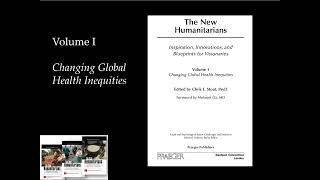
Dr. Chris Stout introduces organizations working on global health equity, from Médecins Sans Frontières to the Marjorie Kovler Center. He traces their founding dates, missions, and how they build capacity in marginalized communities through community-based care and direct services.
Chapters
Volume 1: Changing Global Health Inequities. Médecins Sans Frontières, founded in 1971. I was in Geneva when I first met Doris Schopder, a physician who was involved in the founding of Médecins Sans Frontières, or MSF, or Doctors Without Borders. She was an incredible person filled with energy and stories. As you will find, this chapter provides a frank and transparent description of of the chaos involved in the nascent years of MSF. Quite the shift to the Nobel Prize-winning organization and operation of today. MSF is an independent humanitarian medical aid agency committed to two objectives: providing medical aid wherever needed, regardless of race, religion, politics, or sex, and raising awareness of the plight of the people it helps. Unite for Sight. Founded in 2000. If you ever want to feel inadequate, just look up Jennifer Staple. While most of us were struggling to get through undergraduate school, Jennifer, while at Yale, formed what has become an award-winning global enterprise doing incredible work. The organization's model serves as an inspiration regarding the power of making and acting upon connections. Unite for Sight implements vision screening and educational programs in North America and in developing countries. In North America, patients are connected with free healthcare coverage programs so that they can receive eye care and eye exams by a doctor. In Africa and Asia, Unite for Sight volunteers work with partner eye clinics to implement screening and free surgery programs. Scojo Foundation, founded in 2001. In the small world of global efforts, I read a piece by Jordan Caselow, OD, MPH, and I called him while he was at the Global Health Policy Program at the Council on Foreign Relations in New York, serving as an adjunct senior fellow. We had a wonderful conversation, and I've referenced his keen points on the deadly reciprocity of illness and warfare in subsequent talks I've given. He and Scott Barry went on to found the Scojo Foundation. Their mission is to reduce poverty and generate opportunity through the sale of affordable eyeglasses and complementary products. SCOJO Vision Entrepreneurs are low-income men and women living in rural villages who are trained to conduct vision screenings within their communities, sell affordable reading glasses, and refer those who require advanced eye care to reputable clinics. Sustainable Sciences Institute, founded in 1998. I tell people that Eva Harris, PhD, could make a lab out of a Jeep and that she is the spiritual cousin of MacGyver. I have read her seminal book, A Low-Cost Approach to PCR, and though I'm not a biologist, I was astounded. We first spoke on the phone some years ago about the possibility of collaborating on a project together, and my astonishment continued. She developed the Sustainable Sciences Institute, SSI, and holds a mission to develop scientific research capacity in areas with pressing public health problems. To that end, SSI helps local biomedical scientists gain access to training, funding, information, equipment, and supplies so that they can better meet the public health needs of their communities. Institute for One World Health, founded in 2000. I first spoke with Victoria Hale, PhD, after she and her attorneys had been meeting with Internal Revenue Service attorneys to convince them that the Institute of One World Health was indeed a not-for-profit pharmaceutical company. I think the first in the world. We were looking to collaborate on a pharmacogenomic project in which my center would be the R of R&D and she would work on the D, or development. We first met face-to-face in Geneva at the World Economic Forum headquarters. Today, the Institute for One World Health develops safe, effective, and affordable new medicines for people with infectious diseases in the developing world. Jamkhed, aka Comprehensive Rural Health Project, CRHP, founded in 1970. Shobha Arol, MD, came looking for me in Davos at the World Economic Forum's annual meeting. I'll never forget that. In our conversation, I presumed she needed help with getting some doctors to Jamkhed, India, but she quickly and ever so kindly told me that she was in the market for students so she could help train them before they they developed their bad habits. She and her father, Raj Arol, MD, are doing so and quite successfully. Their Comprehensive Rural Health Project, CRHP, was started to provide healthcare for rural communities, keeping in mind the realities described above. It developed a comprehensive community-based primary healthcare approach, CBPHC, The CRHP is located in Jamkhed, which is far away from a major city and is a typical rural, drought-prone, poverty-stricken area. One of the main aims of the project is to reach the poorest and the most marginalized and to improve their health. In reality, perhaps not everyone in the world will be able to have equal healthcare. However, it is possible to make sure that all people have access to the necessary and relevant healthcare. This concept is known as equity, and it is an important principle of CRHP. Health is not only the absence of disease, it also includes social, economic, spiritual, physical, and mental well-being. With this comprehensive understanding of health, the project focuses on improving the socioeconomic well-being of the people as well as other aspects of health. Health does not exist in isolation. It is greatly related to education, environment, sanitation, socioeconomic status, and agriculture. Therefore, improvement in these areas by the communities in turn improves the health of the people. Health care includes promot— promotive, preventive, curative, and rehabilitative aspects. These areas of integration bring about effective Healthcare. International Center for Equal Healthcare Access, founded in 2001. I met Marie-Charles, MD, MIA, in Quebec City at a Renaissance Weekend. I listened to her present on her center's work, and I knew I'd found a kindred spirit. In fact, at the time of this writing, it's looking like it's promising that we will be working collaboratively together in Cambodia. Marie founded the International Center for Equal Health Care Access, ICEHA, which is truly a remarkable nonprofit organization of 650+ volunteer physicians and nurses who transfer their medical expertise in HIV and infectious diseases with greater than 7,000 aggregate man-years of human capital to colleagues in more than 12 countries in the developing world. Rather than perpetuating a continued dependence on Western charity, this creates a sustainable system that allows these countries to provide healthcare to their own patients at the highest possible standards, and yet within the existing resource limitations. As an interesting but critically important side note, the recipient developing countries themselves shoulder the major share of the program implementation costs, giving them a true sense of proprietary pride value, and ownership as opposed to receiving charity. ICEHA turns the program of international development on its head. Flying Doctors of America, founded in 1990. Alan Gathercole, D. Div., and I have been through a lot together: stuck in Nairobi, stuck in Burundi, bribing air force officials with lighters in Hanoi to bring in medicines, working in Bolivian prisons together, going to Rwanda together, as well as Cambodia, Peru, and the Amazon rainforest. Alan is the founder of the Flying Doctors of America, and his organization runs short-term medical and dental missions to the rural regions of the developing world. Marjorie Kovler Center of Heartland Alliance, founded in 1987. I'd speculate that Mary Fabry, PsyD, spends more time some years in Rwanda than in Chicago. She goes to where the needs are, and when in Chicago, the needs are at the Marjorie Kovler Center, where she is director of one of the— and one of the clinical co-founders. The Kovler Center provides comprehensive community-based services in which survivors work together with staff and volunteers to identify needs and overcome obstacles to healing. Services include mental health, individual or group therapy, counseling, psychiatric services, and a range of culturally appropriate services on-site in the community. Health care: primary health care and specialized medical treatment by medical professionals specifically trained to work with torture survivors. Case management: access to community resources including tutoring, ESL, food, transportation, special events. Interpretation and translation: bridging cultural and linguistic barriers in medical, mental health, and community settings. And legal referral: referral and collaboration with immigration attorneys and organizations.